Teri Beef in Hawaii: Sweet, Savory Plate Lunch Classic (With Recipe)

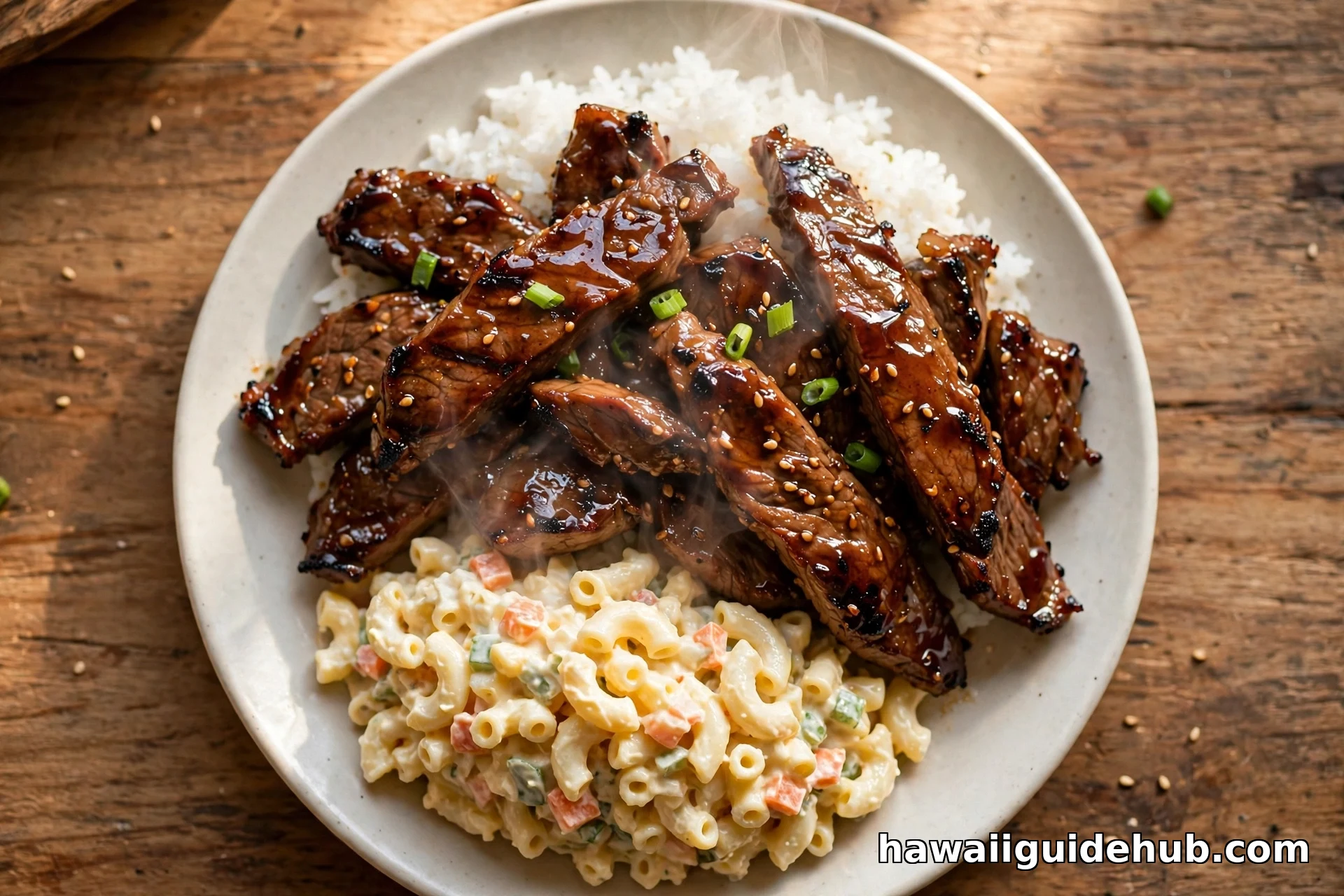
Walk into any plate lunch counter in Hawaii and say the words “teri beef” and nobody will ask you to clarify. They know exactly what you mean: thin slices of beef, glossy with a sweet and savory shoyu glaze, piled over hot rice with a scoop of mac salad on the side. It is one of the defining flavors of local food in the islands, and once you taste the real thing, you will understand why locals shorten “teriyaki beef” to just “teri.” It is faster to say, and when the plate is in front of you, talking slows down anyway.
This is the single guide to everything about teri beef in Hawaii: what it is, where it came from, what makes the Hawaiian version different, the full home recipe with the classic marinade, grilling tips, the beloved teri beef sticks pupu style, variations, and where to find the best plates across the islands.
What Is Teri Beef?
Teri beef is Hawaii’s local name for teriyaki beef. In Japanese, “teri” refers to the glossy shine of the sugary glaze, and “yaki” means grilled or broiled. In Hawaii, locals shortened the word to “teri,” and the name stuck.
What sets Hawaiian teri beef apart from mainland teriyaki is the flavor balance. The islands’ version leans sweeter and more garlicky than what you find in most Japanese restaurants on the mainland. The marinade starts with the familiar base of shoyu (soy sauce) and sugar, but local cooks add generous amounts of fresh garlic, grated ginger, and green onions. Many family recipes also include a splash of mirin or a touch of pineapple juice, a distinctly Hawaiian twist that adds brightness and helps tenderize the meat.
The beef itself is cut thin, usually flank steak, sirloin, or flat iron, sliced about a quarter inch thick against the grain. Thin slices mean the marinade penetrates fast and the meat cooks in minutes on a hot grill, picking up caramelized, slightly charred edges while staying tender inside. The result is sweet, salty, garlicky, and deeply savory, with that sticky glaze that gives the dish its name.
The Story Behind Teri Beef: From Japan to the Plantation Lunch Pail
Teri beef is a dish born from Hawaii’s plantation history. In the late 1800s and early 1900s, tens of thousands of Japanese laborers arrived to work the sugar cane and pineapple fields. They brought their food traditions with them, and the sweet shoyu glaze of teriyaki was one of them. Workers packed their lunches in bento tins: leftover rice plus small portions of whatever protein the family had cooked the night before, including teriyaki-style beef and chicken.
As the plantations declined, lunch wagons began serving these worker meals to crews in the 1930s. By the 1950s, dedicated plate lunch restaurants were opening around the islands, and teri beef earned its permanent spot on the menu. The plate lunch formula settled into its classic form: two scoops of white rice, one scoop of macaroni salad, and a generous heap of meat. Teri beef fit perfectly. It was affordable, it fed a crowd, and the bold sweet and salty flavor paired beautifully with plain rice.
Today teri beef shows up everywhere: plate lunch counters, okazuya delis, drive ins, school fundraisers, and backyard cookouts. It has become one of the clearest edible symbols of Hawaii’s Japanese influence.
What Teri Beef Tastes Like
If you have never had it, imagine the best parts of teriyaki turned up a notch. The first thing you notice is the glaze: sticky, shiny, almost candy like on the caramelized edges. Then the sweetness hits, brown sugar and shoyu reduced onto the meat, followed by the savory depth of the soy sauce and the warm bite of fresh ginger and garlic. Green onions add a fresh, sharp finish.
The texture matters just as much: crisp, charred edges against tender, juicy centers. Eaten over hot white rice with a spoonful of creamy mac salad, you get the full plate lunch experience. Compared to mainland teriyaki, Hawaiian teri beef is sweeter, more heavily garlicked, and less restrained.
The Classic Teri Beef Marinade
Every Hawaii family has its own version, but the classic teri beef marinade is built on a simple foundation. Here is what goes into it and why each ingredient matters.
Shoyu (Soy Sauce)
Shoyu is the backbone. It provides the salt, the deep umami, and the dark color that makes the glaze look so appetizing. Most local recipes call for regular shoyu rather than low sodium, since the sugar balances the salt. Use one cup for two pounds of beef.
Brown Sugar
Brown sugar is what makes Hawaiian teri beef sweeter than its mainland cousins. It caramelizes on the grill and creates that signature sticky glaze. Three quarters of a cup is standard for the classic recipe. Some cooks use white sugar, but brown sugar adds a molasses depth that white sugar cannot match.
Fresh Garlic and Ginger
This is where the Hawaiian version separates itself. Four cloves of minced garlic and a tablespoon of fresh grated ginger give the marinade its punch. Dried ginger powder does not deliver the same brightness, so fresh is worth the effort. Grate the ginger on a fine grater or microplane so it melts into the sauce.
Green Onions
Three chopped green onions add a mild onion sharpness and fresh color. They go into the marinade and also make the classic garnish, sprinkled over the finished beef along with sesame seeds.
Mirin
A quarter cup of mirin, the sweet Japanese cooking wine, rounds out the marinade with gentle sweetness and helps the glaze shine. If you do not have mirin, a tablespoon of honey works in a pinch.
Optional Hawaiian Touches
Many local recipes add a splash of pineapple juice for tropical sweetness and natural tenderizing enzymes. A teaspoon of sesame oil adds nutty depth. A pinch of black pepper or red chili flakes gives heat for those who like it. These are the personal touches that make each family’s teri beef slightly different.
For more of Hawaii’s essential flavors, explore our guide to must-try local dishes in Hawaii, where teri beef takes its place among the islands’ greatest hits.
How to Make Teri Beef at Home
This recipe makes the classic plate lunch style teri beef, enough for 4 to 6 servings. It takes about 15 minutes of prep plus marinating time.
Ingredients
- 2 lbs flank steak or sirloin
- 1 cup shoyu (soy sauce)
- 3/4 cup packed brown sugar
- 1/4 cup mirin
- 4 cloves garlic, minced
- 1 Tbsp fresh ginger, grated
- 3 green onions, chopped (plus more for garnish)
- 1 tsp sesame oil (optional)
- Toasted sesame seeds, for serving
- Hot cooked white rice and mac salad, for serving
Step 1: Slice the Beef
Partially freeze the beef for 1 to 2 hours until firm but not solid. This makes thin, even slicing much easier. Slice against the grain into strips about 1/4 inch thick. Cutting against the grain shortens the muscle fibers and keeps every bite tender.
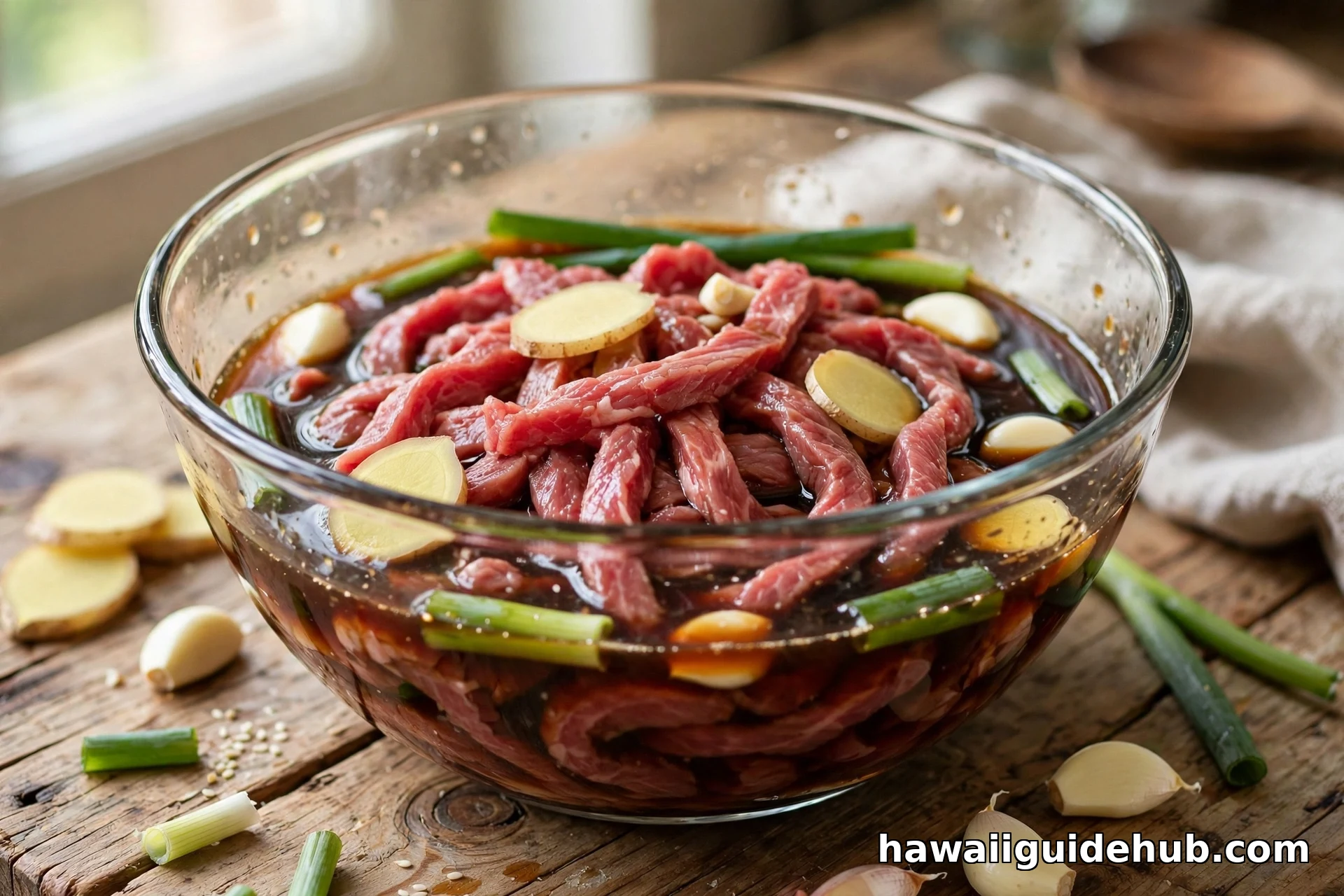
Step 2: Mix the Marinade
Whisk the shoyu, brown sugar, mirin, garlic, ginger, green onions, and sesame oil in a large bowl until the sugar dissolves. It should be boldly sweet and salty with a clear garlic ginger kick.
Step 3: Marinate
Add the beef slices and turn to coat every piece. Cover and refrigerate for at least 4 hours, or overnight for the deepest flavor. Do not marinate longer than 24 hours, as the salt and sugar will start to break down the meat’s texture and make it mushy.
Step 4: Grill or Broil
Remove the beef from the marinade and let the excess drip off. Grill over medium high heat for 2 to 3 minutes per side, until the edges char and the glaze caramelizes. If you do not have a grill, broil on a foil lined pan about 4 inches from the heat, turning once. Cook to 145 F internal temperature for food safety.
Food safety note: Never reuse marinade that touched raw meat unless you boil it first. If you want extra sauce for serving, set aside a portion of the marinade before adding the beef, then simmer it in a small pot until slightly thickened.
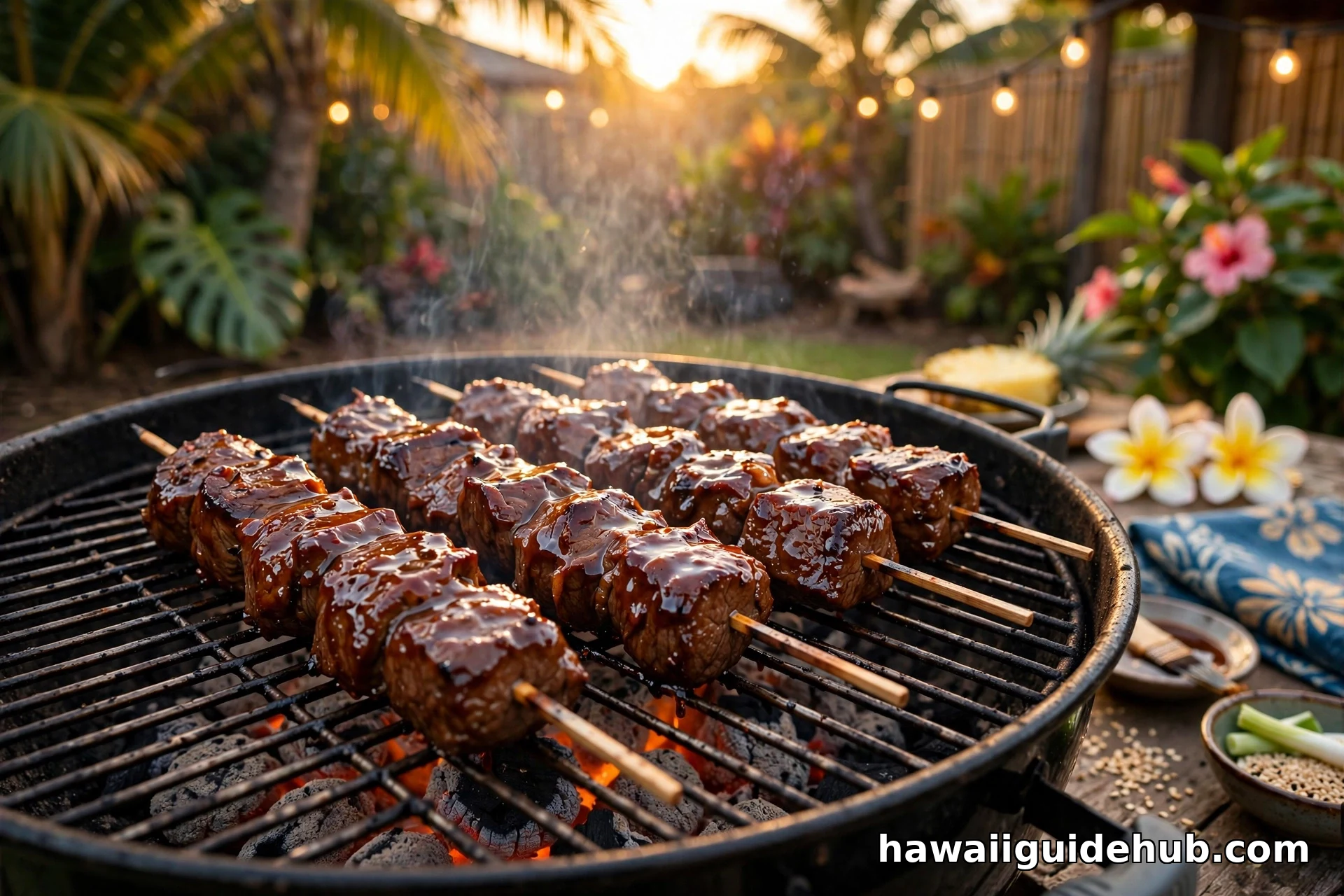
Step 5: Rest and Serve
Rest the beef for 3 minutes. Serve piled over hot white rice with mac salad, spooning extra reduced glaze over the top. Garnish with green onions and sesame seeds.
Teri Beef Sticks: The Pupu Style
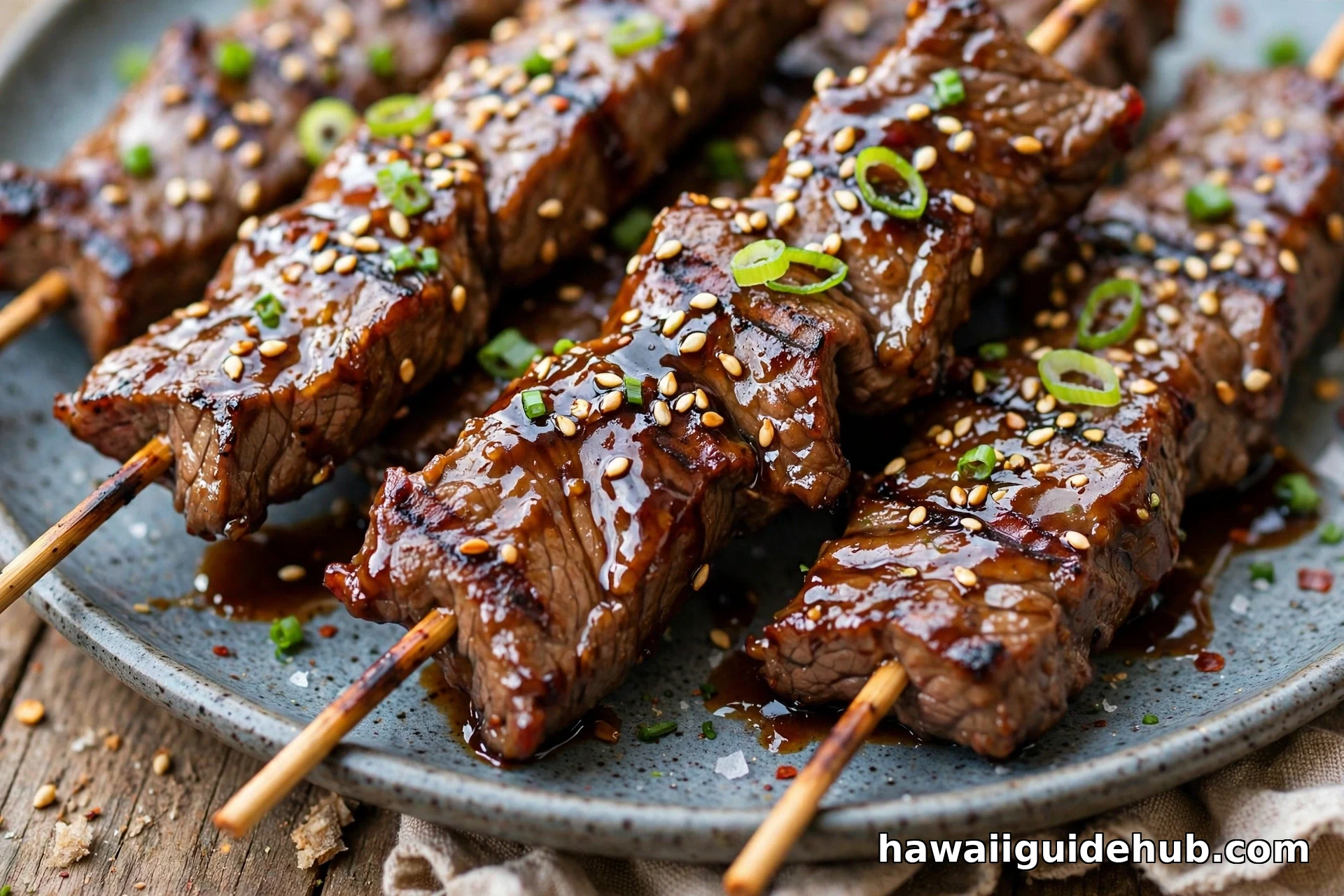
At parties and potlucks across Hawaii, teri beef often shows up in its most snackable form: teri beef sticks. Thin marinated strips are threaded onto bamboo skewers in an S shape and grilled for 2 to 3 minutes per side. They are the perfect pupu (appetizer): easy to eat while talking story, packed with flavor, and gone within minutes of hitting the table.
To make them, follow the same marinade recipe above. Soak wooden skewers in water for 30 minutes before threading so they do not burn on the grill. Thread the strips loosely so heat circulates. Grill over medium high heat, brushing once with reserved fresh marinade, until the edges char. Finish with sesame seeds and green onions.
Grilling Tips for the Perfect Glaze
Sugar is the soul of teri beef, but it is also the trickiest part. Here is how to get caramelization without burning.
Use medium high heat, not screaming hot. The sugar in the marinade burns fast. Medium high gives you charred edges and a sticky glaze in 2 to 3 minutes per side without turning bitter.
Shake off excess marinade. Dripping wet meat steams instead of searing. Let the excess drip off before the beef hits the grill.
Do not walk away. Thin slices cook in minutes. Stay at the grill, watch the edges, and turn when you see caramelization starting.
Oil the grates. The sugary glaze wants to stick. A well oiled grate (or a grill pan) keeps the beef from tearing.
Rest before serving. Three minutes of rest lets the juices settle back into the meat. Slice against the grain if you cut larger pieces after cooking.
Popular Variations
Teri Chicken
The same marinade works beautifully on chicken. Use boneless thighs, which stay juicier than breast meat, and marinate 4 hours to overnight. Grill until the internal temperature reaches 165 F. Teri chicken is just as common on plate lunch menus as the beef version.
Spicy Teri Beef
Add a teaspoon of red chili flakes or a squirt of sriracha to the marinade for heat that cuts through the sweetness. Some local cooks add a sliced Hawaiian chili pepper to the marinade jar.
Pineapple Teri Beef
Replace a quarter cup of the shoyu with pineapple juice for a brighter, fruitier glaze. The enzymes in fresh pineapple tenderize aggressively, so use canned juice (the canning process deactivates the enzymes) and keep the marinating time under 8 hours.
If you love Hawaii’s grilled specialties, our guide to huli huli chicken covers the islands’ other legendary barbecue tradition.
Where to Find Teri Beef in Hawaii
You do not have to cook to eat well. Teri beef is a standard plate lunch item, so you will find it at lunch counters, okazuya delis, and drive ins on every island.
Plate lunch counters are the classic setting. Order the teri beef plate and you will get the full formula: two scoops rice, mac salad, and a heap of glazed beef. Chains like L&L Hawaiian Barbecue and local favorites on every island serve it.
Okazuya delis let you build a custom plate from steam trays. Point at the teri beef, add a piece of lomi lomi salmon, and you have a personalized local lunch.
Rainbow Drive In on Kapahulu Avenue in Honolulu is one of the most famous old school spots, serving plate lunches since 1961. Their teri beef plate is a benchmark for the style.
Zippy’s, Hawaii’s beloved local diner chain, serves teri beef as part of its regular menu alongside its famous chili.
For dessert after your plate lunch, pick up some malasadas, Hawaii’s Portuguese style fried doughnuts, from a nearby bakery.
Frequently Asked Questions
Is teri beef the same as teriyaki beef?
Essentially, yes. “Teri beef” is Hawaii’s local shorthand for teriyaki beef. The Hawaiian version tends to be sweeter and more garlicky than mainland or Japanese restaurant teriyaki, but the core concept is the same: beef glazed with a sweet shoyu sauce and grilled.
What cut of beef is best for teri beef?
Flank steak is the classic choice, followed by sirloin and flat iron. The key is slicing thin (about 1/4 inch) against the grain. Thin slices absorb the marinade quickly and cook in minutes, which is what gives teri beef its signature charred edges and tender centers.
How long should I marinate teri beef?
Four hours is the minimum for good flavor, and overnight is ideal. Do not go past 24 hours, as the salt and sugar will break down the meat’s texture. If you are short on time, even 1 to 2 hours gives decent results with thin slices.
Can I make teri beef without a grill?
Absolutely. A hot cast iron skillet or a broiler works well. Broil marinated slices on a foil lined pan about 4 inches from the heat for 2 to 3 minutes per side. You will still get caramelization, though you will miss the smoky flavor of charcoal.
What is the difference between teri beef and kalbi?
Both are sweet grilled beef dishes popular in Hawaii, but they come from different traditions. Teri beef is Japanese influenced, with a shoyu, sugar, garlic, and ginger marinade. Kalbi is Korean influenced, typically made with short ribs in a marinade that often includes Asian pear, sesame oil, and a different spice profile. Both appear on mixed plates across the islands.
Is teri beef gluten free?
Traditional teri beef is not gluten free because shoyu contains wheat. To make it gluten free, substitute tamari (most tamari is brewed without wheat, but check the label) for the shoyu in equal amounts.
See Teri Beef Made Hawaiian Style
The Bottom Line on Teri Beef
Teri beef is more than a recipe. It is an edible piece of Hawaii’s history, a dish that traveled from Japan with plantation workers, adapted to island tastes, and became a cornerstone of the plate lunch. Whether you grill it at home or order it at a drive in counter, you are tasting the cultural mix that makes Hawaii’s food unlike anywhere else.