Char Siu Chow Fun: Hawaii’s BBQ Pork Noodle Stir-Fry

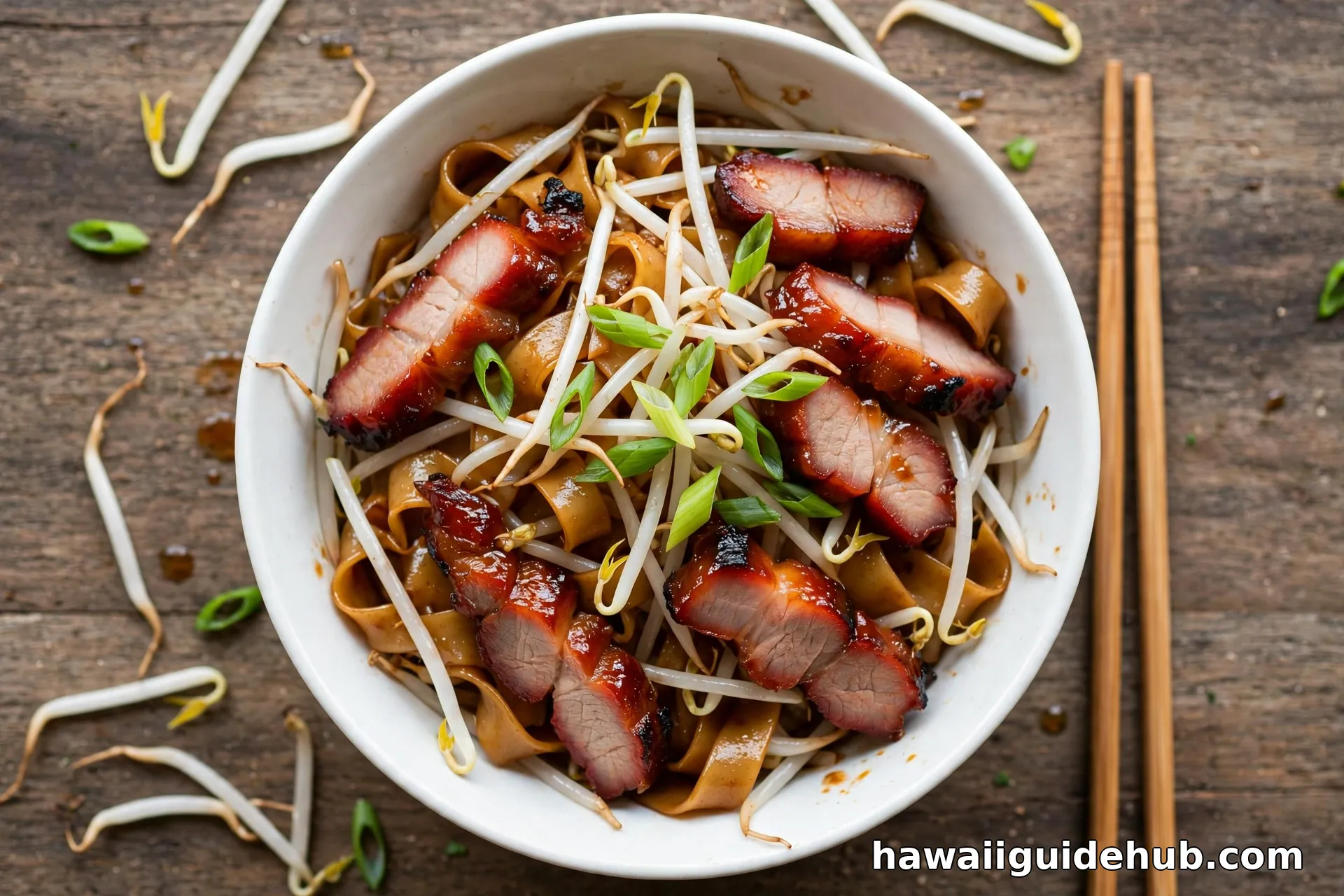
Char siu chow fun is Hawaii comfort food at its most direct: springy rice noodles tossed in a hot wok with slices of sweet Chinese barbecue pork, crisp bean sprouts, and onion, all glossed with a savory sauce. It is the dish that shows up at potlucks, in plate lunch boxes, and on the steam tables of local delis across the islands, and one bite explains why it never leaves the rotation.
This is the complete guide to char siu chow fun. It covers what chow fun is and where it came from, what makes the Hawaii version distinct, the authentic method for making it at home, the ingredients that matter, regional and family variations, what it tastes like, where visitors find it in Hawaii, and substitutions. Everything about char siu chow fun lives on this one page.
Char Siu Chow Fun at a Glance
| The detail | What to know | Why it matters |
|---|---|---|
| What it is | Stir-fried flat rice noodles with Chinese barbecue pork (char siu) and vegetables | The flat noodles define the dish; round noodles make it something else |
| Origin | Cantonese chow fun, adapted in Hawaii’s Chinese-influenced local food scene | Explains the shoyu and oyster sauce in a Cantonese technique |
| Key ingredients | Fresh flat rice noodles, char siu, bean sprouts, onion, oyster sauce, shoyu | Six ingredients; the char siu does the heavy lifting |
| Flavor | Savory, lightly sweet, smoky from the wok; chewy noodles, crisp vegetables | High heat and speed; this is not a slow stir-fry |
| Cook time | About 20 minutes once ingredients are prepped | The prep is the real work; the cooking is fast |
| Serves | 4 as a main dish | Built for family-style sharing, and for potlucks |
| Where to find it | Local delis, plate lunch shops, okazuya, potlucks, and Chinese restaurants in Hawaii | If a place sells plate lunch, it probably sells this |
What Chow Fun Is
Chow fun is the Cantonese name for fried rice noodles, made from wide, flat sheets of rice noodle cut into ribbons. The noodles are soft, chewy, and slightly slippery, with a mild rice flavor that soaks up sauce. In Cantonese cooking, chow fun is a staple: it appears in dim sum restaurants and noodle shops, most famously as beef chow fun with bean sprouts and onion. The defining technique is the wok toss over fierce heat, which gives the noodles their characteristic lightly charred edges and smoky aroma.
Chinese immigrants brought chow fun to Hawaii in the 19th century, and it took root fast. Small local delicatessens across the islands serve it alongside plate lunch offerings, and it is a fixture at parties and potlucks, where a big tray of chow fun feeds a crowd cheaply and disappears quickly. In Hawaii, chow fun is as much a local dish as it is a Chinese one.
What Makes It “Char Siu” Chow Fun
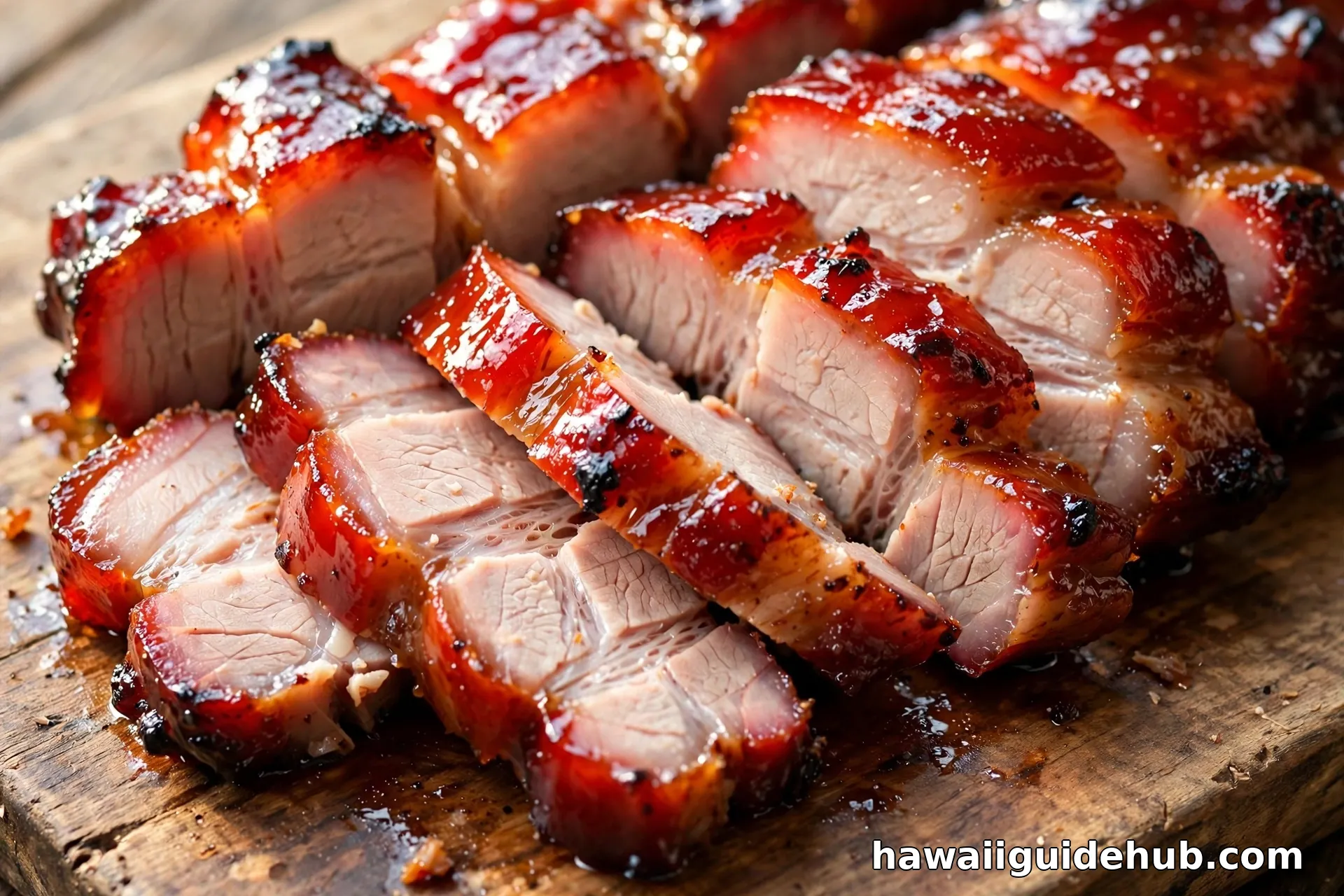
Char siu is Cantonese barbecue pork: pork shoulder or butt marinated in a sweet, savory mixture and roasted until the edges caramelize to a deep red. The marinade typically includes honey or maltose, shoyu, hoisin, five-spice, and red coloring from fermented bean curd or food coloring, which gives char siu its signature ruby exterior. The pork is tender, juicy, and sweet-savory, with crispy charred bits that are the best part.
In char siu chow fun, sliced char siu replaces the beef of classic beef chow fun. The sweetness of the pork plays against the savory noodle sauce, and the caramelized edges add texture. It is a natural pairing that Hawaii’s Chinese community and local cooks embraced, and many island families consider it the definitive version.
The Authentic Char Siu Chow Fun Recipe
This method follows the Hawaii local approach: fresh rice noodles, plenty of char siu, bean sprouts and onion for crunch, and a simple oyster sauce and shoyu seasoning. The whole cook takes about 20 minutes, but have everything prepped before the wok gets hot, because the actual stir-frying moves fast.
Ingredients
- 1 pound fresh flat rice noodles (about 1/4 inch wide; see notes on dried)
- 1/2 pound char siu, sliced into bite-size pieces (store-bought from a Chinese deli works well)
- 1/2 onion, thinly sliced
- 2 cups bean sprouts (about 10 ounces)
- 2 stalks green onion, cut into 1-inch pieces
- 2 tablespoons cooking oil, divided
- 1/4 cup water or chicken broth
Sauce
- 2 tablespoons oyster sauce
- 1 tablespoon shoyu
- 1 tablespoon dark shoyu (for color)
- 1/2 teaspoon sugar
- 1 teaspoon chicken bouillon powder (optional)
- 1/2 teaspoon white pepper
Step by Step Method
- Prep the noodles. If using fresh rice noodles, gently separate the ribbons and bring them to room temperature; cold noodles break. If using dried wide rice noodles, boil until just pliable, drain, and toss with a teaspoon of oil.
- Mix the sauce. Stir all sauce ingredients in a small bowl with a spoonful of water to loosen. Set aside.
- Sear the vegetables. Heat a large wok or skillet over high heat with a tablespoon of oil until smoking. Add the onion and stir-fry until lightly browned, about 2 minutes. Add the bean sprouts and the white parts of the green onion; toss for 1 minute until just softened. Slide everything onto a plate.
- Fry the noodles. Add the remaining oil to the hot wok. Add the noodles and the water or broth, and toss constantly for about 2 minutes, letting the noodles pick up golden, lightly charred spots. This char is the soul of the dish.
- Sauce and combine. Drizzle the sauce over the noodles and toss evenly. Return the vegetables to the wok, add the sliced char siu and the green parts of the green onion, and toss everything together for 1 to 2 minutes until heated through.
- Serve immediately. Chow fun waits for no one. Serve it straight from the wok while the noodles are chewy and the sprouts still have bite.
Tips for Wok Success
High heat is everything. A home burner cannot match a restaurant wok burner, so work in a large pan, do not crowd it, and keep things moving. Fresh rice noodles are strongly preferred; they are sold in the refrigerated section of Asian markets in Hawaii and keep for a few days. If your noodles tear, your heat was too low or you stirred too aggressively. And do not overcook the bean sprouts; they should stay crisp and juicy, not limp.
Variations
Hawaii families all have their version. Some add shredded cabbage or sliced kamaboko (fish cake) to stretch the dish. Some use Spam in place of or alongside the char siu, a very local move. A vegetarian version swaps the pork for extra vegetables and mushrooms with vegetarian oyster sauce. The dry-fried style above is classic, but some cooks make a wetter version with extra broth for a saucier noodle. All are legitimate.
What Char Siu Chow Fun Tastes Like
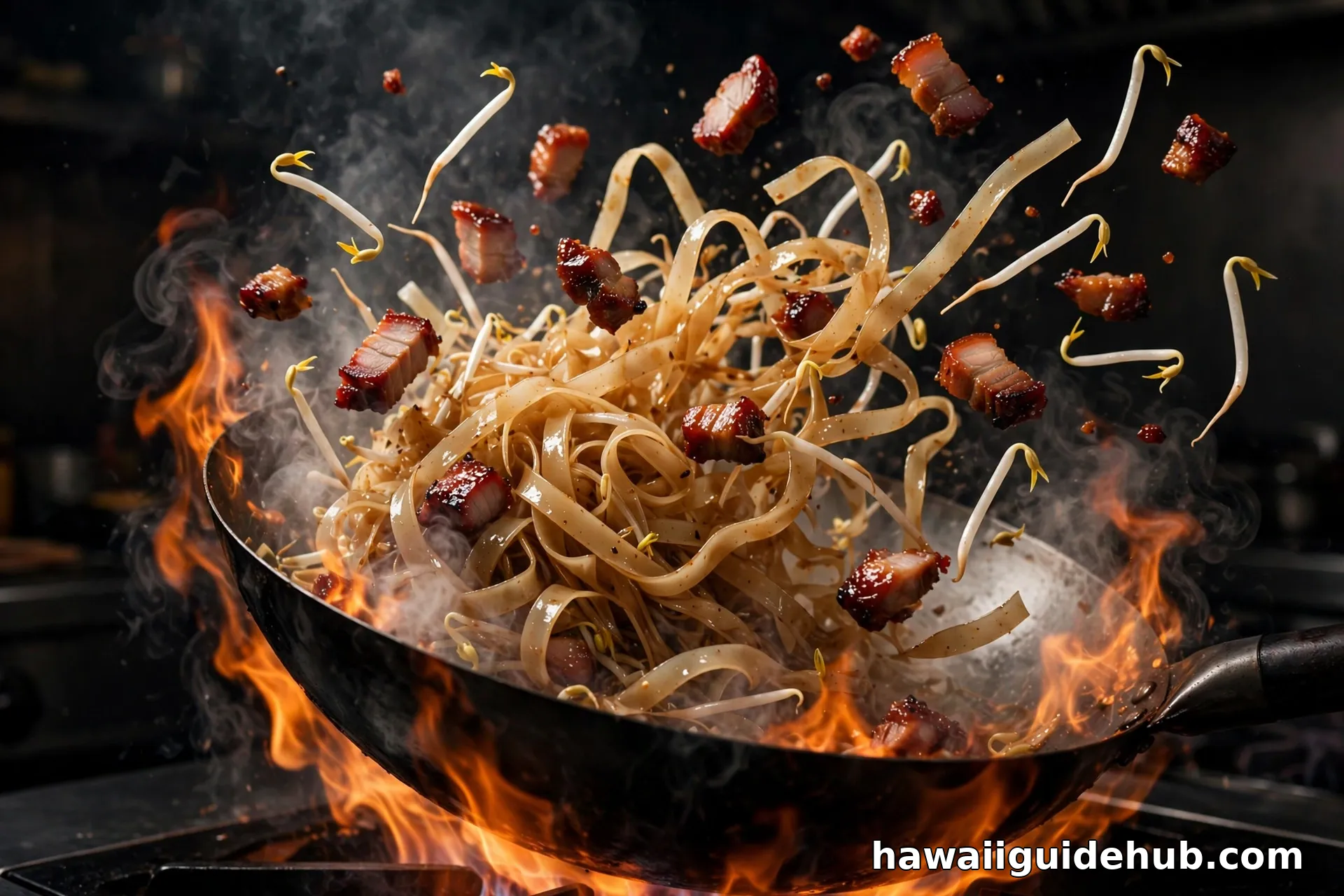
The first thing you notice is the texture contrast: chewy, slippery rice noodles against the snap of fresh bean sprouts and the tender bite of char siu. The flavor is savory and lightly sweet, with the oyster sauce giving depth, the dark shoyu adding color and roastiness, and the white pepper lending a gentle warmth. The wok char contributes a smokiness that ties it all together. It is rich but not heavy, and it is dangerously easy to keep eating.
Where Visitors Find Char Siu Chow Fun in Hawaii
You will find chow fun on steam tables at local delis and okazuya across the islands, often as one of several noodle options next to chow mein and fried saimin. Plate lunch shops sometimes offer it as a side. Chinese restaurants serve their own versions, usually beef chow fun, but many will make it with char siu on request. And if you are lucky enough to be invited to a local potluck or party, the tray of chow fun is the dish to watch for. For more after-hours island flavors, see our guide to late-night eats in Hawaii.
Substitutions
No fresh rice noodles? Dried wide rice noodles (sometimes labeled pad see ew noodles) work; boil them until just pliable. In a pinch, even yakisoba or chow mein noodles can stand in, though the dish becomes a different noodle stir-fry. No char siu? Chinese delis in Hawaii sell it ready to eat; outside Hawaii, check Asian markets or roast your own pork shoulder with a char siu marinade. Vegetarian oyster sauce substitutes well for a meat-free version.
Char Siu in Hawaii: A Short History
Char siu came to Hawaii with Cantonese immigrants in the 1800s, many of whom worked as cooks, merchants, and laborers. In Honolulu’s Chinatown and in plantation towns, Chinese barbecue shops roasted pork in the traditional way, hanging marinated cuts in specialized ovens until the sugars caramelized. Over generations, Hawaii’s char siu developed its own character: a little sweeter, a deeper red, and used more broadly than in Cantonese cooking.
Today char siu is a full-fledged local ingredient, not just a Chinese one. It tops rice in plate lunches, fills manapua (the Hawaii version of char siu bao), gets chopped into fried rice and chow mein, and appears in bentos and okazuya cases across the islands. Most locals buy it ready-made from Chinese delis rather than roasting it at home, and the quality at a good Chinatown barbecue shop rivals anything in Hong Kong.
Chow Fun at the Hawaii Potluck
To understand chow fun’s place in Hawaii, picture the potluck table: a long folding table at a beach park or a garage, loaded with fried chicken, teriyaki beef, poke, rice, mac salad, and always, always a tray of noodles. Chow fun is the noodle dish most likely to be there, because it travels well, serves a crowd from one tray, and pleases everyone from kids to kupuna (elders).
Potluck chow fun has its own rules. It is made in volume, in the biggest pan or wok available. The noodles are cooked a touch firmer so they hold up on the steam table. And there is always more than you think you need, because the tray empties fast. If you are ever invited to a Hawaii gathering, bringing a tray of chow fun marks you as someone who understands.
Making Char Siu at Home
If you cannot buy char siu, roasting your own is straightforward. Marinate pork shoulder or pork butt strips overnight in a mixture of honey, shoyu, hoisin sauce, rice wine, five-spice powder, garlic, and a little red food coloring or red fermented bean curd for the classic color. Roast at 400 degrees Fahrenheit on a rack, basting with the marinade and honey, until the edges char and the internal temperature reaches 145 degrees. Rest, slice, and use for the chow fun. Homemade char siu also elevates fried rice, noodle soups, and rice plates all week.
Chow Fun Noodles: Fresh vs. Dried
The noodle question defines the dish. Fresh rice noodles, sold in sheets or pre-cut ribbons in the refrigerated section of Asian markets, give the ideal texture: supple, chewy, and absorbent. In Hawaii they are easy to find; on the mainland, check large Asian grocery stores. Dried wide rice noodles are the backup: boil them until just pliable, drain, toss with oil, and proceed. They are slightly firmer and less silky, but in a well-seasoned wok they still shine. Whichever you use, room temperature noodles handle the heat better than cold ones straight from the fridge.
Video: Authentic Chow Fun With Wok Hei Technique
Watch the chow fun technique in action: separating fresh rice noodles, marinating, and the high-heat wok toss that creates smoky wok hei.
Frequently Asked Questions
What is the difference between chow fun and chow mein?
Chow fun uses wide, flat rice noodles; chow mein uses thin wheat noodles. In Hawaii, both are local staples, but they are different dishes with different textures. Chow fun is chewy and slippery; chow mein is springier and often crisped in the pan.
Can I make char siu chow fun with dried noodles?
Yes. Use dried wide rice noodles, boil until just pliable, drain well, and toss with a little oil before stir-frying. Fresh noodles give the best texture, but dried noodles make a very respectable version.
Where do I buy char siu in Hawaii?
Chinese delis and barbecue shops across the islands sell ready-to-eat char siu by the pound; many grocery delis carry it too. It is also a common plate lunch protein on its own.
Is chow fun gluten free?
The rice noodles themselves are gluten free, but standard oyster sauce and shoyu contain wheat. Use gluten-free tamari and a gluten-free oyster sauce alternative to make the dish gluten free.
How do I keep the noodles from breaking?
Use room-temperature fresh noodles, high heat, a large pan you do not overcrowd, and a tossing motion rather than aggressive stirring. Cold or old noodles break; fresh ones stay supple.
Char siu chow fun is the kind of dish that explains Hawaii food in a single pan: Chinese technique, local adaptation, sweet pork, chewy noodles, and a crowd of vegetables, all kissed by the wok. Make it once and it will join your own rotation, which is exactly how it became an island classic in the first place.