Best Spam Musubi on Kauai: Where to Find It and How to Make It

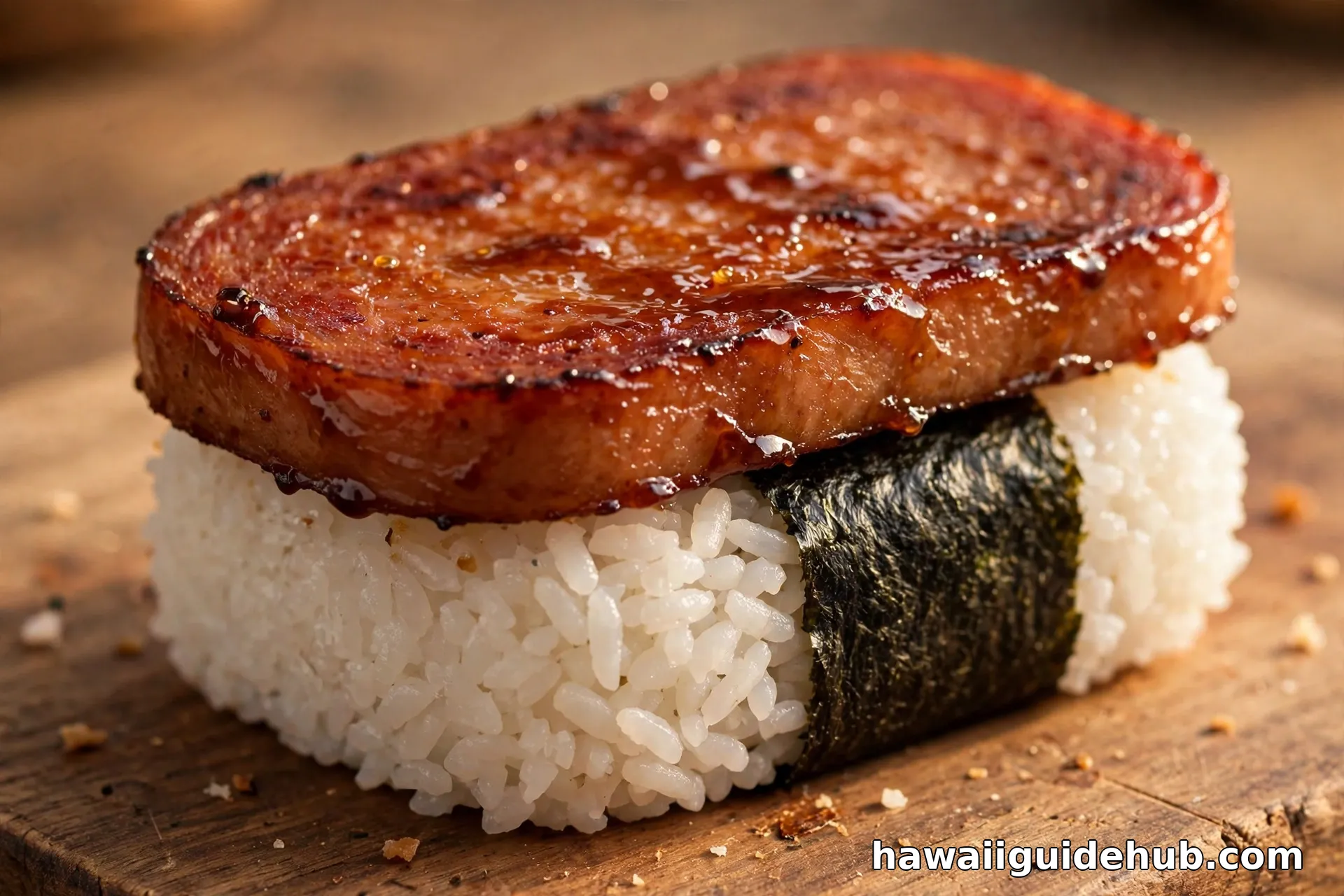
Of all the foods Hawaii gave the world, spam musubi might be the most beloved: a slice of grilled Spam glazed sweet and savory, set on a block of warm rice, and wrapped with a belt of nori. It costs a few dollars, fits in your hand, and tastes like the islands in a single bite. And Kauai is not just a great place to eat it. According to the most widely told history, Kauai is where spam musubi was invented.
This guide covers the story behind the snack, what separates a great musubi from a mediocre one, where to find the best spam musubi on Kauai, and how to make it at home when the craving hits back on the mainland.
Spam Musubi at a Glance
| Spam musubi | What to know | The local angle |
|---|---|---|
| What it is | Grilled Spam on a block of rice, wrapped in nori | Hawaiʻi’s favorite handheld snack |
| Origin | Credited to Barbara Funamura on Kauai, early 1980s | Born on Kauaʻi, not Oʻahu |
| Typical price | A few dollars at convenience stores and delis | The cheapest good lunch on the island |
| Best eaten | Warm or room temperature, same day | Day-old musubi is a sad musubi |
| Hawaii Spam habit | About 7 million cans a year, most per capita in the US | Hawaiʻi out-eats every other state |
What Is Spam Musubi?
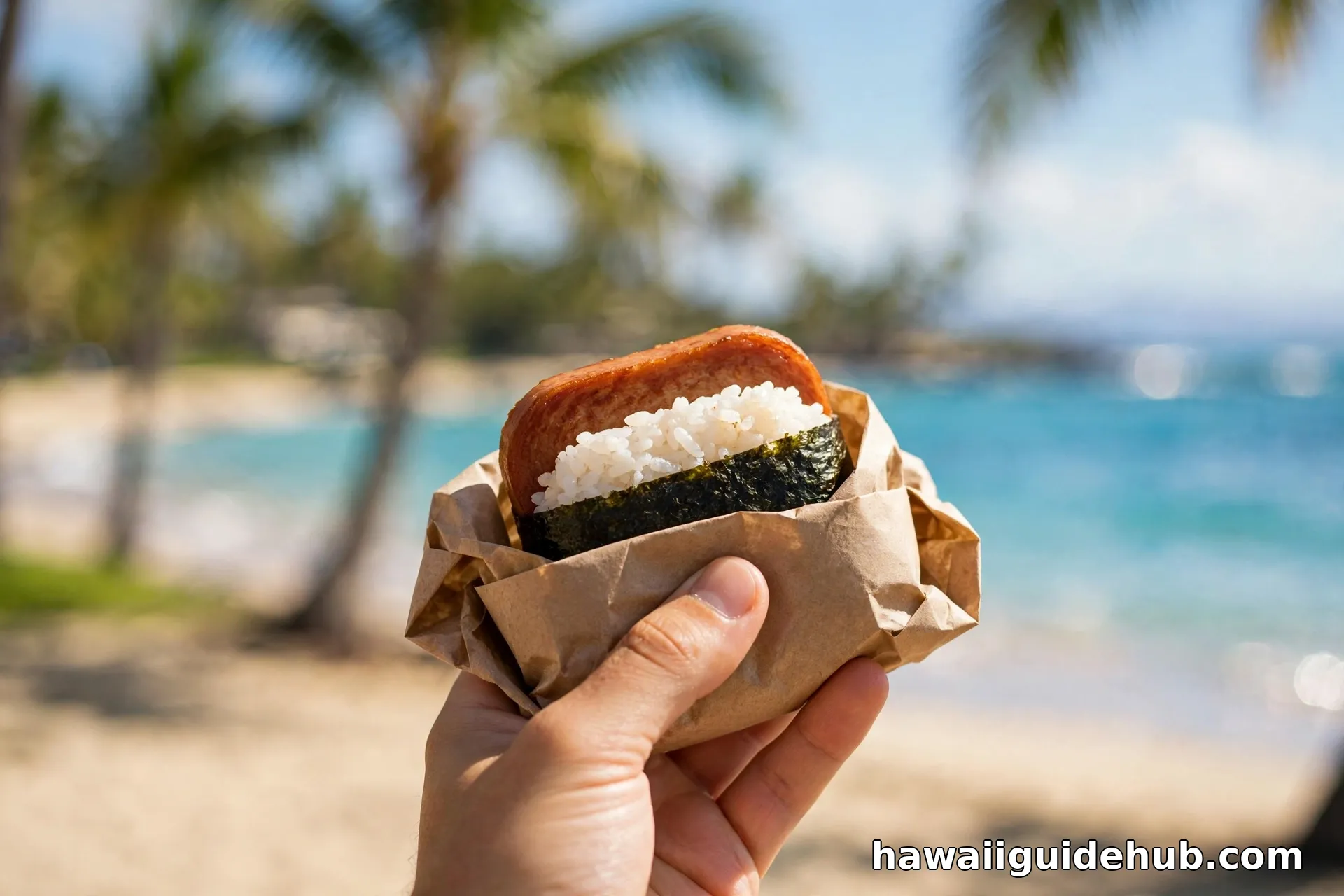
Spam musubi is Hawaii’s take on Japanese onigiri: a compact block of cooked short-grain rice topped with a slice of Spam that has been grilled and glazed, wrapped together with nori (dried seaweed). The combination hits every note: salty, sweet, savory, chewy, and crisp. It is sold everywhere in Hawaii, from gas stations and 7-Elevens to grocery delis and school fundraisers, and it functions as snack, breakfast, beach food, and road trip fuel all at once.
The roots run deep. Japanese immigrants brought musubi and onigiri traditions to Hawaii in the late 1800s and early 1900s. Spam arrived with the US military in World War II: shelf-stable, shippable, and abundant when fresh meat was scarce. After the war, Spam stayed in the local diet and fused with Japanese rice traditions. The result is one of the defining foods of modern Hawaii.
The Kauai Origin Story
The creation of spam musubi as we know it is widely credited to Barbara Funamura, a Japanese American woman who ran the Joni-Hana restaurant on Kauai in the early 1980s. The story goes that she combined two local favorites, Spam and rice, into a handheld musubi wrapped in nori. Her first versions were triangle-shaped, like onigiri, but an employee suggested a rectangular mold, and the now-iconic rectangle was born. The convenient, delicious snack spread across the islands and eventually the world.
Whether or not every detail of the legend is exact, Kauai’s claim is part of the island’s food identity. The dish grew from a restaurant specialty into a statewide convenience food, sold today in gas stations, school fundraisers, and lunchboxes across the islands. Eating a musubi on the island where the story began just tastes better.
What Makes a Great Spam Musubi
Not all musubi are equal. The great ones share five things. The rice must be short-grain and sticky, pressed firmly enough to hold together but not mashed dense. The Spam should be sliced about a quarter inch thick, fried until the edges crisp, and glazed with a shoyu-sugar mixture that caramelizes in the pan. The nori should be fresh enough to have snap, not chew like leather. The ratio matters: enough rice to balance the salt, enough Spam to satisfy. And temperature matters most of all: a musubi eaten warm, within hours of being made, beats a refrigerated one every time.
Where to Find the Best Spam Musubi on Kauai
You do not need a reservation or a rental car adventure to eat well here. Start with the humble convenience store: 7-Elevens and ABC Stores across Kauai sell fresh musubi daily, usually for a couple of dollars, and the turnover is high enough that they are often still warm. Grocery store delis, especially the larger supermarkets in Lihue and Kapaʻa, make excellent musubi in the prepared foods section.
For a step up, look for okazuya counters, the Japanese-style delis where you point at what you want, and dedicated musubi shops in the main towns. Farmers markets sometimes have vendors selling creative versions. The rule of thumb: buy where locals buy, eat it the same day, and try more than one spot. Everyone on Kauai has an opinion about whose musubi is best, and half the fun is forming your own. For trip planning around food, see the best island for first time visitors and the cheapest time of year to visit Hawaii.
Town by town, here is how the hunt usually goes. In Lihue, the big supermarkets near the airport and the town center have the island’s highest musubi turnover, which means the freshest cases. Kapaʻa’s grocery delis and okazuya counters serve the east side crowd and tend to offer more variety, including egg and teriyaki versions. In Poipu and Kōloa, resort-area shops charge a little more but stay convenient to the south shore beaches. Up in Princeville and Hanalei, smaller markets and delis sell out by afternoon, so buy early if musubi is on the day’s agenda.
Spam Jam: Hawaii’s Love Letter to Spam
No food’s place in Hawaii culture is clearer than at Spam Jam, the annual Waikiki street festival celebrating all things Spam. Restaurants serve creative Spam dishes, from musubi to Spam and ahi katsu, and the event draws about 25,000 attendees while raising money for the Hawaii Foodbank. It is the loudest possible answer to anyone who still thinks of Spam as a joke food. In Hawaii, it is heritage, and the festival atmosphere shows how deeply the islands embrace it.
Musubi Etiquette and Freshness Tips
Eat musubi with your hands, unwrapping the nori just enough to hold it. Locals eat them warm, at room temperature, on beaches, in cars, and at desks. The single biggest quality factor is freshness: rice hardens and nori goes leathery within hours, so buy from places with visible turnover, ideally where the case is being restocked. Morning is the best time at most shops. If you are stocking up for a beach day, keep them at room temperature and eat within a few hours rather than refrigerating, which ruins the rice texture.
How do you spot a great one before buying? Look for plump, glossy rice that fills the nori neatly, Spam with visible caramelization rather than pale steamed slices, and nori that looks dark and crisp. A musubi that feels heavy for its size usually has the right rice-to-Spam ratio. Trust the busy shops: on Kauai, the line is the review. And do not overlook the egg version, which adds a savory omelet layer that turns the snack into a proper breakfast.
How to Make Spam Musubi at Home
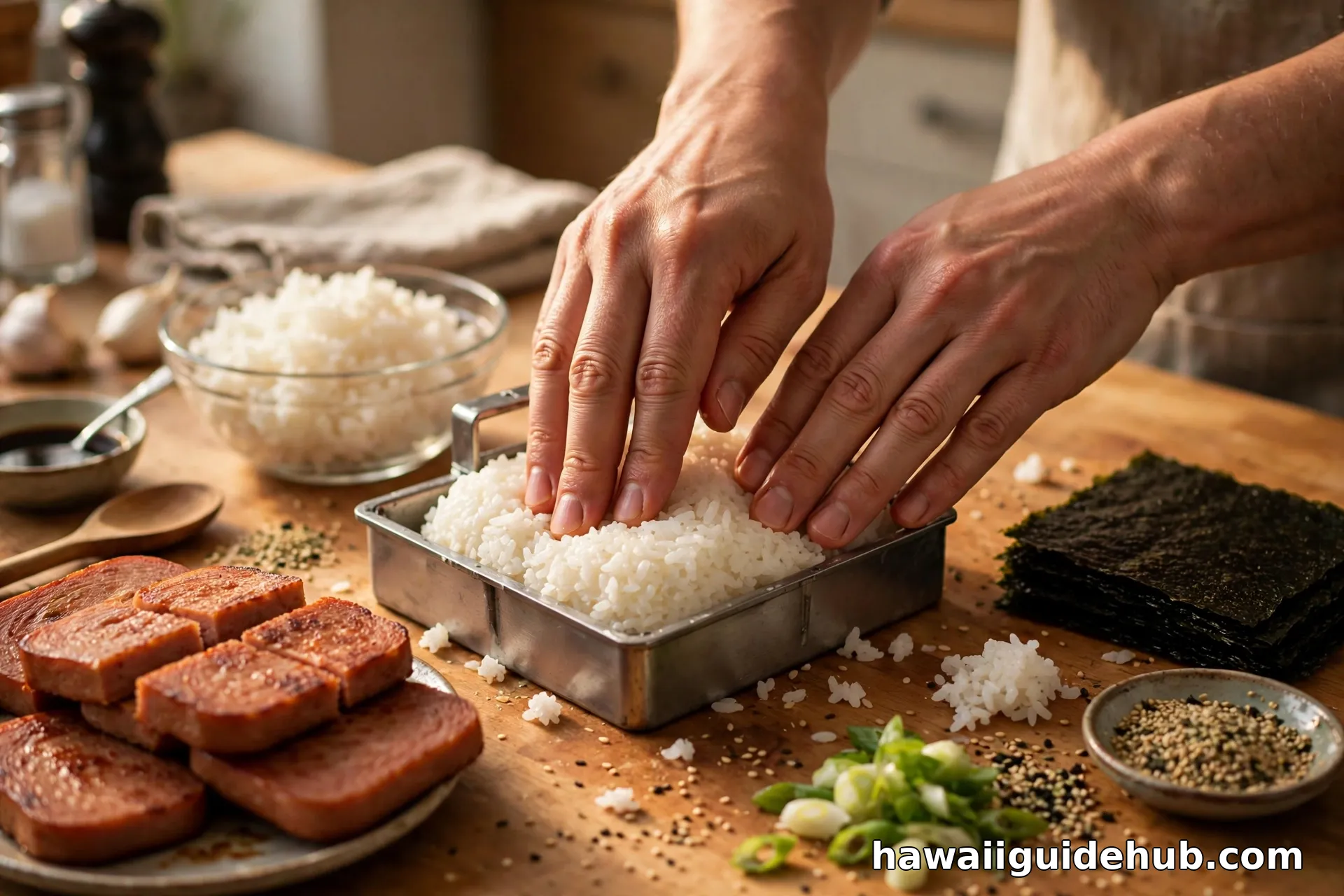
Makes 8 musubi in about 25 minutes. You will need: 1 can of Spam, 4 cups cooked short-grain rice (kept warm; freshly cooked rice presses best), 4 sheets of nori cut in half, 3 tablespoons shoyu, 2 tablespoons sugar, and 1 tablespoon mirin or a teaspoon of honey. A musubi mold helps, but the empty Spam can lined with plastic wrap works just as well.
Slice the Spam lengthwise into 8 even slices, about a quarter inch thick. Fry in a dry skillet over medium-high heat until browned and lightly crisped on both sides, about 2 to 3 minutes per side. Stir the shoyu, sugar, and mirin together, pour over the Spam, and cook, turning, until the sauce reduces to a sticky glaze. Remove from heat.
To assemble, lay a strip of nori on a clean surface. If you have a musubi mold, place it in the center and press in a thick layer of warm rice, about an inch. Add a slice of glazed Spam on top, press once more, and lift the mold away. Wrap the nori snugly around the block and seal the edge with a dab of water. No mold? Line the empty Spam can with plastic wrap and use it as a press. Eat warm or at room temperature the same day.
Spam Musubi Variations Worth Trying
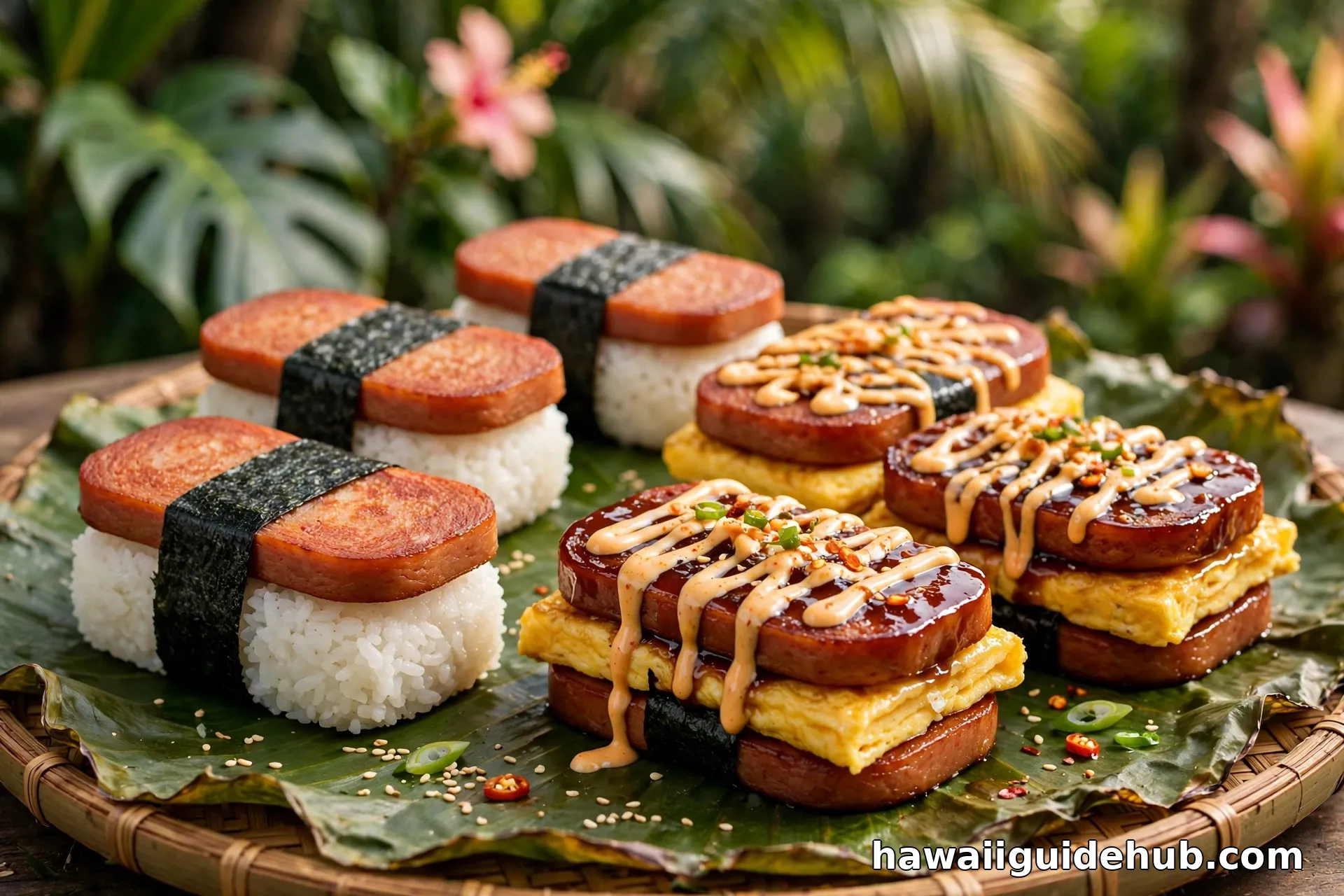
Once you know the classic, branch out. Teriyaki Spam musubi uses a thicker, sweeter glaze. Spam and egg adds a layer of thin omelet for a breakfast version. Spicy mayo drizzled on top gives it a sushi-bar kick. Some shops layer in takuan (pickled radish) for crunch, furikake for extra savoriness, or a smear of Kewpie-style mayo. Purists will tell you the original needs nothing, and they are mostly right, but experimenting is half the joy.
Musubi also makes brilliant travel food for families. It is cheap, filling, mess-contained, and kids tend to love it. See family friendly activities in Hawaii for more kid-approved island ideas.
Beyond Musubi: More Spam on Kauai
Musubi is just the gateway. Kauai’s menus are full of Spam: fried Spam and eggs with rice is the classic local breakfast, Spam fried rice shows up at okazuya counters, and Spam saimin adds salty depth to the noodle soup. Even the McDonald’s breakfast menu in Hawaii includes a Spam, eggs, and rice platter, a genuine local institution. Trying the full range is one of the tastiest ways to understand how completely the islands adopted this canned meat, and why the 7-million-cans-a-year figure surprises nobody who has eaten here.
Video: How to Make Spam Musubi
Watch the full process: frying and glazing the Spam, pressing the rice, and wrapping the musubi.
Frequently Asked Questions
What is spam musubi made of?
Spam musubi is a slice of grilled, glazed Spam on a block of cooked short-grain rice, wrapped together with nori seaweed. The glaze is typically shoyu, sugar, and mirin.
Who invented spam musubi?
Spam musubi is widely credited to Barbara Funamura, who created it in the early 1980s at her Joni-Hana restaurant on Kauai, Hawaii. Her employee’s suggestion of a rectangular mold gave it the iconic shape.
How much Spam does Hawaii eat?
Hawaii consumes about 7 million cans of Spam per year, more per capita than any other US state, according to Hormel. Spam’s popularity dates to World War II military rations.
Should spam musubi be eaten hot or cold?
Warm or room temperature, ideally within a few hours of being made. Refrigeration firms up the rice and dulls the flavor; if you must store them, wrap tightly and eat the same day.
Where can you buy spam musubi on Kauai?
Convenience stores like 7-Eleven, grocery delis, okazuya counters, and musubi shops across the island, especially in Lihue, Kapaʻa, and Poipu. They are inexpensive and sold fresh daily.
Is spam musubi Japanese or Hawaiian?
Both. It fuses Japanese onigiri traditions, brought by immigrants in the late 1800s, with Spam, which entered Hawaii through the US military in World War II. The combination as we know it was created in Hawaii.
How much does spam musubi cost in Hawaii?
Typically a couple of dollars at convenience stores and grocery delis, a bit more at resort shops and specialty counters. It remains one of the cheapest satisfying meals on the islands.
Can you bring spam musubi on a plane?
Yes for interisland and domestic flights, since it is fully cooked. For flights to the US mainland, USDA agricultural inspection applies to fresh produce, but cooked musubi is generally fine. Eat them the same day for the best texture.
Spam musubi is proof that the best foods are often the simplest: rice, meat, seaweed, and a little sweetness, invented on Kauai and loved everywhere. Grab one from a convenience store on your first day, eat it on the beach, and you will understand the island a little better. Then grab another, because one is never enough. And when you make them at home, you will be keeping alive a Kauai-born tradition that turned a humble can of wartime meat into one of the world’s great handheld snacks.