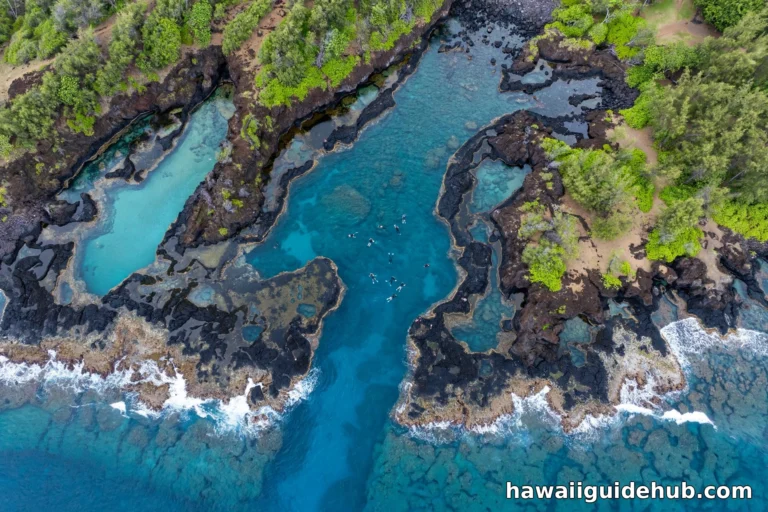
Hawaii’s Coastal Ecosystem: Life at the Edge

Between the surf and the first houses lies one of Hawaii’s toughest neighborhoods: the coastal ecosystem, a narrow band of salt-sprayed plants, nesting seabirds, basking turtles, and hauled-out monk seals. It is the Hawaii every visitor walks through and almost nobody notices, yet it holds the islands’ most salt-tolerant natives and some of their rarest wildlife. This guide explains how the coastal ecosystem works, who lives in it, what threatens it, and how to walk it without harming it.
This is the single complete guide to Hawaii’s coastal ecosystem. It covers the coastal zones, the signature plants, the wildlife, the threats from development to sea-level rise, the restoration projects, beach etiquette, and FAQs. Everything about Hawaii’s coastal ecosystem lives on this one page.
Coastal Zones: From Spray to Sand
| Zone | Where | Plants | Wildlife |
| Splash zone | Wave-washed rock | Algae, lichens | Opihi, crabs, seabird roosts |
| Strand | Sand and dunes above high tide | Naupaka, pohuehue, akiaki, pohinahina | Honu nesting, seabird colonies |
| Coastal shrubland | Behind the dunes | Ilima, akoko, nehe | Seabirds, native insects |
| Littoral forest | Sheltered coasts | Milo, hau, hala, kou | Monk seals, forest birds |
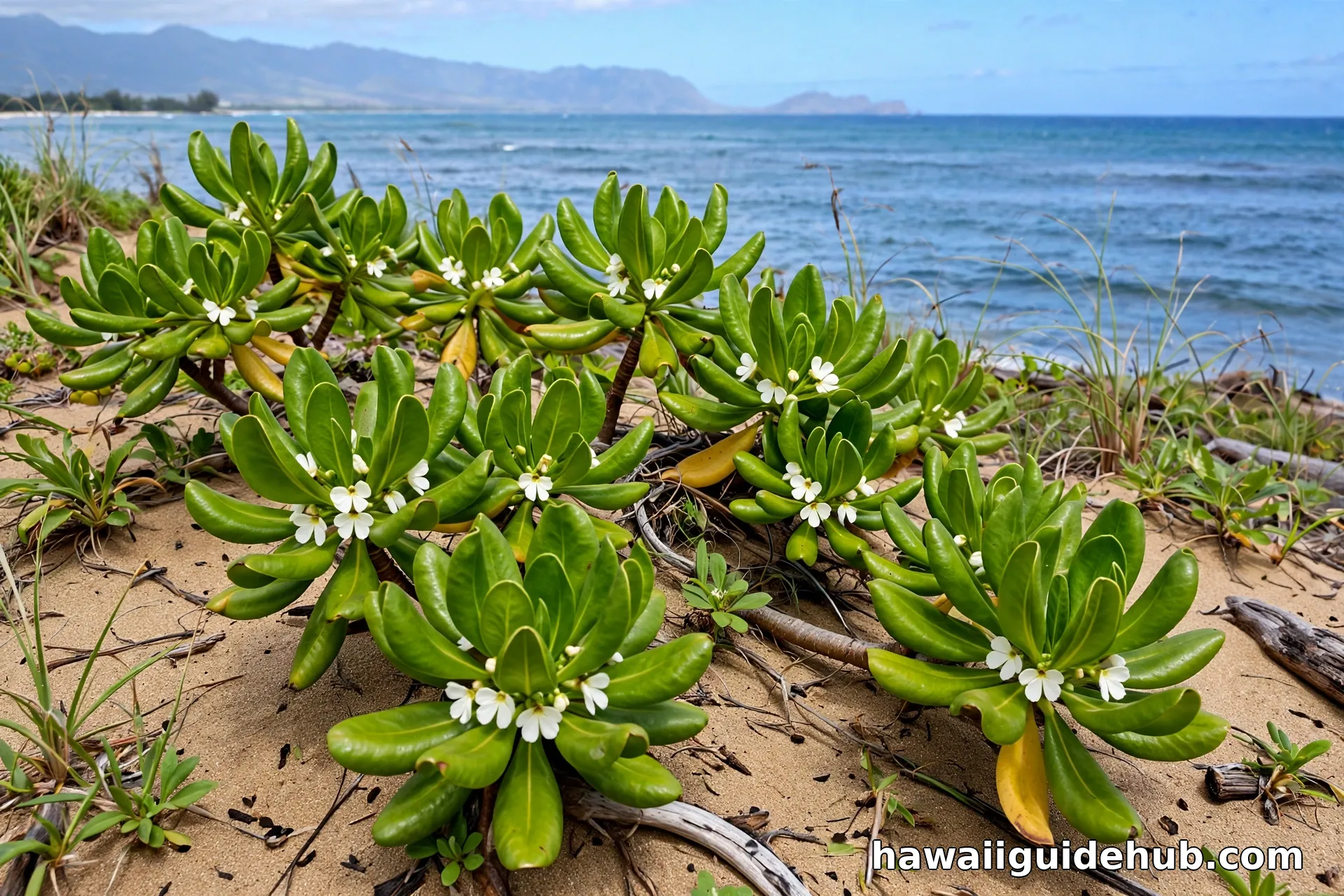
The Strand Plants: Built for Salt and Wind
Strand plants are engineers. Naupaka (Scaevola taccada), with its famous half-flowers, is a fast-growing dune stabilizer: its roots bind sand that the wind would otherwise carry away. Pohuehue, the beach morning glory, sends runners dozens of feet across the sand, pinning it down. Akiaki grass and akulikuli (sea purslane) tolerate burial and salt spray that would kill most plants. Pohinahina’s silvery leaves reflect heat. Together they build and hold the dune, and the dune protects everything behind it: roads, houses, and the coastal plain. Remove the plants, and the beach erodes: the connection is that direct, which is why the DLNR’s dune restoration plantings, like the 344 native plants installed at Kailua Beach in May 2025, focus on exactly these species.
The Littoral Forest: Milo, Hau, and Hala
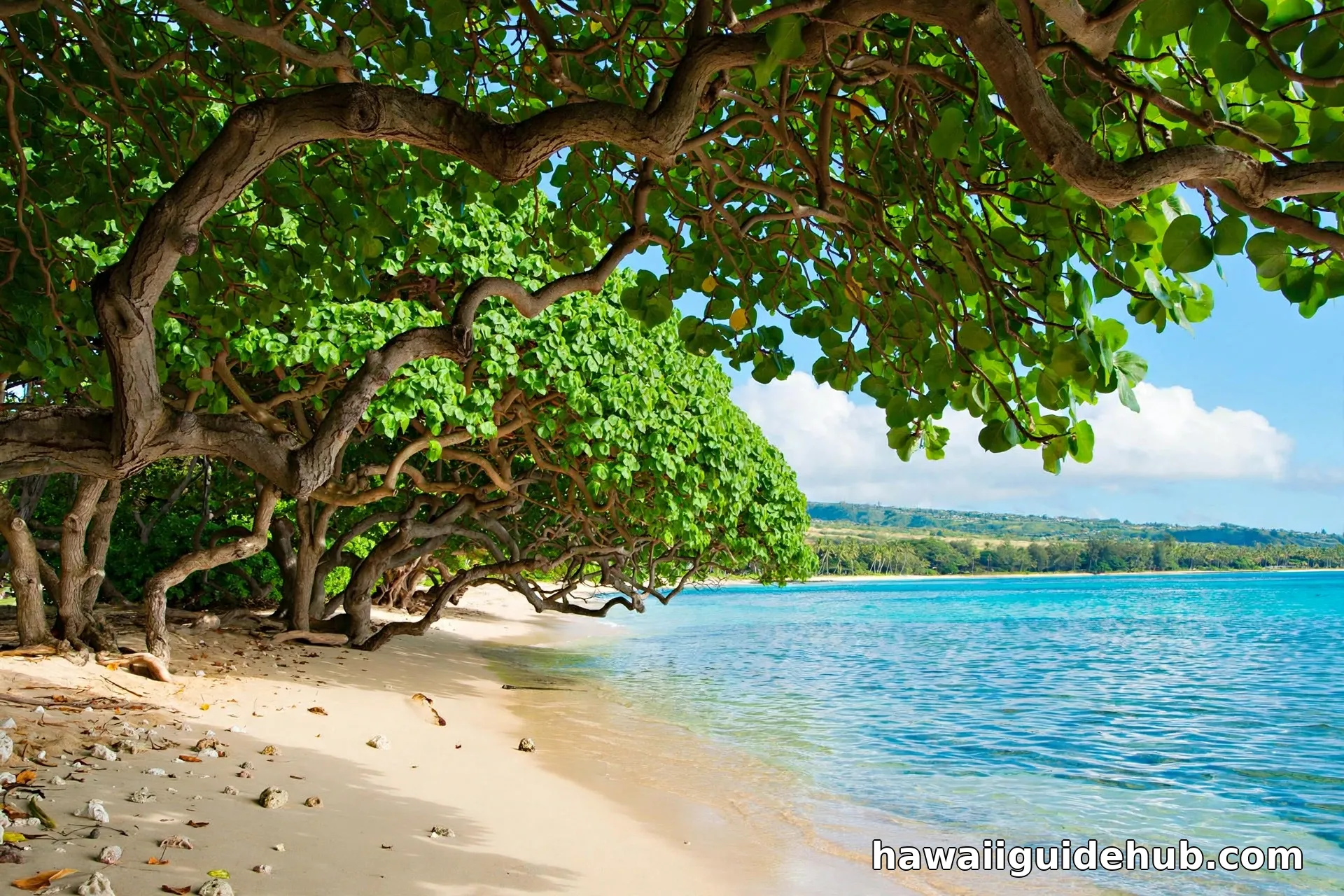
Where the coast is sheltered, the strand gives way to littoral forest: milo with its dark, beautiful wood once reserved for chiefs’ bowls and calabashes; hau, whose light wood made canoe outriggers and whose bark made cordage; hala (pandanus), whose aerial roots brace it against storms and whose leaves weave into mats and sails. These were working forests for Hawaiians: food, fiber, medicine, and timber within sight of the surf. Remnants survive at places like the coastal groves of the national parks and protected shorelines, and they are worth seeking out: a hau canopy over a beach is the classic old-Hawaii shade.
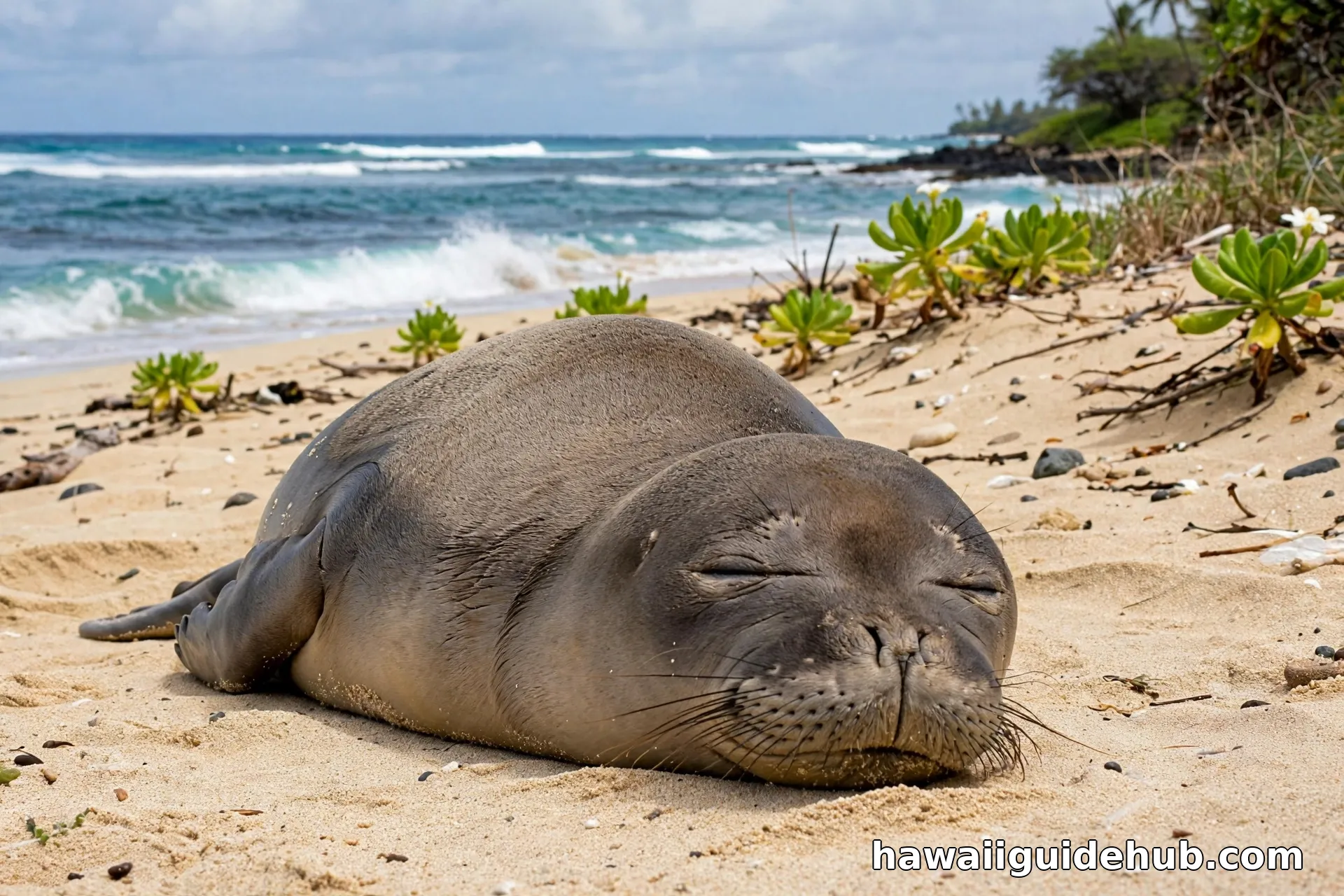
Wildlife at the Edge
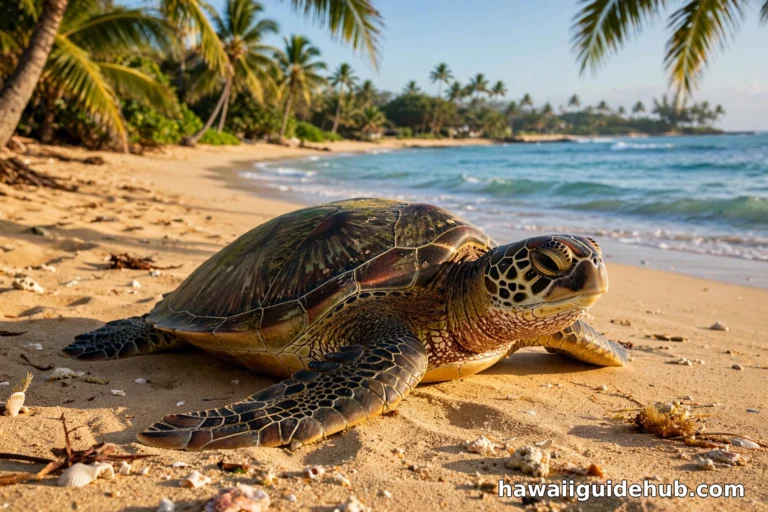
The coast is a nursery and a refuge. Honu haul out to bask and nest on sandy beaches: give them space and never touch them. Hawaiian monk seals, among the world’s rarest seals, rest on beaches statewide: the rule is 50 feet minimum, per NOAA, and never place yourself between a mother and pup. Seabird colonies pack the offshore islets and headlands: moli (Laysan albatross) at Kaena Point, where a predator-proof fence protects ground nests from cats, dogs, and mongoose; wedge-tailed shearwaters and noddies on the islets. Dawn and dusk are the wildlife hours: the shearwaters return at sunset in screaming flocks, one of Hawaii’s great natural spectacles.
Threats: Development, Invasives, and the Rising Sea
The coastal ecosystem is squeezed from both sides. From the land: development, seawalls, and foot traffic that trample dunes; invasive plants like ironwood and kiawe that displace natives; beach grooming that removes the wrack line, the seaweed and debris that feeds strand invertebrates. From the sea: erosion accelerated by seawalls, which reflect wave energy and starve downdrift beaches of sand; and sea-level rise, which is already narrowing beaches and will eventually drown the lowest strand habitat. The plants can migrate inland as the sea rises, but only where there is somewhere to go: a seawall or a road behind the beach means the ecosystem has no retreat.
Restoration: Replanting the Edge
The good news is that coastal restoration works fast: strand plants grow quickly and stabilize sand within seasons. The DLNR’s Kailua dune project, with community volunteers planting akiaki, akulikuli, pohinahina, and nanea behind post-and-rope fencing, is the template: native plants, temporary irrigation, protection from foot traffic, and signage explaining why the rope matters. Kaena Point’s predator-proof fence shows what wildlife protection can do: seabird nesting success soared once the predators were out. These are small, cheap, high-return projects, and many welcome volunteers: the most accessible conservation in Hawaii is a morning planting on a beach.
Beach Etiquette: The Coastal Code
Walk on the wet sand or established paths, not through the dune vegetation: those plants are holding the beach together. Never walk on the dune crest. Keep 50 feet from monk seals and 10 feet from honu, per federal guidelines, and keep dogs leashed and away from both. Do not take sand, rocks, or plants: taking sand is illegal under state law, and every handful is erosion. Pack out everything, including food scraps that attract predators to nesting areas. And if you see a roped restoration area, treat the rope as a wall: those seedlings are the beach’s future. For beach picks, see our Kauai beaches guide and honu etiquette guide.
The Naupaka Legend: Two Halves of a Flower
Every coastal walk in Hawaii passes the naupaka’s strange half-flowers: each bloom looks like half a flower, as if sliced down the middle. The legend says two lovers were separated, one to the mountains and one to the sea, and the gods tore the flower in half: the mountain naupaka blooms one half, the beach naupaka the other, and only when the lovers reunite will the flower be whole. Botanically, the half-flower is an adaptation: the fan-shaped corolla presents pollen precisely to the insects that visit. But the legend does ecological work too: it teaches that the mountain and the sea are connected, which is exactly what the ahupuaa system says. A flower that is half a story about watershed unity.
Opihi: The Limpet That Built a Culture
In the splash zone, the opihi limpet clings to wave-washed rock with legendary tenacity: Hawaiians say opihi pickers must never turn their back on the sea, and the saying “he opihi, he opihi” honors those who brave the surf for them. Opihi were a prized food, gathered at great risk, and they remain a cultural touchstone and a delicacy. The two endemic species, the blackfoot and the yellowfoot, are heavily harvested and slow to recover: the state regulates their take, and responsible gathering means leaving the small ones and never stripping a rock. The opihi is the coastal ecosystem’s cultural keystone: a limpet that taught respect for the ocean’s terms.
Seabird Cities: The Offshore Islets
Hawaii’s seabirds nest where the predators cannot reach: the offshore islets. Mokumanamana and the Northwestern Hawaiian Islands host millions of nesting seabirds, but even the main islands have colonies: Mokuauia and the Mokulua islets off Oahu, Lehua off Niihau. Wedge-tailed shearwaters, red-footed boobies, brown noddies, and white terns pack these rocks in breeding season, and the surrounding waters boil with the fish they feed on. Many islets are off-limits to landing without permits, which is exactly why they work. Watch from the water or the headlands with binoculars: the evening return of the shearwaters, streaming home in their thousands, is the coast’s greatest show.
Kaena Point: A Fence Against Extinction
At Oahu’s western tip, Kaena Point demonstrates what the coast could be. A predator-proof fence, the first of its kind in the United States when built, stretches across the point: mesh buried underground, a rolled hood on top, gates for hikers. Inside, cats, dogs, rats, and mongoose are gone, and the moli (Laysan albatross) nest on the ground in growing numbers, alongside wedge-tailed shearwaters and native plants. It is a mainland island: a piece of pre-human Hawaii recreated with fencing and trapping. The hike to the point is hot and exposed, but the albatross chicks, fluffy and fearless, are worth every step. Kaena Point is proof that the coastal ecosystem remembers how to thrive, given half a chance.
Reading the Beach: What the Wrack Tells You
The wrack line is the beach’s newspaper: read it and you learn what the ocean is doing. Limu (seaweed) species tell you about the reef’s health; the shells show what lives offshore; the occasional glass float or debris marks the currents’ paths. Ghost crabs’ burrows above the line show where the turtles will not nest; honu tracks, like tractor treads, show where they did. A beach with a rich wrack line is a fed beach: the invertebrates in the wrack feed the shorebirds, the shorebirds’ droppings feed the strand plants. Next time you walk a Hawaiian beach, walk the wrack line slowly. It is the coastal ecosystem’s daily report, written in seaweed.
The Night Shift: What Happens After Dark
The coastal ecosystem changes shifts at sunset. Ghost crabs emerge to patrol the sand; the shearwaters stream home; honu haul out to nest under cover of darkness. Artificial light disorients both: hatchlings crawl toward beachfront lights instead of the moonlit surf, and adult turtles avoid lit beaches. This is why coastal lighting ordinances exist and why visitors should keep beach lights off, close the drapes, and use red flashlights at night. The coast’s night shift has run for millennia; a porch light should not be what breaks it.
Tide Pools: The Ecosystem’s Nursery
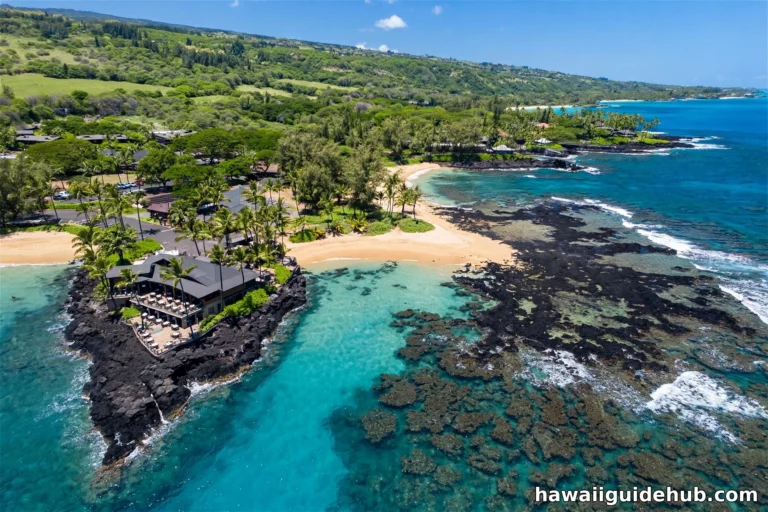
Where lava meets the sea, tide pools concentrate the coastal ecosystem into bathtubs: small fish, urchins, sea cucumbers, and algae in miniature. They are nurseries for reef species and classrooms for keiki, but they are fragile: sunscreen, trampling, and collecting empty them fast. Look, photograph, and step only on bare rock: the pink crust is living coralline algae, the base of the whole food web. A tide pool left as you found it will be full again by the next low tide; one trampled takes seasons to recover.
Watch: Kailua Beach Dune Restoration
Hawaii Coastal Ecosystem FAQs
What is naupaka?
A native coastal shrub (Scaevola taccada) with distinctive half-flowers: legend says the flower was torn in half by separated lovers. Ecologically, it is a premier dune stabilizer, and the Hawaii Sea Grant dune manual recommends it for restoration plantings.
Why shouldn’t I walk on the dunes?
Dune plants hold the sand in place with their roots; trampling kills them and the dune erodes. Stay on the wet sand or marked paths, and respect roped restoration areas: they are rebuilding the beach.
How far should I stay from a monk seal?
At least 50 feet, per NOAA guidelines, and never get between a mother and pup. Seals on the beach are resting: they need undisturbed sleep to survive. If a seal approaches you, move away calmly.
What is the wrack line and why does it matter?
The line of seaweed and debris left by the high tide. It feeds the strand’s invertebrates, which feed the shorebirds: a groomed, “clean” beach is a starved beach. Leave the wrack where it lies.
Can I volunteer for coastal restoration?
Yes. The DLNR, Hawaii Land Trust, and community groups run regular beach plantings and cleanups statewide: Kailua’s dune project is one example. Check the DLNR volunteer calendar: no experience needed, and the work is immediately visible.
The Edge Worth Protecting
Hawaii’s coastal ecosystem is a strip a few dozen yards wide that does outsized work: holding the sand, sheltering the rarest seal in America, nesting seabirds by the thousand, and shading the beach with trees Hawaiians have used for a millennium. It asks little: walk around the plants, give the seals room, leave the sand where it is. In return it gives the Hawaii everyone came for: the beach itself. The edge is not empty space between the ocean and the development. It is the reason both can exist. For more island nature, see our Kauai guide.