ʻŌhiʻa Lehua: The Complete Guide to Hawaiʻi’s Sacred Tree

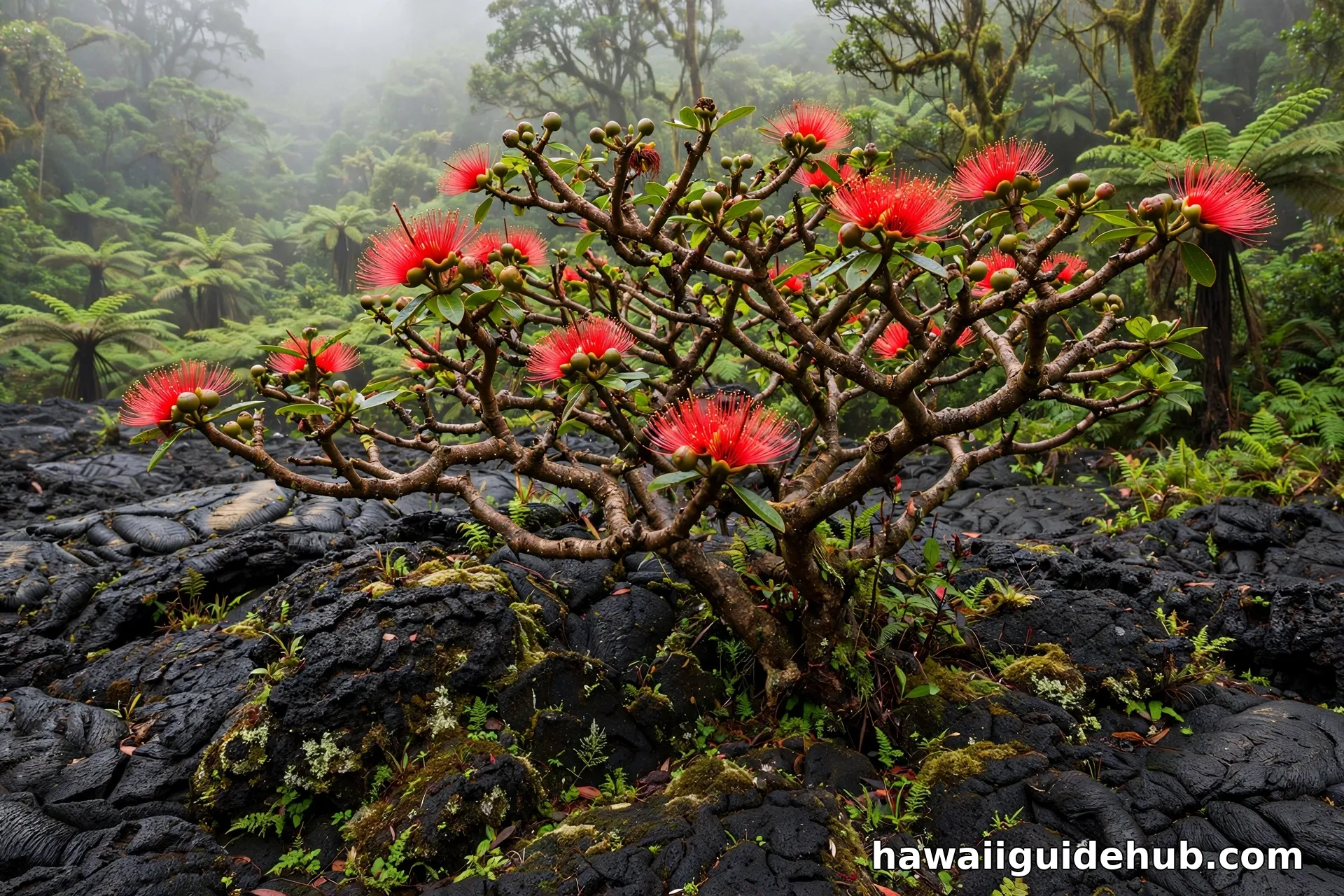
There is a tree in Hawaiʻi that grows straight out of black lava, sometimes within years of an eruption cooling. Its red blossoms look like exploding fireworks made of silk thread, and it is sacred to Pele, the goddess of volcanoes. This is ʻōhiʻa lehua, the most common native tree in the Hawaiian Islands and the backbone of the native forest.
This is the single complete guide to ʻōhiʻa lehua in Hawaiʻi. It covers how to identify the tree and its blossoms, where it grows, why it matters to the forest, the legend of ʻŌhiʻa and Lehua, the deadly fungal disease threatening it, and what visitors can do to help. If you have been searching for anything about ʻōhiʻa lehua in Hawaiʻi, the answers are all here on this one page.
ʻŌhiʻa Lehua at a Glance
| What | The detail | Why it matters |
|---|---|---|
| Hawaiian name | ʻŌhiʻa lehua (oh-hee-ah leh-hoo-ah) | Say it: oh-hee-ah leh-hoo-ah |
| Scientific name | Metrosideros polymorpha (myrtle family) | In the myrtle family |
| Native status | Endemic to the six largest Hawaiian Islands | Found nowhere else on Earth |
| Abundance | Most common native Hawaiian tree; about 865,000 acres of forest | The backbone of Hawai’i’s native forests |
| Elevation range | Sea level to 8,000 feet | From the shore to the high mountain |
| Habitats | New lava flows, rain forests, dry forests, and bogs | One of the most adaptable trees on Earth |
| Blossom colors | Fiery red most common; yellow (lehua mamo) and orange occur | Look for yellow lehua mamo too |
| Blooming season | Year-round, with peaks in spring and fall | There is almost always something in bloom |
| Cultural role | Sacred to Pele; embodiment of the god Kū; used in hula | Woven into religion, dance, and story |
| Biggest threat | Rapid ʻŌhiʻa Death, a fungal disease | The fight to save it is happening now |
What Is ʻŌhiʻa Lehua? How to Identify It
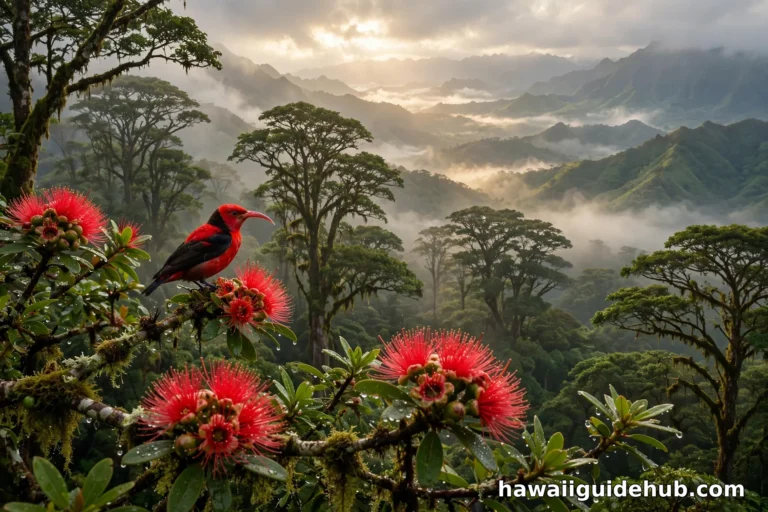
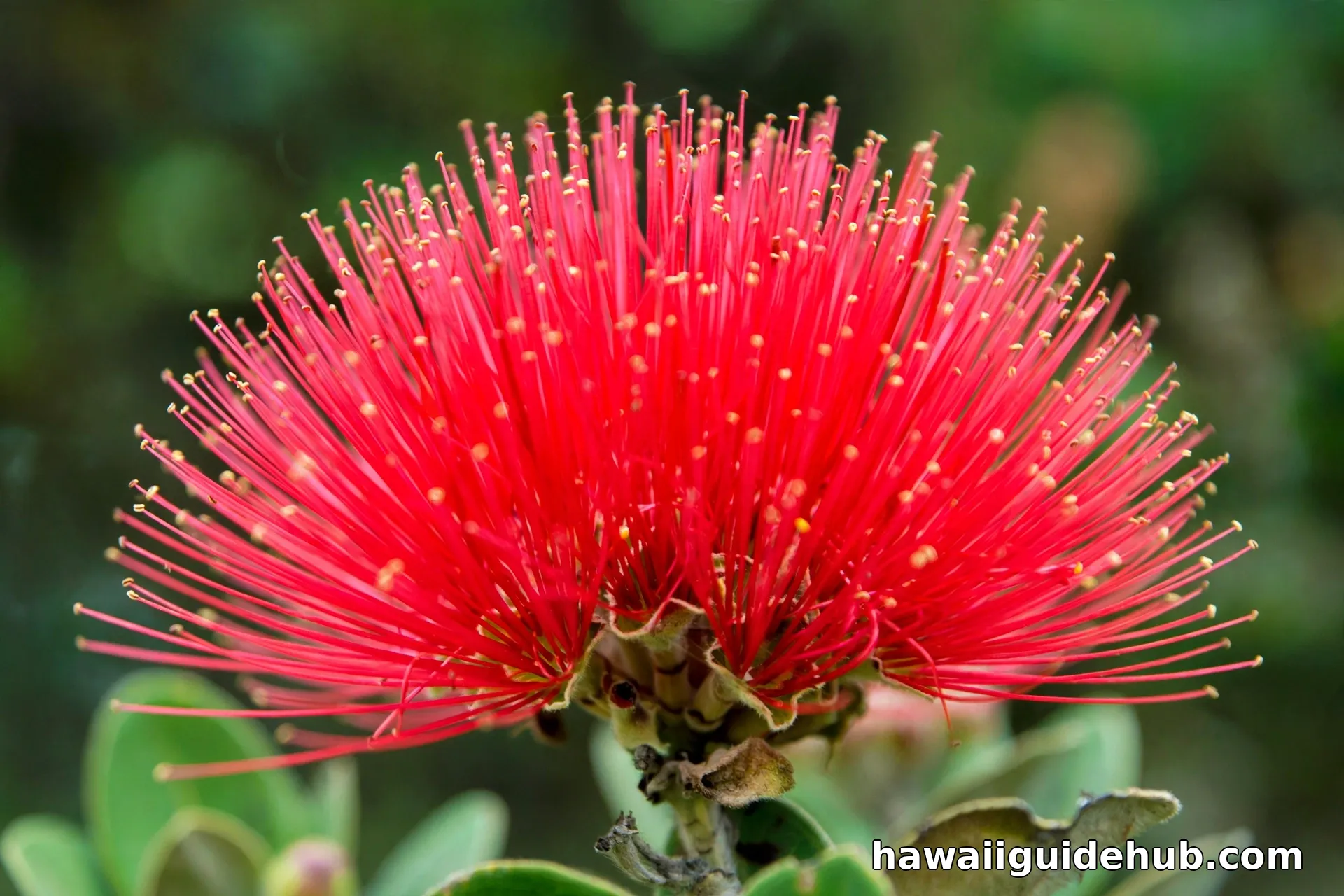
ʻŌhiʻa lehua (Metrosideros polymorpha) is a tree of remarkable adaptability. On a fresh lava flow it may be a gnarled shrub just a few feet tall; in a wet lowland forest it can become a towering canopy tree. The leaves are glossy, oval, and leathery, often with silvery new growth. But it is the blossom that stops hikers in their tracks: the lehua flower has almost no petals to speak of, just a dense pom-pom of hundreds of long stamens tipped with pollen, usually blazing red.
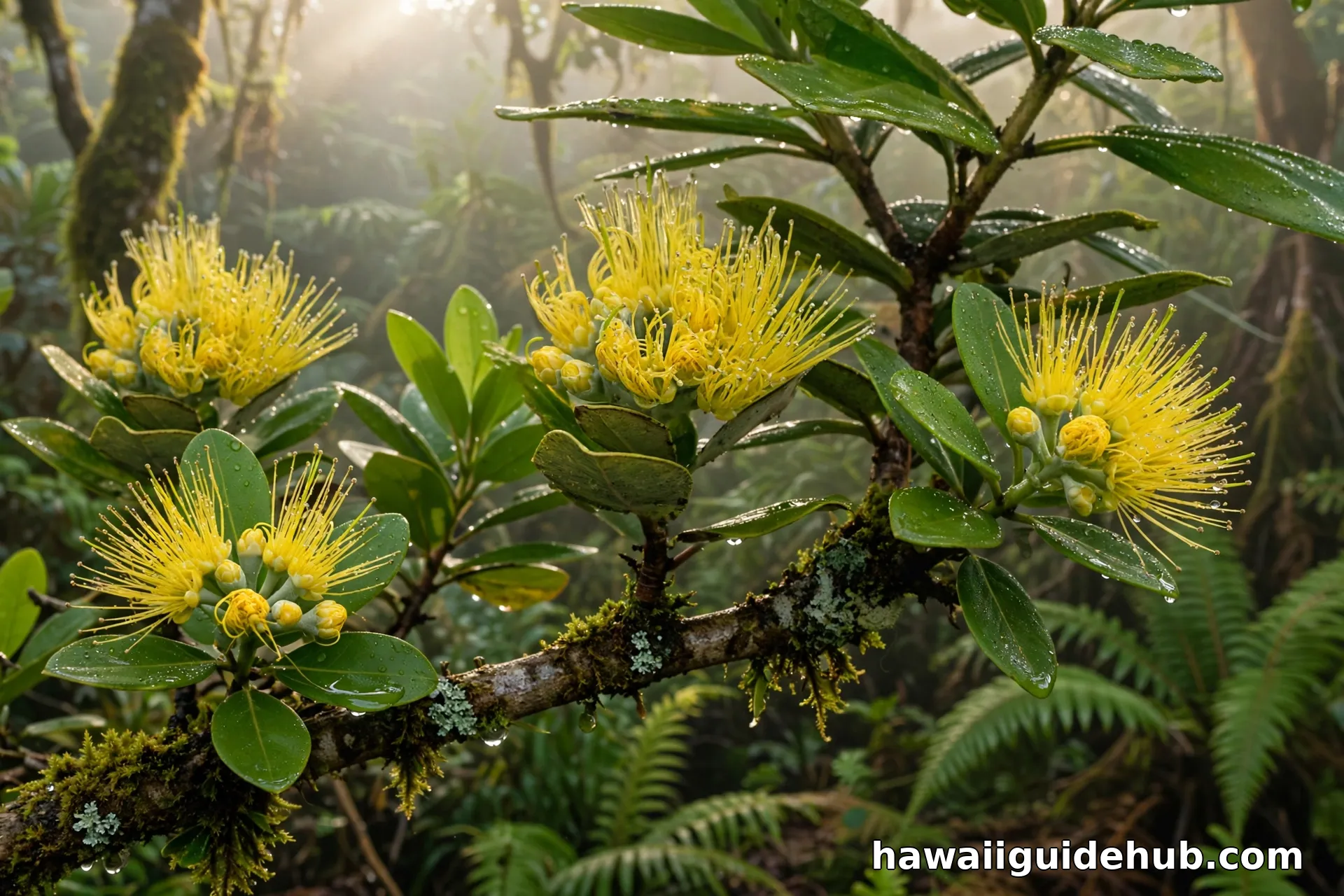
Red is the classic color, but not the only one. Yellow blossoms, called lehua mamo, appear on some trees, and orange shades occur too. The tree blooms year-round, though flowering peaks in spring and fall, so almost any visit to the islands gives you a chance to see lehua in flower. If you see a tree with red powder-puff blossoms growing impossibly out of bare lava rock, you are looking at ʻōhiʻa.
The Tree That Conquers Lava
ʻŌhiʻa is the first native tree to colonize young lava flows, sometimes within just a few years of the rock cooling. Its tiny, lightweight seeds ride the wind and are available year-round, since mature forests always have some trees in flower. The seeds lodge in cracks and fissures, where the young roots chase residual moisture deep into the rock. The tree can even close its stomata, its breathing pores, to hold its breath when toxic volcanic gases blow through.
From that humble start on barren rock, ʻōhiʻa becomes the dominant tree of the Hawaiian rain forest. Scientists call it a keystone species because the entire forest ecosystem hangs on it: its canopy shelters countless other native plants, its blossoms feed native honeycreepers like the ʻapapane and ʻiʻiwi, and its roots protect the watersheds that supply drinking water and agriculture. ʻŌhiʻa forests cover roughly 865,000 acres and make up about 80 percent of Hawaiʻi’s native forest. Half of all the native trees on the Island of Hawaiʻi are ʻōhiʻa.
The tree’s journey to Hawaiʻi is itself remarkable. Its closest relatives grow in New Zealand, and scientists believe its wind-borne seeds crossed thousands of miles of open Pacific, likely by way of the Marquesas Islands, to reach the Hawaiian archipelago. Once here, it diversified into a wide range of forms, from stunted bog shrubs to tall forest giants, all considered the same extraordinarily variable species. It is also famously slow growing, which makes the loss of mature trees to disease especially hard to replace.
Where to See ʻŌhiʻa Lehua in Hawaiʻi
ʻŌhiʻa grows on all six of the largest Hawaiian Islands, from sea level to 8,000 feet, so you do not have to look hard. The most dramatic place to see it is Hawaiʻi Volcanoes National Park, where ʻōhiʻa colonizes recent lava flows in the Kīlauea caldera area and lines the trails through the rain forest. Walking there among red blossoms on black rock is one of the great botanical experiences in the islands, and our guide to the best things to do in Hawaiʻi Volcanoes National Park covers the park’s highlights.
On Oʻahu, the misty trails of the Koʻolau mountains, including the Mānoa Falls trail, pass through ʻōhiʻa-rich forest. Kauaʻi’s Kōkeʻe and the Alakaʻi Wilderness hold spectacular ʻōhiʻa stands, some with the silvery leaf buds unique to Kauaʻi varieties. On Maui, the slopes of Haleakalā and the East Maui rain forest are ʻōhiʻa country. Wherever you hike in native forest, look for the red pom-poms overhead.
Timing is easy because ʻōhiʻa blooms in every month of the year. Spring and fall bring the heaviest flowering, when whole hillsides can glow red, but even in the quieter months you will find blossoms if you look. A rainy-day hike often shows the tree at its best, with wet blossoms shining against dark leaves.
The Legend of ʻŌhiʻa and Lehua
ʻŌhiʻa carries immense cultural weight. The tree is considered the physical embodiment of Kū, one of the four principal Hawaiian gods, and its wood was used for sacred heiau temples, weapons, and tools. The red lehua blossoms are a symbol of Pele, the goddess of fire and volcanoes. In hula, ʻōhiʻa flowers and foliage adorn dancers and are presented as offerings by traditional hālau, and Hawaiians have long called strong, beloved people pua lehua, lehua flowers, for the tree’s resilience and grace.
The most famous legend tells of ʻŌhiʻa, a handsome man, and Lehua, the maiden who loved him. Pele herself desired ʻŌhiʻa, and when he refused her for Lehua, the jealous goddess turned him into a gnarled tree. Lehua begged the other gods for help, and they turned her into the tree’s blossom so the lovers could never be parted. That is why, the legend says, picking a lehua blossom separates the lovers again, and Pele weeps rain. Whether or not you believe the story, the custom is real: out of respect, many Hawaiians will not pick lehua blossoms, and visitors are wise to follow their lead and leave every blossom on the tree.
Rapid ʻŌhiʻa Death: The Threat Every Visitor Should Know
ʻŌhiʻa faces a deadly enemy. Rapid ʻŌhiʻa Death is a fungal disease, caused by two related fungi, Ceratocystis huliohia and Ceratocystis lukuohia, that attacks and quickly kills ʻōhiʻa trees. First identified on the Island of Hawaiʻi in 2014, it has since been confirmed on Kauaʻi, Maui, and Oʻahu. Because ʻōhiʻa makes up about 80 percent of Hawaiʻi’s native forests, its loss would devastate watersheds, wildlife, and cultural traditions alike.
The disease spreads through wounds in the tree and through soil, and human activity is its main carrier: moving ʻōhiʻa wood, hiking with muddy boots, and driving through infested areas all spread the fungus. A state quarantine rule prohibits moving ʻōhiʻa wood, plants, or any plant parts, including flowers and lei, between islands without a permit. Every visitor can help with five simple actions: do not move ʻōhiʻa wood or firewood; do not transport ʻōhiʻa between islands; avoid injuring ʻōhiʻa trees; clean boots, gear, and tools with 70 percent rubbing alcohol or a 10 percent bleach solution; and wash mud off your vehicle after driving near forests.
If you see an ʻōhiʻa whose entire crown has turned brown within days or weeks, report it to your island’s invasive species committee. Early detection is one of the few tools scientists have while research into the disease continues. The lehua blossom you photograph today exists because these forests survived; keeping your boots clean helps them survive tomorrow.
ʻŌhiʻa Lehua in Daily Hawaiian Life
Beyond the forest, ʻōhiʻa wood built much of old Hawaiʻi. Its dense, hard timber became poi pounding boards, weapons, idols, and the posts of houses and temples. Lehua blossoms remain the flower of choice for many lei, though gatherers today are asked to use other native materials for large events to protect the trees. In gardens across the islands, ʻōhiʻa is planted as an ornamental and a living link to the native forest, and its blossoms brighten everything from hotel landscaping to backyard fences.
The tree also anchors the art of hula in a very literal way. Dancers wear lehua blossoms and ʻōhiʻa foliage, and traditional hālau present ʻōhiʻa as offerings, honoring the forests where the dance’s stories live. When Hawaiians speak of people who are skilled, strong, and beloved, they call them pua lehua, lehua flowers, comparing human grace to the tree’s resilience. Few plants anywhere are so thoroughly woven into a culture’s language, religion, and daily craft.
Photographing Lehua Blossoms
Lehua blossoms are among the most photographed flowers in Hawaiʻi, and a little planning helps. Early morning and late afternoon light make the red stamens glow, and the chart above shows how sunrise and sunset shift through the year in Honolulu. A macro setting or close-up mode captures the individual stamens; a wider shot with black lava in the frame tells the tree’s whole story. Never pull down branches or pick blossoms for a better angle. The best lehua photo is the one that leaves the tree exactly as you found it, a principle that applies on every trail in the islands, including the off-the-beaten-path adventures where native forest still thrives.
ʻŌhiʻa Lehua: Frequently Asked Questions
What is ʻōhiʻa lehua?
ʻŌhiʻa lehua (Metrosideros polymorpha) is Hawaiʻi’s most common native tree, endemic to the six largest islands. It is famous for its red brush-like blossoms and its ability to colonize fresh lava flows, and it anchors about 80 percent of the state’s native forests.
Are ʻōhiʻa and lehua the same thing?
Yes and no. ʻŌhiʻa is the tree; lehua is its blossom. In everyday speech, ʻōhiʻa lehua refers to the whole tree, while lehua alone usually means the flower.
Why is it bad luck to pick lehua blossoms?
According to Hawaiian legend, the lehua blossom is the maiden Lehua and the tree is her lover ʻŌhiʻa, whom Pele turned into wood. Picking the blossom separates the lovers, and Pele weeps rain. Out of respect for the legend and the tree, do not pick lehua blossoms.
What is Rapid ʻŌhiʻa Death?
Rapid ʻŌhiʻa Death is a fungal disease that quickly kills ʻōhiʻa trees. First found on Hawaiʻi Island in 2014, it has spread to Kauaʻi, Maui, and Oʻahu. Visitors can help by not moving ʻōhiʻa wood, cleaning boots and gear, and washing vehicles after forest visits.
Where is the best place to see ʻōhiʻa lehua?
Hawaiʻi Volcanoes National Park is the most dramatic setting, with ʻōhiʻa growing on recent lava flows. The tree also lines rainforest trails on Oʻahu, Maui, and Kauaʻi, from sea level to 8,000 feet.
Do lehua blossoms only come in red?
No. Red is most common, but yellow blossoms (lehua mamo) and orange shades occur. The tree blooms year-round, with peaks in spring and fall.
Can I grow ʻōhiʻa lehua at home?
Yes, ʻōhiʻa is grown as an ornamental tree in Hawaiʻi gardens, and nurseries sell seedlings. Buy only from reputable local nurseries, never collect seeds or cuttings from the wild, and be aware that the tree is slow growing. If you live outside Hawaiʻi, check agricultural rules first: ʻōhiʻa is in the myrtle family, and its movement is restricted to prevent disease spread.
ʻŌhiʻa lehua is the tree that refused to wait for soil. It roots in raw lava, feeds honeycreepers found nowhere else, carries the gods in its wood and blossoms, and asks only that we keep our boots clean and our hands off its flowers. Walk a trail where red lehua drifts down like embers, and you are walking through the living heart of Hawaiʻi.