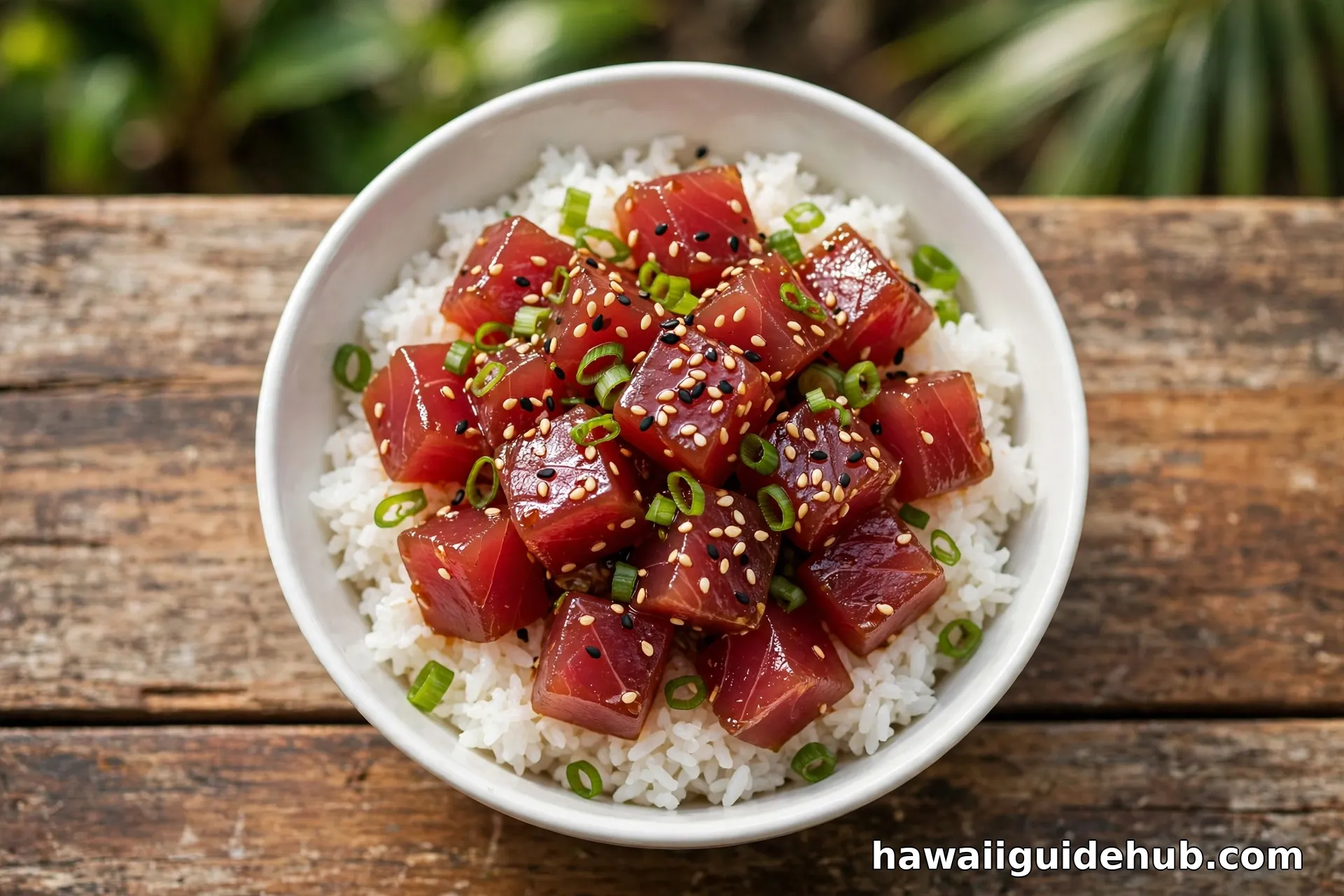
The Best Poke in Līhue, Kauaʻi

If you eat one thing on Kauaʻi, make it poke in Līhue. The island’s main town sits minutes from the airport, and its fish markets and takeout counters serve some of the freshest raw fish plates in Hawaiʻi. Visitors landing at Līhue Airport can be eating a bowl of shoyu ahi within twenty minutes of grabbing their rental car, and locals will tell you the town’s poke counters are the real deal, not tourist traps.
This is the single complete guide to poke in Līhue. It covers what poke is and where it comes from, the best poke spots in Līhue and what to order at each one, how poke is priced and served, what to do if you do not eat raw fish, and answers to the questions visitors ask most. Everything about best poke in Līhue, poke bowls on Kauaʻi, and where to find poke in Līhue is right here on this one page.
Poke in Līhue at a Glance
| The format | Cubed raw fish seasoned Hawaiian style, usually ahi tuna; sold by the pound from the case, or as a bowl over rice |
| Where | Fish markets, takeout counters, and grocery poke bars around Līhue |
| The hours rule | Morning to mid afternoon; counters often sell out early, so go before lunch |
| The price logic | Deli and market prices, well below sit-down restaurant prices |
| The plan | Most spots are takeout only, so eat at the beach or your hotel; ideal first meal after landing |
What Poke Actually Is
Poke (pronounced poh-kay) is a Hawaiian dish of cubed raw fish tossed with seasonings. The word itself is Hawaiian for “to slice” or “to cut crosswise into pieces,” which is exactly how the fish is prepared. Long before Hawaiʻi had restaurants, Native Hawaiians ate reef fish cut into chunks and seasoned with sea salt, seaweed (limu), and the roasted, ground kukui nut condiment called inamona. It was simple food, eaten with poi, and it reflected an island diet built on what the reef provided that day.
The poke most visitors know today, built on ahi tuna, arrived later. As commercial tuna fishing grew around the islands in the twentieth century, yellowfin ahi became abundant and affordable, and the classic shoyu ahi poke (tuna with soy sauce, sesame oil, green onion, and sweet onion) became the standard. Japanese, Chinese, and Korean immigrants shaped the local dishes visitors love today, adding their own touches: shoyu, sesame oil, chili flakes, furikake, and mayonnaise-based spicy sauces. The mainland “poke bowl” craze of the 2010s took the format further, but in Hawaiʻi the heart of poke is still the fish counter, the cold case, and the pound of fresh ahi to take home.
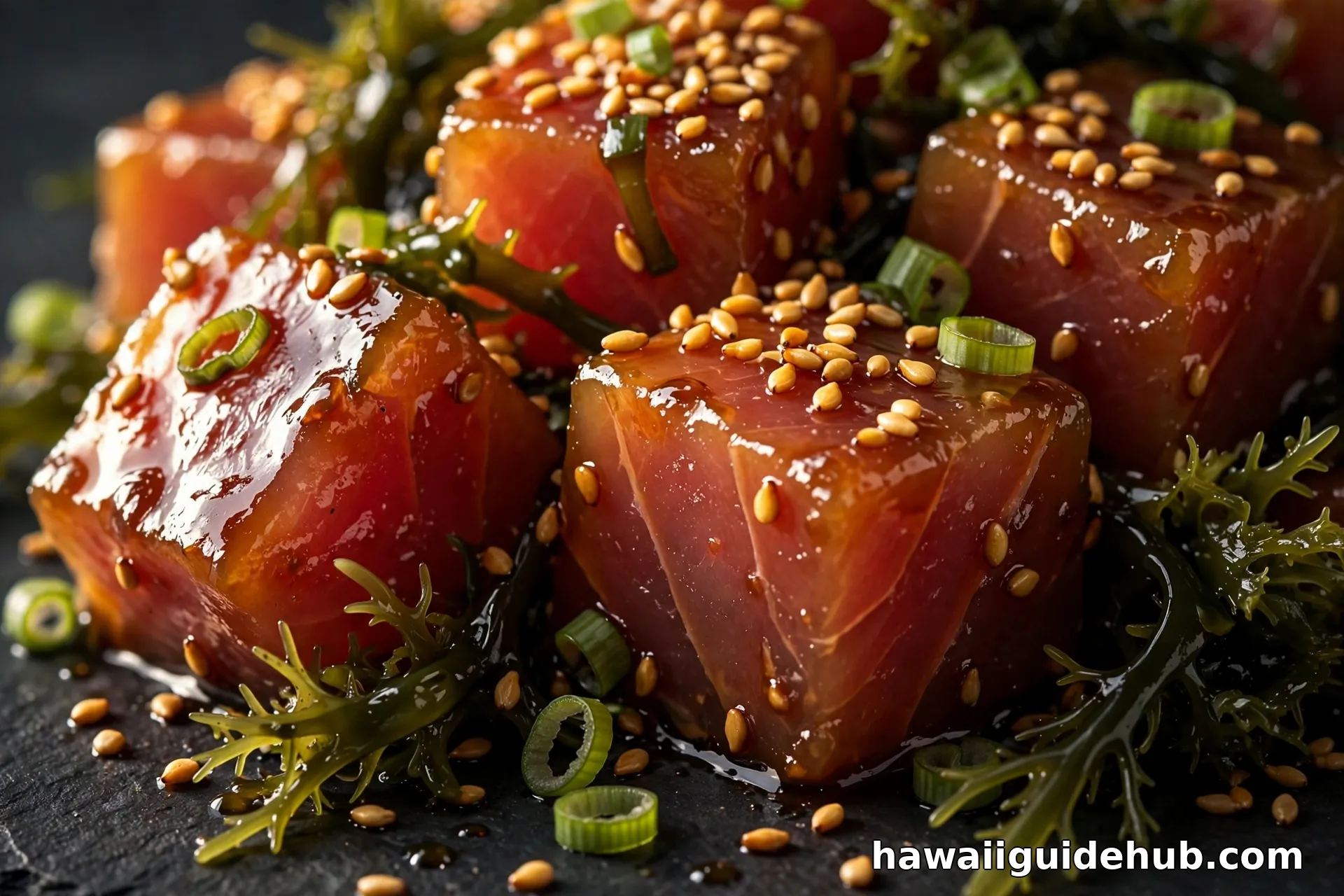
What poke tastes like depends on the preparation, but the baseline is clean and oceanic. Good ahi is buttery and mild, never fishy. Shoyu poke is savory and nutty from sesame oil. Spicy ahi brings creamy heat. Inamona adds a rich, roasted depth. Limu (seaweed) gives a briny crunch. The rice underneath a bowl is usually plain steamed white rice, which exists to balance the bold seasoning, not to compete with it.
Why Līhue Is a Great Poke Town
Līhue works for poke for a practical reason: it is where the fish lands. The town wraps around the island’s main airport and harbor, and its fish markets buy directly from local boats. That short supply chain is why a takeout counter on Kuhio Highway can sell ahi that was swimming a day or two earlier. Resort areas on the south and north shores have poke too, but the deepest cases and the most local crowds are in Līhue.
The culture matters as much as the supply. In Hawaiʻi, poke is lunch food and pau hana (after work) food. People stop at a fish market on the way home, buy a pound of poke and a bowl of rice, and eat at the beach or at home. Most of the best counters in Līhue are takeout only, with a few picnic tables at most. That is not a drawback. It is the authentic way to eat it, and it keeps prices at market level instead of restaurant level.
The Best Poke Spots in Līhue
These are the counters visitors ask about by name, and each one has a different strength. All of them sit within a few miles of each other along the Kuhio Highway corridor, so you can easily try more than one in a single afternoon. Hours change, so check the current schedule before you go, and go early in the day for the fullest selection.
The Fish Express
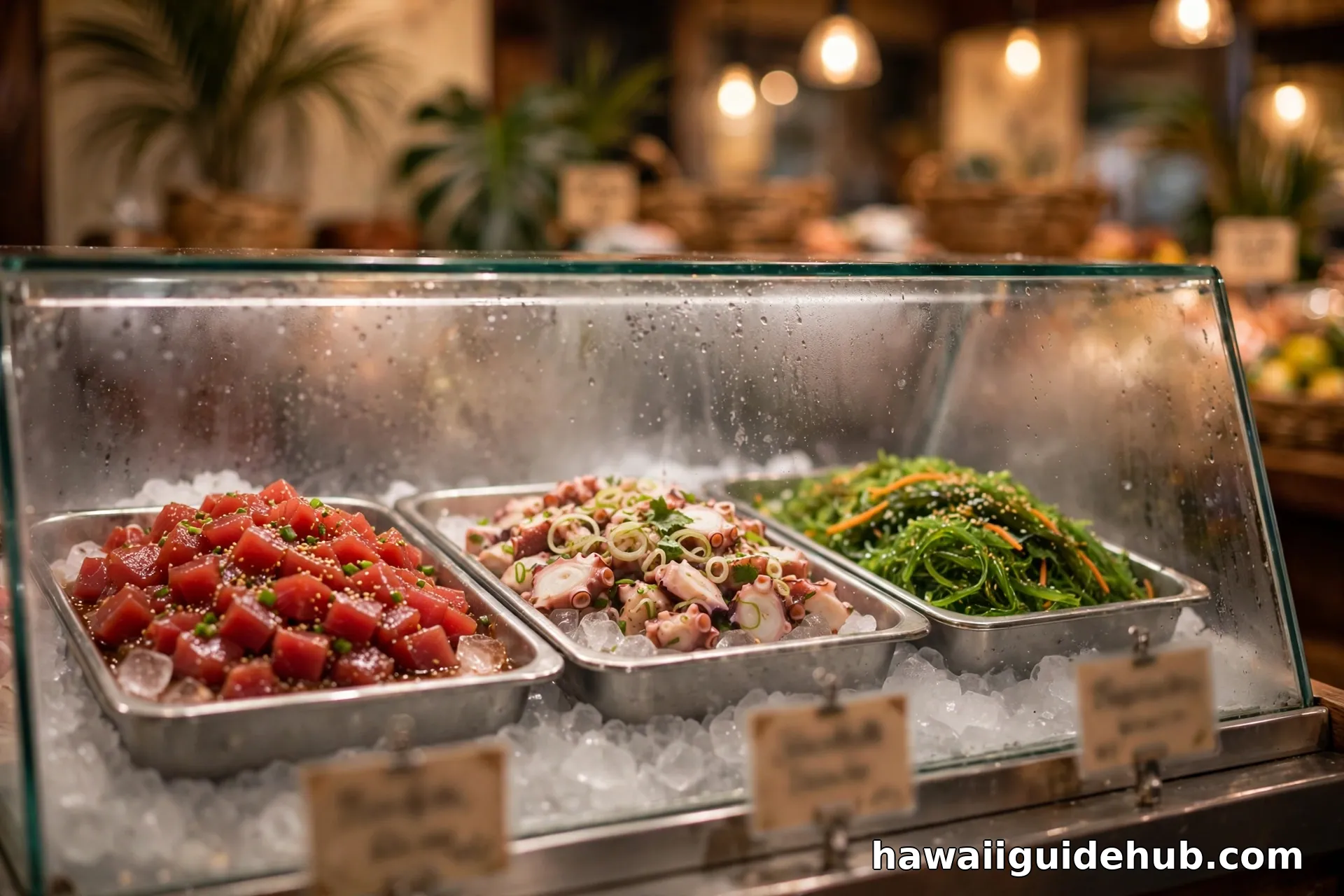
The Fish Express (3-3343 Kuhio Highway) is the Līhue poke stop most visitors hear about first, and it earns the reputation. This takeout-only shop near the airport typically offers at least half a dozen ahi preparations, from classic shoyu to spicy ahi, and a self-serve topping bar lets you build your own bowl with whatever extras you like. Reviewers consistently call it the best poke they had on Kauaʻi, and the spaghetti-style mac salad that comes with plate lunches gets its own fan club. Hours generally run 10 AM to 4 PM daily, and it is a true mom and pop operation, so expect a line at lunch and a sold-out case if you arrive late.
Konohiki Seafoods
Konohiki Seafoods (3-4301 Kuhio Highway) is a local-style seafood hub where the poke selection is famously deep. Regulars talk about dozens of poke varieties in the case, alongside plate lunches like ginger fried chicken and kalua pork. The ahi inamona poke bowl and spicy ahi poke are the orders to know. It opens early (around 6:30 AM) and usually winds down by mid afternoon, Monday through Saturday. This is the spot for visitors who want to eat what Līhue eats on a workday: fast, generous, and unpretentious.
Lawaiʻa Fish Co.
Tucked into an industrial area at 3082 Peleke Street, Lawaiʻa Fish Co. is a small family business built around locally sourced seafood. The menu leans creative: seared sesame-crusted ahi sashimi, big eye tuna shoyu poke served on fried wonton, and spicy ahi bowls. Hours are short (mornings to early afternoon on weekdays, Saturday mornings), which tells you everything about how the fish moves here. It is a favorite of visitors who want to taste what the boats brought in that morning rather than a standardized menu.
Foodland Farms Līhue
Hawaiʻi residents buy a huge share of their poke at grocery stores, and Foodland’s poke bars are the gold standard. The Foodland Farms in Līhue keeps a full cold case of poke sold by the pound, with the same shoyu, spicy, and specialty preparations you find at dedicated fish markets. This is the easiest option for visitors staying in a condo with a kitchen: grab a pound of poke, a bag of rice, and dinner is handled. Quality is consistently high because the fish turns over fast.
Worth the Short Drive: Pono Market, Kapaʻa
Strictly speaking this one is not in Līhue, but Pono Market in nearby Kapaʻa (about fifteen minutes north) is famous enough island-wide that poke pilgrims make the drive. It is a tiny local market with an outsized reputation for poke and plate lunches. If you are heading up the east side toward Kapaʻa or the north shore anyway, it fits naturally into the day.
Video: Kauaʻi’s Must-Try Food Spots
This local resident’s tour of Kauaʻi food spots includes a dedicated segment on where to find the island’s best poke, plus what else to eat around Līhue.
How to Order Poke Like a Local
Walking up to a poke case for the first time can feel like a test, but the system is simple once you know it. You are making three decisions: the fish, the preparation, and the format. Start with the fish. Ahi (yellowfin tuna) is the default and the right first choice. If the case has aku (skipjack), aʻu (marlin), or tako (octopus), those are worth trying once you know you like the basics.
Next comes the preparation, which is the seasoning the fish is tossed in. Shoyu is the classic: soy sauce, sesame oil, onion, green onion. Spicy ahi adds a creamy chili mayo heat. Inamona (sometimes labeled Hawaiian style) uses roasted kukui nut for a rich, nutty depth. Limu poke includes seaweed for brininess and crunch. Wasabi, kimchee, and furikake versions all have their fans. When in doubt, order a small amount of two styles instead of a large amount of one.
Finally, choose the format. By the pound is the traditional move: you point at the case, name your styles, and take the container to go. A poke bowl layers your chosen poke over rice (white rice is standard, brown rice sometimes available) with optional toppings. Bowls cost more per ounce of fish than buying by the pound, but they are a complete meal. Either way, eat it soon. Poke is at its best within a few hours of purchase, and it should stay chilled until you eat it.
Poke Styles You Will See on the Menu
| Style | What’s in it | Order it if |
| Shoyu ahi | Soy sauce, sesame oil, sweet onion, green onion; savory and nutty | You want the classic baseline, or it is your first poke |
| Spicy ahi | Chili mayo or chili flakes on the shoyu base; creamy heat over savory tuna | You want heat with your fish |
| Inamona (Hawaiian style) | Roasted kukui nut, sea salt, sometimes limu; rich and roasted | You want the deeply traditional one |
| Limu poke | Seaweed through the seasoning; briny crunch against soft fish | You like texture and ocean flavor |
| Tako poke | Cubed octopus instead of tuna; chewy and mild, often Korean-style seasoning | You want chewy rather than raw-fish soft |
| Wasabi / furikake | Modern riffs on the shoyu base; sharp heat or savory seaweed crunch | You want something modern |
What to Know Before You Go
A few practical realities will make your poke run smoother. First, go early. The best counters sell through their case by mid afternoon, and the most popular styles go first. A shop that opens at 10 AM may have a thin case by 2 PM. Second, bring a cooler bag or plan to eat right away. Poke is raw fish, and even winter days on Kauaʻi are warm enough that it should not sit in a hot car while you tour the island.
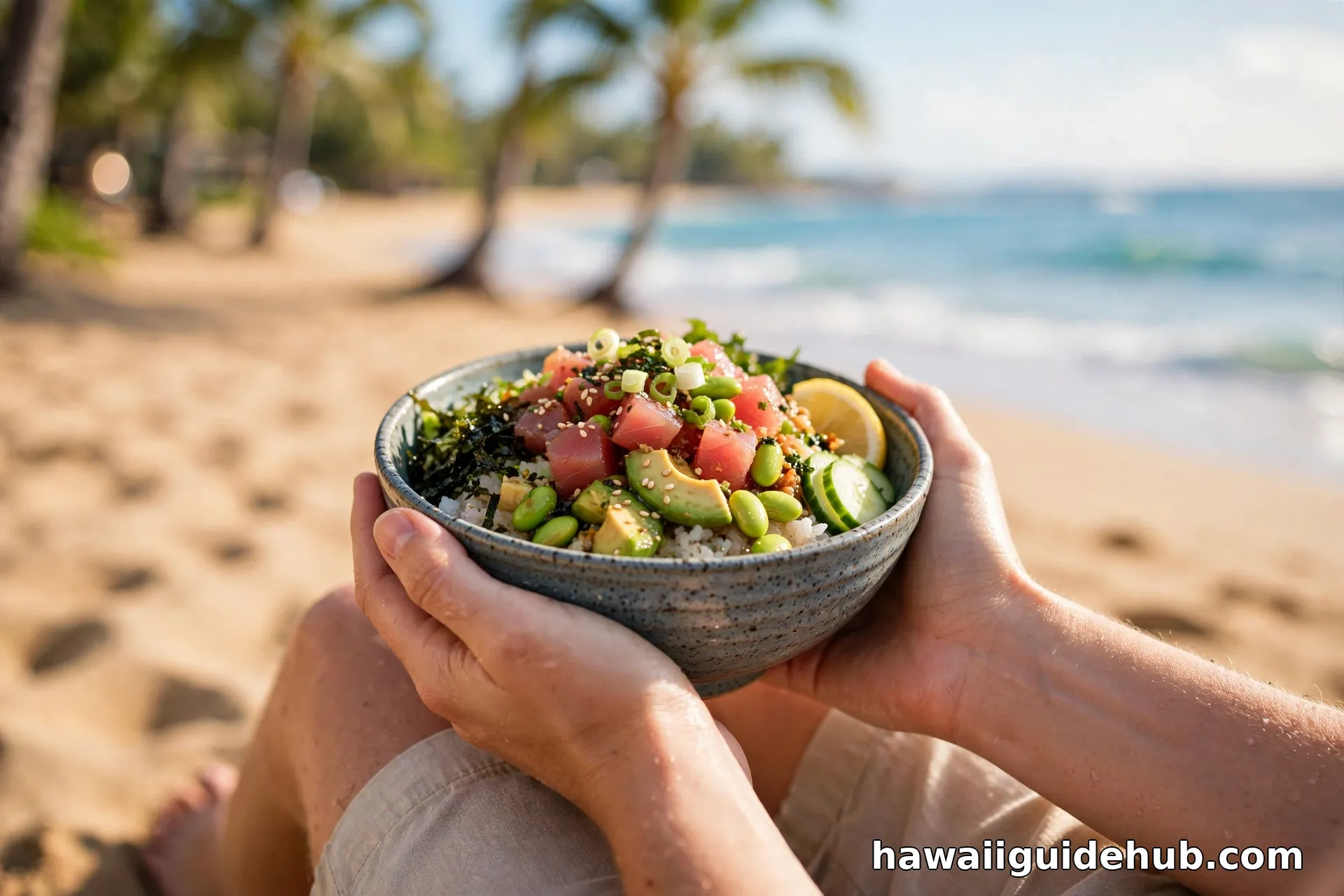
Third, most poke counters are takeout only. Plan your meal around that: Kalapaki Beach is minutes from the Līhue counters, and a poke bowl eaten with your feet in the sand is one of the island’s great cheap pleasures. If you are staying on the south shore, the drive up from Poipu is an easy one. Fourth, prices are market prices, not restaurant prices. Buying by the pound from a grocery or fish market case is one of the best food values on Kauaʻi. Bowls with all the toppings cost more, but still far less than a sit-down seafood dinner.
Finally, be a good guest in line. The regulars ahead of you know exactly what they want, and the staff move fast. It is completely fine to ask what is freshest today or what a first-timer should try. Counter staff at these shops are usually happy to explain the difference between preparations, and a small sample is sometimes offered. Do not overthink it: point, pay, and enjoy.
If You Do Not Eat Raw Fish
Traveling with someone who will not eat raw fish does not mean skipping the poke stops. Every counter on this list sells cooked food too. Plate lunches with shoyu chicken, kalua pork, katsu, or grilled fish come from the same kitchens, and the mac salad and rice plates are legitimately good in their own right. Lawaiʻa Fish Co. does excellent seared (not raw) ahi, and Konohiki’s ginger fried chicken has its own following. Order the cooked plate, share a bite of someone else’s poke if you are curious, and nobody misses out.
Frequently Asked Questions
What is the best poke in Līhue?
The Fish Express, Konohiki Seafoods, and Lawaiʻa Fish Co. are the three names that come up most often, each with a different strength: variety and bowl-building at Fish Express, deep local-style selection at Konohiki, and boat-fresh creativity at Lawaiʻa. Foodland Farms Līhue is the easy grocery option. Try two in one day and decide for yourself.
How much does poke cost in Līhue?
Poke is sold either by the pound from the cold case or as a built bowl over rice. By-the-pound prices at markets and grocery stores are the best value; bowls cost more because they include rice and toppings. Either way, expect to pay far less than a restaurant seafood dinner. Check the posted prices at the counter, since fish prices move with the catch.
Is poke safe to eat?
Poke from a busy, reputable fish market with high turnover is as safe as raw fish gets, because the fish moves fast and stays chilled. Buy from counters that look clean and busy, keep your purchase cold, and eat it the same day. If you are pregnant or have a compromised immune system, talk to your doctor about raw fish before your trip.
Can I get poke near Līhue Airport?
Yes. The Fish Express and Konohiki Seafoods both sit on Kuhio Highway within a few minutes of the airport, which makes poke a perfect first meal after landing. Grab your rental car, drive five minutes, and you are eating.
What is the difference between poke and a poke bowl?
Poke is the seasoned raw fish itself, traditionally sold by the pound. A poke bowl is a meal format: poke served over rice with toppings. In Hawaiʻi, locals often buy poke by the pound and add their own rice at home, while visitors tend to order bowls. Both are authentic; they are just different formats.
Why Poke Belongs on Your Kauaʻi Itinerary
Poke is not just a meal on Kauaʻi. It is a window into how the island eats: fish from local boats, seasonings from a century of immigrant kitchens, served without ceremony from a cold case. Līhue’s counters put that whole story within a few miles of the airport, at prices that make it easy to go back twice. Eat it early in your trip, learn which style you like, and you will find yourself planning beach days around the poke case for the rest of the week.