Squid Lau Lau: Hawaiian Squid and Taro Stew Recipe

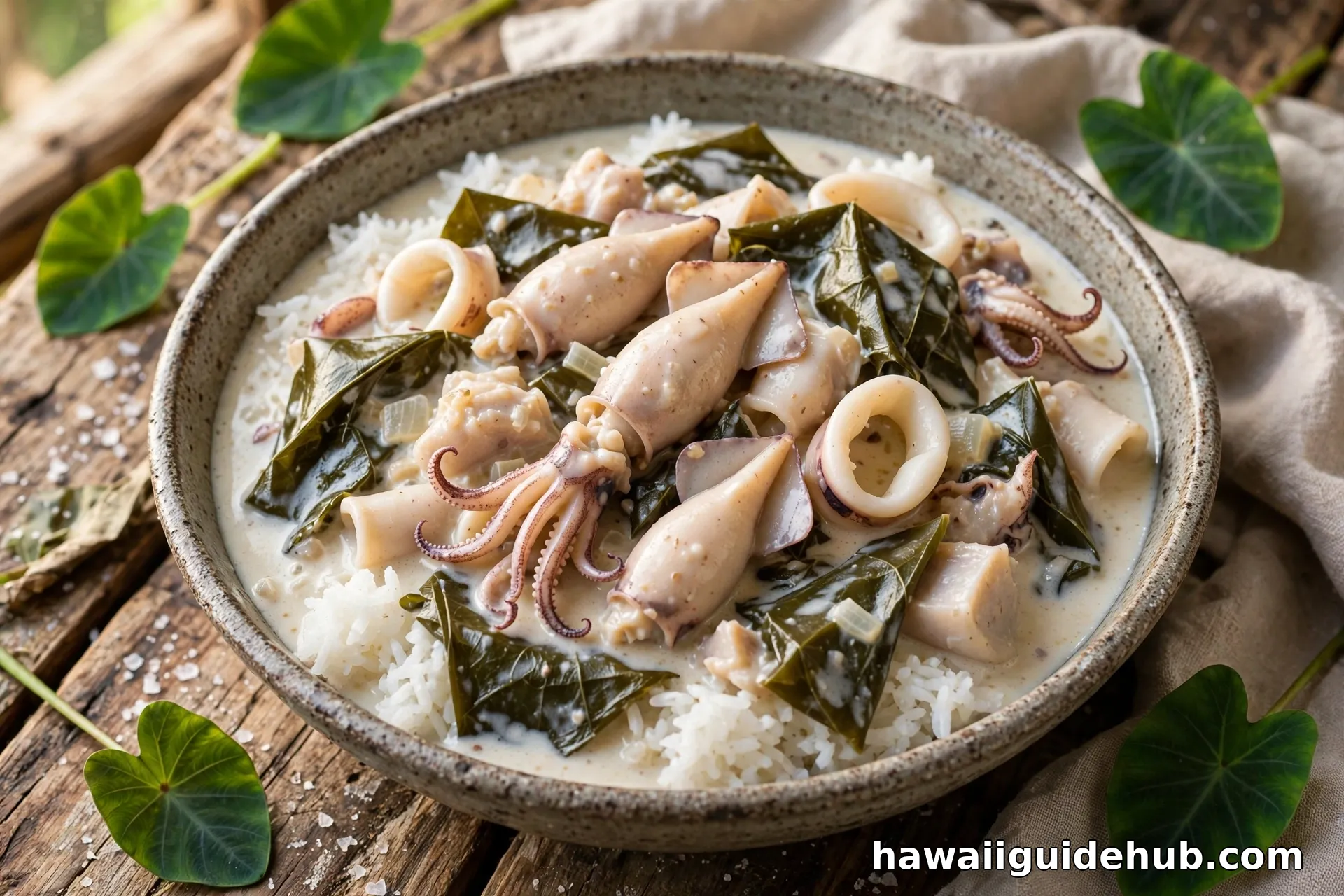
Squid lau lau, also called squid luau, is one of Hawaii’s great home-style dishes: tender squid simmered with taro leaves and coconut milk into a rich, savory green stew. It is the kind of food that shows up at family gatherings, graduations, and backyard parties, the dish aunties make in a big pot and everyone asks about. Visitors rarely find it on restaurant menus, which makes it one of the most authentic tastes of local Hawaii you can cook yourself.
This is the single complete guide to squid lau lau. It covers what the dish is and how it differs from regular lau lau, the cultural roots of the ingredients, a traditional-style recipe with step-by-step instructions, ingredient sourcing and substitutions, common mistakes, variations, how to serve it, and answers to common questions. Everything about squid and taro stew is answered on this one page.
Squid Lau Lau at a Glance
| Tasting note | The detail |
|---|---|
| What it is | Squid simmered with taro (luau) leaves and coconut milk, a traditional Hawaiian stew |
| Flavor | Savory, mildly sweet, creamy, with the ocean taste of squid |
| Texture | Soft, stew-like; the leaves cook down almost like creamed spinach |
| The build | Squid, luau leaves, coconut milk, water, Hawaiian salt |
| Time and yield | About 2 hours, mostly hands-off simmering; serves 6 as a side dish |
| Serve with | Steamed white rice, always |
| Non-negotiable | Taro leaves must be cooked thoroughly; never eat them raw |
What Is Squid Lau Lau?
To understand squid lau lau, start with the leaves. Luau leaves are the leaves of the taro plant (kalo), the same plant whose root becomes poi. In Hawaiian cooking, luau leaves are a staple green, cooked down into soft, savory dishes. Squid luau combines them with squid and coconut milk in a single pot, simmered until everything melds into a stew.
Despite the similar name, squid lau lau is different from regular lau lau. Traditional lau lau wraps pork, butterfish, or chicken in whole taro leaves, then wraps the bundle in ti leaves and steams it for hours. Squid lau lau skips the wrapping: the leaves are chopped and simmered directly with the squid, more like a stew than a steamed parcel. Both dishes share the same soul: taro leaves, slow cooking, and flavors that define Hawaiian home cooking.
The Cultural Roots
Taro is the most culturally significant plant in Hawaii. According to Hawaiian tradition, the taro plant is the elder sibling of the Hawaiian people, and it sustained the islands for centuries before Western contact. Cooking its leaves with seafood reflects the old Hawaiian way of eating: what the land and sea provide, combined simply and cooked patiently.
Squid and octopus (tako) have always been part of the Hawaiian diet, gathered from reefs and tide pools. Coconut arrived with the Polynesian voyagers. The dish as locals know it today, finished with canned coconut milk, reflects plantation-era and modern Hawaii: traditional ingredients meeting convenient new ones. It remains a family-gathering dish rather than a restaurant dish, which is why many visitors first encounter it at a local potluck or a relative’s table.

Traditional-Style Squid Lau Lau Recipe
This recipe follows the traditional home-style method used by local families: about 2 hours total, 6 servings as a side dish. The proportions come from community recipes shared by Hawaii cooks, including a version from a Kauai farming family.
Ingredients
- 2 pounds luau (taro) leaves, washed, stems and fibrous veins removed, chopped
- 1/2 to 1 pound squid, cleaned (remove ink sac, eyes, head, and beak), boiled until tender and cut into bite-size pieces
- 2 cups water
- 2 cups coconut milk
- 1 teaspoon Hawaiian salt, plus more to taste
- 1 teaspoon sugar (optional, to balance)
Instructions
Step 1: Prep the leaves. Wash the luau leaves thoroughly. Remove the stems and the thick fibrous parts of the veins; the tender stems can be peeled and chopped if you like. Stack the leaves, roll them up, and cut into strips.
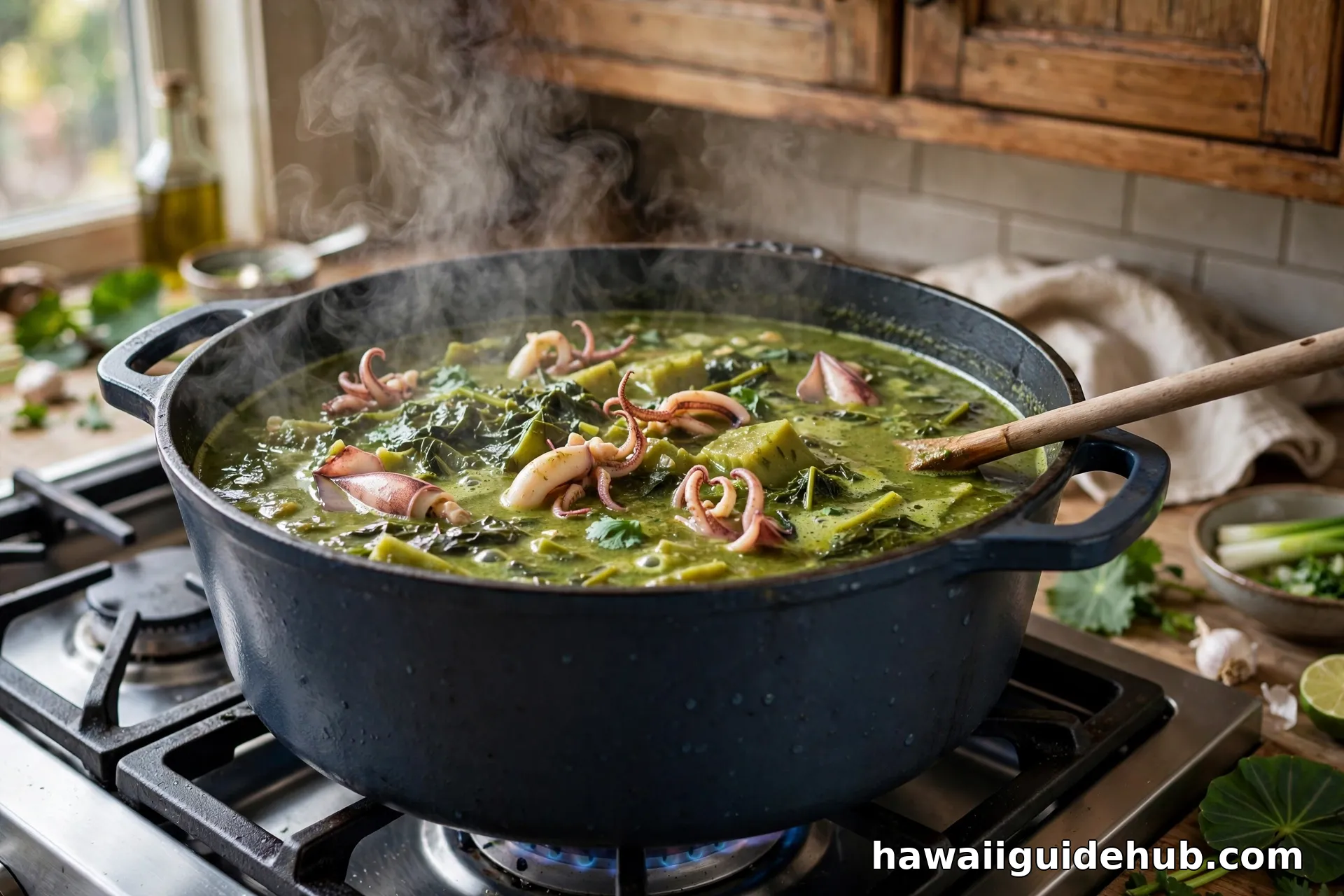
Step 2: Simmer the leaves. Place the leaves in a large pot with the water. Bring to a boil, then lower the heat and simmer for about 1 hour, stirring frequently. The leaves need this long cook to become fully tender and safe to eat. Do not rush this step.
Step 3: Cook the squid. While the leaves simmer, clean the squid and boil it in salted water until tender, about 15 to 20 minutes. Cut into bite-size pieces. Octopus (tako) works the same way and is a common substitute.
Step 4: Combine and finish. Drain the leaves if there is excess water. Stir in the coconut milk, Hawaiian salt, sugar if using, and the cooked squid. Heat gently but do not boil, which can make the coconut milk separate. Simmer until everything is heated through and the flavors meld, about 15 to 30 minutes. Adjust salt to taste and serve hot over steamed white rice.
Sourcing Ingredients
In Hawaii, fresh luau leaves are sold at most supermarkets and farmers markets, often in large bags. On the mainland, check Asian or Pacific Islander grocery stores, or farmers markets in areas with Pacific Islander communities. Frozen luau leaves also work and are widely available online. Canned coconut milk is sold everywhere; use unsweetened, or a mix of sweetened and unsweetened for a hint of sweetness, as some local cooks do.
For squid, fish markets and Asian groceries sell whole squid that you clean yourself, or pre-cleaned tubes and tentacles. Fresh is best, but frozen squid works well once thawed. If you cannot find squid, octopus is the traditional alternative and many families actually prefer it.
Common Mistakes to Avoid
Undercooking the leaves. Raw taro leaves contain calcium oxalate crystals that irritate the mouth and throat. They must be simmered until completely soft, a full hour at minimum. When in doubt, cook them longer. Boiling the coconut milk. Add it at the end and keep the heat gentle; a hard boil can split the sauce. Overcooking the squid. Squid turns rubbery with prolonged hard cooking, so boil it just until tender, then warm it through in the finished stew. Skipping the salt. The dish needs proper seasoning to shine; taste and adjust at the end.
Squid Lau Lau vs. Other Hawaiian Seafood Dishes
Visitors often meet several Hawaiian seafood dishes on one trip, and they are easy to confuse. Poke is raw fish seasoned and served cold, bright and fresh. Lomi lomi salmon is salted salmon massaged with tomatoes and onions, also served cold as a side. Squid lau lau is the opposite: fully cooked, served hot, and built on greens rather than raw fish. If poke is Hawaii’s summer, squid lau lau is its winter comfort food. Together with kalua pork and chicken long rice, it rounds out the classic Hawaiian plate that locals grew up eating at every celebration.
Nutrition Notes
For a comfort dish, squid lau lau eats surprisingly well. Luau leaves are rich in vitamins, minerals, and antioxidants, and they contribute more protein than most greens. Squid is lean protein, low in fat and high in minerals. The coconut milk adds the richness and the calories, so the dish is hearty but not heavy in the way a cream-based stew would be. Served over rice with a vegetable side, it makes a genuinely balanced meal, the kind of everyday food that sustained island families long before nutrition labels existed.
Making It for a Crowd
Squid lau lau scales beautifully, which is why it is a luau and graduation-party staple. Double or triple the recipe in a large stockpot, keeping the proportions the same. The long simmer is forgiving, so timing is flexible if guests are late. Keep it warm in a slow cooker on the low setting for serving, and put the rice cooker on a big batch of rice. Make it a day ahead if you can: like most stews, it reheats perfectly and the flavor deepens overnight. For a party, plan on the 6-serving recipe feeding about 6 people as a side, so scale up generously.
Variations
Families personalize this dish endlessly. Some add a spoonful of butter for richness. Some include diced onion or garlic sauteed at the start. A pinch of baking soda in the leaf-cooking water helps the leaves keep their bright green color. Sugar or a little brown sugar balances the savory notes. Chicken or pork can replace the squid for a meat version, and some cooks add both squid and octopus. The core never changes: luau leaves, coconut milk, patience.
Storing and Reheating
Refrigerate leftovers within two hours of cooking and use them within four days for the best quality and food safety. Reheat gently in a saucepan over medium-low heat, stirring often, and never let it boil hard. If the stew thickened overnight, loosen it with a splash of water or coconut milk. It also freezes very well for up to three months; thaw it overnight in the refrigerator before reheating. Many local cooks insist the dish tastes best on day two, once the squid, leaves, and coconut milk have fully settled into each other, so cooking ahead is a genuine advantage.
How to Serve Squid Lau Lau
Always with steamed white rice. The creamy stew over rice is the complete dish; nothing else is required. At gatherings it sits alongside other Hawaiian plates: kalua pork, lomi lomi salmon, chicken long rice, and poi. For a deeper dive into Hawaiian plate culture, see our guide to must-try local dishes. Leftovers keep well in the refrigerator for several days and reheat gently on the stove; like many stews, it tastes even better the next day.
Where Visitors Encounter It
You will rarely see squid lau lau on tourist menus, which is exactly why it matters. Look for it at local-style plate lunch spots, Hawaiian food restaurants, farmers market food stalls, and community fundraisers. If a menu lists “squid luau” as a side, order it. For visitors who want the full education in Hawaiian food traditions, our lomi lomi salmon guide covers another essential dish.
Watch: Squid Luau by Chef Maka Kwon
Frequently Asked Questions
What is squid lau lau made of?
Squid, taro (luau) leaves, coconut milk, water, and Hawaiian salt. Some versions add butter, onion, garlic, or a little sugar.
Is squid lau lau the same as squid luau?
Yes, the names refer to the same dish: squid simmered with taro leaves and coconut milk. “Lau lau” properly means the wrapped steamed bundles, but local usage applies it to this stew too.
Can you eat taro leaves raw?
No. Raw taro leaves contain calcium oxalate crystals that irritate the mouth and throat. Always simmer them until completely soft, at least one hour.
Can I use spinach instead of luau leaves?
You can make a similar stew with spinach or collard greens in a pinch, but it will not taste like squid lau lau. The taro leaves give the dish its distinctive flavor and silky texture.
Can I make squid lau lau in a slow cooker?
Yes. Simmer the leaves first until fully tender, then combine everything in the slow cooker with the coconut milk and cook on low until heated through and melded. Never put raw luau leaves straight into a slow cooker without the full cooking time.
How long does squid lau lau keep?
Several days in the refrigerator. Reheat gently on the stove without boiling. It often tastes better the next day as the flavors meld.
Squid lau lau is Hawaii in a bowl: the sea, the taro patch, and the coconut, cooked low and slow the way families have always done it. It will not be the prettiest dish you eat in Hawaii, but it may be the one you remember. Make it at home, serve it over rice, and taste what local Hawaii actually eats. For more island cooking, explore our complete guide to huli huli chicken.