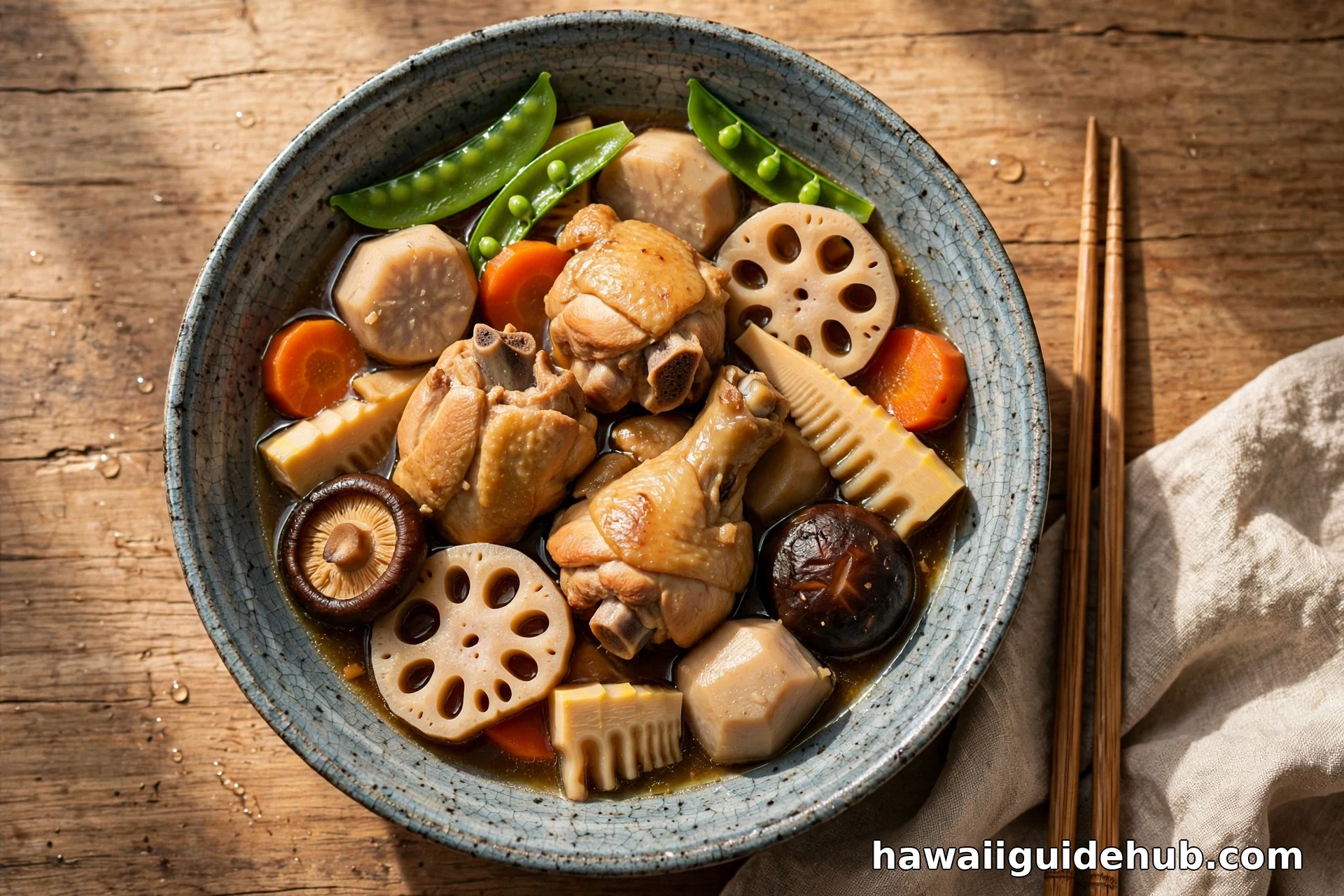
Nishime Recipe Hawaii: Authentic Method and Ingredients

Every New Year in Hawaii, Japanese American families sit down to osechi, the traditional spread of symbolic dishes, and somewhere on the table there is always nishime. It is a humble-looking pot of chicken and root vegetables simmered in sweetened shoyu broth, but it carries more meaning than almost anything else on the table. Each vegetable simmers together in one pot, a symbol of family harmony in the year ahead.
This guide explains what nishime means, how it became a Hawaii New Year tradition, and how to make it at home with an authentic Hawaii-style recipe. You will learn the ingredients, the step-by-step method, smart substitutions, and where to find nishime across the islands if you would rather buy than cook.
Nishime at a Glance
| Element | What it is | Why it matters |
|---|---|---|
| The dish | Japanese simmered dish of chicken and vegetables in sweet shoyu-dashi broth | Everything cooks together in one pot |
| The flavor | Savory-sweet, gentle, and deeply comforting | Shoyu, sugar, mirin, and dashi in balance |
| The name | From the Japanese for simmered; eaten for harmony within the household | The name carries a wish for family harmony |
| The occasion | New Year osechi, family gatherings, and okazuya delis year-round in Hawaii | Celebration food that became everyday food |
| Also called | Chikuzenni, a regional name for the same style of dish | Same dish, different regional name |
| The effort | About 1 hour of mostly unattended simmering; easy, one pot | Mostly hands-off once it simmers |
What Does Nishime Mean?
Nishime (煮しめ) is Japanese for a dish of ingredients simmered together until tender and infused with seasoned broth. It belongs to the family of nimono, Japan’s broad category of simmered foods. In another part of Japan the same style of dish is called chikuzenni, after the old name for Fukuoka Prefecture, and you will hear both names in Hawaii.
The symbolism runs deep. Because many different vegetables cook together in a single pot, nishime is eaten as a wish for harmony within the household in the new year. Individual ingredients carry their own meanings too: burdock root (gobo), a deep root vegetable, represents a firm foundation for the family, while taro (satoimo), which sprouts many small corms around the parent, symbolizes wishes for many children. Eating nishime is, in a real sense, eating good wishes.
The Symbolism in the Pot
Every ingredient in nishime was chosen for more than flavor. This is what makes osechi different from ordinary cooking: the New Year table is a collection of edible wishes. Burdock root (gobo), which drives deep into the earth, represents a firm foundation for the family, and the holes running through lotus root (renkon) stand for a clear, unobstructed view of the future. Taro (satoimo), which produces many small corms around its parent, expresses the wish for many children and a flourishing family.
Even the cooking method carries meaning. Simmering many ingredients together in one pot represents the family staying close and harmonious through the year. When you understand this, nishime stops being just a side dish and becomes the emotional center of the New Year table, which is why so many Hawaii families refuse to skip it no matter how busy the holidays get.
Nishime in Hawaii
Japanese immigrants brought nishime to Hawaii with them, and it took root fast. In the islands it escaped the New Year box and became everyday food: a classic side at okazuya, the beloved Japanese delis where you point at trays of ready-made dishes, and a fixture at family parties, potlucks, and celebrations of all kinds. Ask a local about nishime and you will likely hear about a mother or grandmother who made it every New Year, or about grabbing a scoop from the okazuya counter on the way home.
Hawaii-style nishime has its own character. Local cooks tend toward a slightly sweeter broth than in Japan, generous with sugar alongside the shoyu, and chicken thighs are the standard protein, though pork appears too. Taro is a natural fit here, thriving in island soil, and many families add daikon or green beans to the classic lineup. Like so many Hawaii foods, it is Japanese in origin and local in soul, which is exactly what our guide to must-try local dishes in Hawaii is all about.
What Does Nishime Taste Like?
Nishime tastes like comfort. The broth is savory from dashi and shoyu, rounded with sugar and mirin, and every ingredient drinks it up. Chicken thighs turn silky and rich. Taro goes creamy at the edges. Carrots and lotus root stay faintly crisp at the center. Konnyaku, the chewy yam cake, soaks up broth like a sponge. Nothing is spicy, nothing is sharp; it is the gentlest dish on the New Year table, which is precisely why children and grandparents reach for it first.
Nishime Ingredients
A proper nishime pot holds a crowd of ingredients, but none of them are exotic in Hawaii. Japanese markets and many mainstream supermarkets stock everything here. The recipe below serves 8 to 10 as a side dish.
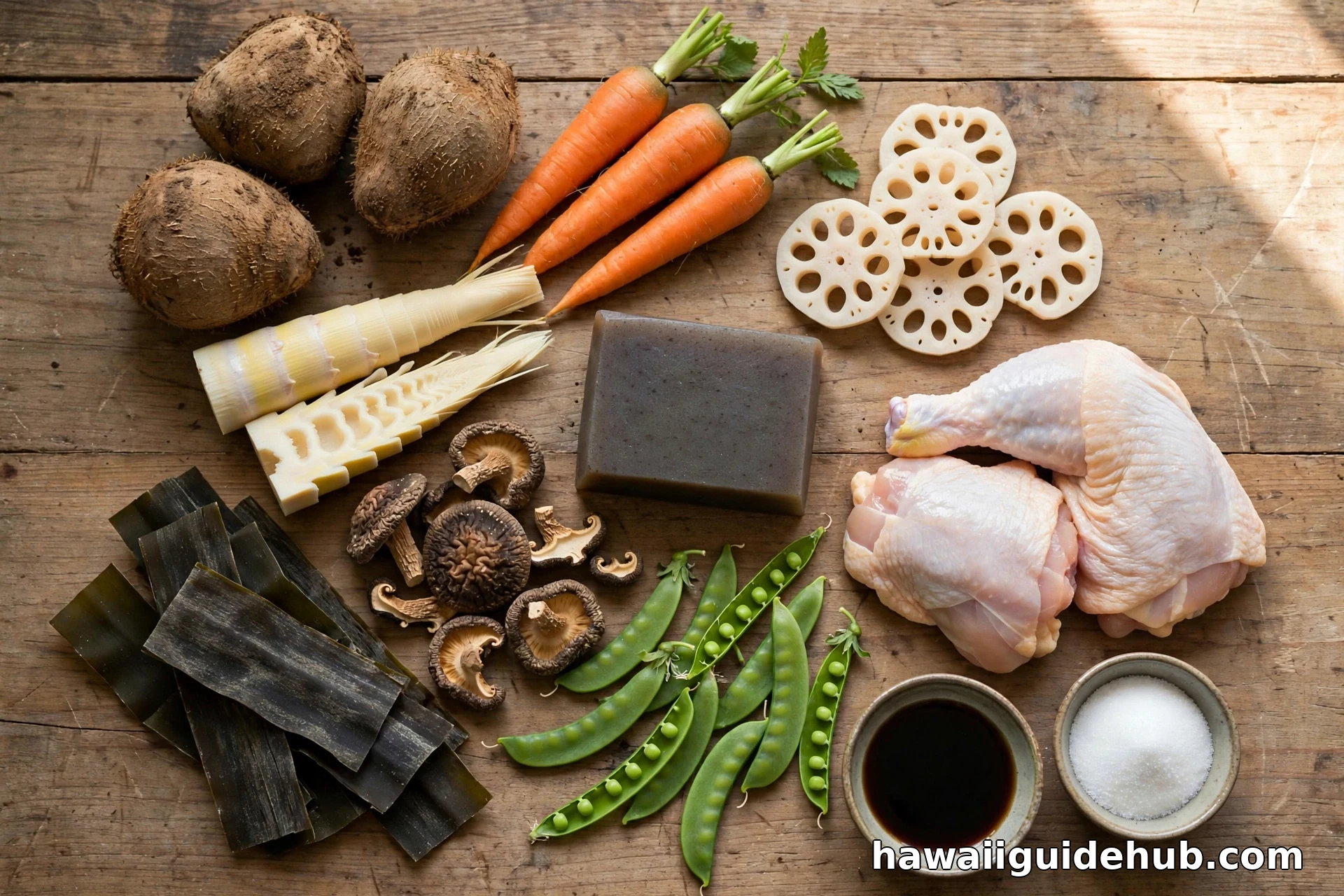
| Ingredient | Amount | Notes |
|---|---|---|
| Boneless, skinless chicken thighs | 2 lbs | Cut into 1.5-inch pieces |
| Taro (satoimo) | 1 lb | Peeled, cut into large chunks |
| Carrots | 2 large | Peeled, cut into chunks |
| Lotus root (renkon) | 1 small | Peeled, sliced 1/4 inch thick |
| Bamboo shoots (takenoko) | 1 cup | Sliced; canned is fine |
| Konnyaku | 8 oz | Sliced, parboiled before use |
| Dried shiitake mushrooms | 4 | Rehydrated, stems removed |
| Kombu | 1 oz | Cut into strips |
| Snow peas (kinusaya) | 1 cup | Strings removed, added last |
| Dashi | 4 cups | Homemade or from dashi powder |
| Shoyu | 1/2 cup | Japanese soy sauce |
| Sugar | 1/4 cup | Adjust to taste |
| Mirin | 2 tbsp | Sweet rice wine |
Authentic Hawaii-Style Nishime Recipe: Step by Step
The method is simple: everything simmers in one pot, with ingredients added in order of how long they take to cook. Total time is about an hour, and most of it is unattended.
Step 1: Prepare the Konnyaku and Chicken
Slice the konnyaku and boil it for 2 to 3 minutes, then drain. This removes its distinctive smell and helps it absorb broth. Cut the chicken thighs into bite-size pieces. If you like, quickly brown the chicken in the dry pot to render some fat and build flavor, then remove it and wipe out excess fat.
Step 2: Build the Broth
Return the chicken to the pot with the dashi, shoyu, sugar, and mirin. Bring to a gentle boil, skimming any foam that rises. The broth should taste savory-sweet and a touch stronger than you want the finished dish, since the vegetables will dilute it as they release water.
Step 3: Add the Hard Vegetables
Add the taro, carrots, lotus root, konnyaku, and kombu. These dense ingredients need the longest simmer. Cover with a drop lid (otoshi-buta), or a circle of parchment or foil resting directly on the food, and simmer gently for about 20 minutes. The drop lid keeps everything submerged and cooking evenly.
Step 4: Add the Tender Ingredients
Add the bamboo shoots and rehydrated shiitake, and simmer 10 more minutes. Finally, stir in the snow peas and cook just 2 to 3 minutes more, until bright green and tender-crisp. Taste the broth and adjust with a splash more shoyu or a pinch of sugar.
Step 5: Rest Before Serving
Turn off the heat and let the pot cool for at least 20 minutes, or refrigerate overnight. Like all simmered dishes, nishime tastes better after resting, as the ingredients absorb the broth fully. Serve at room temperature or gently reheated, which is exactly how it appears in the New Year spread.
Tips for the Best Nishime
Cut everything to a similar size so it cooks evenly. Keep the simmer gentle, never a rolling boil, which clouds the broth and toughens the chicken. Use the drop lid; it is the single biggest difference between okay nishime and great nishime. And do not skip the rest: nishime made the day before always beats nishime made an hour before.
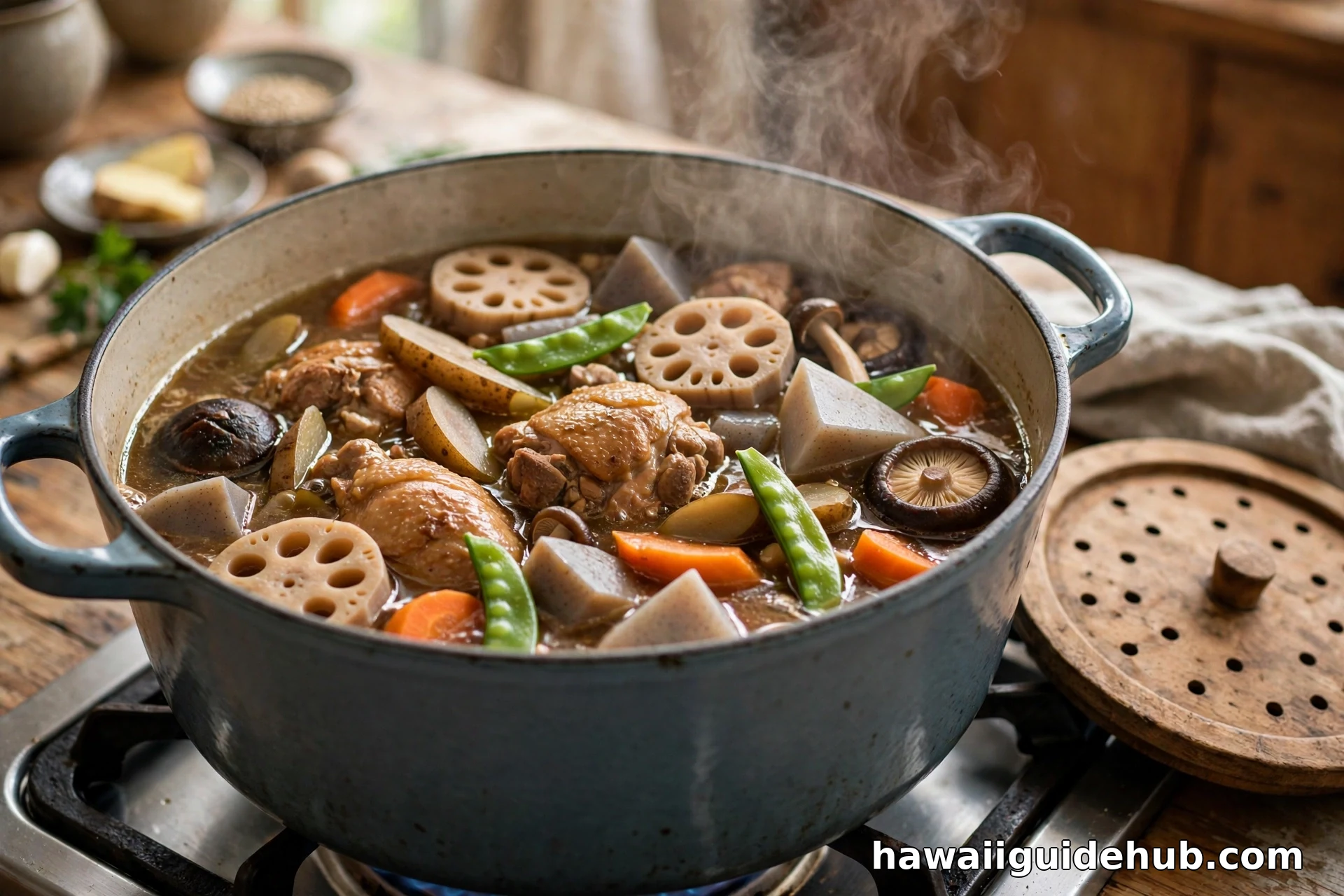
Wear gloves when peeling taro. Raw taro skin can irritate sensitive hands, a quirk of the corm that disappears completely with cooking. For more on this remarkable root, see our guide to Hawaiian-grown foods and fruits.
Decorative Cuts: Making It Beautiful
Traditional nishime is as much about looks as taste, and Japanese home cooks cut vegetables into shapes with their own names. Carrots become plum-blossom flowers (hana-giri) with a few angled notches. Shiitake caps get a decorative cross or star scored into the top. Lotus root slices are already beautiful, their hole pattern doing the work for you. Taro is often cut into six-sided rounded shapes that cook evenly and look elegant in the bowl.
You do not need these cuts for delicious nishime, and weeknight cooks should skip them without guilt. But for New Year, when the dish sits in a lacquered box on display, the extra ten minutes of knife work transforms the pot. It is the difference between dinner and osechi.
Nishime Substitutions
Missing an ingredient? Nishime is forgiving. Pork shoulder or country-style ribs can replace the chicken. Daikon stands in for lotus root in a pinch, and regular mushrooms work when dried shiitake are unavailable, though you will lose some depth. Burdock root (gobo), the traditional Japanese choice, is worth seeking out at a Japanese market for its earthy flavor and its symbolism of a firm family foundation. Frozen mixed Japanese vegetables, sold as nishime mix at some markets, make a fine shortcut for weeknight cooking.
How to Serve Nishime
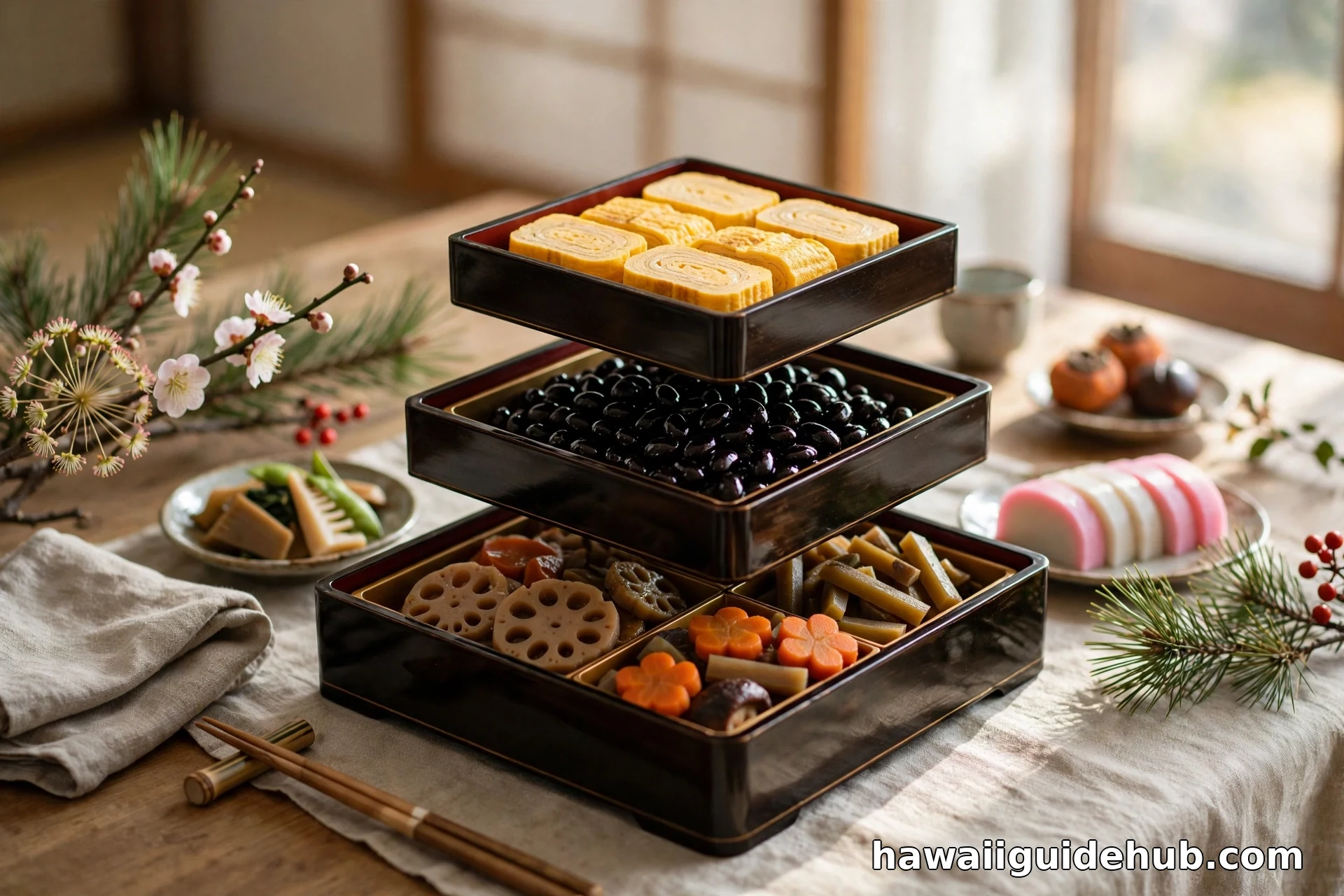
Nishime is served at room temperature or just warm, never piping hot, which makes it ideal party food. For New Year, arrange it in one tier of a jubako, the lacquered stacked boxes of osechi, letting the colors of carrot, snow pea, and shiitake show. At other gatherings it goes straight from the pot to a serving bowl, with a little of its broth spooned over. It pairs perfectly with steamed rice, and leftovers make an excellent next-day lunch, arguably even better than the first serving.
Where to Find Nishime in Hawaii
If you would rather taste nishime than make it, head to an okazuya. These Japanese delis, found across Oahu and the neighbor islands, sell nishime by the scoop alongside their other prepared dishes, and it is a local favorite for takeout lunches. Around New Year, supermarkets and specialty shops sell complete osechi sets that include nishime, and many families simply order the whole spread. It also appears at the kind of local celebrations covered in our guides to lomi lomi salmon and huli huli chicken, the foods of Hawaii gatherings.
Watch: Quick and Easy Nishime
This Hawaii home cook shows how nishime comes together in a real local kitchen, including the shortcut of using pre-cut nishime vegetables:
Nishime FAQs
What is nishime in Hawaii?
Nishime is a Japanese simmered dish of chicken and vegetables in a sweet shoyu-dashi broth, brought to Hawaii by Japanese immigrants. It is a staple of New Year osechi, a classic okazuya deli side, and a fixture at local family gatherings.
What does nishime mean?
Nishime (煮しめ) means simmered food in Japanese. As a New Year dish it symbolizes harmony within the household, since many ingredients cook together in one pot. It is also called chikuzenni in some regions of Japan.
What vegetables go in nishime?
Classic nishime includes taro, carrots, lotus root, bamboo shoots, konnyaku, shiitake mushrooms, kombu, and snow peas, simmered with chicken in dashi seasoned with shoyu, sugar, and mirin. Burdock root and daikon are common additions.
How long does nishime keep?
Refrigerated in a sealed container, nishime keeps 4 to 5 days and reheats well. It is traditionally served at room temperature as part of osechi, which is why it makes such good New Year food: it tastes better after resting overnight.
Is nishime the same as chikuzenni?
Essentially, yes. Chikuzenni is the regional name from northern Kyushu for the same style of simmered chicken and vegetables. In Hawaii you will hear both names, with nishime the more common one.
Can I make nishime vegetarian?
Yes. Leave out the chicken and use kombu dashi or shiitake soaking liquid as the broth base. The vegetables and konnyaku carry the dish beautifully on their own, and many Buddhist-style preparations are fully vegetarian.
Nishime is proof that the simplest pots hold the deepest meaning. One pot, a crowd of vegetables, and a wish for the family to stay close in the year ahead. Whether you simmer it for New Year or scoop it from an okazuya counter on an ordinary Tuesday, you are tasting one of Hawaii’s most quietly beloved traditions.