Ala Moana Beach Park: Honolulu’s People’s Park, Magic Island & Complete Visitor Guide

Ask a Honolulu local where they actually spend their beach days and you will hear the same answer again and again: Ala Moana. Not Waikiki, with its wall of hotels and crowds. Ala Moana Beach Park is where the city goes to swim, picnic, celebrate birthdays, run at sunrise, and watch the sun drop behind the Waiʻanae Range. It is Honolulu’s great shared backyard, and the nickname it earned nearly a century ago still fits: The People’s Park.
This guide covers everything you need to know before you go: where the park is and how to get there, the two very different beaches inside it, swimming conditions and safety, the fascinating history of how the park was built, facilities and parking, the rules that catch visitors off guard, the famous annual events held here, and the best times to visit.
Ala Moana Beach Park at a Glance
| Detail | What to know | Make the most of it |
|---|---|---|
| Hours | 4:00 AM to 10:00 PM daily, closed overnight | The park closes overnight; plan evening visits before 10 PM |
| Entry and parking | Free, no reservations, no entry fee | One of Honolulu’s best free days out |
| The beach | About a half mile of gold sand, reef-protected swimming | The reef keeps the swimming calm |
| Lifeguards | Honolulu Ocean Safety towers staffed daily | Swim near a staffed tower |
| Magic Island | 47-acre peninsula with a calm, rock-walled lagoon | The calmest water in the park |
| Facilities | Restrooms, outdoor showers, picnic tables, tennis courts | Bring food; the picnic setup is all here |
| Best for | Families, swimmers, picnics, jogging, sunsets | Stay for sunset |
| Location | 1201 Ala Moana Blvd, Honolulu, between Waikiki and downtown | Your landmark: between Waikiki and downtown |
Where It Is and How to Get There
Ala Moana Beach Park sits on the south shore of Oʻahu, directly across Ala Moana Boulevard from Ala Moana Center, about two miles west of central Waikiki and just south of downtown Honolulu. The address is 1201 Ala Moana Boulevard, Honolulu, HI 96814.
If you are driving from Waikiki, head west on Ala Moana Boulevard, cross the Ala Wai Canal, and turn left onto Ala Moana Park Drive, the interior road that loops through the park. From downtown or the airport, take Nimitz Highway or Ala Moana Boulevard east toward Waikiki and follow the park signs. There is no entry gate and no fee.
Public transit is straightforward. TheBus routes running along Ala Moana Boulevard stop right at the park, and it is an easy ride from Waikiki or downtown. If you are staying in Waikiki without a car, you can even walk here along the waterfront in about 30 to 40 minutes, and the shared Biki bike stations around the park make the ride over quick.
The Two Beaches: Ala Moana Beach and Magic Island
The park actually holds two distinct swimming areas, and knowing the difference matters.
Ala Moana Beach
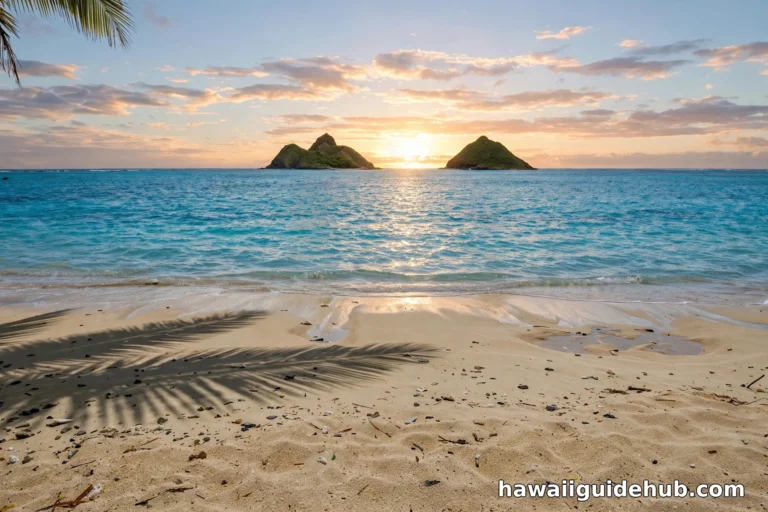
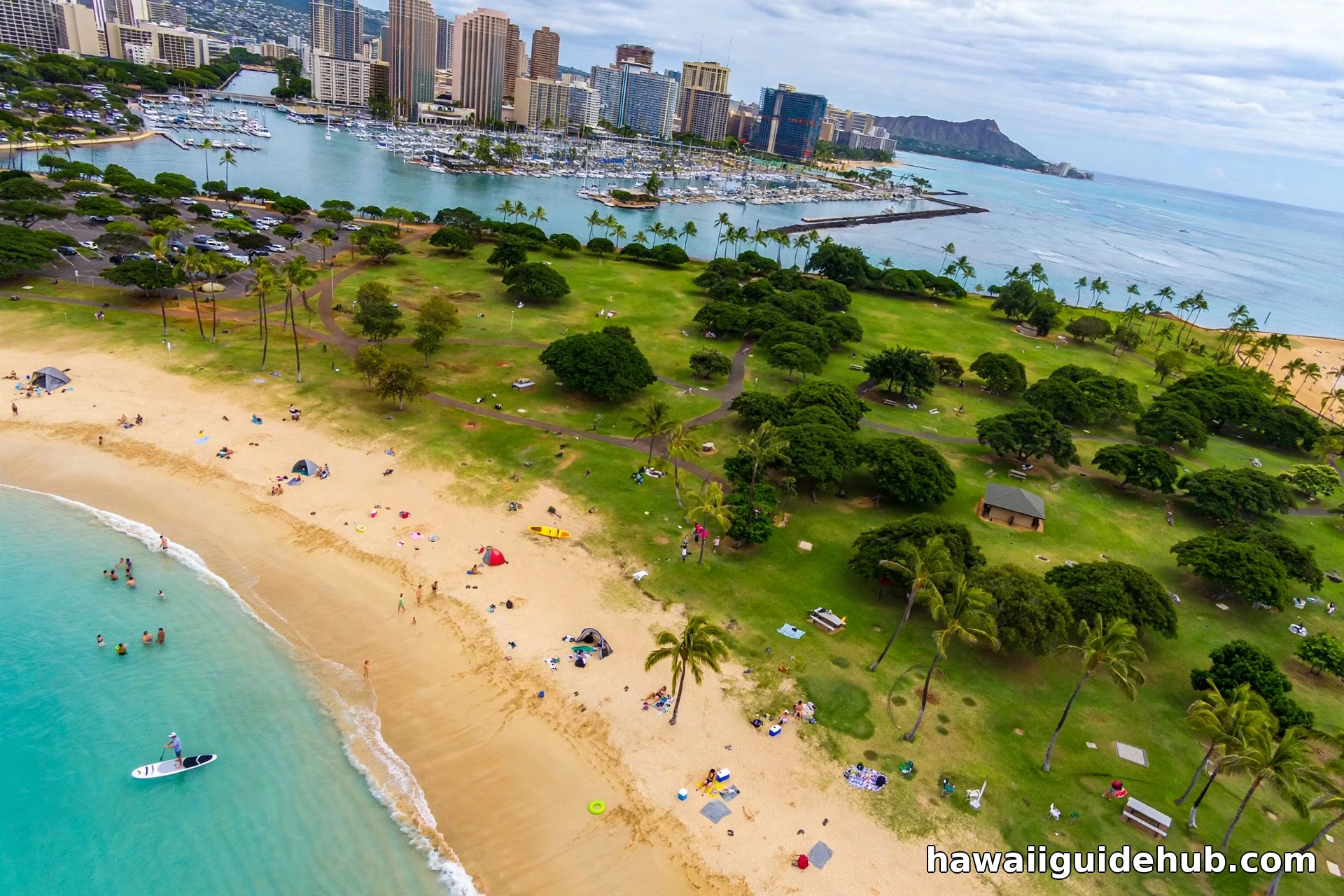
The main beach runs roughly a half mile along the park’s ocean edge. An offshore reef breaks the swells, so the water near shore stays calm on most days, which is why this is one of the most popular open-ocean swimming spots in Hawaiʻi. The beach is wide, the sand is golden, and the views stretch from downtown Honolulu to Diamond Head.
One thing to know: the ocean bottom is not the same everywhere. The east end of the beach, the side closer to Diamond Head, has a sandy bottom with no reef or rocks, which makes it the easiest place to walk in. The middle and west sections have rocks on the nearshore bottom, so entry is trickier and water shoes help. The bottom also drops off fairly quickly once you are in, so weaker swimmers should stay close to shore even though the surface looks calm.
Magic Island (ʻĀina Moana)
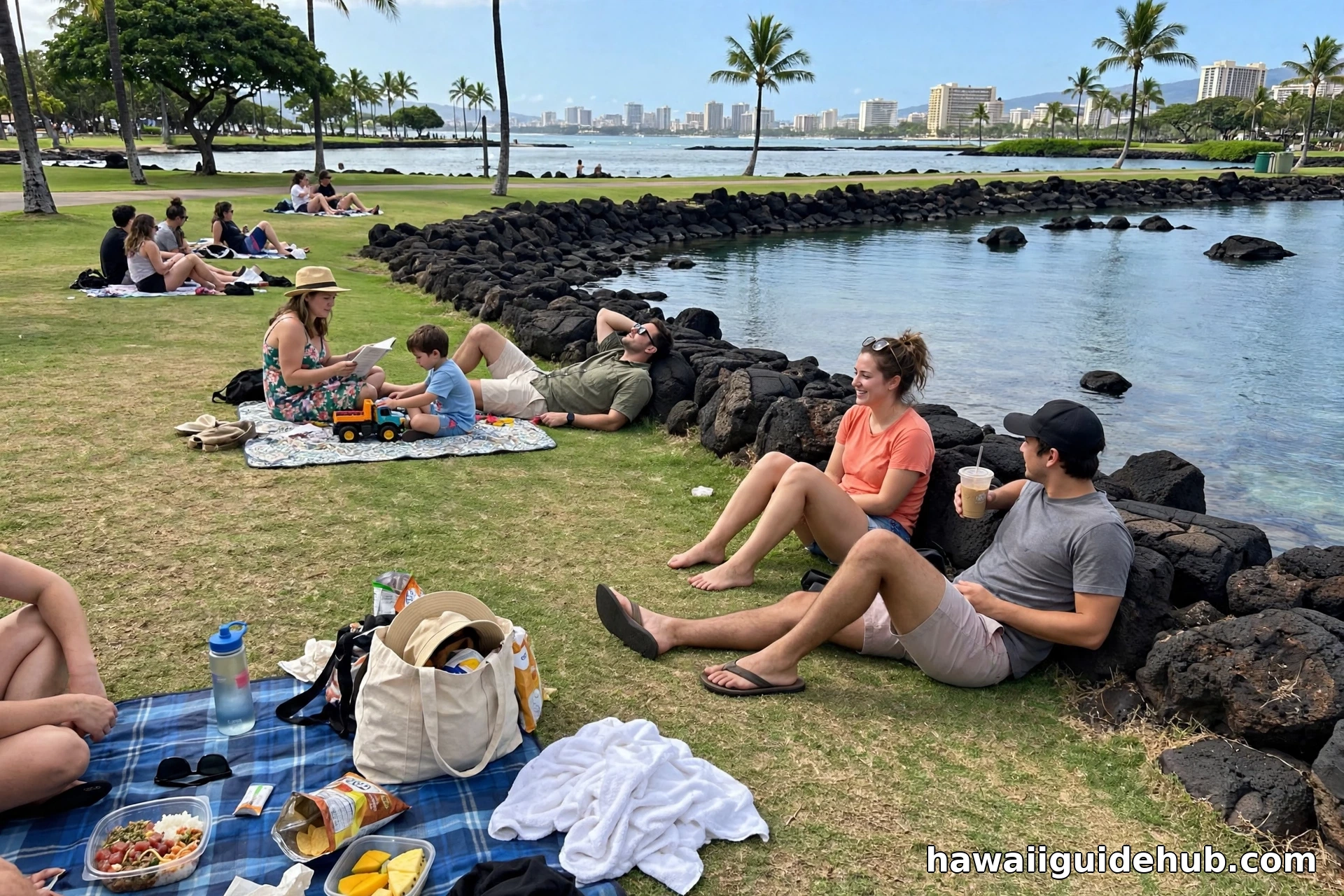
At the park’s east end, a 47-acre man-made peninsula juts into the ocean. This is Magic Island, and its lagoon is the calmest water in the whole park. Rock walls enclose the lagoon and block the waves, creating a shallow, bath-like swimming area that local parents love for toddlers and small children.
Magic Island is also the park’s social heart. The broad lawns fill with birthday parties, church potlucks, and family gatherings on weekends. A paved path loops the peninsula, and the views from the point take in Waikiki, Diamond Head, and the Honolulu skyline. If you only have time for one part of the park, walk out to Magic Island first.
Swimming, Snorkeling, and Surf Conditions
For swimming, Ala Moana is one of the most forgiving beaches on Oʻahu’s south shore. The reef protection means small waves and gentle conditions through most of the year. Summer brings the calmest water. Winter can see slightly bigger south swells, but the beach rarely gets rough the way north shore beaches do.
Snorkeling is possible but modest. The reef holds colorful fish, and lucky snorkelers sometimes spot honu, the Hawaiian green sea turtle, near the deeper sections by the breakwater. It is not a premier snorkeling destination, though. If you do snorkel, remember the basics of sea turtle etiquette and reef-safe behavior: give turtles plenty of space, never touch coral, and use reef-safe sunscreen.
Surfers should know that the famous south shore breaks sit just offshore, not inside the swimming area. Spots like Big Rights, Big Lefts, Concessions, and Courts are out beyond the reef. The beach itself is for swimming, paddling, and floating.
Stand-up paddleboarding is excellent here, especially in the Magic Island lagoon, where beginners can learn on flat water without fighting waves or boat traffic.
How the People’s Park Was Made
Few visitors guess that almost everything they see at Ala Moana was built by hand. The park rests on reclaimed land that was once swampy marshland. In the 1920s, as Honolulu grew, the city began filling the marsh to create public open space, a deliberate effort to give residents shoreline access as Waikiki developed into a resort district.
The park was dedicated in 1934 by President Franklin Delano Roosevelt, who dubbed it The People’s Park, a name that stuck. Early features included a sports pavilion, banyan courts, a lawn bowling green, and the Roosevelt entry portals. The two ponds and drainage canals were dredged around 1932.
The beach itself did not exist until later. Beginning in 1954, the mile-long sandy beach fronting the park was constructed, and it still requires periodic sand replenishment to fight erosion. In 1962, the 47-acre ʻĀina Moana, Magic Island, was built. It was originally conceived as a major resort development, but the plans were abandoned and it became park open space instead. McCoy Pavilion followed in 1975. In 1988, the park was added to the State Register of Historic Places, recognizing its significance as one of Hawaiʻi’s oldest and most beloved public parks.
During World War II the park served as a military battery and staging area. After the war it was restored, and through the 1990s it saw further renovation. Today the park welcomes an estimated four million visitors a year.
Facilities and Amenities
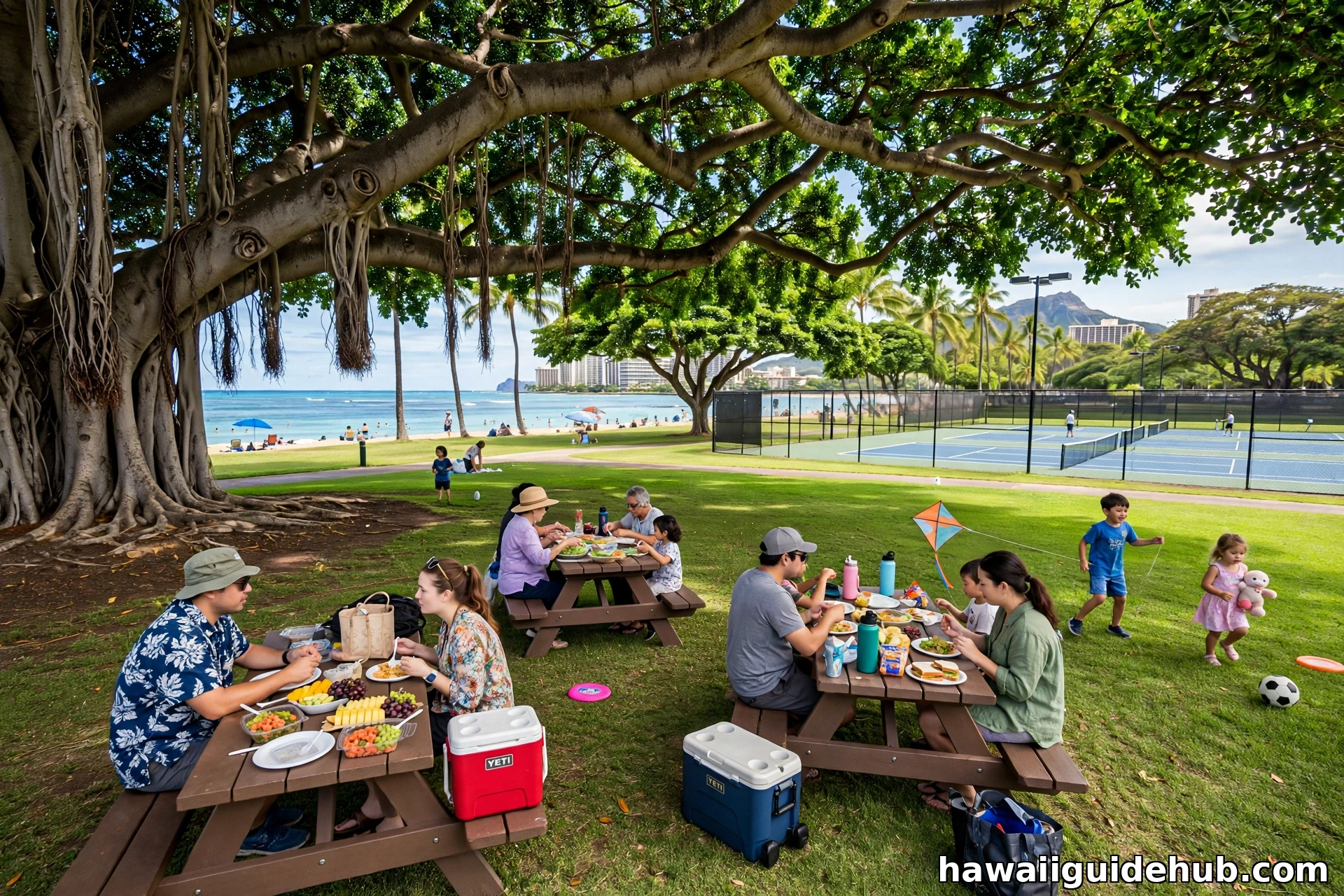
This is a full-service regional park, not just a beach. You will find restrooms and outdoor showers at several points along the beach, including bathhouse facilities at both the Diamond Head and ʻEwa ends. Picnic tables and pavilions are scattered under the banyan and palm trees, and the grassy areas are big enough for ball games, kite flying, and large group gatherings.
Active visitors get tennis courts, a lawn bowling green, exercise equipment along the pathways, and about three miles of paved walkway that loops the park and Magic Island, a favorite running route for Honolulu residents. Food concessions operate at the beach, and McCoy Pavilion hosts events and performances.
One practical note: there are no beach equipment rentals inside the park itself. If you want a paddleboard or snorkel gear, rent before you arrive or stick to swimming.
Parking
Parking is free, which is a genuine bargain this close to Waikiki. There are large lots on both the Magic Island side and the main beach side, plus roadside parking along Ala Moana Park Drive and Ala Moana Boulevard.
The catch is that the lots fill up on weekends, holidays, and summer afternoons. Locals arrive early to claim picnic spots, and by midday on a Saturday the lots can be full. Come before 9 AM on weekends, or visit on a weekday morning when you will have your pick of spaces. Always check posted signs so you do not block traffic or risk a tow.
Rules to Know Before You Go
The park is open from 4:00 AM to 10:00 PM daily and closed overnight. The closure is enforced, so do not plan to sleep on the beach or stay past 10 PM.
Lifeguards from Honolulu Ocean Safety are stationed at towers along the beach every day, but you should still swim with a buddy and respect your limits, especially where the bottom drops off.
Dogs are not allowed on the beach, which surprises some visitors. Honolulu city rules keep dogs off all city beaches, so leave pets at home. Alcohol rules follow standard Honolulu park regulations, and glass containers are a bad idea on any beach.
As with every beach in Hawaiʻi, use reef-safe sunscreen. The state bans sunscreens containing oxybenzone and octinoxate, and the reef right offshore is exactly what these laws protect. For more on timing your beach days around the seasons, see our guide to the best months to visit Oʻahu.
Annual Events at the Park
Ala Moana Beach Park hosts some of Honolulu’s most meaningful public gatherings. The best known is the Shinnyo Lantern Floating Hawaiʻi ceremony, held every year on Memorial Day. Thousands of people gather on Magic Island at dusk to float candle-lit lanterns honoring loved ones, and the sight of the glowing lanterns on the water against the city skyline is unforgettable. It is free, it draws enormous crowds, and if you are on Oʻahu on Memorial Day it is worth planning around.
The park also hosts concerts, cultural festivals, and community events throughout the year at McCoy Pavilion and on the Magic Island lawns. Check the City and County of Honolulu parks calendar before your trip to see what is on.
Best Time to Visit
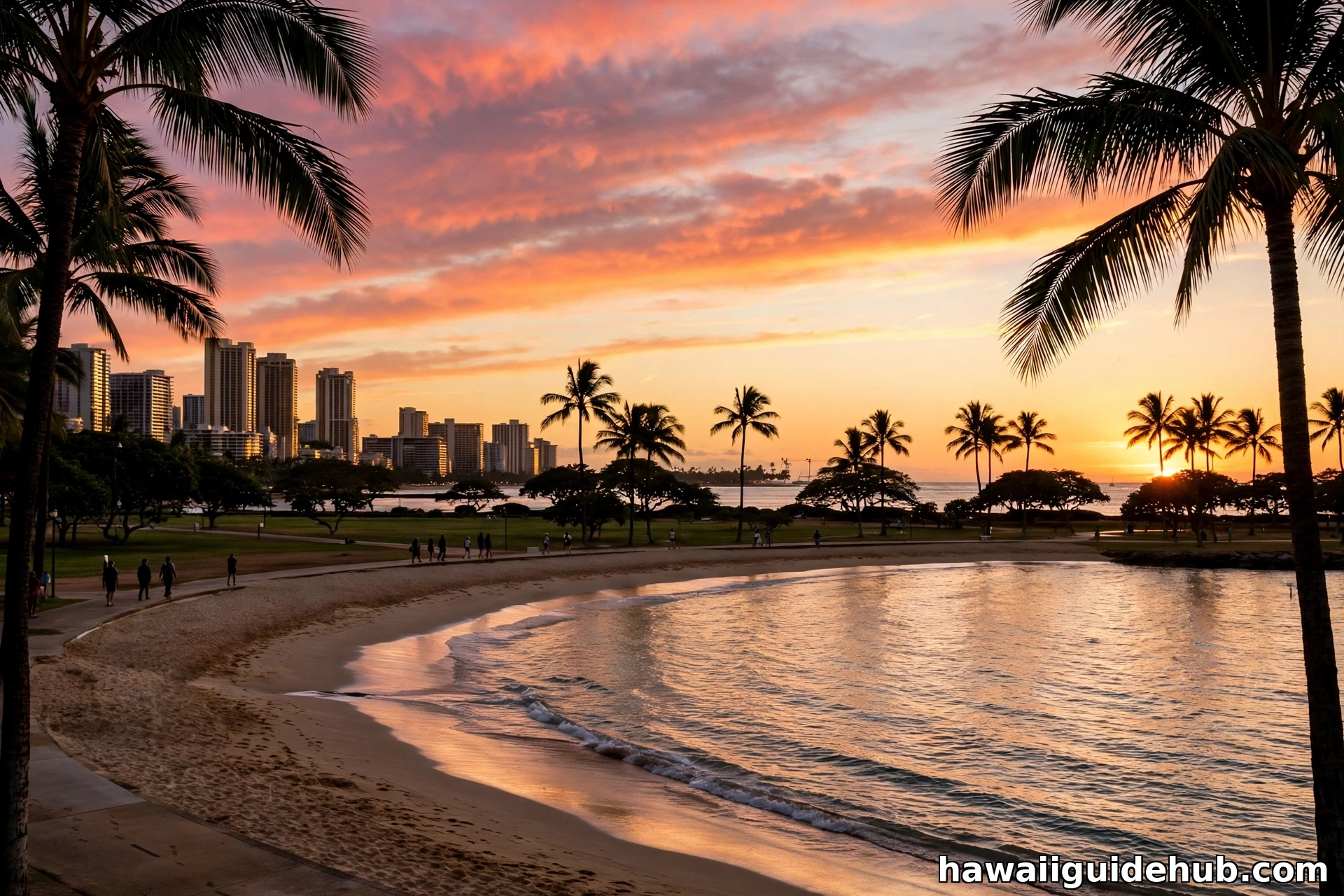
Weekday mornings are the quietest and, in our opinion, the loveliest time at Ala Moana. The water is glassy, the joggers are out, parking is easy, and you can have a stretch of sand nearly to yourself. Late afternoons are busier but bring the reward this park is famous for: sunset. The sun sets over the ocean to the west, and the sky over the Waiʻanae Range turns orange and pink while the downtown skyline lights up.
Weekends and holidays are the park at its most local and festive, with big family gatherings and full parking lots. If you want the community atmosphere, come on a Saturday. If you want space, come on a Tuesday morning.
Nearby Alternatives
If Ala Moana is packed or you want a change of scene, you have options within minutes. Kakaʻako Waterfront Park, just east toward downtown, offers grassy lawns, the famous surfboard lockers, and views of the harbor with fewer crowds. Kahanamoku Beach, toward Waikiki by the Hilton Hawaiian Village, is another calm, reef-protected swimming beach with lifeguards. And if you are chasing bigger adventures around the island, from the North Shore’s legendary surf towns to hiking and snorkeling across Oʻahu, the island rewards exploration.
See Ala Moana and Magic Island on Video
This walking tour explores Magic Island and the Ala Moana waterfront in 4K, a good preview of the lagoon, the paths, and the skyline views before you go.
Ala Moana Beach Park FAQs
Is Ala Moana Beach Park free?
Yes. Entry and parking are completely free, and no reservations are required. It is a City and County of Honolulu regional park.
Is Ala Moana Beach good for swimming?
Yes, it is one of the calmest and safest swimming beaches on Oʻahu’s south shore thanks to the offshore reef. The east end near Diamond Head has the sandiest bottom. The ocean floor drops off fairly quickly, so weaker swimmers should stay near shore.
Are there lifeguards at Ala Moana Beach Park?
Yes. Honolulu Ocean Safety lifeguard towers along the beach are staffed daily.
What is Magic Island?
Magic Island, or ʻĀina Moana, is a 47-acre man-made peninsula at the park’s east end, built in 1962. Its rock-walled lagoon is the calmest swimming water in the park and a favorite for families with small children.
Can you park overnight at Ala Moana Beach Park?
No. The park is open 4:00 AM to 10:00 PM and closed overnight, and the closure is enforced.
Is Ala Moana Beach Park better than Waikiki?
It depends what you want. Ala Moana is quieter, free to park at, and favored by locals for swimming, picnics, and sunsets. Waikiki has more dining, shopping, and surf lessons steps from the sand. Many visitors enjoy both. If you are visiting Oʻahu for the first time, our first-time visitor guide can help you plan.
Ala Moana Beach Park is the rare place that belongs equally to tourists and locals. Come for a swim, stay for the sunset, and you will understand why Honolulu calls it The People’s Park.