ʻAnini Beach, Kauaʻi: Parking, Snorkeling, and the North Shore’s Calmest Lagoon

On the north shore of Kauaʻi, where the road narrows and the houses give way to ironwood trees, there is a beach that locals have quietly loved for generations. ʻAnini Beach stretches for nearly two miles along a calm, reef-protected lagoon, offering some of the safest swimming and easiest snorkeling on the entire island. It is the kind of place where families set up for the whole day and sea turtles glide past snorkelers in the morning light. And unlike many of Kauaʻi’s famous beaches, parking here is free, plentiful if you arrive early, and right next to the sand.
This guide covers ʻAnini Beach end to end: how to get there, where to park, the facilities, the snorkeling, and how to plan a perfect beach day.
What Makes ʻAnini Beach Special
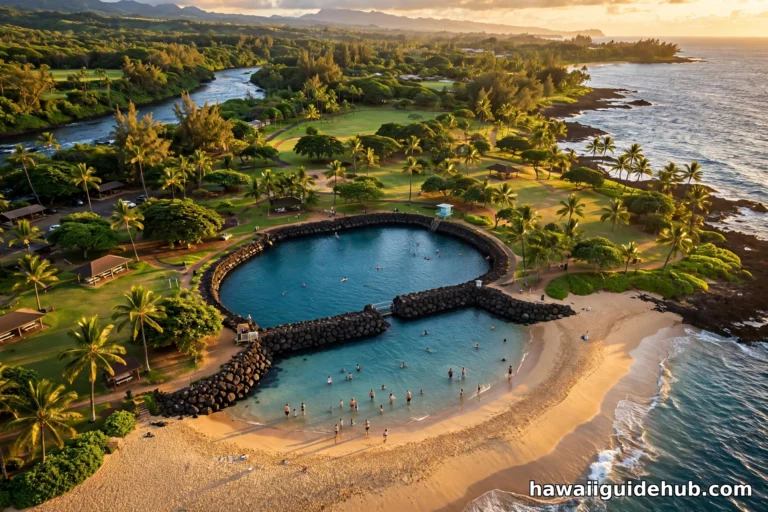
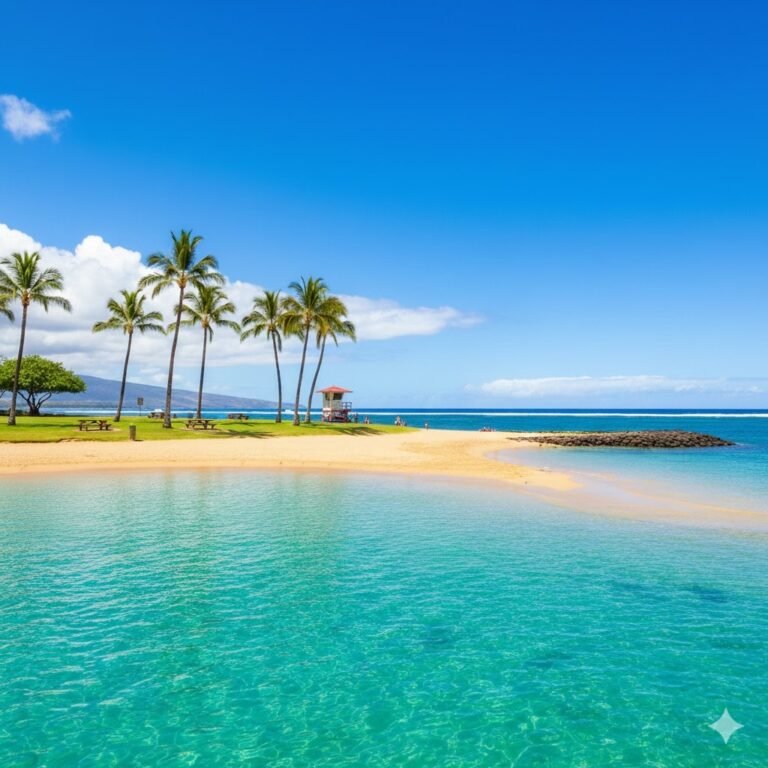
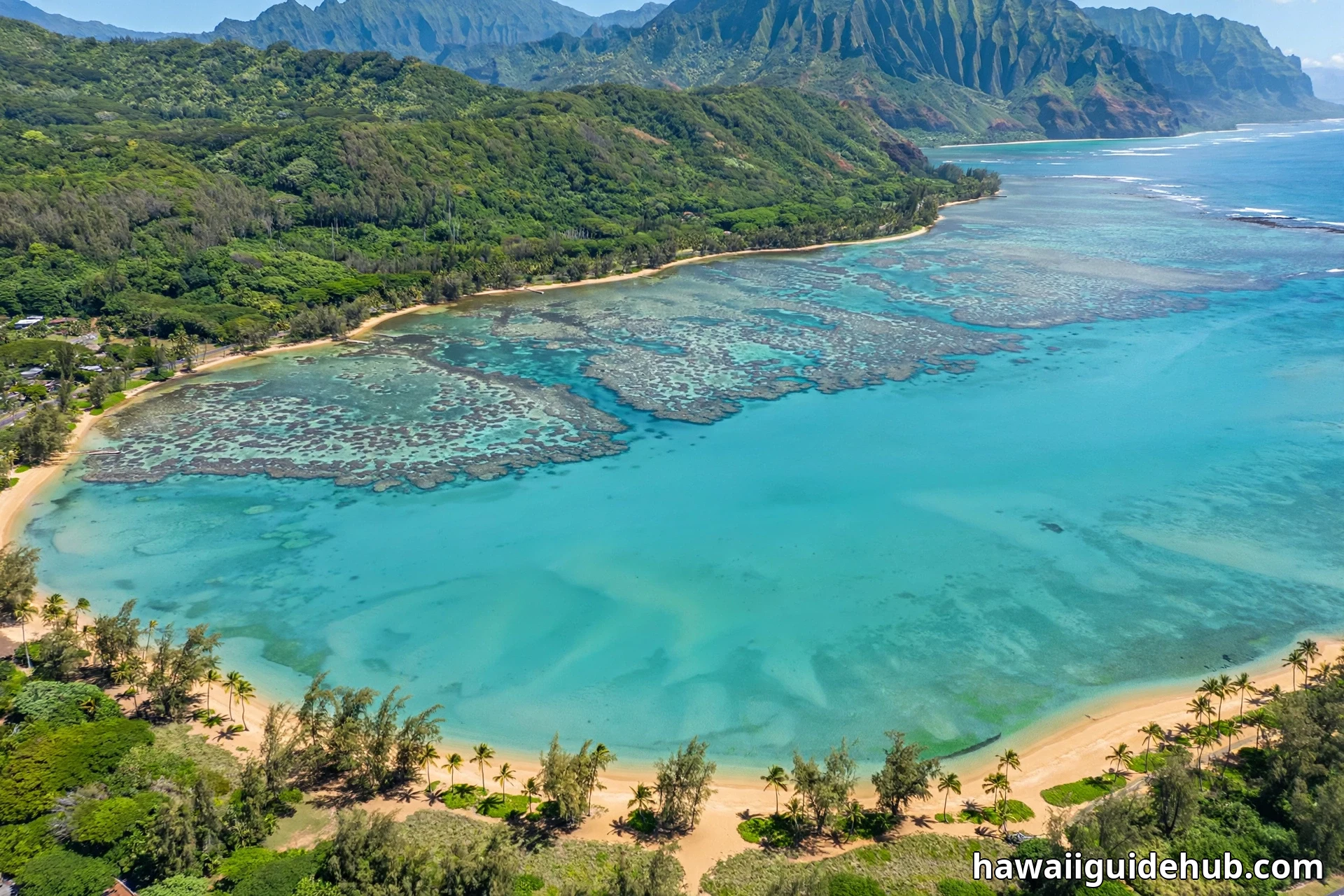
ʻAnini Beach (pronounced ah-NEE-nee) sits on the north shore of Kauaʻi near the town of Kilauea, about ten minutes from Princeville. What sets it apart is the reef. A massive fringing reef, one of the longest in the Hawaiian Islands, breaks the ocean swells long before they reach the sand. The result is a shallow, calm lagoon that stays swimmable even in winter, when north shore surf pounds beaches just a few miles away.
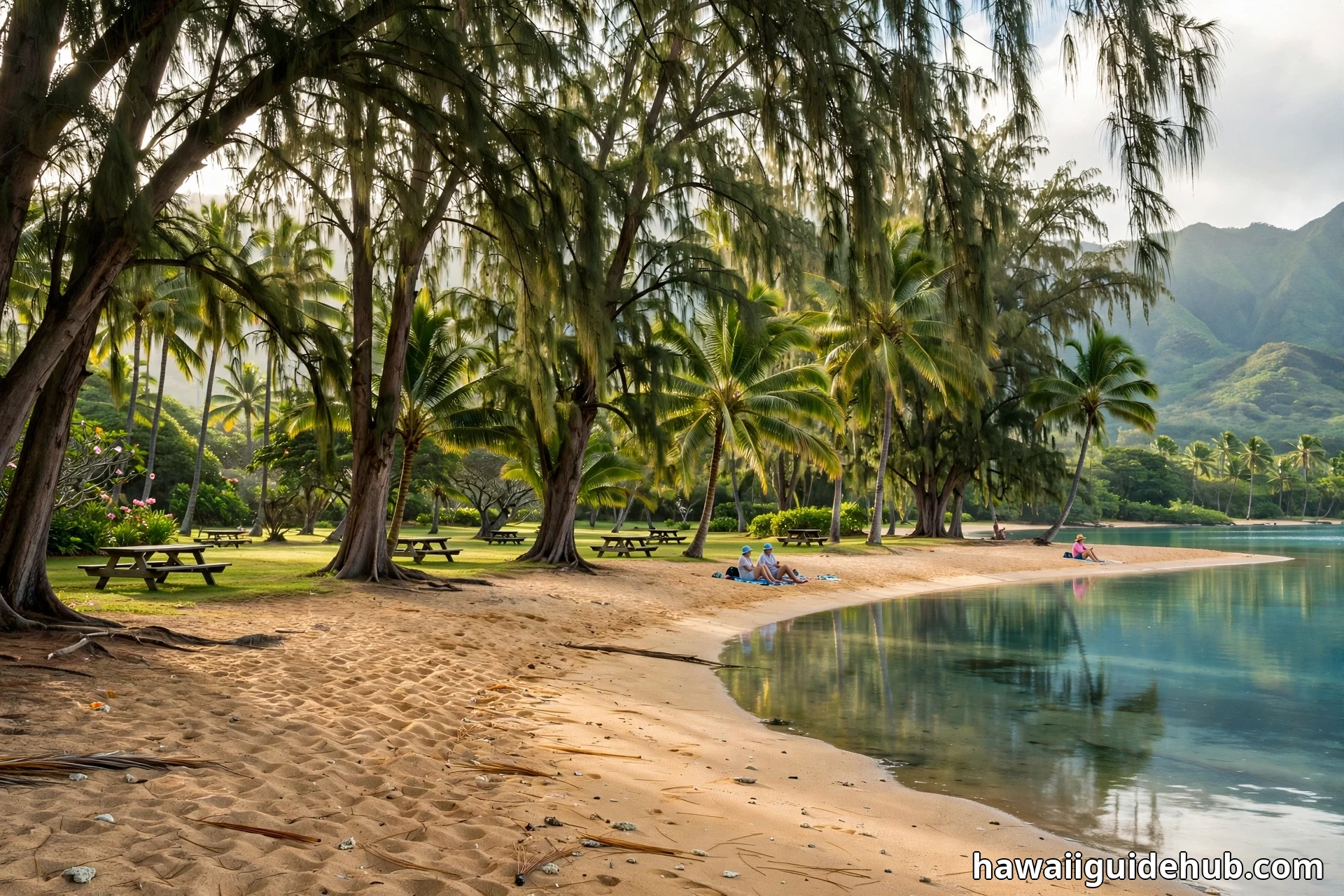
The beach is a narrow ribbon of golden sand shaded by ironwood, false kamani, and palm trees. It never feels crowded the way Poʻipū or Hanalei can. Much of the shoreline fronts private homes, but the public beach park in the middle gives everyone easy access, with a grassy lawn, picnic tables, and room to spread out.
For families with small children, ʻAnini is hard to beat. The water stays shallow for a long way out, the waves are usually gentle ripples, and the snorkeling starts just steps from shore. For everyone else, it is simply one of the most relaxing beaches on Kauaʻi, a place to float, paddle, read under a tree, and watch the sun drop toward the Nā Pali Coast in the late afternoon.
How to Get to ʻAnini Beach
ʻAnini Beach is tucked down a residential road on Kauaʻi’s north shore, and first-time visitors often wonder if their map has led them astray. It has not. The drive is part of the charm.
From Līhuʻe, take Highway 56 (Kūhiō Highway) north toward Princeville. Between mile markers 25 and 26, just past Kilauea town, turn right onto Kalihiwai Road. At the fork, bear slightly left onto ʻAnini Road. Follow ʻAnini Road all the way to the beach. The road runs roughly parallel to the shoreline, and you will see the ocean through the trees on your right as you drive.
Plug just past 4371 ʻAnini Road, Kilauea, HI 96754 into your map app. The drive from Līhuʻe takes about 35 to 40 minutes. From Princeville, it is only five to ten minutes. From Hanalei, plan on ten to fifteen minutes.
The best snorkeling and swimming are toward the western end of ʻAnini Road, near the boat ramp. Many visitors park at the main beach park first, then drive slowly along the road to scout before choosing a spot.
ʻAnini Beach Parking
Parking at ʻAnini Beach is free, and that alone makes it a favorite among locals and budget travelers. There is no parking lot fee, no reservation system, and no attendant. You simply pull off and park.
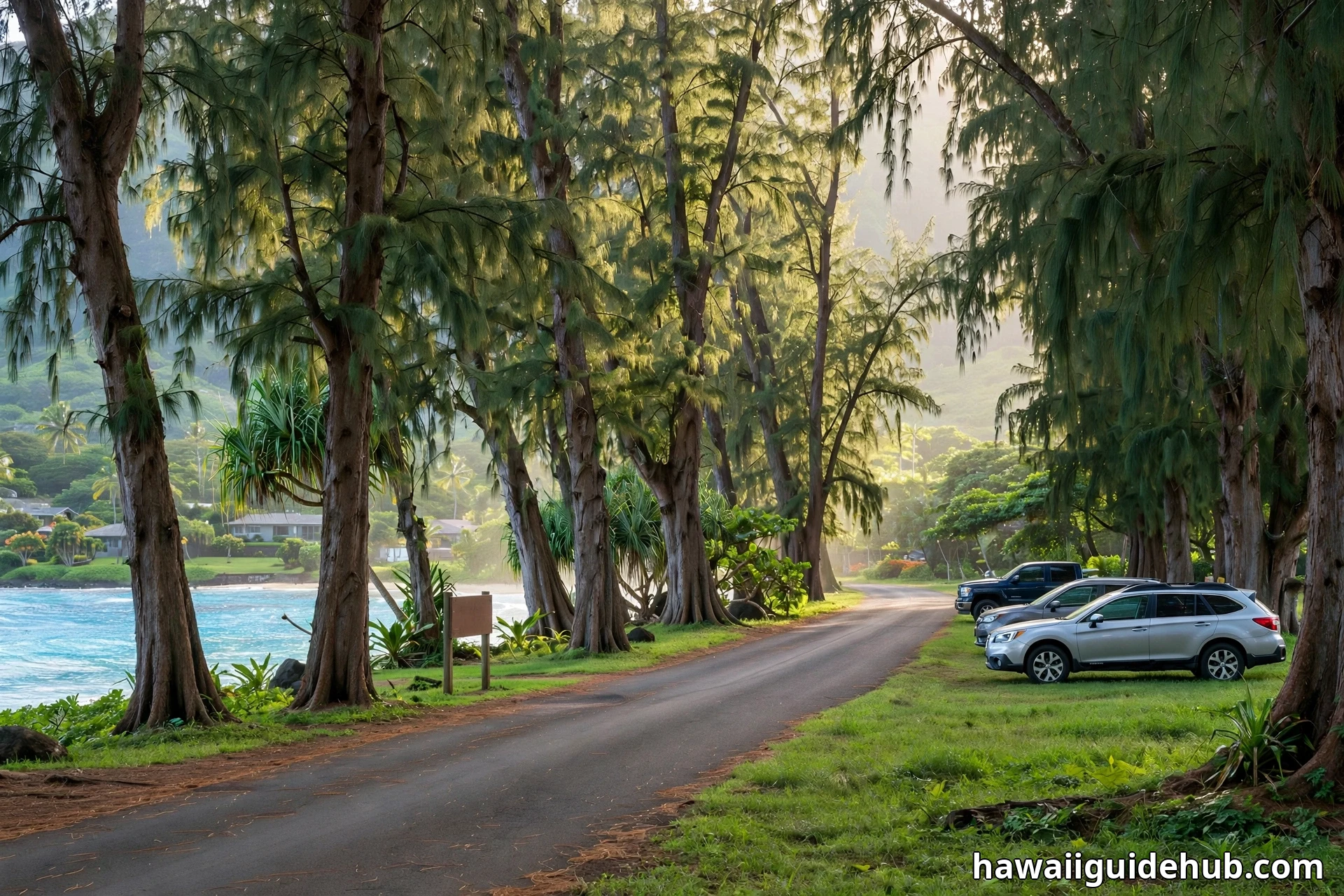
Most of the parking is along ʻAnini Road itself, on the ocean side of the street. Near the county beach park, there is a designated parking area plus roadside spots on the grass. On a typical weekday morning, you will have your pick of spaces. On weekends and holidays, the roadside fills up by mid-morning, so arriving before 9 AM is the smart move.
If you head past the main park area toward the western end of the beach, you will be parking in a residential stretch. Here, be a respectful guest: pull fully off the road, never block a driveway or mailbox, and keep noise down in the early morning. Residents are welcoming to beachgoers who treat the neighborhood with care.
A few practical parking notes. The road is narrow in places, so park as close to the shoulder as you safely can. Do not leave valuables visible in your car, as you would at any Hawaiʻi beach. And if you are towing a trailer or driving a large vehicle, stick to the main beach park area, where turning around is easier.
The county campground has its own parking for registered campers. You will need a county camping permit, which you should arrange well in advance through the County of Kauaʻi.
Facilities at ʻAnini Beach Park
The county beach park at ʻAnini is well equipped for a full day at the beach. Facilities include public restrooms, outdoor showers for rinsing off, an outdoor sink, drinking fountains, and water spigots. There are shaded picnic tables scattered across the lawn, plus trash and recycling bins. It is one of the better-maintained beach parks on the north shore.
What you will not find: lifeguards, food vendors, or equipment rentals. Swim with the usual ocean caution, keep children within arm’s reach, and never swim alone. Rent gear in Princeville before you drive over.
The park’s lawn is a genuine asset. Families claim picnic tables early and let toddlers play on the grass between swims. The shade from the ironwoods is deep and cool, a welcome break from the midday sun.
The Beach Itself
ʻAnini’s shoreline runs for close to two miles, though the character of the beach changes as you move along it. Near the main park, the sand is wide and the water entry is gentle. This is the best area for families and first-time snorkelers. Toward the western end, the beach narrows in places and the water gets slightly deeper near the reef channels, which experienced snorkelers appreciate.
The sand is golden and soft, though narrower than the south shore’s postcard beaches. At high tide, some sections shrink considerably, so check the tide before you pick a far-flung spot. The trees behind the beach provide natural shade, a blessing on sunny days.
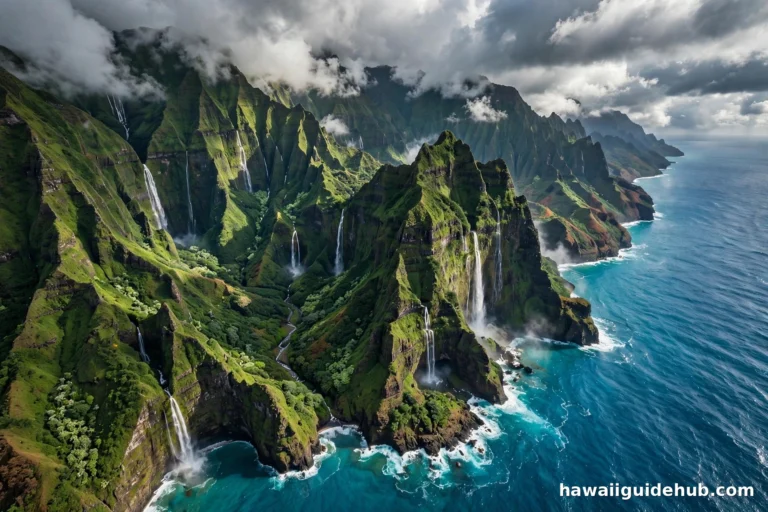
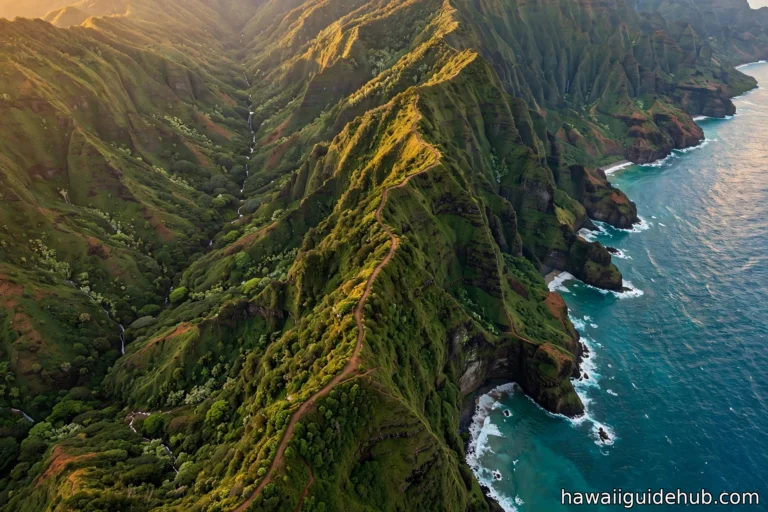
One of the quiet pleasures of ʻAnini is the view. Looking west, the Nā Pali Coast rises in the distance, its green cliffs catching the afternoon light. Looking out to sea, the reef paints shifting patterns of turquoise and deep blue.
Snorkeling at ʻAnini Beach
Snorkeling is the main event at ʻAnini, and it is some of the most beginner-friendly snorkeling on Kauaʻi. The reef sits close to shore, the water is shallow and calm, and the marine life is abundant. You can see plenty without swimming far at all.
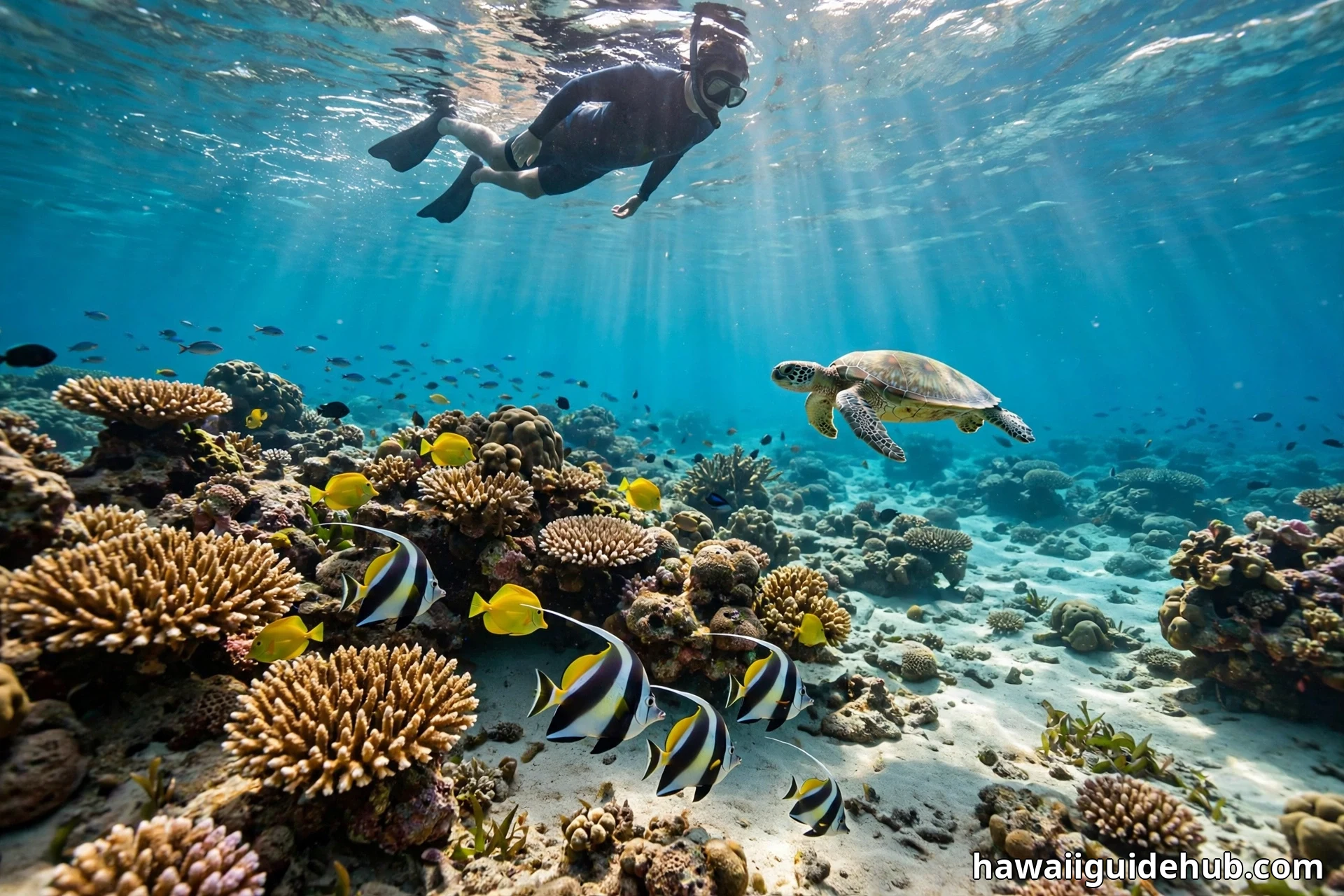
The sweet spot for snorkeling is near the boat ramp toward the western end of ʻAnini Road. Facing the ocean, work the right side of the ramp area, where coral heads rise from the sandy bottom in water just a few feet deep. Hawaiian green sea turtles (honu) are regulars here, often seen gliding over the reef or resting on the sand. You will also spot Moorish idols, butterflyfish, parrotfish, tangs, and if you are lucky, Hawaiʻi’s state fish, the humuhumunukunukuāpuaʻa.
Mornings bring the calmest water and the clearest visibility, before the trade winds pick up around midday. At low tide the water can be frustratingly shallow in spots, so aim for a mid to rising tide if you can. Year-round snorkeling is possible here thanks to the reef’s protection, which is rare for a north shore beach.
Reef etiquette is essential. Never stand on or touch the coral, which is a living animal that breaks easily and takes years to recover. Use reef-safe sunscreen, applied at least 15 minutes before you enter the water. Keep a respectful distance from turtles: federal and state guidance asks for at least 10 feet of space, as our guide to Hawaiian green sea turtle conservation and snorkeling etiquette explains. And as always, snorkel with a buddy and stay aware of your limits.
Swimming and Other Water Activities
Swimming at ʻAnini is about as safe as ocean swimming gets on Kauaʻi’s north shore, but the ocean still deserves respect. The reef keeps the big swells out, and the lagoon is shallow enough that most adults can stand in many areas. Children love it here because they can splash and wade without waves knocking them over.
That said, conditions change. Winter swells can push water over the reef and create stronger currents near the reef channels and the boat ramp. If the water looks rough or murky, stay out or stick to wading. With no lifeguard on duty, you are your own safety officer.
Beyond swimming and snorkeling, ʻAnini is a lovely spot for stand-up paddleboarding and kayaking, two of the most accessible outdoor adventures in Hawaii. The flat water inside the reef is ideal for beginners. Windsurfers also use ʻAnini when the trades are up, particularly in the afternoons. Bring your own gear or rent in Princeville, as there are no rentals at the beach itself.
Fishing from shore is popular with locals, especially in the early morning and evening. If you bring a rod, be mindful of swimmers and snorkelers, and check current state fishing regulations before you go.
When to Visit ʻAnini Beach
ʻAnini is a year-round beach, which is one of its great advantages. Summer brings the calmest conditions, warmest water, and the most reliable snorkeling. Winter is still very visitable thanks to the reef, though you should check surf conditions and expect the water to be a touch cooler and occasionally choppier during big north swells.
Time of day matters more than time of year. Early morning is the golden window: calm winds, glassy water, the best snorkeling visibility, and easy parking. By early afternoon, the trade winds often ripple the surface and reduce underwater clarity. Late afternoon brings beautiful light and fewer people, making it a lovely time for a beach walk or a sunset picnic, though snorkeling is usually past its best by then.
Weekdays are noticeably quieter than weekends, when local families fill the park’s picnic tables. If you visit on a weekend, arrive before 9 AM to get parking near your preferred spot.
What to Bring
ʻAnini rewards the well-prepared. Pack reef-safe sunscreen, plenty of water, and snacks or a full picnic, since there are no food vendors at the beach. Bring snorkel gear, beach chairs, and a shade tent or umbrella if you want guaranteed shade. Water shoes are useful for the rocky entries in some areas.
If you plan to stay into the evening, bring insect repellent. The trees and nearby stream can mean mosquitoes after sunset.
Camping at ʻAnini Beach
ʻAnini Beach is one of the few Kauaʻi beaches with a county campground, and it is a beloved option for budget travelers and locals. The campground sits right behind the beach, with tent sites on the grass under the trees, plus the park’s restrooms and showers.
Camping requires a permit from the County of Kauaʻi, and permits are limited, so book early. Bring all food, water, and supplies, keep campsites clean, and observe quiet hours. The campground’s beachfront location means you can fall asleep to the sound of the reef and wake up steps from the water.
Nearby Stops Worth Your Time
ʻAnini makes a great anchor for a north shore day and deserves a spot on any list of things to do on Kauaʻi. The Kīlauea Point National Wildlife Refuge and its historic lighthouse are just minutes away. Princeville, five to ten minutes west, has grocery stores and rental shops. Hanalei, another ten minutes beyond, offers one of the most beautiful bays in Hawaiʻi. Many visitors pair a morning at ʻAnini with an afternoon exploring the best things to do in Hanalei.
Tips for a Perfect ʻAnini Beach Day
Arrive before 9 AM for easy parking, calm water, and the best snorkeling visibility. Set up near the boat ramp for snorkeling, or near the main park for picnic tables and restrooms. Reapply reef-safe sunscreen often, drink plenty of water, and give the reef and turtles their space.
Park with care along the road, keep driveways clear in the residential stretch, and pack out all trash. Check the surf and weather before you go, and if the water looks rough, enjoy the beach from the sand instead. ʻAnini is at its best when you slow down: float in the lagoon, watch the turtles, and let the north shore set the pace.
ʻAnini Beach FAQs
Is parking free at ʻAnini Beach?
Yes. All parking at ʻAnini Beach is free. Most visitors park along ʻAnini Road on the ocean side of the street, near the beach park or toward the western end. Arrive before 9 AM on weekends and holidays for the easiest parking.
Is ʻAnini Beach good for snorkeling?
It is one of the best beginner snorkeling spots on Kauaʻi. The fringing reef sits close to shore in shallow, calm water, with turtles, reef fish, and coral easily visible. Mornings offer the clearest water.
Are there lifeguards at ʻAnini Beach?
No. ʻAnini Beach does not have lifeguards. The reef-protected lagoon is generally calm, but you should still swim with caution, supervise children closely, and never swim alone.
Can you swim at ʻAnini Beach in winter?
Usually, yes. The long fringing reef blocks most winter swells, keeping the lagoon swimmable when other north shore beaches are dangerous. Always check current surf conditions first, and stay out if the water looks rough.
How do you pronounce ʻAnini?
It is pronounced ah-NEE-nee. The ʻokina at the start indicates a glottal stop, a brief pause before the first syllable.
Is ʻAnini Beach good for kids?
It is one of the most kid-friendly beaches on Kauaʻi. The water is shallow and calm, the sand is soft, and the park has restrooms, showers, picnic tables, and shade. Just remember there is no lifeguard, so keep children within arm’s reach in the water.
ʻAnini Beach is the north shore’s quiet answer to Kauaʻi’s bigger, busier beaches. It does not have the drama of the Nā Pali Coast or the fame of Hanalei Bay, but it has something just as valuable: calm, clear water you can count on, free parking steps from the sand, and a reef full of life waiting just offshore. Come early, snorkel the morning glass, picnic under the ironwoods, and you will understand why locals have kept this beach to themselves for so long.