Maluaka Beach Maui: Snorkeling, Sea Turtles, and South Maui’s Favorite Local Spot

There is a stretch of sand at the quiet end of South Maui where the morning routine runs on turtle time. Before the trade winds pick up, locals slip into the water off Maluaka Beach with masks and fins, and almost every one of them comes back with the same story: a Hawaiian green sea turtle, grazing calmly over the reef like it had the place reserved. They did not swim far to find it. That is the whole appeal of Maluaka Beach. It is not the biggest beach on Maui, and it is not the loudest. It is the one where the turtles come to you.
Regulars call it Turtle Town, and the name has stuck because it is honest. The fringing reef off the south end of the beach is a feeding ground for honu, the Hawaiian green sea turtle, and on a calm morning you are more likely to see one than not. Pair that with soft golden sand, free parking, real restrooms, and a neighborhood feel, and you get a beach day that costs nothing and delivers plenty. This guide covers how to get there, where to park, where to snorkel, and the few rules that keep this spot special.
Where Maluaka Beach Is
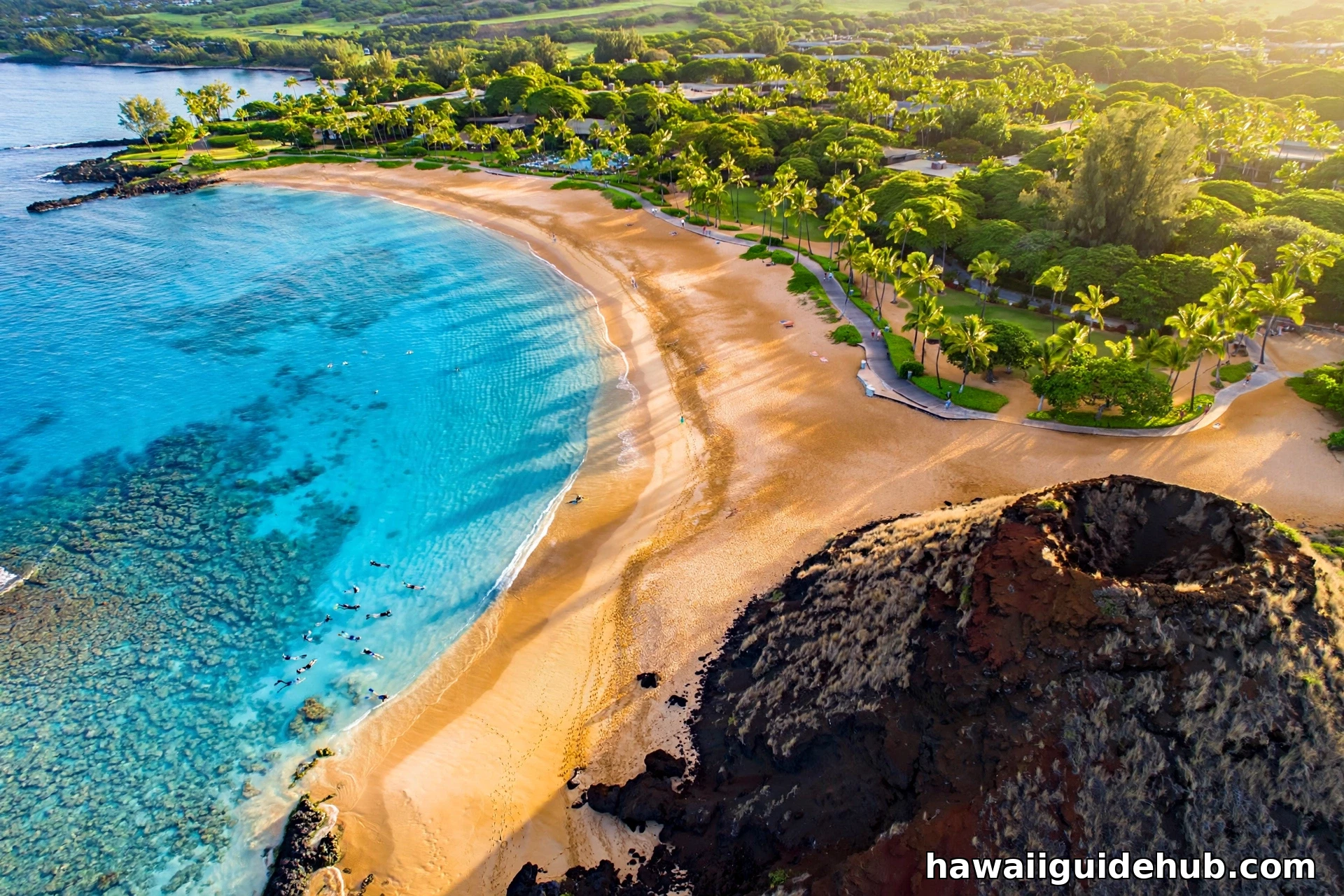
Maluaka Beach sits in Makena, at the southern end of the Wailea resort district on Maui’s south shore. It is the kind of beach you find at the end of the road, past the last resort and just before the lava fields take over the coastline. From Kihei, it is about a 20 minute drive south. From the Wailea resorts, it is roughly 10 minutes.
The beach faces southwest, which means it catches some of the best light on the island in the late afternoon and sits in the lee of the West Maui Mountains, keeping the water calm on most days. To the south, the dark cone of Puʻu Olai rises from the shoreline, a landmark you can see from the sand. On clear days you can also spot Molokini Crater offshore and the island of Lānaʻi on the horizon.
Do not expect a big sign announcing your arrival. Beach access here is marked with modest “Public Beach Right-of-Way” signs, which is exactly how the locals like it. If you are planning a wider Maui trip, start with our reasons to visit Maui to see where this beach fits into your island plans.
Why Everyone Calls It Turtle Town
The nickname is not marketing. The reef off Maluaka Beach grows the limu, or seaweed, that Hawaiian green sea turtles love to eat, and honu have been coming here to graze for as long as anyone can remember. They are so regular that boat tours departing from nearby Kihei Harbor built entire “Turtle Town” snorkel trips around these waters, though you do not need a boat to find them. Shore snorkelers see turtles here constantly.
A turtle on the reef is going about its business, and it deserves space. Hawaii’s guidance is simple: stay at least 10 feet (about 3 meters) away from sea turtles, never touch one, and never chase or corner it. The turtles at Maluaka are famously unbothered by people, which is exactly why the rule matters. A calm turtle is a turtle that keeps coming back. Our sea turtle etiquette guide covers the full rules and the conservation story behind them.
In Hawaiian culture, the honu is an ʻaumakua, a family guardian spirit, and a symbol of longevity and peace. Seeing one glide over the reef is the kind of moment people plan whole trips around, and at Maluaka Beach it happens on an ordinary Tuesday morning.
Snorkeling the South-End Reef
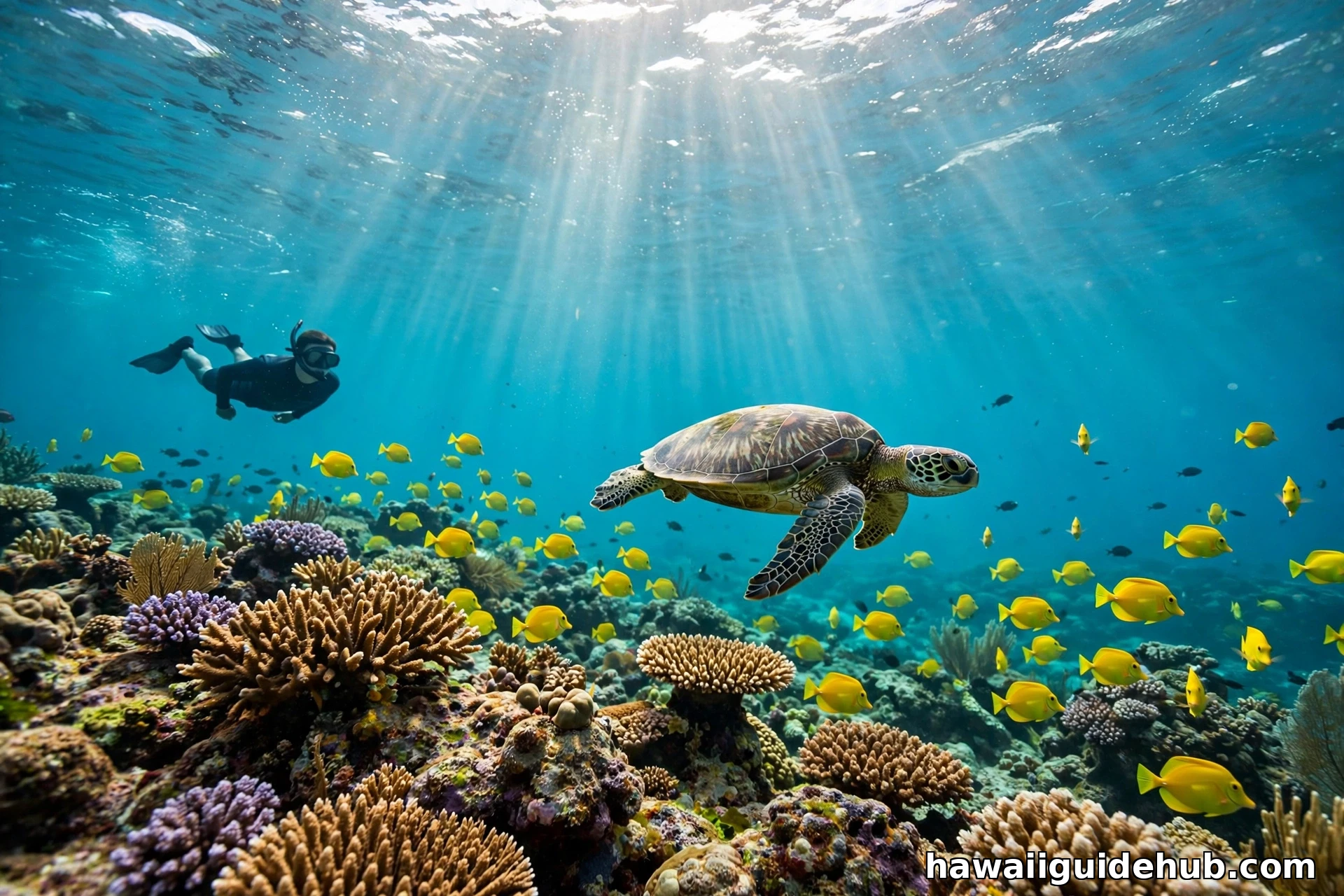
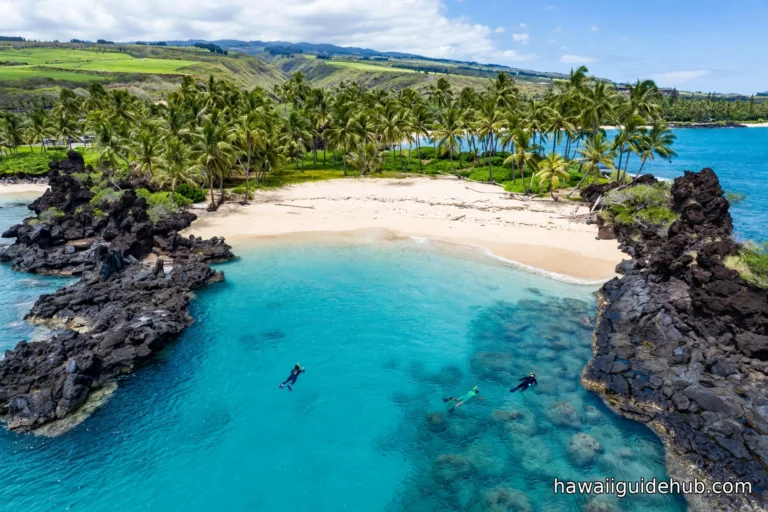
The snorkeling at Maluaka Beach is concentrated at the south end, where a fringing reef starts near the rocky point and curves outward into the bay. This is where the turtles feed and where the reef fish gather. The entry is friendly: soft sand leads into the water with very little rock underfoot, so you can walk out to waist depth, put on your fins, and swim out.
Swim out about 50 yards from the south end and the sandy bottom gives way to coral heads, ledges, and ravines. Expect to see schools of yellow tang, Moorish idols, convict tang, butterflyfish, and parrotfish working the reef. Red pencil urchins dot the rocks. And then, usually when you least expect it, a turtle will rise from the reef or cruise past at eye level, completely unhurried.
Morning is the magic window. The wind is down, the water is glassy, and visibility is at its best before the afternoon trades ripple the surface. By midday the water can get choppy, especially on windier days. Always check conditions before you go in, and if the surf is up or the water looks murky, save the snorkel for another day. The north end of the beach is sandier and better for swimming than snorkeling.
Maluaka is one of Maui’s most rewarding outdoor adventures in Hawaii precisely because it needs no boat, no tour, and no reservation. Just bring a mask, arrive early, and swim out.
From Shore or By Boat: Which Turtle Town Is Right for You
Here is something first-time visitors often miss: “Turtle Town” is not one pinned spot on a map. It is a nickname that boat captains and locals use for a stretch of the Makena coastline where turtles reliably hang out, and Maluaka Beach is the shore-accessible heart of it. Snorkel boats leaving Kihei Harbor run dedicated Turtle Town trips to nearby reefs, and they are a fine option if you want a guided experience, gear provided, and a captain who knows exactly where the turtles were yesterday.
But the shore option at Maluaka has real advantages. It costs nothing. You go on your own schedule, stay as long as you like, and mix snorkeling with beach time instead of being on a boat’s clock. The reef off the south end is the same reef the boats visit, and the turtle sightings are just as reliable on a calm morning. The tradeoff is that you are on your own for gear, safety judgment, and reading conditions. If you are a confident swimmer with your own mask and fins, the shore wins. If you are new to snorkeling or want someone else handling the logistics, a boat trip is money well spent.
One more consideration: boats cannot drop you on the beach itself. If your idea of a perfect day is an hour on the reef followed by a nap under a palm, with lunch from your own cooler in between, the shore version of Turtle Town is built for exactly that.
Maluaka Beach With Kids
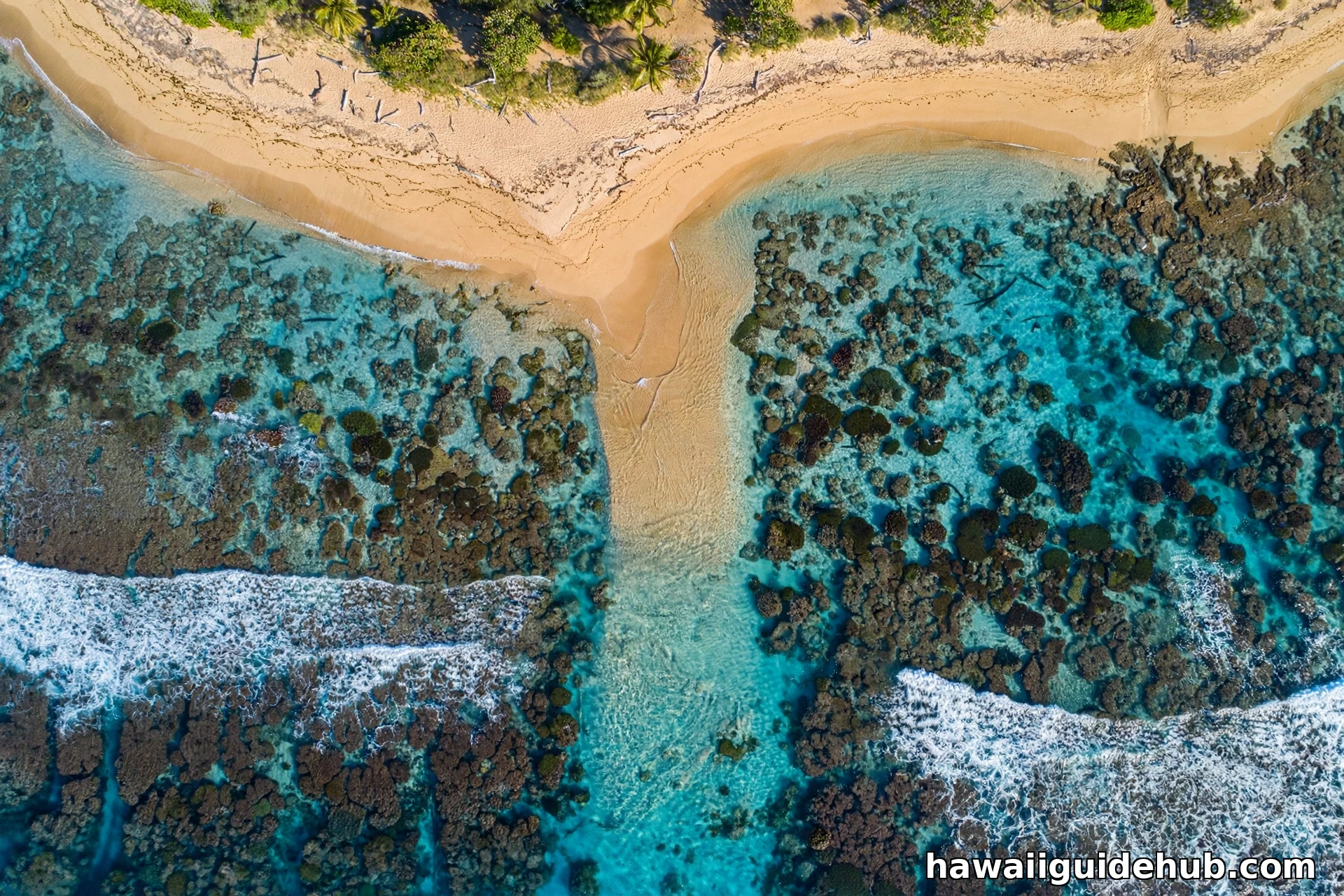
Maluaka Beach works well for families, with a few caveats worth knowing in advance. The middle of the beach has the gentlest entry and the most manageable waves, making it the best zone for younger swimmers. The sand is soft, there is room to spread out, and the grassy area by the south lot gives kids a place to run around that is not sand.
The caveats: there is no lifeguard, so an adult needs to be the designated water watcher, full stop. The south-end reef that makes the snorkeling great also means rocky patches in the water at that end, so keep small children toward the sandy middle. And because there is no food for sale, pack more snacks and water than you think you need. Sun protection matters double here. The sun reflects off both sand and water, and kids burn fast. Rash guards, hats, and reef-safe sunscreen applied before you leave the car will save the afternoon.
For older kids who can swim confidently, Maluaka is a wonderful first real snorkeling spot. The sandy entry is forgiving, the reef is close, and spotting a turtle on your first outing is the kind of core memory that sticks. Go early, go on a calm day, and stay within the reef area rather than swimming out past it.
The Beach Day Itself
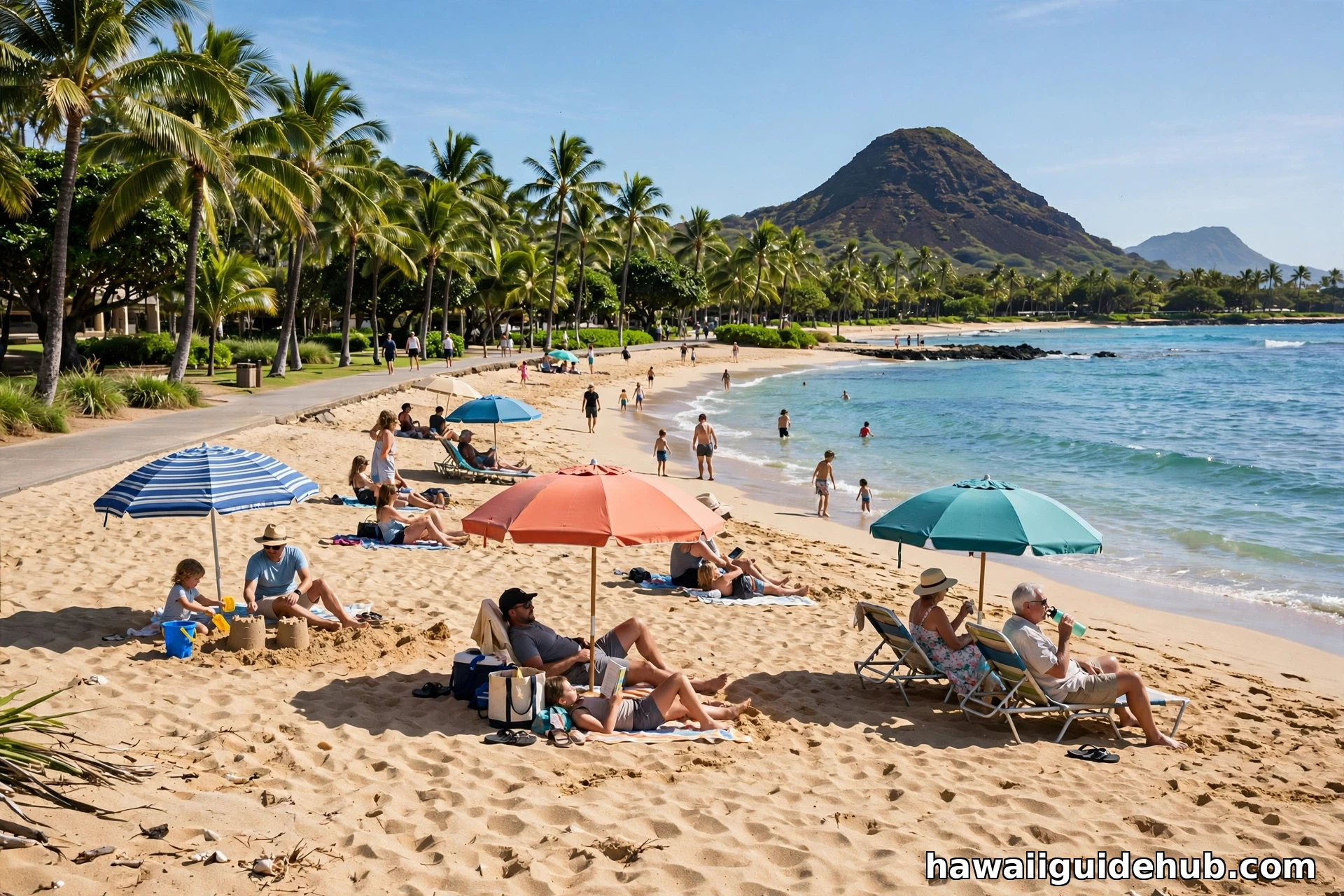
Even if you never put on a mask, Maluaka Beach earns its keep. The sand is soft and golden, the shoreline is long enough that you can find your own patch even on busy days, and the swimming is pleasant in the calmer middle of the beach. Families like it because the waves are usually manageable and there is plenty of room for kids to play.
It is also a genuinely pretty place to do nothing. The grassy knoll above the south end has shade trees and a view straight out to sea, and in winter you can sometimes spot humpback whales breaching offshore or spinner dolphins cruising past. Sunsets here face the open ocean, and the light on Puʻu Olai at golden hour is worth staying for.
Parking: The Two Lots You Need to Know
Maluaka Beach has two free public parking lots, and knowing which is which saves a lot of circling.
North lot
The larger of the two. Drive south on Makena Alanui from Wailea, turn right onto Honoiki Street, then left onto Makena Road. Continue past Keawalaʻi Church and you will find the lot across the street from the church. Posted park hours run from 7:00 a.m. to 8:00 p.m. There is no street parking on the north side, so use this lot.
South lot
The smaller lot, and the one closest to the best snorkeling. Continue south on Makena Alanui, turn right onto Makena Keonoio Road, and follow it to the end. A paved walkway lined with palms leads from the lot to the beach, with small access paths and steps down to the sand. This lot fills first, so on weekends and holidays it can be full by midmorning.
The honest advice: arrive early. Both lots are free, both fill up, and if they are full your options are limited. The south lot puts you closest to the reef and the grassy picnic area, so aim there first if snorkeling is the plan.
Facilities and What Is (and Is Not) Here
Maluaka Beach is well set up for a public beach access, without feeling developed.
- Restrooms: Flushing toilets with running water at both the north and south ends.
- Showers: Outdoor showers at both ends for rinsing off.
- Picnic area: Grassy knoll near the south lot with picnic tables and shade trees.
- Walkway: A paved palm-lined walkway parallels the beach on the south end, with steps and paths down to the sand.
- Lifeguard: None. Swim with a buddy and use normal ocean caution.
- Food and drink: None at the beach. There are no vendors, snack stands, or restaurants, so pack a cooler.
Park hours are posted as 7:00 a.m. to 8:00 p.m. The beach is public and free, no reservations or permits needed.
Honest Tips Before You Go
A few things worth knowing so the day goes smoothly.
- No lifeguard on duty. This is the single most important fact about Maluaka Beach. The water is usually calm, but conditions change. Never snorkel alone, and keep a close eye on kids.
- Give turtles 10 feet of space. Federal and state law protect honu. Admire, photograph, and let them be.
- Use reef-safe sunscreen. Hawaii law bans sunscreens containing oxybenzone and octinoxate. Apply before you arrive so it has time to absorb.
- Do not stand on the reef. Coral is alive and fragile. Float over it, and if you need to rest, find sand.
- Bring everything you need. No food, no rentals, no shops at the beach. Water, snacks, shade, and snorkel gear all come with you.
- Watch the wind. Calm mornings are the rule for good snorkeling. If whitecaps are showing by noon, the afternoon session is a maybe.
These are the same habits that protect Hawaii’s marine life everywhere you swim, and they matter most at a place this heavily loved.
What Is Nearby
Maluaka Beach makes a good anchor for a South Maui day. Makena State Park, home to Big Beach, is just south past Puʻu Olai. The Wailea resort area to the north has restaurants, shops, and the Wailea Beach Path for a sunset stroll. And if the lava fields at the end of the road sound interesting, La Perouse Bay is a short drive further south.
Best Time to Visit
For snorkeling, mornings win year round, and summer brings the calmest water. Winter can bring bigger swells to south-facing shores, so check the surf forecast in the colder months. Winter also brings humpback whales, and Maluaka’s elevated grassy knoll is a fine land-based whale watching perch from December through March. Weekdays are noticeably quieter than weekends.
See Maluaka Beach on Video
A quick look at what the snorkeling is actually like at Maluaka Beach, turtles included.
The Bottom Line
Maluaka Beach is the rare spot that lives up to its nickname. Turtle Town delivers: regular honu sightings from shore, a reef worth the swim, soft sand for the hours between, and enough parking and facilities to make it easy. It asks little in return, just an early arrival, reef-safe sunscreen, and ten feet of respect for the turtles. Give it that, and it will give you one of the best free mornings on Maui.