Turtle Beach Oahu: The Complete Laniakea Beach Guide

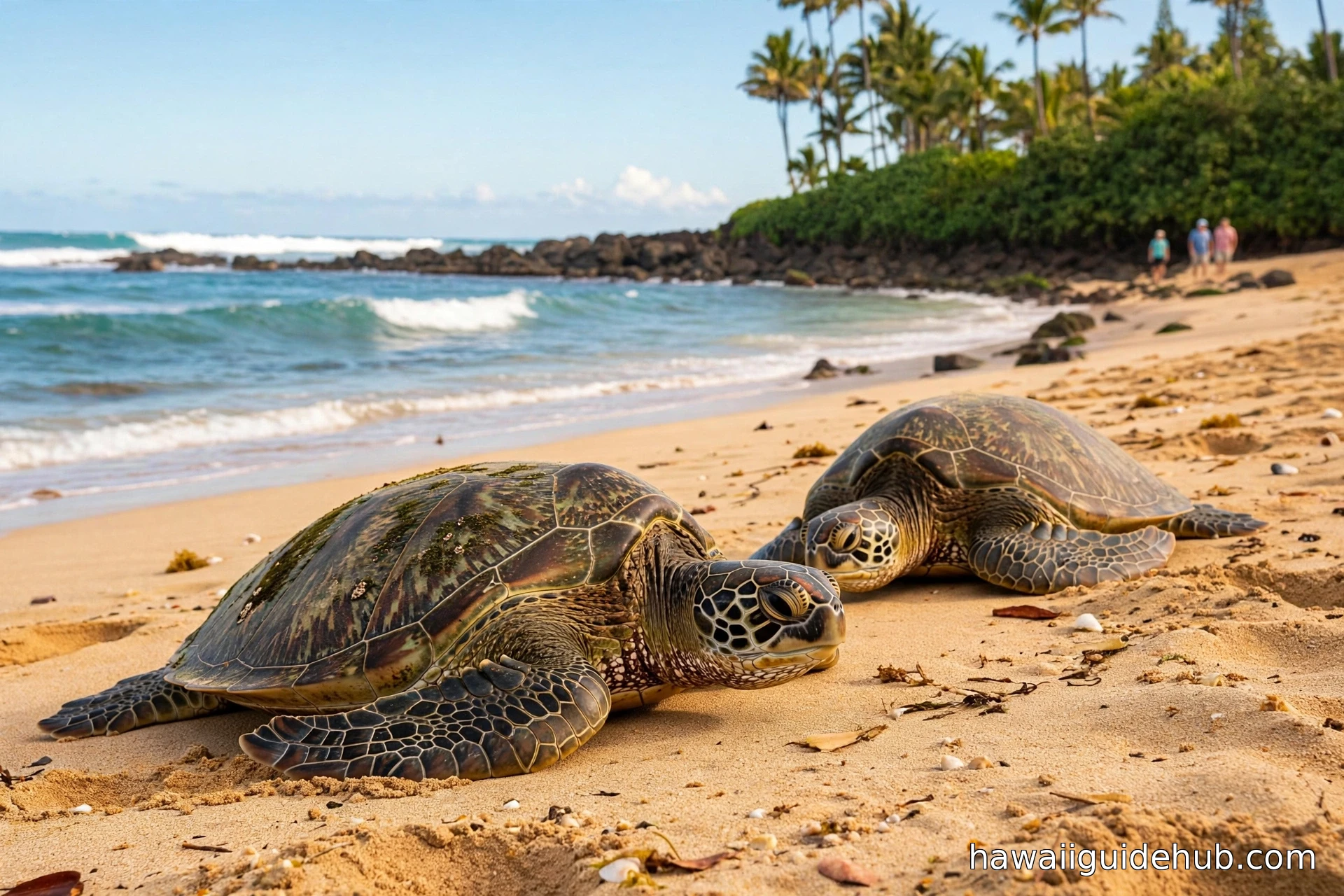
There is a particular kind of silence that falls over a crowd when a sea turtle hauls itself out of the surf. Conversation drops to a murmur. Cameras come up slowly. Nobody is told to be quiet, but everyone is. At Laniakea Beach on Oahu’s North Shore, that silence happens daily, sometimes a dozen times a day, because this unassuming stretch of sand is one of the most reliable places on Earth to watch Hawaiian green sea turtles rest in the open.
Locals call it Turtle Beach. The official name is Laniakea Beach, and the distinction matters because there is no sign on the highway announcing either one. Drivers blow past it constantly, eyes fixed on the surf breaks and shrimp trucks further down the road, never knowing that a left turn into a small roadside pullout would put them within twenty feet of an animal that has been swimming these waters since before humans had boats.
This guide covers everything you need for a visit: where the beach is and how to find it, when the turtles are most likely to be ashore, the viewing rules that protect them, and the practical details like parking and swimming conditions that catch first-timers off guard.
Where Is Turtle Beach on Oahu?
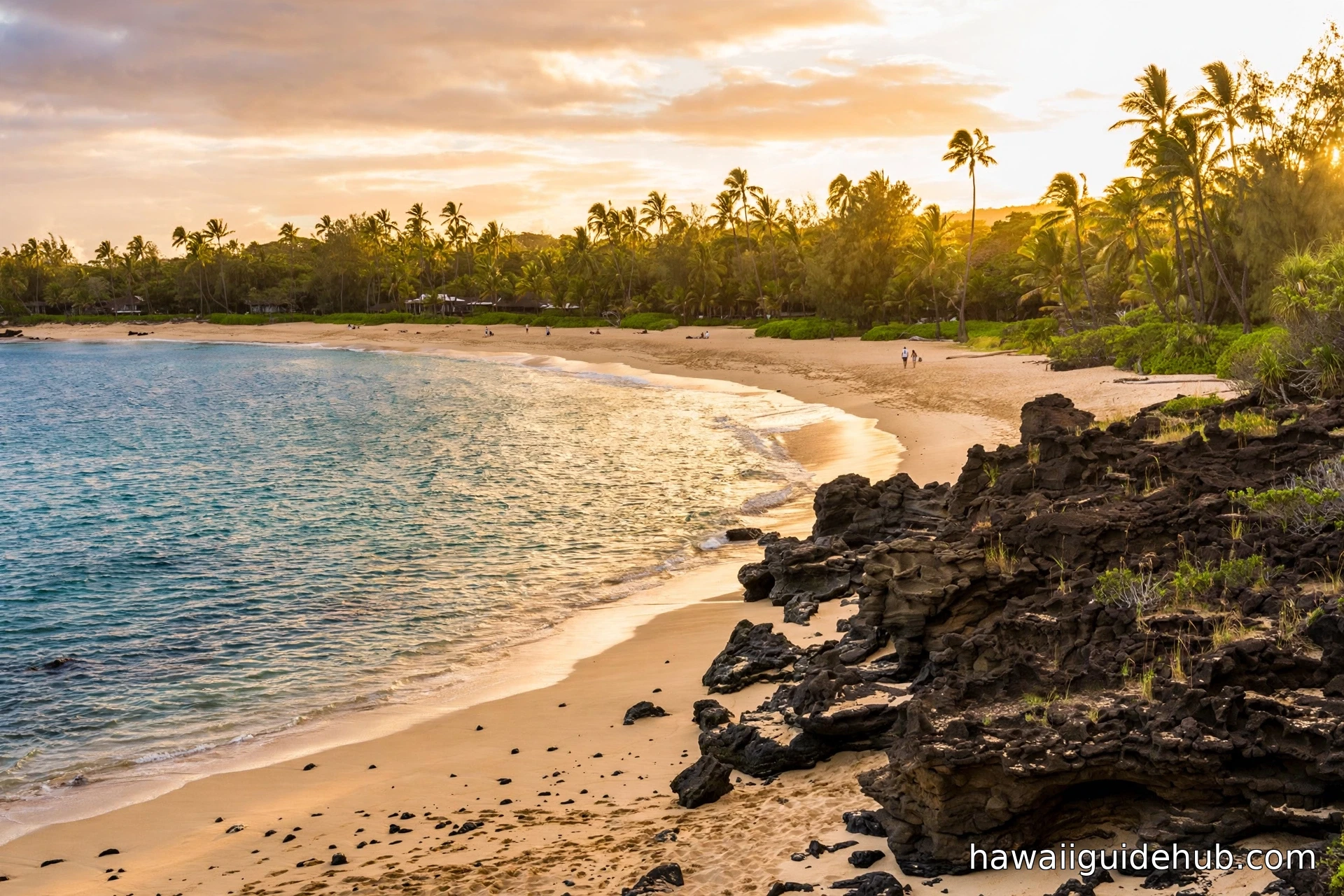
Turtle Beach is the nickname for Laniakea Beach, a public beach on Oahu’s North Shore along the Kamehameha Highway, roughly one mile east of Haleiwa town. If you are driving from Haleiwa toward Waimea Bay, it sits on the ocean side of the highway, tucked between residential stretches with no grand entrance. There is a small beach access opening and an unpaved parking area across the street. If you reach Waimea Bay, you have gone too far.
The drive from Waikiki takes about 45 minutes to an hour depending on traffic. From Honolulu International Airport, plan on roughly 50 minutes. The route is straightforward: take H-1 west to H-2 north, follow it to the Kamehameha Highway, and continue through Haleiwa. The highway hugs the coastline here, and the ocean stays in view for most of the final stretch.
One honest warning about finding it: there is no big sign. The beach reveals itself as a gap in the roadside vegetation with cars clustered along the shoulder. Navigation apps know it as Laniakea Beach, so punch that in rather than “Turtle Beach,” which can confuse the search results.
Why the Turtles Come to Laniakea
The Hawaiian green sea turtle, or honu, has been coming ashore at Laniakea since at least 1999, when researchers with NOAA’s Marine Turtle Research Program began documenting the basking behavior here. What makes this beach special is the food. A rocky limestone shelf runs along parts of the shoreline, and it grows thick with limu, the Hawaiian seaweed that honu graze on. The turtles feed in the shallows, then haul out onto the sand or the flat rocks to rest and warm themselves in the sun.
Basking is unusual. Of all the sea turtle populations in the world, only a handful regularly come ashore during daylight to rest, and Hawaii’s green turtles are among them. A basking turtle is not sick, stuck, or asking for help. It is doing exactly what it is supposed to do: conserving energy, regulating its body temperature, and digesting its last meal of limu. The kindest thing you can do is let it finish.
The turtles at Laniakea are residents, not passersby. Volunteers who monitor the beach know many of them individually. Some have been returning to this same stretch of sand for decades. That loyalty to a place is part of what makes the viewing here so reliable, and part of why the protections around them are taken so seriously.
An adult Hawaiian green turtle can weigh 300 pounds or more and live past 80 years. They are vegetarians as adults, grazing almost exclusively on limu and seagrass, which is why the algae-covered shelf at Laniakea functions like a dinner table they never have to leave. Juveniles start life as omnivores in the open ocean, drifting with currents for years before recruiting to nearshore feeding grounds like this one. The turtles you see basking are the survivors of long odds: only a tiny fraction of hatchlings reach adulthood, which is one more reason the protections around them are strict.
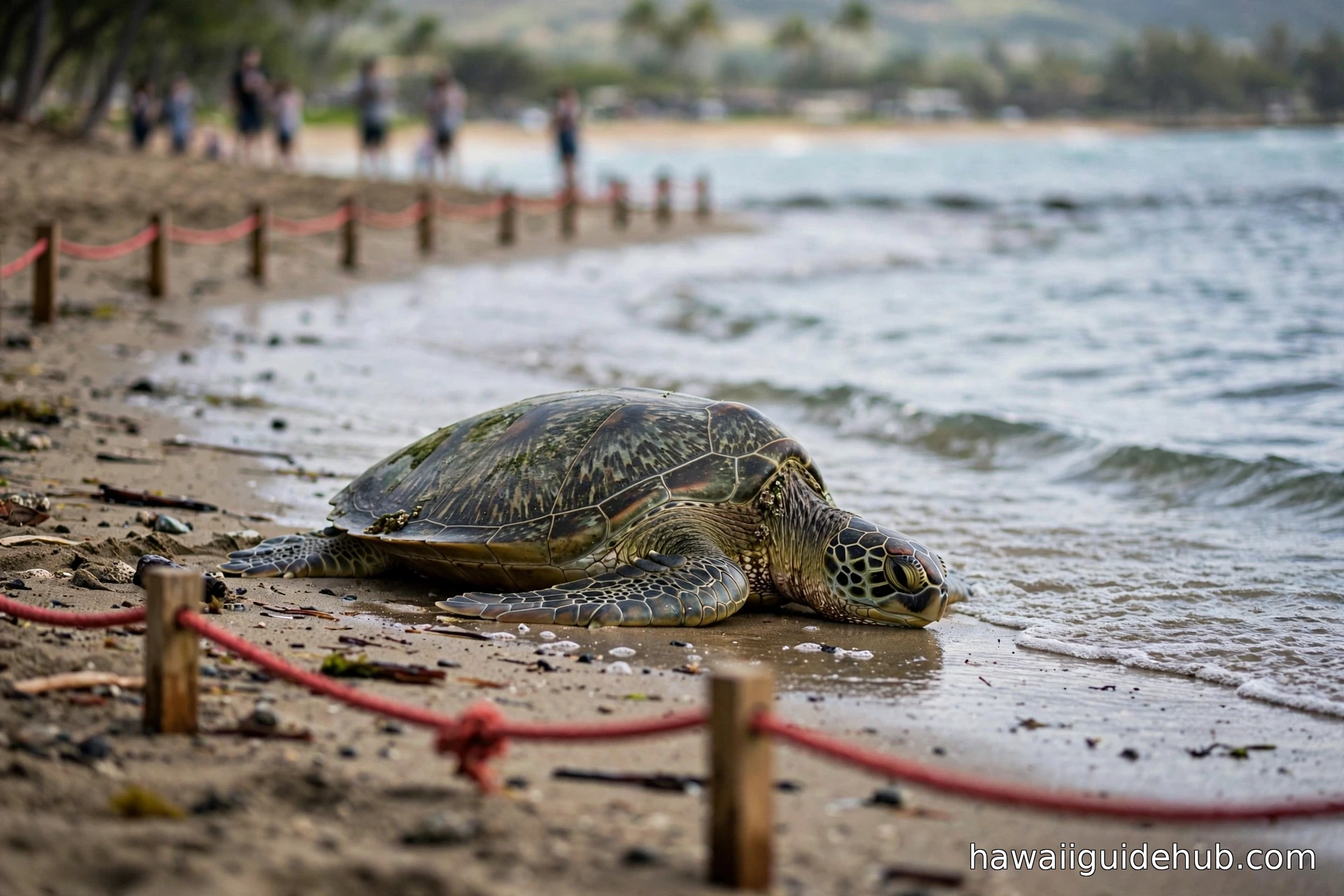
Much of the day-to-day protection at Laniakea comes from volunteers with Malama na Honu, a local nonprofit that stations trained monitors at the beach. They set the red rope perimeters each morning, answer visitor questions, and gently redirect anyone who drifts too close. Their presence is the reason the beach works as well as it does: without someone marking the boundary, well-meaning crowds would inevitably press in. If you visit, treat the volunteers as the authority on the sand. They know the resident turtles by name and can tell you which ones are regulars.
The Best Time to See Turtles at Turtle Beach
You can see honu at Laniakea year-round, but your odds improve with timing. Midday is the sweet spot. Between roughly 11 a.m. and 1 p.m., turtles that have been feeding in the morning often come ashore to bask through the warmest part of the day. Late afternoon brings a second wave, and on calm summer evenings, visitors have counted twenty or more turtles resting on the sand near sunset.
Summer, from about May through October, is the best season overall. The ocean is calmer, the sand is warmer, and the turtles spend more time ashore. Winter changes the equation. The North Shore’s famous surf season runs roughly November through February, and when the waves are up, the turtles stay in the water. Swimming becomes dangerous for people too, with strong rip currents and red-flag warnings common along this coast in winter.
Arrive early regardless of season. The parking situation is the beach’s worst feature, and the lot fills quickly on weekends and holidays. An early arrival also means softer light for photos and fewer crowds around the turtles.
Turtle Viewing Rules: The 10-Foot Law of the Land
This section matters more than any other in this guide. Hawaiian green sea turtles are protected under the federal Endangered Species Act and under Hawaii state law. It is illegal to touch, chase, feed, harass, or harm them in any way. Federal civil penalties can reach $100,000 per violation, and NOAA Fisheries and Hawaii’s Department of Land and Natural Resources actively enforce these protections.
The practical rule, from NOAA’s viewing guidelines, is simple: stay at least 10 feet (3 meters) from every turtle, on the sand and in the water. Volunteers at Laniakea mark resting areas with red rope barriers. Stay behind the rope. Do not cross it for a closer photo.
The full etiquette list: – Keep your distance. Ten feet minimum, more if you can. – Never touch a turtle, even one that looks like it wants attention. – Never feed turtles. They eat limu, not your snacks, and human food can harm them. – No flash photography. It can disorient and stress the animals. – Move slowly and keep voices low around resting turtles. – Never stand between a turtle and the ocean, and never block its path. – If a turtle approaches you in the water, stay still and let it pass. Do not reach out.
A resting turtle may look like it is posing for you. It is not. It is sleeping in the sun because it feels safe enough to do so, and your job as a visitor is to keep it that way.
Parking and Getting to Laniakea Beach
Parking is limited and it is the single biggest headache of visiting Turtle Beach. The main option is an unpaved lot across the Kamehameha Highway from the beach access. It fills early, especially on weekends, holidays, and any day with good weather. Overflow parking lines the highway shoulder, which narrows the road and slows traffic through the area.
Crossing the highway demands care. There is no traffic light at the beach access, and cars move fast along this stretch. Use the marked crosswalk area, wait for a clear gap, and keep children close. The congestion here is well known locally, so drive the North Shore expecting slow stretches around Laniakea.
TheBus, Oahu’s public transit, serves the North Shore, but the ride from Waikiki takes over two hours each way with transfers. For most visitors, a rental car or a North Shore tour that includes a Laniakea stop makes far more sense.
Swimming and Snorkeling at Turtle Beach
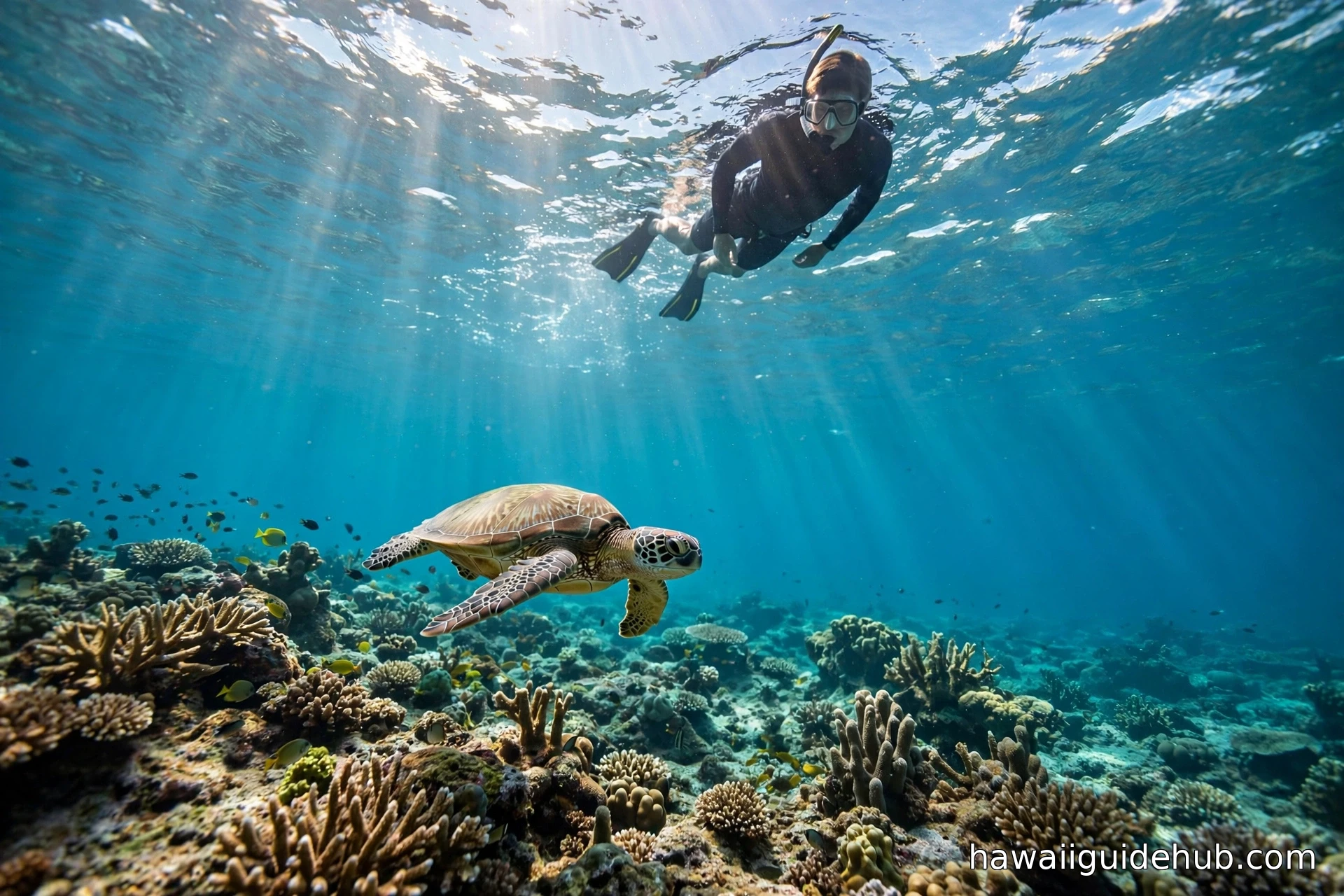
Laniakea is a wildlife viewing beach first and a swimming beach second. In summer, when the ocean is calm, swimming is pleasant along the sandy stretches, and snorkelers do encounter turtles in the shallows. In winter, treat the ocean here with real respect: the same swells that draw professional surfers to the North Shore create dangerous rip currents at Laniakea, and lifeguards post red flags when conditions turn.
There are no lifeguards stationed directly at the turtle viewing area, though a lifeguard tower stands further down the beach toward Chun’s Reef. If you plan to swim, check conditions before entering, stay in the calmer sandy areas, and keep well clear of the rocky shelf where turtles feed.
Snorkeling etiquette mirrors the beach rules. If a turtle swims near you, enjoy the moment without pursuing it. Hovering directly above a resting turtle or following it along the reef counts as harassment under the same laws that protect basking turtles. Give every animal a wide berth and the encounter will be better for it.
For dedicated snorkeling with calmer conditions, nearby Chun’s Reef, a short walk down the beach, offers a sandy entry and gentler water in summer. Shark’s Cove, further east, is another popular North Shore snorkeling spot worth knowing about.
Facilities: What Turtle Beach Does and Doesn’t Have
Set expectations before you go. Laniakea Beach has no public restrooms, no outdoor showers, no picnic tables, and no food vendors. Bring water, reef-safe sunscreen, and everything else you will need, because the nearest facilities are back in Haleiwa town.
What the beach does have: shade trees along parts of the sand, a beautiful long shoreline for walking, and on most days, the turtles themselves. There is no entrance fee and no reservation system. It is a public beach, open to everyone, which is exactly why the volunteer presence matters so much.
Pack out everything you bring. There are limited trash facilities, and anything left behind ends up in the ocean the turtles swim in.
What Else Is Near Turtle Beach
Laniakea sits in the middle of one of Oahu’s best day-trip corridors, so it pairs naturally with nearby stops. Haleiwa town, about five minutes west, has shave ice, shrimp trucks, boutiques, and the North Shore’s most walkable main street. It is the obvious lunch stop before or after the beach.
Heading east, Waimea Bay is minutes away, with its famous rock jump in summer and monstrous surf in winter. Chun’s Reef, adjacent to Laniakea itself, is the local favorite for calmer swimming. Further along the North Shore, the surf breaks at Pipeline and Sunset Beach are worth a look even if you never touch a board.
If you are building a full North Shore itinerary, our guide to what to do on Oahu’s North Shore lays out the route, and our look at the island’s must-see spots helps prioritize when time is short.
A Note on Wildlife Safety
Everything in this guide comes back to one principle: these are wild animals, and the law treats them that way. The information here reflects NOAA Fisheries viewing guidelines and Hawaii state protections as of this writing, but rules can change, and on-the-ground volunteers and posted signs always have the final word. If a volunteer asks you to move back, move back. If a sign says an area is closed, respect it.
Parents should brief children before arriving. The turtles are genuinely exciting to see, and excited kids run toward exciting things. A two-minute conversation in the parking lot about the 10-foot rule will save everyone stress on the sand.
The Honu Deserve the Hype
Turtle Beach earns its nickname honestly. Few places in the world let you stand on a public beach and watch wild sea turtles nap in the sun, and fewer still do it as reliably as Laniakea. Go for the turtles, but go prepared: arrive early, park legally, bring your own supplies, and give every honu the ten feet of respect the law and basic decency require. The beach will still be there tomorrow. With responsible visitors, the turtles will be too.