
Where Is Pipeline in Hawaiʻi
Quick Answer: Where Is Pipeline?
The Banzai Pipeline breaks off Ehukai Beach Park on the North Shore of Oʻahu, Hawaiʻi. It sits on the famous seven mile stretch of surf coast between Sunset Beach to the east and Waimea Bay to the west, fronted by a small county beach park off Ke Iki Road just mauka of Kamehameha Highway. From Honolulu and Waikīkī, the drive is roughly 35 miles and takes about an hour in normal traffic, following the H-1 and H-2 freeways north and then Kamehameha Highway through Haleʻiwa and along the coast.
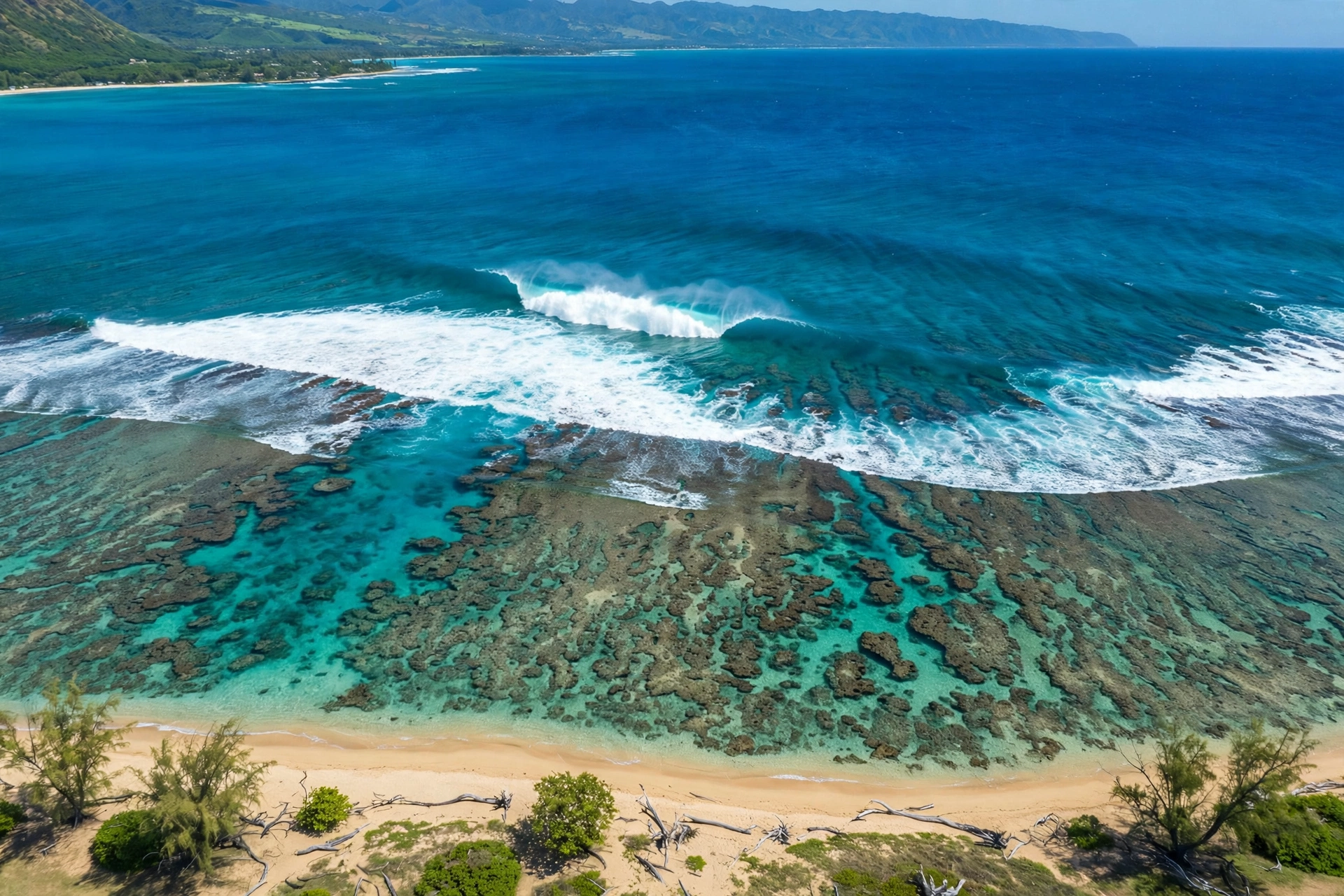
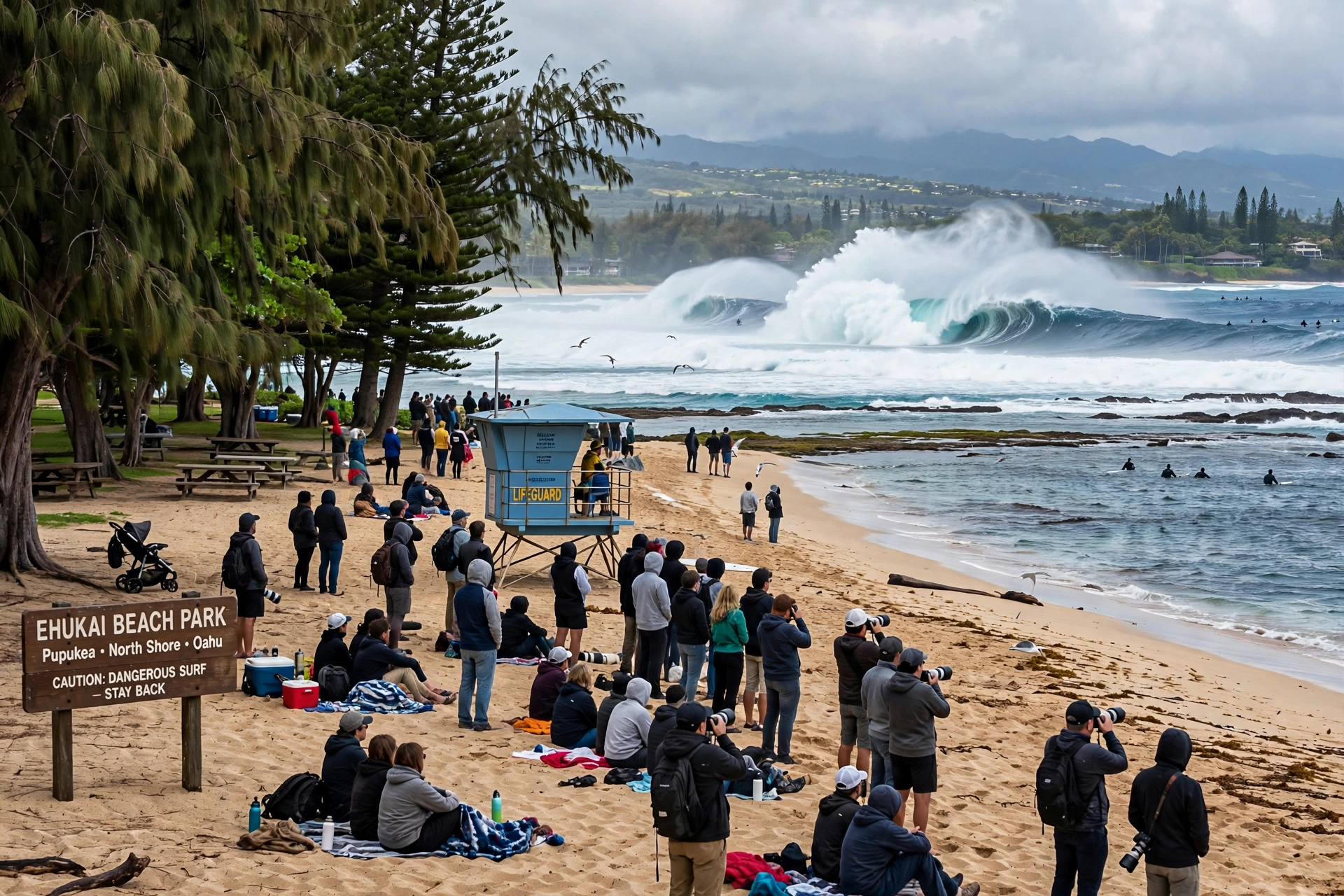
Pipeline is not a town, a beach resort, or a single marked attraction. It is a reef break, a place where ocean swells meet a shallow lava reef and rise into one of the most famous waves on earth. The wave breaks close to shore, which is why spectators can stand on the sand at Ehukai Beach Park and watch world class surfing from a few dozen yards away. On a big winter day, the parking lot fills before sunrise, the beach fills with photographers and fans, and the lineup fills with the best surfers in the world.
If you are looking for the short version: Pipeline is at Ehukai Beach Park on Oʻahu’s North Shore, between Sunset Beach and Waimea Bay, and it comes alive on northwest swells from about November through March.
The Break: What Makes Pipeline
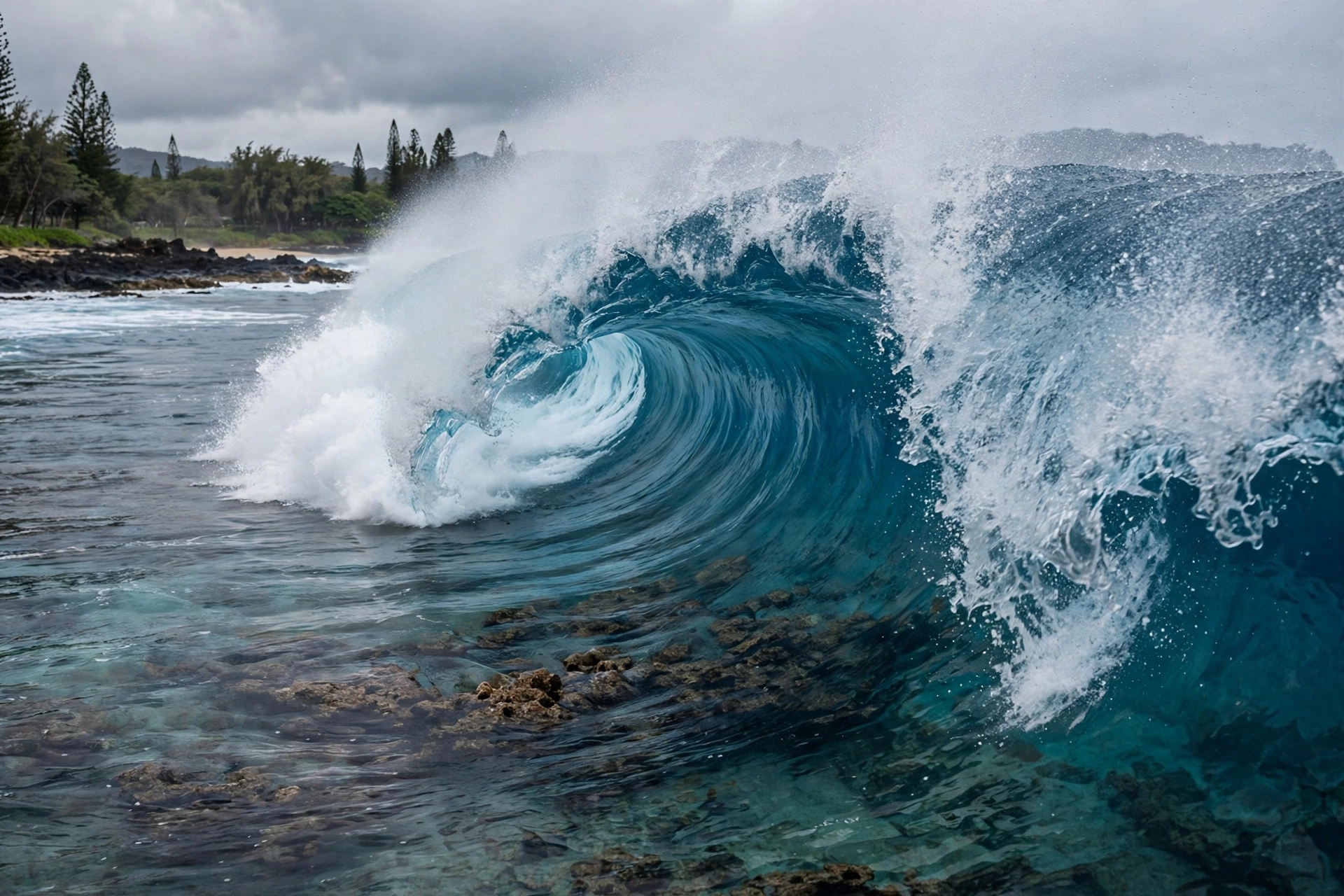
Pipeline owes its fame to a rare combination of reef shape, swell direction, and proximity to shore. The wave breaks over a flat topped lava reef that rises abruptly from deeper water. When a northwest swell arrives, the water shoals fast, the wave face jacks up suddenly, and the lip throws out over a shallow bottom to form the deep, round barrels that made Pipeline the measuring stick of surfing.
The Reef in Three Parts
Surfers divide Pipeline into three zones, named for their distance from shore. First Reef is the closest to the beach and the shallowest, with water as little as six feet deep over the lava shelf. This is where the classic Pipeline barrel forms on medium swells, and it is also the most dangerous section because there is so little water between a falling surfer and the reef. Second Reef sits farther out and handles larger swells, producing longer rides. Third Reef, the farthest offshore, only breaks on the biggest swells of the winter, when waves can reach truly enormous size.
The same peak also produces Backdoor, the right hand wave that peels off the opposite side of the takeoff zone. On certain swells, Backdoor offers some of the most technical tube riding in the sport, and many contests are decided on which surfers can master both Pipeline lefts and Backdoor rights in the same heat.
Why Northwest Swells Matter
Pipeline is a winter wave because it depends on swells generated by North Pacific storms. From about November through March, low pressure systems spin across the northern Pacific and send long period swells marching toward Hawaiʻi from the northwest. Pipeline faces almost directly into this swell window, which is why it lights up while south facing shores on the same island stay flat. In summer, when the storm track shifts and the North Pacific goes quiet, Pipeline sleeps and Ehukai Beach can be calm enough for swimming, though ocean conditions always deserve a fresh check.
The Benchmark Wave
Ask competitive surfers which wave defines the sport and most will name Pipeline. It has hosted the season ending championship event of professional surfing for decades, and winning at Pipeline remains one of the most respected achievements in the sport. The wave’s reputation rests on its perfection and its punishment in equal measure. On the right day, it produces flawless cylindrical barrels. On the wrong day, or for the wrong surfer, the shallow reef, the heavy lip, and the powerful currents make it one of the most dangerous breaks in the world. That duality is the whole story of Pipeline.
Reading the Wave from the Beach
Even as a spectator, you can learn to read Pipeline. Sets arrive in groups, with lulls between them that can last several minutes on smaller days. The takeoff zone sits just beyond the whitewater of the inside section, and experienced watchers can spot the deeper, darker water over the reef. When a proper set approaches, the horizon darkens, the crowd on the sand stirs, and the lineup scrambles for position. The best barrels often come on the second or third wave of the set, when the reef has had a moment to organize the energy. Wind matters too: light offshore or variable winds groom the faces into clean walls, while strong onshore trades chop the surface and make the wave crumble. Mornings are usually cleanest, which is another reason the parking lot fills at dawn.
History of Pipeline
Before surfers arrived, the waters off what is now Ehukai Beach Park were known to local fishermen and divers. The modern story of Pipeline begins in the early 1960s, when the North Shore was still a quiet country coastline and the idea of riding its heaviest waves seemed impossible to most surfers.
The name itself comes from surf filmmaker Bruce Brown, who was on Oʻahu in 1961 filming his movie Surfing Hollow Days. Construction pipes for a Kamehameha Highway project lay stacked near the beach, and Brown dubbed the then unnamed break “Pipeline” after them. The “Banzai” prefix was added later, borrowed from the spirited cry associated with fearless commitment, and the full name Banzai Pipeline stuck as the wave’s legend grew.
Californian Phil Edwards is credited as the first surfer to ride Pipeline, in 1961, proving that the wave was rideable at all. Through the rest of the 1960s, a small group of pioneers pushed deeper into the North Shore’s heavy water. In the 1970s, Gerry Lopez became synonymous with the wave, riding impossibly deep inside its barrels with a calm style that earned him the nickname “Mr. Pipeline” and set the template for tube riding everywhere.
As professional surfing organized itself, Pipeline became its spiritual and competitive home. The winter contest held there each December, long known as the Pipe Masters, has decided world titles and launched careers. Through every era of the sport, from single fins to modern shortboards, Pipeline has remained the wave by which surfers are judged. The wave also shaped surf culture far beyond competition: films, magazines, and photographs from Pipeline taught the world what a perfect barrel looks like, and generations of surfers have made pilgrimages to the North Shore to test themselves against it.
Visiting and Watching Pipeline
Most visitors experience Pipeline the way it is best experienced: from the sand. Because the wave breaks close to shore, Ehukai Beach Park offers one of the great free spectacles in sports, a front row seat to world class surfing with no ticket required.
Getting There
From Honolulu, take the H-1 west to the H-2 north toward the North Shore, then follow Kamehameha Highway through Wahiawā and Haleʻiwa and east along the coast. Ehukai Beach Park sits between Sunset Beach and Waimea Bay; look for the signed turnoff onto Ke Iki Road. The drive takes about an hour without traffic, longer on winter weekends and contest days when the North Shore draws big crowds. Public buses serve the North Shore, but service is infrequent, so most visitors rent a car. For more on getting around the island, see the Oʻahu transportation guide.
Parking and Facilities
Ehukai Beach Park has a small parking lot that fills early on good winter swells, often before 8 a.m. Overflow parking lines Ke Iki Road and nearby streets; arrive early, park legally, and never block driveways or beach access paths. The park has restrooms, outdoor showers, and picnic tables, and City and County of Honolulu lifeguards staff the beach. There are no food concessions at the park itself, so bring water and snacks, or plan to eat in nearby Haleʻiwa or at the shops near Sunset Beach.
The Best Viewpoints
The main beach at Ehukai faces the break directly, and on a pumping day you can feel the thump of the lip hitting the water. Walk east or west along the sand for slightly different angles. Photographers cluster near the waterline at first light for the cleanest conditions, since trade winds often pick up by midday and add texture to the wave faces. Bring sun protection, because there is little shade, and keep a respectful distance from the lifeguard towers and any contest infrastructure during events.
When to Go
For watching surf, visit between November and March, when northwest swells are most consistent. Flat spells happen even in winter, so check the surf forecast from the National Weather Service Honolulu office before making the drive. In summer, Pipeline is usually flat, and Ehukai becomes a quiet beach park better suited to swimming and relaxing, though you should always check with lifeguards about current conditions. Contest season brings the biggest crowds and the most electric atmosphere, along with road congestion and packed parking.
Contest Season Atmosphere
When a major winter contest is running, Ehukai transforms. Scaffolding rises on the sand, the world’s best surfers warm up on the beach, commentators call the action over loudspeakers, and thousands of fans line the shoreline. Even if you know little about competitive surfing, the atmosphere is electric: every great ride draws a roar you can feel in your chest. Contest days also bring the worst traffic and the scarcest parking on the North Shore, so plan to arrive very early or consider visiting on a non contest swell day, when the surfing can be just as good and the beach far calmer. Event schedules depend on surf conditions and are announced on short notice, so check official contest channels before you go.
What to Bring
Pack like you are spending a full day at an exposed beach with no shops in sight. Bring reef safe sunscreen, a hat, sunglasses, plenty of water, and food, because the nearest options require a drive. A beach umbrella or shade tent helps on cloudless days, and a light jacket is worth having for windy winter afternoons. Binoculars are a nice touch for watching the outside reefs. Leave valuables out of sight in your car, lock up, and take your rubbish with you; this is a beloved community beach, and keeping it clean matters to the people who live nearby.
Where to Stay Nearby
Most visitors base themselves in Haleʻiwa, the North Shore’s main town, about ten minutes west, which has vacation rentals, small inns, shops, and restaurants. Staying on the North Shore puts you close to the action for dawn patrol sessions. Others stay in Waikīkī or Ko Olina and make Pipeline a day trip. For help choosing a base, see the Oʻahu towns guide.
Safety at Pipeline
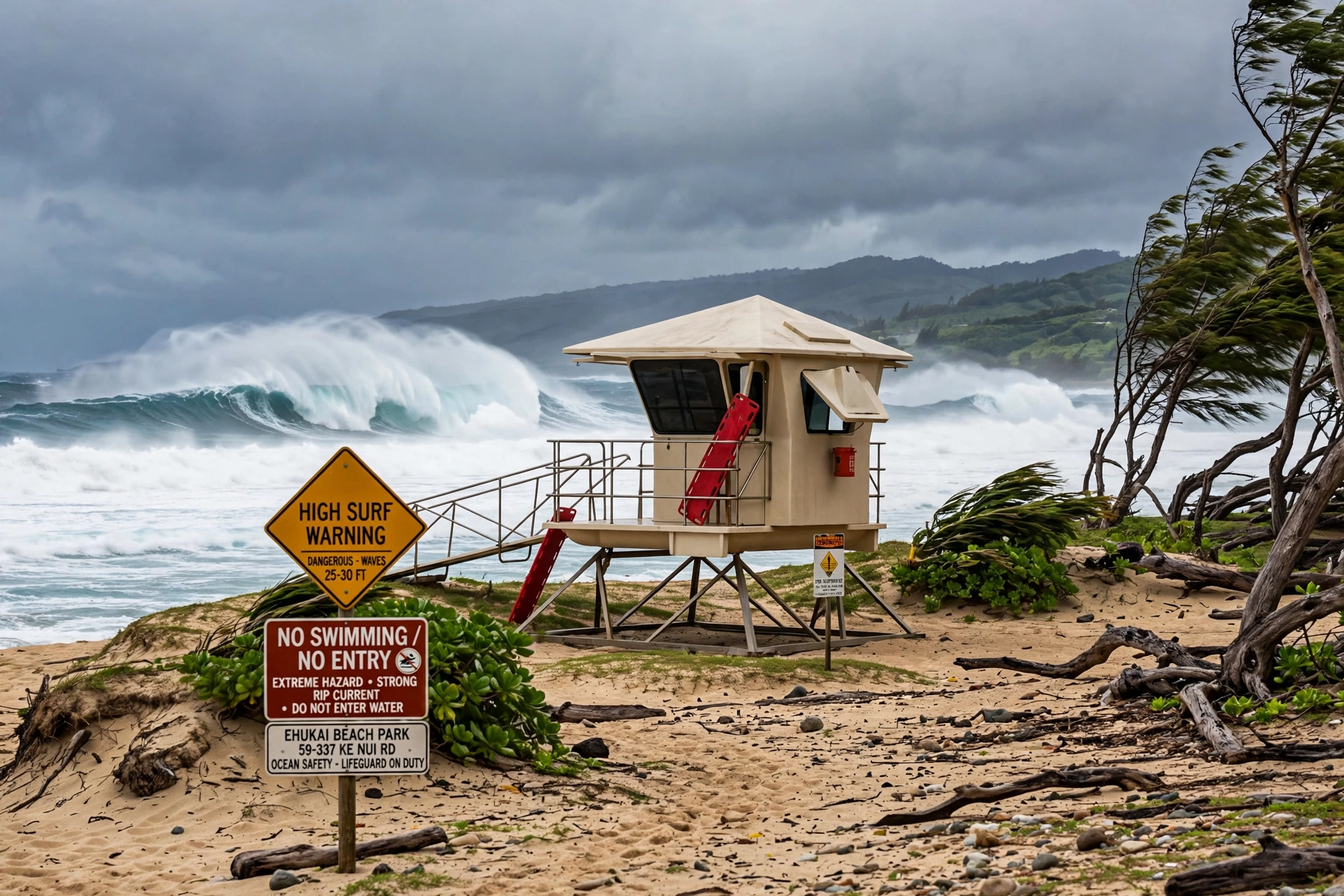
This section deserves plain language. Pipeline is one of the most dangerous surf breaks in the world, and it has taken lives, including the lives of experienced professional surfers. Deaths and serious injuries have occurred here across the decades. The danger is not theoretical, and it is not limited to reckless behavior. The wave breaks in very shallow water over lava rock, the lip is extremely powerful, hold downs can be long on big days, and strong currents sweep along the reef.
Pipeline is for expert surfers only. If you are a beginner or intermediate surfer, do not paddle out at Pipeline. There is no gentle inside section to learn on, and the consequences of a mistake are severe. Even strong surfers visiting from elsewhere should watch the break for a long time, talk to lifeguards, and honestly assess whether their skills match the conditions before considering entering the water. Local surfers know this reef intimately; visitors do not.
For non surfers, the safety rules are simpler but still matter. Never turn your back on the ocean, especially on high surf days when waves can surge far up the beach without warning. Keep children close to you and away from the waterline when surf is up. Do not swim at Ehukai when the surf is large; strong rip currents and shorebreak can overwhelm even good swimmers. Obey all lifeguard instructions and warning signs, and check the daily surf and ocean safety forecast before you go.
One more point of etiquette that is also a safety matter: the lineup at Pipeline is crowded with highly skilled surfers riding waves of consequence. Spectators should never swim or paddle into the break zone, and photographers in the water should know exactly what they are doing. Respect in the water at Pipeline is not just custom; it keeps people alive.
Nearby North Shore Surf Spots
Pipeline sits in the middle of the most famous stretch of surf coast on earth. Several legendary breaks lie within a few minutes drive, each with its own character.
Sunset Beach
Just east of Pipeline, Sunset Beach is another world class reef break known for powerful, shifting peaks that test even professional surfers. It hosts major winter contests and draws heavy crowds on big swells. Like Pipeline, it is an experts only wave in winter, though the beach itself is beautiful for watching and walking.
Waimea Bay
A few minutes west, Waimea Bay is the home of big wave surfing’s most storied tradition. When winter swells reach truly giant size, the bay produces enormous waves, and it is the venue for the Eddie Aikau Big Wave Invitational, the prestigious event named for the legendary Waimea Bay lifeguard and surfer. The Eddie is held only when the surf meets a very high threshold, which means it does not run every winter. In summer, the bay famously goes flat and becomes one of Oʻahu’s most beloved swimming and snorkeling beaches.
Rocky Point
Between Pipeline and Waimea Bay, Rocky Point offers a rippable reef break that hosts professional qualifying events. It is still a serious wave, but on smaller days it is one of the more approachable performance waves on this stretch for skilled surfers.
Haleʻiwa and Beyond
The town of Haleʻiwa, ten minutes west, is the North Shore’s hub for food, shopping, and surf culture, and the break at Haleʻiwa Aliʻi Beach Park is a mellower option for competent surfers on moderate days. To the east, the Pupukea coastline holds Shark’s Cove and Three Tables, which are celebrated snorkeling spots in the calm summer months and powerful surf spots in winter. For an overview of the island’s beach towns and regions, see where Oʻahu is located and the Oʻahu beaches guide.
Frequently Asked Questions
Where exactly is Pipeline located?
Pipeline breaks off Ehukai Beach Park on the North Shore of Oʻahu, between Sunset Beach and Waimea Bay along Kamehameha Highway. The beach park entrance is off Ke Iki Road, and the wave breaks just offshore, clearly visible from the sand.
Why is it called Pipeline?
Surf filmmaker Bruce Brown named the break “Pipeline” in 1961 after construction pipes stacked near the beach for a Kamehameha Highway project. The “Banzai” prefix was added later, and the full name Banzai Pipeline became standard as the wave’s fame spread.
Can beginners surf Pipeline?
No. Pipeline is for expert surfers only. The wave breaks in very shallow water over a lava reef, and the consequences of mistakes are severe. Beginners should take lessons at gentle beach breaks on the south shore instead and enjoy Pipeline as spectators.
When is the best time to see Pipeline?
Winter, from about November through March, when North Pacific storms send northwest swells to the North Shore. Check the surf forecast before driving up, because even winter has flat spells, and the biggest days draw the biggest crowds.
Is Pipeline the most dangerous wave in the world?
It is consistently ranked among the most dangerous. The combination of shallow reef, heavy barrels, strong currents, and crowded lineups has caused deaths and serious injuries over the decades, including among professional surfers. Other breaks, such as Teahupoʻo in Tahiti and Nazaré in Portugal, are also infamous for their danger, but Pipeline’s toll over more than sixty years of heavy surfing history is well documented. It deserves its reputation and your respect.
What is Backdoor?
Backdoor is the right hand wave that breaks off the same reef peak as Pipeline. When the swell direction is right, surfers take off on the Pipeline peak and ride right instead of left, threading a technical, hollow barrel. Many contests are won or lost on Backdoor.
Can you swim at Ehukai Beach?
In the calm summer months, Ehukai can be suitable for swimming, and lifeguards staff the beach. In winter, when the surf is up, swimming is dangerous because of powerful shorebreak and rip currents. Always check with lifeguards about current conditions before entering the water.
How do I get to Pipeline from Waikīkī?
Drive about 35 miles via the H-1, H-2, and Kamehameha Highway, roughly an hour without traffic. Go through Haleʻiwa and continue east along the coast to Ehukai Beach Park, turning off Kamehameha Highway onto Ke Iki Road. Arrive early on winter swell days because parking fills fast.
Related Guides
- Where Is Oʻahu Located in Hawaiʻi: position, regions, and getting to the island
- Oʻahu Beaches: the island’s best beaches by coast
- Oʻahu Towns: Haleʻiwa, Honolulu, Kailua, and more
- Hawaiʻi Beaches: the statewide beaches hub
- Best Time to Visit Hawaiʻi: seasons, swells, and trip timing
- Hawaiʻi Map: island chain geography
A Final Note
Pipeline is that rare place where the legend and the reality match. Stand on the sand at Ehukai on a clean winter swell and you will see exactly what the photographs promised: impossible green barrels detonating over a reef you could almost touch, ridden by surfers who have devoted their lives to this one wave. It is thrilling to watch, humbling to contemplate, and absolutely not to be trifled with. Visit with respect, watch from the beach, check the forecast, listen to the lifeguards, and you will understand why this short stretch of North Shore reef became the most famous wave in the world.