
Līhuʻe Hawaiʻi Map
Līhuʻe is the town most visitors meet first on Kauaʻi, and the one most of them pass through without really seeing. It is the county seat, the commercial center, and the home of the island’s main airport, which means almost every Kauaʻi trip begins or ends here. This map and area guide walks you through Līhuʻe’s layout street by street: the Rice Street town core, the Nāwiliwili waterfront, the airport district, and the surrounding neighborhoods. Use it to get your bearings, find the landmarks, and understand why Līhuʻe works so well as a base for exploring the island.
On This Page
Līhuʻe at a Glance
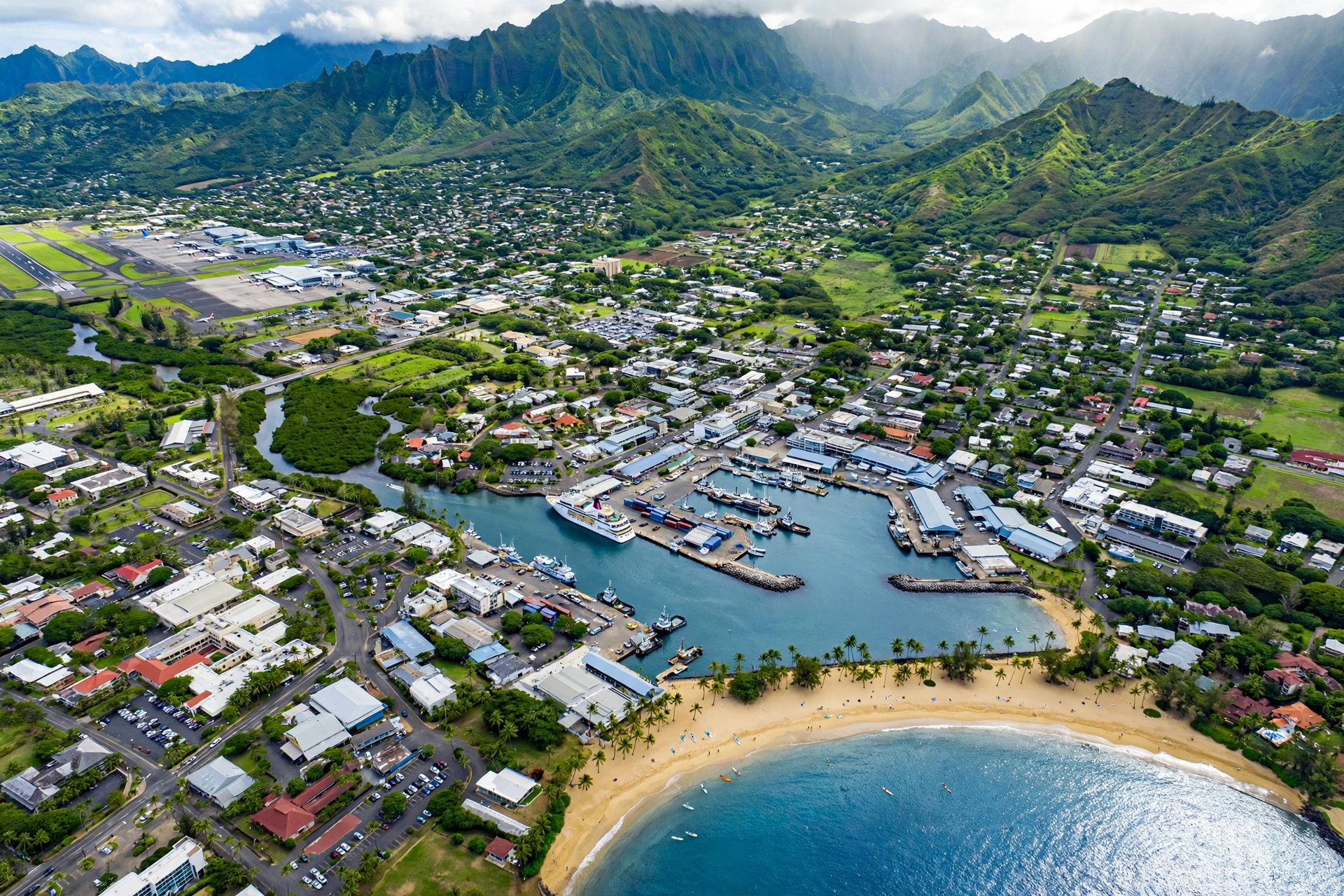
Līhuʻe sits on the southeast coast of Kauaʻi, roughly in the middle of the island’s eastern shoreline. The name means “cold chill” in Hawaiian, a reference to the cool mountain air that drifts down from the interior. In ancient times this was a small coastal settlement in the district of Puna, in the land division of Kalapaki. That quiet village began its transformation in 1837, when Royal Governor Kaikioʻewa moved his governing seat here from Waimea, making Līhuʻe the island’s administrative center.
The sugar industry did the rest. The Līhuʻe sugar mill was built in 1849, and for the next century and a half it anchored one of the longest running sugar operations in the islands, staying in use until 2000. Plantation owner William Harrison Rice built the island’s first irrigation system in 1856, an innovation that was copied across Hawaiʻi. German immigrants began arriving in 1881, and the first Lutheran church in Hawaiʻi was founded here in 1883, giving Līhuʻe an architectural and cultural flavor unlike any other Kauaʻi town. Līhuʻe was officially recognized as the county seat in 1905, and it has held that role ever since.
Today Līhuʻe is home to roughly 6,500 residents in the town core, with the wider east side holding far more. It is where Kauaʻi does its business: county government, the courts, banks, wholesalers, and the island’s main hospital all cluster here. For travelers, three things make Līhuʻe matter. First, Līhuʻe Airport (LIH) sits just minutes west of downtown, so nearly every visitor lands here. Second, Nāwiliwili Harbor at the south edge of town is Kauaʻi’s deep water port and the island’s main cruise ship destination. Third, Līhuʻe sits at a crossroads: Kūhiō Highway runs north toward the east side and North Shore, Kaumualiʻi Highway runs west toward the South Shore and Waimea Canyon, and the airport road feeds straight into both.
Unlike the resort towns, Līhuʻe feels like a working town. Rice Street storefronts serve residents more than tourists, plate lunch counters outnumber white tablecloth restaurants, and the pace is set by county workers and plantation-era families rather than tour buses. That is exactly why it makes a good base: prices tend to run lower than in Poʻipū or Princeville, every direction on the island is reachable within about an hour, and you get a sense of how Kauaʻi actually lives. The Līhuʻe map guide covers the town’s geography in finer detail; this page covers Līhuʻe as a place to know, stay, eat, and explore.
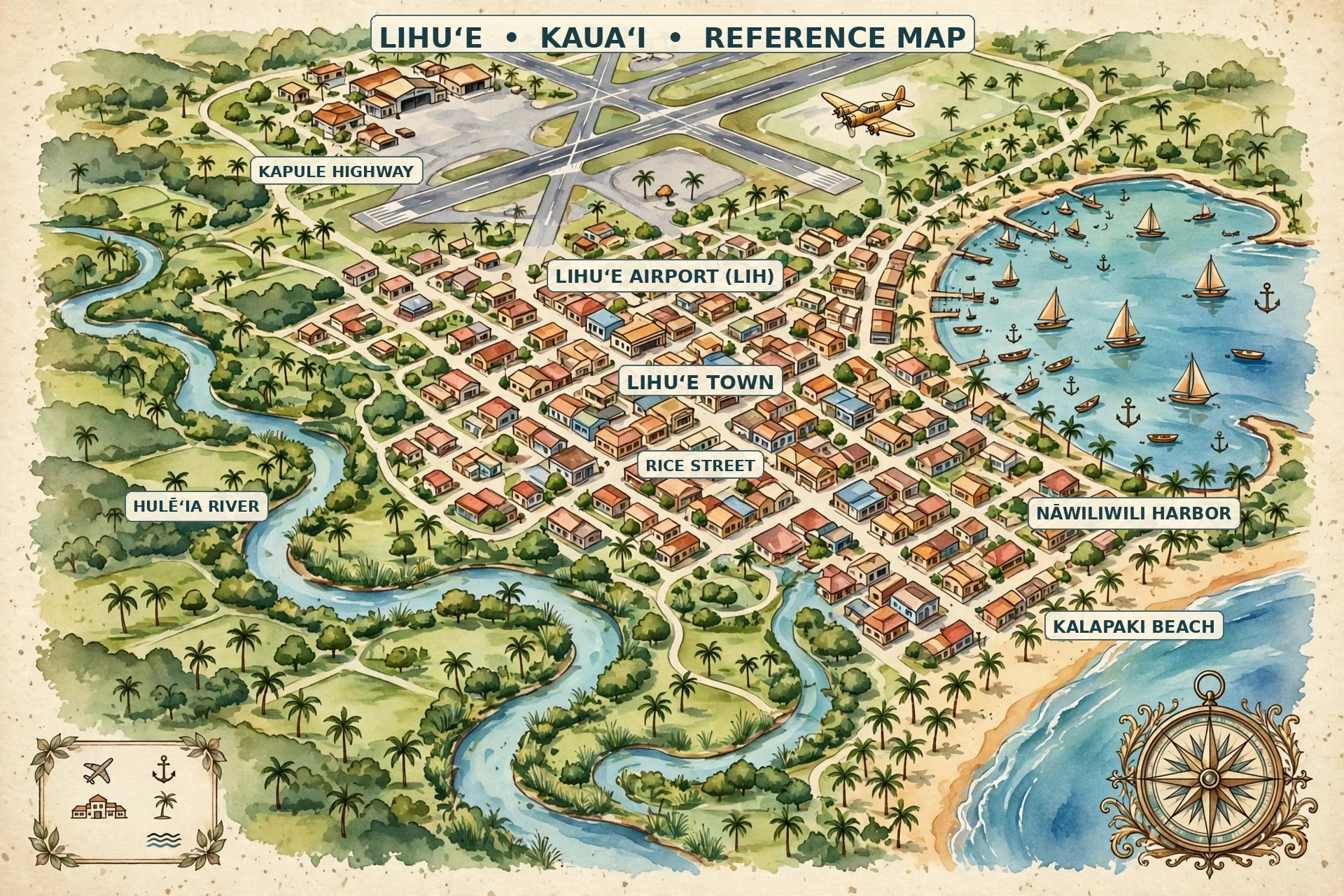
Map: Līhuʻe Town Layout
Picture Līhuʻe as three zones stacked from west to east. The airport district occupies the western edge, where Ahukini Road and the airport access roads meet Kūhiō Highway. The town core sits in the middle, strung along Rice Street between the highway and the waterfront. Nāwiliwili and Kalapaki form the eastern and southern edges, where the town meets the harbor and the sea.
Rice Street: The Town Core
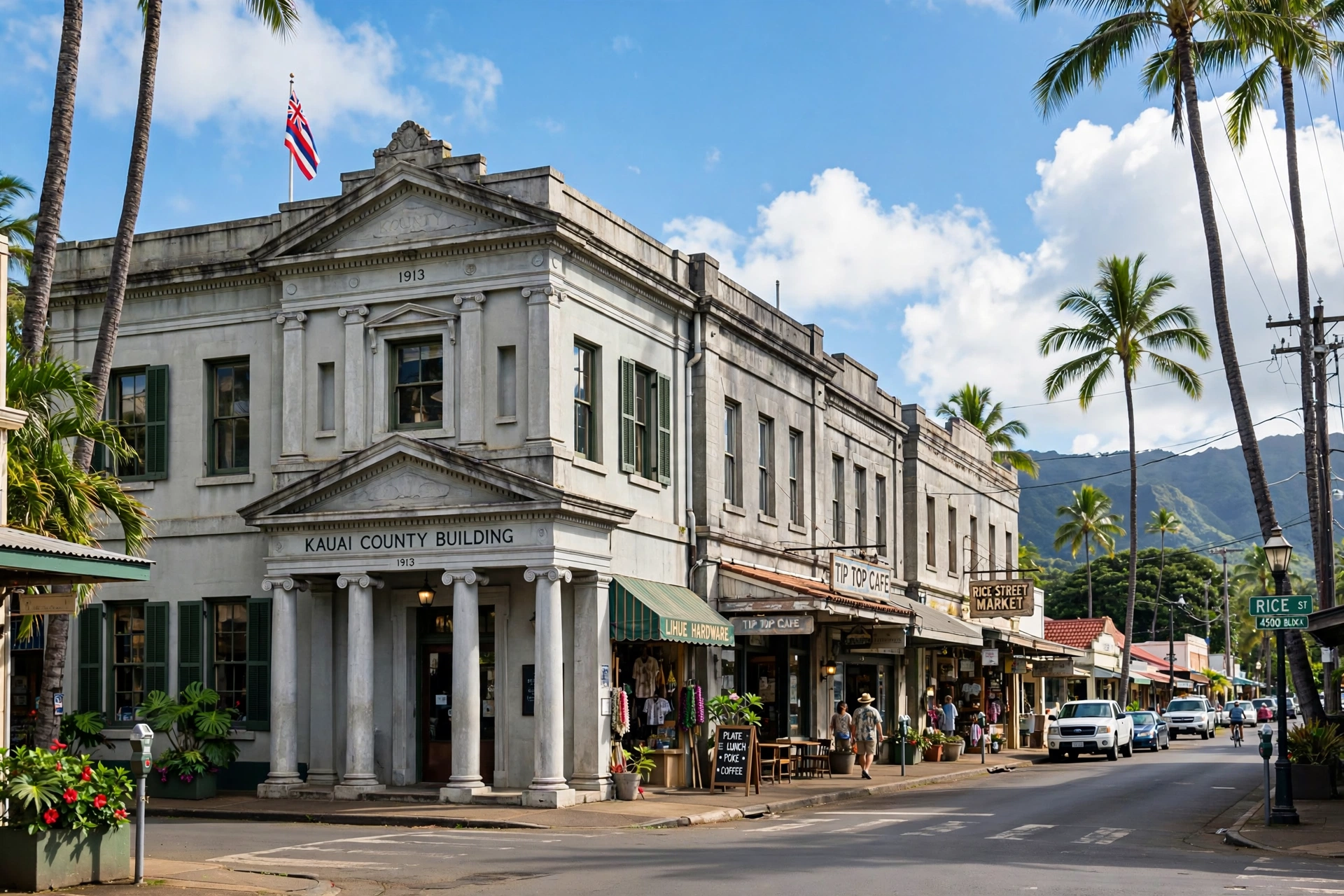
Rice Street is Līhuʻe’s main street and its historic heart. Starting at Kūhiō Highway and running east toward the water, it is lined with the concrete commercial buildings that earned the town core its nickname, the “concrete village.” Unlike the wooden false-front plantation towns elsewhere in Hawaiʻi, Līhuʻe built in concrete and neoclassical style beginning in the early 1900s, when the town’s seat of government drew banks, stores, and offices to Rice Street.
The two story Historic County Building, built in 1912, still anchors the street and remains one of the longest serving county buildings in the state. Nearby stand the Bank of Hawaiʻi branch built in 1913, the Kauaʻi Museum in its own historic building, churches, law offices, and the small shops and eateries that serve the downtown workforce. Halekō Road marks the old center of town, where the original Līhuʻe Store once stood. Park once and walk: Rice Street’s core is compact enough to cover on foot, and the side streets hold barber shops, bakeries, and lunch counters that have served locals for generations.
Nāwiliwili: The Waterfront
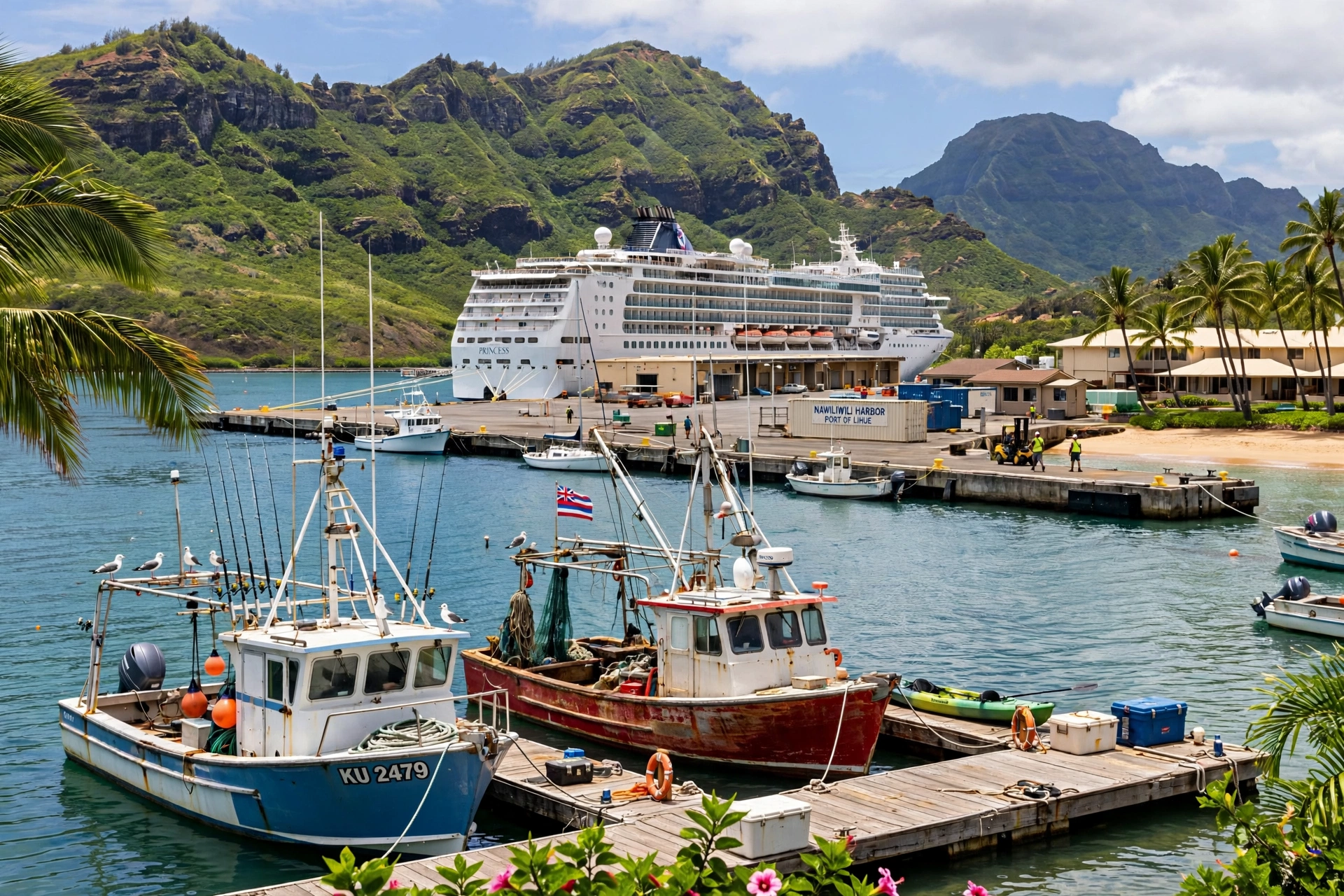
At the south end of town, Rice Street becomes Nāwiliwili Road and descends toward the harbor. Nāwiliwili became the island’s main shipping port after the deep water harbor was completed in 1930, and it remains a working waterfront: cargo ships, fishing boats, interisland barges, and cruise liners all use it. The harbor area also holds the cruise ship terminal, which is why so many day visitors get their first look at Kauaʻi from this shoreline.
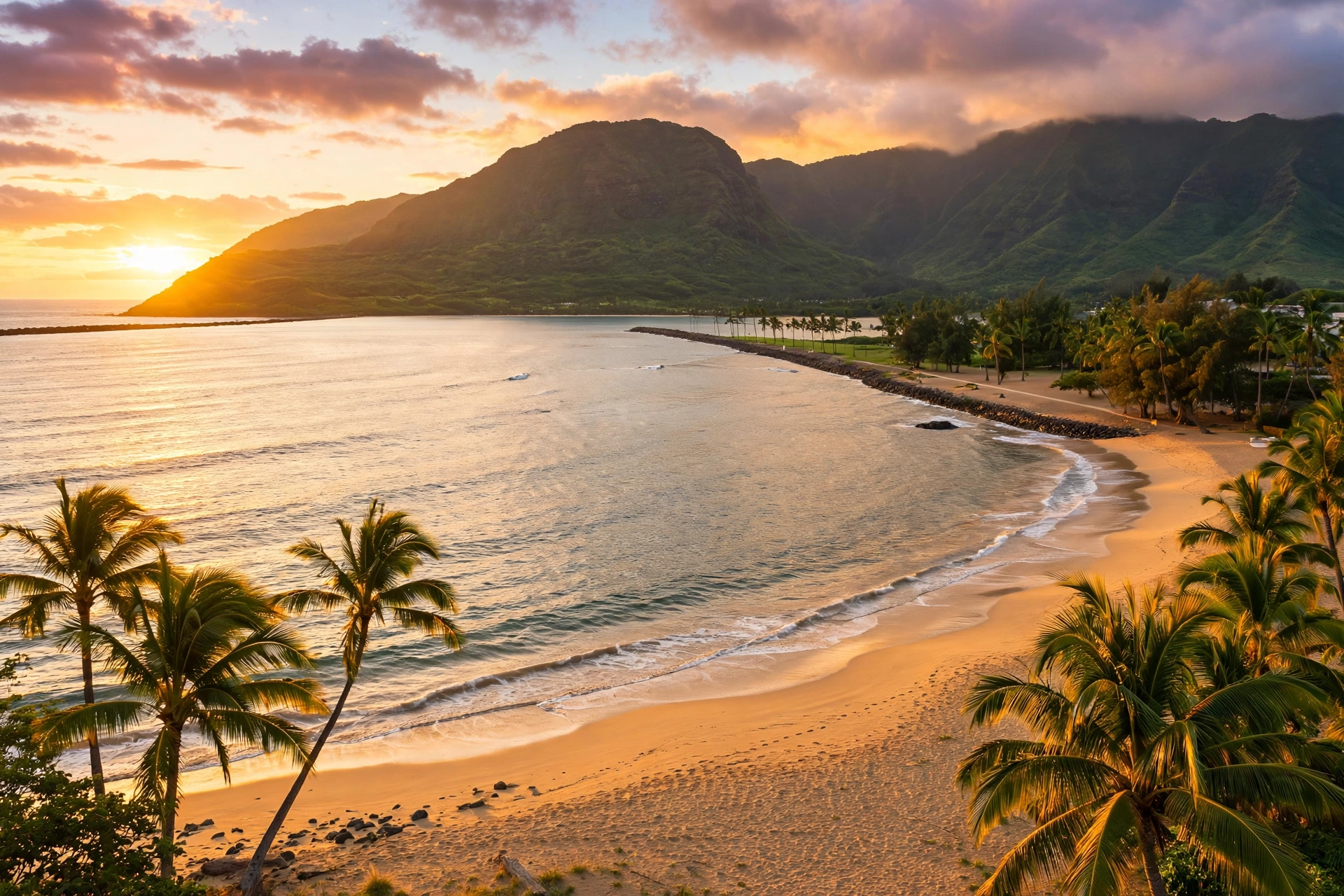
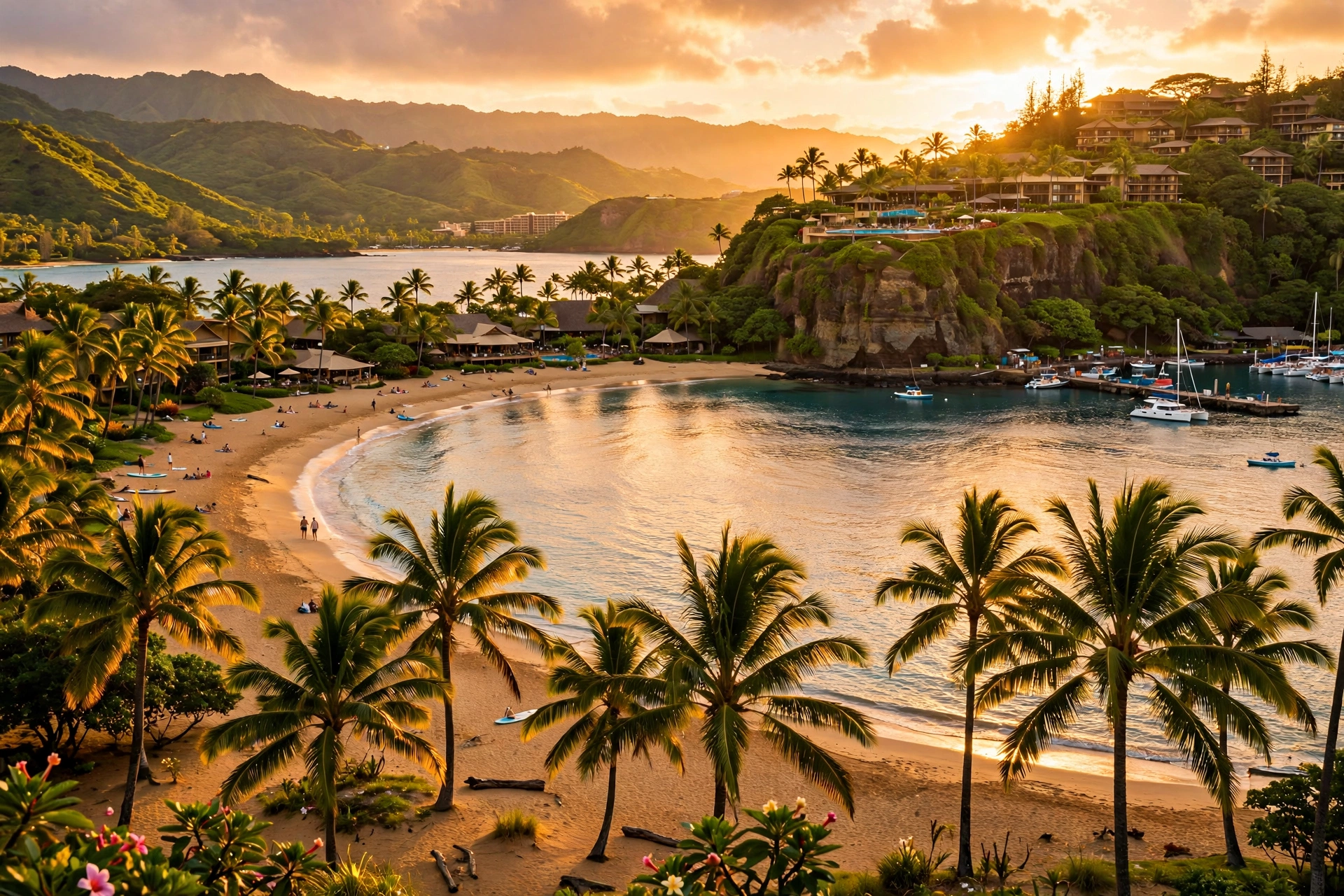
Just west of the harbor sits Kalapaki Beach, a crescent shaped bay tucked at the foot of the bluff. The beach fronts the resort area and offers a protected swimming spot with views back toward the Hāʻupu mountains. The Nāwiliwili to Kalapaki stretch is Līhuʻe’s scenic edge: harbor lookouts, the lighthouse point at Nīnini, and the coastal path that connects the beach to the harbor park.
The Airport District
West of the town core, the land flattens into the airport district. Līhuʻe Airport occupies a large footprint between Ahukini Road and Kūhiō Highway, and the surrounding blocks hold rental car facilities, light industrial buildings, big box retail, and the island’s main shopping centers. This is the practical zone: groceries, pharmacies, hardware, and the stores you hit on arrival day before driving to your lodging. The airport itself is only about five minutes by car from downtown Rice Street, which makes Līhuʻe the easiest town on Kauaʻi for early departures and late arrivals.
Key Areas and Neighborhoods
Downtown Līhuʻe
The Rice Street core described above is the civic and commercial downtown. Expect county offices, the historic buildings, the museum, and a cluster of local eateries. Mornings are busy with the government workforce; evenings are quiet, since most of the nightlife sits closer to the resorts. Downtown is the best place in town for a walking look at plantation era architecture.
Kalapaki Bay
Kalapaki is Līhuʻe’s resort pocket, wrapped around the crescent of Kalapaki Beach below the harbor bluff. The beach is the draw: a sheltered bay with gentle water, good for swimming and beginner surfing lessons, backed by the resort and its restaurants. The coastal setting, with the Hāʻupu range rising behind the bay, makes it one of the prettiest urban beaches on Kauaʻi. Staying here puts you within walking distance of the sand while keeping you minutes from downtown and the airport.
Puhi
Southwest of downtown along Kaumualiʻi Highway, Puhi is Līhuʻe’s inland suburb and home to Kauaʻi Community College. It is mostly residential and institutional, with the county’s main sports and community facilities nearby. Travelers pass through Puhi on the way to the South Shore or Waimea Canyon. It has grocery stores, gas stations, and fast food, which makes it a useful stop when stocking up.
Hanamāʻulu
North of the airport along Kūhiō Highway, Hanamāʻulu is a former plantation village turned residential community. Hanamāʻulu Beach Park offers a small, reef protected swimming area that locals favor. The neighborhood also sits near the start of the Wailua Falls drive, which makes it a handy landmark when navigating the east side.
Niumalu
South of the harbor along the coast, Niumalu is a quiet residential pocket with Niumalu Beach Park. The park’s stream and shoreline appeared in the film Raiders of the Lost Ark. It is more of a local gathering spot than a visitor destination, but it shows the residential side of the Līhuʻe waterfront.
Attractions In and Around Līhuʻe
Kauaʻi Museum
On Rice Street in the town core, the Kauaʻi Museum is the island’s best single stop for understanding where you are. Its exhibits trace Kauaʻi from volcanic formation through the Hawaiian monarchy, the missionary era, and the sugar plantation century, with artifacts, photographs, and art from across the island. Budget about two hours. It is also one of the island’s best rainy day activities, since the whole museum is indoors.
Kilohana Plantation
Just south of downtown, Kilohana is the 1935 Tudor style estate built by sugar executive Gaylord Parke Wilcox, now open to the public as a plantation heritage site. The grounds hold shops, galleries, the Kōloa Rum Company tasting room, and Gaylord’s restaurant. A narrow gauge train runs a narrated loop through the surrounding farmland, passing crops like taro, sugarcane, banana, and pineapple, with a stop to feed farm animals. Evening luaus are held on the grounds. The estate shows the gracious side of the plantation era, and the train ride is genuinely informative about island agriculture.
Grove Farm Homestead Museum
On Nāwiliwili Road, Grove Farm preserves one of Hawaiʻi’s earliest sugar plantations in something close to its original form. German immigrant Hermann Widemann started the plantation in 1854; George Norton Wilcox bought it in 1864, and the Wilcox family ran it for more than a century. The main house, workers’ cottages at Kaipu Camp, the plantation office, and the gardens are all preserved, and the site is on the National Register of Historic Places. Tours run by reservation with small groups, and the guides are knowledgeable about both the buildings and the plantation labor history. The museum also runs a free sugar train ride on the second Thursday of each month.
Kalapaki Beach
Līhuʻe’s home beach is the crescent at Kalapaki Bay. The bay is protected enough for relaxed swimming, and surf schools operate here because the waves stay gentle. It is also a fine sunset spot, with the sun dropping behind the Hāʻupu mountains. Facilities include restrooms and nearby dining at the resort. It will not replace a North Shore expedition, but as a town beach ten minutes from the airport, it is hard to beat.
Nāwiliwili Harbor and Nīnini Point
The harbor itself is worth a slow drive or walk: watch the cruise ships and cargo operations, then continue to Nīnini Point for the lighthouse and the coastal views back toward Kalapaki. The breakwater and harbor park are popular with local families on weekends.
Menehune Fishpond
Just south of town near Niumalu, the Alekoko Fishpond, better known as the Menehune Fishpond, is an ancient Hawaiian aquaculture site. Legend credits its construction to the menehune, the mythical small people of Hawaiian tradition, who are said to have built it in a single night. The fishpond’s rock walls are partially restored and visible from the overlook. It is a quick stop, but it connects Līhuʻe to a Hawaiian past far older than the sugar era.
Wailua Falls Drive
One of the island’s classic short drives starts in the Līhuʻe area. Head north through Hanamāʻulu, then mauka on Maʻalo Road to the Wailua Falls overlook. The 80 foot falls drop in a double cascade into a fern lined pool, and the viewpoint requires no hiking. The drive takes about 20 minutes each way from downtown Līhuʻe, and it pairs naturally with a stop at the fishpond or a morning at the museum.
Huleia National Wildlife Refuge
The Huleia River valley just south of town is a protected wetland and bird sanctuary. The Kalepa Ridge portion offers views over the valley, and boat tours explore the river itself. Native waterbirds, including endangered Hawaiian species, use the refuge. It is a quieter, nature focused counterpoint to the town’s historic sites.
Where to Stay in Līhuʻe
Līhuʻe’s lodging clusters in three areas, and each suits a different kind of trip. The Kalapaki Bay area holds the town’s main resort properties, with beach access, pools, restaurants, and the easiest swimming in town. Stay here if you want resort amenities without resort town prices, and if you like the idea of walking to the beach.
Downtown and the Rice Street area hold smaller hotels and inns aimed at business travelers and budget conscious visitors. These put you near the museum, the restaurants, and the town’s daily life, but none are on the beach. The airport district and the highway corridors hold chain hotels and condo style properties that work well for one night stays around flights: you can be at the terminal in five to ten minutes.
As a base for a full Kauaʻi trip, Līhuʻe’s central position is its strongest argument. The North Shore, the South Shore, and Waimea Canyon are all within roughly an hour’s drive, so you can day trip in every direction without relocating. The tradeoff is that Līhuʻe has fewer beaches and less evening activity than Poʻipū or Hanalei. Many visitors split their stay: a night or two in Līhuʻe around arrival and departure, with the middle nights closer to the coasts they plan to explore most.
Dining and Shopping
Līhuʻe eats like a local town, which is a compliment. The most famous stop is Hamura Saimin, the old school noodle shop in downtown that has served its signature saimin, barbecue sticks, and lilikoi pie for generations. It is a genuine Kauaʻi institution and worth a visit even if noodles are not usually your thing. Around Rice Street and the town core you will find plate lunch counters, bakeries, poke shops, and family restaurants where the customers are mostly residents.
Kukui Grove Center, west of downtown near the highway, is the island’s main shopping mall, with national retailers, a cinema, and local shops mixed in. It is the practical stop for anything you forgot to pack. The Kilohana Plantation grounds add a different shopping experience: local artisans, Hawaiʻi made gifts, and the rum tasting room, all in the historic estate setting. Līhuʻe’s farmers markets, including the county’s market in town, are good for tropical fruit, local honey, and cut flowers.
For evening drinks and a livelier scene, the Kalapaki resort area and the harbor side restaurants draw the after work and visitor crowd. Kauaʻi Beer Company in downtown brews its beer on site and serves a solid pub menu. Dining in Līhuʻe tends to cost less than in the resort areas, and reservations are rarely the ordeal they can be in Hanalei or Poʻipū.
Getting Around
A rental car is the practical choice for staying in Līhuʻe, as it is everywhere on Kauaʻi. The town’s central location keeps drives short: the airport is about five minutes away, Wailua Falls about 20 minutes, Poʻipū about 25 to 30 minutes, Hanalei about 40 to 45 minutes, and Waimea Canyon about an hour. Traffic on Kūhiō Highway through the east side can slow during morning and evening commute hours, so plan airport runs with a cushion.
The Kauaʻi Bus public system runs routes through Līhuʻe, connecting the airport, downtown, Kapaʻa, Hanalei, and Waimea. It is inexpensive and workable for patient travelers, but schedules are limited and a full island day by bus takes planning. Taxis and rideshares serve the airport and town, and hotel shuttles cover the Kalapaki properties.
Downtown Līhuʻe itself is walkable: Rice Street’s core, the museum, and the harbor viewpoints can be covered on foot if you park once. For the harbor, Kalapaki Beach, and the fishpond, you will want the car. Parking downtown is generally easy except during weekday business hours, and the beach and harbor lots are free.
Frequently Asked Questions
Is Līhuʻe worth visiting, or should I just drive through?
It is worth at least half a day. The Kauaʻi Museum, Grove Farm, and Kilohana Plantation give you the island’s history in a way the beaches cannot, and Kalapaki Beach is a genuinely pleasant swim. Most visitors pass through on arrival day; the ones who stop tend to be glad they did.
How far is Līhuʻe from the airport?
About five minutes by car. Downtown Rice Street is roughly two miles from the terminal, which makes Līhuʻe the most convenient town on Kauaʻi for early flights and late arrivals.
What does Līhuʻe mean?
The name means “cold chill” in Hawaiian, referring to the cool air that moves down from the mountains behind the town.
Is Līhuʻe a good base for exploring Kauaʻi?
Yes, mainly because of its central location. The North Shore, South Shore, and Waimea Canyon are all within about an hour’s drive, so you can day trip everywhere without changing hotels. The tradeoff is fewer beaches and quieter evenings than the resort towns.
Can you swim at Kalapaki Beach?
Yes. Kalapaki is a protected crescent bay with generally gentle water, and surf schools use it for beginner lessons. Conditions still vary with swells, so check the ocean safety signs posted at the beach.
Where do cruise ships dock on Kauaʻi?
At Nāwiliwili Harbor in Līhuʻe. It is the island’s deep water port and main cruise destination, with a terminal at the south edge of town near Kalapaki Beach.
What is the Menehune Fishpond?
The Alekoko Fishpond near Niumalu, just south of Līhuʻe, is an ancient Hawaiian fishpond. Legend says the menehune, the mythical small people of Hawaiian tradition, built it in one night. Its rock walls are partially restored and visible from the roadside overlook.
How long does the Wailua Falls drive take from Līhuʻe?
About 20 minutes each way from downtown. Drive north through Hanamāʻulu, then inland on Maʻalo Road to the overlook. The falls are visible from the viewpoint with no hiking required.
Related Guides
- Līhuʻe Map: the detailed town and airport map reference
- Kauaʻi Map: the full island reference with regions, towns, and driving routes
- Where Is Tunnel Beach: the famous North Shore snorkeling beach near Hanalei
- Lumahaʻi Beach Map: the wild North Shore beach east of Tunnels
- Hawaii Beach Map: locating beaches across all the islands
- Hawaii Map: the statewide reference map and area guide
Reading the Island Through Līhuʻe
Līhuʻe rewards the traveler who looks past the airport and the harbor. Its streets hold the whole arc of Kauaʻi’s modern story: the ancient fishpond at the town’s edge, the royal seat established in 1837, the sugar mill that ran from 1849 to 2000, the concrete storefronts of the plantation town, and the working harbor that still connects the island to the world. Walk Rice Street in the morning, visit the museum, eat saimin where the locals eat, and watch the sun drop behind the Hāʻupu range from Kalapaki Beach. You will leave understanding Kauaʻi not just as a destination, but as a place where people live, work, and keep a long history close at hand.