
Oʻahu Beaches
Introduction
Oʻahu has more beaches than any other Hawaiian island, and no two stretches of sand behave the same way. The south shore around Waikīkī is calm in summer but can turn lively in winter. The North Shore is glassy and swimmable from May through September, then transforms into the most famous big-wave arena on earth. The windward east side stays breezy and green year round, while the leeward west side sits in the rain shadow and runs hotter and drier.
This guide covers every coast of the island: what each beach is known for, who it suits, and the seasonal patterns that decide whether the water will be a playground or something to admire from the sand. If you are comparing islands, the statewide Hawaii beaches guide places Oʻahu in context alongside Maui, the Big Island, and Kauaʻi.
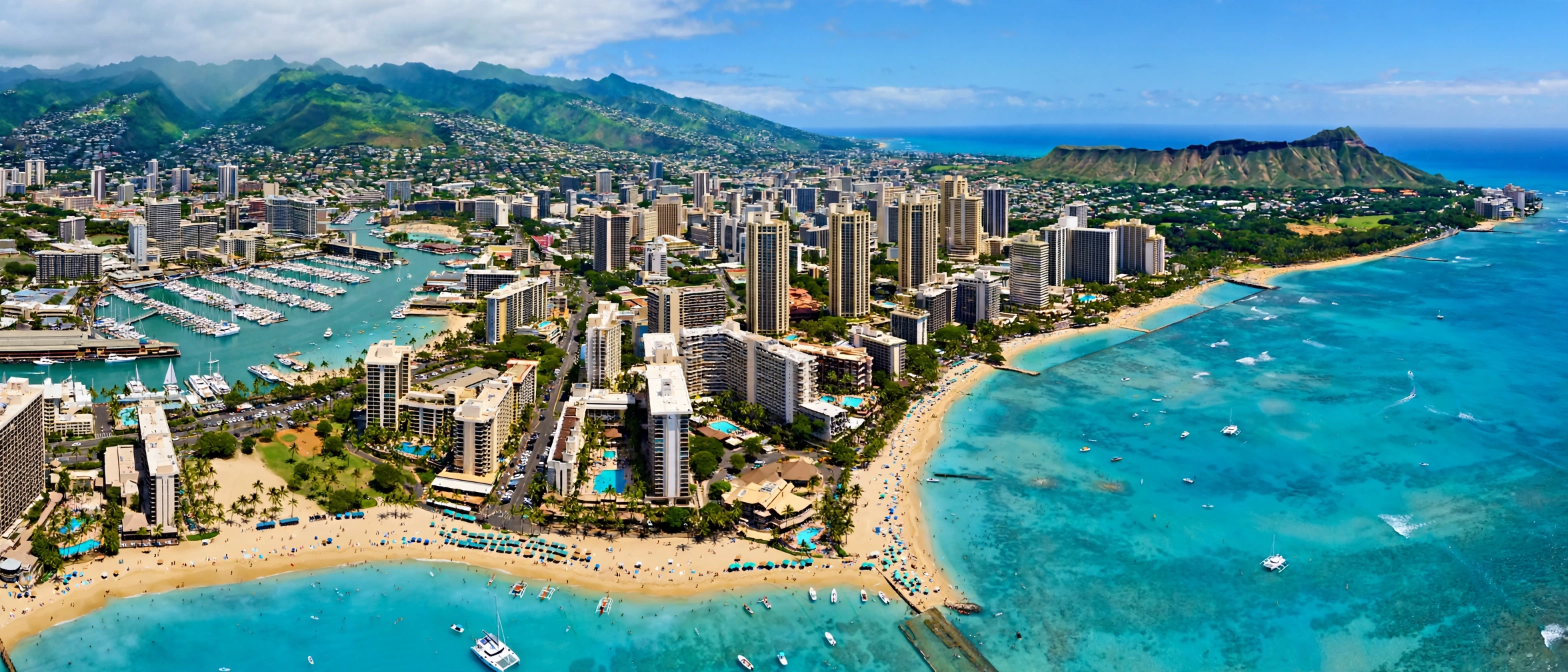
Table of Contents
- Oʻahu Beaches at a Glance
- South Shore Beaches
- East Side Beaches
- North Shore Beaches
- West Side Beaches
- Best Oʻahu Beaches by Activity
- Beach Safety on Oʻahu
- Frequently Asked Questions
- Related Guides
Oʻahu Beaches at a Glance
Oʻahu is the third-largest Hawaiian island but packs roughly 112 miles of coastline into a compact, driveable package. You can eat breakfast in Waikīkī, swim at Lanikai by midmorning, and watch sunset over the North Shore in a single day, which is something no other island lets you do as easily. The island’s beaches fall into four clear coastal personalities, and understanding them matters more than any single beach recommendation.
The south shore, anchored by Waikīkī and stretching from Pearl Harbor to Diamond Head, faces the Kona wind shadow and gets the least rain on the island. Summer brings gentle south swells that make Waikīkī perfect for learning to surf, while winter stays mostly calm. The east side, or windward coast, faces the northeast trade winds. It is breezier, greener, and slightly cooler, with beaches like Kailua and Lanikai that stay swimmable almost all year thanks to protective offshore reefs.
The North Shore faces open ocean to the north and northwest. Summer trade-wind swells keep it small and swimmable, often under two feet, but winter storms born in the North Pacific send swells of 20 to 40 feet or more crashing onto the same sand. The west side, or leeward coast, sits in the island’s rain shadow. Beaches like Mākaha get big winter surf too, but the summer water is usually calm, and the sunsets are unobstructed.
Seasonality is the single most important concept for Oʻahu beaches. The ocean here has two seasons: a winter season from roughly October through March, when north and west shores get powerful surf, and a summer season from April through September, when south shores pick up gentle swells. Trade winds blow most afternoons on the east and south shores, which can chop up the surface after noon. Morning is almost always the calmest, clearest window for swimming and snorkeling everywhere on the island.
South Shore Beaches
The south shore holds the beaches most visitors meet first. They are the most developed, the most lifeguarded, and the easiest to reach without a car, but they are also the most crowded. Go early in the day and you will have a different experience than the midday version.
Waikīkī Beach
Waikīkī is actually a two-mile string of eight connected beach sections, not one beach, stretching from the Hilton Hawaiian Village at the west end to the Diamond Head end near Kapiʻolani Park. The middle sections, Royal Hawaiian Beach and Kūhiō Beach, sit directly in front of the resort towers and draw the biggest crowds. The water is shallow, warm, and usually calm, protected by an offshore reef about a quarter mile out.
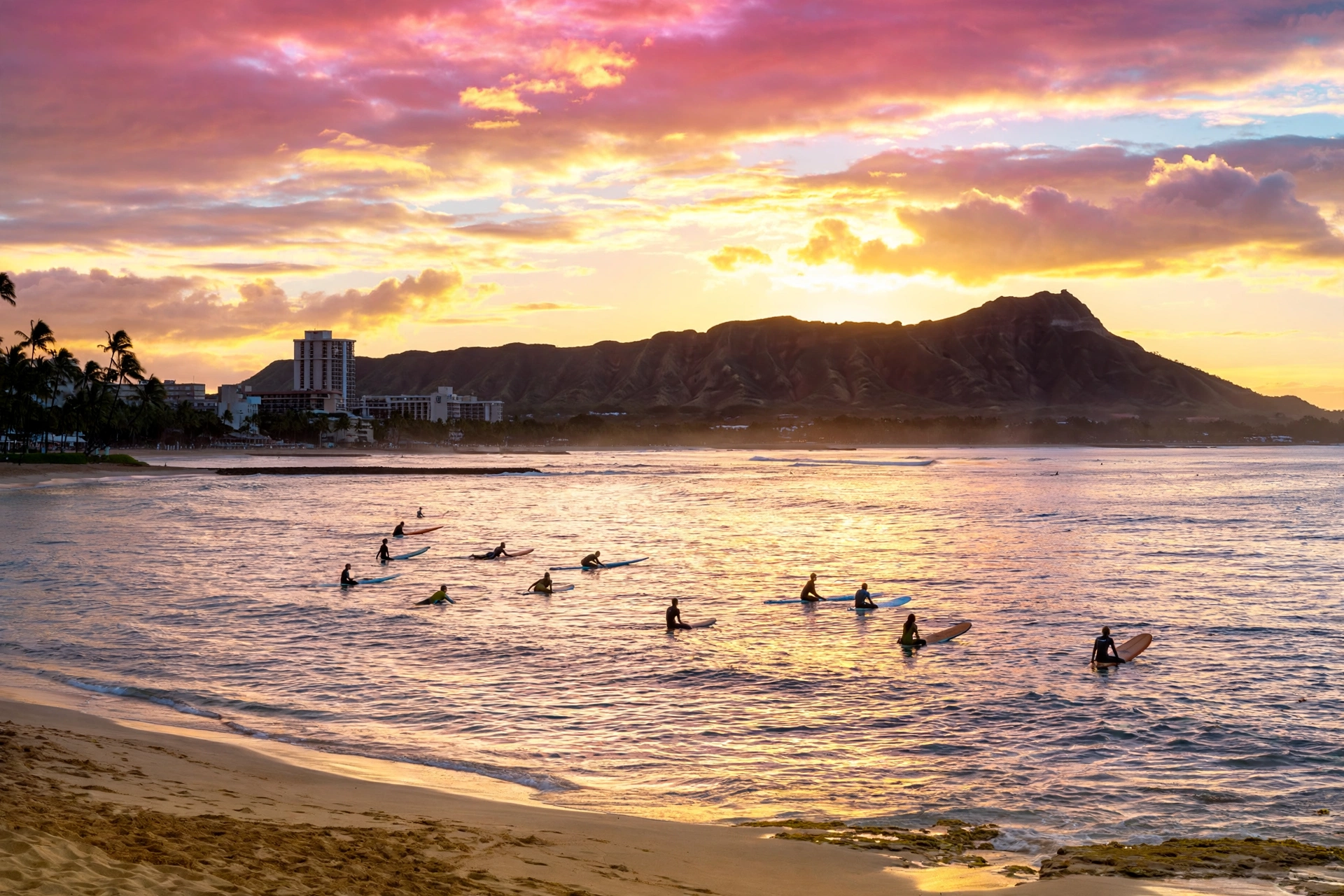
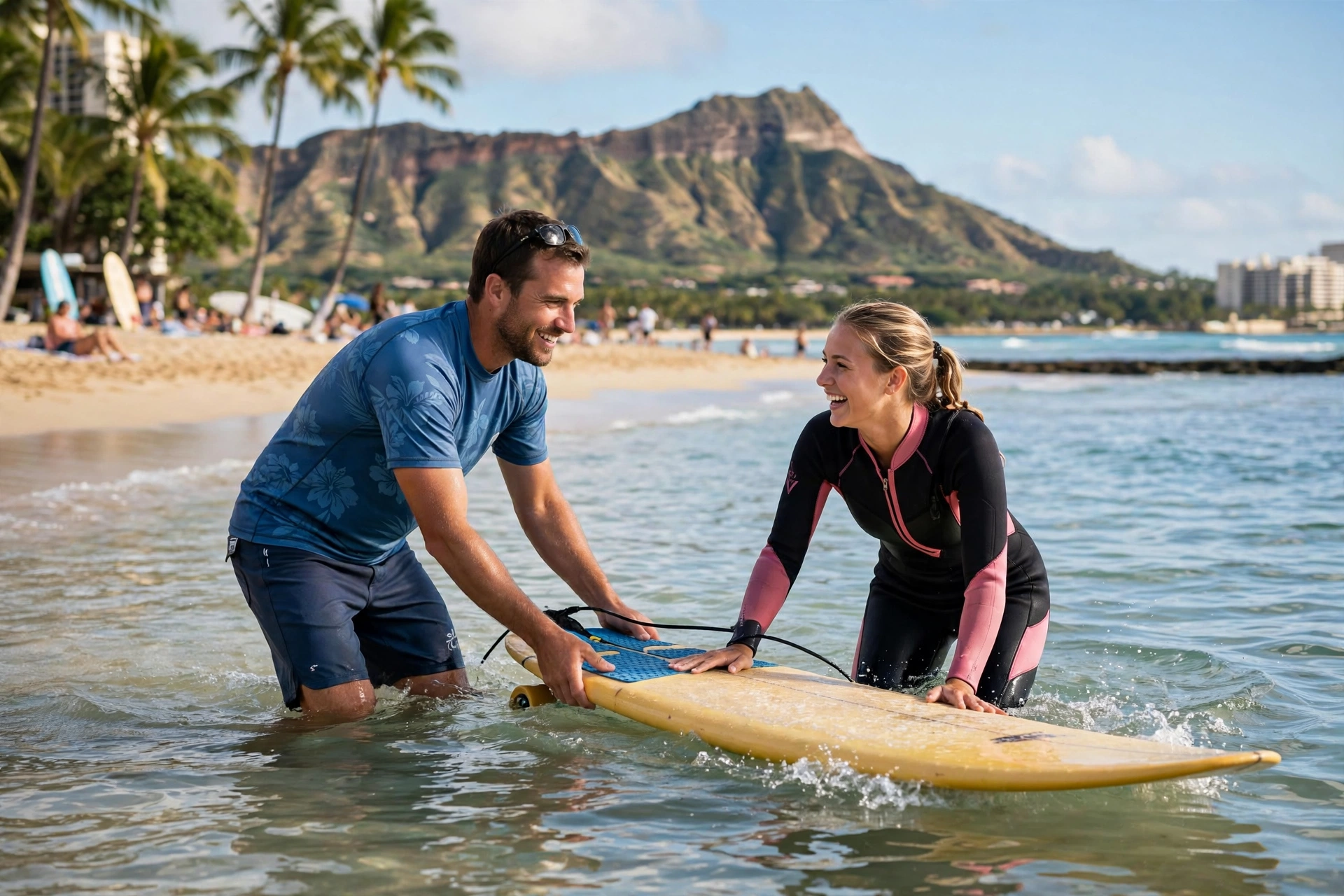
What Waikīkī does better than any beach on the island is teach people to surf. The waves break far offshore on the reef and roll in as gentle, whitewater rollers that are ideal for longboards and first lessons. Dozens of surf schools operate from the beach, and the Duke Kahanamoku statue at the center marks the spiritual home of modern surfing. For swimming, the best water is on the Diamond Head end, where the crowds thin and the sand widens.
Practical notes: parking is limited and mostly in paid garages. Arrive before 9 a.m. for the best sand space and the calmest water. Restrooms and showers are available at several beach access points, and lifeguard towers are staffed along the full length.
Ala Moana Beach Park
Locals call it the people’s beach, and they mean it. Ala Moana Beach Park is a 76-acre county park between downtown Honolulu and Waikīkī, with a half-mile of golden sand fronting a calm, reef-protected swimming area. Magic Island, a man-made peninsula built in 1964 at the park’s west end, adds another swimming lagoon and one of the island’s most popular sunset picnic spots.
The swimming area stays calm year round because the reef keeps swells out, making it the safest large-scale swimming beach in Honolulu for small children. The park has tennis courts, jogging paths, picnic tables, and ample free parking by Honolulu standards, though the lot fills on weekends. On summer weekends, the park hosts some of the biggest local beach gatherings on the island, which is a cultural experience in itself but means less open sand.
Hanauma Bay Nature Preserve
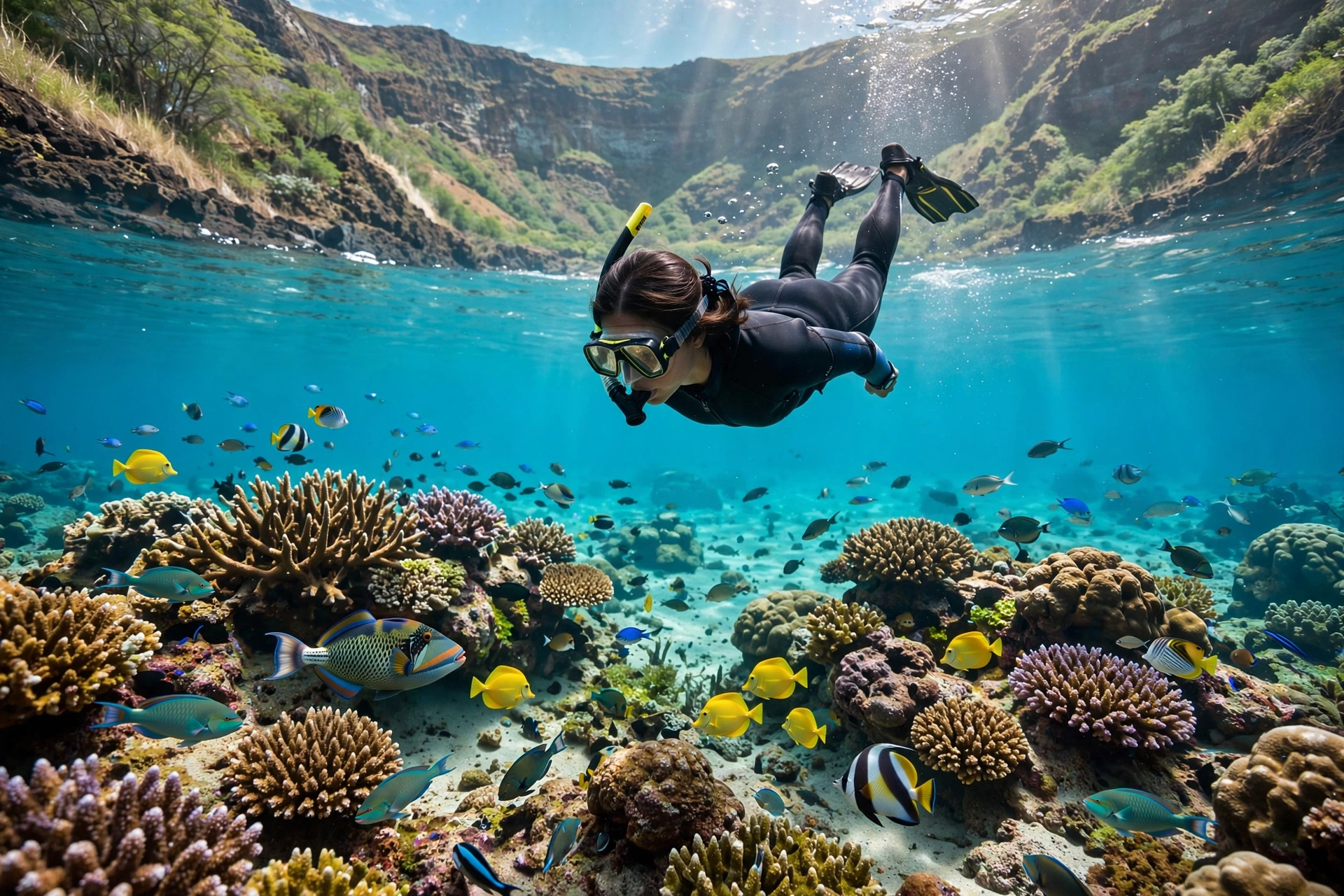
Hanauma Bay is a flooded volcanic crater on the southeast coast and one of the best beginner snorkeling spots in the state. The curved bay is shallow, calm, and packed with green sea turtles, parrotfish, and reef fish that have grown accustomed to visitors. It is also one of the most regulated beaches in Hawaiʻi, and planning ahead is mandatory.
Non-residents age 13 and older pay $25 per person, and reservations are required through the city portal. Tickets release exactly 48 hours in advance at 7:00 a.m. HST and can sell out within minutes on weekends. A limited number of walk-in tickets are available at the gate starting at 6:45 a.m. on a first-come basis, but counting on those during peak season is a gamble. The preserve is open Wednesday through Sunday, 6:45 a.m. to 4:00 p.m., and closed Monday and Tuesday so the reef gets two rest days each week. Everyone watches a short educational video before entering.
Parking costs $3 in cash and is first come, first served. Arrive at least 20 minutes before your reservation slot, since late arrivals beyond the grace period are turned away. Only mineral sunscreen is allowed, and touching or standing on the coral is prohibited. For alternatives without the reservation stress, the statewide Hawaii snorkeling guide lists calmer options across the islands.
Sandy Beach
Sandy Beach sits at the east end of the south shore, just past Hanauma Bay, and it is famous for the wrong reasons for casual swimmers: a powerful shorebreak that dumps directly onto the sand. It is one of the best bodysurfing and bodyboarding beaches on Oʻahu, but it sends more people to the emergency room with neck and spine injuries than any other beach on the island.
Watch the local bodysurfers for a while before deciding anything. If you are not an experienced bodysurfer, enjoy Sandy Beach as a spectacular place to watch the ocean rather than enter it. The beach has lifeguards, restrooms, and picnic areas, and the views up the Ka Iwi coastline are excellent.
East Side Beaches
The windward coast runs from Makapuʻu Point north to Kahuku, and it holds Oʻahu’s prettiest postcard beaches. The trade winds keep it green and a few degrees cooler than town, and the offshore reefs make the water reliably swimmable even when the North Shore is raging.
Lanikai Beach
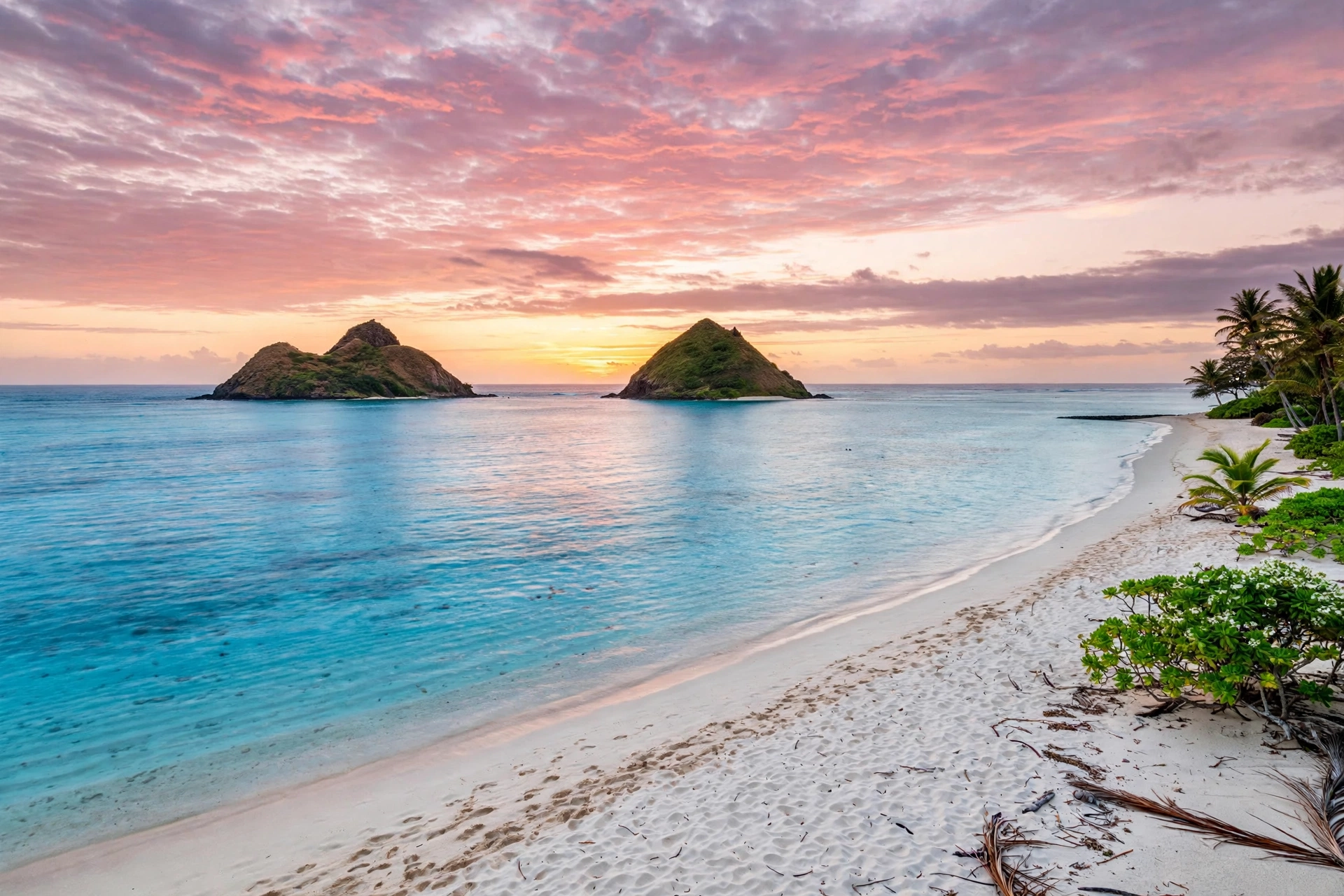
Lanikai means “heavenly sea,” and on a calm morning the name feels understated. This half-mile stretch of powdery white sand fronts some of the clearest turquoise water in Hawaiʻi, with the twin Mokulua Islands rising offshore like a painting backdrop. It is consistently ranked among the best beaches in the world, and it has no facilities, no lifeguards, no parking lot, and no commercial activity of any kind.
That last part matters. Lanikai is a residential neighborhood, and parking is restricted to the narrow streets, where it fills by midmorning. Walk in from the beach access paths, respect the residents, and take everything out with you. The Mokulua Islands are a protected seabird sanctuary; landing on the northern island is restricted, and the southern island requires care around nesting birds. Kayak rentals launch from nearby Kailua Beach instead.
Kailua Beach
Kailua Beach stretches about 2.5 miles along Kailua Bay and is the windward coast’s main stage. The sand is soft and white, the water is a gradient of turquoise, and the offshore reefs keep the swimming calm most days. It is the launch point for kayak trips to the Mokulua Islands and to Popoiʻa Island, the small flat islet a quarter mile offshore.
Kailua town, a short walk from the beach, has the best beach-day food infrastructure on the windward side: shave ice, plate lunch spots, and grocery stores for picnic supplies. The beach park has restrooms, showers, and lifeguards. Afternoon trade winds can pick up, so mornings are best for kayaking and stand-up paddling.
Waimānalo Beach
At roughly five miles, Waimānalo is the longest sandy beach on Oʻahu, and it never feels crowded because there is simply so much of it. The sand is fine and golden, ironwood trees provide natural shade along the back of the beach, and the water stays swimmable most of the year. The views across the bay to the Koʻolau mountains are among the best beach backdrops on the island.
The trade winds hit Waimānalo directly, which means Portuguese man o’ war can wash in during strong wind episodes. Check with lifeguards before swimming, and skip the water if you see the blue balloons on the sand. The beach park at the center has restrooms, showers, and lifeguards; the long stretches to either side are unguarded.
Makapuʻu Beach
Makapuʻu sits at the southeastern tip of the island beneath the Makapuʻu Point Lighthouse trail. It is a classic bodysurfing beach with a consistent shorebreak, and the water clarity on calm days is superb. The beach is small and the parking lot is smaller, so arrive early. Pair it with the paved lighthouse trail above for one of the best beach-plus-hike mornings on the island; the full Oʻahu hikes guide covers the trail details.
North Shore Beaches
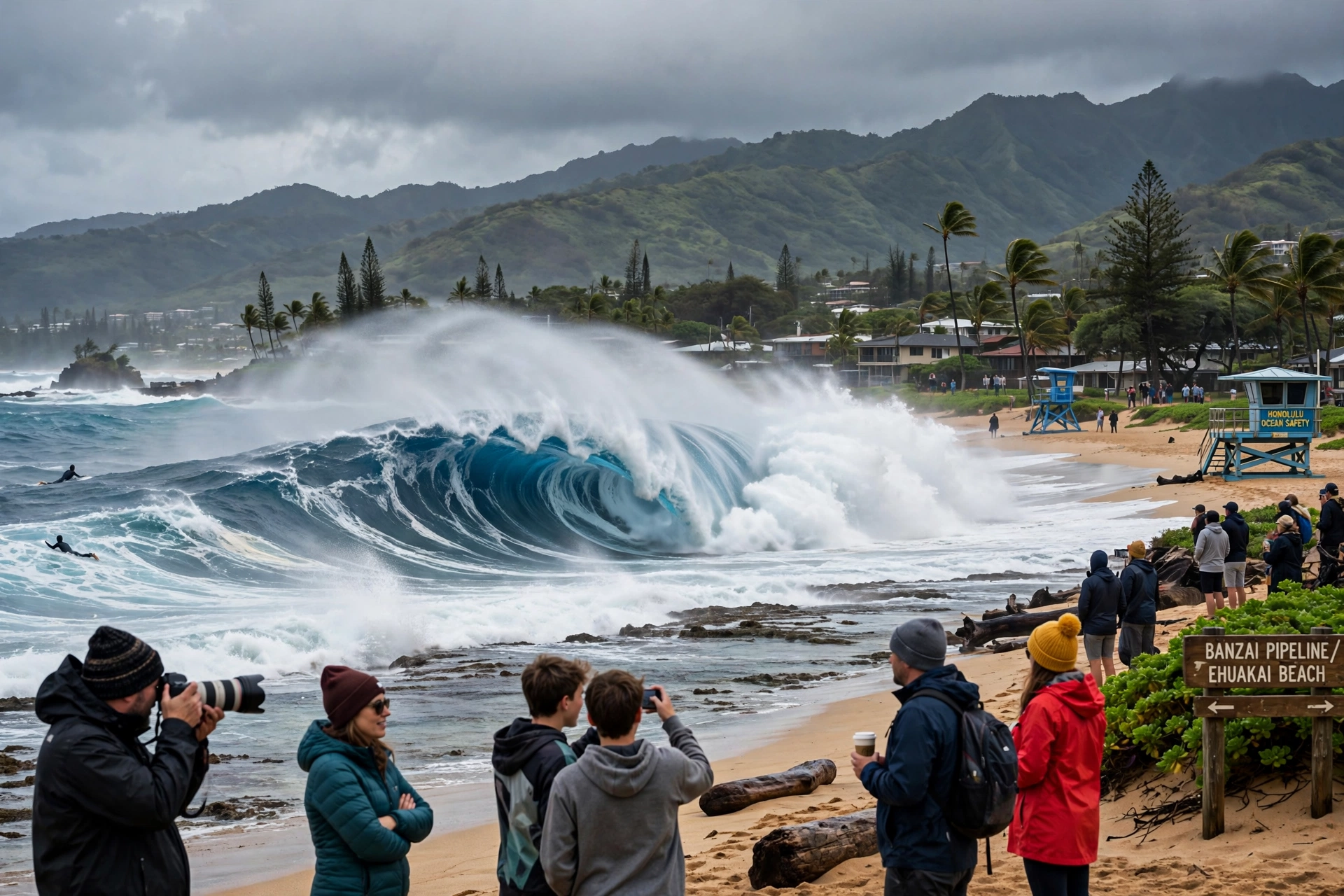
The North Shore is a seven-mile stretch of coastline between Haleʻiwa and Kahuku that becomes the center of the surfing universe every winter. From May through September, these same beaches are calm, swimmable, and far less crowded than Waikīkī. From October through March, only expert surfers belong in the water, and everyone else belongs on the sand watching.
Waimea Bay
Waimea Bay is the North Shore’s great shape-shifter. In summer, it is a calm, crescent-shaped swimming beach with excellent snorkeling along the rocky points and a famous jump rock that local kids leap from into deep water. In winter, it hosts some of the largest surfable waves on earth, and the Eddie Aikau Big Wave Invitational runs here when the swell tops 20 feet, an event so rare it has only run a handful of times in four decades.
The beach park has restrooms, showers, lifeguards, and a large parking lot that fills on big-swell days. Winter water entry for non-surfers is dangerous and sometimes fatal; the shorebreak alone can injure. Summer mornings are the sweet spot for swimming and snorkeling.
Sunset Beach
Sunset Beach is two miles of wide golden sand fronting one of the most famous surf breaks in the world. In winter, the waves here are thick, powerful, and strictly for professionals; it is a regular stop on the championship surf tour. In summer, the ocean flattens into a calm swimming beach that locals prefer to the more touristed bays.
The beach has lifeguards but limited facilities. The sunsets, true to the name, are spectacular year round, and the wide beach means you can always find space even on busy winter days when thousands line the sand to watch the surf.
Banzai Pipeline and Ehukai Beach Park
Pipeline is the most famous wave in surfing, a hollow barrel that breaks over a shallow reef table at Ehukai Beach Park. Watching it on a big winter day, with spray blowing off the top and the crowd lining the sand in silence between sets, is one of the great spectator experiences in sports. Getting in the water here in winter without expert ability is genuinely life-threatening; the reef sits just feet below the surface.
In summer, Ehukai is a pleasant, uncrowded swimming beach. The park has restrooms, showers, and picnic tables. Food trucks cluster along Kamehameha Highway nearby in winter, adding to the scene.
Haleʻiwa Aliʻi Beach Park
Just west of Haleʻiwa town, Aliʻi Beach Park is the North Shore’s most family-friendly option. The main swimming area sits in a protected channel, and the park has a full set of facilities: restrooms, showers, picnic tables, and lifeguards. In winter, the outer reef produces a surf break for experienced surfers while the inside stays manageable, though caution is still warranted.
Haleʻiwa town itself is worth the trip: shave ice, shrimp trucks, surf shops, and a historic plantation-era main street. Combine the beach with lunch in town for the classic North Shore day.
Turtle Bay and Kuilima Cove
At the northeastern tip of the North Shore, Turtle Bay’s Kuilima Cove is a small, reef-sheltered pocket that stays swimmable almost year round, making it the most reliable winter swimming spot on this coast. The cove is excellent for beginner snorkeling when the water is calm. The adjacent resort area has restaurants and parking, and the public beach access is well marked.
West Side Beaches
The leeward coast runs from Barbers Point to Kaʻena Point and gets the least rain on Oʻahu. It is hotter, drier, and less visited than the other coasts, which means emptier beaches and a more local feel. Winter brings big surf to the exposed breaks, while summer is calm.
Ko Olina Lagoons
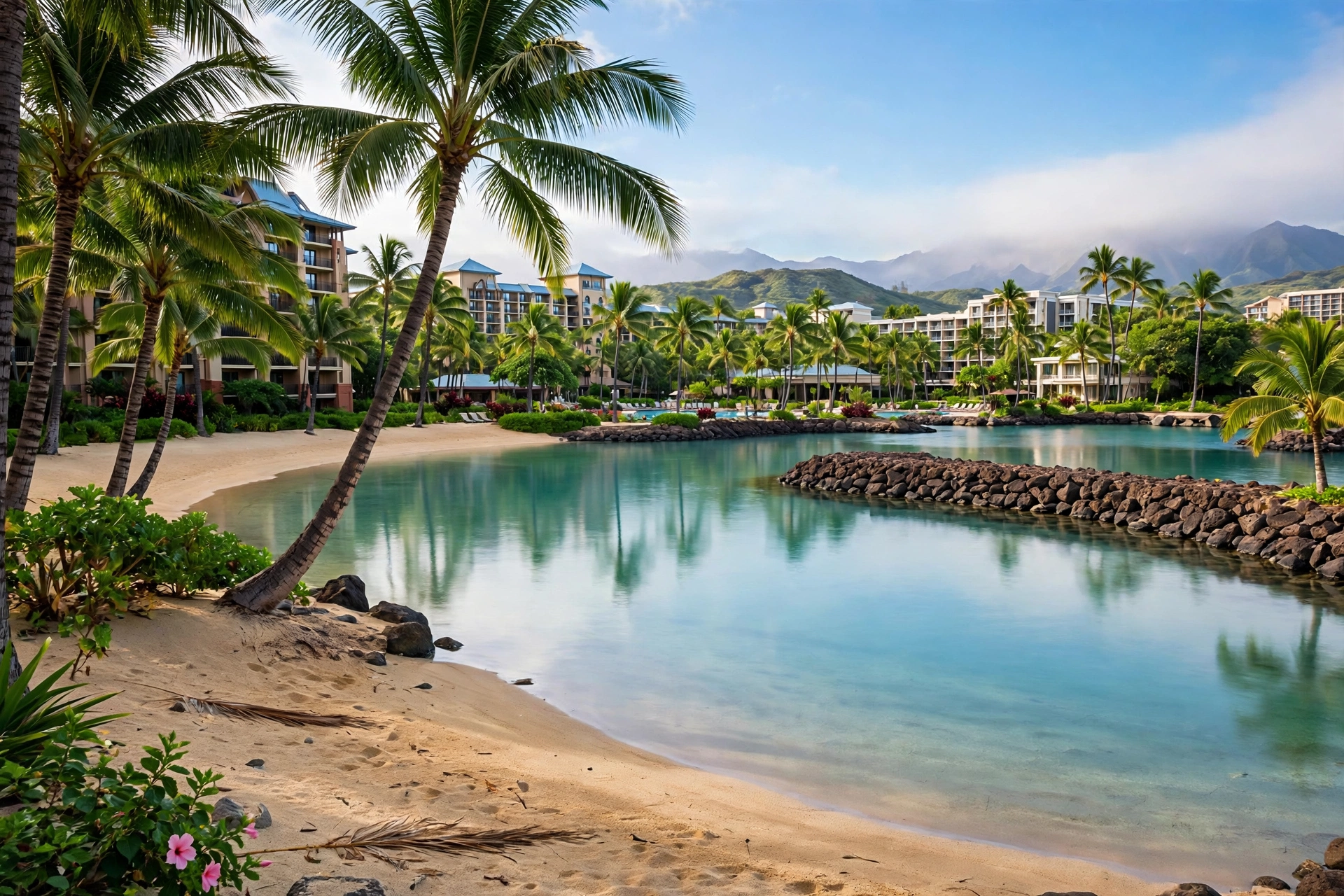
Ko Olina is a resort development with four man-made lagoons, each a calm, sandy-bottomed swimming pocket protected by rock breakwaters. The lagoons are open to the public by law, with public parking available, though the lots are small and fill early. The water is gentle year round, making the lagoons ideal for small children and nervous swimmers.
Each lagoon has a slightly different character; the first lagoon near the marina tends to be quietest. Arrive before 10 a.m. on weekends to secure public parking. The lagoons have restrooms and showers but no lifeguards at every lagoon, so check signage.
Mākaha Beach
Mākaha is the west side’s surf capital, a deep-water break that produces big, powerful winter waves and hosts a long local surf culture. In summer, the beach is a wide, calm stretch of sand with good swimming and excellent sunset views. The beach park has restrooms, showers, and lifeguards.
The west side runs on a more local rhythm than the tourist corridors, and visitors are welcomed when they show respect: keep noise down, don’t leave valuables visible in cars, and follow lifeguard guidance. The winter surf here deserves the same caution as the North Shore.
Yokohama Bay (Keawaʻula Bay)
At the end of Farrington Highway, where the road literally stops, Yokohama Bay is the last beach before the Kaʻena Point wilderness. It is a long, wild stretch of sand with powerful shorebreak in winter and calmer swimming in summer. The sunsets here, with nothing but ocean to the horizon, are among the best on the island.
There are minimal facilities and no lifeguards, so this is a beach for confident ocean-goers. The Kaʻena Point trailhead starts nearby, offering a coastal hike to a seabird sanctuary at the island’s westernmost tip.
Pokai Bay
Pokai Bay, fronting the old Army rest camp at Māʻili, is the calmest natural swimming beach on the west side thanks to a long offshore breakwater. It is a local family favorite with a protective reef, gentle water, and full park facilities. If you want the west side’s sunshine without its surf, this is the spot.
Best Oʻahu Beaches by Activity
Best for Swimming
For the calmest, most reliable swimming, choose reef-protected beaches: Ala Moana Beach Park and Kūhiō Beach in town, Kailua and Lanikai on the windward side, Kuilima Cove at Turtle Bay, and the Ko Olina lagoons on the west side. In summer, add Waimea Bay and Chun’s Reef on the North Shore. Morning is always calmer than afternoon.
Best for Snorkeling
Hanauma Bay is the headliner for beginners, with its shallow reef and dense fish population, but it requires reservations. Shark’s Cove on the North Shore is the island’s best shore snorkeling when summer flattens the ocean; in winter it is a pounding surf zone and completely off limits. Kahe Point, known as Electric Beach, has a warm-water outflow from the power plant that attracts turtles and schools of fish. Kuilima Cove and the Ko Olina lagoons are gentle alternatives for first-timers.
Best for Surfing
Beginners should start at Waikīkī, where the long, gentle reef breaks and the concentration of surf schools make learning as safe as it gets. Canoes Beach at the west end of Waikīkī is particularly forgiving. Intermediate surfers head to Diamond Head’s Cliffs break or the south shore’s Kaisers and Threes. Experts own the winter North Shore: Pipeline, Sunset, Waimea, and Haleʻiwa. The west side’s Mākaha offers expert winter waves with smaller crowds.
Best for Families
Families with small children want calm water, lifeguards, restrooms, and shade. The top picks are Ala Moana Beach Park, Kūhiō Beach at Waikīkī, Kailua Beach Park, Pokai Bay, and the Ko Olina lagoons. All have gentle entries and full facilities. Avoid Sandy Beach and Makapuʻu with young kids because of the shorebreak.
Best for Sunset
West-facing beaches win for sunset: Yokohama Bay, Mākaha, Ko Olina, and Pokai Bay on the west side, plus Magic Island at Ala Moana. On the North Shore, Sunset Beach and Waimea Bay face northwest and catch spectacular winter sunsets. Waikīkī faces south-southwest, so the sun sets over the ocean to the right of Diamond Head, which is a fine consolation.
Best Secluded Beaches
For empty sand, head to the long stretches of Waimānalo Beach away from the park, the far ends of Sunset Beach, Yokohama Bay on a weekday, or the beaches near Kaʻena Point. The windward coast north of Kailua has several unsigned beach accesses with few visitors. Secluded does not mean safer; these beaches often lack lifeguards, so swim conservatively.
Beach Safety on Oʻahu
Oʻahu’s beaches are beautiful and, on the wrong day, genuinely dangerous. Drowning is a leading cause of visitor fatalities in Hawaiʻi, and almost all of those deaths involve the ocean. The rules below are not suggestions; they are the difference between a great beach day and a tragedy.
Rip Currents and Shorebreak
Rip currents are narrow channels of water pulling away from shore, and they cause the majority of ocean rescues. If caught, do not fight the current by swimming straight back to the beach. Swim parallel to the shore until you are out of the pull, then angle back in, or float and signal for help. Sandy Beach and Makapuʻu are famous for shorebreak injuries: waves that break directly onto the sand can slam swimmers headfirst into the bottom. Never turn your back on the ocean, and never let small children play at the water’s edge on shorebreak beaches.
Winter Surf Season
From October through March, the North Shore and exposed west side beaches can see surf of 15 to 40 feet. Waves of this size move with the force of a freight train and have killed strong swimmers. When in doubt, stay on the sand. Lifeguards post warning signs and will advise you directly; follow their guidance without argument. Check the surf forecast every morning before choosing a beach.
Box Jellyfish
The Hawaiian box jellyfish, Alatina alata, arrives on south-facing beaches on a lunar schedule so predictable that lifeguards publish the dates. Expect influxes roughly 8 to 10 days after each full moon, lasting two to three days, at beaches including Waikīkī, Ala Moana, Hanauma Bay, and the Waiʻanae coast. The sting is painful but not life-threatening for most people. If stung, rinse with vinegar, carefully remove tentacles with tweezers rather than bare hands, and find a lifeguard, who can apply treatment. Do not rinse with fresh water, which can trigger more venom release.
Portuguese Man O’ War
These blue, balloon-like creatures blow in on strong trade winds, most often on windward beaches like Waimānalo, Kailua, Lanikai, and Makapuʻu. Their sting is painful and the tentacles can stretch several feet. Unlike box jellyfish stings, do not apply vinegar; rinse with seawater and remove tentacles carefully, then see a lifeguard. If you see the blue balloons washed up on the sand, stay out of the water.
Lifeguards and Warning Flags
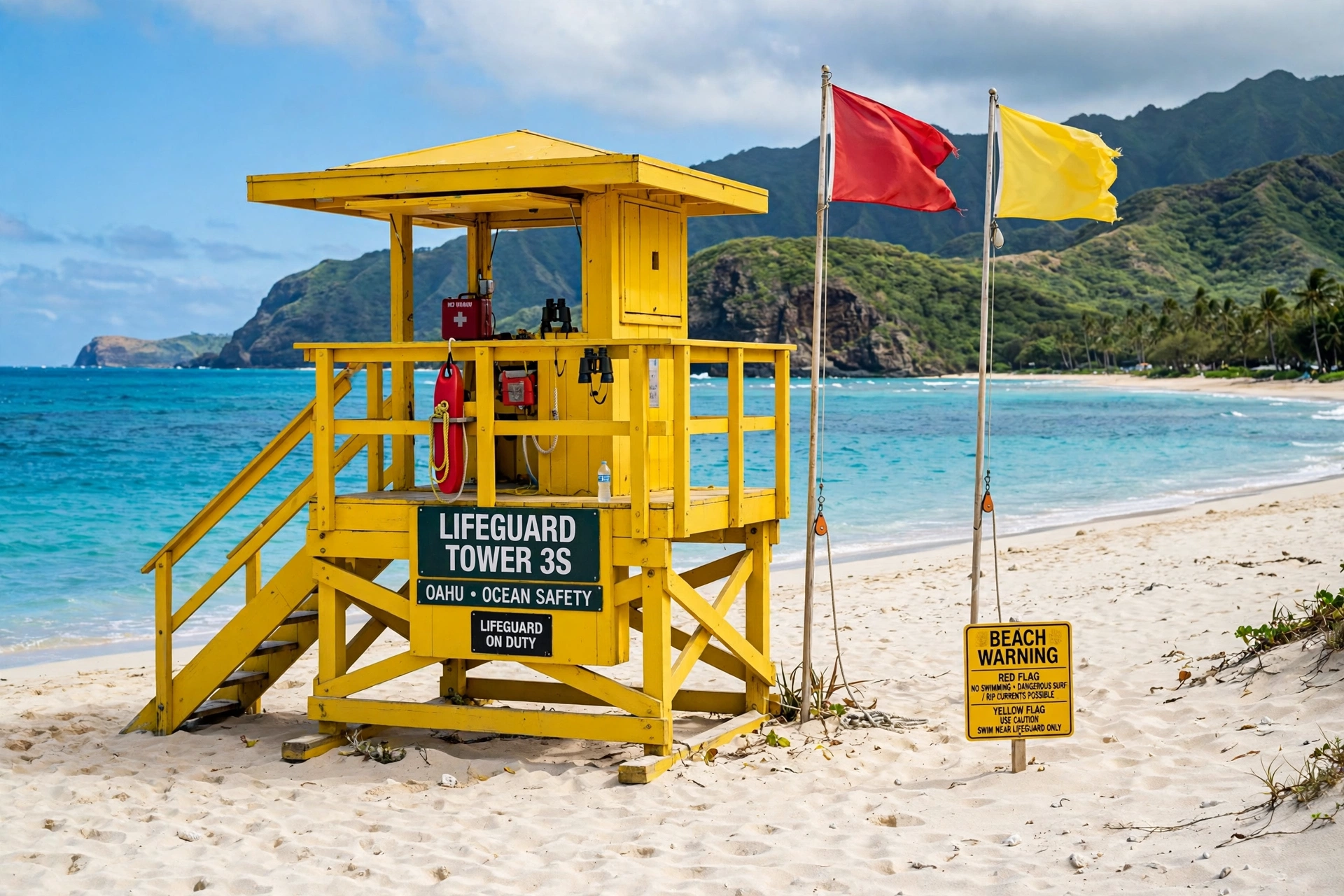
Swim at lifeguarded beaches whenever possible. Oʻahu lifeguards mark hazards with signs and flags: orange flags indicate high surf warnings, and posted signs warn of jellyfish, strong currents, or brown water after heavy rain. The state’s beach safety website updates conditions multiple times daily. After heavy rain, avoid swimming near stream mouths and in murky brown water, which can carry bacteria and reduce visibility for spotting hazards.
Sun and Reef-Safe Sunscreen
The sun near the equator is stronger than most visitors expect; sunburn can develop in under 30 minutes at midday. Hawaiʻi law prohibits the sale of sunscreens containing oxybenzone and octinoxate, chemicals shown to harm coral reefs. Use mineral sunscreens with zinc oxide or titanium dioxide, wear a rash guard, and reapply after swimming. The reef will thank you, and so will your skin.
Sea Turtles and Monk Seals
Green sea turtles, or honu, are common at many Oʻahu beaches, and endangered Hawaiian monk seals occasionally haul out to rest on the sand. Federal and state law requires staying at least 10 feet from turtles and 50 feet from monk seals. Never touch, feed, or chase them. If a seal is resting on the beach, give it wide space and keep dogs leashed far away.
Frequently Asked Questions
What is the best beach on Oʻahu?
There is no single best beach; it depends on what you want. Lanikai wins for beauty, Waikīkī for learning to surf, Hanauma Bay for easy snorkeling, Waimea Bay for summer swimming with scenery, and Waimānalo for long empty walks. Match the beach to the activity and the season.
Can you swim at the North Shore in winter?
Generally no. From October through March, North Shore surf is for expert surfers only, and swimming is dangerous even for strong swimmers. The one exception is Kuilima Cove at Turtle Bay, which stays sheltered. In summer, the North Shore is calm and excellent for swimming.
Do you need reservations for Hanauma Bay?
Yes. Non-residents must book online exactly 48 hours ahead at 7:00 a.m. HST, and slots sell out fast. A small number of walk-in tickets are available at the gate from 6:45 a.m. The bay is closed Monday and Tuesday. Entry is $25 per person age 13 and older.
Which Oʻahu beaches have lifeguards?
Most major beaches do, including all of Waikīkī, Ala Moana, Hanauma Bay, Kailua, Waimānalo’s main park, Waimea Bay, Sunset Beach, Ehukai, Haleʻiwa Aliʻi, Sandy Beach, and Mākaha. Remote stretches like Yokohama Bay and the far ends of long beaches typically do not.
What is the water temperature on Oʻahu?
Ocean temperatures range from about 75°F in winter to 82°F in summer. Most swimmers are comfortable without a wetsuit year round, though a rash guard adds sun protection and a little warmth for long snorkel sessions.
Are Oʻahu beaches free?
Yes. All beaches in Hawaiʻi are public by law, and there is no private beach ownership. You may have to pay for parking at some locations, and Hanauma Bay charges an entry fee, but the sand and water themselves are always free to access.
When is the best time of day to go to the beach?
Morning. The wind is lightest, the water is clearest, the crowds are thinnest, and the sun is less intense. Trade winds typically pick up around midday, chopping up the surface on east and south shores.
What should I do if I see a shark?
Stay calm, keep the shark in sight, and move steadily toward shore without splashing. Shark encounters at Oʻahu beaches are rare. Avoid swimming at dawn and dusk, near stream mouths after rain, or in murky water, and never swim alone in remote areas.
Can I drink alcohol on Oʻahu beaches?
No. Alcohol is prohibited on all public beaches in Hawaiʻi, and the law is enforced, particularly at Waikīkī and Ala Moana. Fines apply.
What is the difference between the North Shore and Waikīkī?
Waikīkī is an urban resort beach on the calm south shore, best for beginners and convenience. The North Shore is a rural coastline famous for giant winter surf, country towns, and a strong surf culture. They are about an hour apart by car and feel like different islands.
Related Guides
- Hawaii Beaches: the statewide beaches hub
- Hawaii Snorkeling: Complete Guide: best snorkel spots across the islands
- Oʻahu Hikes: The Complete Guide: trails to pair with beach days
- Where Is Pearl Harbor on a Map: planning a history day near the south shore
- Maui Beaches: The Complete Guide: comparing Maui’s shoreline
- Hawaii Map: Complete Reference Map & Area Guide: orienting yourself across the islands
Reading Oʻahu’s Water
The reward for learning Oʻahu’s beaches is a kind of literacy. You start to read the island the way locals do: checking the swell direction before choosing a coast, going early when the trades are still asleep, knowing which bay stays calm when the jellyfish calendar turns, and understanding that the same stretch of sand can be a swimming pool in July and a proving ground in January. Oʻahu gives you more coastline per mile than anywhere else in Hawaiʻi, and every mile of it rewards the swimmer who pays attention.