The Melon-Headed Whale: What You Need to Know

The vast, deep blue waters surrounding Hawaii are teeming with incredible marine life, but few creatures are as captivating and mysterious as the melon-headed whale. With their distinct, rounded foreheads and highly social nature, these animals are a fascinating subject for marine biologists and ocean lovers alike. This guide explores everything you need to know about these remarkable oceanic dolphins, from their unique physical traits to their complex social behaviors.
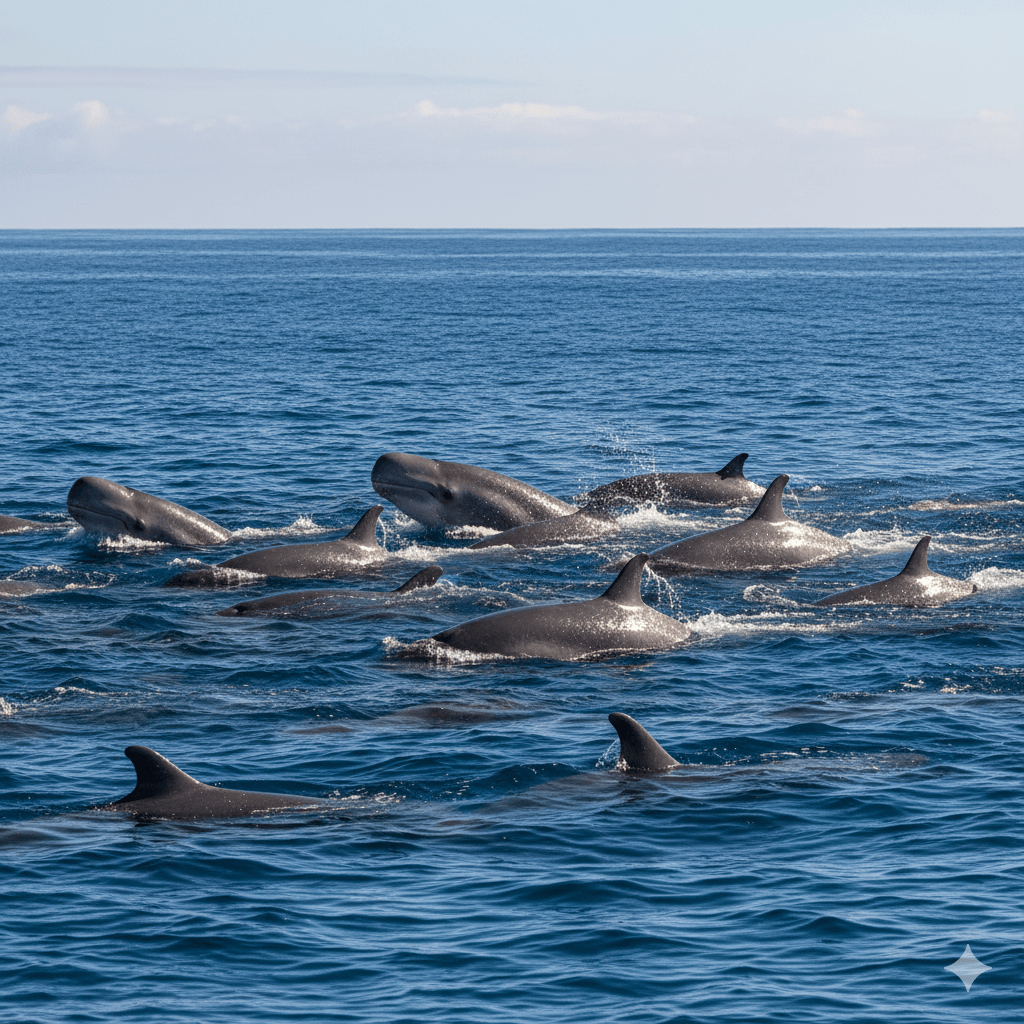
The melon-headed whale is actually a species of oceanic dolphin, despite its name. When encountered in the open ocean, these dolphins are often seen in large, energetic groups, sometimes numbering in the hundreds — a truly spectacular sight, though one few visitors ever witness, since melon-headed whales live far offshore in deep water. Understanding these animals is not just about appreciating their beauty; it’s about recognizing their role in the marine ecosystem and the importance of protecting them for future generations. By learning more about their lives, we can better understand the challenges they face and how we can contribute to their conservation.
Taxonomy and Physical Characteristics
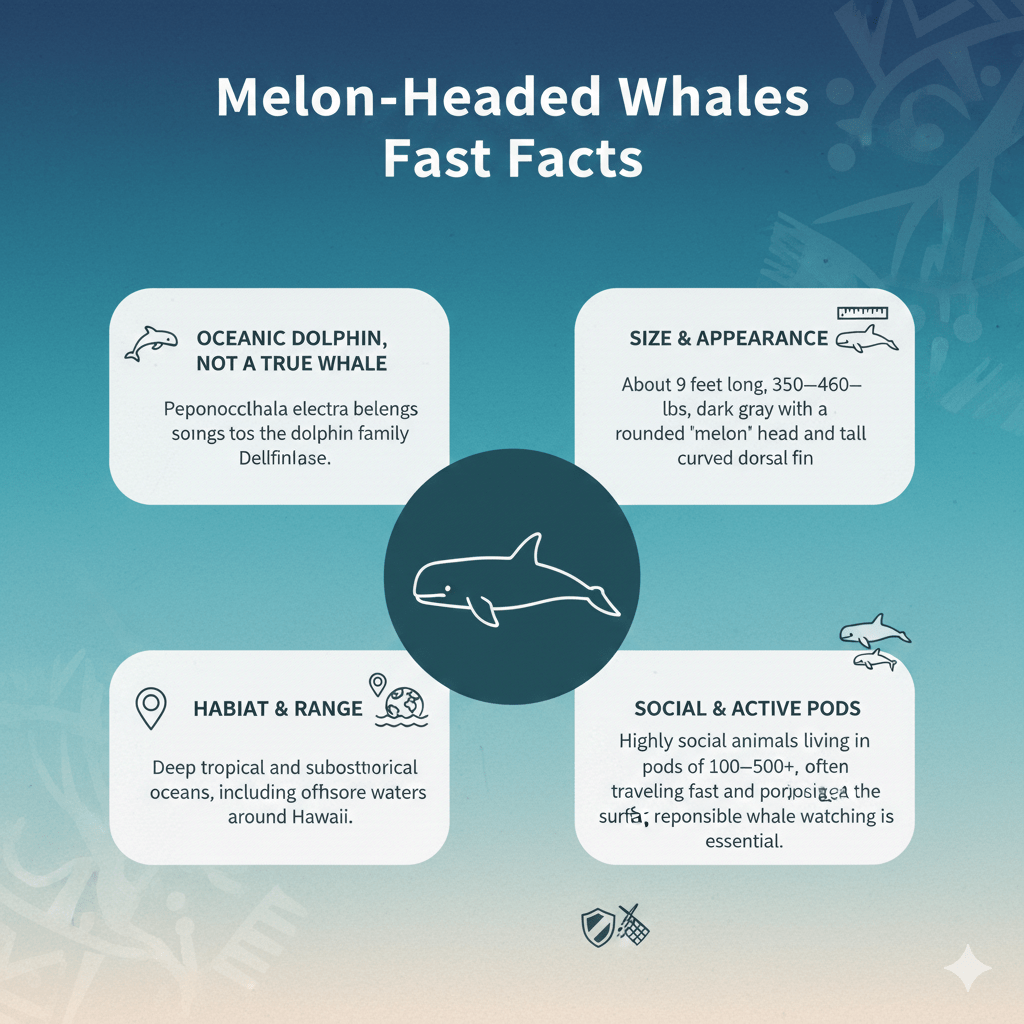
The melon-headed whale (Peponocephala electra) belongs to Delphinidae, the oceanic dolphin family, within the suborder Odontoceti — the toothed whales. Other odontocetes include porpoises, sperm whales, and beaked whales. Despite the “whale” in its common name, the melon-headed whale’s closest relatives are other oceanic dolphins, such as the pygmy killer whale and the false killer whale.
What does a whale with a melon head look like?
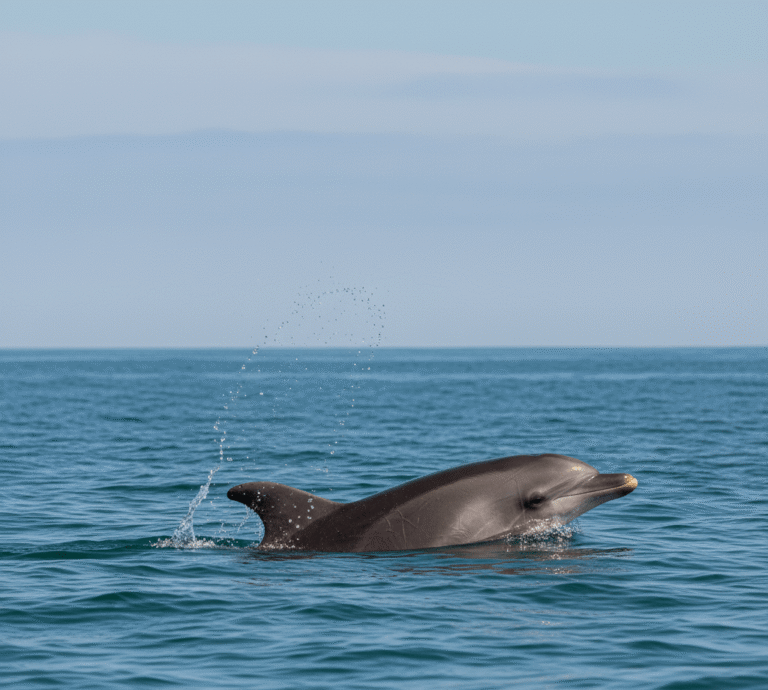
The melon-headed whale gets its name from its head, which is its most distinctive feature. The head is small and cone-shaped, and the forehead is round and bulbous, like a “melon.” This melon is made up of a lot of fat cells that are very important for echolocation.
Key physical attributes include:
- Size: Adults can grow to be as long as 9 feet (2.7 meters). They are relatively slender compared to other whale species.
- Weight: An adult melon-headed whale can weigh anywhere from 350 to 460 pounds (160 to 210 kg).
- Color: Their bodies are dark gray to black, and they often have a darker “cape” on their backs that hangs down below the dorsal fin. Their lips are usually white, and they might have a light gray or white spot on their belly.
- Fins and Fluke: Their dorsal fin is tall and curved (falcate), like a killer whale’s but smaller. Their flippers are long and pointed, and their tail, or fluke, is wide with pointed tips and a clear notch in the middle. This fluke design allows for powerful and agile swimming.
- Teeth: They are a type of toothed whale and have 20 to 25 pairs of small, sharp, cone-shaped teeth in both their upper and lower jaws. These are great for catching prey that is slippery.
What the Whale Melon Does
What is the melon used for? It is essential for echolocation. The whale produces high-frequency clicks in its nasal passages, and the melon acts like a lens, focusing the sound waves into a forward beam. When the sound waves strike an object, they bounce back as echoes, which the whale receives through its lower jaw and transmits to the inner ear. This allows the animal to effectively “see” its surroundings with sound — navigating, finding food, and detecting predators in dark or murky waters.
What’s the difference between a melon-headed whale and a dolphin?
People often ask, “Is a melon-headed whale a dolphin?” Yes, it is. Melon-headed whales belong to the oceanic dolphin family, Delphinidae, which makes them dolphins in the scientific sense. The “whale” in their common name is a historical quirk — in everyday language, “whale” and “dolphin” are often separated by size rather than strict classification, even though all dolphins are technically toothed whales. Like the more familiar bottlenose dolphin, the melon-headed whale is a highly social, intelligent delphinid, but it lives much farther offshore.
Where it lives and where it is found
Melon-headed whales are found in deep, tropical, and subtropical waters around the globe. They are a pelagic species, which means they mostly live in the open ocean and not near the shore.
Where does the melon-headed whale live?
Their geographic range is extensive, typically between 40°N and 35°S latitudes. They are often found in the Pacific Ocean, which includes Hawaii and the Philippines.
- The Atlantic Ocean, which includes the Caribbean and the Gulf of Mexico
- The Indian Ocean
They like deep water far from land, but they can also be seen closer to land, especially around oceanic islands like the Hawaiian Islands, where deep water is close to shore. They usually like warm water, with surface temperatures above 77°F (25°C). There is no strong evidence of long-range seasonal migration patterns, but they do move around in small groups, probably because of changes in water temperature and the availability of food.
Behavior and Social Structure
Melon-headed whales are very social creatures that live in large, close-knit groups called pods. These pods can include anywhere from 100 to 500 individuals, and sometimes even more than 1,000. Their social structure is dynamic, and when encountered in the open ocean they are often seen traveling at high speeds, porpoising (leaping out of the water) as they move.
They are known to hang out with other types of cetaceans, especially the Fraser’s dolphin. These groups of different species often travel and look for food together. Communication is very important for their social lives. They use a complicated mix of clicks, whistles, and pulsed calls to talk to each other, plan group movements, and keep their social ties strong.
What Do Melon-Headed Whales Eat?
Since they are active hunters, most of what they eat comes from deep ocean prey. They eat by diving deep, usually at night, when many of the animals they eat move closer to the surface in a process called diel vertical migration.
Their diet includes:
- Squid: This is a big source of food.
- Small Fish: They eat different kinds of small fish that live in deep water.
- Crustaceans: They eat shrimp and other small crustaceans as well.
They use their echolocation to pinpoint prey in the dark depths and their speed and agility to chase it down. Hunting is often a group effort, with members of a pod working together to catch and herd food.
Life Cycle and Reproduction
We don’t know much about how melon-headed whales mate, but it’s probably similar to how other dolphins do it, with complicated social interactions and displays. It is thought that the gestation period lasts about 12 months.
When they are born, calves are usually about 3 feet (1 meter) long and live in the water. The mother nurses her calf for an extended period, and the young whale remains close to its mother, learning essential survival skills like hunting and socializing. The young whale’s growth depends on the strong bond between mother and calf. The lifespan of melon-headed whales is estimated to be between 20 and 30 years, though more research is needed to confirm this.
Threats And Conservation Status
The International Union for Conservation of Nature (IUCN) lists the melon-headed whale as “Least Concern.” But that doesn’t mean they aren’t facing threats. We don’t know how many individuals exist worldwide, which makes it hard to assess the severity of different threats.
Natural and Human-Induced Threats
- Predators in Nature: The main animals that eat them in the wild are big sharks and killer whales (orcas), but they are probably not very good at it because they are so fast and live in big groups.
- Acoustic Trauma: Because they rely so much on sound, they are very sensitive to loud noises underwater. Heavy ship traffic, naval sonar, and seismic surveys can all make them act strangely, hurt them, and in some cases, cause mass strandings.
- Fishing Bycatch: Melon-headed whales, like many other marine mammals, can get caught up in fishing gear like gillnets and longlines. This can cause harm, death, and drowning.
- Marine Debris and Pollution: Eating plastic and other marine debris can hurt your insides and make you hungry. Chemical pollutants can also build up in their bodies, which can hurt their health and ability to have children.
- Climate Change: Changes in the ocean’s temperature and chemistry can change where and how many of their prey are, which could affect their long-term survival.
Conservation efforts focus on reducing these threats. This includes controlling noise underwater, making fishing safer, and trying to clean up the plastic pollution in our oceans.
How to Observe Melon-Headed Whales Responsibly
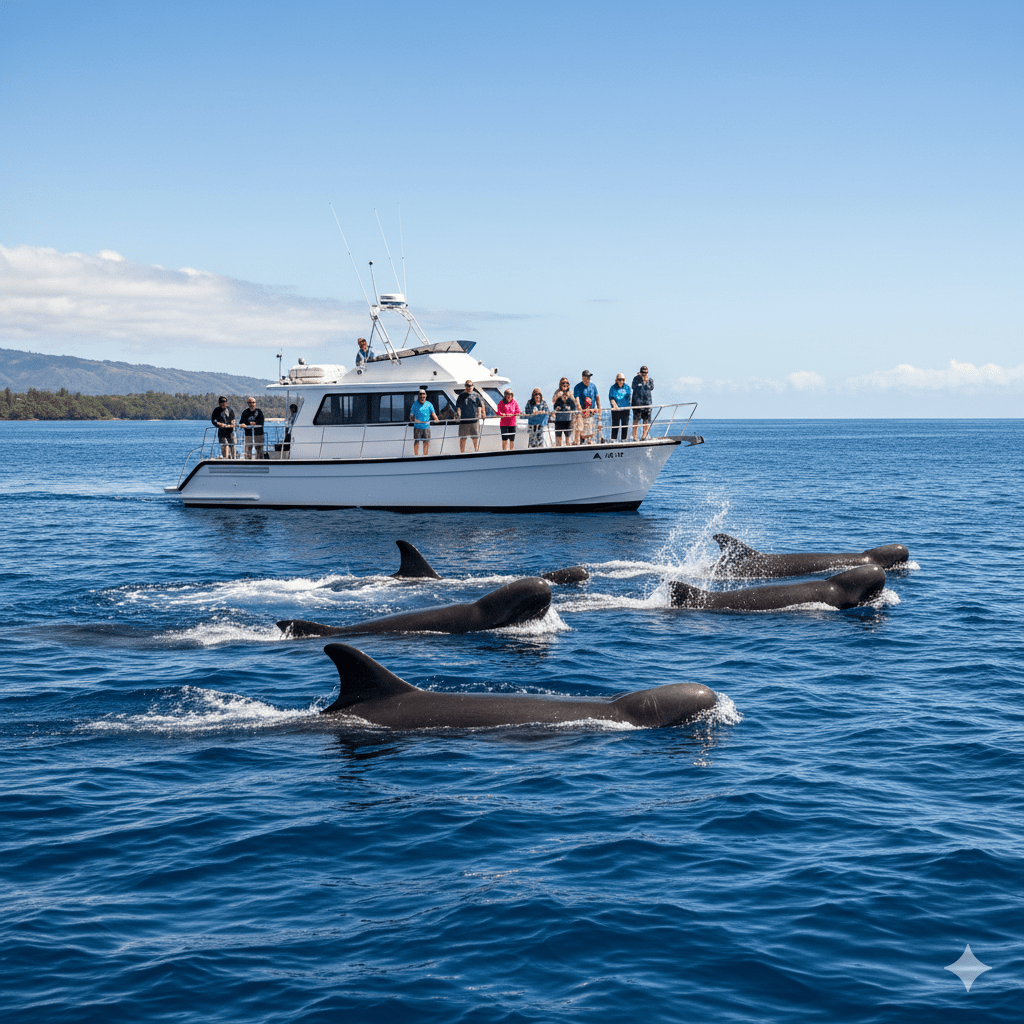
Because melon-headed whales live in deep water far from shore, sightings are uncommon and usually happen well offshore. If you are fortunate enough to encounter them, observing responsibly is essential. Marine tour companies in Hawaii must follow strict federal rules designed to keep these animals safe. For more on keeping wildlife encounters safe for the animals, see our guide to eco-friendly whale watching in Hawaii.
Rules For Watching Whales Responsibly:
- Stay at a Safe Distance: Boats should never approach closer than 100 yards (91 meters) to whales or dolphins.
- Do Not Chase or Circle: Never pursue the animals or block their path of travel.
- Limit Viewing Time: To minimize disturbance, keep your time with one group short.
- Don’t Make Loud Noises: When you’re near the animals, move slowly and quietly.
- Don’t Feed Marine Mammals: It is against the law to feed wild animals, and it is bad for their health and natural behaviors.
You can enjoy these amazing animals without hurting them if you choose a tour company that cares about the health of marine life.
Respecting and Protecting the Melon-Headed Whale
The melon-headed whale is a reminder of how much life thrives unseen in the open ocean. Its sophisticated echolocation, deep-diving habits, and tightly bonded pods make it one of Hawaii’s most intriguing offshore dolphins — even though most visitors will never spot one from shore. Learning about species like this helps us appreciate the complex web of life beneath the waves and understand why it deserves our respect and protection.
Because these dolphins spend their lives in deep, offshore waters, they remain difficult to study, and much about their behavior is still being discovered. To learn more about the marine life you can encounter closer to Hawaii’s shores, explore our guide to encountering Hawaii’s iconic marine species for snorkelers and divers.