Snorkeling With Children on Oahu: Readiness, Safety and Turtle Etiquette

A family snorkeling day on Oahu should begin with swimming readiness and ocean conditions, not a promise of seeing turtles. Children differ in confidence, stamina and comfort with equipment. A minimum age advertised for an activity does not establish whether a particular child is ready for open water.
A preparation guide for families — not a tour directory.
This guide helps families decide whether to snorkel, prepare equipment and supervision, and choose a land-based alternative when needed. For a comparison of locations, use our Oahu snorkeling locations guide. The family questions below should come before the choice of beach.
Start With Readiness, Not Age
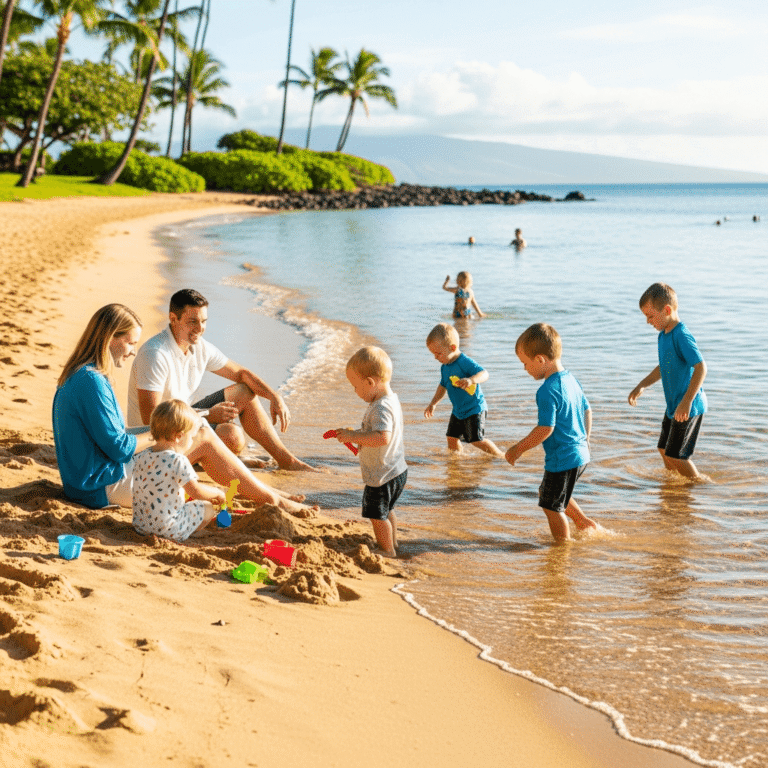
There is no single age at which every child becomes ready to snorkel in the ocean. Pool swimming, wearing a mask and swimming in moving salt water are different experiences. A child who enjoys a swimming pool may still be uncomfortable with waves, poor visibility, unfamiliar equipment or not being able to stand.
Hawaii Ocean Safety advises snorkelers to be experienced ocean swimmers familiar with surf, currents and waves breaking in shallow water. If a child has not developed the necessary swimming skills, make the outing a beach visit or a shore-viewing trip. A flotation aid does not substitute for that readiness.
Before planning ocean entry, consider whether the child can communicate discomfort, follow an instruction to stop and return, and remain calm when water splashes the face. Discuss these points with a qualified swimming instructor if you are unsure. Do not make a holiday wildlife encounter the first test of basic water competence.
The child must also want to participate. Reluctance, crying or pressure from siblings are reasons to change the plan. Agree beforehand that anyone can opt out, including after you arrive. Treat leaving the water early as a sensible decision, not a failure.
Practice With Equipment Before the Beach Visit
Introduce equipment in a controlled setting under appropriate adult supervision. A mask should fit comfortably without repeated leaking or painful strap pressure. Practice breathing through the snorkel, signaling for help and removing the equipment as taught by a qualified instructor. Familiarity with gear reduces surprises, but does not remove ocean hazards.
Use equipment sized for the person wearing it. Adult fins or an oversized mask can make movement and communication more difficult. Check straps, mouthpieces and attachments before use, and follow the manufacturer’s instructions. Do not improvise repairs to essential equipment immediately before entering the ocean.
A snorkel vest, inflatable toy, wetsuit and approved life jacket are different items. Do not treat them as interchangeable. If a life jacket is required for an activity, use an appropriately approved model that fits the wearer and is suitable for that use. Ask a qualified professional for help choosing and fitting equipment when needed.
Choose Conditions for the Least Experienced Person
A well-known beach is not automatically an appropriate family snorkeling site. Consider surf, currents, water quality, entry and exit, lifeguard coverage and how much energy the return will require. The weakest swimmer’s ability should guide the decision for the group.
Prefer a lifeguarded beach and speak with the on-duty lifeguard before entering. Explain the ages, swimming experience and planned activity honestly. A lifeguard may recommend a different part of the beach, a different activity or staying out. Respect that advice even when other visitors are already swimming.
Check National Weather Service forecasts and Hawaii Department of Health water-quality advisories. Avoid brown or murky water after runoff and obey closures. Reassess when you arrive because a forecast cannot describe every current or breaking wave at your entry point.
Summer often brings smaller north swells, while south-facing shores can receive summer surf. Winter can bring large north and west swells. Neither a season nor an early-morning start guarantees suitable conditions. Our seasonal conditions guide explains these differences in more detail.
Understand the Location Before Entering
Hanauma Bay: This managed nature preserve has lifeguards and visitor facilities, but currents and other hazards still exist. Check the City’s current admission and access information. A reservation or shallow-looking reef does not make the bay suitable for every child.
Turtle Canyon: This is an offshore reef setting near Waikiki. Do not describe it as a shallow beach for young children or assume it stays calm all year. Open-water swimming and returning to a vessel place different demands on a swimmer than a controlled pool session.
Harbors, lagoons and quiet-looking bays: A lack of waves or crowds does not establish water quality, safe access or freedom from vessel traffic. Do not choose a place such as a harbor simply because the water appears flat. Use managed access and current local advice.
Rocky North Shore sites: Uneven entries, shallow reef and sudden surge can complicate a family outing. A tidepool or enclosed-looking cove can still be affected by waves. If a child cannot comfortably manage the entry and exit under the day’s conditions, stay on land.
Assign Supervision Clearly
Decide which capable adult is responsible for each child before anyone approaches the water. Avoid an arrangement where several adults vaguely assume someone else is watching. The supervising adult should stay attentive and close enough to respond, without taking photographs, checking a phone or watching wildlife instead of the child.
Use a buddy system, but do not treat one child as the responsible supervisor for another. Lifeguards provide an additional layer of protection; their presence does not replace a parent or caregiver’s attention. Keep non-swimmers and younger children closely supervised around the shoreline as well as in the water.
Agree on simple signals for discomfort, help and returning to shore. Identify the exit and a meeting point on land. Keep sessions within the child’s energy and comfort limits rather than setting a target duration. End the activity if anyone is tired, cold, frightened or struggling with the equipment.
Pack for Comfort Without Distracting From Supervision
Bring drinking water, towels, dry clothing, shade and familiar, well-fitting equipment. Sun-protective clothing can reduce exposed skin. Follow local sunscreen requirements and the product’s directions; the words “reef-safe” alone do not establish legal compliance or guarantee no environmental impact.
Keep cameras optional. An adult supervising a child should not also be responsible for capturing an underwater encounter. Store valuables securely and keep the return to the car or accommodation simple. A tired child should not face an unexpectedly long walk in wet gear.
For an editable trip checklist, use the Hawaii packing list generator. Review the list for your own family rather than assuming a generated checklist covers every personal need.
Teach Turtle Etiquette Before a Sighting
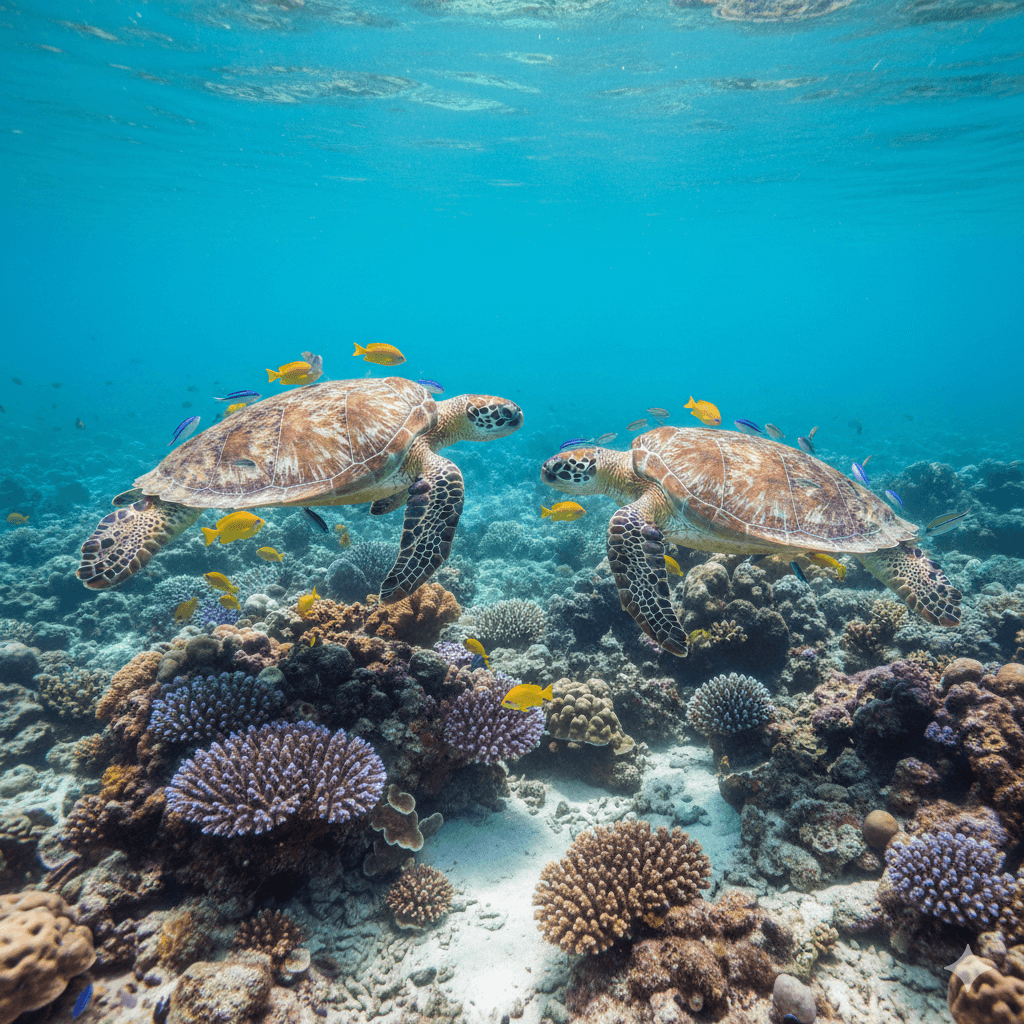
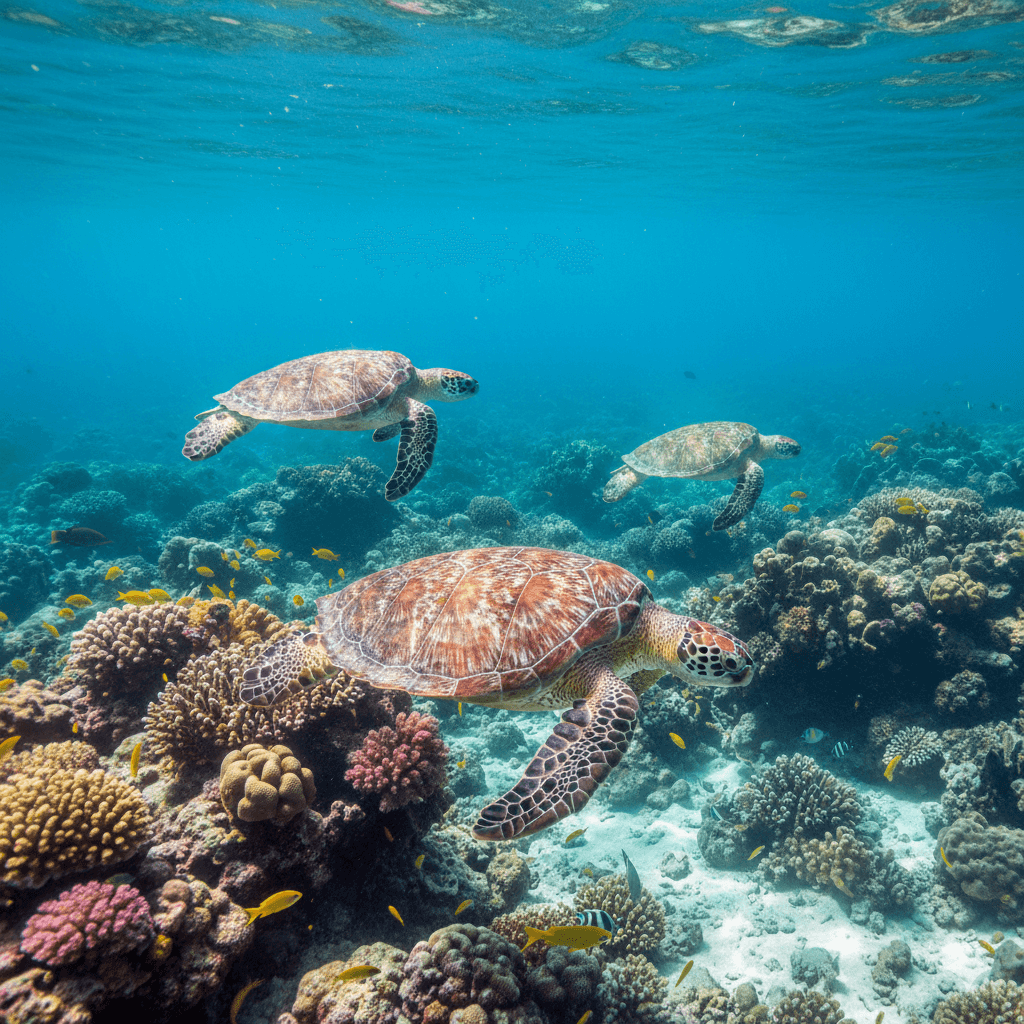
Explain that turtles are wild, protected animals. They may feed, rest or surface nearby, but they should not be touched, chased, fed, surrounded or blocked. A turtle’s approach is not an invitation to follow it. Keep its path to the surface and shoreline clear.
NOAA recommends at least 10 feet (3 meters) of viewing distance on land and in water. Give more space if necessary and follow barriers or staff directions. Teach this before entering so a sighting does not become an excited scramble toward the animal.
A turtle resting on sand may be basking normally. Never push it into the sea or wake it for a photograph. If one appears injured or entangled, keep back and contact the NOAA Marine Wildlife Hotline at 888-256-9840. Do not attempt to remove hooks or line yourself.
Our turtle conservation and viewing guide explains the protections and practical behavior in more detail. Learning why an animal needs space can be a useful part of the family experience even without going underwater.
Have a Shore-Based Backup Plan
Families can look for turtles from land without making snorkeling the goal. Our Oahu shore-viewing guide explains basking locations and realistic expectations. Stay on dry, stable ground, supervise children and leave a wide route for wildlife.
When conditions rule out the beach entirely, choose another activity rather than searching for an unmonitored cove. The purpose is a family day that suits the people present. Watching waves from a safe viewpoint, learning about marine life or returning on another day are valid alternatives.
Questions Families Often Ask
Is there a guaranteed safe age for snorkeling? No. Age alone does not establish swimming ability, confidence or readiness for local conditions. An activity provider’s minimum age is an eligibility rule, not an individual safety assessment.
Can a flotation aid make a non-swimmer ready? It does not replace swimming skills, close supervision or appropriate conditions. Do not use equipment as a reason to put a child into an environment beyond their ability.
What if we do not see turtles? Wildlife is unpredictable. Do not swim farther, stay longer or approach an animal more closely to meet an expectation. The outing should remain appropriate even if no turtle appears.
What should we do in an emergency? Alert the lifeguard immediately and call 911 when emergency help is needed. Follow responder instructions. Do not create a second emergency by entering dangerous water to attempt a rescue beyond your training.