What Is the Closest Country to Hawaii?

What is the closest country to Hawaii? The answer depends on what you mean: the closest sovereign nation is Kiribati (about 1,000+ miles south), many sources name Japan (about 4,000 miles west), and technically the closest country is the United States itself (Hawaii is a US state). This guide gives the honest, sourced answer: with the nuance the question deserves.
This page covers the closest country by different definitions, the distances, why sources disagree, and FAQs. Everything about the closest country to Hawaii is on this one page.
The Short Answer
By strict geography, the closest sovereign nation to Hawaii is Kiribati: its Line Islands lie roughly 1,000-1,235 miles south (sources vary). Many references name Japan (~3,850-4,024 miles) as the closest foreign country. Technically, the closest country is the United States itself: Hawaii is the 50th state, ~2,400 miles from California. Hawaii is the most remote island chain on Earth: no country is truly “close.”
Closest to Hawaii: It Depends What You Mean
| Interpretation | Answer | Distance |
| Closest sovereign nation | Kiribati (Line Islands) | ~1,000-1,235 mi (sources vary) |
| Commonly cited foreign country | Japan | ~3,850-4,024 mi |
| Closest US mainland point | Point Arena, California | ~2,045 nautical mi |
| Technically | The United States itself | ~2,400 mi from California |
Why Sources Disagree
The disagreement is definitional. Kiribati’s territory spans 3.5 million sq km of ocean: its Line Islands (including Kiritimati) are the closest foreign soil to Hawaii, but they are remote atolls with no regular transport links. Japan is the closest major foreign country with real connections: flights, trade, tourism. Both answers are “correct”: they answer different questions. The honest response names both and explains the difference.
Kiribati: The Closest Neighbor
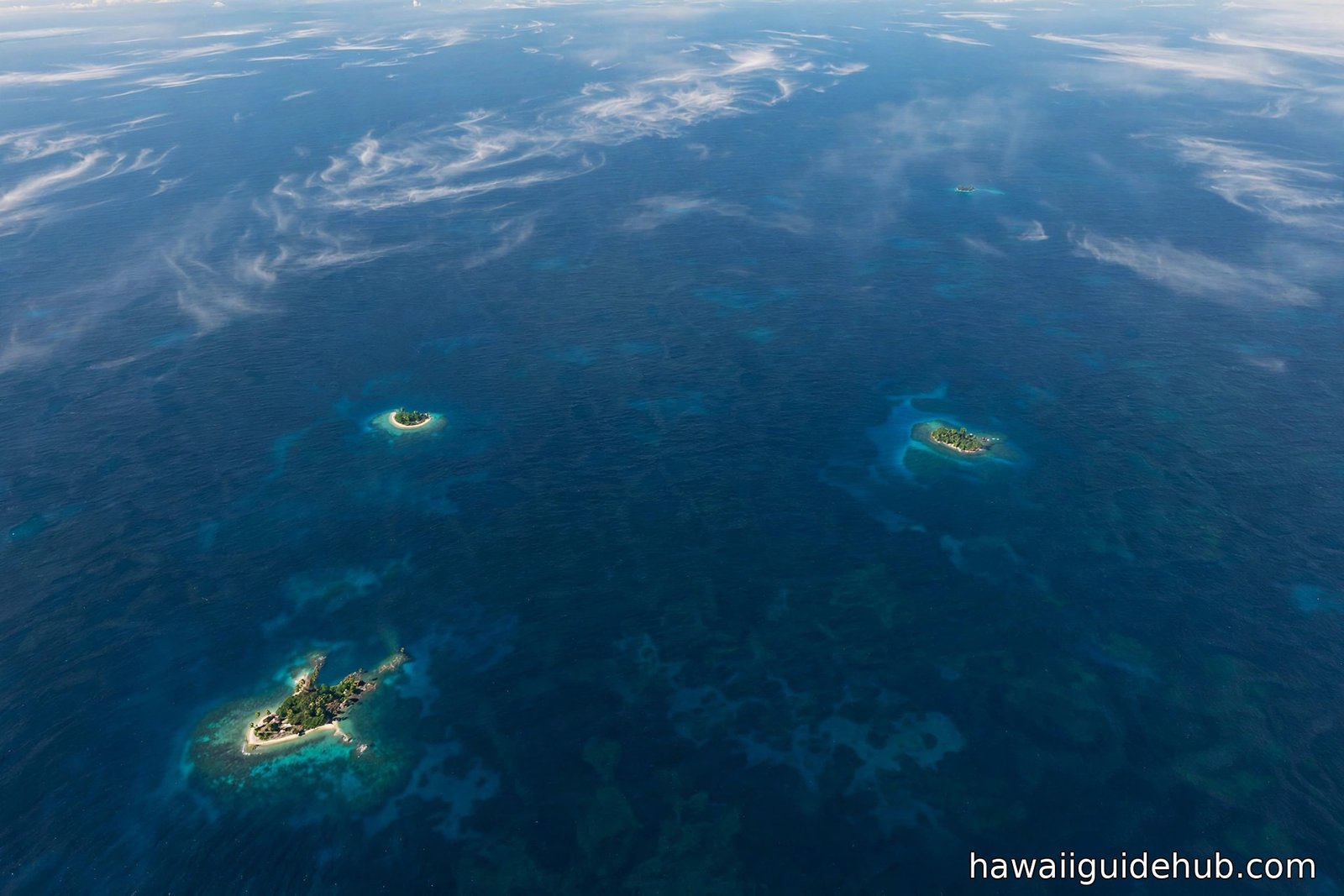
Kiribati (pronounced “Kiribas”): 33 atolls scattered across the central Pacific, population ~115,000. Its Line Islands sit south of Hawaii: the closest foreign land. But “close” is relative: there are no direct flights, no ferries, no practical connection. Kiribati is famous for being the first to see the new day (UTC+14 on Kiritimati): nearly a full day ahead of Hawaii. Neighbors in geography; strangers in practice.
Japan: The Closest Connected Country
Japan (~3,850-4,024 miles west) is the closest major foreign nation with deep ties: daily flights, huge tourism, cultural exchange. Hawaii’s Japanese heritage runs deep: plantation history, food, festivals. When people ask “closest country,” they often mean “closest country that matters”: Japan is the answer. The bridge across the Pacific: Honolulu to Tokyo is the islands’ most important international link.
The Most Remote Islands on Earth
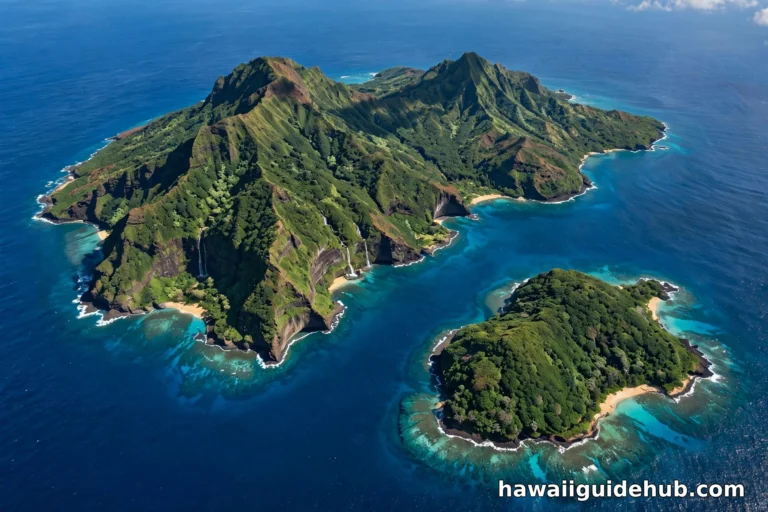
Hawaii is the most isolated archipelago on the planet: ~2,400 miles from California, ~4,000 from Japan, ~5,500 from Australia. The nearest landmass of any kind is Johnston Atoll (~717 miles, uninhabited US territory). This isolation shaped everything: the unique wildlife, the distinct culture, the self-reliant spirit. Remoteness is Hawaii’s defining geographic fact: everything else follows from it.
For Hawaii travel, see Hawaii weather in December, the best things to do on the Big Island, and the best five things to do in Hawaii Volcanoes National Park.
The Pacific: A Water World
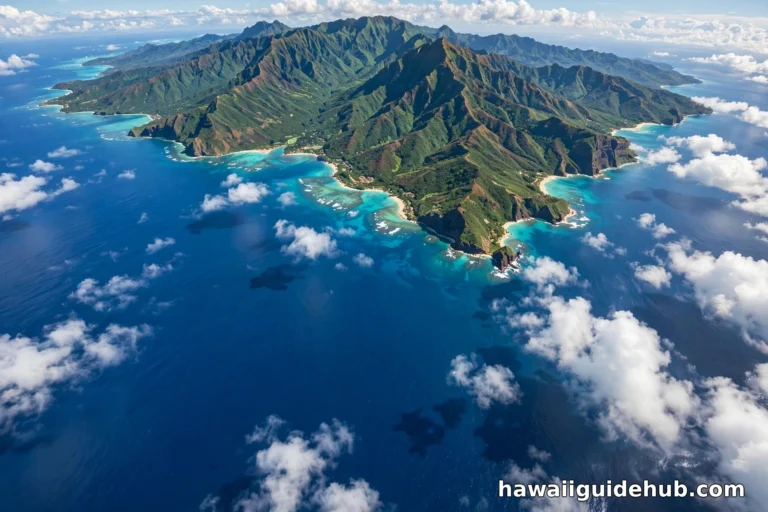
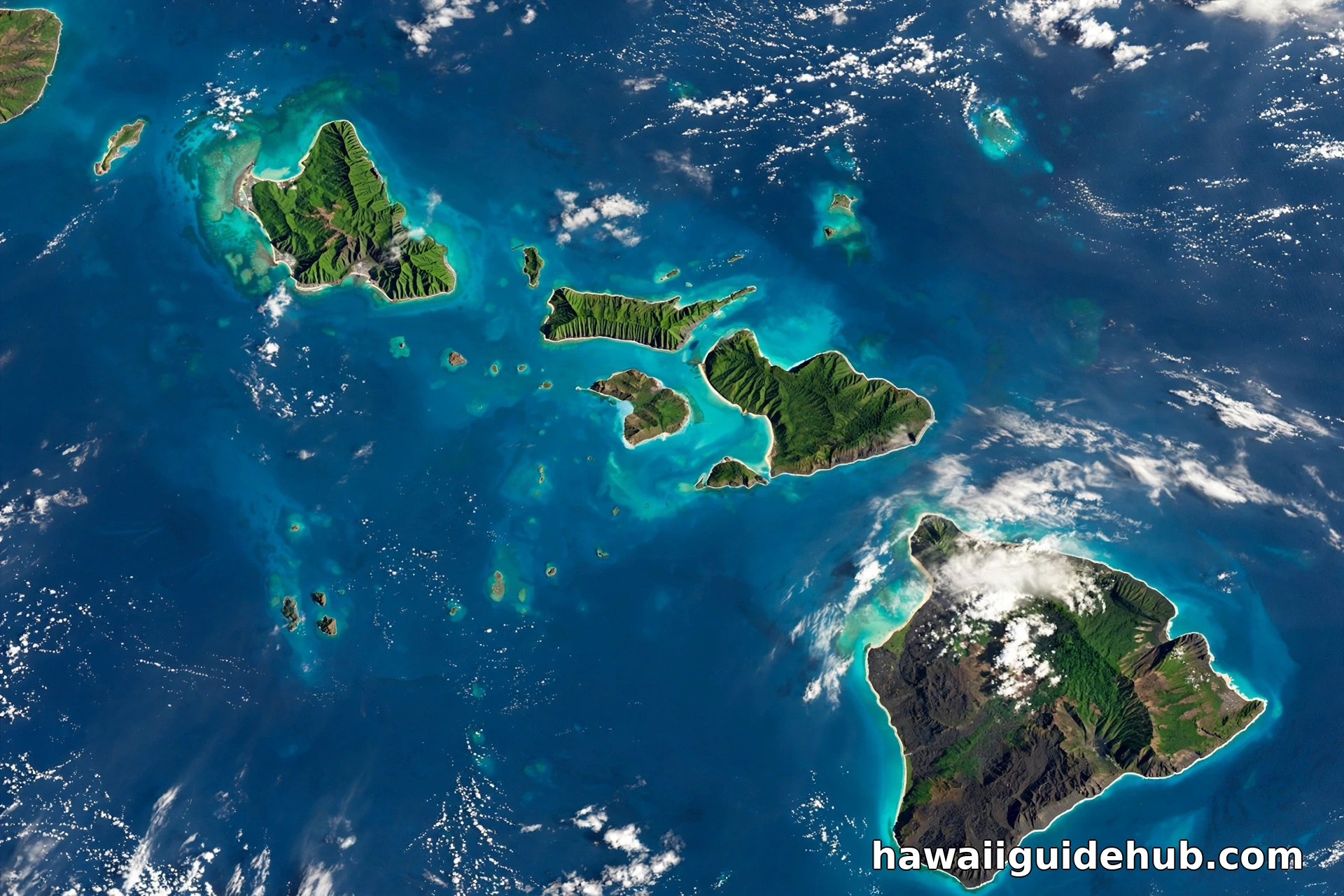
The Pacific covers more of Earth’s surface than all land combined: Hawaii sits in the middle of the largest wilderness on the planet. From space, the islands are green dots in blue infinity. This is why “closest country” is a strange question here: the answer is always “far.” The ocean is not empty space between places: it is the place itself. Hawaii’s geography is the Pacific.
How Isolation Shaped Hawaii
Isolation made Hawaii unique: 90% of native Hawaiian plants and animals exist nowhere else on Earth. The honeycreepers, the silverswords, the happy-face spider: evolution’s private laboratory. Human culture too: the Polynesian voyagers who settled these islands created a civilization shaped by distance. Isolation is not a lack: it is the engine of everything Hawaiian.
The Flight Map
From Honolulu: 5-6 hours to the US West Coast, ~8 hours to Tokyo, ~10 to Sydney, ~5 to Tahiti (via connections). There are no short international hops: every foreign destination is a journey. The flight map reveals the truth: Hawaii connects west to Asia, east to America, south to Polynesia: a hub with long spokes. The distances are the story: plan accordingly.
Time Zones: A Day Apart
Kiribati’s Kiritimati (UTC+14) and Hawaii (UTC-10) are 24 hours apart: the biggest time difference between “neighbors” on Earth. When it is Monday in Honolulu, it is Tuesday in Kiritimati: the closest foreign islands are a day in the future. The International Date Line bends around Kiribati: geography’s quirkiest border. Time, like distance, separates them.
What “Closest” Means for Travelers
For travelers, “closest” means reachable: Japan wins by a mile (daily direct flights, 8 hours). Kiribati is geographically nearer but practically another planet. The useful answer: the closest country you can actually visit easily is Japan (or the US mainland, if you count it). Geography quizzes want Kiribati; travel planning wants Tokyo. Know which question you are asking.
The Aleutian Question
To the north, Alaska’s Aleutian Islands stretch toward Hawaii: the closest US territory in that direction (~2,000 miles). But Alaska is the same country: it does not answer “closest country.” The north Pacific is empty: no foreign nation lies between Hawaii and Alaska. The compass matters: south gives Kiribati, west gives Japan, north and east give America.
French Polynesia and the South Pacific
South of Hawaii: French Polynesia (Tahiti, ~2,600 miles), the Cook Islands, Samoa, Tonga, Fiji. These are Hawaii’s Polynesian cousins: shared ancestry, similar cultures, vast distances. Tahiti is farther than Kiribati but more connected: the Polynesian triangle’s corners are far apart. The South Pacific is family: distant, beloved, and worth the flight.
Why This Question Matters
The question reveals how we think about place: “closest” assumes closeness exists. In Hawaii, it barely does: the islands are defined by distance. Understanding the isolation explains the culture, the prices, the wildlife, the vibe. The answer is not trivia: it is the key to Hawaii. The closest country is far: that is the point.
Measuring the Miles
Distances vary by source because “Hawaii” and “Kiribati” are archipelagos: which island to which? Honolulu to Kiritimati: ~1,300 miles. Hawaii island to the nearest Line Island: ~1,000. Tarawa (Kiribati’s capital) to Honolulu: ~2,400. The range is honest: pick your endpoints. This is why sources quote 1,000 to 2,500 miles: all are defensible. The lesson: demand the endpoints, not just the number. Precision beats confidence.
The Johnston Atoll Footnote
The closest landmass to Hawaii is Johnston Atoll: ~717 miles southwest, uninhabited, US-administered. A former nuclear test site and chemical weapons depot, now a wildlife refuge. It is not a country: but it is the nearest dry land. The footnote matters: “closest country” and “closest land” are different questions. The atoll is the trivia answer; Kiribati is the country answer.
Hawaii’s International Personality
Despite the isolation, Hawaii is deeply international: Japanese, Filipino, Chinese, Korean, and Polynesian communities shape the culture. The islands face west as much as east: the Pacific Rim is the neighborhood. Honolulu is a Pacific capital: hosting APEC, the East-West Center, and cultures from every shore. Isolation from land; connection across water.
The Sovereignty Conversation
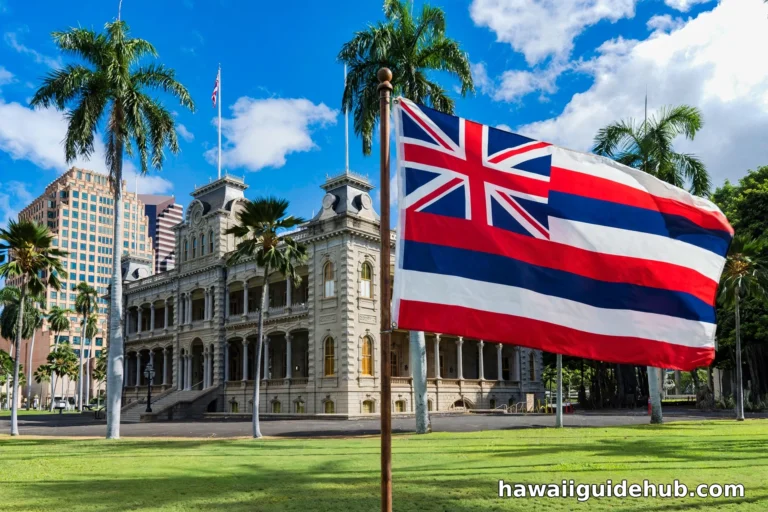
Some Native Hawaiians dispute US sovereignty: the “closest country” question lands differently in that conversation. The history: kingdom, overthrow (1893), annexation (1898), statehood (1959). The sovereignty movement keeps the question alive: whose country is this? This guide takes no position: but the geography is the same whatever the politics. The islands are where they are.
Planning Around the Distance
The practical takeaway: everything takes longer and costs more. Flights are 5+ hours minimum; shipping adds to prices; “popping over” to another country is not a thing. Plan buffer days, expect jet lag, and embrace it: the distance is the filter that keeps Hawaii special. The remoteness is the experience: you earned these islands.
The Equator Line
Hawaii sits ~1,470 miles north of the equator; Kiribati straddles it. The Line Islands are equatorial: hot, humid, and on the line. Hawaii is subtropical: trade winds, mild temperatures, the sweet spot. The latitude difference matters: it is why Hawaii’s climate is perfect and Kiribati’s is intense. Closeness in miles; distance in degrees.
How Far to Everywhere
The full scorecard from Honolulu: San Francisco ~2,400 mi, Tokyo ~3,850, Sydney ~5,100, Tahiti ~2,700, Auckland ~4,400, London ~7,200. Every direction is far: the map is a study in blue. The distances explain the airfares, the culture, the self-reliance. Memorize one number: 2,400 (the mainland). Everything else is farther.
The Antipode
Hawaii’s antipode (the point directly through the Earth): the Indian Ocean off southern Africa. Dig straight down from Waikiki and you surface in open water near nowhere. The antipode is the ultimate “far”: the farthest place from Hawaii on the planet is ocean. The islands are not just remote: they are maximally remote.
Why Hawaii Feels Closer Than It Is
Modern Hawaii feels connected: same currency, same language, same Netflix. The flight is routine; the culture is familiar. But the map does not lie: 2,400 miles of ocean. The familiarity is American; the geography is Polynesian. The feeling of closeness is the achievement: 150 years of connection across the void. Do not mistake comfort for proximity.
The Answer in One Sentence
If forced to one sentence: the closest foreign country to Hawaii is Kiribati, about 1,000 miles south, though Japan (4,000 miles west) is the closest most people mean, and the United States (2,400 miles east) is the technical answer. The sentence is long because the truth is layered. Geography rewards precision: the short answer misleads.
For the Quiz Night
Winning the pub quiz: answer “Kiribati” and cite the Line Islands. Bonus points: name Kiritimati (Christmas Island), the world’s largest coral atoll, in UTC+14. The judges might accept Japan: argue gracefully. The secret weapon: mention that sources disagree because the definitions differ. Knowledge with nuance wins: the confident single answer loses.
The View from the Beach
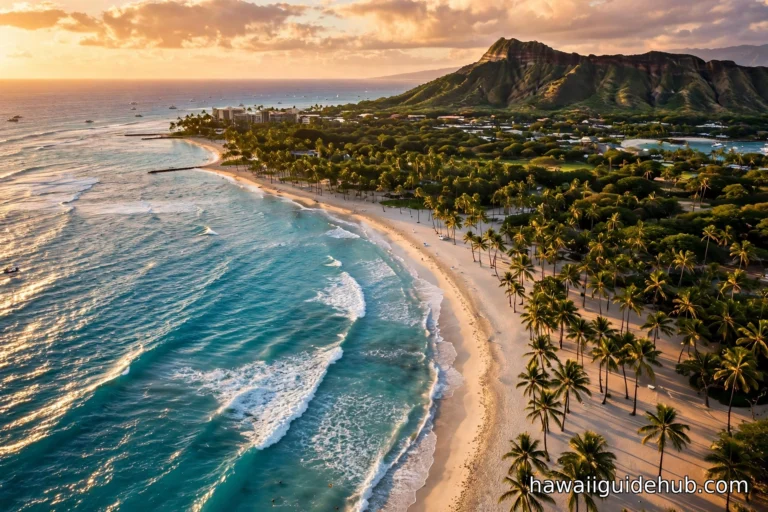
Stand on a Hawaii beach and look south: the next country is 1,000 miles of open ocean away. Look west: 4,000 miles to Japan. Look east: 2,400 to California. Every horizon is water: the defining view of the islands. The beach is not the edge of a country: it is the edge of the world. That is what “closest country” really means here: the vast, beautiful, humbling blue.
The Map Is the Message
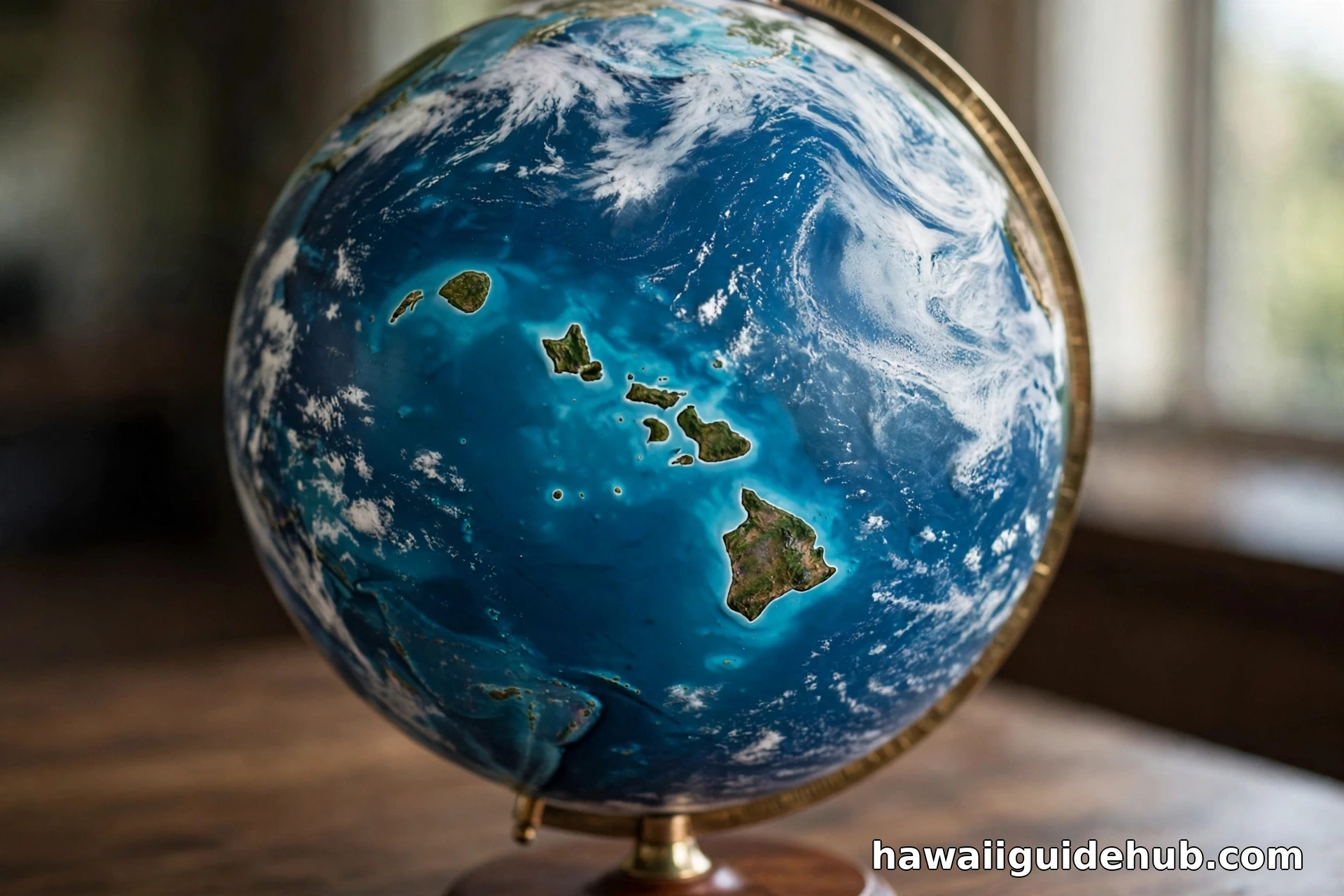
Look at a Pacific-centered map: Hawaii floats alone, the distances radiating in every direction. The map teaches what words cannot: the scale of the blue. Most world maps center the Atlantic: Hawaii is a footnote at the edge. Center the Pacific and the islands become the middle of everything: the crossroads of the largest ocean. Perspective changes the answer: the map you use shapes the truth you see.
Video: Why Is Hawaii Part of the US?
The geography behind the statehood.
Frequently Asked Questions
What is the closest country to Hawaii?
Kiribati (by strict geography), Japan (by common citation), or the US itself (technically).
How far is Hawaii from Kiribati?
Roughly 1,000-2,400 miles depending on which islands: sources vary widely.
Is Hawaii closer to Japan or the US mainland?
The US mainland (~2,400 mi from California) is closer than Japan (~4,000 mi).
What is the closest landmass to Hawaii?
Johnston Atoll, ~717 miles southwest: uninhabited US territory.
Is Hawaii the most remote place on Earth?
Its archipelago is the most isolated: no other island chain is farther from continents.
Can you fly directly from Hawaii to Kiribati?
No direct commercial flights: the “closest” neighbor is practically unreachable.
The closest country to Hawaii is a trick question with three right answers: Kiribati by the map, Japan by the connections, America by the constitution. The deeper truth: Hawaii is gloriously, definingly alone. The most remote islands on Earth, 2,400 miles from everywhere, shaped by isolation into something found nowhere else. That is not a trivia answer: it is the whole story of these islands.