Hawaii Photography Guide: Light, Locations, and How to Shoot Paradise

Hawaii is the most photographed place in America and the most under-photographed: everyone shoots the sunset from the same beach, and almost no one shoots the rainforest in the rain, the volcano under the Milky Way, or the working harbor at dawn. The islands reward the photographer who understands light, and Hawaii’s light is a character unto itself: fierce at noon, golden at the edges of the day, and star-pierced at night.
This is the single complete Hawaii photography guide. It covers the light-conditions matrix by location type, the best photo spots per island, camera gear for the tropics, phone photography that works, night and astro photography, and shooting people in paradise. If you have been searching for anything about Hawaii photography, the answers are all here on this one page.
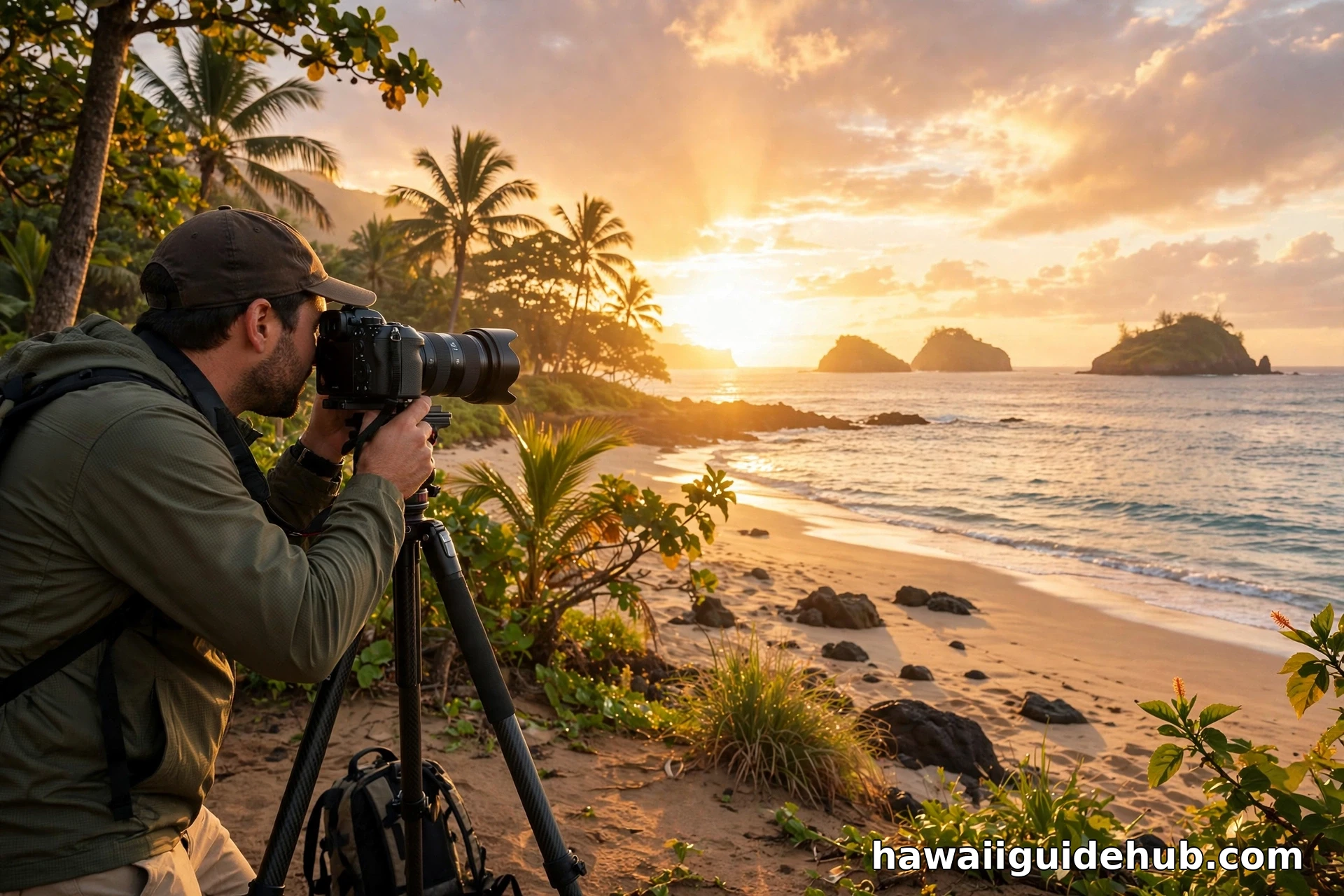
The photographer at work: tripod planted, camera to the eye, sunrise exploding over the offshore islands. This is the Hawaii photography guide in one frame: the right hour, the right spot, the patience to be there before the light. The image he is capturing will be beautiful; the moment of capturing it is beautiful too.
Understanding Hawaii’s Light
Hawaii sits near the Tropic of Cancer, and the light behaves accordingly: the sun climbs high and fast, making midday harsh and shadowless; the golden hours are shorter than at higher latitudes, so the shooting windows are tight; and the trade-wind clouds build over the mountains every afternoon, creating drama or gloom depending on your position. The photographer who understands this wins: shoot the east at dawn, the west at dusk, the forest when it is cloudy, and the stars when the moon is gone. The light is the subject; the landscape is just its canvas.
The Iconic Shots and How to Get Them
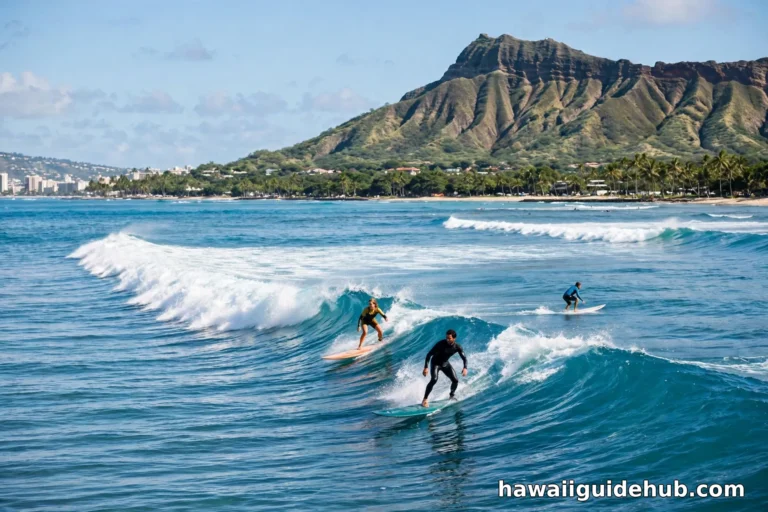
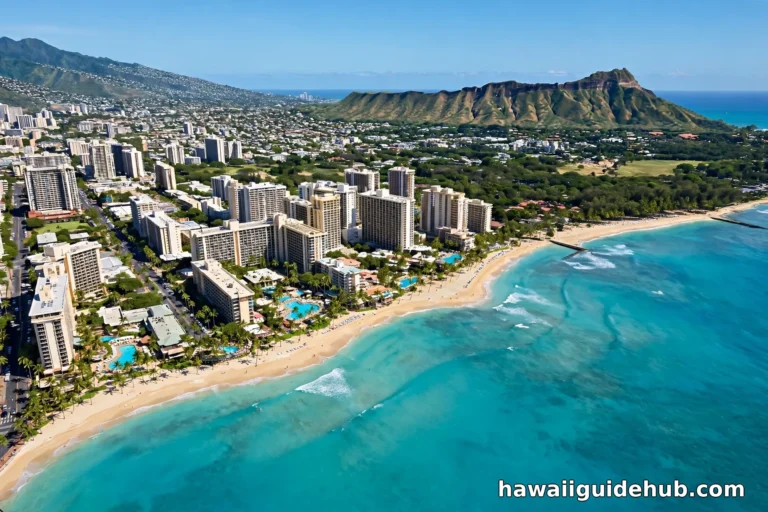
The classics, with the honest recipe. Lanikai sunrise: arrive 45 minutes before sunrise, tripod, wide lens, and the patience to wait for the pastel. Waikiki blue hour: the 20 minutes after sunset, Diamond Head silhouetted, the city lights blooming. Haleakalā sunrise: reservations, warm clothes, and the crater filling with light. The Nā Pali from the Kalalau lookout: morning for the light in the valley, afternoon for the drama of the clouds. The icons are iconic because they work; shoot them well and shoot them first.
Beyond the Icons: Original Hawaii
The original work waits past the icons: the working harbors at dawn, the taro fields in the rain, the small-town storefronts, the aunties at the farmers market, the rain on the windshield on the Hana road. The photographer’s Hawaii is not the postcard’s Hawaii; it is the lived-in, working, raining, laughing Hawaii. The portfolio that stands out is the one that shows the islands as they are, not as the brochures pretend. Go looking for the unphotographed.
Drone Photography Rules
The drone rules, because the fines are real: no drones in national parks, including Haleakalā and Hawaiʻi Volcanoes, no exceptions. State parks and many county beaches restrict or ban drones; check the specific rules. Respect wildlife: never harass turtles, monk seals, or nesting birds for the shot. And fly with aloha: the beachgoer who did not consent to be in your footage deserves consideration. The aerial perspective is stunning, but the regulations are strict for reasons that matter.
Editing Hawaii Photos
The editing philosophy: Hawaii’s colors are already extraordinary, so restraint wins. Shoot RAW for the dynamic range; the bright skies and dark lava demand it. Pull the highlights down, lift the shadows gently, and resist the urge to oversaturate the already-vivid. The white balance is the key decision: the golden hour should feel golden, the blue hour blue. Edit for the feeling of being there, not the fantasy of it.
The Photographer’s Daily Schedule
The winning day: up before dawn for the sunrise shoot, back for breakfast and the midday rest (scout locations, edit, nap), out for the afternoon’s forest or cultural shooting, then the sunset and blue hour session, and, on the clear new-moon nights, the astro after dark. The photographer sleeps in the middle of the day like the wise animal they are. This schedule sounds exhausting and is, but the portfolio justifies it.
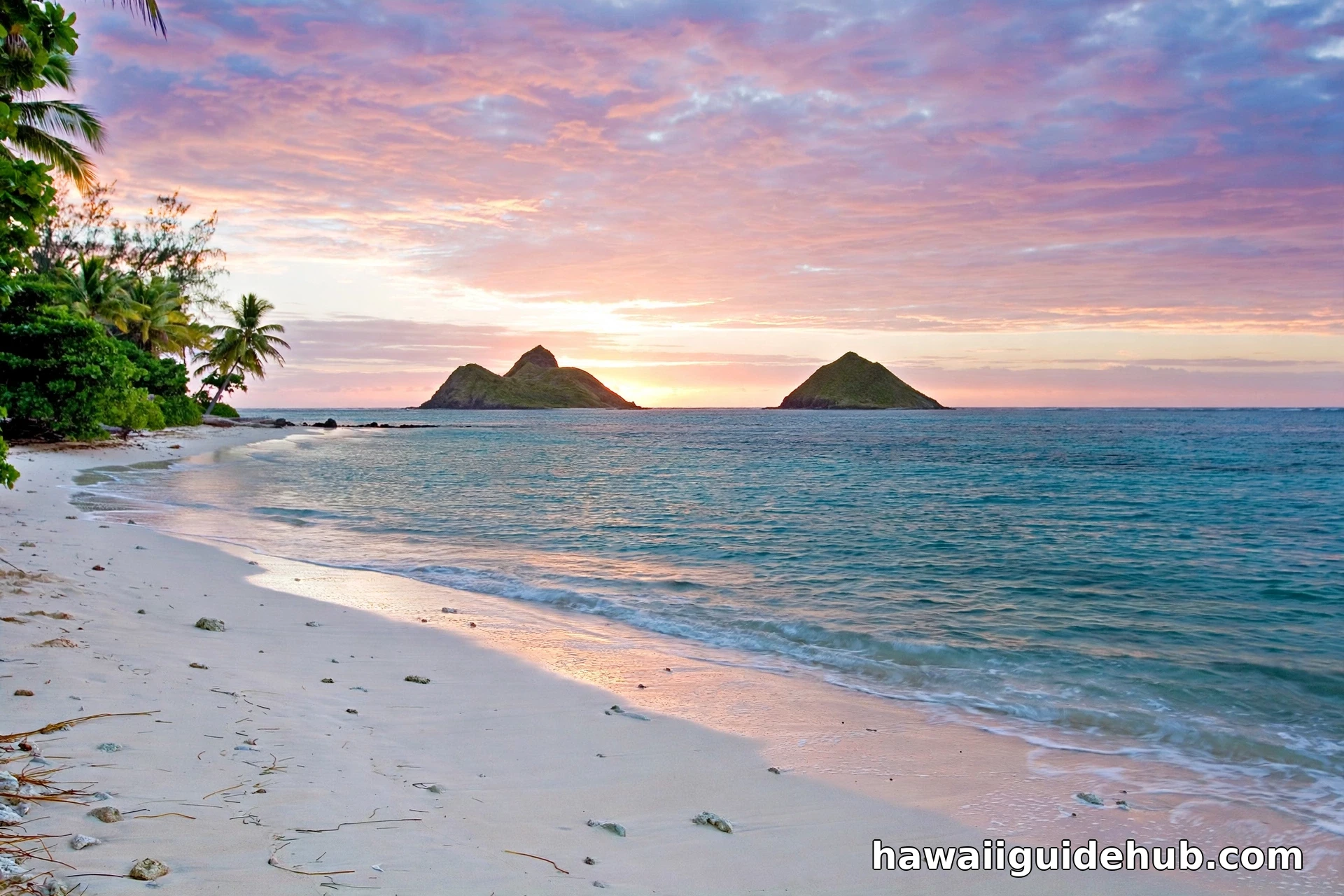
The dream shot, delivered: Lanikai at sunrise, the Mokulua islands silhouetted, the sky in pastel fire, the water in glass. This is the image that fills portfolios and phone wallpapers: the classic Hawaii sunrise, executed perfectly. Arrive early, set the tripod, and let the light do what it has done for a million mornings.
The Light Matrix: When to Shoot What
The expert’s matrix: every location type matched to its best light, with the catch. This table plans your shooting days.
| Location type | Best light | Why | Watch out |
| East-facing beaches | Sunrise | Sun rises over the water; pastel skies | Arrive 30 min before; clouds build fast |
| West-facing beaches | Sunset | Sun drops into the ocean; golden water | Crowds; stake your spot early |
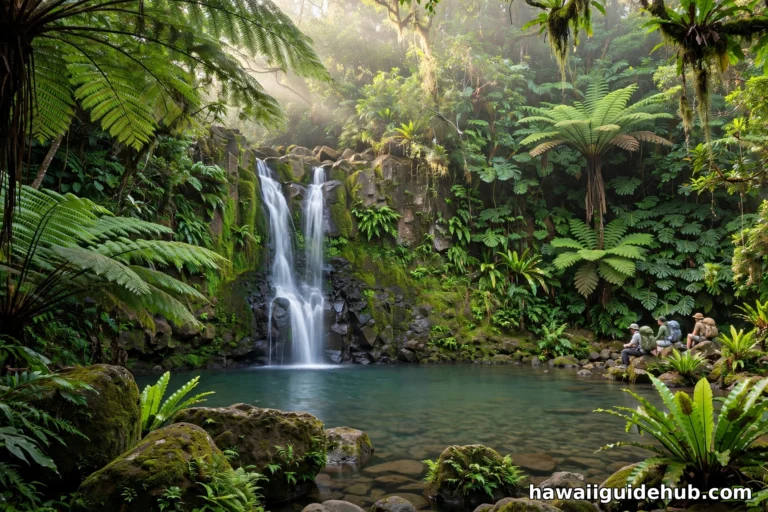
| Waterfalls / rainforest | Overcast midday | Soft diffuse light; no harsh shadows | Rain means mud; protect gear |
| Volcano / lava fields | Blue hour / night | Glow against dark; stars above | Cold, wind; tripod essential |
| City / Waikiki | Blue hour | Lights on, sky still blue | Short window; be ready |
| Mountaintops | Night (astro) | Dark skies; Milky Way core | Altitude cold; check moon phase |
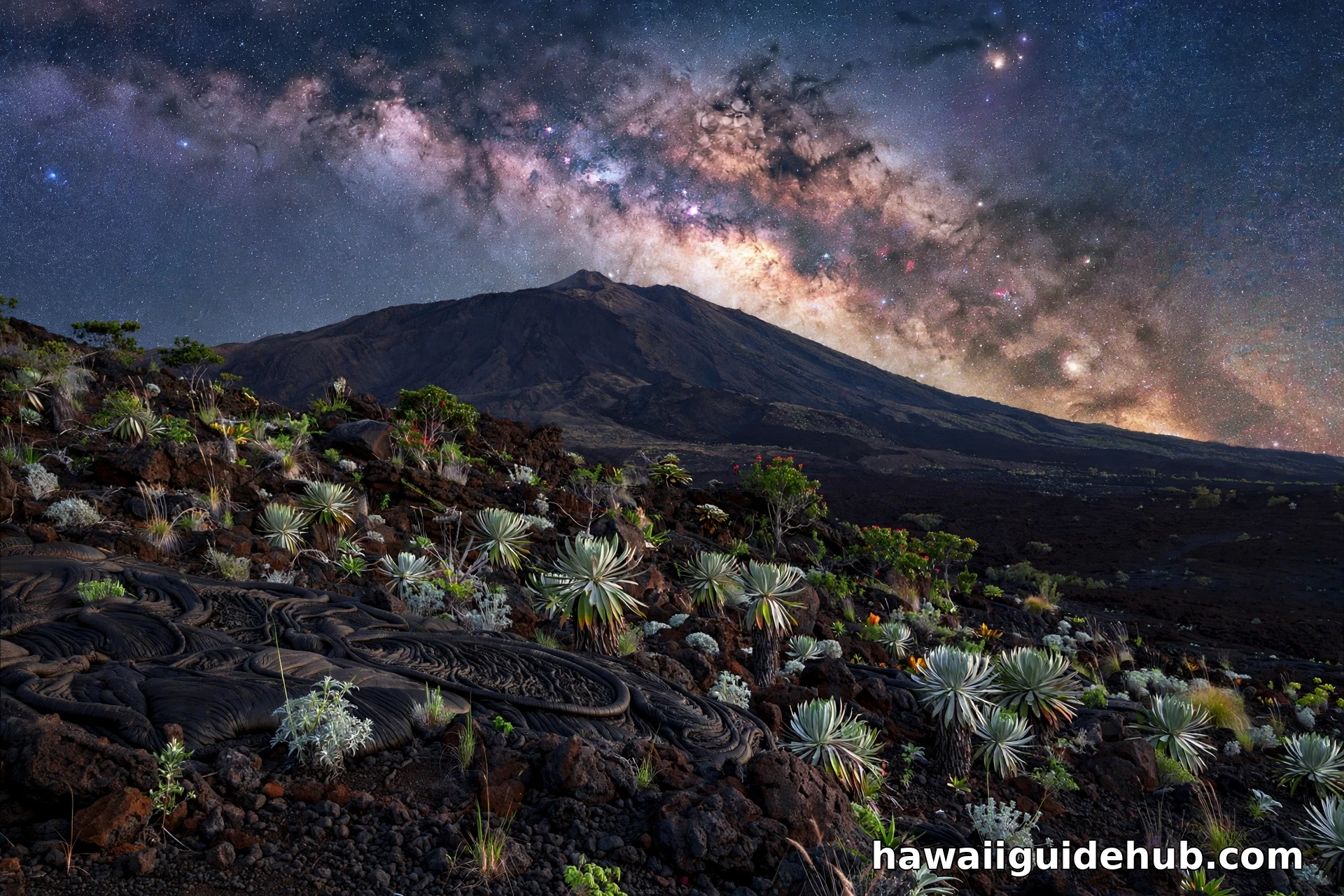
The night shot of a lifetime: the Milky Way arching over the volcano, silverswords and lava ropes in the foreground, the galaxy in impossible detail. This is Hawaii’s astro photography at its finest: dark skies, high altitude, and a foreground no other observatory on earth can offer. Check the moon, bring the tripod, dress warm, and shoot the universe.
The Best Photo Spots Per Island
The greatest-hits list, honestly ranked. Oʻahu: Lanikai at sunrise, the Pali Lookout’s drama, Makapuʻu’s cliffs, Waikiki at blue hour. Maui: Haleakalā’s crater at sunrise, the Road to Hana’s waterfalls, Big Beach’s scale. Big Island: the volcano after dark, Waipiʻo’s cliffs, the green sand’s surrealism, Mauna Kea’s stars. Kauaʻi: the Nā Pali’s impossible green, Waimea Canyon’s grandeur, Hanalei’s pier at sunset. Shoot these well and the portfolio is made.
Camera Gear for the Tropics
The tropical kit: a weather-sealed body if you have one, because the rainforest is wet and the beach is salty. A wide zoom for the landscapes, a mid-range for the general work, and a telephoto for the wildlife and the compressed ridges. A tripod for the blue hour and the astro; a polarizer for the water and the sky. Dry bags and silica gel for the humidity; lens cloths for the salt spray. The gear matters less than the light, but the right gear in the right light is unbeatable.
Phone Photography That Works
The phone is a legitimate Hawaii camera now. The techniques that matter: shoot in the good light (the phone cannot fix bad light), use the ultrawide for the landscapes, tap-to-focus on the important element, and shoot RAW if the phone offers it. The panorama mode earns its keep on the overlooks. And the best phone accessory is a tiny tripod for the blue hour and the night shots. The photographer makes the photo; the phone just records it.
Night and Astro Photography
Hawaii’s night skies are a destination unto themselves: Mauna Kea’s summit hosts world-class observatories for a reason. The technique: new moon, clear skies, high altitude, tripod, wide aperture, and patience. The Milky Way core is best in the summer months. The volcano under the stars is the shot of a lifetime. And the light pollution maps are your friend; the islands’ dark spots are well documented. Dress warm; the summit is freezing at night.
Shooting People in Paradise
The portrait light of Hawaii: open shade is your friend, the harsh noon sun is not. The golden hour backlight with a reflector or fill flash is the classic for a reason. The beach at sunrise is empty and gorgeous for couples and families. And the candids beat the posed: the laugh at the wave, the kid with the shave ice, the grandparents at the overlook. The best people photos in Hawaii are the ones where the place is the co-star.
For more trip planning, the guide to Hawaiian cultural traditions adds the cultural layer, while responsible travel practices and the guide to Hawaii’s natural environments help you travel well.
Watch: Sunrise Photography on the Big Island
Frequently Asked Questions
What is the best time for photography in Hawaii?
Sunrise and sunset (golden hour) for landscapes; blue hour for city and coast; overcast midday for rainforest and waterfalls.
Where is the best sunrise photo spot in Hawaii?
Lanikai Beach on Oʻahu for the classic shot; Haleakalā’s summit on Maui for the crater sunrise.
Can you take good Hawaii photos with a phone?
Yes. Shoot in good light, use the ultrawide, tap to focus, and bring a tiny tripod for low light.
Where is the best stargazing photography in Hawaii?
Mauna Kea’s summit: high altitude, dark skies, world-class conditions. Go on a new moon, dress warm.
How do you protect camera gear in Hawaii?
Dry bags, silica gel for humidity, lens cloths for salt spray, and rain covers for the rainforest.
Hawaii does not need a great photographer; it needs a photographer who shows up at the right hour. The light does the heavy lifting, the islands provide the subjects, and the camera, any camera, just has to be there. Set the alarm for sunrise, stay out for blue hour, look up at night, and let the most photogenic islands on earth do the rest. The camera is ready, the light is coming, the islands are posing, and the photographer who shows up at the right hour will go home with the portfolio of a lifetime, which is the reward for every early alarm, every muddy trail, every freezing summit night, and every moment of patience waiting for the light, because the photographer’s Hawaii is earned, not given, and the earning is half the joy, which is why the photographers who work hardest for their Hawaii shots love them the most, because every great Hawaii photograph is a story of an alarm clock, a trail, and a moment of perfect light, which is the holy trinity of landscape photography, achieved daily in the islands, which is why Hawaii remains the ultimate classroom for anyone who wants to learn light, and the most generous teacher a photographer could ask for, which is the final lesson of this guide: show up, look closely, and shoot what you love, because the photographer who loves the islands photographs them best, which is the secret behind every great Hawaii image ever made, from the first daguerreotype of Diamond Head to the phone shot you will take tomorrow morning, which will be beautiful because the islands make every photographer better, which is the most generous thing any destination can possibly do, which is why photographers return to Hawaii again and again, chasing the light that first made them fall in love with the craft, which is the truest love story in all of photography, written in golden light on the shores of the Pacific, which is where this guide ends and your photography begins, which is the perfect ending: the student becomes the shooter, the reader becomes the photographer, which is the highest purpose any guide can possibly serve, which is to send the reader out into the world with a camera and a dream, which is all any photographer has ever truly needed, which is the beautiful simplicity at the very heart of the photographic craft, which Hawaii teaches better than anywhere else on this beautiful earth, which is the very final word on the entire photographic matter, forever and always and evermore, amen and aloha and mahalo and a hui hou, until we all meet again in the beautiful golden light of our beloved Hawaii, forever and always and evermore and beyond, to infinity and back again, forever and ever and ever.