Hawaii for First-Time Snorkelers: The Complete Beginner’s Guide

Your first snorkel in Hawaii is a rite of passage: the mask goes on, the face goes in, and the underwater world explodes into color. Turtles glide past, clouds of yellow tang part around you, and the coral city hums with life. The beginner’s advantage is that Hawaii’s easiest snorkel spots are also among its most beautiful; you do not need skill to see wonder, just a mask that fits and a spot that forgives.
This is the single complete guide to Hawaii for first-time snorkelers. It covers the snorkel spot skill ladder, gear that fits, the first-snorkel technique, safety rules, reef etiquette, and what you will actually see. If you have been searching for anything about snorkeling in Hawaii for beginners, the answers are all here on this one page.
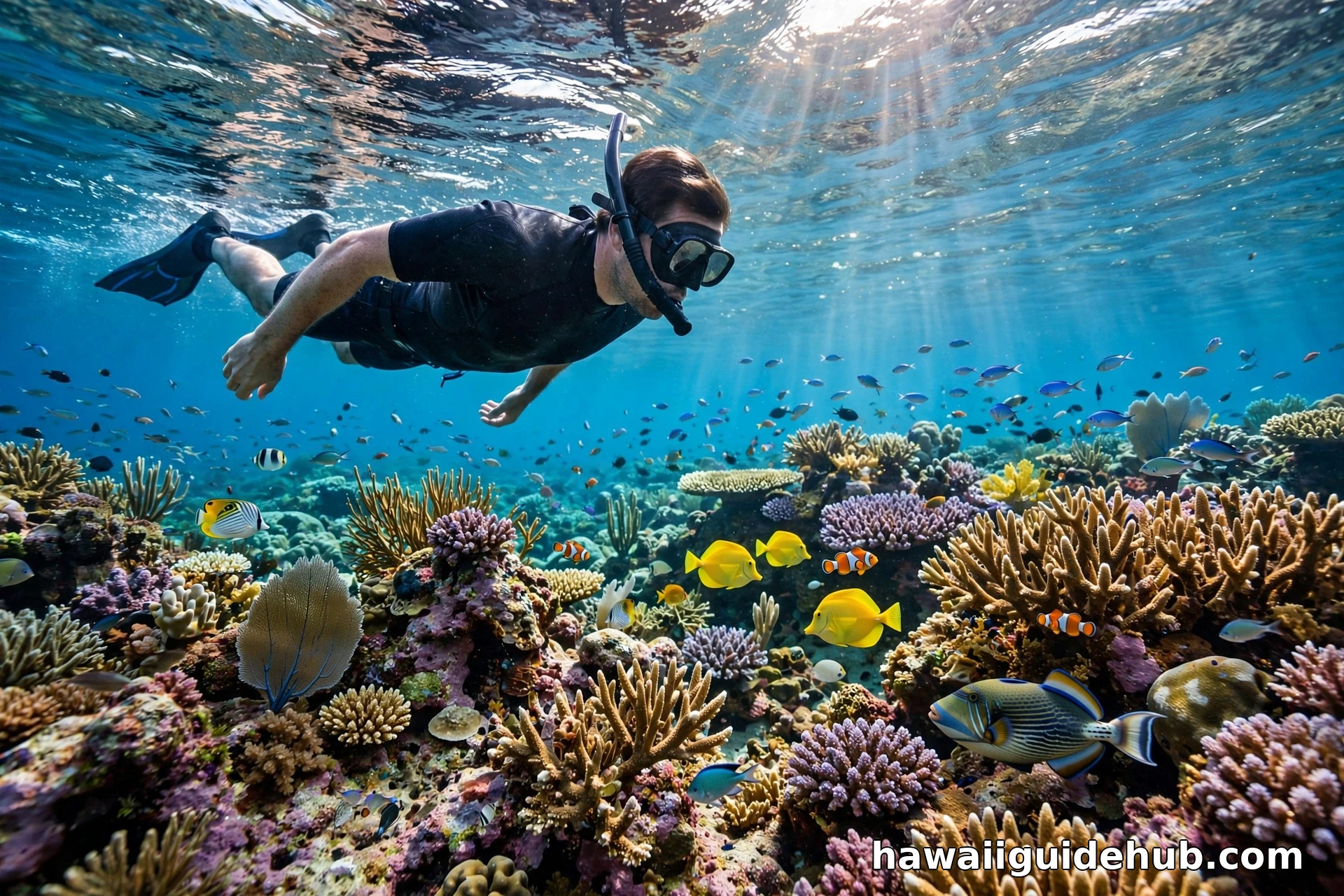
The underwater metropolis: a snorkeler gliding over a coral city teeming with yellow tang, clownfish, and a triggerfish, sunbeams piercing the blue. This is what waits beneath the surface of the beginner bays: not a pale imitation of the ocean but the ocean at its most alive. The mask is the ticket; the reef is the show.
Why Hawaii Is the Best Snorkeling Classroom
The case for learning here. The water is warm enough that the wetsuit is optional, removing the biggest beginner barrier. The visibility is world-class, so the reward is instant: you see the reef immediately, not murky shapes. The marine life is abundant and charismatic; the turtle shows up on day one. The entry spots are sandy and gradual, not rocky and intimidating. And the culture of the islands treats the ocean as a teacher, not an adversary. Nowhere on earth makes the first snorkel easier or more magical.
Choosing Your First Snorkel Day
The perfect first-snorkel conditions: morning, for the calm water and clear visibility. A protected bay, for the forgiveness. A sunny day after several calm days, for the clarity. Light winds, for the flat surface. Check the surf report and the lifeguard flags; if the ocean looks angry, it is angry, and the reef will wait. The best first snorkel is the boring one: flat, clear, calm, and utterly spectacular underneath.
Guided Tour vs. Shore Snorkeling
The first-timer’s dilemma. Shore snorkeling: free, flexible, and the shallow bays are genuinely easy; the downside is no guide and no boat to rest on. Guided boat tour: gear provided, guide in the water, access to the spectacular offshore spots, and the safety of the group; the downside is cost and the schedule. For the nervous first-timer, the guided tour is worth it: the guide’s confidence becomes yours. For the comfortable swimmer, the shore bay is perfect.
Snorkeling With Kids
Kids take to snorkeling like they were born for it, which, in Hawaii, they practically are. Start them in the shallows with a mask alone, then add the snorkel. Kid-sized gear matters; the adult mask leaks on small faces. Stay within arm’s reach, keep sessions short, and let them lead. The kid who snorkels at eight remembers it at eighty. And the family snorkel, everyone floating over the reef together, is the trip’s defining memory.
Common First-Timer Fears, Answered
The fears, honestly addressed. Fear of the deep: stay in the shallows; the reef’s best is in ten feet of water. Fear of fish: they are more afraid of you, and none of the reef fish bite snorkelers. Fear of the mask: practice in the pool or the shallows until it feels natural. Fear of swallowing water: the snorkel’s purge valve and the clearing technique handle it. Fear of sharks: the statistics are overwhelmingly in your favor, and the lifeguarded bays are the safest water in the islands. Every fear has an answer; the reef has the reward.
After the First Snorkel: The Addiction
Warning: the first snorkel is a gateway. The second snorkel happens the next day, at a different bay. By day three you are planning the boat trip to the offshore reef. By the flight home you are researching your next snorkel destination. This is normal and healthy. The underwater half of Hawaii hooks everyone who tries it; the only cure is more snorkeling. Feed the addiction responsibly: reef-safe sunscreen, no touching, and the ladder’s next rung.
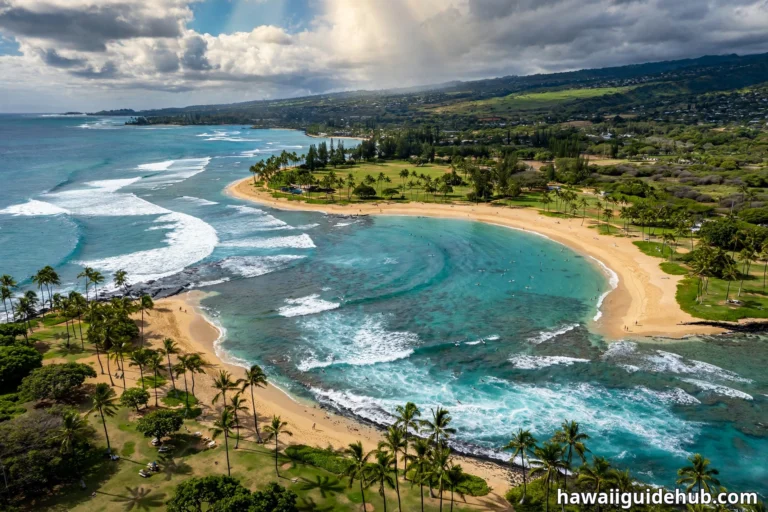
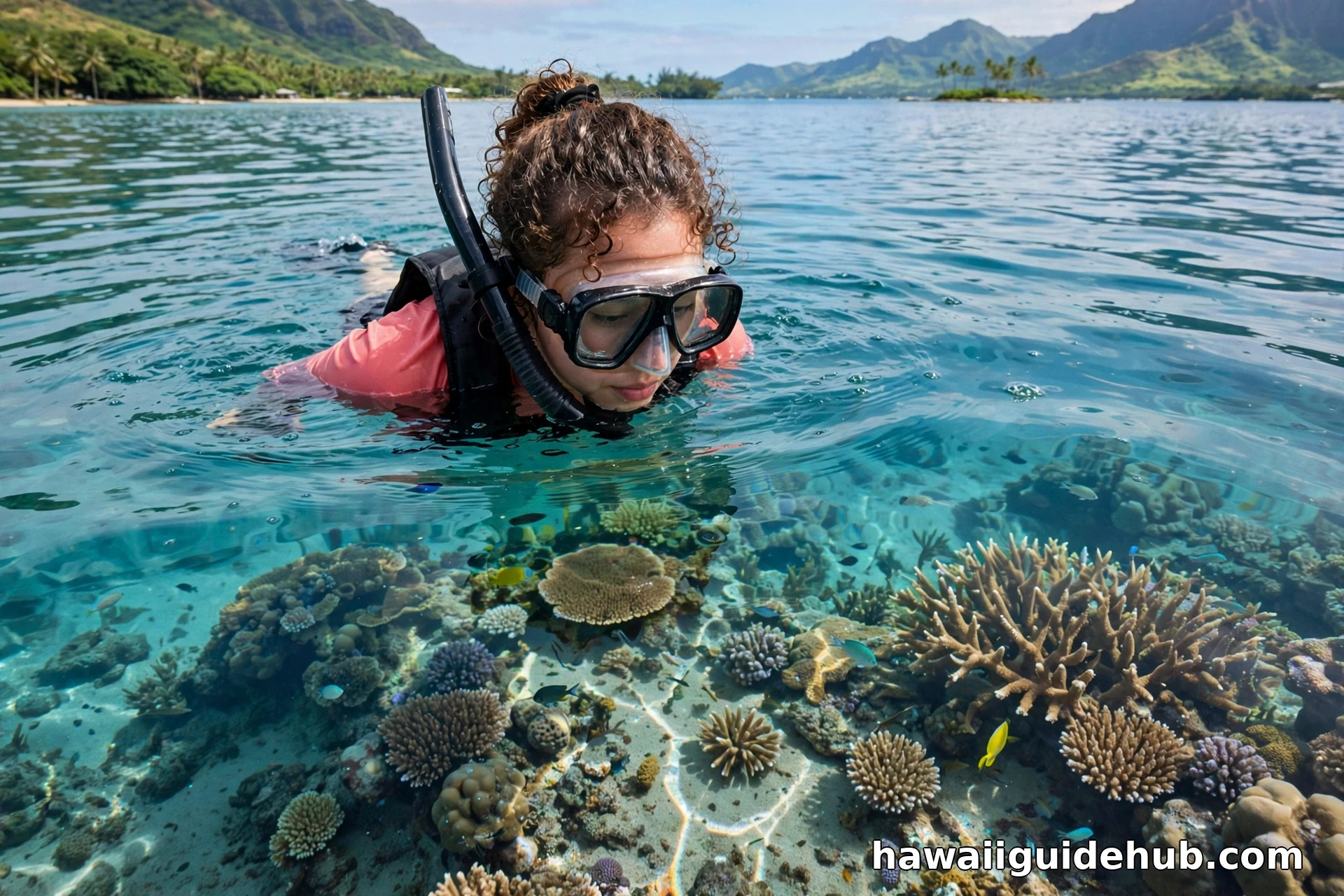
The beginner’s view: a snorkeler floating over a shallow coral garden, the reef visible in crystalline water, mountains on the horizon. This is the first-snorkel ideal: calm, clear, shallow, and alive. The technique is simple, float and breathe, and the reward is immediate: the coral city in all its color, right below.
The Snorkel Spot Skill Ladder
The expert’s ladder: start at the bottom, climb as confidence grows. Each rung decoded honestly.
| Spot | Difficulty | What you’ll see | The catch |
| Hanauma Bay (Oʻahu) | Easiest | 100+ fish species, turtles | Reservations required; crowded |
| Kahaluʻu Bay (Big Island) | Easiest | Turtles, reef fish, calm water | Rocky entry; urchins |
| Anini Beach (Kauaʻi) | Easy | Reef fish, turtles, calm lagoon | No lifeguard; reef far out |
| Kapalua Bay (Maui) | Easy | Coral gardens, turtles, clear water | Small beach; fills early |
| Shark’s Cove (Oʻahu, summer) | Easy-moderate | Lava formations, diverse fish | Summer only; winter surf dangerous |
| Molokini Crater (Maui, boat) | Moderate | Visibility, deep-water species | Boat trip; can be choppy |
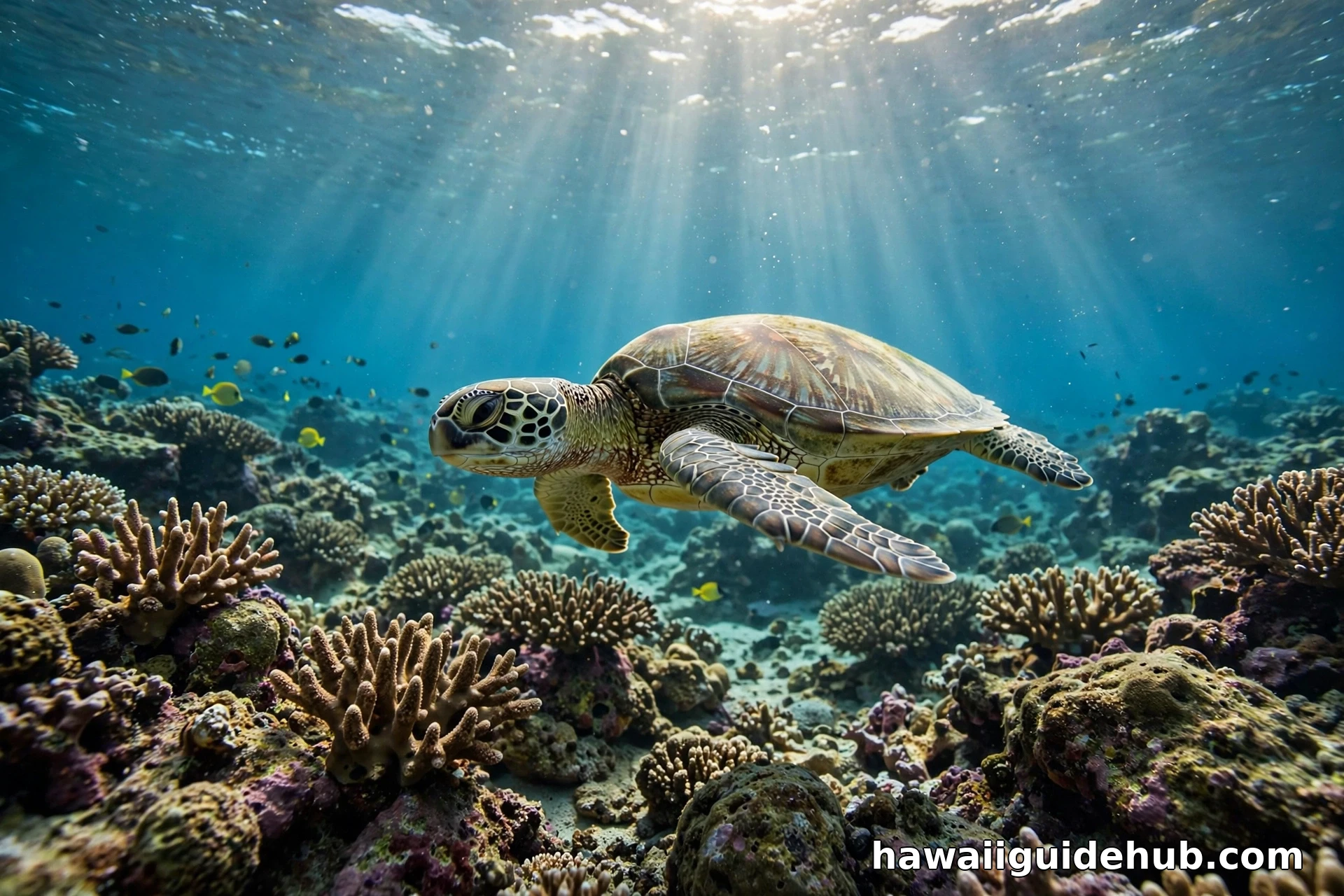
The honu in its element: a green sea turtle gliding over the coral reef, sunbeams streaming down, the ancient mariner in perfect grace. This is the sighting that makes the first snorkel unforgettable: the turtle does not hurry, does not fear, simply flies through the water with impossible elegance. Watch, do not touch, and remember this moment forever.
Gear That Fits: The Non-Negotiable
The number one cause of bad first snorkels is bad gear: a leaking mask, a choking snorkel, fins that blister. Rent from a proper dive shop, not the beach kiosk with the sun-bleached gear; try the mask on dry (it should seal with a gentle inhale, no strap), and get fins that fit snug without pinching. Full-face masks are popular but controversial: they are easy to breathe in but harder to clear and some operators restrict them. For the first snorkel, the classic mask-and-snorkel is the reliable choice.
The First-Snorkel Technique
The technique in five steps. One: practice in the shallows first, standing depth, getting used to breathing through the snorkel. Two: learn to clear the mask and snorkel before you need to. Three: enter from sand, not rock, and float before kicking. Four: breathe slowly and deeply; the panic reflex comes from fast shallow breathing. Five: relax and look around; the reef rewards the calm. The whole learning curve takes twenty minutes; the wonder lasts forever.
Safety Rules for New Snorkelers
The rules that matter: never snorkel alone. Stay inside the reef and away from channels, harbor mouths, and drop-offs. Do not touch the bottom; standing on coral kills it and urchins punish feet. Watch the conditions: if the water looks rough, it is rough; skip it. Do not chase or touch turtles or any marine life; the distance rule is ten feet. And know your limits: tired snorkelers make mistakes, so rest on the beach between sessions. The ocean is generous to the respectful.
Reef Etiquette
The reef is a living city, and you are the guest. Wear reef-safe sunscreen, applied well before entering so it does not wash off in a cloud. Do not stand on, touch, or kick the coral; even a light touch damages the polyps. Do not feed the fish; it disrupts their behavior and the ecosystem. Take only photos. The snorkelers who follow the etiquette see more, because the reef trusts them; the ones who do not see a reef in decline.
What You Will Actually See
The honest preview: clouds of yellow tang and convict tang, parrotfish crunching coral, butterflyfish in pairs, the humuhumunukunukuapuaʻa if you are lucky, and green sea turtles grazing like underwater cows. On the great days: eagle rays, octopus, eels in the rocks. The reef is not an aquarium; some days are quieter than others. But the first turtle, gliding past at arm’s length, makes every snorkel worth it.
For more trip planning, the guide to Hawaiian cultural traditions adds the cultural layer, while responsible travel practices and the guide to Hawaii’s natural environments help you travel well.
Watch: Beginner Snorkeling in Oahu
Frequently Asked Questions
Where is the best snorkeling for beginners in Hawaii?
Hanauma Bay on Oʻahu and Kahaluʻu Bay on the Big Island: calm, shallow, lifeguarded, with abundant marine life.
Do you need to know how to swim to snorkel?
Basic comfort in water is essential. Non-swimmers should take a guided tour with flotation and stay in shallow areas.
Should beginners rent or buy snorkel gear?
Rent from a proper dive shop for the first trips; the staff fit the gear and the quality beats beach kiosks.
Are full-face snorkel masks good for beginners?
They are easy to breathe in but harder to clear; some operators restrict them. The classic mask-and-snorkel is more reliable.
When is the best time to snorkel in Hawaii?
Morning: calmest water, best visibility, fewer crowds. Summer offers the calmest conditions on most islands.
The first snorkel is the doorway: through it lies the other half of Hawaii, the half under the water, where the turtles glide and the reef glows and the beginner becomes the enthusiast in a single morning. Get the mask fitted, pick the calm bay, breathe slow, and go meet the neighbors. The water is warm, the reef is waiting, the turtle is already out there gliding through the sunbeams, and the only thing missing from the underwater city is you, which is the final argument for the hesitant: the reef does not wait, the turtle does not pose twice, and the first snorkel is the one you will remember when you are old, which is why the time to do it is now, this trip, this morning, in the calm bay with the mask that fits. The ocean has been waiting millions of years for this moment; the least you can do is show up with a well-fitted mask and an open mind, because the reef rewards the prepared and amazes the willing, in exactly that order, which is the beautiful logic of the first snorkel: do the small preparations, and receive the enormous reward, which is the best deal in all of travel: twenty minutes of learning for a lifetime of wonder. The snorkelers who start in Hawaii never really stop; they just find new reefs, new turtles, new mornings floating over the coral city, which is the snorkeler’s version of coming home, which is why the first snorkel in Hawaii is never the last snorkel anywhere, and the islands are proud to have started the beautiful addiction, which is the highest compliment any destination can receive from a first-time snorkeler, who arrived nervous and left enchanted, which is exactly the transformation Hawaii does best, turning the hesitant into the hooked with a single morning over the reef, which is all it ever takes when the water is this clear and the turtles this close, which is the everyday miracle of the Hawaiian reef, available to anyone with a mask and the courage to float, which is the only admission the ocean ever requires, and it is the cheapest ticket to wonder ever sold, which is why the snorkelers keep coming back, trip after trip, reef after reef, because the underwater world, once seen, is never forgotten, which is the final truth of the first snorkel: it changes how you see the ocean forever, which is the greatest souvenir any trip can possibly give, carried home in the heart, not the suitcase, which is where the very best travel memories always live, safe from fading and full of color, like the reef itself on a perfect Hawaiian morning, which is the very best morning there is, anywhere in the whole wide wonderful underwater world of beautiful Hawaii, forever and always and ever.