
Waikīkī is the most famous neighborhood in Hawaiʻi, and it is important to understand exactly what it is: a district of Honolulu on the south shore of Oʻahu, not a separate town or city. Everything in Waikīkī sits within the City and County of Honolulu, and the neighborhood blends into the wider urban area of Hawaiʻi’s capital with no clear line where one ends and the other begins. Visitors sometimes arrive expecting an isolated resort enclave and find instead a dense, walkable beachfront district set against a working city, with Diamond Head rising at its eastern end and the towers of downtown Honolulu visible to the west.
This guide covers Waikīkī as a place: its location and layout, its history from royal retreat to the birthplace of modern surfing, the two-mile beach and its sections, the streets and landmarks of the district, what there is to see and do, and the practical facts about eating, shopping, staying, and getting around. For the wider island, see our Oʻahu travel guide and Oʻahu beaches guide.
Waikīkī at a Glance

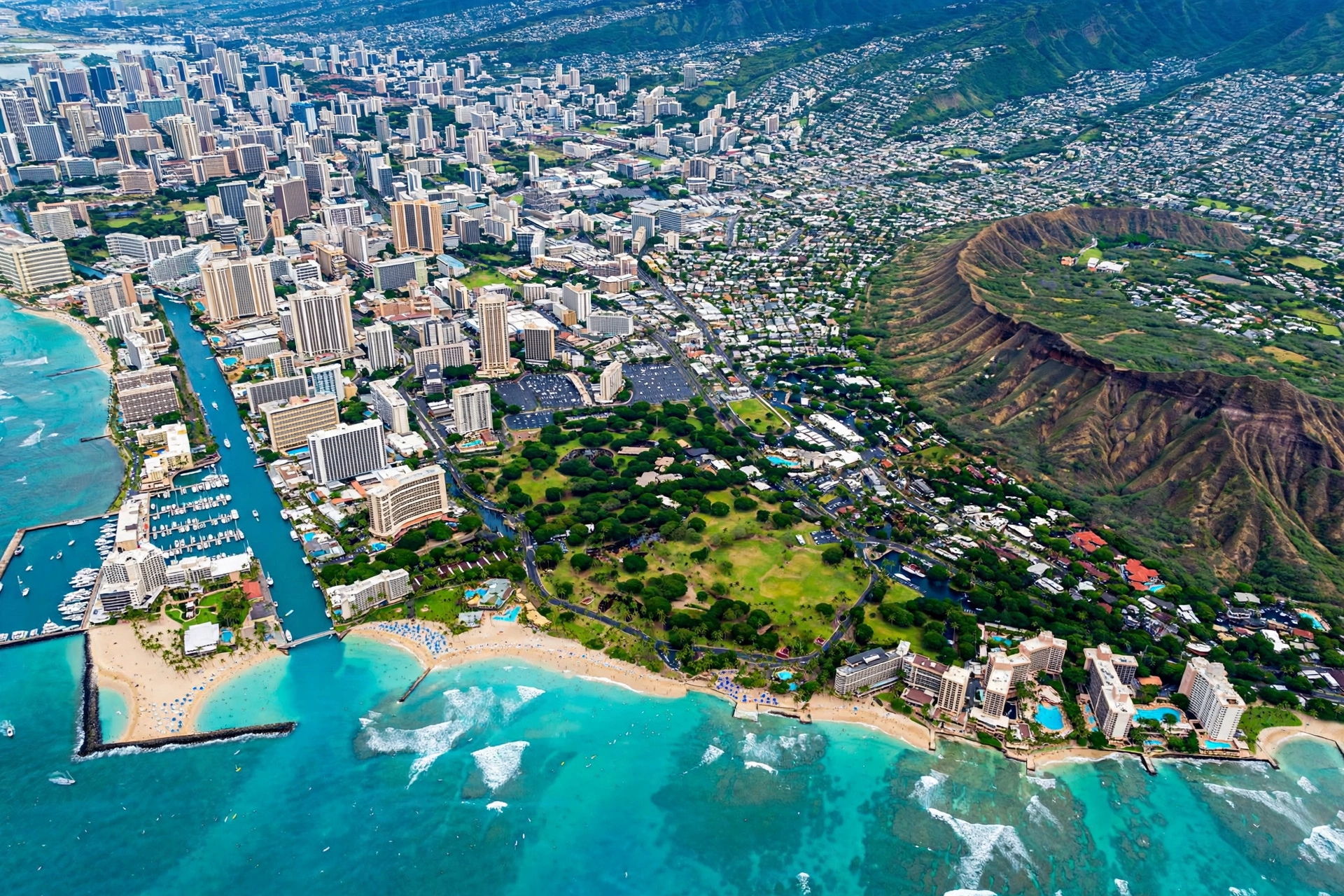
Waikīkī occupies roughly one square mile of prime south-facing coastline on Oʻahu, centered on Kalākaua Avenue, the main street that runs parallel to the beach. The neighborhood is bounded roughly by the Ala Wai Canal to the north and west, Diamond Head and Kapiʻolani Park to the east, and Māmala Bay and the Pacific Ocean to the south. Within that compact area sit the beach itself, most of Oʻahu’s beachfront hotels, a dense grid of shops and restaurants, and several parks and historic sites.
Geography explains much of Waikīkī’s character. The district faces due south into the open Pacific, which gives it warm, relatively gentle surf for most of the year and spectacular sunsets. It sits in the rain shadow of the Koʻolau mountains, so it is noticeably drier and sunnier than the windward side of the island. Trade winds cool the afternoons, and temperatures stay within a narrow, pleasant band through the year. The offshore reef shapes the waves: a fringing reef breaks the ocean swell into the long, rolling waves that made the place famous for surfing, and it creates calm, shallow swimming areas close to shore.
Waikīkī’s two most recognizable landmarks frame the district. At the eastern end, Diamond Head, known in Hawaiian as Lēʻahi, rises 761 feet above the coast, its tuff cone profile visible from nearly every point in the neighborhood. At the western end, the Ala Wai Canal and the Ala Wai Yacht Harbor mark the boundary with the rest of Honolulu. Between them, the beach runs for about two miles, interrupted by groins, seawalls, and small parks that divide it into named sections, each with its own character.
It helps to set expectations honestly. Waikīkī is urban, busy, and thoroughly developed. The beach is engineered and maintained, with sand replenishment projects carried out over the decades to counter erosion. High-rise buildings line the shore, and Kalākaua Avenue carries heavy foot traffic, especially in the evening. Travelers seeking solitude will not find it here. What Waikīkī offers instead is convenience and history: a beach you can reach on foot from hundreds of places to stay, calm water suited to beginners, and a shoreline layered with more than a century of surf culture.
History of Waikīkī
Royal Waikīkī
Long before hotels, Waikīkī was a place of privilege. In the 1800s it was a retreat for Hawaiian royalty, valued for its surf, its fishponds, and its freshwater springs. The name Waikīkī is commonly translated as “spouting fresh water,” a reference to the springs that once flowed in the area. Aliʻi, the chiefs and later the monarchs of the Hawaiian Kingdom, kept residences along this coast. King Kamehameha V, Queen Liliʻuokalani, and other members of the royal family spent time here, and surfing, then called heʻe nalu or wave sliding, was practiced by Hawaiians of all ranks long before it became a global sport.
The royal connection is still visible in the district’s names. Kapiʻolani Park, the large green space at the Diamond Head end of Waikīkī, is named for Queen Kapiʻolani. Kalākaua Avenue honors King Kalākaua. The Royal Hawaiian Hotel, the famous pink landmark on the beach, takes its name from the site’s royal past. Understanding this layer matters because Waikīkī’s identity as a playground did not begin with tourism; it began as a Hawaiian place of recreation and rest, and that history is part of what the name carries.
The Birthplace of Modern Surfing
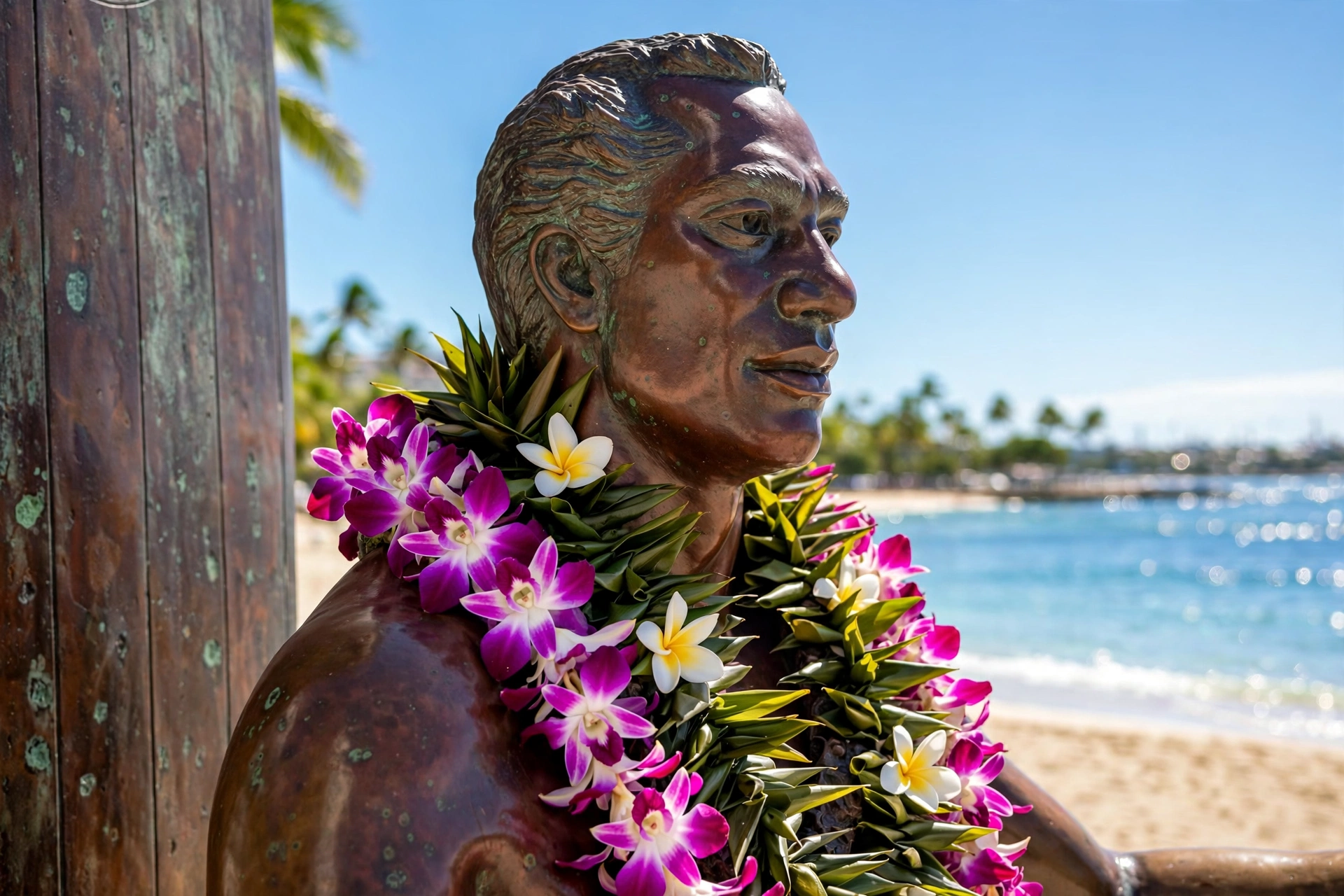
Waikīkī’s claim as the birthplace of modern surfing rests on the early 1900s, when a small group of beach boys began teaching visitors to ride waves at the gentle breaks off the beach. The most famous figure of this era is Duke Kahanamoku, born in 1890 and raised in Waikīkī, who became an Olympic swimming champion and then the great ambassador of surfing to the world. Kahanamoku demonstrated surfing in California, Australia, and beyond, and his name is permanently attached to the sport’s global spread. A well-known bronze statue of the Duke stands on the beach at Waikīkī, draped with lei, and it remains one of the most photographed landmarks in the district.
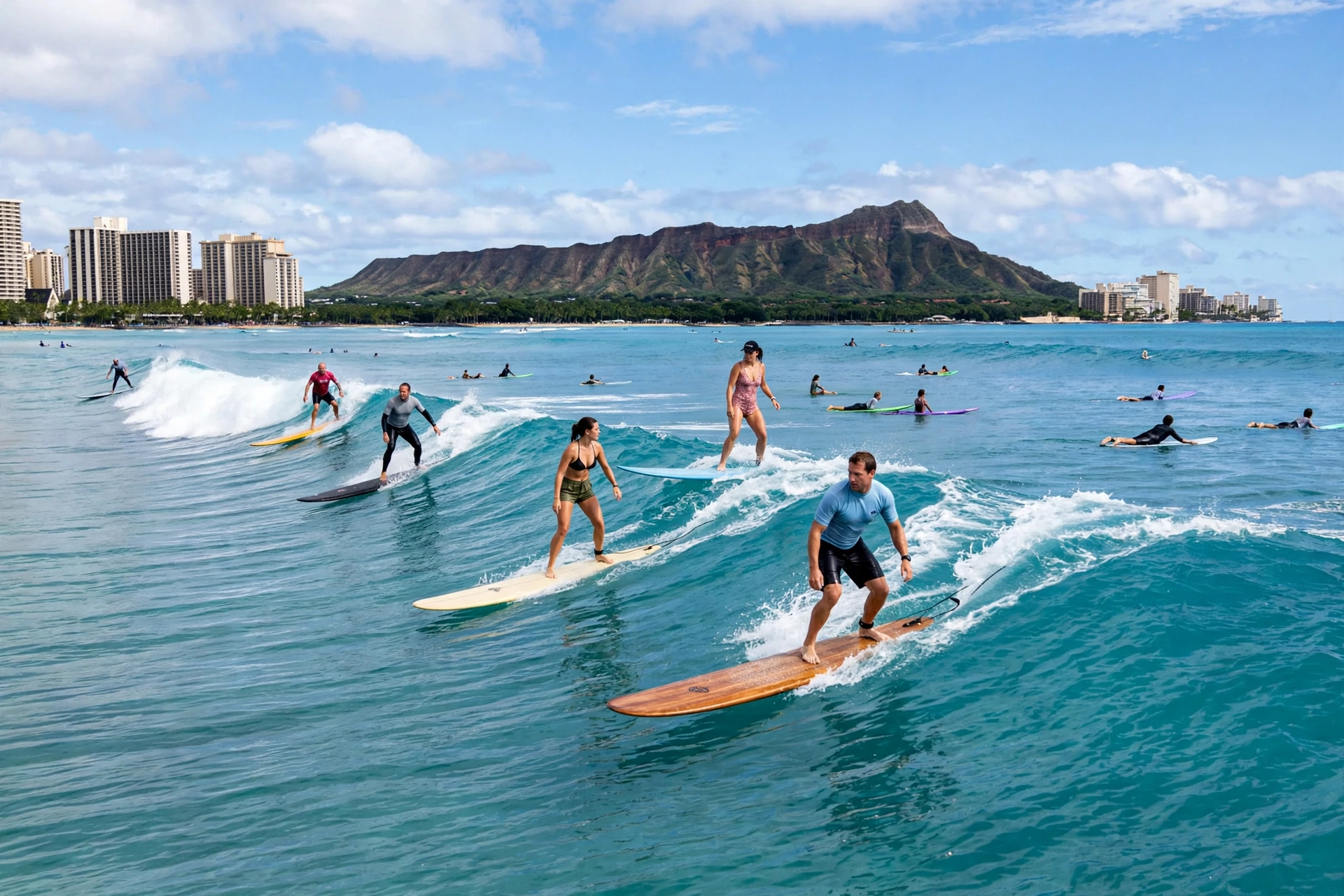
The beach boys of Waikīkī were watermen who made their living from the ocean: teaching surfing, paddling outrigger canoes, and looking after visitors in the water. Their culture of hospitality and ocean skill shaped the visitor experience of Waikīkī for generations, and outrigger canoe rides off the beach continue that tradition today. The surf breaks they rode, Canoes, Queens, and others named for the beach sections, are still among the most beginner-friendly waves in Hawaiʻi, which is why Waikīkī remains the standard first stop for learning to surf.
The Ala Wai and the Making of Modern Waikīkī
Much of modern Waikīkī is built on drained wetland. In the early 1900s the area behind the beach was a low-lying plain of fishponds, taro fields, and duck ponds, prone to flooding and mosquitoes. Between 1921 and 1928 the Ala Wai Canal was dredged to drain the wetlands and carry runoff to the sea, creating the buildable land on which the district’s hotels and streets now stand. The canal permanently changed the area’s hydrology, and its history explains why Waikīkī’s street grid looks the way it does, with the canal forming the district’s northern and western edge.
Tourism development followed in stages. The Moana Hotel, now the Moana Surfrider, opened in 1901 as the first hotel on the beach. The Royal Hawaiian Hotel, the pink landmark, opened in 1927. Air travel after World War II brought mass tourism, and the decades that followed filled the shoreline with high-rises. The beach itself has been repeatedly nourished with imported sand to fight erosion, a maintenance effort that continues in various forms. The result is the Waikīkī of today: historic at its core, thoroughly modern on its surface, and still defined by the beach and the reef that made it famous.
The Beach
Waikīkī Beach runs for about two miles along the district’s southern edge, but it is not one continuous stretch of sand. Seawalls, groins, piers, and small parks divide it into sections, and the width and character of the sand vary considerably from one end to the other. Some sections are wide and lively; others are narrow strips in front of seawalls. Knowing the sections helps visitors find the right spot for swimming, surfing, or simply sitting on the sand.
Beach Sections from West to East
At the western end, near the Ala Wai Yacht Harbor, the beach is narrower and quieter, fronted by parks and the Hilton Hawaiian Village area. Moving east, Fort DeRussy Beach offers a wide, groomed stretch of sand in front of a military recreation area and public park, popular with families and steady with visitors. The central sections, in front of the Royal Hawaiian and Moana hotels, are the historic heart of the beach: Royal Hawaiian Beach, sometimes called the Royal-Moana stretch, sits where the beach boys have worked for over a century.
Further east, Kuhio Beach is a protected, walled swimming area popular with families and beginner surfers, with a small park and the Duke Kahanamoku statue nearby. Queens and Canoes, named for the surf breaks offshore, are the classic Waikīkī surf-teaching zones, where the long, gentle reef waves break far from shore. At the far eastern end, near Kapiʻolani Park and the Waikīkī War Memorial Natatorium, the beach narrows again toward Diamond Head, with Sans Souci and Kaimana Beach offering a quieter, more local feeling stretch of sand at the district’s edge.
Swimming and Surf Conditions
The fringing reef off Waikīkī creates conditions that are unusually forgiving for a famous surf destination. Waves break far offshore over the reef and roll toward the beach as long, gentle swells, losing power as they travel. Inside the reef, the water is shallow and calm, suitable for swimming and wading. This is why Waikīkī works for beginners: the surf is real enough to ride and mild enough to learn on, and the sandy bottom in the swimming areas is free of the sharp reef found at many Hawaiian beaches.
Conditions vary by season and section. South swells in the summer months bring larger waves to the south shore, and Waikīkī’s surf can reach respectable size during strong south swells, though it rarely becomes dangerous for competent swimmers. Winter is generally calmer on the south shore while the North Shore takes the big surf. Currents exist, particularly near channels in the reef, and swimmers should respect posted signs and lifeguard guidance. The City and County of Honolulu staffs lifeguard towers along the beach, and their warnings about conditions on a given day should be taken seriously.
Ocean safety deserves emphasis because Waikīkī’s gentle reputation can mislead. Drowning remains a leading cause of visitor deaths in Hawaiʻi, and most incidents involve visitors who overestimate their ability. Snorkeling, swimming, and surfing all carry risk, and the calm appearance of the water inside the reef does not eliminate it. Swim near lifeguards, never swim alone, and treat the ocean with the respect that every Hawaiian beach demands.
Kalākaua Avenue and the District
Kalākaua Avenue is Waikīkī’s main street and its social center, running the length of the district roughly parallel to the beach, one block inland for much of its length. The avenue is lined with shops, restaurants, and hotel entrances, and in the evenings the section near the beach becomes a promenade crowded with strolling visitors. Street performers, lei vendors, and open-air dining give it a festive character after dark, and it is the natural route for an evening walk from one end of the district to the other.
Behind Kalākaua Avenue, the district’s grid holds the supporting infrastructure of a resort neighborhood: Kūhiō Avenue, one block mauka or inland, carries more local-oriented shops and eateries, and the side streets between the two avenues are dense with smaller hotels, condominiums, and restaurants. The Ala Moana area to the west connects Waikīkī to the Ala Moana Center, one of the largest open-air shopping centers in the United States, and to downtown Honolulu beyond. To the east, Kalākaua Avenue runs into Kapiʻolani Park and the residential neighborhoods at the foot of Diamond Head.
Several landmarks anchor the district beyond the beach. Kapiʻolani Park, at the Diamond Head end, is a large public park with the Honolulu Zoo and the Waikīkī Shell performance venue on its grounds. The Royal Hawaiian Center and the International Market Place are major shopping complexes on Kalākaua Avenue. The Waikīkī War Memorial Natatorium, an oceanfront memorial to Hawaiʻi’s World War I veterans, stands at the eastern end of the beach near Kapiʻolani Park; it has been closed for years and its future has been debated, but the structure remains a landmark. Fort DeRussy, the military reservation in the western part of the district, includes a public park and the U.S. Army Museum of Hawaiʻi, which is open to the public.

What to See and Do
In the Water
Surfing is the defining activity of Waikīkī, and the beginner breaks off the central beach are the standard place to learn. Surf schools and individual instructors operate from the beach, offering lessons that typically include equipment and a beach briefing before paddling out. Because the waves are long and gentle, first-timers can often stand up within a single session. More experienced surfers can find faster sections further out on the reef, though Waikīkī is not a destination for advanced wave riding; its fame rests on accessibility, not challenge.
Outrigger canoe rides continue the beach-boy tradition, with steersmen paddling crews of visitors out through the surf and catching waves back to the beach. Stand-up paddling, snorkeling, and swimming fill out the water options, and the calm inside-reef water suits all of them. Catamaran sails depart from the beach for short cruises along the coast, offering views of Diamond Head and the Honolulu skyline from the water. As with any ocean activity, visitors should choose operators carefully, listen to safety briefings, and stay within their abilities.
On Land
Walking is the simplest pleasure in Waikīkī. The beachfront promenade runs much of the district’s length, and an evening stroll from one end to the other passes the historic hotels, the Duke statue, and the full sweep of the shoreline. Kapiʻolani Park offers green space, banyan trees, and views back toward the beach and Diamond Head. The Honolulu Zoo, within the park, is a long-established family attraction.
History-oriented visitors can walk a self-guided route through the district’s past: the Moana Surfrider and Royal Hawaiian hotels, both still operating, display their early-1900s character; the Duke Kahanamoku statue marks the surf heritage; and the U.S. Army Museum of Hawaiʻi at Fort DeRussy covers the islands’ military history, including the World War II era. The Royal Hawaiian Center hosts cultural programming, and free hula and music performances are staged at various venues around the district through the week.
Nearby
Waikīkī’s position within Honolulu makes it a practical base for the wider south shore. Diamond Head State Monument, at the district’s eastern edge, offers the island’s most popular short hike, a steep trail to the summit of the crater with panoramic views. Downtown Honolulu and the Hawaiʻi State Capitol, ʻIolani Palace, and the historic Chinatown district lie a short drive or bus ride to the west. Ala Moana Beach Park, just west of the district, provides a calmer local beach alternative. See our guide to Oʻahu’s location and regions for the broader island context.
Where to Eat, Shop, and Stay
Waikīkī’s dining scene is broad and heavily oriented to visitors. The beachfront hotels house restaurants at every price level, from fine dining rooms to casual poolside grills, and Kalākaua and Kūhiō avenues are lined with eateries serving Hawaiian, Japanese, American, and international food. Plate lunch shops, poke counters, and shave ice stands offer inexpensive local-style eating alongside the resort restaurants. Prices run higher than in residential Honolulu neighborhoods, which is the normal premium of a resort district, and visitors willing to walk a few blocks inland or ride the bus into neighboring areas will find lower prices.
Shopping follows the same pattern. Luxury boutiques cluster in the major centers on Kalākaua Avenue, while surf shops, souvenir stores, and ABC Stores, the ubiquitous Hawaiʻi convenience chain, fill the street level throughout the district. The Royal Hawaiian Center and International Market Place anchor the high end; smaller arcades and street-level shops cover everything else. As an informational note rather than a recommendation, visitors should know that prices for souvenirs and beach gear are generally higher in Waikīkī than at stores outside the district.
Accommodation in Waikīkī spans the full range, from landmark beachfront resorts to mid-range hotels, budget properties, and condominium rentals on the side streets. The beachfront tier commands the highest rates for direct ocean views and beach access; properties a block or two inland cost less while remaining within easy walking distance of the sand. Waikīkī is the densest concentration of visitor accommodation on Oʻahu, which means wide choice but also means booking ahead for peak periods is prudent. This guide does not recommend specific properties; the categories above describe the market as it stands.
Getting Around
Waikīkī is one of the most walkable districts in Hawaiʻi. The beach, Kalākaua Avenue, and most shops and restaurants lie within a compact area that is easily covered on foot, and walking is the default mode for getting around the neighborhood itself. The flat terrain and the beachfront promenade make for easy strolling, though midday heat and sun call for water, shade, and sun protection.
For longer distances, TheBus, Honolulu’s public transit system, serves Waikīkī with routes connecting to Ala Moana, downtown Honolulu, and points around the island, and fares are modest. Taxis and rideshare services operate throughout the district. Biki, the Honolulu bikeshare program, stations bicycles around Waikīkī for short trips. Rental cars are available but are often more trouble than they are worth for visitors who plan to stay within the district, since parking is expensive and scarce; a car becomes useful mainly for day trips around Oʻahu. Traffic on the H-1 freeway and surface streets can be heavy at commute hours, so visitors driving should allow extra time.
Frequently Asked Questions
Is Waikīkī a city or a town?
Neither. Waikīkī is a neighborhood and resort district of Honolulu, within the City and County of Honolulu on Oʻahu. It has no separate government and no boundary that marks where Honolulu ends and Waikīkī begins.
How long is Waikīkī Beach?
The beach runs for about two miles along the district’s shoreline, divided by seawalls, groins, and parks into named sections including Fort DeRussy, Royal Hawaiian Beach, Kuhio Beach, Queens, and Canoes.
Is Waikīkī good for beginner surfers?
Yes. The long, gentle reef breaks off the central beach, particularly at Canoes and Queens, are among the most beginner-friendly waves in Hawaiʻi, and surf instruction has operated here for over a century.
Who was Duke Kahanamoku?
Duke Kahanamoku (1890 to 1968) was a Waikīkī-born Olympic swimming champion who became the great ambassador of surfing, demonstrating the sport around the world. His statue stands on Waikīkī Beach.
Can you swim at Waikīkī Beach?
Yes. The water inside the fringing reef is shallow and calm, with sandy swimming areas and lifeguard towers along the beach. Swim near lifeguards, respect posted signs, and never swim alone.
What is Kalākaua Avenue?
Kalākaua Avenue is Waikīkī’s main street, running the length of the district parallel to the beach. It holds most of the district’s shops, restaurants, and hotel entrances and is the center of evening foot traffic.
How far is Waikīkī from Honolulu’s airport?
Waikīkī is about 10 miles southeast of Daniel K. Inouye International Airport. The drive typically takes 20 to 30 minutes outside of heavy traffic, longer at commute hours.
Is Waikīkī expensive?
Prices in the district run higher than in residential Honolulu, particularly for beachfront accommodation and dining on Kalākaua Avenue. Walking a few blocks inland or using public transit to neighboring areas brings costs down.
Related Guides
- Oʻahu Travel Guide
- Oʻahu Beaches
- Where Is Oʻahu Located in Hawaiʻi
- Hawaiʻi Map
- Best Time to Visit Hawaiʻi
Reading Waikīkī
Waikīkī rewards visitors who see it whole: a Hawaiian royal retreat, the beach where modern surfing grew up, an engineered shoreline, and a working city neighborhood all layered in one square mile. The surf that carried Duke Kahanamoku still breaks over the same reef, the pink walls of the Royal Hawaiian still face the same ocean, and the evening crowds on Kalākaua Avenue are the latest version of a gathering that has gone on here for generations. Understand those layers and the district becomes more than a resort strip; it becomes a readable record of how Hawaiʻi met the wider world, written in sand, reef, and street grid.