Tiki Meaning in Hawaii: The Real Story of the Kiʻi

Here is the first thing to know: “tiki” is not a Hawaiian word. The Hawaiian word is kiʻi, and it means something sacred: a religious image that can hold the presence of a god. The tiki of tiki bars and souvenir shops is a 20th-century American invention built on a misunderstanding. The real kiʻi guarded temples, carried mana, and represented the four great gods of Hawaii. This is the true meaning of tiki in Hawaii: the sacred original and the commercial copy, and how to tell them apart.
This page covers what kiʻi means, the tiki vs kiʻi distinction, the four gods, how kiʻi were made and used, where to see real ones, the invention of tiki culture, respectful behavior, and FAQs. Everything about tiki meaning in Hawaii is on this one page.
The Short Answer
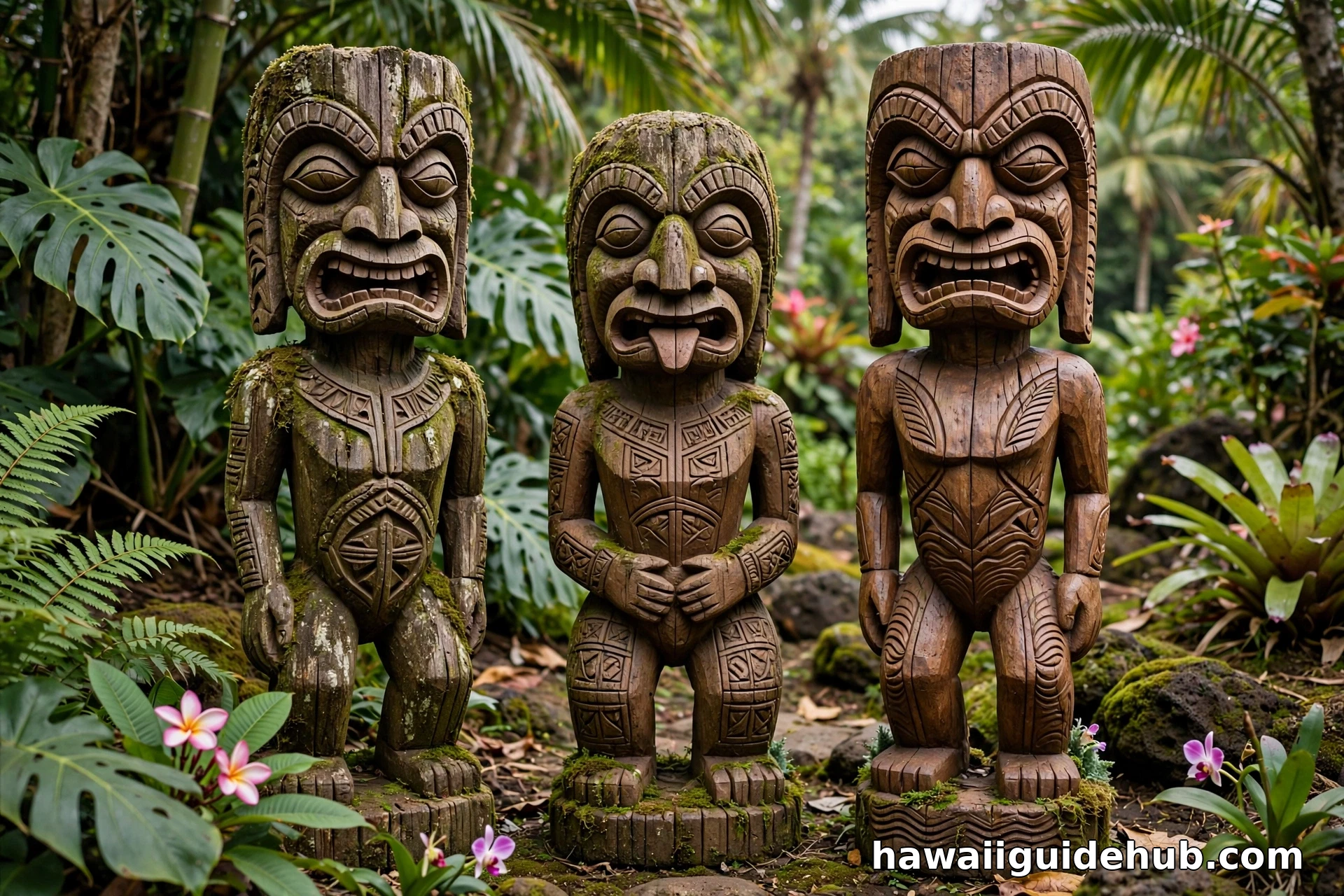
In Hawaii, the carved figures are called kiʻi, not tiki: “tiki” comes from Māori tradition. A kiʻi is a sacred image, carved from wood, stone, or feathers, into which a god’s presence could be summoned. The great kiʻi represented the four gods: Kū (war), Lono (fertility and peace), Kāne (light and life), and Kanaloa (the sea). They stood in temples (heiau), marked sacred boundaries, and carried mana, spiritual power. The tiki-bar tiki is a separate American pop-culture creation from the 1930s onward.
Tiki vs Kiʻi: The Word Matters
Across Polynesia, the carved human figures share a family of names: tiki in Māori (where Tiki is the first man), tiʻi in Tahitian, kiʻi in Hawaiian. In Hawaiian, kiʻi also means “image” generally, and in the Kumulipo creation chant, Kiʻi is a primordial man. When Americans encountered the carvings, they grabbed the Māori word and applied it everywhere, flattening distinct traditions into one souvenir label. Using “kiʻi” in Hawaii is not pedantry; it is respect. It says you know these belong to a specific culture, not a generic tropical fantasy.
The Four Gods of the Kiʻi
| God | Domain | What the kiʻi represents |
| Kū | War, strength, governance | The warrior god; invoked by chiefs, carved fierce |
| Lono | Fertility, agriculture, peace | The god of the Makahiki; abundance and rain |
| Kāne | Light, life, creation, fresh water | The creator; procreator of the universe |
| Kanaloa | The sea, voyaging, the underworld | The ocean god; companion and counterpart to Kāne |
How Kiʻi Worked: Gods in Wood and Stone
A kiʻi was not a decoration and not an idol in the simple sense. Through ritual, a god’s presence could be summoned into the image, which then held mana, spiritual power, and the god could be called back to that same image for generations. Kiʻi were carved from wood (ʻōhiʻa lehua, kauila, lama, and many others: a 2020 study found over 18 wood genera in Hawaiian carvings), stone, and even feathers: the great feathered images of Kūkāʻilimoku, the war god, required the cooperation of entire communities to gather the feathers. They stood in heiau temples, at sacred boundaries, and in places of refuge. They were intermediaries between humans and gods.
Where to See Real Kiʻi
Puʻuhonua o Hōnaunau National Historical Park on the Big Island holds the great royal kiʻi guarding the place of refuge: fierce wooden figures that are the real thing, in their real context. The Bishop Museum in Honolulu holds historic kiʻi of wood, stone, and feathers. Heiau sites across the islands still hold kiʻi in place. When you see them, remember: these are religious objects. Do not climb on them, do not pose mockingly, do not take pieces. Photograph respectfully, speak quietly, and treat the site as what it is: a temple.
The Invention of Tiki Culture
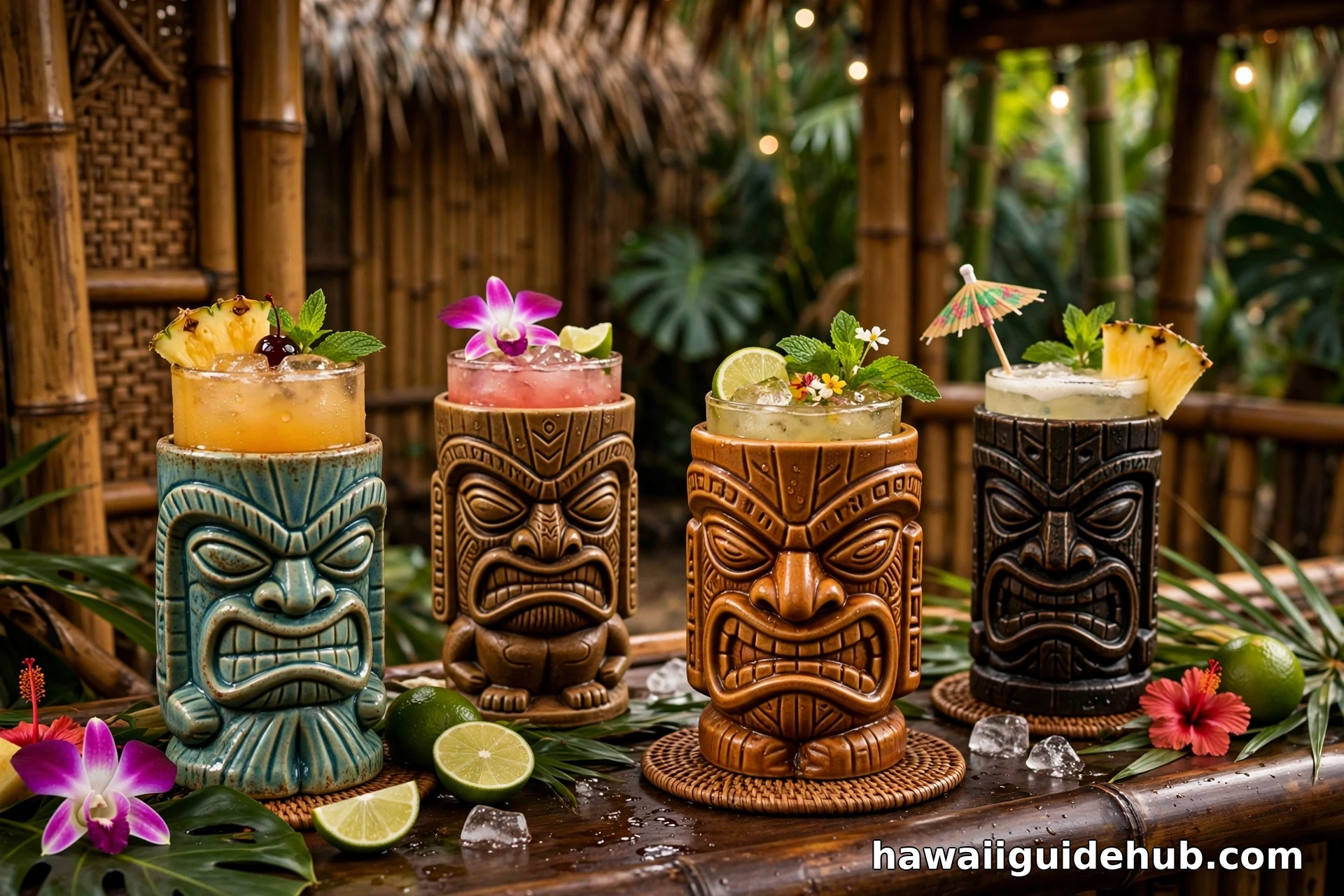
The other tiki, the one with the umbrella drink, was invented in 1930s California. Don the Beachcomber and Trader Vic built a fantasy of the South Seas from bamboo, rum, and borrowed Polynesian imagery, and postwar America embraced it: tiki bars, tiki mugs, tiki torches, tiki parties. It was creative, often beautiful, and fundamentally a fantasy: a mashup of a dozen Pacific cultures filtered through Hollywood. The tiki mug on your shelf and the kiʻi in the heiau share a distant ancestor and nothing else. Enjoy the cocktail; know the difference.
Respectful Behavior Around Kiʻi
Simple rules. Do not touch or climb on kiʻi at cultural sites. Do not remove anything, not even a pebble, from heiau. Do not use sacred images as props for silly photos. Buy carvings from Hawaiian artisans, not mass-produced imports, and understand that a souvenir “tiki” is decor, not a sacred object. If a site has cultural practitioners present, follow their lead. The kiʻi survived the missionary era, when many were destroyed: the ones standing today are survivors. Treat them that way.
For Hawaiian culture, see Hawaii’s history before the 50th star, the significance of ohana, and Hawaiian traditions: hula, chanting, and storytelling.
The Missionary Era: When the Kiʻi Fell
In 1819, Kaʻahumanu and Kamehameha II abolished the kapu system, and in the upheaval many heiau were destroyed and kiʻi burned or discarded. Missionaries arriving in 1820 preached against “idols,” and countless sacred images were lost. The kiʻi that survive in museums and parks are precious precisely because so many were destroyed. The tradition did not die, though: carvers kept the knowledge, and the Hawaiian cultural renaissance of the 1970s onward brought the kiʻi back to temples and public places. Every kiʻi standing today is a comeback story.
Feather Work: The Most Sacred Images
The greatest kiʻi were not wood but feathers. Images like those of Kūkāʻilimoku, the war god, were built over frames and covered in thousands of tiny red and yellow feathers from the ʻiʻiwi and ʻapapane birds. Anthropologist Adrienne Kaeppler argued these feathered images outranked wooden ones: making them required whole communities, from the bird catchers to the feather workers to the priests, bound by genealogy and obligation. A feathered kiʻi was a society made visible. A few survive in museums; seeing one is a privilege.
Kiʻi in the Creation Chant
The Kumulipo, Hawaii’s great creation chant, names Kiʻi as a primordial man born alongside the gods Kāne and Kanaloa, ancestor of the senior line of chiefs. The name means “image,” and the identification runs deep: humanity itself as the image of the divine. This is why the word matters beyond the statues. Kiʻi is not just what the carvings are called; it is a theological statement about what people are. The carvings and the chant tell the same story.
Reading a Kiʻi: What the Features Mean
Look closely at a kiʻi and it reads like a text. The large head signifies the seat of mana. Wide eyes mean vigilance, watchfulness against evil. The open mouth can signify the devouring of enemies or the speaking of divine words. Hands on the belly suggest contemplation and spiritual power. Headdresses and body patterns identify rank and lineage. None of it is random decoration: every feature is a sentence in a visual language. Learning to read it turns a garden statue into a document.
Modern Carvers: The Tradition Lives
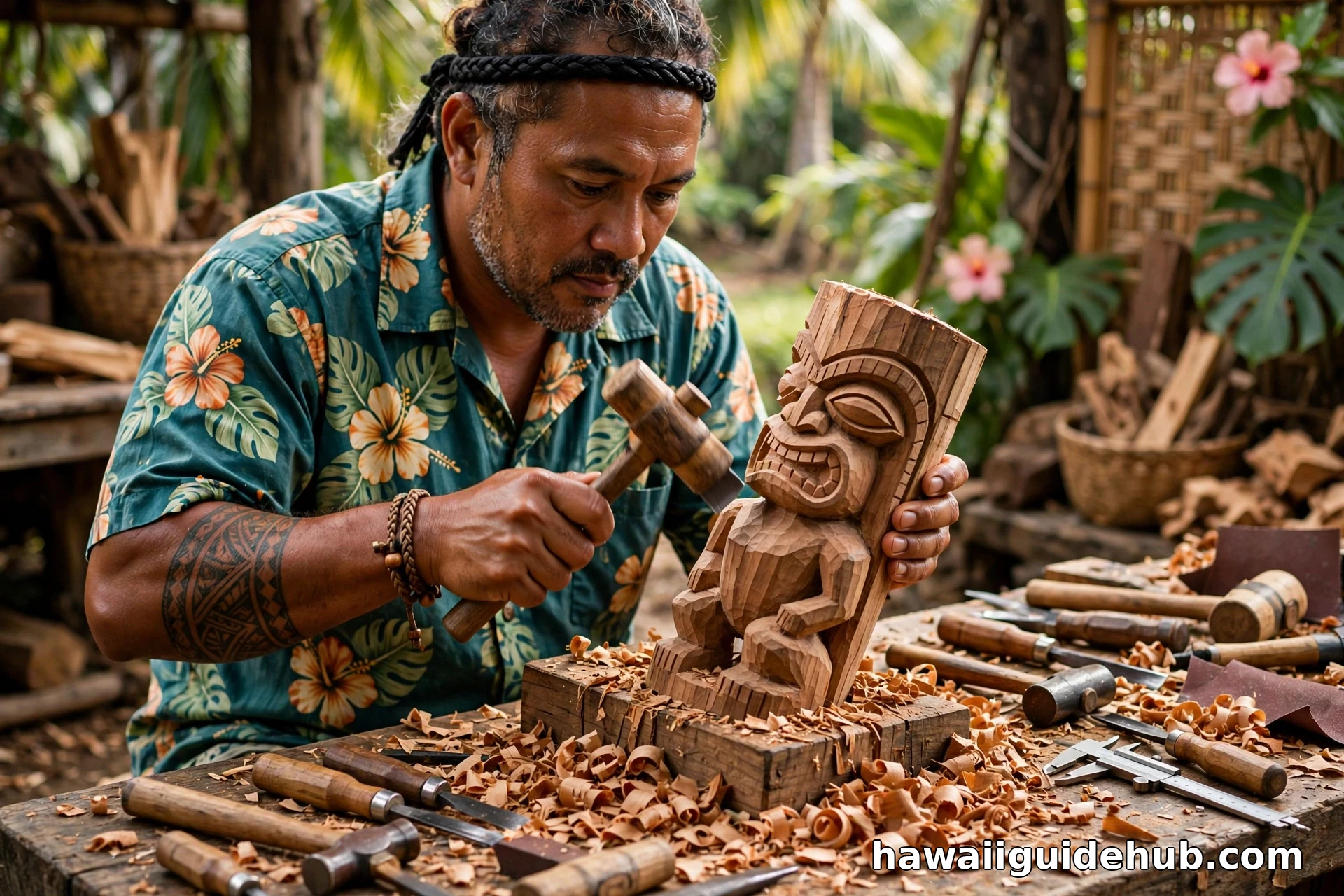
Kiʻi carving is not a dead art. Hawaiian carvers today create kiʻi for heiau restoration, cultural centers, and private commissions, working in native woods with both traditional adzes and modern tools. The best carvers study the old forms deeply: the proportions, the gods’ attributes, the protocols for sacred work. Buying from a Hawaiian carver supports the living tradition and gets you a piece with real cultural lineage. Ask the carver about the piece: a real carver will tell you which god it represents and why.
Tiki Tattoos and Jewelry
The kiʻi image travels: pendants, tattoos, prints, surfboard art. Much of it is respectful appreciation; some of it is thoughtless appropriation. The line is intent and knowledge: a tattoo of Kū chosen after learning who Kū is differs from a generic “tribal” design picked from a wall. If you wear the imagery, know the story. The gods deserve at least that much from the people who borrow their faces.
The Moai Connection
Hawaii’s kiʻi have famous cousins: the moai of Rapa Nui (Easter Island), the monumental stone figures that are the largest in the tiki family. Same Polynesian root, wildly different expression: where Hawaiian kiʻi are wooden and human-scaled, the moai are stone giants. The Marquesan tiki, the Tahitian tiʻi, the Māori hei-tiki pendants: all branches of one tree. Understanding the family makes each member clearer. The kiʻi is Hawaii’s dialect of a Polynesian-wide language.
The Heiau: Where Kiʻi Stood
Kiʻi belonged to the heiau, the temples that were the centers of Hawaiian religious and political life. Different heiau served different gods: war temples for Kū, agricultural temples for Lono, and the great luakini temples where the highest rituals were performed. The kiʻi stood as the god’s presence in the temple court, witnesses to offerings, prayers, and sometimes human sacrifice. Visiting a heiau site today, with the kiʻi standing where they stood centuries ago, is the closest most people will come to old Hawaii. Go quietly.
What the Souvenir Tiki Gets Wrong
The souvenir tiki gets almost everything wrong, and that is fine as long as you know it. It mashes Hawaiian, Māori, and generic “tribal” designs into one. It adds masks Hawaiians never used. It turns sacred figures into barware. None of this is a crime: cultures borrow and play. The problem is only when the copy replaces the original in people’s minds, when visitors leave Hawaii thinking tiki means “cocktail mug.” This page exists so that does not happen to you.
A Visitor’s Kiʻi Itinerary
Do it in order. Start at the Bishop Museum in Honolulu: the historic kiʻi collection gives you the forms and the stories. Then visit Puʻuhonua o Hōnaunau on the Big Island: the royal kiʻi in their temple context, ocean behind them, exactly where they belong. If time allows, add a heiau site on your island: Puʻukoholā on the Big Island, or the heiau along Oahu’s windward side. Three stops, and you will understand what the souvenir shops never tell you.
The Word You Use Is the Respect You Show
Language is the smallest, easiest respect. Say kiʻi in Hawaii, and Hawaiians notice: it signals that you know the difference between the sacred and the souvenir. Say tiki at a heiau and nobody will scold you, but the word marks you as a tourist in a way kiʻi does not. This is not about political correctness; it is about accuracy. The things are called kiʻi. Calling them by their name is the least you can do for objects that have carried gods.
Video: How America Invented Tiki
Before tiki bars: the strange story of the American South Seas fantasy.
Frequently Asked Questions
What does tiki mean in Hawaii?
The Hawaiian word is kiʻi: a sacred image that can hold a god’s presence. “Tiki” is the Māori-derived word Americans use.
What are the four tiki gods?
Kū (war), Lono (fertility and peace), Kāne (light and creation), and Kanaloa (the sea).
Are tiki statues religious?
Real kiʻi are sacred religious objects. Souvenir tikis are decorations with no religious meaning.
Did Hawaiians wear tiki masks?
No. Hawaiians did not traditionally use masks; “tiki masks” are tourist products, not Hawaiian tradition.
Where can I see real kiʻi in Hawaii?
Puʻuhonua o Hōnaunau National Historical Park (Big Island) and the Bishop Museum (Honolulu).
Is it disrespectful to own a tiki statue?
A souvenir tiki is just decor. But treat real kiʻi at cultural sites with the respect due sacred objects.
The kiʻi meaning in Hawaii is ultimately about presence: the belief that the divine can dwell in carved wood, that a statue can hold mana, that the boundary between worlds is thinner than we think. The tiki bar borrowed the shape and lost the soul. Knowing the difference does not ruin the cocktail; it just means you will never mistake the mug for the god again, and you will carry the real story home with you.