Waterfalls Near Kona, Hawaii: The Honest Guide

Here is the honest truth about waterfalls near Kona: there are almost none in Kona itself. The Kona coast is the dry side of the Big Island, all sun and lava rock, and waterfalls need rain. The island’s great falls are on the wet east and north sides, a 1.5 to 2-hour drive away. This guide tells you the truth up front, then gives you every waterfall worth the drive from Kona: Akaka Falls, Rainbow Falls, Umauma, Kulaniapia, the Kohala falls, and where you can actually swim.
This page covers why Kona has no waterfalls, the six best falls by drive time, swimming options, the best waterfall day trip from Kona, tours, safety, and FAQs. Everything about waterfalls near Kona is on this one page.
The Short Answer
The best waterfalls near Kona are Akaka Falls (442 feet, about 2 hours away), Rainbow Falls (80 feet, about 2 hours), and the Kohala waterfalls (about 1.5 hours, swimmable on tours). There are no significant waterfalls in Kailua-Kona itself: the Kona coast is too dry. Plan a full day trip to the Hamakua Coast or Hilo side for waterfalls, and combine it with the volcano or Waipio Valley.
Why Kona Has No Waterfalls
It is a rain problem. The Kona coast sits in the rain shadow of Hualalai and Mauna Loa: the trade winds drop their moisture on the east side, leaving Kona sunny and dry. Waterfalls need watersheds, and Kona’s watersheds are small and seasonal. The Hilo and Hamakua sides catch the rain: Hilo gets over 120 inches a year, and every gulch has a falls. So the honest answer to “waterfalls near Kona” is “drive to where the rain is.” The drive is the price of admission, and it is a beautiful one.
The Waterfalls, by Drive Time from Kailua-Kona
| Waterfall | Drive from Kona | Height | Access |
| Akaka Falls | About 2 hours | 442 ft | Easy paved loop; no swimming |
| Rainbow Falls | About 2 hours | 80 ft | Roadside viewpoint; no swimming |
| Umauma Falls | About 2 hours | Multi-tier | Private; tours and zipline |
| Kulaniapia Falls | About 2 hours | 120 ft | Private inn; swimming allowed |
| Kohala waterfalls | About 1.5 hours | Seven falls | Private tour only; swimming |
| Waipio Valley | About 2 hours | Valley falls | Lookout only; valley restricted |
Akaka Falls: The One You Must See
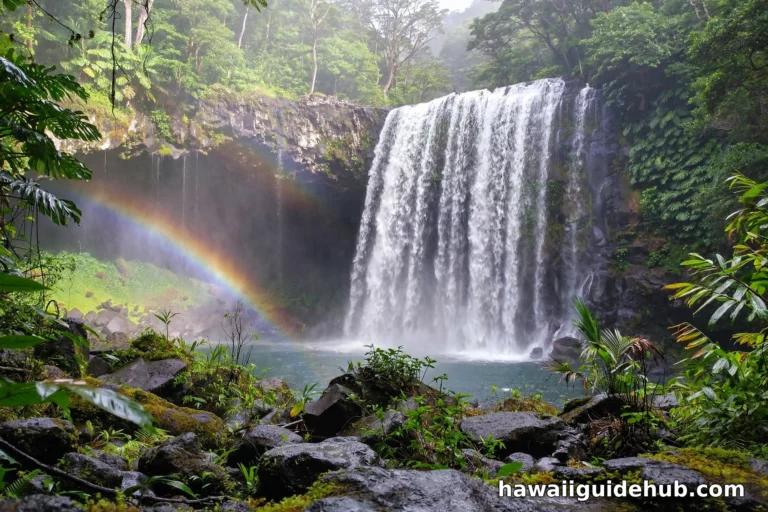
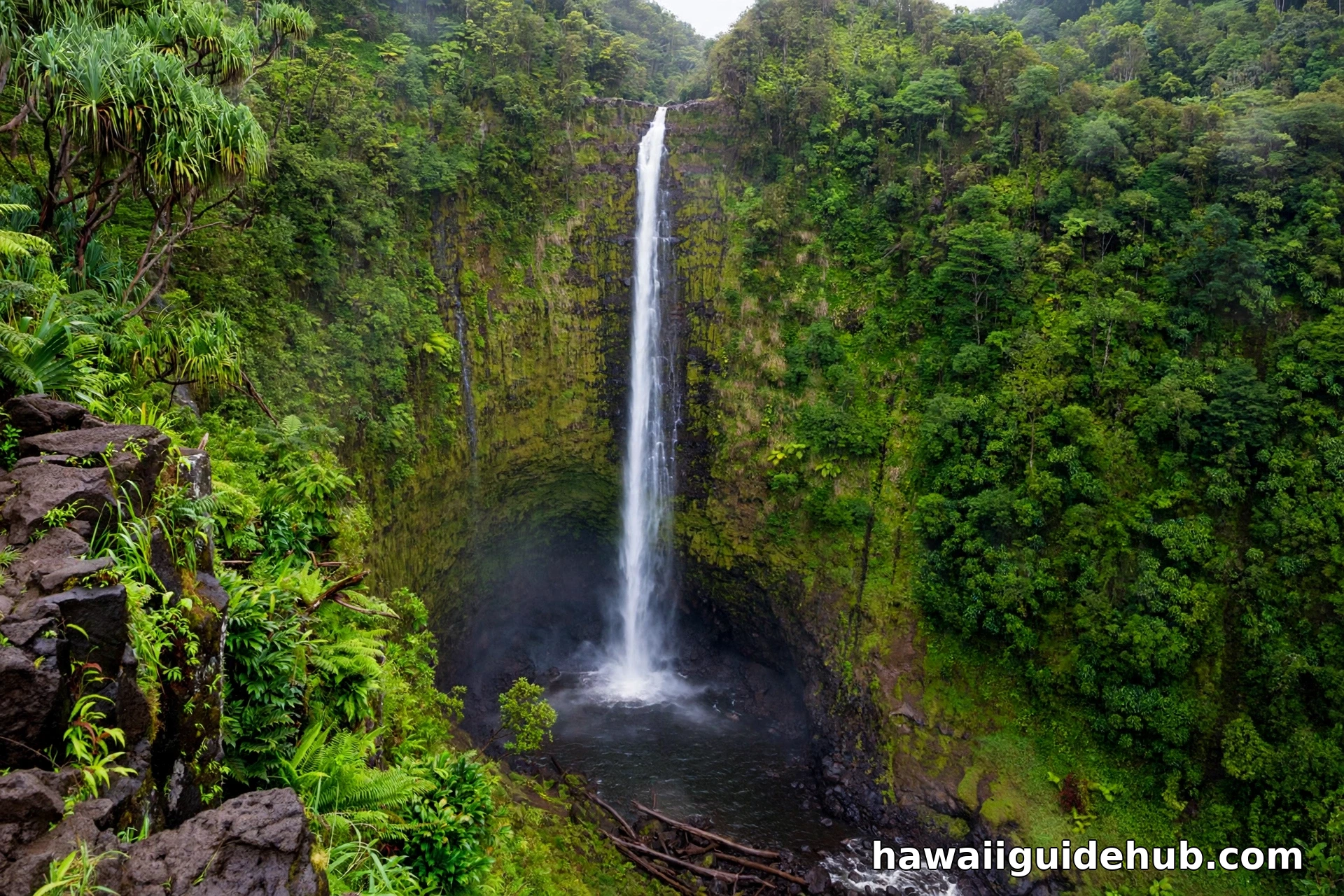
Akaka Falls State Park is the Big Island’s waterfall crown jewel: a 442-foot plunge into a gorge so lush it looks prehistoric. The half-mile paved loop is easy and kid-friendly, passing bamboo groves, orchids, and the smaller Kahuna Falls. Go in the morning for the best light and smallest crowds. The park charges a small entry and parking fee. It is the single most impressive waterfall on the island, and the reason the drive exists.
Rainbow Falls and the Hilo Waterfalls
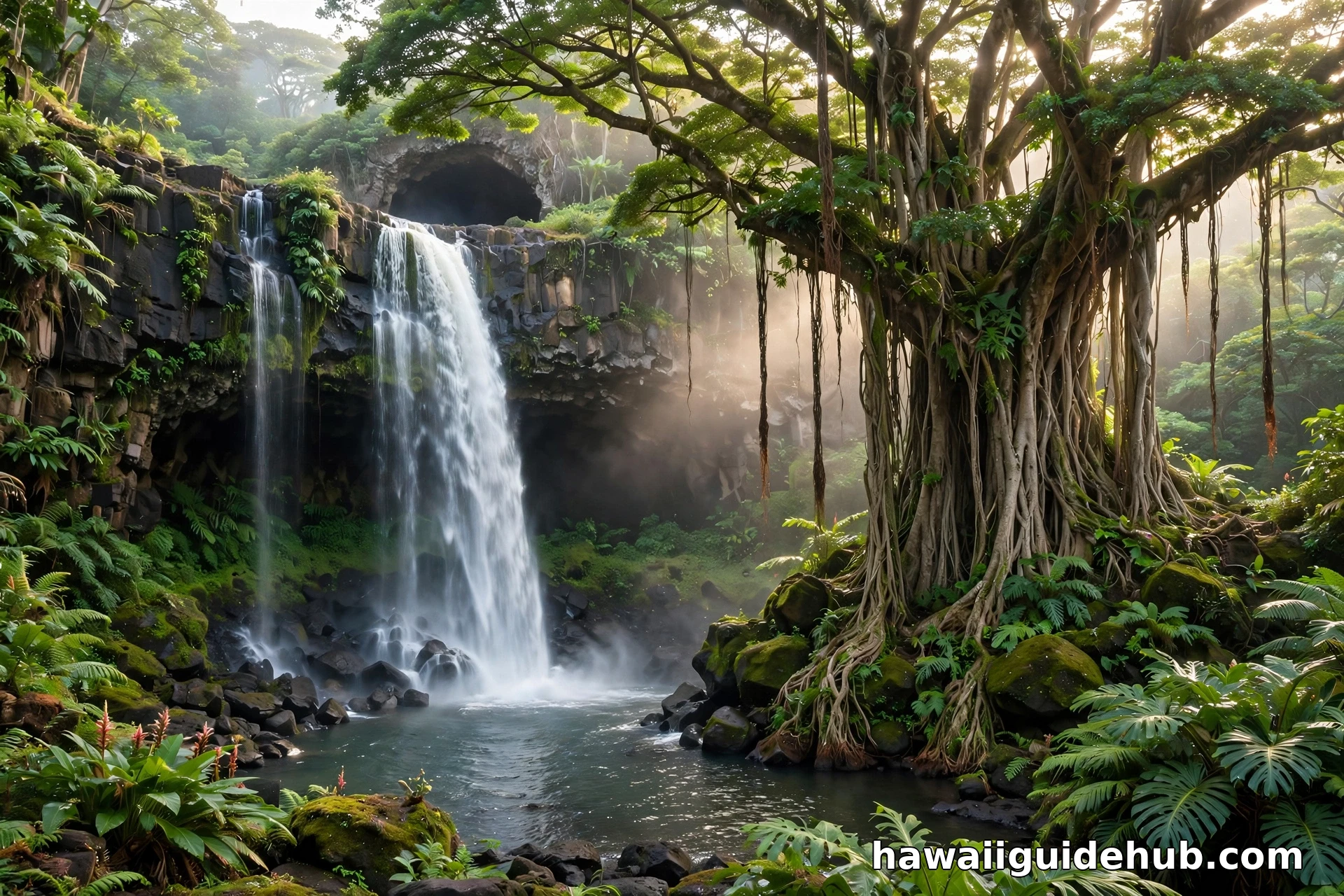
Rainbow Falls (Waianuenue) is Hilo’s hometown waterfall: 80 feet over a lava cave, with rainbows in the morning mist and a giant banyan tree beside the viewpoint. It is nearly roadside, no hiking required. Nearby, the Boiling Pots (Peʻepeʻe Falls) churn below. Combine both with the Hilo farmers market and a malasada stop for the classic Hilo morning. These falls are the easiest waterfall payoff on the island.
Where You Can Actually Swim
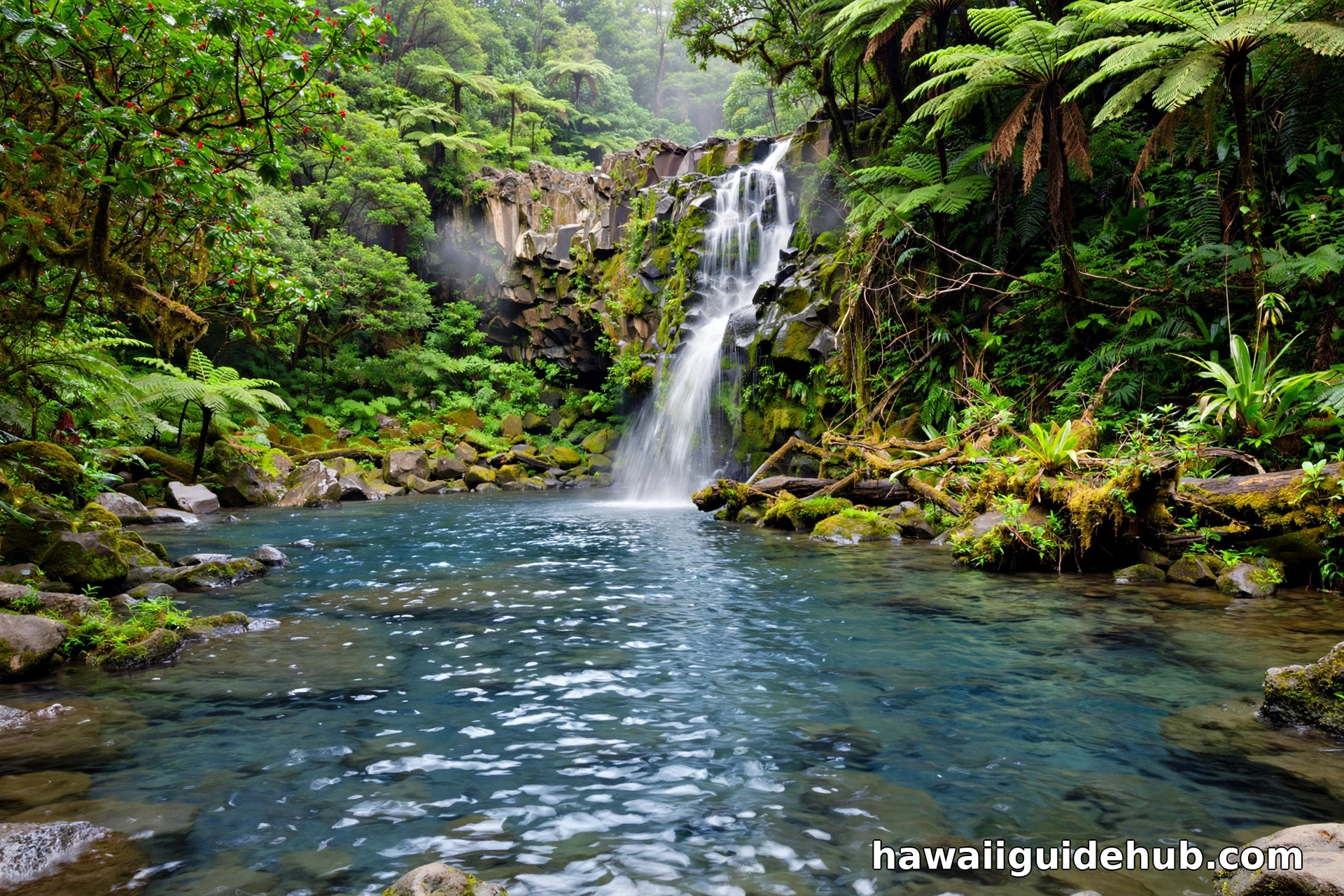
Most famous waterfalls are look-but-don’t-swim: Akaka and Rainbow have no safe swimming access. For swimming, go private. Kulaniapia Falls, at an inn near Hilo, offers waterfall swimming, rappelling, and kayaking to day guests. The Kohala Waterfall Adventure takes you into a private nature reserve with seven waterfalls and swimming in pristine pools. These cost money, but they deliver the waterfall-swim fantasy the public falls cannot. Book ahead: capacity is limited.
The Perfect Waterfall Day from Kona
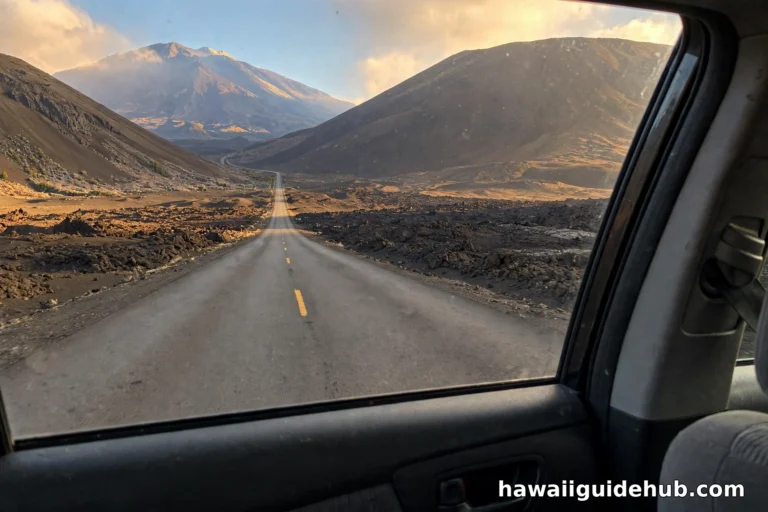
Leave Kona by 7 AM and drive the Hamakua Coast: it is the scenic route and the destination in one. Stop at Tex Drive-In for malasadas, hit Akaka Falls mid-morning, lunch in Hilo, Rainbow Falls and Boiling Pots after, then drive back via the Saddle Road or continue to Volcano for the night. It is a long day, 10 to 12 hours, but it stacks the island’s best waterfalls, the coast drive, and Hilo into one loop. Alternatively, split it: waterfalls one day, volcano the next, overnighting in Volcano Village.
For more Kona planning, see the best things to do in Kona, the best things to do on the Big Island, and five things to do in Hawaii Volcanoes National Park.
Umauma Falls: The Adventure Option
Umauma Falls is a triple-tiered cascade on private land off the Hamakua Coast, and it is built for adventure: the Umauma Experience offers ziplines that fly directly over the falls, plus ATV tours and waterfall rappelling. It is the most adrenaline-flavored waterfall on the island. Even without the zipline, the falls are spectacular from the viewing areas. If your group wants waterfalls plus action, Umauma is the pick: it turns sightseeing into a full-throttle day.
Waipio Valley: Waterfalls from Above
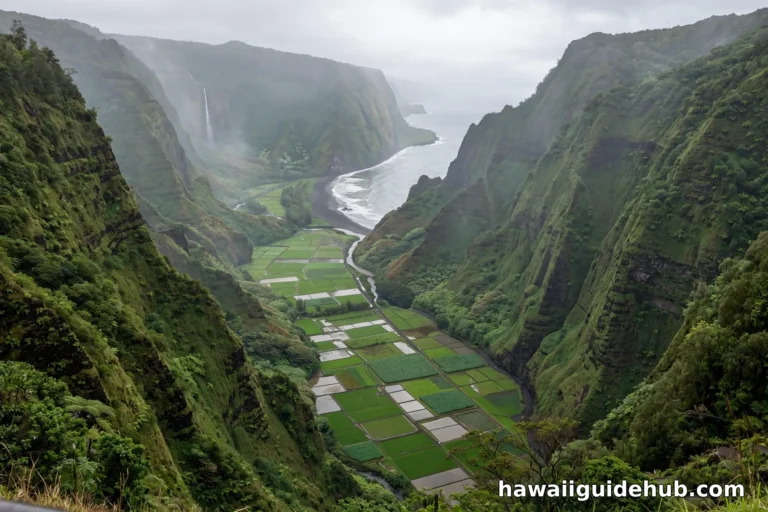
Waipio Valley holds some of the island’s tallest waterfalls, Hiilawe Falls among them, but you will see them from the lookout, not up close. The valley floor is restricted: the road down is brutally steep, limited to residents and permitted tours, and the valley is a living community, not a theme park. Respect it. The lookout view, with waterfalls threading the thousand-foot cliffs, is one of Hawaii’s great vistas and needs no closer access to be unforgettable.
The Hamakua Coast: Waterfall Alley
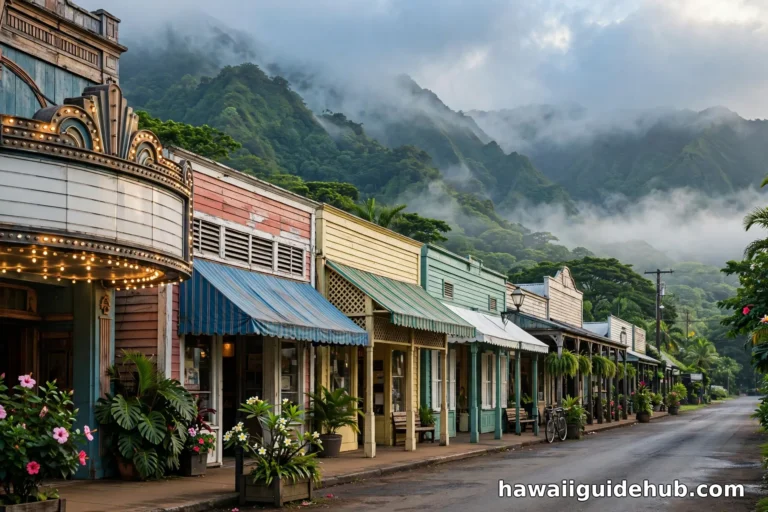
The Hamakua Coast between Honokaa and Hilo is waterfall alley: nearly every gulch hides one. Beyond the famous names, roadside pullouts reveal unnamed cascades after rain. The Hawaii Tropical Bioreserve Garden has its own waterfall boardwalk. Honokaa town is the gateway, with Tex Drive-In’s malasadas as the mandatory stop. Drive slowly, pull over often, and keep the camera ready: the coast delivers waterfalls like other roads deliver billboards.
Waterfall Safety: Read This
Waterfalls kill people in Hawaii every year, and the rules are simple. Never swim at the base of a tall waterfall: rocks and logs come over without warning. Flash floods can turn a calm pool deadly in minutes: if it is raining upstream, stay out of the water. Leptospirosis bacteria live in freshwater streams: keep cuts covered and do not drink stream water. Stay on marked trails: the cliffs around falls are crumbly and the drops are fatal. The falls are beautiful; treat them with the respect they demand.
Photographing Waterfalls
Overcast days are waterfall photography gold: soft light, saturated greens, no harsh shadows. A polarizing filter cuts the glare on wet leaves. For the silky-water effect, use a tripod and a slow shutter, but honestly the falls look great frozen mid-crash too. Include people or trees for scale: Akaka’s 442 feet does not read in a photo without it. Morning at Rainbow Falls earns its name: go early for the rainbow in the mist. And bring lens cloths: waterfall spray is constant.
The Legend of Akaka Falls
Every Hawaiian waterfall has a story, and Akaka’s is a tragic one: the legend tells of the chief Akaka, who fell to his death from the top of the falls. The park’s signage shares the moʻolelo, and local guides tell it with the gravity it deserves. These are not just scenic viewpoints; they are storied places. Read the signs, learn the names, and remember that the falls were sacred long before they were photographed.
When Waterfalls Disappoint
Honest caveats. After dry spells, even famous falls can thin to a trickle: Akaka rarely disappoints, but smaller falls do. Crowds at Akaka midday can clog the loop trail. The drive from Kona is long enough that a rushed trip feels punishing. And no, you cannot swim at the famous ones, which disappoints everyone who imagined it. Set expectations with this guide, leave early, and the falls will exceed them.
Pairing Waterfalls with the Volcano
The classic Big Island combo: waterfalls by day, volcano by night. Drive from Kona to the Hamakua waterfalls in the morning, continue to Hilo for lunch, then on to Hawaii Volcanoes National Park for the afternoon and the after-dark crater glow. Overnight in Volcano Village and drive back the next day via the south coast. It is the island’s greatest-hits loop, and it works because the geography cooperates: falls, then volcano, then home, in one logical line.
Waterfalls for Every Fitness Level
Waterfall chasing on the Big Island scales to any ability. Zero walking: Rainbow Falls and the Waipio Valley lookout are essentially roadside. Easy paved loop: Akaka Falls, half a mile, suitable for kids and grandparents. Moderate adventure: the Kohala waterfall tour involves hiking but guides set the pace. Full throttle: Umauma’s ziplines and rappelling. Nobody needs to be an athlete to see world-class waterfalls here; the island serves them at every difficulty setting. Pick your level and go.
What to Pack for Waterfall Day
Rain jacket or poncho: the east side delivers rain on schedule. Mosquito repellent, especially in summer. Sturdy walking shoes: the Akaka loop is paved but damp. Swimsuit and towel if you are doing a swim tour. Water shoes for rocky entries. A dry bag or ziplock for the phone. Snacks and water: food options thin out along the Hamakua Coast outside the towns. And the camera, obviously: this is the most photographed day of most Big Island trips.
The Rain Makes the Falls
Final perspective: the reason the Kona side has no waterfalls is the reason the east side has the best ones. The same trade winds that keep Kona sunny dump 120 inches of rain on Hilo, and every inch becomes a cascade. Do not curse the rain on waterfall day: it is the entire point. The wettest places make the most spectacular falls. Embrace the poncho, chase the rainbows, and thank the clouds.
The Secret Falls: Ask a Local
Beyond the famous names, the Big Island hides dozens of falls known only to locals: gulch cascades on private land, roadside drops after heavy rain, swimming holes passed down through families. You will not find them on maps, and this guide will not name them: secret spots stay secret by staying unnamed. But here is the key: befriend a local guide, take the small tours, linger at the country stores, and ask respectfully. The island rewards the curious. The famous falls are the introduction; the hidden ones are the graduate course.
Video: Epic Big Island Waterfalls
Akaka Falls, Rainbow Falls, and Boiling Pots: the east Hawaii waterfall tour.
Frequently Asked Questions
Are there waterfalls in Kona?
No significant ones. The Kona coast is too dry; the waterfalls are on the east and north sides.
What is the closest waterfall to Kona?
The Kohala waterfalls, about 1.5 hours north, accessible by private tour with swimming.
Can you swim at Akaka Falls?
No. Akaka Falls has no swimming access; it is a viewpoint waterfall.
How tall is Akaka Falls?
442 feet, one of the tallest and most famous waterfalls in Hawaii.
Can you do waterfalls and the volcano in one day from Kona?
It is possible but rushed: 12+ hours of driving and sightseeing. Better as two days with a Volcano Village overnight.
When is the best time to see waterfalls?
After rain, which is often: the east side is wet year-round. Morning light is best for photos.
The waterfalls near Kona are not near Kona at all, and that is fine: the drive to them is one of the great road trips in Hawaii, and the falls at the end are worth every mile. Accept the geography, leave early, pack the rain jacket and the mosquito repellent, and let the wet side of the island show you what all that rain is for. The dry side has the beaches; the wet side has the waterfalls; the whole island has you covered, beautifully and completely, from the sunny shores to the misty falls and back again. Check recent rainfall before you drive out: the falls run strongest in the day or two after heavy rain, and the access roads can turn muddy fast.