Things to Do in Waikiki and Honolulu: Beaches, History, Hikes and Island Nights

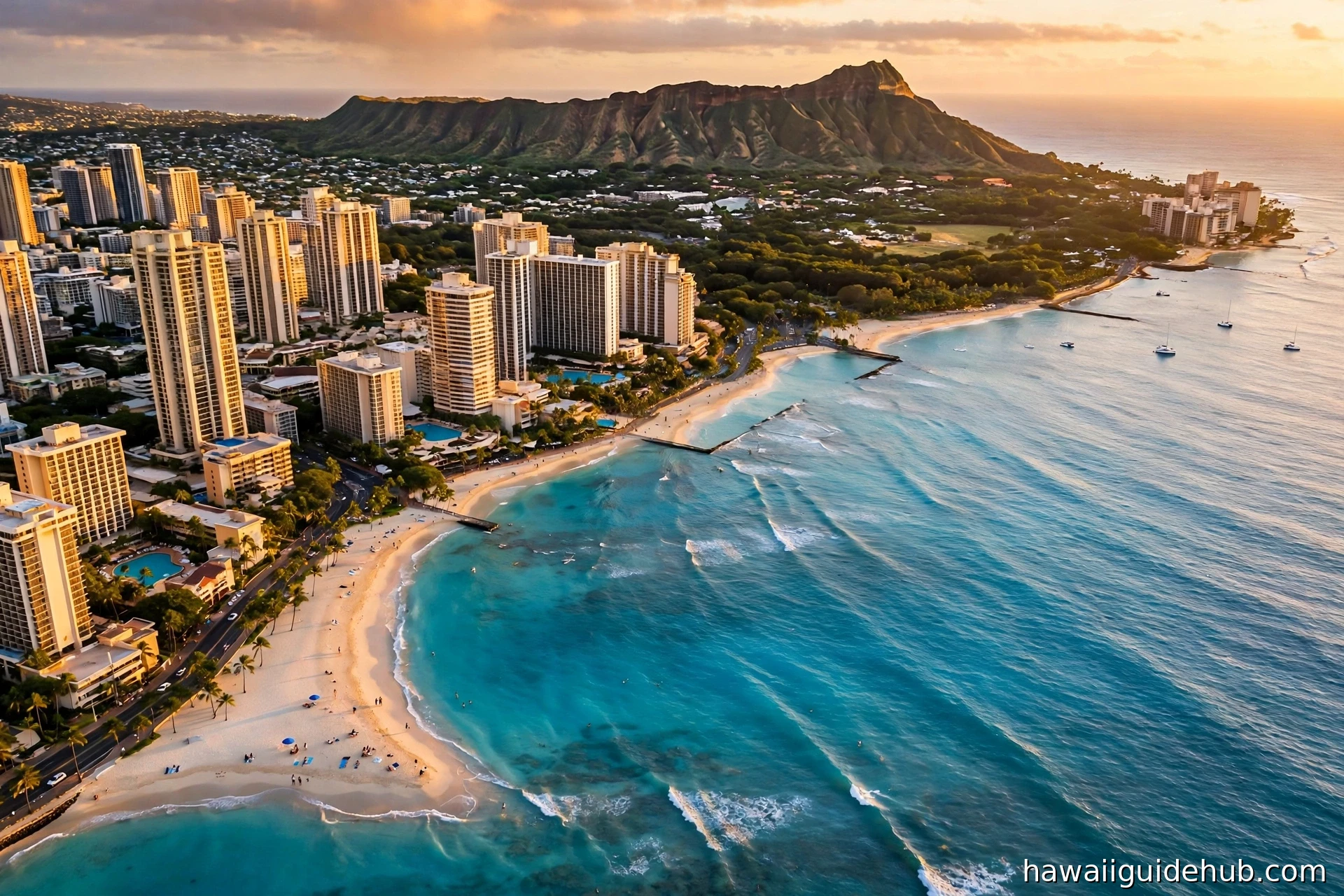
Waikīkī is where most visitors to Oʻahu begin, and for good reason. This famous two-mile stretch of beach sits at the foot of Diamond Head with the towers of Honolulu rising just behind it, packing an remarkable amount of Hawaiʻi into one walkable neighborhood. But Waikīkī is only the starting point. Just minutes away, downtown Honolulu holds royal palaces, world-class museums, historic harbors, and neighborhoods with real local character. This guide covers the essential things to do in Waikīkī and Honolulu, from sunrise hikes to solemn memorials to the best way to spend an evening on the sand.
Start With Waikīkī Beach Itself
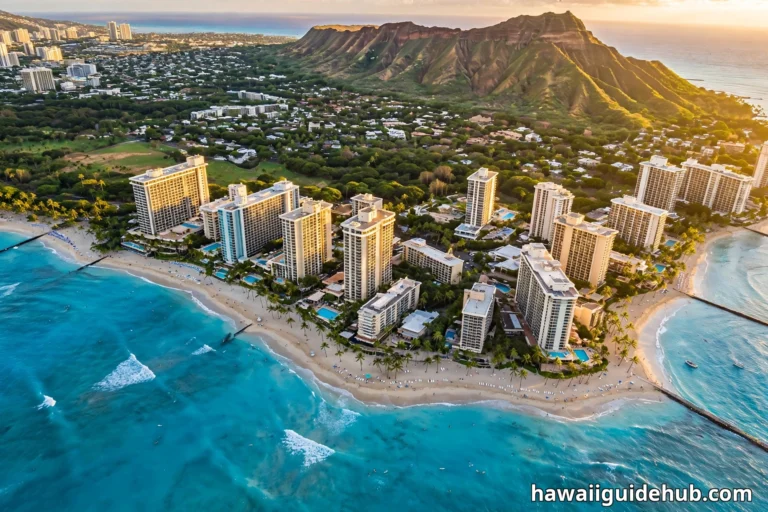
Waikīkī Beach is not one single beach but a chain of connected sandy sections running about two miles along the south shore of Oʻahu, from the Hilton Hawaiian Village end to the Duke Kahanamoku Lagoon and beyond toward Diamond Head. The sand is soft, the water is typically calm and warm, and the view of Lēʻahi (Diamond Head) rising at the eastern end is one of the most photographed scenes in the Pacific.
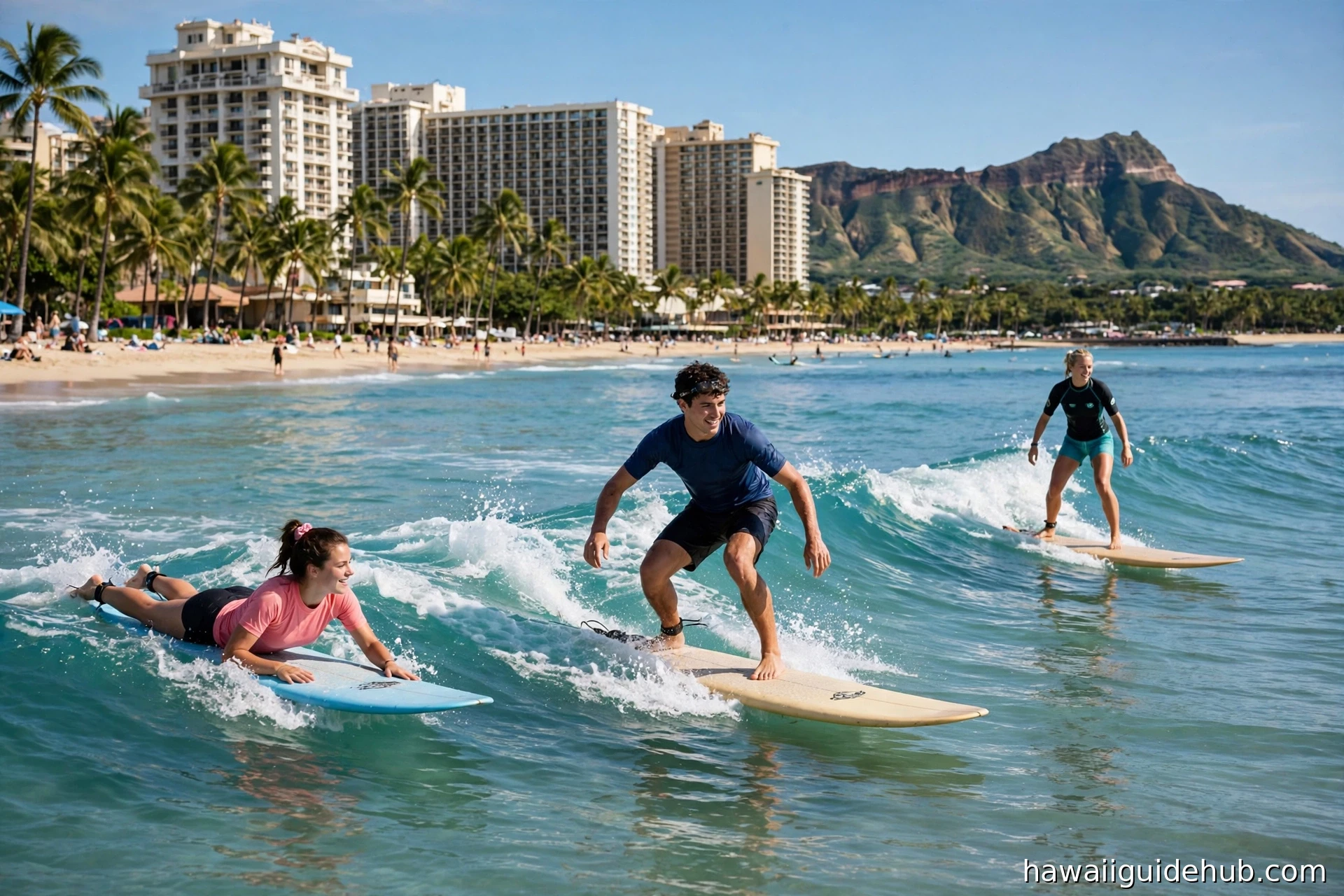
This is also the birthplace of modern surfing. Duke Kahanamoku, the Olympic swimmer who introduced surfing to the world, grew up swimming and surfing these waters, and his bronze statue with arms outstretched in aloha stands on Kalākaua Avenue facing the beach. It is a popular meeting point and photo stop. The gentle, rolling breaks off Waikīkī are ideal for first-time surfers, and surf schools line the beach offering lessons with long, stable boards.
For the classic Waikīkī experience, arrive early. The beach fills by mid-morning, and the morning light on Diamond Head is at its best before 9 a.m. Bring reef-safe sunscreen, as Hawaiʻi state law bans sunscreens containing oxybenzone and octinoxate, and Maui County rules are stricter still. If you want a quieter stretch, walk east toward Kapiʻolani Park and Queen’s Surf Beach, where the crowds thin and the views open up.
Knowing the segments helps you pick your spot. The western end, fronting the big resort grounds, has the widest sand and the most social scene, while the central stretch is the busiest water in Hawaiʻi, full of first-time surfers, outrigger canoes, and catamarans loading at the sand. Kūhiō Beach, the middle-to-eastern section, sits behind offshore breakwaters that calm the water into a protected swimming pond, which is why families with small children settle there. Beyond Kūhiō, Queen’s and the beaches toward Diamond Head grow quieter, with local picnics and better snorkeling on calm mornings. Conditions follow a pattern too: Waikīkī faces south, so summer brings southern swells and the long, forgiving reef breaks, Canoes and Queen’s among them, that make this such a good surf classroom, while winter usually leaves the shore gentle for swimming. The reef is sharp and full of urchins in places, so reef shoes help, and give turtles and any monk seal resting on the sand complete space.
Hike Diamond Head (Lēʻahi) at Sunrise
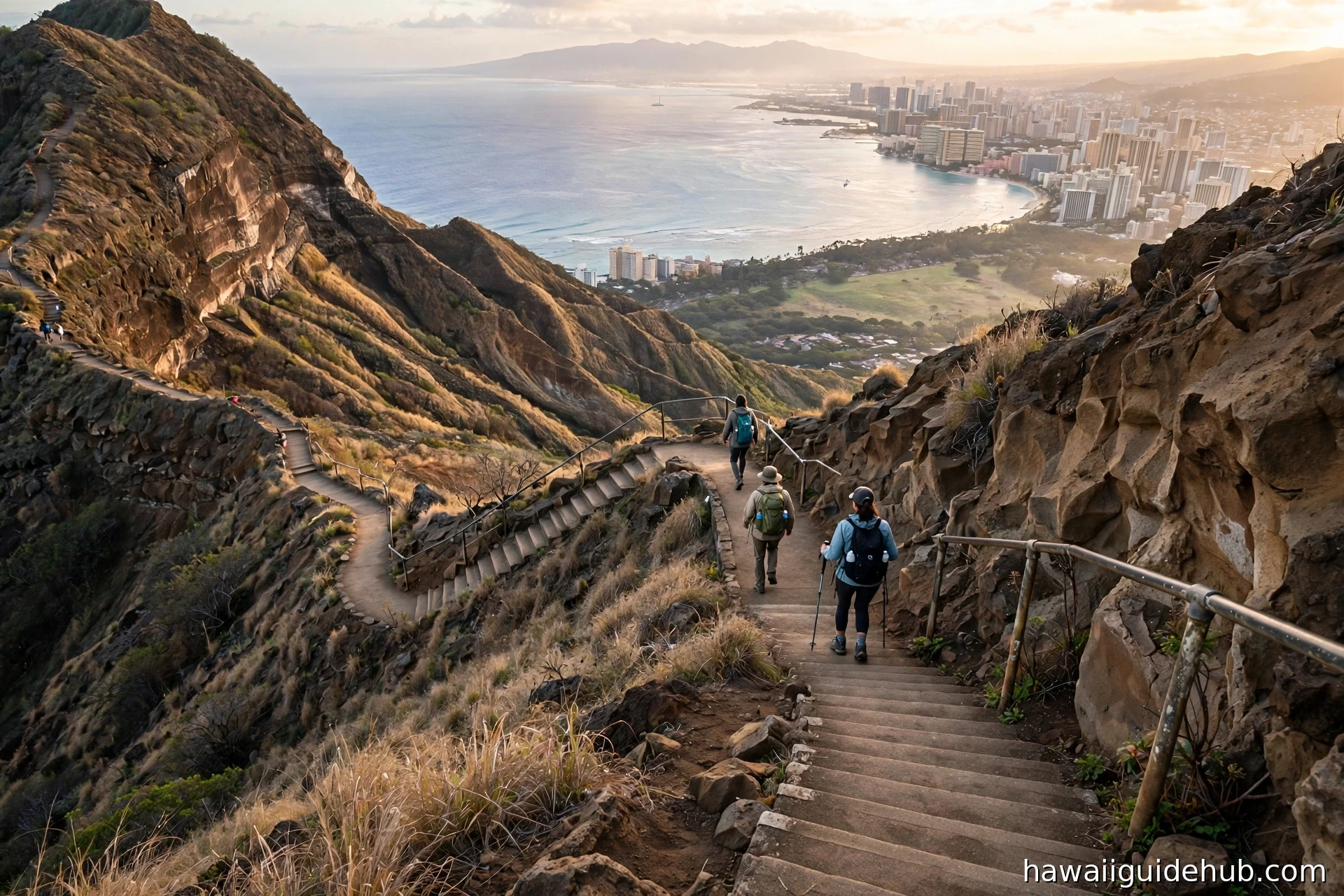
The defining silhouette of Waikīkī is Diamond Head, known in Hawaiian as Lēʻahi. The Diamond Head Summit Trail climbs 1.6 miles round trip through the volcanic crater to a lookout with sweeping views of Waikīkī, Honolulu, and the Pacific. It is the single most popular hike on Oʻahu, and it rewards an early start.
Planning matters here more than it used to. According to the Hawaiʻi Division of State Parks, non-residents must book entry and parking reservations in advance through the state reservation system. Entry is $5 per non-resident, parking is $10 per vehicle, and Hawaiʻi residents enter free with state ID. The monument is open daily from 6 a.m. to 6 p.m., with last entry at 4:30 p.m., and it is closed on Christmas and New Year’s Day. Gates close at 6 p.m. sharp.
The trail itself is moderate, with switchbacks, a tunnel, and two sets of stairs near the top. Allow 1.5 to 2 hours round trip, bring water, and wear real shoes rather than flip-flops. The crater is hot and fully exposed. An early morning reservation means cooler temperatures and thinner crowds, and the sunrise view from the summit batteries is worth the alarm.
Pay Your Respects at Pearl Harbor
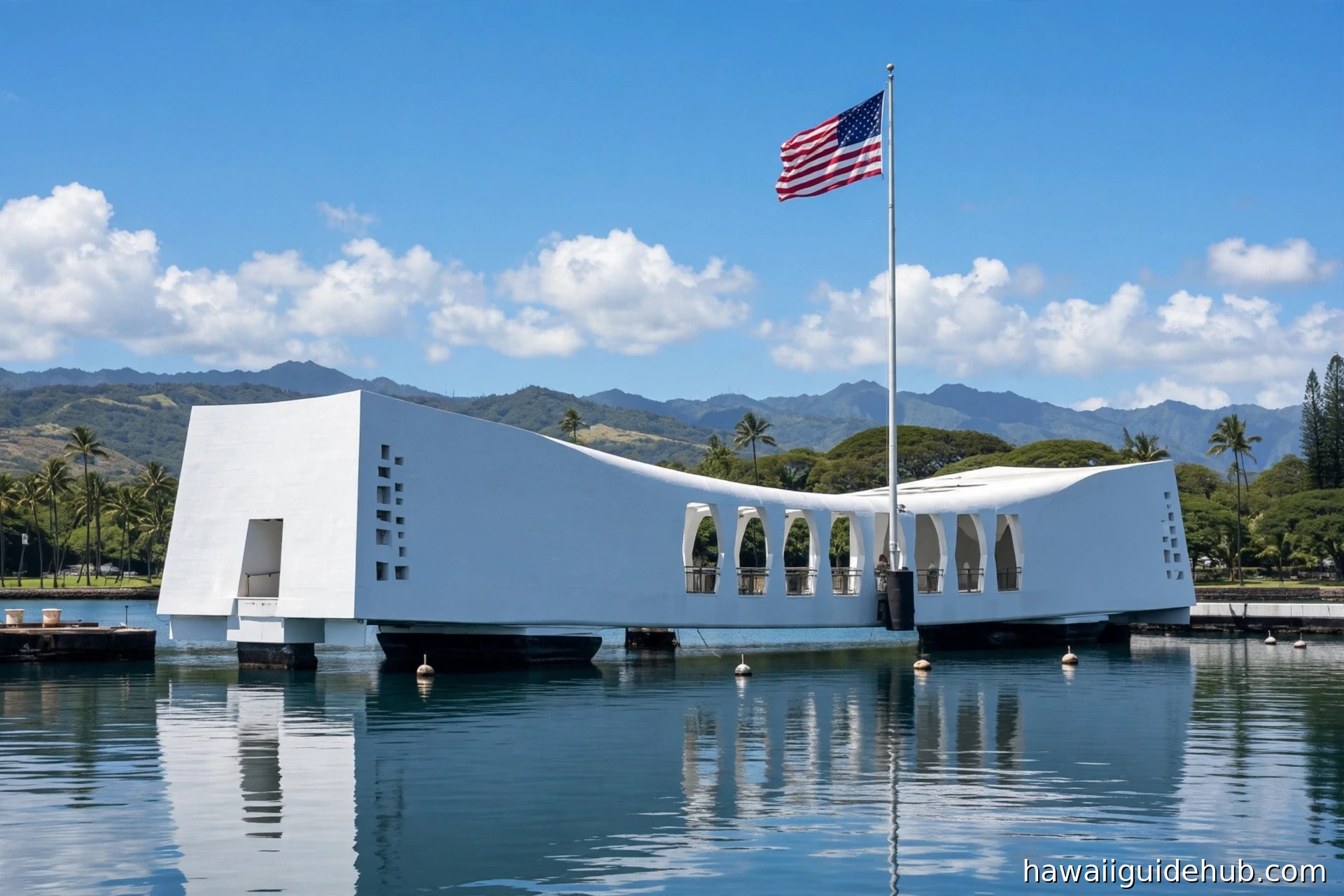
About 20 minutes west of Waikīkī by car, Pearl Harbor National Memorial preserves the history of December 7, 1941. The centerpiece is the USS Arizona Memorial, a white structure spanning the sunken battleship where 1,177 sailors and Marines lost their lives. More than 900 remain entombed in the hull, making this an active war grave as well as a memorial.
The 45-minute USS Arizona Memorial program is free, but every visitor needs a timed ticket reserved through Recreation.gov, which charges a $1 nonrefundable processing fee per ticket. Tickets are released in two windows, eight weeks and 24 hours in advance, both at 3 p.m. Hawaiʻi time, and the roughly 1,300 daily tickets can sell out quickly in peak season. Programs run every 15 minutes starting at 8 a.m., with the last boat departing at 3:30 p.m. Arrive about an hour before your slot.
Note the strict bag policy: bags, purses, and backpacks are not allowed inside, though small wallets, phones, and cameras are fine, and paid bag storage is available outside the visitor center. The memorial grounds, exhibit halls, and theater are free to enter. Plan at least half a day, and consider an early slot, since the Navy can pause boat operations in windy conditions.
Tour ʻIolani Palace, America’s Only Royal Palace
In downtown Honolulu stands ʻIolani Palace, the official residence of Hawaiʻi’s monarchy and the only official royal residence in the United States. Dedicated in 1882 under King Kalākaua, it was home to the king and his successor, Queen Liliʻuokalani, and it is now a National Historic Landmark with meticulously restored interiors.
The Hawaiʻi Division of State Parks notes that guided tours of the palace interior are available by advance reservation through the Friends of ʻIolani Palace, with tour hours generally running Wednesday through Saturday. Walking the grand staircase and the throne room gives real context to the overthrow of the Hawaiian Kingdom in 1893, and the grounds themselves are lovely for a picnic. Check the palace website for current hours and ticket options before you go, as schedules can change.
Go Deeper at Bishop Museum
For the full story of Hawaiʻi beyond the beach, head to the Bishop Museum in the Kalihi neighborhood, a few miles inland from Waikīkī. Founded in 1889 by Charles Reed Bishop in memory of Princess Bernice Pauahi Bishop, it is the largest museum in Hawaiʻi and the state museum of natural and cultural history, holding tens of millions of objects.
The Hawaiian Hall is the highlight, with royal featherwork, carvings, and a full-size sperm whale suspended overhead. The Pacific Hall covers voyaging and migration across Oceania, and the planetarium explores the star knowledge of Polynesian navigators. The museum is generally open daily from 9 a.m. to 5 p.m., closed on Thanksgiving and Christmas, with general admission in the mid-$30s for adults and discounts for youth, seniors, kamaʻāina, and military. Plan two to three hours.
Explore Honolulu’s Neighborhoods
Beyond the big sights, Honolulu’s neighborhoods reward wandering. Chinatown, centered on Nuʻuanu Avenue and Hotel Street, is the city’s oldest commercial district, with lei shops, open markets, herbal stores, and some of the best inexpensive eating in town. The monthly First Friday art walk brings galleries and street life after dark.
Kakaʻako, between downtown and Waikīkī, has transformed into Honolulu’s creative district, with large-scale murals, craft breweries, and the SALT complex of shops and restaurants. It is an easy stop on the way between Waikīkī and downtown, and the murals make for a fun self-guided walk.
For green space, Kapiʻolani Park at the Diamond Head end of Waikīkī is Honolulu’s oldest public park, with the Honolulu Zoo and Waikīkī Aquarium on its edges. Both are solid half-day stops, especially with kids. The park itself is worth an unhurried morning: joggers circle the paths at dawn, tennis players take the public courts, and the bandstand hosts free concerts on select weekends. It is also the natural endpoint of a beach walk, with food trucks often parked along its edges at lunchtime.
The zoo covers 42 acres of tropical gardens at the corner of Kapahulu Avenue and Kalākaua, and it rewards a morning visit, when the animals are most active. On the shoreline at 2777 Kalākaua Avenue stands the Waikīkī Aquarium, founded in 1904 and one of the oldest public aquariums in the United States, with living coral, Hawaiian reef fish, giant clams, and a monk seal habitat in a compact building most visitors tour in one to two hours. It is open daily from 9 a.m. to 4:30 p.m., with admission at $12 for adults and $5 for juniors ages 4 to 12, and children 3 and under free. It doubles as the perfect hot-afternoon or light-rain plan, and it teaches you the names of the fish you saw snorkeling that morning.
Shop Kalākaua Avenue and Ala Moana
Kalākaua Avenue, Waikīkī’s main strip, is lined with shops from souvenir stands to luxury flagships, plus the Royal Hawaiian Center and International Market Place. For serious shopping, Ala Moana Center, about a 15-minute walk or short trolley ride west of Waikīkī, is one of the largest open-air shopping centers in the world, with hundreds of stores and a strong food scene.
For something more local, the Ala Moana Farmers’ Market and the markets in Chinatown offer produce, prepared foods, and crafts. Sunday mornings at the Kapiʻolani Community College farmers’ market are a local institution worth planning around.
Where to Eat Around Waikīkī and Honolulu
You will not go hungry. Waikīkī itself covers everything from beachside plate lunches to high-end hotel dining along Kalākaua Avenue. For local flavor at local prices, head to Kapahulu Avenue just east of the zoo, where you will find long-standing spots for malasadas, poke, and shave ice within a short walk of the beach.
Downtown and Chinatown offer the city’s most interesting dining, from dim sum houses to modern Hawaiʻi regional cuisine. Kakaʻako’s food halls and food truck gatherings are good for sampling widely. If you want to try the foods Hawaiʻi is known for, our guide to must-try local dishes in Hawaii is a good companion read.
Waikīkī After Dark
Waikīkī does not shut down at sunset. The beachside torch-lighting ceremony and hula show at Kūhiō Beach happen several evenings a week and are free. Kalākaua Avenue stays lively with street performers, open-air bars, and live music spilling from hotel lounges.
On Friday evenings, the Hilton Hawaiian Village puts on a fireworks show over the lagoon, visible from much of Waikīkī Beach. Arrive early to claim a spot on the sand, since the central sections fill quickly. For a quieter evening, walk the beach path east toward Kapiʻolani Park as the city lights come on behind Diamond Head. The rooftop and beachfront bars along Kalākaua Avenue offer a middle ground: a drink with the surf audible below and the skyline glowing behind you.
A 3-Day Waikīkī and Honolulu Itinerary
Day one: beach and Diamond Head. Start with an early Diamond Head reservation, cool off with lunch in Kapahulu, then spend the afternoon on Waikīkī Beach with a surf lesson. End with sunset on the sand and dinner along Kalākaua Avenue.
Day two: history day. Drive or bus to Pearl Harbor for a morning USS Arizona Memorial program, then head downtown for ʻIolani Palace in the afternoon and an evening wander through Chinatown.
Day three: culture and neighborhoods. Spend the morning at Bishop Museum, lunch in Kakaʻako among the murals, an afternoon at the Honolulu Zoo or Waikīkī Aquarium, and Friday fireworks if the timing lines up. For first-timers weighing islands, our guide to the best island for first-time visitors helps put Oʻahu in context.
One Perfect Day in Waikīkī, Hour by Hour
Short on time? Compress the neighborhood into one well-spaced day. Start at sunrise on the sand with a swim while the water is glassy and the reef fish are active, then take a surf lesson or snorkel the quieter east end midmorning, before the trade winds freshen. Give the middle of the day to shade: the aquarium’s cool, compact galleries or a picnic under Kapiʻiolani Park’s banyans, with lunch inland on Kūhiō Avenue, where the lines are shorter and the plate lunch is better. In the afternoon choose one anchor only, the zoo if you have children or a second, lazier session at Kūhiō as the light softens. End at the Kūhiō Beach Hula Mound for the free evening show, then sunset from the beach wall and dinner after dark on Kalākaua. Not one hour of it requires a car.
See Waikīkī and Honolulu on Video
Waikīkī and Honolulu FAQs
How many days do you need in Waikīkī?
Three full days covers the essentials: one beach and Diamond Head day, one Pearl Harbor and downtown history day, and one museum and neighborhoods day. Add days for North Shore or windward side trips using our complete Oʻahu island guide.
Is Waikīkī safe for swimming?
Generally yes. The nearshore waters are usually calm, and lifeguards staff the main sections. As with anywhere in Hawaiʻi, check surf conditions, never swim alone, and stay near the lifeguard towers. Winter swells can raise surf on south shores.
Do you need a car in Waikīkī?
Not for Waikīkī itself, which is very walkable, and the Waikīkī Trolley covers the main sights. A car helps for Pearl Harbor, the North Shore, and the windward side. If you do drive, expect to pay for parking at most Waikīkī hotels.
What is the best time of year to visit Waikīkī?
Waikīkī is pleasant year-round. Winter brings bigger surf and whale season, summer brings calmer water and warmer temperatures. For hiking beyond Diamond Head, see our guide to outdoor adventures in Hawaii.
Can you walk from Waikīkī to Diamond Head?
Yes, it is about a 30 to 40 minute walk from central Waikīkī to the Diamond Head trailhead. Many visitors walk or take the trolley, since crater parking requires a reservation and fills early.
What is on the windward side of Oʻahu?
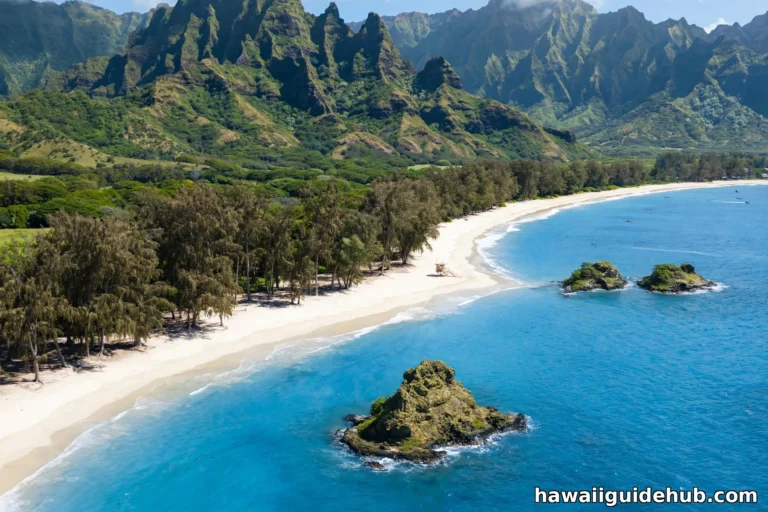
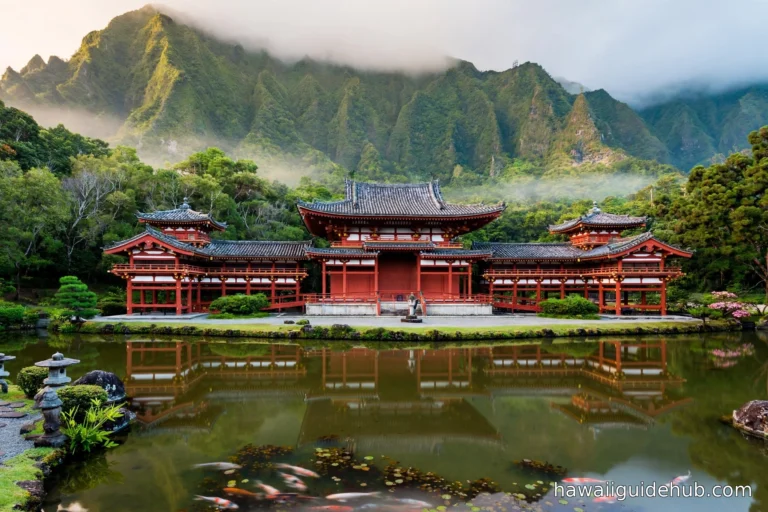
The windward (east) coast holds Kailua and Lanikai beaches, the Byodo-In Temple, and scenic drives. Read our explainer on the windward side of Oʻahu before planning a day trip.
Waikīkī and Honolulu pack beaches, hikes, history, and city life into a compact area you can explore largely on foot. Book the reservation-only sights early, build in beach time between the museums and memorials, and leave at least one evening free for the sand. It is the classic Hawaiʻi base for a reason.