
Kōloa, Hawaiʻi
On This Page
Kōloa at a Glance
Kōloa is a small historic town on Kauaʻi’s South Shore, set a few miles inland from the sunny beaches of Poʻipū. With its plantation-era storefronts, shade trees, and easygoing pace, Kōloa feels like a place time forgot in the best possible way. Visitors often pass through on their way to the beach, but the town rewards those who stop: it is one of the most historically significant towns in Hawaiʻi, the birthplace of the islands’ sugar industry, and the starting point of the Kōloa Heritage Trail.
Kōloa sits at the gateway between the dry, sunny South Shore and the green farmland of the island’s interior. The town center is compact enough to explore on foot in under an hour, centered on Kōloa Road and Maluhia Road. Most visitors arrive for the history and the shopping, then stay for the relaxed atmosphere that the resort areas nearby simply do not have. Unlike Poʻipū, Kōloa is a working town where locals shop, eat, and run errands. That authenticity is part of its charm.
The town’s location makes it a natural base for exploring the South Shore. Poʻipū’s beaches are a short drive away, Spouting Horn and the Kōloa Heritage Trail are close by, and the island’s main highway connects Kōloa to Līhuʻe in about 20 minutes. Travelers who want sunshine without resort prices often look at Kōloa as a place to stay, and day visitors find it an easy stop between the airport and the coast.
What sets Kōloa apart from other small Hawaiian towns is its history. In 1835, the first successful commercial sugar plantation in the Hawaiian Islands was established here, launching an industry that would shape Hawaiʻi’s economy, immigration, and land use for the next 150 years. Old Kōloa Town preserves the look of a plantation-era commercial district, and several historic structures remain standing. For visitors interested in how Hawaiʻi became what it is today, Kōloa is essential.
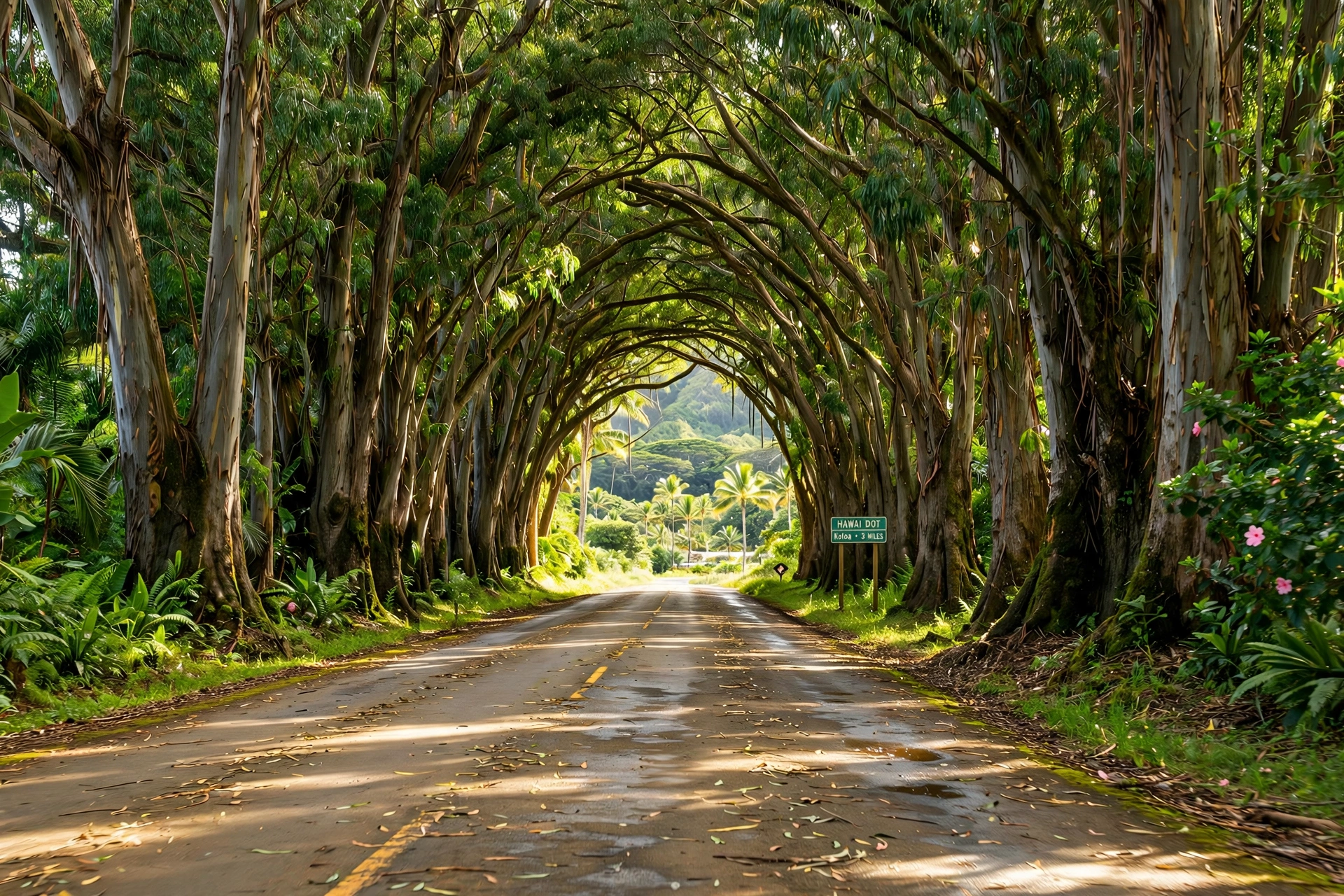
Kōloa also works well as a practical stop. Travelers driving between Līhuʻe and the South Shore resorts pass right through town, and the tree-tunnel drive on Maluhia Road is worth slowing down for on its own. The town has gas, groceries, and services that can be harder to find near the resort areas, making it a useful place to stock up before heading to the beach. Many visitors plan their South Shore days around a Kōloa stop: morning at Poʻipū Beach, lunch in Old Kōloa Town, and an afternoon drive along the Heritage Trail.
History: Hawaiʻi’s First Sugar Plantation
Before sugar, the Kōloa area was known for its fertile land and reliable water from the upland streams. Ancient Hawaiians farmed the region and lived in the area’s lowland valleys. The name Kōloa is said to refer to a native duck, the koloa maoli, that once inhabited the region’s wetlands. The landscape that visitors see today, a mix of pasture, cane fields in the distance, and small-town streets, was shaped almost entirely by the plantation era that began in the 1830s.
In 1835, three partners, Ladd & Company, leased land from King Kamehameha III and established the first commercially successful sugar plantation in the Hawaiian Islands at Kōloa. Earlier attempts at sugar production on other islands had failed, but the Kōloa venture succeeded, and its success triggered a rush of plantation development across the islands. Within a few decades, sugar dominated Hawaiʻi’s economy and drove the immigration waves that brought workers from China, Japan, Portugal, Korea, the Philippines, and elsewhere. The multicultural society that defines modern Hawaiʻi traces its roots directly to the plantation system that started here.
As the plantation grew, Kōloa grew with it. The town became a commercial center serving plantation workers and their families, with stores, a post office, and social halls lining the main street. The plantation-era buildings that give Old Kōloa Town its character date from this period. Sugar remained the economic backbone of the region for more than a century, and the Kōloa Sugar Company operated until 1972, when the last plantation on Kauaʻi’s South Shore closed.
The end of sugar could have emptied Kōloa, as it did some plantation towns. Instead, the town adapted. Tourism growth in nearby Poʻipū brought new life to the old commercial district, and historic buildings were preserved and repurposed as shops, galleries, and restaurants rather than being demolished. Today, Kōloa balances its historical identity with a functioning modern town, and the Kōloa Heritage Trail, a self-guided driving and walking tour, connects the town’s historic sites with landmarks across the South Shore.
Visitors interested in the plantation era should know that Kōloa’s story is not a simple one. The sugar industry brought prosperity and modern infrastructure, but it also brought the overthrow of the Hawaiian Kingdom, the loss of Hawaiian land, and harsh working conditions for immigrant laborers. Local historical interpretation presents this complexity honestly, and visitors who take time to read the Heritage Trail markers will come away with a fuller understanding of Hawaiʻi’s past.
The plantation workforce shaped Kōloa’s cultural character in ways still visible today. Workers arrived from China, Japan, Portugal, Korea, the Philippines, and Puerto Rico, and their descendants remain part of the South Shore community. The food traditions they brought, from Portuguese sweet bread to Filipino plate lunch staples, are woven into the local dining scene. Annual cultural events in the broader Kōloa-Poʻipū area, including plantation-era celebrations and multicultural festivals, reflect this layered heritage. Visitors who attend a local festival or community event will see living history rather than a museum display.
Walking through Kōloa with an eye on its history changes the experience entirely. The wide main street was laid out for plantation commerce, the old wooden buildings were designed for a tropical climate before air conditioning, and the shade trees were planted deliberately to cool the town center. Even the town’s layout, with worker housing set back from the commercial core, tells the story of a company town. The Heritage Trail markers explain these details at each stop, and taking the time to read them turns a casual stroll into a genuine history lesson.
Exploring Old Kōloa Town
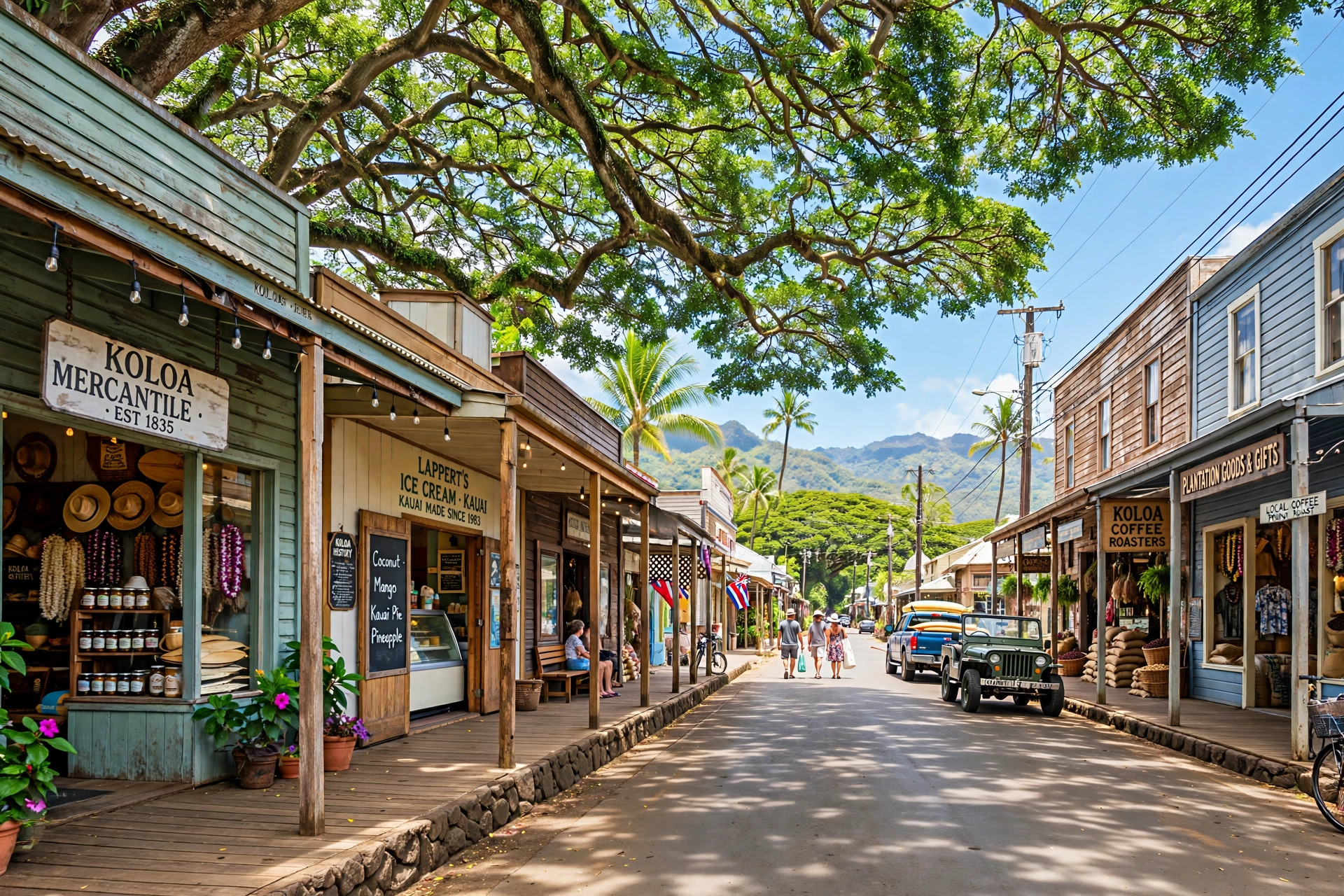
Old Kōloa Town is the historic commercial district at the heart of modern Kōloa, centered on the intersection of Kōloa Road and Maluhia Road. The district’s plantation-era buildings, many dating to the late 1800s and early 1900s, have been preserved in their original style with wooden facades, covered walkways, and false fronts that recall the American frontier towns of the same era. The whole district can be walked in 30 to 45 minutes, and it is worth slowing down to read the historical markers and notice the architectural details.
The shops in Old Kōloa Town lean toward locally made goods: Hawaiian crafts, art, clothing, and souvenirs that go beyond the generic resort-shop inventory. Several galleries showcase the work of Kauaʻi artists, and the bookshops and specialty stores give the district a character distinct from the mall-style shopping elsewhere on the South Shore. Prices are generally reasonable, and browsing is unhurried. The district also hosts a weekly farmers market where local growers sell tropical fruit, vegetables, flowers, and prepared foods.
Historic Buildings
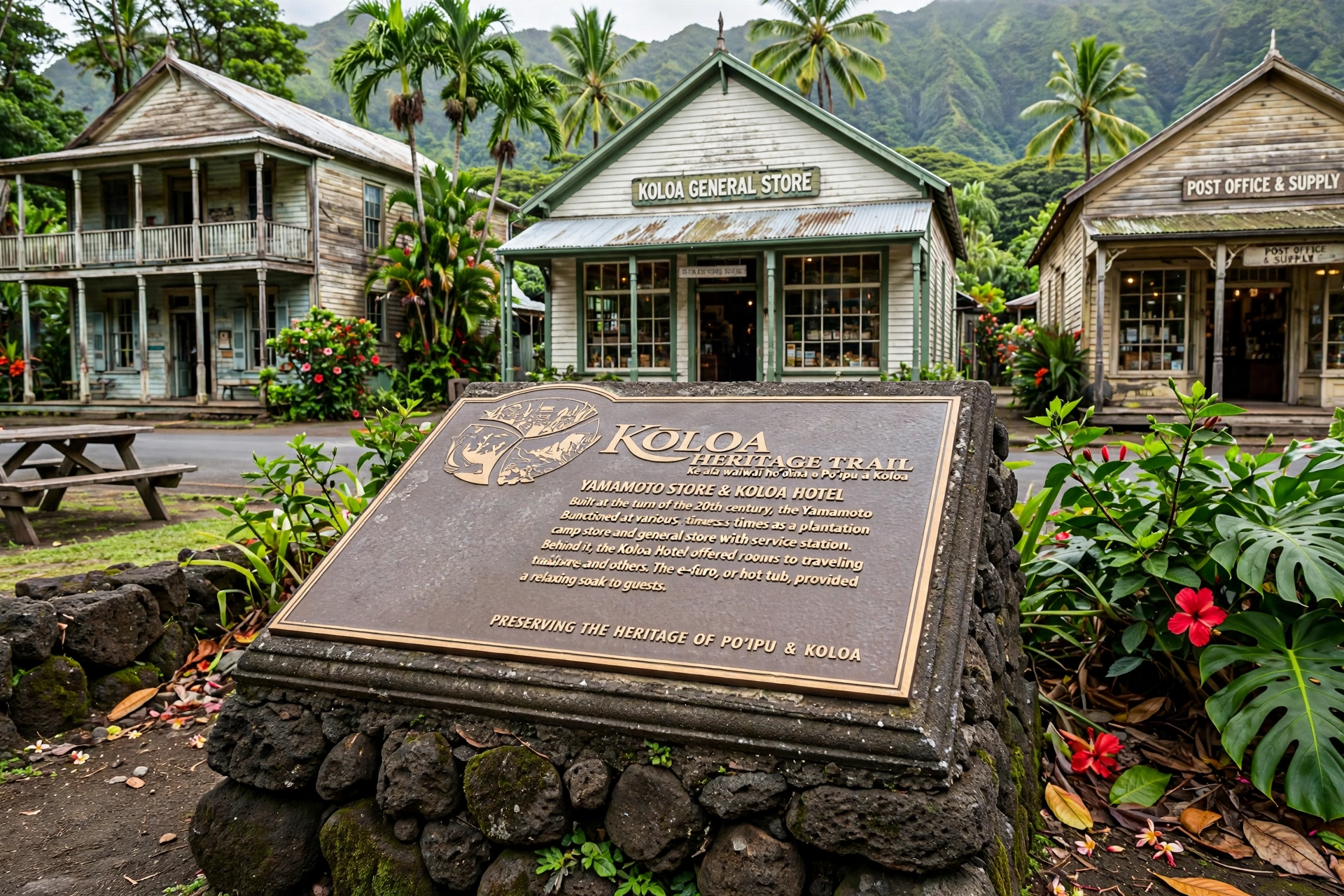
Several of the town’s buildings are historically significant in their own right. The old Kōloa School, the plantation-era storefronts, and the former social halls each have stories tied to the sugar era. The Kōloa Heritage Trail begins in the town and includes markers at key sites, with a trailhead monument that orients visitors to the full route. Picking up the trail guide before exploring gives the buildings context that makes the walk far more rewarding.
The town’s large monkeypod trees, planted during the plantation era, are landmarks in their own right. Their broad canopies shade the main street and the town’s central gathering areas, and they are among the oldest and largest trees on the South Shore. In the late afternoon, the light filtering through the monkeypod canopy over the old storefronts is one of Kauaʻi’s prettiest small-town scenes.
Dining in Old Kōloa Town
Kōloa’s dining scene is small but solid, built around local ingredients and the plantation-town setting. The town has a mix of casual lunch spots, coffee houses, and sit-down restaurants serving everything from plate lunch and poke to pizza and contemporary island cuisine. Many establishments emphasize locally sourced produce and seafood. Dining here tends to be more affordable and more local in character than the resort restaurants in Poʻipū, and several spots are favorites of South Shore residents.
For a quick stop, the town’s shave ice stands, bakeries, and coffee shops make easy additions to a walking tour. Travelers passing through on the way to or from the South Shore beaches often stop in Kōloa for lunch, and the town handles the midday crowd without losing its relaxed feel.
Kōloa also comes alive for community events throughout the year. The town hosts plantation-era celebrations, holiday parades, and cultural festivals that draw residents from across the South Shore. These events offer visitors a genuine look at local life, with food booths, live music, and craft vendors that go well beyond the tourist experience. Checking the local event calendar before a visit can turn a routine stop into a memorable one, especially during the winter festival season when the town decorates its historic storefronts.
Nearby Attractions
Poʻipū Beach Park
Poʻipū Beach Park, about 10 minutes south of Kōloa, is the South Shore’s best-known beach and one of the most popular swimming and snorkeling spots on Kauaʻi. The beach’s protected cove, lifeguard station, and adjacent facilities make it a favorite for families. Hawaiian monk seals frequently haul out on the sand here, and the beach is also a good spot for spotting sea turtles. The park has restrooms, showers, picnic tables, and a grassy area, and the nearby resort shops and restaurants are an easy walk away.
Spouting Horn
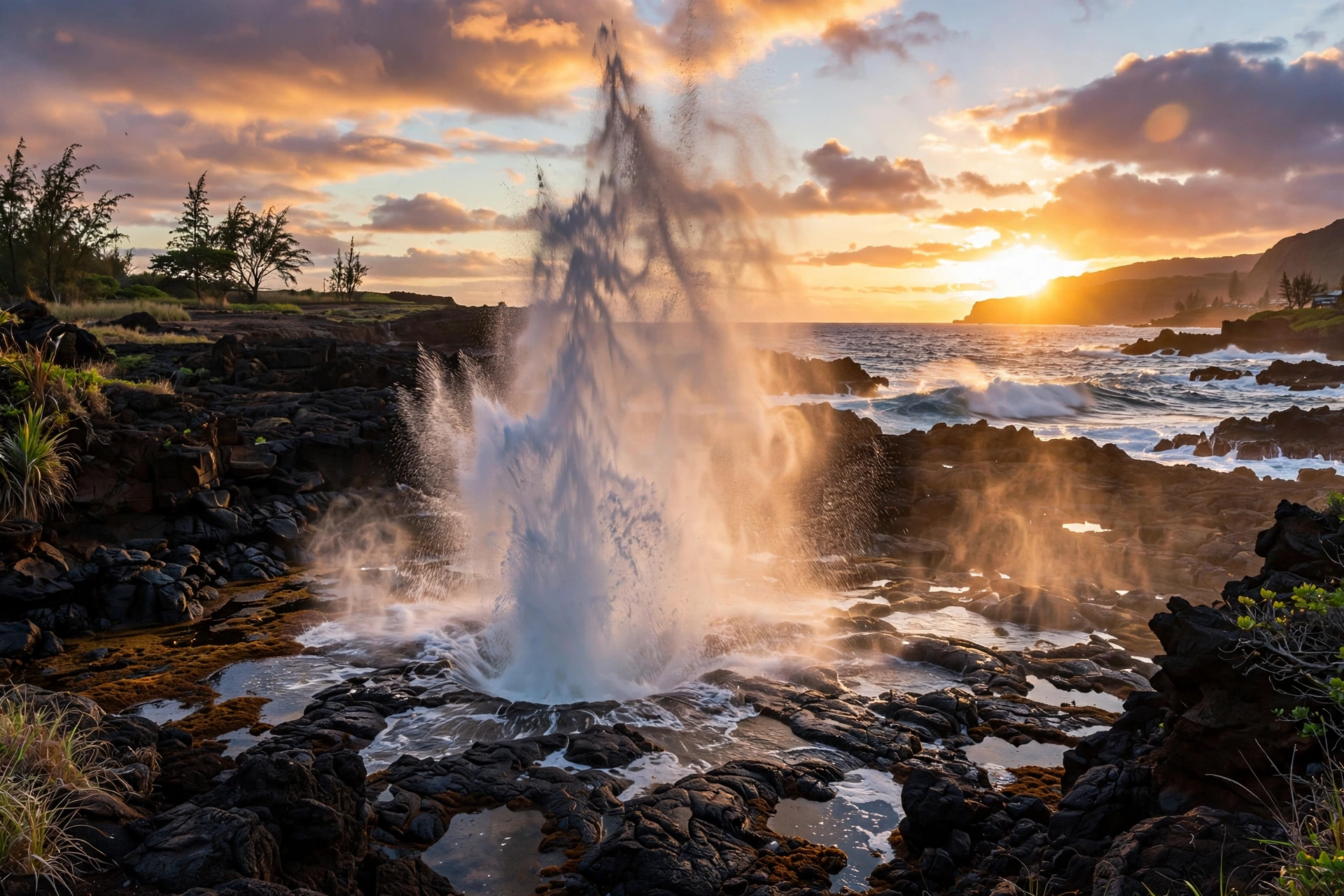
Spouting Horn, a natural blowhole on the rocky coastline near Poʻipū, is one of Kauaʻi’s most visited natural attractions and a stop on the Kōloa Heritage Trail. Ocean swells force water through a lava tube and shoot it skyward, sometimes reaching 50 feet or more on big surf days. The overlook is fenced for safety, and the sound of the blowhole, said in Hawaiian legend to be the moaning of a trapped moʻo (lizard), carries across the parking area. The adjacent shops sell local crafts and snacks, and the sunset views from the point are excellent.
The Kōloa Heritage Trail
The Kōloa Heritage Trail is a 10-mile self-guided tour connecting 14 historic sites between Kōloa and the Poʻipū coast. The trail’s numbered stone markers trace the region’s history from ancient Hawaiian fishponds and the 1835 sugar plantation through the missionary era and into the modern resort age. Visitors can drive the full route in about two hours with stops, or walk individual segments. The trail guide, available at the trailhead monument in Kōloa and at local shops, is worth picking up before starting.
Moir Gardens
The Moir Gardens, located within the grounds of a Poʻipū resort near the coast, are among the finest botanical gardens on Kauaʻi’s South Shore. The gardens were created in the 1930s and feature cactus and succulent collections, orchids, bromeliads, and rare tropical plants from around the world. The gardens are open to the public, and the peaceful pathways make a pleasant contrast to the beach crowds nearby. Admission policies have varied over the years, so visitors should confirm current access before planning a visit.
Prince Kūhiō Park
Prince Kūhiō Park, a small county park near the coast, preserves the birthplace and childhood home site of Prince Jonah Kūhiō Kalanianaʻole, a Hawaiian prince and later Hawaiʻi’s delegate to the U.S. Congress. The park includes a monument to the prince and interpretive signs about his life and legacy. It is a quiet, reflective stop that adds a layer of Native Hawaiian history to the South Shore visit, and it is rarely crowded.
Mahaulepu Heritage Trail
For visitors who want to combine history with a coastal walk, the Māhāʻulepū Heritage Trail runs along the undeveloped coastline east of Poʻipū. The trail passes ancient Hawaiian sites, lithified sand dunes, and some of the island’s most dramatic coastal scenery. The full hike to Māhāʻulepū Beach takes about two hours round trip. The trail is exposed and can be hot, so morning is the best time to go, with water and sun protection.
Baby Beach and Kōloa Landing
Closer to Kōloa, the small coves along the coast offer quieter alternatives to Poʻipū’s busy main beach. Baby Beach, a shallow protected cove near the Poʻipū area, is popular with families with young children because of its calm, knee-deep water. Kōloa Landing, a historic small-boat harbor, was once the shipping point for the region’s sugar and remains an interesting historical stop with shore diving nearby. These smaller coastal spots reward visitors who explore beyond the main resort beaches.
Waimea Canyon Day Trips
Kōloa’s central South Shore location makes it a reasonable base for a Waimea Canyon day trip. The drive to Waimea town takes about 45 minutes, and the canyon lookouts are another 20 minutes beyond that. Many visitors pair a morning in Kōloa with an afternoon drive to the canyon, returning to the South Shore for sunset. The contrast between the dry canyon country and the lush South Shore in a single day shows off Kauaʻi’s remarkable variety.
Where to Eat and Stay
Kōloa’s dining options center on Old Kōloa Town, where casual restaurants, coffee shops, and lunch counters serve visitors and locals alike. The food scene emphasizes fresh, local ingredients, and several establishments have built loyal followings among South Shore residents. For more variety, the Shops at Kukuiʻula in Poʻipū, a short drive away, offer additional restaurants ranging from casual to upscale. Grocery stores in Kōloa and nearby Kukuiʻula make self-catering easy for visitors staying in vacation rentals.
Lodging in Kōloa itself is limited to a handful of small inns, bed and breakfasts, and vacation rentals, which tend to be quieter and more affordable than the Poʻipū resorts. Most visitors who want beachfront luxury stay in Poʻipū and visit Kōloa for meals and shopping. Travelers choosing Kōloa as a base get a more local experience and easy access to both the South Shore beaches and the island’s interior. As with all Hawaiʻi lodging, booking well in advance is wise, especially for the winter high season and holiday periods.
Getting to Kōloa
Kōloa is located on Kauaʻi’s South Shore, about 12 miles southwest of Līhuʻe Airport. The drive takes roughly 20 to 25 minutes via Kaumualiʻi Highway (Highway 50) and Maluhia Road, the scenic tree-tunnel road that is itself one of the island’s most photographed drives. A rental car is the most practical way to reach Kōloa and explore the surrounding area, as public transit on the South Shore is limited.
The Kauaʻi Bus system does serve the Kōloa and Poʻipū area with limited routes, but schedules are infrequent and oriented toward commuters rather than visitors. Travelers relying on the bus should check current routes and timetables in advance. Rideshare services operate on Kauaʻi but can be scarce outside the main tourist corridors, so visitors should not count on them for flexible sightseeing.
Parking in Old Kōloa Town is generally easy, with street parking and small lots near the main shopping areas. During the weekly farmers market and holiday events, the town center can fill up, but parking is rarely a serious problem. The town is flat and walkable, and most visitors park once and explore on foot.
Frequently Asked Questions
Where is Kōloa, Hawaiʻi?
Kōloa is a historic town on Kauaʻi’s South Shore, a few miles inland from Poʻipū Beach and about 20 minutes southwest of Līhuʻe Airport. It sits at the junction of Kōloa Road and Maluhia Road, the scenic tree-tunnel drive.
Why is Kōloa historically important?
Kōloa was the site of Hawaiʻi’s first successful commercial sugar plantation, established in 1835. The plantation launched an industry that shaped the islands’ economy, immigration, and land use for 150 years, making Kōloa one of the most historically significant towns in Hawaiʻi.
How much time do I need in Old Kōloa Town?
Plan 1 to 2 hours to walk the historic district, browse the shops and galleries, and read the Heritage Trail markers. Add more time if you want to eat lunch or visit the farmers market. Kōloa works well as a half-day stop combined with Poʻipū’s beaches.
Is Kōloa worth visiting if I’m staying in Poʻipū?
Yes. Kōloa is a 10-minute drive from Poʻipū and offers a completely different experience: a genuine historic town with local shops, galleries, and restaurants at prices well below the resort area. It is also the starting point of the Kōloa Heritage Trail.
What is the Kōloa Heritage Trail?
The Kōloa Heritage Trail is a 10-mile self-guided tour of 14 historic sites between Kōloa and the Poʻipū coast, marked by numbered stone monuments. It covers ancient Hawaiian sites, the 1835 plantation, the missionary era, and the modern resort age. Allow about two hours with stops.
Can you swim at beaches near Kōloa?
Yes. Poʻipū Beach Park, about 10 minutes away, is one of Kauaʻi’s best swimming and snorkeling beaches, with a lifeguard station and protected cove. Other nearby beaches vary in conditions, so check with lifeguards about currents before swimming at unguarded spots.
When is the Kōloa farmers market?
Kōloa hosts a weekly farmers market featuring local produce, tropical fruit, flowers, and prepared foods. Market days and hours can change, so visitors should confirm the current schedule locally before planning around it.
Is Kōloa a good base for exploring Kauaʻi?
Kōloa works well as a South Shore base, with easy access to Poʻipū’s beaches, Spouting Horn, and the Heritage Trail, plus reasonable drives to Waimea Canyon and the North Shore. Lodging in town is quieter and often more affordable than Poʻipū, though options are limited.
Related Guides
- Kauaʻi Towns : more historic towns across the Garden Island
- Kauaʻi beaches : Poʻipū and the island’s best shoreline
- Kauaʻi History : the island’s deeper past
- Hawaiʻi Towns : notable towns across all islands
- Best Time to Visit Hawaiʻi : planning your South Shore trip
- Hawaiʻi Map : finding Kōloa on the island
A Final Note
Kōloa rewards visitors who look past the beach and take an interest in how Hawaiʻi became what it is. The town’s plantation-era streets hold the story of an industry that transformed an island kingdom, and the Heritage Trail connects that story to the land and sea around it. Walk the old town slowly, read the markers, and stop for lunch where the locals eat. Kōloa is small, but its history is as large as Hawaiʻi’s.