Hawaiian Fishponds: Ancient Aquaculture That Still Works

Long before aquaculture was an industry, Hawaiians engineered it into the coastline: stone-walled fishponds that raised mullet and milkfish without feed, fertilizer, or pollution. At European contact, nearly 500 loko ia produced an estimated 2 million pounds of fish a year. By 1994, six still operated. Today, communities are rebuilding the walls stone by stone. This guide explains how Hawaiian fishponds worked, the three designs, the genius of the makaha gates, and the restoration revival.
This is the single complete guide to Hawaiian fishponds. It covers what loko ia are, the three pond types, the makaha gate mechanism, Heeia and the great ponds, the collapse, the restoration movement, visiting and volunteering, and FAQs. Everything about Hawaiian fishponds lives on this one page.
What a Loko Ia Is
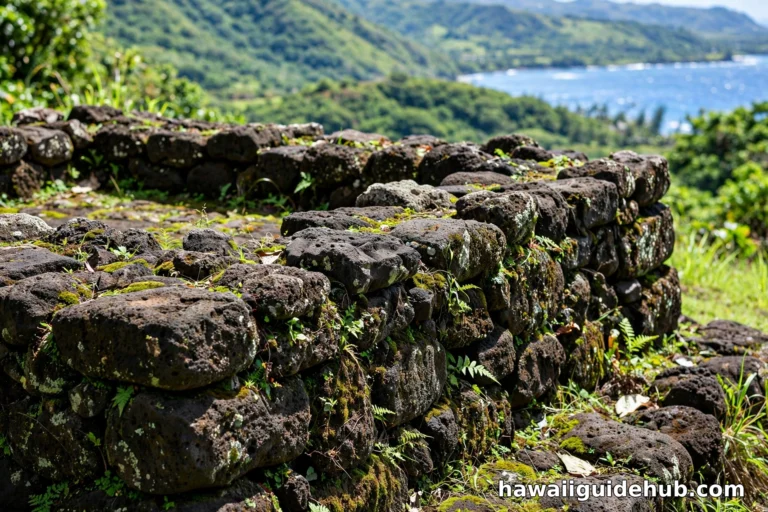
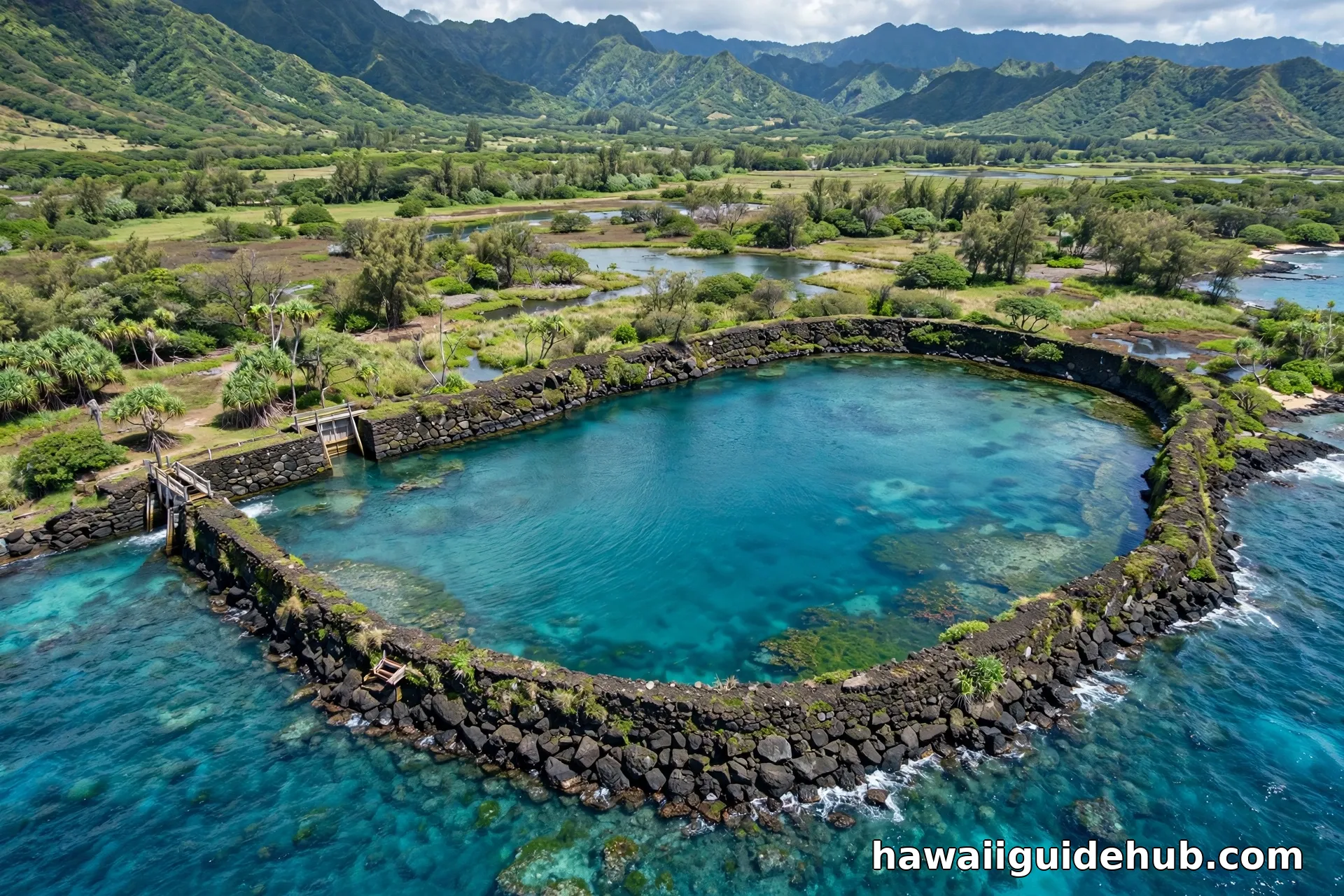
A loko ia is an enclosed coastal fishpond: a stone wall (kuapa) built in the shallows, creating a brackish basin where fish are raised and harvested. Fresh water from streams mixes with seawater through the wall’s gates, creating the brackish conditions mullet and milkfish love. The ponds were not just food sources but engineered ecosystems: nutrient-rich stream water fed plankton, plankton fed the fish, and the pond’s outflow enriched the surrounding reef. Research has shown restored ponds increase fish stocks in nearby waters, acting as nurseries. The Hawaiians built aquaculture that fed the reef instead of polluting it.
Three Fishpond Designs
| Type | Hawaiian name | How it works | Example |
| Seawall pond | Loko kuapa | Stone wall encloses reef flat; gates in the wall | Heeia (Oahu), 88 acres |
| Landside pond | Loko umeiki | Walled basin fed by stream, near shore | Several Kona ponds |
| Inland pond | Loko wai | Freshwater pond, often spring-fed | Historic Oahu ponds |
The Makaha: The Gate the Fish Outgrow
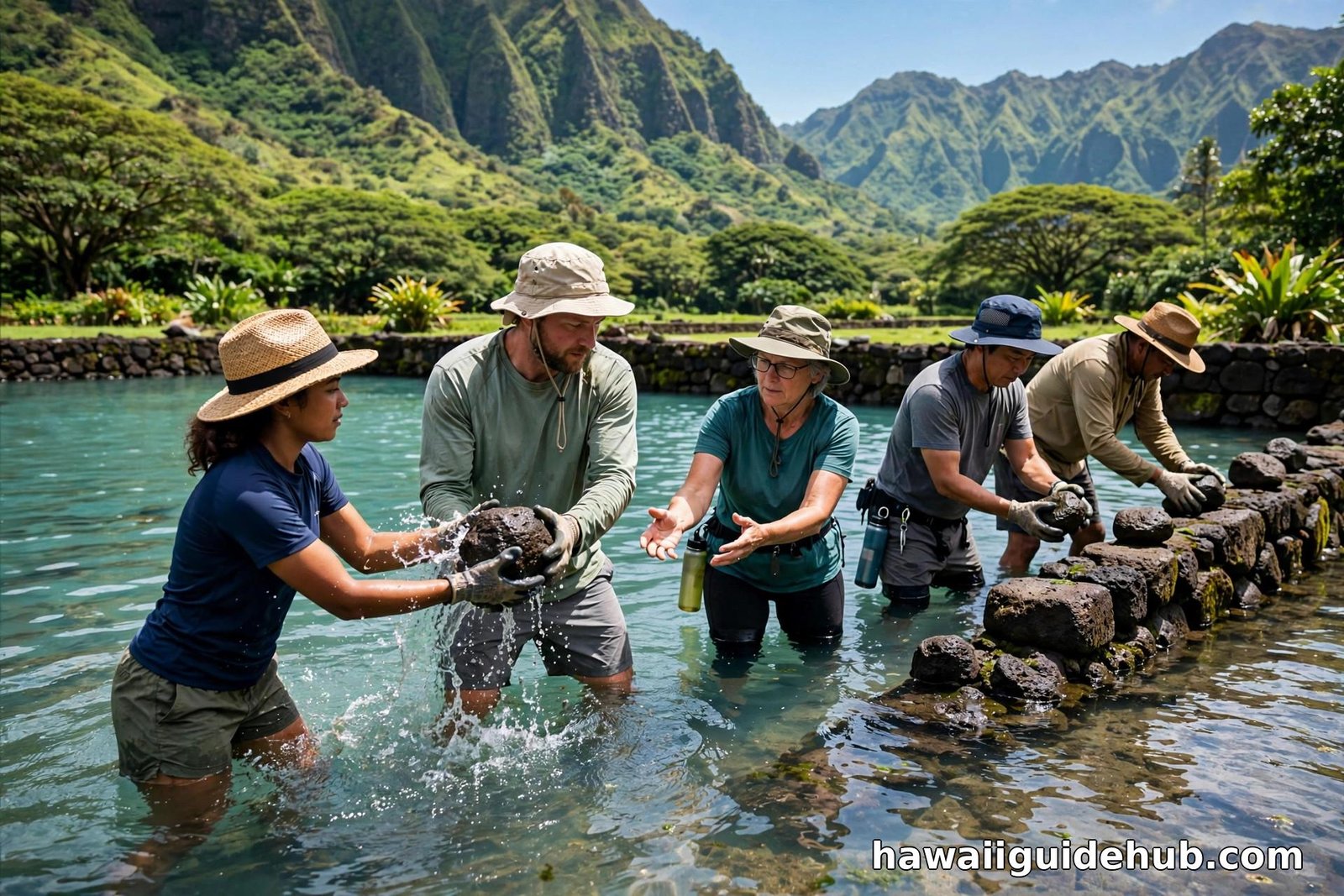
The system’s genius is the makaha, the sluice gate. A narrow channel through the wall holds a grate of vertical wooden slats spaced about a finger apart, left open on purpose. The incoming tide carries juvenile fish through the gaps; they feed and grow inside; within months their bodies are thicker than the gap, and they cannot leave. The tide keeps flowing both ways, flushing the pond, while the grown fish stay trapped by their own size. It is a passive sorting machine: no nets, no feed, no labor beyond maintaining the wall and the grate. During spawning migrations, keepers set nets on the pond side and watched the big fish trap themselves trying to reach the sea.
Heeia: The Great Pond
Heeia Fishpond on Oahu’s windward coast is the flagship: 88 acres enclosed by a kuapa wall, 600 to 800 years old, stewarded by the nonprofit Paepae o Heeia. The restoration has been heroic: removing invasive mangrove that choked the pond, rebuilding the wall stone by stone with community workdays, reducing sedimentation, and restocking native fish. Thousands of volunteers have passed stones hand to hand along the wall. Heeia is now a working pond again, producing fish for the community and serving as a classroom for thousands of students: the loko ia as school, food source, and cultural anchor.
Molokai: The Fishpond Island
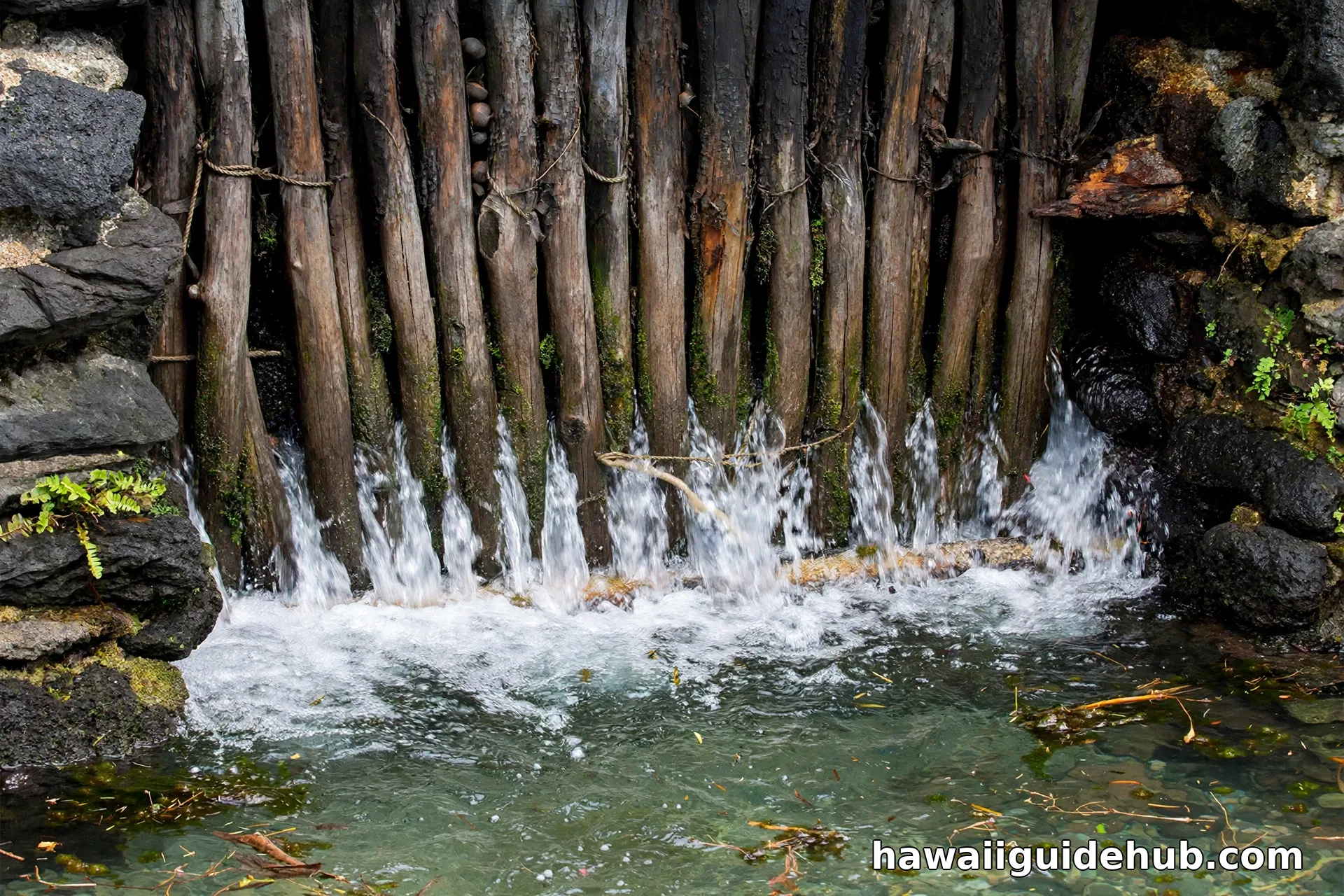
Molokai’s south shore holds the densest concentration of fishponds: dozens of loko kuapa strung along the calm coast, the island’s nickname Aina Momona, land of plenty, earned by this aquaculture. Kaloko-Honokohau National Historical Park on the Big Island preserves three pond styles in one place. On Maui, the nonprofit Aoao O Na Loko Ia O Maui restores Kalepolepo (Koieie) Fishpond in Kihei with volunteers and skilled stonemasons. Each island’s ponds reflect its coastline: the designs vary, but the makaha principle is universal.
The Collapse
The ponds died by a thousand cuts. The Mahele privatized the shoreline; plantation agriculture diverted the streams that fed the ponds’ brackish mix; introduced mangrove choked the basins; development filled ponds for harbors and housing, Maunalua Bay’s great pond, once Oahu’s largest, vanished under suburbia. Without maintenance, the kuapa walls crumbled and the makaha gates rotted. By 1994, six ponds still operated out of hundreds. The knowledge nearly went with them: but the walls remained, and walls can be rebuilt.
The Restoration Revival
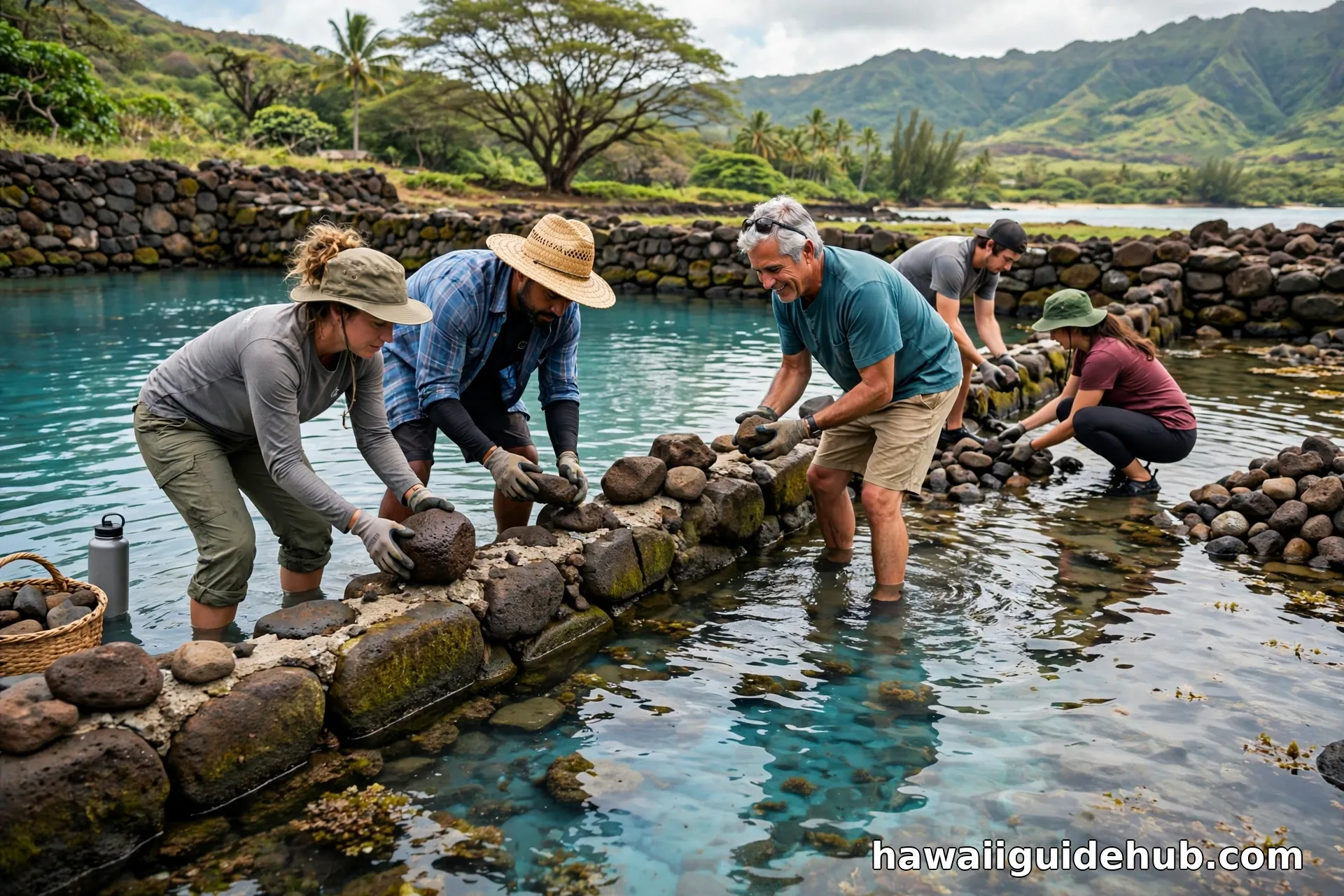
The revival is one of Hawaii’s great community movements. At Heeia, Paepae o Heeia runs regular community workdays: volunteers clear mangrove, pass stones, and learn the pond’s ecology. On Molokai, practitioners like Noelani Lee’s teams manage ponds with traditional methods, teaching that the work heals people as well as land. University of Hawaii research confirms what practitioners knew: restored ponds boost local fish production and can help model climate-resilient aquaculture. The ponds are being rebuilt not as museums but as food systems: the goal is working loko ia feeding communities again, as they did for centuries.
Visiting and Volunteering
Heeia Fishpond welcomes visitors on tours and workdays: check Paepae o Heeia’s schedule. Kaloko-Honokohau’s ponds are visible on the park’s coastal trails. On Molokai, pond visits run through community organizations. Come prepared to work: the workdays are real labor, hauling stone and clearing mangrove, and they are the point. What to know: the ponds are cultural sites, not swimming holes; follow the stewards’ guidance; and understand that every stone you place is a continuation of an 800-year project. Wear reef-safe sun protection and tabis or sturdy water shoes, bring drinking water, expect mud, and plan to learn more in one morning of wall work than in a week of reading about it, because the pond teaches through the hands first and the head second, which is exactly how the kiai learned it, generation after patient generation, stone after stone. For island planning, see our Kauai guide and volcanoes guide.
The Fish: Mullet and Milkfish
Two species dominated the ponds: the striped mullet (amaama) and the milkfish (awa). Both thrive in brackish water, both feed low on the food chain on plankton and algae, and both were prized table fish. The mullet’s life cycle fit the pond perfectly: juveniles entered through the makaha, grew fat on the pond’s plankton, and were harvested at size. The ponds produced fish without a single pound of feed: the stream’s nutrients grew the plankton, the plankton grew the fish. It was aquaculture with an energy return modern fish farming cannot touch, because the sun and the stream did all the work.
Building the Kuapa: Dry-Stack Engineering
The kuapa walls are dry-stack masonry: stones fitted without mortar, built to withstand surf for centuries. The walls at Heeia stretch for thousands of feet, enclosing 88 acres; Molokai’s walls run for miles along the south shore. Construction was communal: thousands of people passing stones hand to hand, the same laulima labor that built the auwai and the heiau. The walls breathe: water flows through the gaps, and the structure flexes with the waves instead of fighting them. Modern engineers studying the walls note their resilience: mortar would have cracked, but the dry stack moves and settles, surviving storms that destroy concrete.
Ponds as Nurseries: The Ecological Science
University of Hawaii research has confirmed what the pond keepers knew: loko ia function as fish nurseries, boosting stocks in surrounding waters. Juvenile fish shelter in the ponds, protected from predators; nutrients from the streams feed the food web; and the pond’s outflow carries productivity to the reef. The ponds were not just farms but ecosystem infrastructure: each one a node of productivity in the coastal system. This is why the restoration matters beyond culture: rebuilding ponds rebuilds the reef’s productivity, a marine protected area that feeds people instead of just restricting them.
The Maunalua Loss
The starkest symbol of the collapse is Maunalua Bay on Oahu: once home to the island’s largest fishpond complex, a vast engineered seascape of walls and gates. In the 20th century it was filled for housing development: the ponds buried under suburbia, the walls under streets. It is the cautionary tale the restoration movement carries: what was lost was not just fish production but a working landscape centuries in the making, erased in a decade. Every restored pond is, in part, an answer to Maunalua: this time the walls stay.
Fishponds and the Modern Food Movement
The loko ia sits at the center of Hawaii’s food sovereignty movement, and for good reason: it is proof of concept. An island chain importing 90 percent of its food once produced 2 million pounds of fish a year from coastal ponds, sustainably, without feed or pollution. Restored ponds are being studied as models for climate-resilient aquaculture: low-input, ecosystem-enhancing, community-managed. The ponds offer something modern aquaculture struggles to provide: protein production that improves its environment. The future of fish farming may look, in part, like the past of Hawaiian fishponds.
The Kiai: Pond Keepers
Each pond had its kiai, caretakers who knew it intimately: when the makaha needed clearing, when the wall needed stone, when the fish were ready, when to open the gates for the spawning run. The kiai’s knowledge was observational and deep: water color, fish behavior, tidal rhythms, the signs of a pond in balance or out of it. The position was hereditary in some places, appointed in others, always respected. Today’s restoration stewards are the kiai’s successors: Paepae o Heeia’s staff, Molokai’s practitioners, the volunteers who return month after month. The title has changed; the job, watching the water and knowing what it needs, has not.
How a Pond Feeds a Reef: The Nutrient Path
Follow the nutrients and the pond’s genius becomes visible. Streams carry upland nutrients down through taro loi and wetlands, which filter and transform them; the enriched water enters the pond, feeding plankton blooms; the plankton feeds the fish; and the pond’s tidal outflow carries the surplus to the reef, where corals and reef fish benefit. The pond is the middle link in a nutrient chain running from mountain to sea: the ahupuaa’s water system made productive. Modern coastal development breaks this chain, dumping raw runoff on reefs; the ponds completed it, turning runoff into fish. Restore the pond and you restore the chain.
Watch: Kai Piha, Na Loko Ia
Hawaiian Fishponds FAQs
What is a loko ia?
A traditional Hawaiian fishpond: a stone-walled coastal enclosure for raising fish, primarily mullet and milkfish. Nearly 500 existed at European contact, producing an estimated 2 million pounds of fish annually.
How do the makaha gates work?
Wooden slat grates in the wall let juvenile fish swim in with the tide; the fish grow too big to swim back out. The gates stay open, flushing the pond while trapping the harvest: passive, brilliant engineering.
Can you visit Heeia Fishpond?
Yes, through Paepae o Heeia’s tours and community workdays. The 88-acre pond is an active restoration site: visitors learn the ecology and often join the wall rebuilding.
Why did the fishponds disappear?
Land privatization, stream diversions for plantations, invasive mangrove, and coastal development. By 1994 only six of the historic hundreds still operated.
Are fishponds being restored?
Yes, statewide: Heeia on Oahu, Kalepolepo on Maui, Molokai’s south shore ponds, and Kaloko-Honokohau on the Big Island. Community workdays do the rebuilding, and research confirms restored ponds boost nearby fish stocks.
Aquaculture That Feeds the Reef
The loko ia is the rebuke to every claim that aquaculture must pollute: Hawaiians raised millions of pounds of fish in ponds that cleaned the water and nursed the reef. The makaha gate, the kuapa wall, the brackish balance, are technologies as sophisticated as anything in modern fish farming, and they run on tides and patience. The walls are being rebuilt, the fish are returning, and the knowledge is being taught to a new generation. Go stack a stone at Heeia. The pond has been waiting 800 years; it can wait for your Saturday, and it will repay you with mullet schooling in water your hands helped enclose. The kuapa has outlasted kingdoms, plantations, and suburbs: add your stone, and it outlasts a little more. For more Hawaiian heritage, see our honu guide.