Hawaii With a Baby: The Complete Parent’s Guide

Hawaii with a baby is not the trip you imagined before the baby: it is slower, stranger, and in many ways better. The islands are built for this stage of life in ways you do not expect: the weather forgives, the beaches soothe, the pace matches a newborn’s, and the locals adore babies with an enthusiasm that will carry you through the hard moments. The parents who love Hawaii with a baby are the ones who planned for the baby’s trip, not their old trip with a baby attached.
This is the single complete guide to Hawaii with a baby. It covers the gear decisions, flying with an infant, sun and water safety, feeding and sleep on island time, the best beaches and activities for babies, and realistic expectations. If you have been searching for anything about Hawaii with a baby, the answers are all here on this one page.
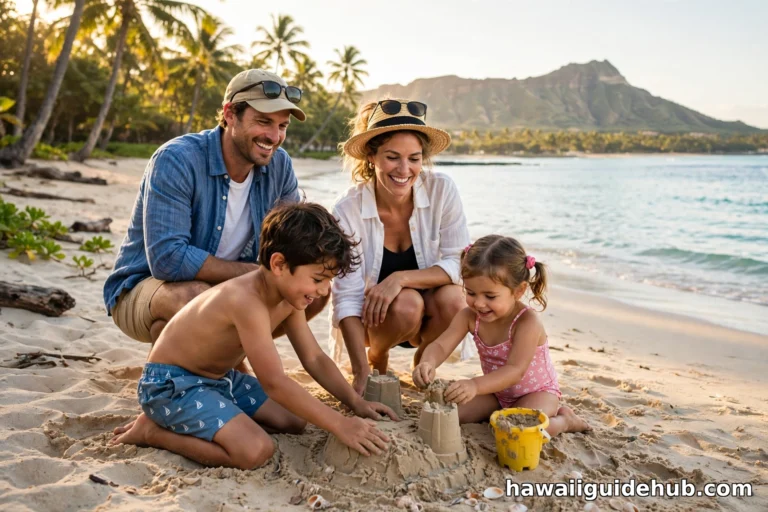
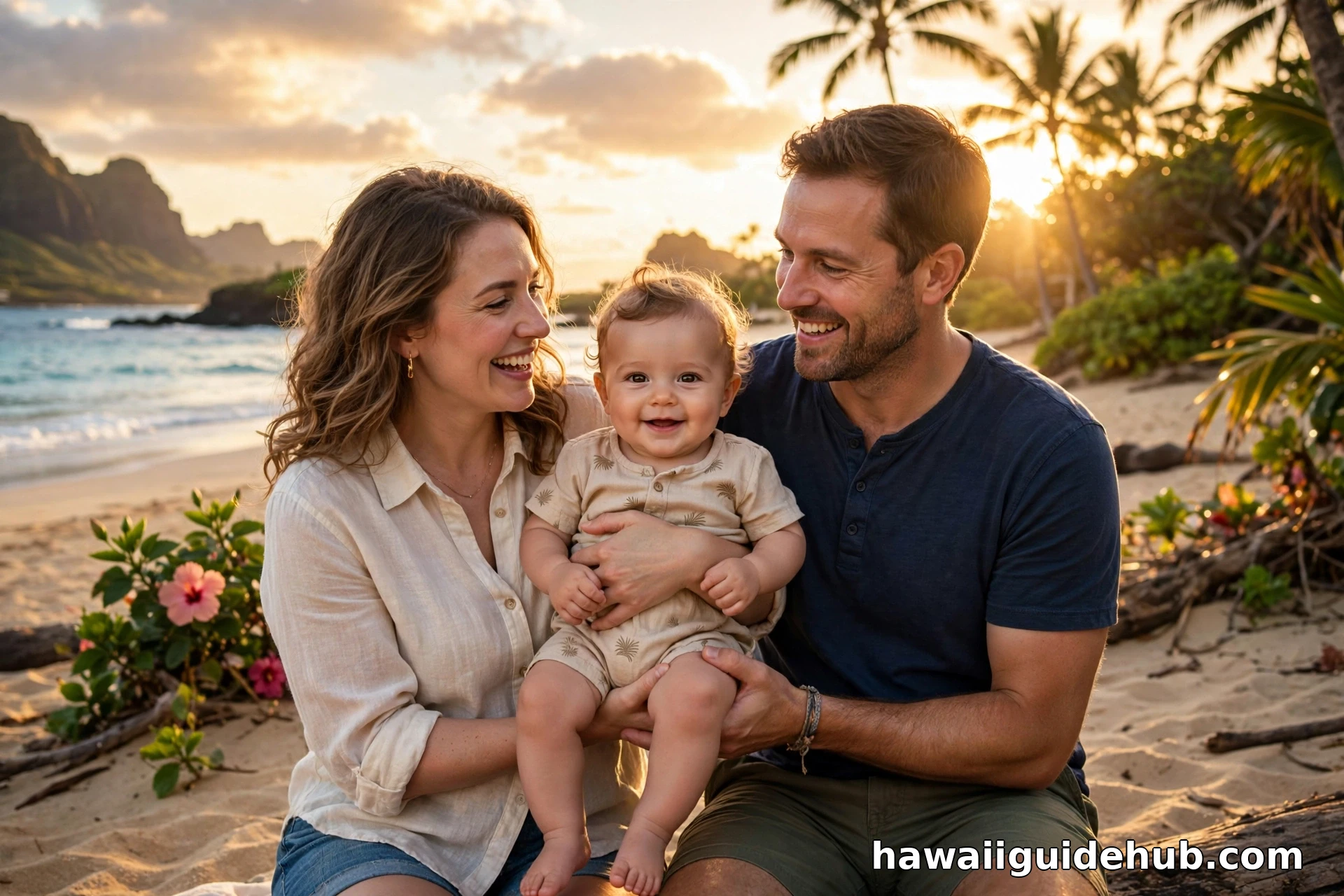
The golden hour family: two parents, one delighted baby, the beach glowing behind them. This is the Hawaii-with-a-baby trip at its best, not the frantic sightseeing of the old days but something warmer and slower. The baby will not remember it, but the parents will, and the photograph will outlast them all.
Why Hawaii Works for Babies
The case for Hawaii with a baby, made properly. The temperature never shocks: no winter coats, no heat waves, just 75 to 85 degrees of forgiveness. The ocean soothes fussy babies like nothing else; the white noise of the surf is nature’s shusher. Outdoor living means no cabin fever: the “living room” is the lanai, the beach park, the garden. Naps happen in the stroller under a palm tree. And the culture: Hawaiians love babies openly and unabashedly, which means help, smiles, and patience everywhere you go. The islands were made for this.
Choosing Where to Stay
Lodging makes or breaks the baby trip. A condo or vacation rental with a kitchen, washer-dryer, and separate bedroom beats a hotel room every time: bottles washed, clothes cleaned, baby sleeping in the dark bedroom while parents live on the lanai. Ground-floor units eliminate elevator waits with the stroller. Resorts with calm lagoons and kids’ pools add convenience at a premium. Whatever you choose, confirm the crib situation in writing and bring your own sleep setup as backup; hotel cribs vary from excellent to alarming.
The Daily Rhythm That Works
The winning baby schedule in Hawaii: up with the sun, which the baby will do anyway thanks to the time change. Morning beach or activity while it is cool and the baby is fresh. Midday: the sacred nap, back at the condo in the dark cool room, while parents rest too. Afternoon: pool, stroll, or low-key outing. Early dinner, early bedtime. This rhythm respects the baby’s needs and happens to be the ideal Hawaii schedule anyway: you will see every sunrise and miss every crowd.
Health and Medical Prep
Prepare for the minor: infant pain reliever, thermometer, saline spray for the dry flight air, diaper cream, and the pediatrician’s after-hours number in your phone. Know the nearest urgent care to your lodging; every island has good options near the resort areas. Travel insurance with medical coverage is cheap peace of mind. The major risks are sun and water, both covered above; the minor miseries are handled by the well-stocked diaper bag. Consult your pediatrician before flying with very young infants.
What to Skip (Without Guilt)
Release these without regret: the sunrise at Haleakalā with a baby who wakes at 5 a.m. anyway is redundant; the Road to Hana’s 10-hour car day is a hostage situation with an infant; boat tours with age minimums are non-starters; fine dining past 6 p.m. is a gamble you will lose. None of these are the trip. The trip is the beach at 8 a.m., the nap at noon, the sunset stroll. Skip boldly; the islands will still be there when the baby is five.
The Partner Strategy
Two parents, one baby, infinite tag-teaming. Alternate the adventures: one does the sunrise hike while the other does the slow morning; swap for the sunset sail’s baby-free edition. Each parent gets one “big thing” per trip, guilt-free. Communicate about tiredness before it becomes resentment. And remember you are a team having an adventure, not two individuals enduring one. The couples who thrive are the ones who planned the trade-offs before the plane.
Baby Gear: Bring vs. Rent vs. Buy There
The eternal question, answered item by item. The table below is the expert’s verdict.
| Item | Bring | Rent | Buy there | Verdict |
| Car seat | Yes, if baby has a seat | Rental companies offer them | Expensive, don’t | Bring your own; you know it |
| Stroller | Lightweight travel one | Available from baby gear rentals | Don’t | Rent the beach-ready one |
| Crib / pack ‘n play | Bulky to fly | Yes, delivered to hotel | Don’t | Rent; hotels also provide |
| Carrier / wrap | Yes, always | No | Available but pricey | Bring; it’s your hands-free |
| Beach tent / shade | Bulky | Some rentals include | Yes, cheap at Costco/Target | Buy there, donate after |
| Diapers & wipes | Travel supply only | No | Yes, full stock | Buy there; same brands |
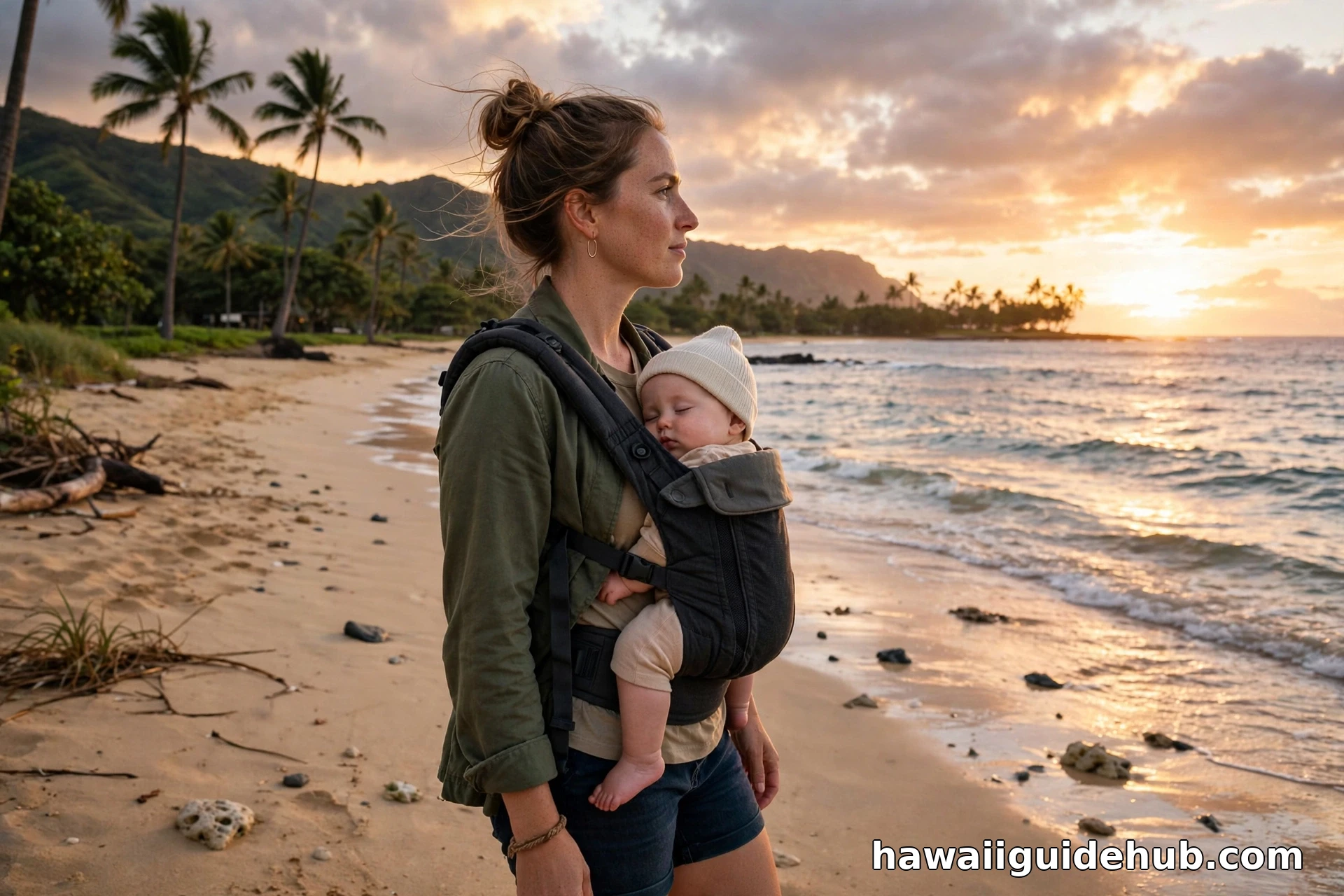
The carrier at sunset: a sleeping baby, a watchful mother, the ocean doing its golden-hour performance. This is the baby carrier’s finest hour, the fussy evening walk that becomes the day’s most peaceful memory. Strap the baby on, walk the beach, and let the surf do the soothing. The carrier earns its place in the suitcase a hundred times over.
Flying With a Baby to Hawaii
The flight is the crucible: five to ten hours with an infant. Lap infants fly free domestically, but a purchased seat with the car seat is safer and saner on long hauls. Time feedings for takeoff and landing to help ears pressurize. Bring twice the diapers, changes of clothes for everyone, and the full feeding kit. Walk the aisles; nobody minds a pacing parent. And lower the bar: the goal is arrival, not elegance. Every parent on that plane has been where you are.
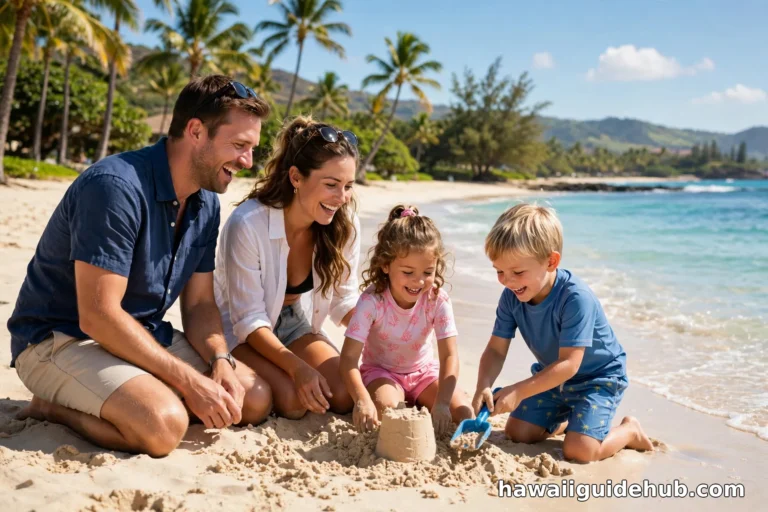
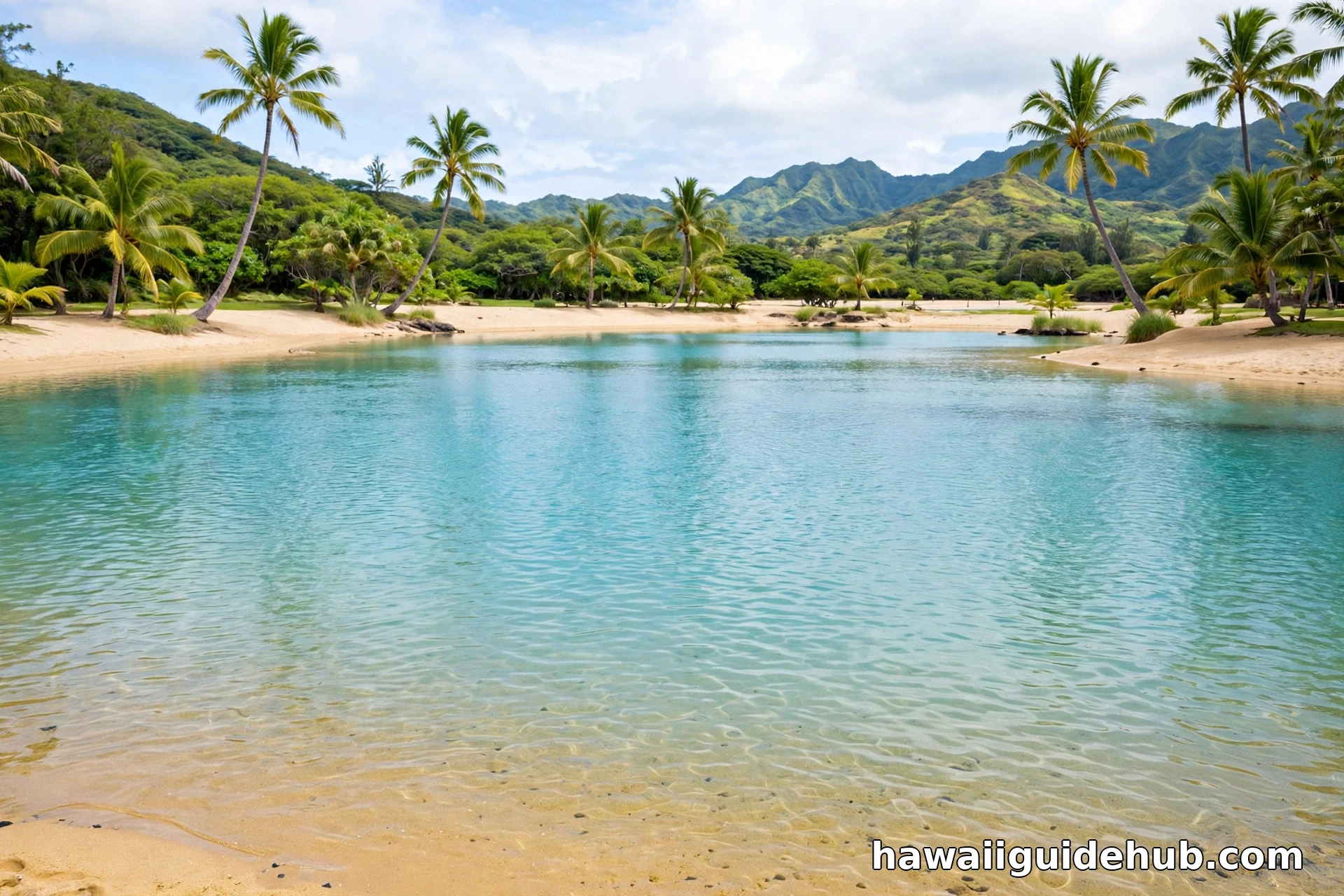
The baby beach in its purest form: glassy shallow water, gentle sand, palm trees for shade, mountains behind. This is where the baby’s Hawaii happens: splashing at the edge, napping under the umbrella, the safest possible introduction to the ocean. Find your island’s version of this lagoon and return to it daily; the baby will not tire of it, and neither will you.
Sun, Water, and Safety
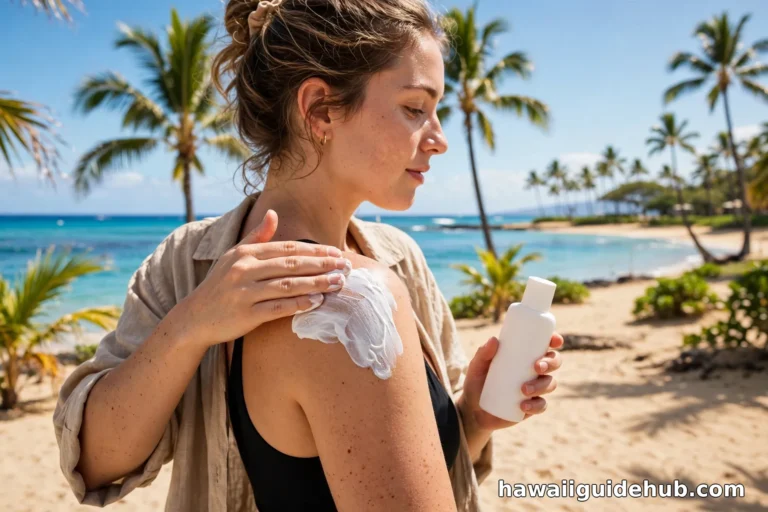
Babies under six months should stay out of direct sun entirely: shade, hats, and protective clothing, not sunscreen, per pediatric guidance. Older babies need mineral sunscreen, reapplied religiously, plus rash guards and hats. Water: never leave a baby unattended near water, not for a second; even gentle shore break can knock a sitting baby over. Choose the calmest beaches: the lagoons, the protected coves, the baby beaches each island brags about. Hydration matters for everyone: the trade winds mask how much water you are losing.
A last thought for the parents reading this at 2 a.m., baby asleep on your chest, trip half-planned and doubt creeping in: go. The logistics will work out, the baby will be fine, and Hawaii will be better than you dared hope. Every parent who has done this trip says the same thing afterward: the worry was worse than the reality, the joy was better than the brochure, and the baby, impossibly, seemed to know they were somewhere special. Trust the islands. They have been welcoming babies since long before guidebooks existed.
Feeding and Sleep on Island Time
Keep the baby’s schedule, not the island’s, for the first days: well-rested babies adjust faster than overtired ones pushed into local time. Breastfeeding travels well; nursing covers double as sunshades. Formula: bring what you need for the flight, buy the rest there. For sleep, recreate home: the portable crib, the white noise, the dark room, with blackout solutions for unfamiliar windows. Expect the schedule to wobble; it recovers. Do not start sleep training, weaning, or any other project on this trip.
The Best Baby-Friendly Beaches and Activities
Every island has its baby beaches: calm, shallow, shaded. The lagoons of Ko Olina, Baby Beach in Lahaina, Poipu’s protected cove, and the calm Kona coast coves all work. Activities: the aquarium, the botanical gardens’ stroller paths, scenic drives with nap-friendly car time, farmers markets for stroller browsing. Skip: boat tours with age minimums, long hikes, luaus that run past bedtime. The baby’s best day is the simple one: morning beach, afternoon nap, sunset stroll.
Realistic Expectations
You will not do what you did before the baby, and grieving that is normal. You will do something else: slower mornings, earlier nights, and a front-row seat to your baby’s first ocean, first sand, first sunset. Take turns with your partner for the adventures that need doing; the solo sunrise hike while the other sleeps in is a gift, not a sacrifice. The trip’s success is not measured in activities completed but in the family’s wellbeing. By that measure, Hawaii with a baby is hard to beat.
For more trip planning, the guide to Hawaiian cultural traditions adds the cultural layer, while responsible travel practices and the guide to Hawaii’s natural environments help you travel well.
Watch: Helping Kids Adjust to Hawaii Time
Frequently Asked Questions
Is Hawaii good for babies?
Yes. The weather, calm beaches, slow pace, and baby-adoring culture make Hawaii one of the best destinations for traveling with an infant.
Should you bring a car seat to Hawaii?
Bring your own if baby has a plane seat; you know its history and installation. Rental companies also offer them.
Can babies wear sunscreen in Hawaii?
Babies under six months should avoid direct sun and sunscreen; use shade and protective clothing. Older babies can use mineral sunscreen.
What is the best island for a baby?
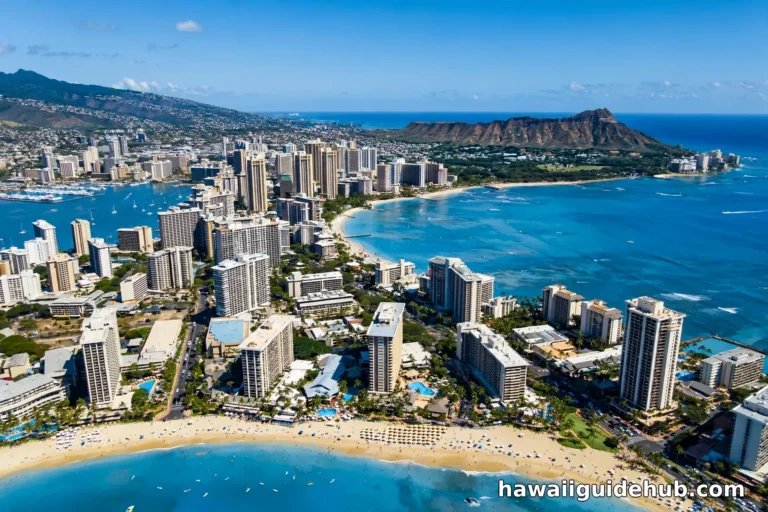
Oʻahu has the most infrastructure and calm lagoons; Maui’s resort areas are also excellent. Choose by flight length and lodging.
Should you rent baby gear in Hawaii?
Yes for bulky items: cribs, strollers, beach gear. Baby gear rental companies deliver to hotels. Bring the carrier and car seat.
Hawaii with a baby is the trip where you learn that paradise is not a place you conquer but a rhythm you join: the nap schedule, the tide schedule, the sunset schedule, all equally sacred. Pack the carrier, rent the crib, buy the diapers there, and let the islands do what they do best: slow you down to the speed of wonder. And years from now, when the baby is grown and the photographs are faded, you will remember not the logistics but the feeling: the small warm weight asleep against you, the surf hushing, the sun going down gold over the water, and the certain knowledge that you were exactly where you were supposed to be, with exactly who you were supposed to be with. The baby will not remember Hawaii, but you will remember the baby in Hawaii, and that memory, salt-sweet and sun-warmed, will outlast everything else the trip contained, which is why the parents who go always say the same thing to the parents still deciding: stop deciding, and go. The islands are waiting, the baby is ready, and the golden hour is doing its golden thing whether you are there to see it or not. Be there. Strap on the carrier, pack the diaper bag, book the condo with the washer-dryer, and go meet your baby’s first ocean. It is waiting, warm and shallow and impossibly blue, and the baby, held safe in your arms at the water’s edge, will feel what babies have always felt in Hawaii: completely, utterly at home, which is exactly what Hawaii does best: it makes everyone feel like they belong, even the very smallest travelers, especially the very smallest travelers, who arrive with nothing and receive everything the islands have to give, freely, joyfully, and forever, as they always have.