Centipedes in Hawaii: Giant Centipede Bites, Danger & Prevention

Hawaii has no snakes, no scorpions of consequence, and no truly dangerous spiders. But it has one creature that sends locals and visitors to urgent care with clockwork regularity: the giant centipede. If you find a fast, orange-legged arthropod the length of your hand in your shower, this guide covers what it is, whether it is dangerous, what to do about a bite, and how to keep them out of your house.
What Is the Giant Centipede in Hawaii?
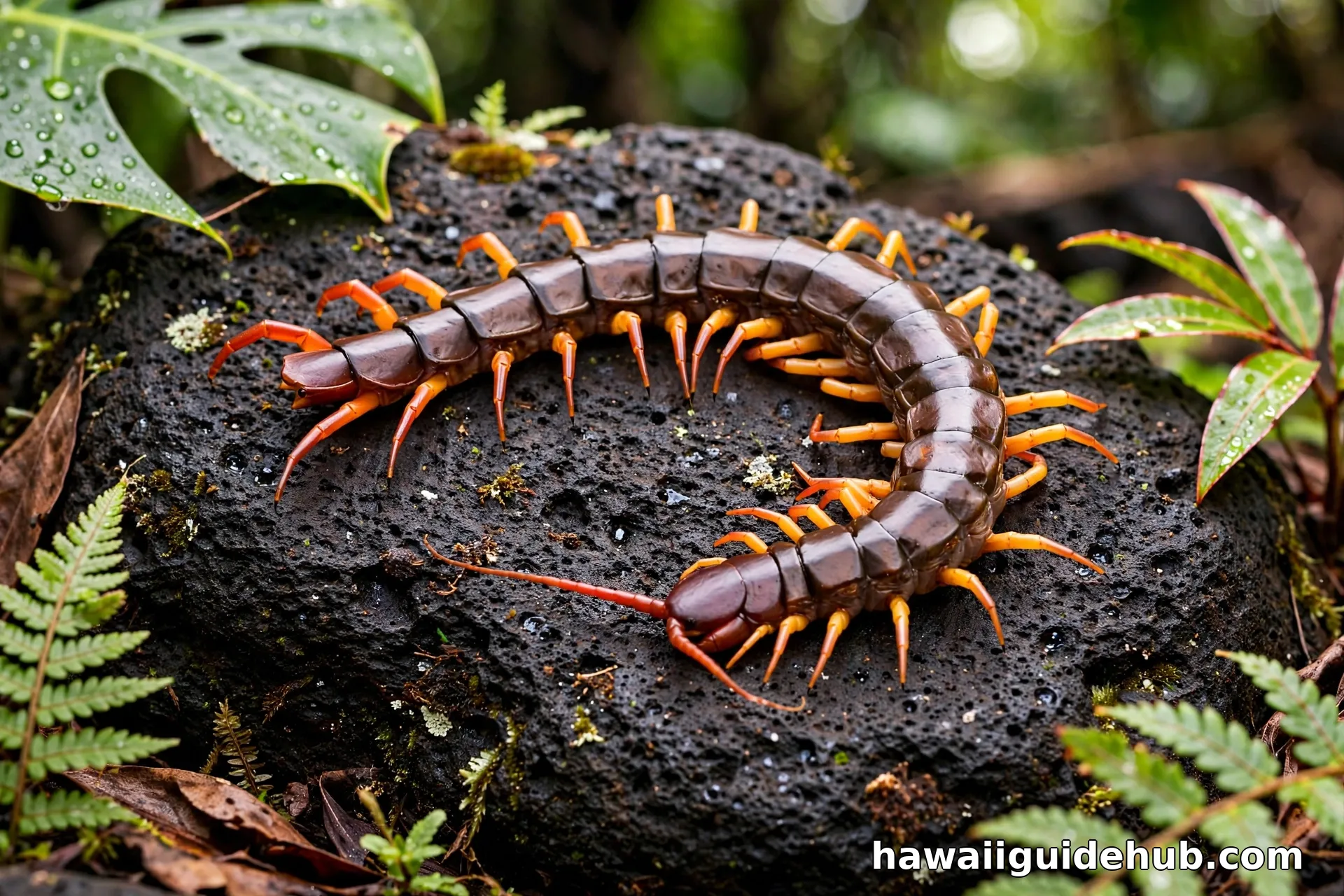
The culprit is Scolopendra subspinipes, known as the Vietnamese centipede, jungle centipede, or simply the giant centipede. Adults reach 4 to 8 inches, with reddish-brown segmented bodies and yellow to orange legs, one pair per segment. In 2018, a specimen captured in Hawaii measured an astonishing 36.6 cm, over 14 inches, one of the largest ever recorded. They are nocturnal predators that hunt insects, spiders, and even small mice, using venom-injecting fangs called forcipules. They are fast, aggressive when cornered, and excellent climbers: they can and do climb walls and into beds.
Are Centipedes Native to Hawaii?
No. None of Hawaii’s centipedes are native. The giant centipede is believed to originate in Southeast Asia and was accidentally introduced to Hawaii by humans, possibly by Polynesian voyagers or early explorers, likely as stowaways in cargo. Hawaii hosts three centipede species in total; the other two, a small Lithobius species and Mecistocephalus maxillaries, are minor players. Scolopendra morsitans has also been documented from Honolulu. Only Scolopendra subspinipes is medically significant.
Hawaii’s Centipedes Compared
| Species | Size | Look | Danger | Where you meet it |
| Scolopendra subspinipes | 4-8 in (up to 14) | Red-brown body, orange legs | High: excruciating bite | Gardens, houses, shoes, beds |
| Mecistocephalus maxillaries | ~2 in | Pale, slender | Low: tiny, soil-dwelling | Garden soil, leaf litter |
| Lithobius sp. | Under 1 in | Brown, short | None for humans | Under stones, damp spots |
| House centipede | 1-1.5 in body | Gray-yellow, very long legs | Minimal: bites rare | Bathrooms, basements |
House centipedes, the long-legged gray ones in bathrooms, are a different, far less concerning animal: they rarely bite people, their venom is weak, and they eat cockroaches and silverfish. Most Hawaii residents tolerate them as free pest control.
Where They Live and Why They Come Inside
Giant centipedes live in damp, dark places: under stones and logs, in leaf litter, mulch, rock walls, and compost. They hunt at night and hide by day. Campers and hikers meet them on the trail: never place bare hands where you cannot see, and wear gloves moving firewood or rocks. See Hawaii’s outdoor adventures guide and the Waimea Canyon hiking guide for trail safety basics. They enter houses hunting prey (cockroaches are a favorite) and seeking moisture, squeezing through gaps under doors, window screens, and pipe entries. Ground-floor units, garden-level lanais, and houses near rock walls or heavy vegetation see the most. They are most active in warm, wet months, and rain drives them indoors.

How Bad Is the Bite?
Honestly: one of the most painful arthropod bites in Hawaii. Victims describe immediate, intense, burning pain that radiates from the bite, with swelling, redness, and sometimes numbness lasting hours to days; most symptoms resolve within 48 hours. The medical literature is reassuring on the big question: serious complications are very uncommon, and bites are rarely dangerous to healthy adults. That said, bites to small children, the elderly, or anyone with insect-venom allergies deserve prompt medical attention, and any bite showing spreading redness, fever, or tissue breakdown needs a doctor.
What to Do If Bitten
First, do not panic: it will hurt, and then it will get better. Wash the area with soap and water. Apply heat as soon as possible: hot (not scalding) water or a warm compress is thought to denature the venom proteins and reduce pain and duration. Follow with ice to control swelling. Ibuprofen for pain, antihistamine cream for itching. Keep the wound clean and covered, and make sure tetanus vaccination is current. Go to urgent care or the ER if pain is unmanageable, swelling spreads rapidly, you develop fever, nausea, or signs of allergic reaction, or the victim is a small child. Most victims never seek care and recover on their own.
Keeping Centipedes Out of Your House
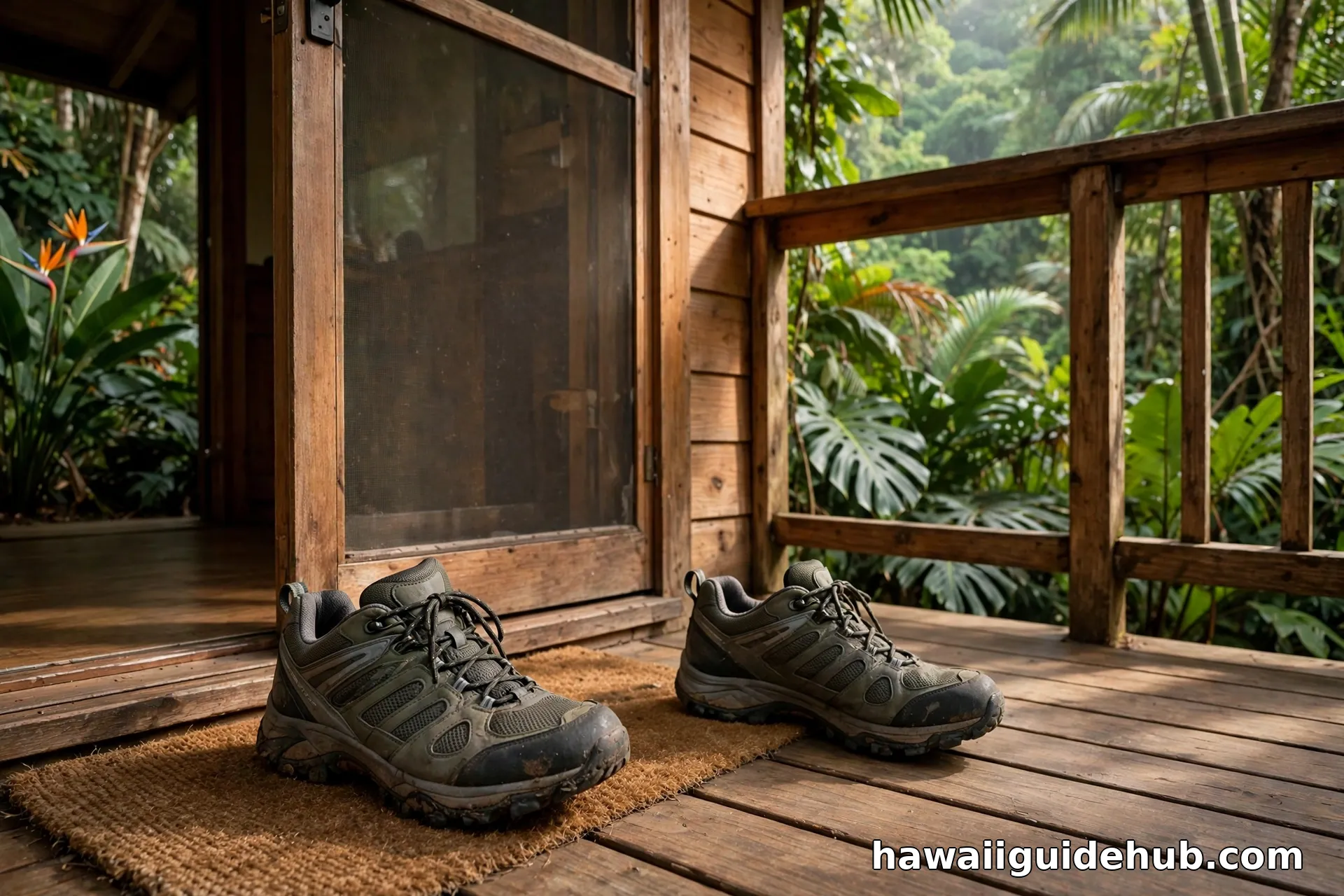
Shake out shoes, towels, and clothing left on the floor, every time: this is where most indoor bites happen. Seal gaps under doors with weather stripping, repair window screens, and caulk pipe entries. Reduce moisture and clutter around the foundation: clear leaf litter, mulch, and debris away from walls, and fix leaks. Keep beds away from walls and bedding off the floor. A dehumidifier helps in damp rooms. For persistent problems, a pest control company can treat the perimeter, but habitat reduction matters more than chemicals: no damp hiding places, no centipedes.
Centipedes and Hawaii Culture
Centipedes have no traditional significance in Native Hawaiian culture: as introduced species, they arrived after the culture’s formative centuries. In modern local culture they are simply the islands’ most hated pest, the subject of war stories traded by everyone who has lived in a garden-level apartment. Some longtime residents keep a dedicated “centipede shoe” or tongs by the door. It is a rite of passage: your first Hawaii centipede encounter means you really live here.
The 14-Inch Monster: Hawaii’s Record Centipede
In 2018, Hawaii made the centipede record books when Clayton Cambra captured a Scolopendra subspinipes measuring 36.6 cm, nearly 14.5 inches, far beyond the species’ usual 8-inch maximum. The specimen drew international attention from entomologists. It is an outlier, not the norm: most Hawaii giant centipedes run 4 to 6 inches. But it explains why the islands’ centipede stories tend toward the tall-tale end of believable.
Centipede vs Millipede: Don’t Confuse Them
Millipedes are the slow, cylindrical, many-legged decomposers you see curled in garden soil after rain. They do not bite, are not venomous, and some Hawaii species can release a mild defensive chemical that stains skin. Centipedes are fast, flattened, predatory, and bite. The quick field test: if it runs away fast, it is probably a centipede; if it curls into a spiral and plays dead, it is a millipede.
For Visitors: Hotels and Vacation Rentals
Tourists in high-rise Waikīkī hotels will likely never see a centipede. Guests in garden-level vacation rentals, jungle cabins, and ground-floor condos, especially on the Big Island and Kauaʻi, should take the same precautions as residents: shake out shoes, keep luggage zipped and off the floor, check towels, and keep the lanai door closed at night. Planning a Big Island stay? See the best things to do on the Big Island and things to do in Kona when choosing a base. If you find one in your rental, do not try to catch it: call the property manager. They have dealt with this before.
Ecological Role: What Centipedes Do in Hawaii
As an introduced predator, the giant centipede sits awkwardly in Hawaii’s ecosystems. It eats native insects and spiders as readily as introduced cockroaches, and large individuals can take small native vertebrates like geckos and nestling birds. Hawaii’s native fauna evolved without centipede predators of this size, so the ecological impact is real, if unstudied compared to rats or mongoose. Their predators in turn include mongoose, cattle egrets, and cane toads, all introduced themselves: Hawaii’s food webs are largely an assembly of newcomers eating newcomers.
Bite Timeline: What to Expect
Minutes 0 to 5: sharp, burning pain at the bite site, often two puncture marks, rapid swelling. Minutes 5 to 60: pain peaks and may radiate up the limb; the area reddens and hardens. Hours 1 to 12: intense throbbing gradually eases; swelling stabilizes. Some victims report numbness, itching, or swollen lymph nodes. Day 1 to 2: residual soreness and itching; most symptoms resolve within 48 hours. A minority develop blistering or localized tissue irritation lasting a week. Throughout: watch for spreading redness, red streaks, fever, or pus, signs of secondary infection that need medical care.
Video: Centipede Bite Advice from Hawaii
A Hawaii resident’s firsthand account of a centipede bite and what helped.
Frequently Asked Questions About Centipedes in Hawaii
Are centipedes in Hawaii poisonous?
They are venomous, not poisonous: they inject venom through fangs. The giant centipede’s bite is extremely painful but rarely dangerous to healthy adults.
Can a centipede bite kill you?
Almost never. U.S. data recorded only a handful of centipede-bite deaths over decades, with unclear causes. Serious complications like anaphylaxis are very rare. The pain, however, is legendary.
Are centipedes native to Hawaii?
No. All of Hawaii’s centipedes, including the giant centipede Scolopendra subspinipes, were introduced by humans. None evolved in the islands.
How do I get rid of centipedes in my house in Hawaii?
Remove what attracts them: seal entry gaps, clear damp leaf litter and clutter from around the house, fix leaks, and shake out shoes and towels. Perimeter pest treatment helps persistent cases.
Do house centipedes bite in Hawaii?
Rarely. House centipedes are timid, their venom is weak, and they prefer to flee. They are beneficial predators of cockroaches and silverfish.
What should I do if a centipede bites my dog?
Small dogs can have stronger reactions: swelling, pain, drooling. Wash the area, apply a cold compress, and call your vet, especially for small breeds or if swelling spreads.
Why Hawaii’s Centipedes Are So Big
Island gigantism plays a role: without the mainland predators and competitors that keep Scolopendra subspinipes in check across Asia, Hawaii’s centipedes grow larger and bolder. Year-round warmth means year-round hunting and breeding, no winter die-back. Abundant prey, introduced cockroaches, geckos, and frogs, provides a rich food supply. The result is a tropical island where a hand-length venomous predator is simply part of the background fauna, and where the record books occasionally get rewritten.
Do centipedes in Hawaii come out in the day?
Rarely. They are nocturnal and hide in dark, damp places during daylight. Daytime sightings usually mean you disturbed one’s hiding spot, or heavy rain has flooded it out.
Are there centipedes on all Hawaiian islands?
Yes. The giant centipede is established on all the main islands, most numerous in warm, wet, low-elevation areas. Drier upland areas see fewer.
How the Bite Works: Forcipules, Not Jaws
A centipede does not bite with its mouth. Its first pair of legs evolved into venomous fangs called forcipules, curved claws on the head segment connected to venom glands. When threatened, the centipede coils, grips with its many legs, and drives the forcipules in like twin syringes. The venom is a cocktail of proteins that attacks nerves and tissue, which is why heat applied quickly can help: it denatures some of those proteins before they do their worst. The two puncture marks often seen are the forcipule entry points, easily mistaken for a spider bite.
Room by Room: Where They Turn Up Indoors
Bathrooms: moisture draws them; check towels, bathmats, and under-sink cabinets. Bedrooms: they climb bed frames and hide in bedding left on the floor; keep beds away from walls. Kitchens: under appliances and near pet food, hunting cockroaches. Laundry rooms: damp, dark, and full of hiding spots; shake everything. Garages: the number one entry point; seal the door gap and declutter. Closets: shoes on the floor are the classic bite scenario. The pattern is always the same: dark, damp, ground level, near prey.
DIY vs Pest Control
DIY wins for occasional sightings: seal gaps, remove habitat, shake shoes, and keep a pair of long tongs and a lidded jar for catch-and-release far from the house. Call pest control when sightings are weekly, when you find them in bedrooms repeatedly, or when children or allergic family members are at risk. A good company treats the exterior perimeter and identifies entry points; beware anyone selling monthly indoor spraying as the whole solution. Without habitat and entry work, the centipedes come back.
What attracts centipedes to a house?
Moisture, darkness, and prey. Leaky pipes, damp leaf litter against the foundation, ground-level entry gaps, and a healthy cockroach population are the four horsemen of centipede infestation.
Do ultrasonic pest repellers work on centipedes?
No credible evidence supports them for centipedes or most other pests. Save your money for weather stripping and a dehumidifier.
Hawaii’s giant centipede is startling, painful, and almost never truly dangerous. Respect it, shake your shoes, seal your doors, and you will likely share the islands with it for years without incident. And if you do get bitten, heat, ice, and ibuprofen: then you will have your own war story.