Best Food in Kona Hawaii

Ask a Kona local where to eat and the answer rarely starts with a fancy dining room. It starts with poke still cold from the morning’s catch, a plate lunch eaten at a picnic table, shave ice on Aliʻi Drive, and a cup of coffee grown on the volcano slope above town. The best food in Kona is a place based cuisine: Pacific fish, ranch beef, volcanic soil produce, and the layered food traditions of Native Hawaiian, Japanese, Filipino, Portuguese, and Korean Hawaiʻi, all within a few miles of shoreline.
This guide walks the essential Kona dishes one by one: what each one is, where it came from, how it is made and served, what it tastes like, and where visitors actually encounter the best versions, from poke counters and diners to farmers markets and the famous Kona coffee belt.
Kona Food at a Glance
| Poke | Cubed raw fish, usually ʻahi, with shoyu, sesame, onion, and limu | The essential Kona lunch, sold by the pound at counters |
| Kona coffee | Coffee grown only in the Kona districts on Hualālai and Mauna Loa slopes | A protected regional product, smooth and low in bitterness |
| Loco moco | Rice, hamburger patty, brown gravy, fried egg | Diner born comfort food, now in endless Kona variations |
| Plate lunch | Rice, macaroni salad, and an entree such as kalua pork or chicken katsu | The everyday local meal |
| Fresh catch plates | Ono, mahi mahi, and ʻahi grilled, blackened, or in tacos | Kona’s harbor fleet lands fish daily |
| Shave ice | Feather fine ice with tropical syrups, often over ice cream | The afternoon ritual on Aliʻi Drive |
| Tropical fruit | Papaya, mango, lilikoi, apple bananas, Kona oranges | Best from farmers markets, eaten the same day |
Poke: The Dish Kona Does Best
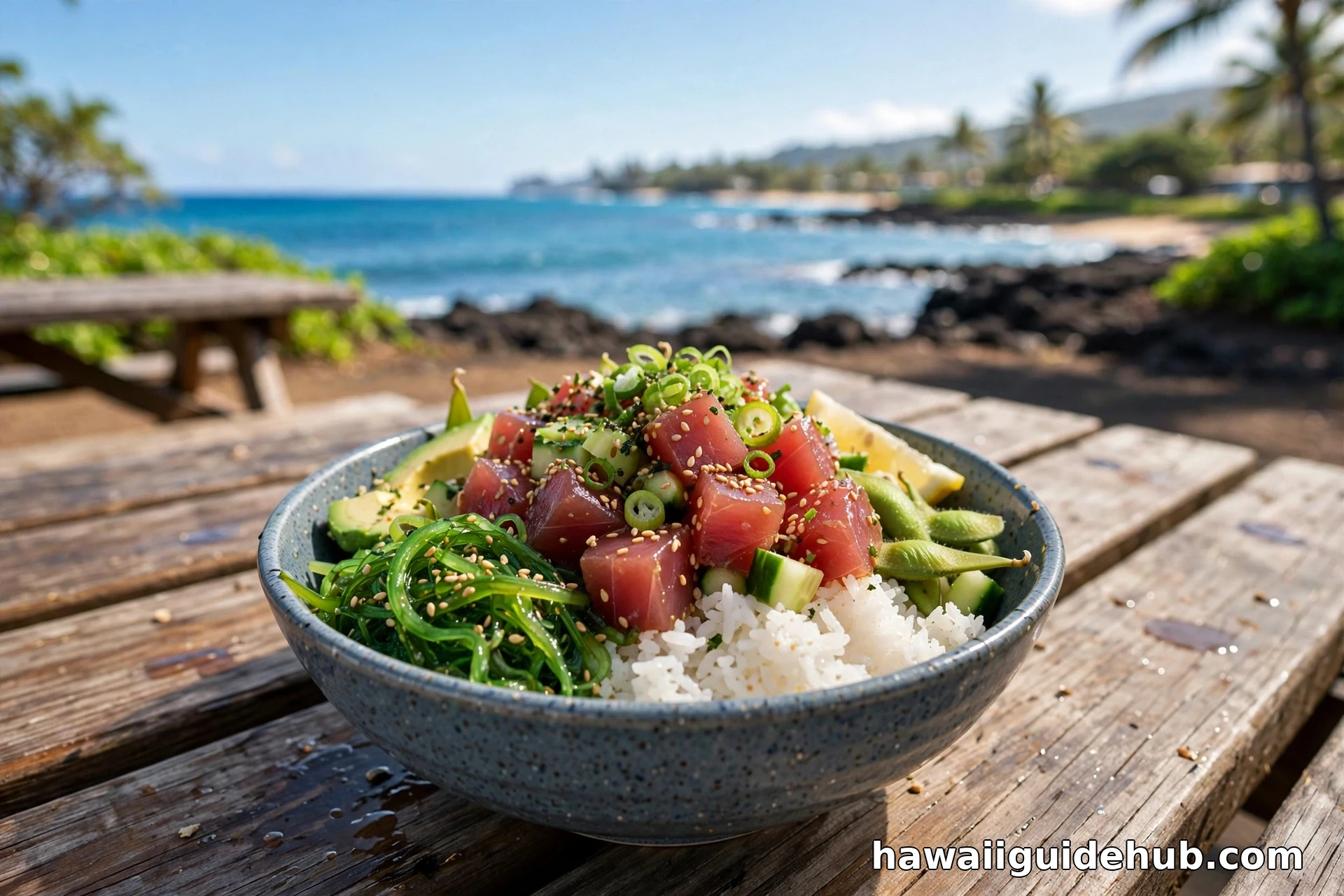
Poke, pronounced poh-keh, begins with Native Hawaiian practice: fresh reef and pelagic fish cut into cubes and seasoned simply with salt, limu seaweed, and ʻinamona, roasted kukui nut. The modern Kona bowl keeps that foundation and adds the flavors of Hawaiʻi’s immigrant kitchens: shoyu, sesame oil, sweet onion, green onion, and chili. At a good Kona counter the fish is local ʻahi or aku, cut the same morning, displayed on ice, and sold by weight or over warm rice.
What should it taste like? Cold, clean, and oceanic, with the fish itself in front and the seasoning in support. Shoyu poke is savory and rounded, spicy poke carries heat from chili and mayonnaise based sauces, and traditional style poke with limu and ʻinamona tastes of the shoreline itself. Names on Kona menus turn playful, and counters such as Da Poke Shack on Aliʻi Drive built followings on freshness above all. Eat poke at lunch, when the case is fullest, and take it to a beach park picnic table. Our guide to things to do in Kona pairs naturally with a poke run, since most counters sit minutes from the town’s beaches and historic sites.
Kona Coffee: The Taste of the Slopes
Kona coffee is not a brand. It is a place: coffee grown in the North and South Kona districts on the western slopes of Hualālai and Mauna Loa, in a narrow belt of volcanic soil with sunny mornings, afternoon cloud cover, and mild nights. That microclimate, plus hand picking of ripe red cherry, gives the cup its reputation for smoothness and low bitterness. Hawaiian law protects the name, and bags labeled 100 percent Kona are the genuine article, while blends may contain as little as ten percent Kona beans.
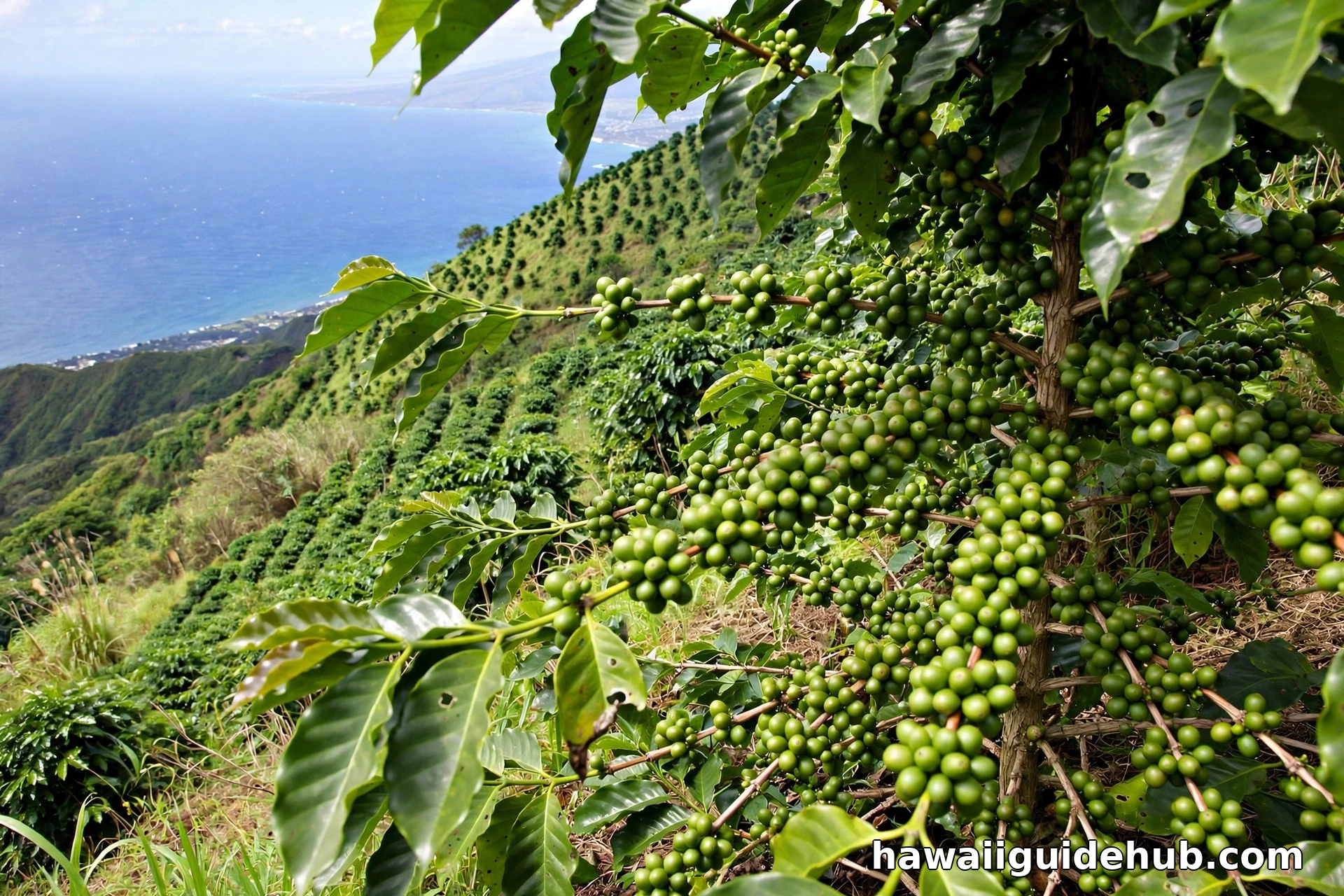
Visitors taste Kona coffee best at the source. Farm stands and small mills along the Mamalahoa Highway pour samples, sell whole bean bags, and explain the difference between washed and natural processing better than any label can. In town, cafes brew local beans for espresso drinks and drip coffee. A practical tip: buy beans as a souvenir here rather than at the airport, where selection narrows and prices climb. The crop’s story, from 19th century plantings to today’s small family farms, is one of the tastier chapters in the island’s history covered in our Kohala Coast and Kona coast coverage.
Loco Moco and the Plate Lunch: Local Comfort
The loco moco is Hawaiʻi’s great diner invention: a scoop or two of white rice, a hamburger patty, a ladle of brown gravy, and a fried egg on top, traditionally credited to teenagers in Hilo in 1949 and now served everywhere in Kona. It tastes like the best kind of comfort, salty, rich, and runny yolked, especially with local grass fed beef from the island’s ranch country. Kona kitchens riff on it freely: kalua pork loco, fish loco, even versions with fried rice, and smoke meat breakfasts at small local spots draw loyal morning crowds.
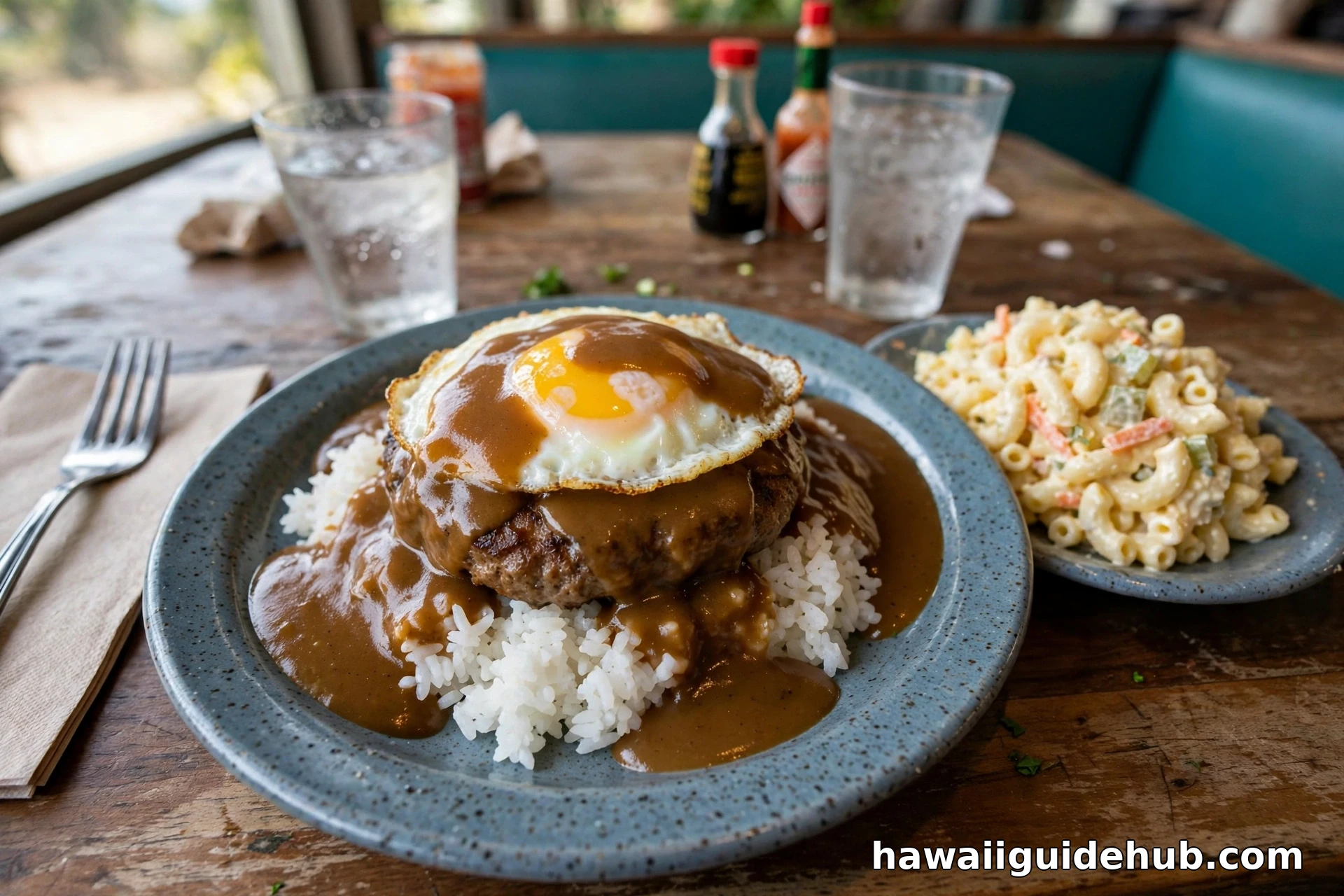
Its everyday cousin is the plate lunch: two scoops of rice, one scoop of macaroni salad, and an entree that maps the islands’ food history, kalua pork and cabbage from Hawaiian tradition, chicken katsu and teriyaki from Japanese kitchens, Korean kalbi, Filipino pork adobo, and Portuguese sausage at breakfast. A plate lunch is the most honest meal in Kona, priced for working people, sized generously, and eaten everywhere from diners to harbor side tables. If you eat only one local meal in town, make it this one.
Fresh Catch: Fish From Kona Waters
Kailua-Kona sits beside deep Pacific water, and the town’s fish culture reflects it. Local boats land ʻahi, ono, mahi mahi, and deep water snappers such as opakapaka, and menus in Kona lean on whatever came in that day. Grilled fish plates with rice, fish tacos with island slaw, seared ʻahi with wasabi butter, and fish market counters selling fillets for condo grills all compete for the same catch. Fish forward restaurants around the harbor and Aliʻi Drive, including long running local favorites such as Umekes, built menus around poke flights, fish tacos, and ahi preparations.
How to order well: ask what is local and fresh today, and be suspicious of menus that never change. Kona’s best fish meals follow the boats, not a printed script. Visitors staying up the coast can fold a harbor lunch into a beach day from our Big Island highlights guide, since the Kona coast’s snorkeling bays and fish counters sit within the same few miles.
Sweet Kona: Shave Ice, Malasadas, and Tropical Fruit
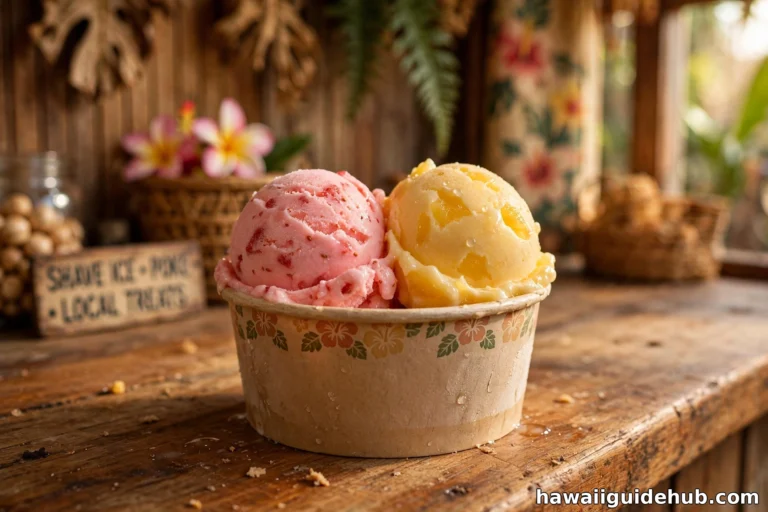
Dessert in Kona runs cold and tropical. Shave ice, shaved feather fine rather than crushed, takes syrups in island flavors such as lilikoi, guava, mango, and coconut, often poured over a scoop of vanilla or macadamia nut ice cream and capped with sweetened condensed milk. Malasadas, the Portuguese fried dough rolled in sugar, arrive hot at bakeries and market stalls and should be eaten within the hour. Chocolate lovers should look for bars made with Big Island grown cacao, a small but real local industry.
Fruit is the everyday sweet. Kona’s markets overflow with papaya, mango in season, lilikoi, rambutan, longan, apple bananas, and the prized Kona orange. A ripe papaya with a squeeze of lime at a condo breakfast is, for many returning visitors, the taste they miss most. Farmers markets in Kailua-Kona and Captain Cook are the surest source, and market vendors will happily tell you which fruit is at its peak that week.
Breakfast in Kona: Coffee, Pancakes, and Portuguese Sausage
Kona mornings have their own menu. Local diners serve Portuguese sausage with eggs and rice, macadamia nut pancakes with coconut or lilikoi syrups, and breakfast plates built around island fish or smoke meat. The coffee, of course, is the point for many visitors: a pot of local drip at a diner table is often better than the resort cup, because the beans traveled ten miles instead of an ocean. Arrive early. The best small breakfast spots fill with local workers and fishermen long before the tour groups wake up, and the line at the door by nine in the morning is a reliable quality signal in this town.
What to Bring Home From Kona
Edible souvenirs follow strict rules of their own. Whole bean 100 percent Kona coffee is the classic purchase, and macadamia nuts, raw or roasted, travel equally well. Big Island honey, especially from lehua blossoms, and locally made chocolate round out the list. Fresh fruit is the exception: Hawaii’s agricultural inspection rules restrict many fresh items leaving the state, and anything you buy at a market is best enjoyed on island. Check the inspection rules for your specific items at the airport rather than assuming, since pineapples and treated fruit follow different rules from most produce. A bag of coffee and a jar of honey, eaten slowly back home, extend a Kona food trip by weeks.
Where Visitors Encounter Kona Food
Kona food concentrates in a few walkable and drivable zones. Aliʻi Drive in Kailua-Kona holds poke counters, cafes, shave ice stands, and oceanfront tables in one seaside strip. The old industrial area near the harbor mixes fish restaurants and a brewery scene. Uphill, the coffee belt along the highway strings farm stands through Captain Cook and Hōlualoa, an art and coffee village worth a slow afternoon. Farmers markets rotate through town lots during the week. None of this requires formality: Kona’s best eating is famously casual, and reservations matter mainly at the small number of fine dining rooms.
One more habit separates a good Kona food day from a great one: eat with the sun. Markets and poke counters peak in the morning and at lunch, diners own the early hours, and shave ice tastes best after a hot afternoon swim. Save the sit down dinner for sunset, when the fishing boats are in and the day’s catch is on the board.
Video: Walking and Tasting Through Kona
This Kona tasting walk strings together poke, local plates, and sweet stops in the historic center, a good preview of how the town’s food fits into a single afternoon.
Frequently Asked Questions
What food is Kona most famous for?
Kona coffee is the world famous product, protected by law and grown only in the Kona districts. At the table, the town is best known for exceptionally fresh poke and just landed Pacific fish, followed by plate lunches, loco moco, and shave ice.
What does poke taste like?
Fresh poke tastes clean and oceanic, with firm, cold cubes of fish seasoned lightly with salt, shoyu, sesame, and onion depending on the style. The fish leads and the sauce supports, and traditional style adds limu seaweed and roasted kukui nut for a distinctly Hawaiian shoreline flavor.
Is 100 percent Kona coffee worth it?
For coffee drinkers, yes, at least once. Genuine 100 percent Kona is smooth, sweet, and low in bitterness, and buying it at a Kona farm stand supports the small farms that keep the district’s coffee culture alive. Blends cost less but may contain only ten percent Kona beans.
Where do locals eat in Kona?
Locals fill the poke counters at lunch, the diners serving loco moco and plate lunches, the farmers markets in the morning, and the harbor side fish spots when the boats come in. Follow the lunch hour crowds away from the resort strip and you will eat well.
What should a first time visitor order in Kona?
Start with shoyu ʻahi poke over rice, a plate lunch with kalua pork, a loco moco at a diner breakfast, a cup of 100 percent Kona coffee at a farm, and shave ice with lilikoi on Aliʻi Drive. That short list covers the town’s essential flavors.
Kona’s best food is inseparable from Kona itself: fish from its deep blue water, coffee from its volcanic slopes, beef from its ranch uplands, and fruit from its year round sun. Eat the poke on the day it was caught, drink the coffee where it grew, and take the plate lunch to a picnic table by the sea, and you will understand the town the way its residents do, one honest meal at a time.