Hawaii Accessible Travel Guide: Honest Advice for Every Traveler

Hawaii is more accessible than its rugged reputation suggests, but less accessible than a flat mainland city: the honest answer, and the one this guide gives throughout. Volcanic landscapes, historic sites, and ocean activities all present real barriers, yet the islands also offer paved coastal paths, accessible beaches with beach wheelchairs, ADA-compliant national parks, and a hospitality culture that genuinely tries. The key is knowing exactly what to expect, attraction by attraction.
This is the single complete guide to accessible travel in Hawaii. It covers honest accessibility ratings by experience type, accessible beaches and trails, national and state parks, transportation and equipment rental, lodging considerations, and planning strategies for travelers with mobility, visual, hearing, and cognitive disabilities. If you have been searching for anything about accessible Hawaii travel, the answers are all here on this one page.
This is accessibility done right: a smooth paved path with railings, curving along the cliffs above the Pacific at sunset. No stairs, no barriers, no compromises, just the full grandeur of the Hawaiian coast available to everyone. Seek out paths like this one on every island; they are more common than you would expect, and they are among the finest walks in the state for travelers of all mobilities.
The Golden Rule: Confirm, Don’t Assume
The single most important accessibility skill in Hawaii is the phone call. Websites go stale, “accessible” means different things to different properties, and a trail rated accessible in 2019 may have eroded since. Before booking anything, call and ask specific questions: What is the surface? What is the grade? Are there stairs anywhere on the route? Can your lift accommodate my chair’s weight and dimensions? The properties that answer confidently are the ones to trust; the ones that hesitate are telling you something. Never assume, always confirm, and keep notes.
Island-by-Island Access Snapshots
Oʻahu has the best accessibility infrastructure: Honolulu’s sidewalks, TheBus, and major attractions like Pearl Harbor and ʻIolani Palace are well set up. Maui’s resort areas, Kāʻanapali’s beach path and Wailea’s coastal walk, are excellent, though Upcountry and Hana get rugged. The Big Island is a mixed bag: the national park and Kona coast shine, but distances are vast and rural areas thin on services. Kauaʻi is the most challenging: beautiful but rugged, with fewer accessible facilities, though Poipu and the canyon overlooks work well. Choose your island with your needs in mind, not just your dreams.
Accessible Tours Worth Booking
Some operators genuinely cater to accessibility. Helicopter companies on multiple islands have custom chair lifts for boarding, a spectacular option that bypasses terrain entirely. Several catamaran and boat operators have accessible boarding; confirm the specific vessel, not just the company. Accessible van tour companies offer island tours with lift-equipped vehicles and knowledgeable guides. Submarine tours, which descend without getting wet, are inherently accessible at the dock level. Book these early: accessible inventory on tours, like vans, is the first to sell out.
Dining and Shopping Access
Resort-area restaurants are generally accessible, with ramps and accessible restrooms the norm in newer construction. Food trucks and farmers markets vary: ask about terrain, since grass and gravel lots are common. Shopping centers statewide meet ADA standards; the open-air ones add the pleasure of the trade winds. The practical tip: call ahead for the specific location, not the chain, because the 1980s wing and the 2020 wing can differ dramatically.
Emergency Planning
Plan for the what-ifs. Know the location of the nearest hospital and urgent care to your lodging. Carry a written list of medications, equipment specifications, and emergency contacts, plus your equipment vendor’s local number. If you use a power chair, know your range and carry the charger; Hawaii’s distances and hills drain batteries faster than flat cities. Travel insurance that covers medical evacuation is worth considering for remote areas. None of this is pessimism; it is the same preparation any traveler does, adapted.
Traveling Companions: Dividing the Roles
Good companion dynamics make or break the accessible trip. Divide roles explicitly: who handles the equipment, who navigates, who makes the confirmation calls. Build rest into the itinerary for the companion too; accessibility logistics are work, and tired helpers help poorly. And preserve autonomy: the goal is the traveler’s trip, facilitated, not the companion’s trip, managed. The best accessible travel partnerships run on communication, not assumption.
Accessibility by Experience: Honest Ratings
No generic “Hawaii is accessible” claims here. The table below rates common experiences honestly, with the caveats that matter.
| Experience | Access level | What to know | Best for |
| Paved coastal paths | Excellent | Miles of flat paved oceanfront path | Wheelchair users, all mobilities |
| Beach swimming | Good at select beaches | Beach wheelchairs available; book ahead | Ambulatory + assisted swimmers |
| Volcano viewing | Good | Overlooks and scenic drives fully accessible | All mobilities |
| Boat snorkel tours | Varies | Some operators have lifts; confirm directly | Call ahead, never assume |
| Rainforest hikes | Limited | Muddy, rooted, stepped trails dominate | Ambulatory hikers; botanical gardens instead |
| Historic sites | Mixed | Pearl Harbor fully accessible; older sites vary | Check each site’s access page |
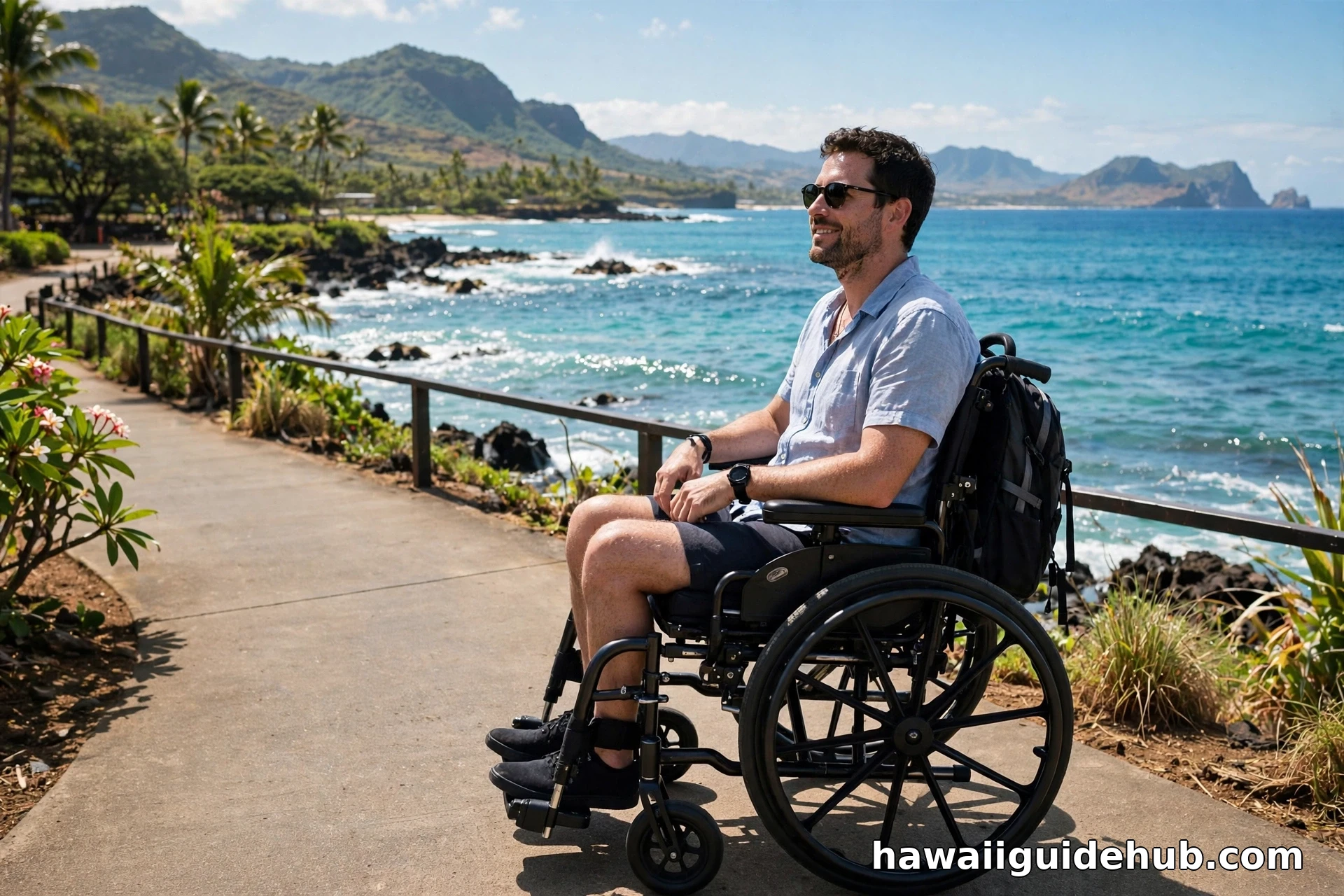
This is the image that matters: a wheelchair user on a smooth oceanfront path, the whole blue Pacific spread out before him, no barriers between him and the view. Hawaii’s paved coastal paths are the great equalizer, delivering the islands’ signature experience, ocean, cliffs, trade winds, to every traveler equally. If you do nothing else accessible in Hawaii, do this: find the path, roll out at golden hour, and let the islands come to you.
Accessible Beaches: Sand Without the Struggle
Several Hawaiian beaches are genuinely set up for wheelchair users. Spencer Beach Park on the Big Island offers paved walkways, accessible restrooms, and calm water. Poipu Beach Park on Kauaʻi and Kāʻanapali Beach on Maui have accessible facilities and beach wheelchair programs. Many counties lend beach wheelchairs, fat-tired chairs that roll over sand, free or cheap, but they must be reserved ahead. Call the county parks department before your trip: availability is limited and first-come systems disappoint.
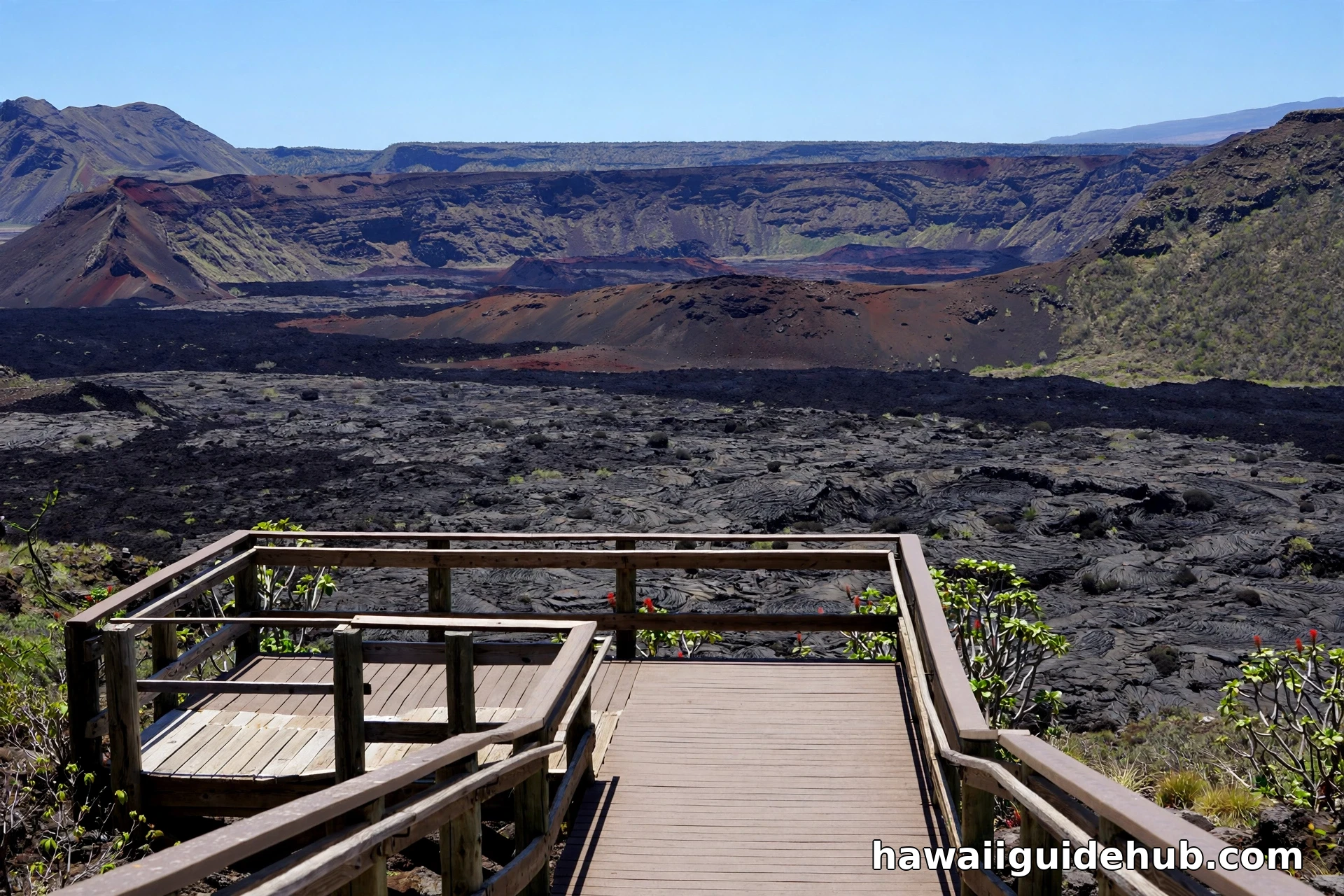
The boardwalk ends at the edge of the extraordinary: a volcanic crater stretching to the horizon, lava fields in every shade of black and rust, all of it visible from a level wooden platform with railings. This is Hawaiʻi Volcanoes National Park at its most democratic, proof that the islands’ wildest landscapes can be shared. Roll to the end, stay a while, and feel very small in the best possible way.
Trails and Parks: What Rolls and What Doesn’t
Hawaiʻi Volcanoes National Park is a standout: the Chain of Craters Road scenic drive, many overlooks, and the Sulphur Banks boardwalk are wheelchair accessible, delivering the volcano experience without the hiking. The Makapuʻu Lighthouse Trail on Oʻahu is paved to the summit. Botanical gardens statewide, Na ʻĀina Kai, the Hawaii Tropical Botanical Garden, Waimea Valley’s paved path to the waterfall, offer lush rainforest immersion on accessible grades. What does not roll: most waterfall hikes, with their mud, roots, and stream crossings. Choose the gardens over the trails and you lose nothing.
A final word on attitude, because it matters as much as logistics. Hawaii’s hospitality culture, the spirit of aloha, is not marketing copy; it is a genuine social ethic of welcome and care that extends naturally to travelers with disabilities. Ask for help when you need it: the beach attendant, the hotel engineer, the fellow traveler. You will be met with kindness far more often than not. The islands have been welcoming every kind of traveler for centuries. Come as you are; the aloha will handle the rest.
Getting Around: Transportation and Equipment
Rent an accessible van well ahead: inventory on the islands is limited and books out in peak season. Standard rental cars work for travelers who can transfer; request hand controls early if needed. TheBus on Oʻahu is fully accessible with kneeling buses; other islands’ transit is spottier, making a rental car nearly essential outside Honolulu. For equipment, Honolulu and the major resort areas have medical supply companies renting wheelchairs, scooters, hospital beds, and oxygen: arrange delivery to your hotel before arrival. Notify your airline 48 hours ahead about mobility devices and carry battery documentation.
Lodging: Booking for Access
Book ADA rooms directly with the hotel, not through third-party sites, and confirm the specific features: roll-in shower versus tub, bed height, door widths, balcony access. Newer resorts generally exceed ADA minimums; older properties may meet the letter but not the spirit. Condos offer kitchens and space but vary wildly in access: ask for photos of the bathroom and entrance. Ground-floor units eliminate elevator dependence. And confirm beach access: an “oceanfront” room means little if the path to the sand is stairs.
Travelers With Visual, Hearing, and Cognitive Disabilities
Accessibility is broader than mobility. Travelers with low vision benefit from Hawaii’s high-contrast landscapes but should know that trail signage is inconsistent; guided tours add narration that signs cannot. The national parks offer audio description and tactile exhibits at visitor centers. For hearing disabilities, major attractions provide assistive listening and captioned presentations; luaus and shows vary, so ask. Travelers with cognitive or sensory sensitivities should know that Hawaii’s natural environments, beaches at off-peak hours, gardens, quiet overlooks, are inherently low-stimulation, while Waikiki and cruise ports are not. Plan the sensory load like the physical one.
For more trip planning, the guide to Hawaiian cultural traditions adds the cultural layer, while responsible travel practices and the guide to Hawaii’s natural environments help you travel well.
Watch: Big Island Wheelchair Travel Tips
Frequently Asked Questions
Is Hawaii wheelchair accessible?
Partially. Paved coastal paths, many beaches with beach wheelchairs, national park overlooks, and major attractions are accessible; rainforest hikes and rugged sites are limited.
Can you rent a beach wheelchair in Hawaii?
Yes, through county parks departments and some nonprofits, usually free or cheap. Reserve ahead; availability is limited.
Is Pearl Harbor wheelchair accessible?
Yes. The visitor center, museums, and the USS Arizona Memorial via Navy shuttle boat are wheelchair accessible.
Are Hawaii’s national parks accessible?
Hawaiʻi Volcanoes offers accessible scenic drives, overlooks, and boardwalks. Haleakalā’s summit visitor center and overlooks are accessible; trails vary.
Should you rent an accessible van in Hawaii?
If you use a wheelchair full-time, yes, and book months ahead. Island inventory is limited, especially in peak season.
Hawaii rewards the prepared accessible traveler richly: the paved coastal paths alone deliver miles of oceanfront grandeur, the volcano overlooks give the full drama without the climb, and the beaches with proper equipment give the ocean itself. The barriers are real but mappable, and this guide is the map. Plan specifically, confirm directly, and the islands will meet you more than halfway. The ocean does not care how you arrive at its edge; it only asks that you come. Plan well, confirm everything, and then let Hawaii do what it has always done: welcome you completely, exactly as you are. And when you roll back up that coastal path at sunset, the trade winds in your face and the Pacific spread out before you, you will understand what the accessible travel community has known all along: the best destinations are not the ones without barriers, but the ones worth navigating the barriers to reach. Hawaii is that destination, many times over, for every traveler willing to plan the way there, and the planning itself becomes part of the adventure: the calls that confirm, the maps that reveal, the itinerary that takes shape around what matters most. The trip begins long before the flight, in the careful, hopeful work of making it possible. Every confirmed reservation is a door opening; every answered question is a path clearing. By the time the plane touches down, you will have already traveled far, and the islands will be ready: the paths paved, the overlooks waiting, the ocean exactly where you left it in your imagination, more beautiful than any photograph and more welcoming than any brochure ever promised, waiting patiently for exactly you, exactly as you are, today and always.