Climate of Hawaii: Trade Winds, Seasons, Records & Microclimates

Hawaii’s climate is famously perfect and famously misunderstood. Yes, it is warm year-round, but the islands also hold the wettest place on earth, deserts, snow-capped summits, and 10 of the world’s 14 Köppen climate zones on a single island. This guide explains how Hawaii’s climate actually works: the trade winds, the two seasons, the microclimates, the records, and what it all means for your trip.
Two Seasons, Not Four
Hawaii has two seasons: kau (summer), May through October, and hoʻoilo (winter), November through April. At sea level the difference is subtle: average daytime highs run about 85°F in summer and 78°F in winter, with nighttime lows in the 70s and 60s respectively. The ocean moderates everything: water temperatures vary only about 6 degrees across the year, from roughly 73°F in winter to 80°F in summer. Seasonal lag means the warmest months are August and September and the coolest are February and March, not the calendar extremes mainlanders expect.
The Trade Winds: Hawaii’s Air Conditioner
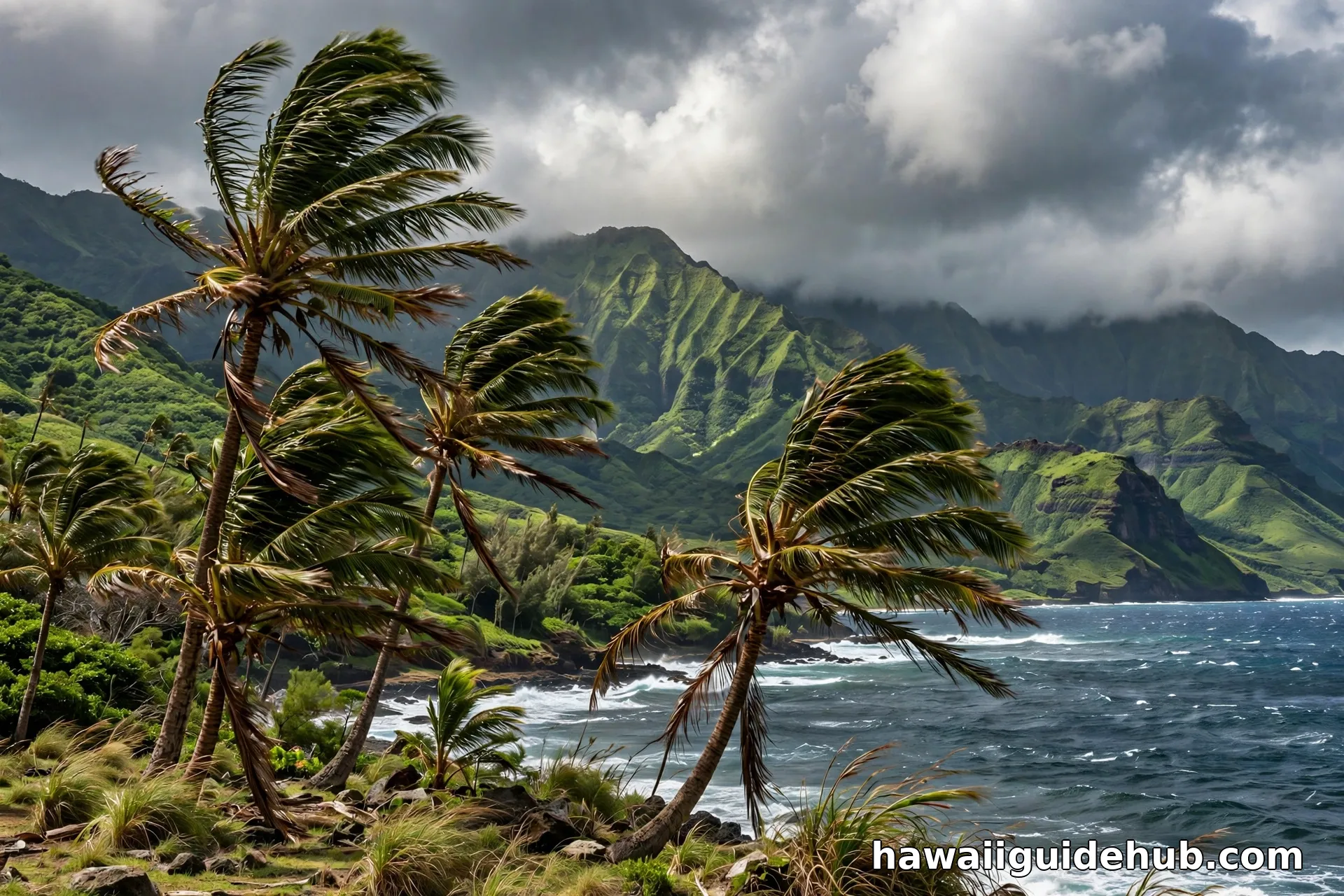
The northeast trade winds are the engine of Hawaii’s climate, blowing more than half the year and over 90 percent of the time in peak summer stretches. They do three jobs: they cool the islands with steady breezes, they deliver the moisture that becomes windward rain, and they keep vog and humidity from settling. When the trades die, locals call it “kona weather”: hot, muggy, still air from the south that makes everyone grumpy. A typical forecast reads “breezy trades, windward showers”: learn to love that sentence.

Windward vs Leeward: The Great Divide
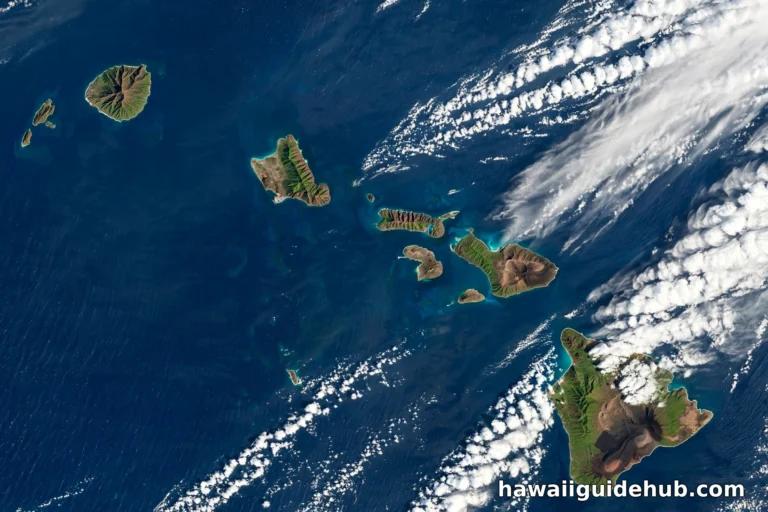
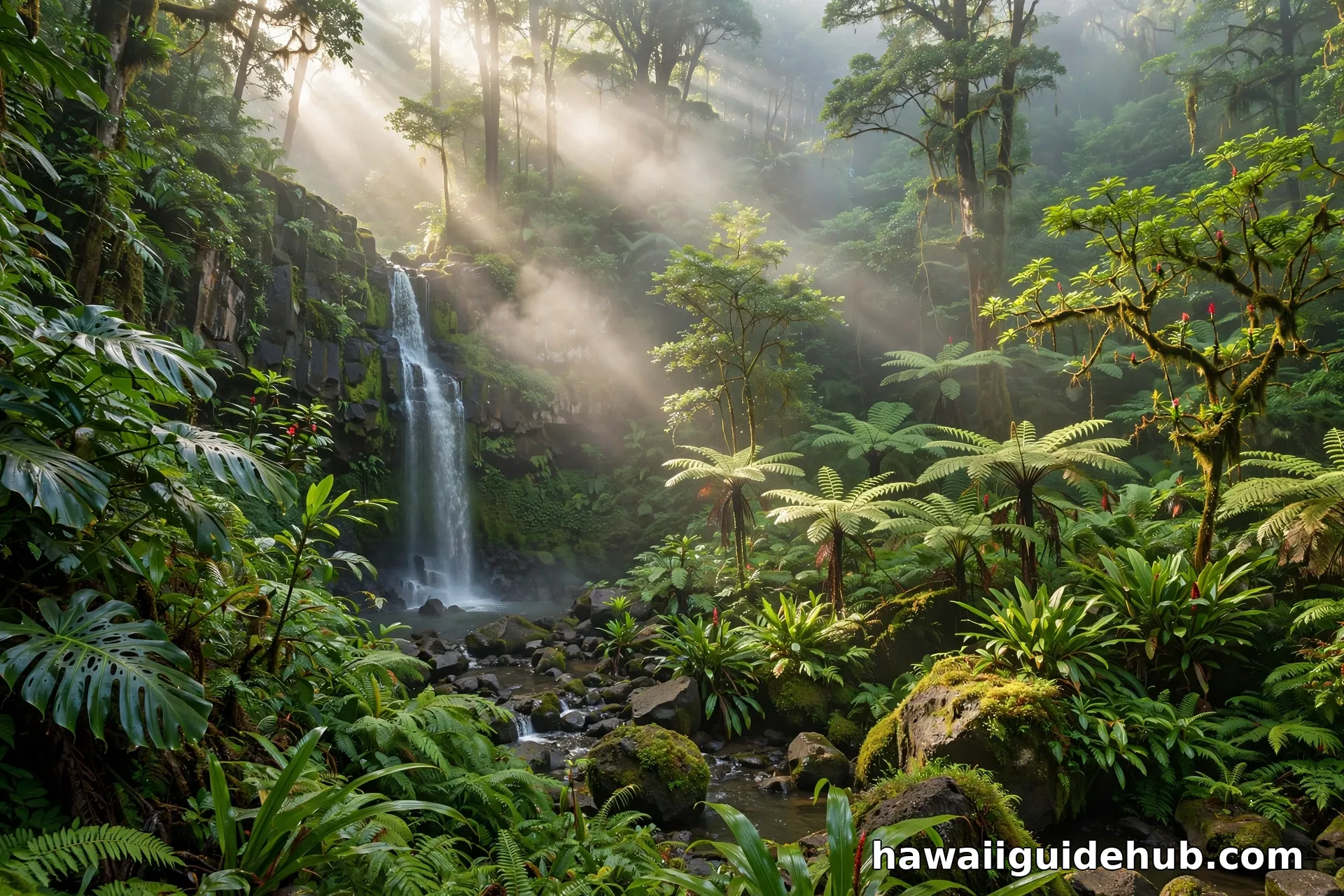
Every island is split by its mountains into a wet windward (east) side and a dry leeward (west) side. Moist trade-wind air slams into the mountains, rises, cools, and dumps rain: the rainiest spots sit around 3,000 feet elevation on windward slopes. The air then descends the leeward side warmer and drier. The result is staggering: Kailua-Kona on the Big Island gets about 18 inches of rain a year while Hilo, 60 miles away, gets over 127. On Kauaʻi, Poʻipū’s sunny beaches and Princeville’s lush cliffs are the same island, different worlds. Per NASA’s Earth Observatory, average yearly rainfall on the Big Island alone ranges from 8 inches to 404 inches.
Ten of Fourteen Climate Zones on One Island
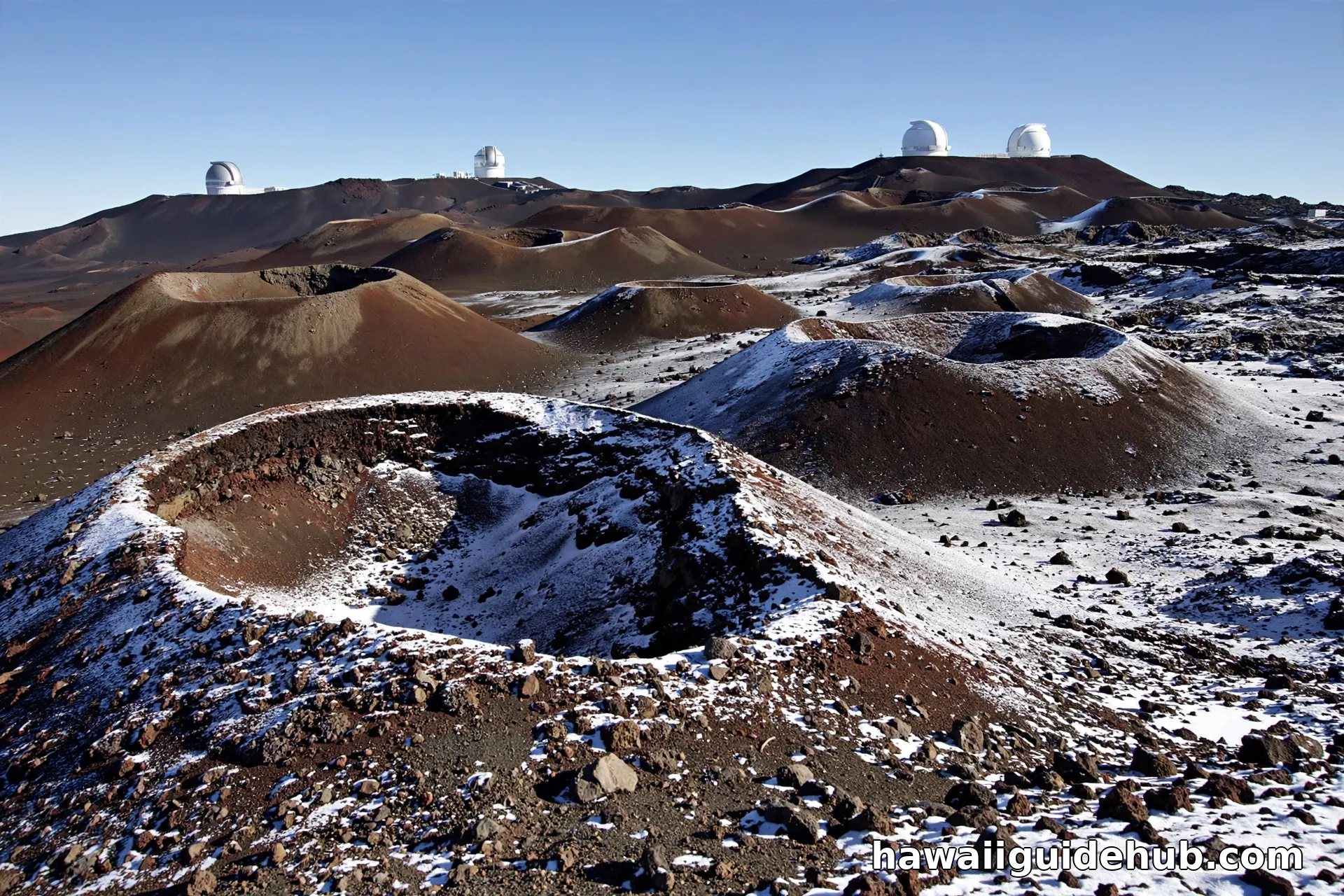
The Big Island hosts 10 of the world’s 14 Köppen climate subcategories across four of the five major groups: tropical, dry, temperate, and even polar. Drive from Kona’s sunny beaches up through Waimea’s temperate ranchlands to the polar tundra of Mauna Kea’s summit and you cross climate zones that on a continent would take thousands of miles. It is one of the great geographic party tricks on earth, and a big part of why the Big Island rewards explorers: see the best things to do on the Big Island.
The Record Book: Hawaii’s Climate Extremes
Per the State of Hawaii Data Book and NOAA:
| Record | Value | Where / When | Source |
| Hottest temperature | 100°F | Pahala, Big Island, April 27, 1931 | Per NOAA |
| Coldest temperature | 12°F | Mauna Kea summit, May 17, 1979 | Per National Weather Service |
| Wettest average rainfall | 444 in/year | Mt. Waiʻaleʻale, Kauaʻi | Per State Data Book |
| Wettest single year | 666 in | Waiʻaleʻale, 1982 | Per State Data Book |
| Driest average rainfall | 8.7 in/year | Kawaihae, Big Island | Per State Data Book |
| Strongest wind gust | 143 mph | Makahuena Point, Kauaʻi, Sept 11, 1992 (Hurricane Iniki) | Per State Data Book |
A note on the cold record: the State Data Book also lists a 1.4°F reading from inside Mauna Kea’s summit cone on January 20, 1970, but the official NWS record low stands at 12°F. Either way, yes, it snows in Hawaii: Mauna Kea and Mauna Loa get winter snow above about 11,000 feet most years, and Haleakalā on Maui sees it roughly once every five years.
Rain: When, Where, How Much
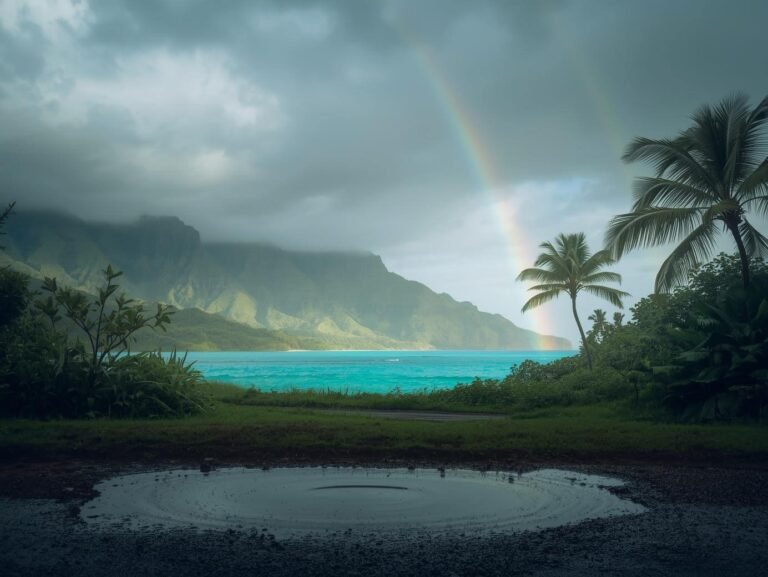
It rains every day somewhere in Hawaii. Winter (November through April) brings the heaviest rains island-wide, including kona storms that can soak even leeward sides. Summer rain is mostly brief windward and mountain showers. Mt. Waiʻaleʻale on Kauaʻi, averaging 444 inches a year, is among the wettest places on earth. Hilo is the wettest city in the islands. The practical rule: mornings are drier than afternoons on windward sides, and leeward beaches stay sunny while the mountains rain. If your Hilo day looks gray, drive 30 minutes west: see things to do in Kona for the sunny-side plan.
Hurricanes and Vog
Hurricane season runs June through November, but direct hits are rare: only a handful of hurricanes have affected the islands since the 1950s, with Iniki (1992) on Kauaʻi the benchmark disaster. The islands’ small size in a huge ocean is its own protection. Vog, volcanic smog from Kīlauea, drifts with the winds and can haze skies and irritate lungs on the Big Island and occasionally statewide during eruptions: check the volcanoes park guide for current conditions before visiting.
El Niño, La Niña, and Year-to-Year Swings
El Niño winters tend to run drier than normal in Hawaii as the subtropical high shifts and trades weaken; La Niña winters lean wetter with stronger trades. These are tendencies, not guarantees, but they shape everything from waterfall flows to surf to wildfire risk. In a strong El Niño year, expect drier leeward coasts and leaner waterfalls; in La Niña, pack extra rain gear for windward adventures.
What to Pack for Hawaii’s Climate
Light, breathable layers: shorts and tees by day, a light jacket or fleece for winter evenings and any mountain or summit trip. Rain jacket, not an umbrella: windward rain comes sideways. Reef-safe sunscreen and a hat: the equatorial sun is fierce even on cloudy days, and sunburn is the most common Hawaii weather injury. Sturdy walking shoes for muddy windward trails. And if Mauna Kea’s summit is on your itinerary, full winter gear: it can be below freezing up there while it is 80°F at the beach.
Island-by-Island Climate Differences
Oʻahu: the most “average” Hawaiian climate. Honolulu averages about 80°F year-round with modest rain; the windward side (Kāneʻohe, Kailua) is wetter and greener, the leeward Waiʻanae coast drier and hotter. Maui: Kīhei and Lahaina sit in a rain shadow and bake, while Hāna and the windward northeast are among the wettest towns in the state; Haleakalā’s summit can be 30 degrees colder than the beach. Kauaʻi: the Garden Isle earns the name, the wettest of the main islands overall, with the Nā Pali Coast catching enormous rain and Poʻipū staying sunny in the south. Big Island: every extreme at once, from Kona’s 18 inches to Hilo’s 127, plus snow on the summits. Pick your island side as carefully as your island.
The Trade Wind Inversion: Why Mountains Make Their Own Weather
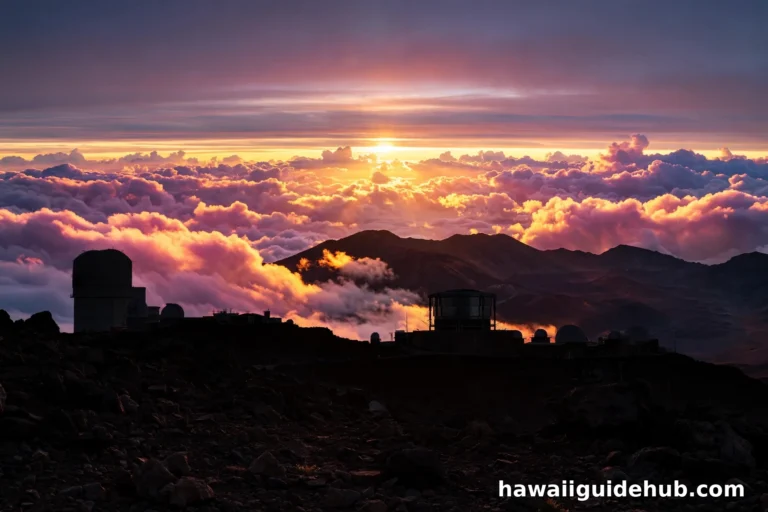
Here is the elegant physics behind it all. Northeast trades carry moist ocean air toward the islands. Mountains force that air upward; it cools, condenses, and rains, mostly below about 5,000 feet where a semi-permanent “trade wind inversion” caps the clouds. Above the inversion the air is dry: that is why the tallest summits are arid and why observatories sit above the clouds. The now-dry air descends the leeward slopes, warming as it falls, which is why leeward coasts are sunny. One mechanism, and it explains nearly everything about Hawaiian weather.
Daylight: Short Days, Small Swings
At 20°N latitude, Hawaii’s day length varies far less than the mainland’s: roughly 11 hours in December to 13.5 in June. Sunrise hovers around 6 to 7 AM year-round, sunset around 5:45 to 7:15 PM. Twilight is brief: the sun drops fast near the equator, so plan summit sunsets and stargazing with little lingering light. The upside: no 4 PM winter darkness, ever.
Ocean Seasons: When Each Shore Shines
Winter (November-March) brings giant surf to north-facing shores: Oʻahu’s North Shore, Maui’s Honolua, Kauaʻi’s north coast. Summer (May-September) flips it: south swells light up Waikīkī, Kona, and Poʻipū while north shores go lake-calm. This is why “best beach” depends on month as much as island. Water temperature barely moves, but wave energy swings enormously: check surf forecasts daily and never underestimate winter shorebreak.
Video: Snow in Hawaii? Climate Zones Explained
How one island holds tropical rainforest, desert, and snowy tundra at once.
Frequently Asked Questions About the Climate of Hawaii
What is the hottest temperature ever recorded in Hawaii?
100°F, recorded at Pahala on the Big Island on April 27, 1931, per NOAA. It remains the state record.
Does it ever get cold in Hawaii?
At sea level, rarely below the 50s°F even in winter. At elevation, absolutely: Mauna Kea’s summit averages near freezing in winter and holds the state record low of 12°F.
What are the two seasons in Hawaii?
Kau (summer), May to October, warmer and drier; and hoʻoilo (winter), November to April, slightly cooler and wetter. The difference at the beach is only a few degrees.
Which side of Hawaii is the rainiest?
The windward (east/northeast) sides. Mt. Waiʻaleʻale on Kauaʻi averages 444 inches of rain a year, among the wettest spots on earth, while leeward areas a few miles away can get under 20.
Does Hawaii get hurricanes?
Rarely. Hurricane season is June to November, but direct hits are uncommon thanks to the islands’ small size in a vast ocean. Iniki (1992) was the last major one.
What is the best weather month in Hawaii?
September through early November often brings the sweet spot: warm, dry, steady trades, and thinner crowds. April and May run a close second.
Climate Change: What’s Shifting
Hawaii is already measuring the changes. Air temperatures have warmed measurably over the past century, with more record highs in Honolulu in recent years. Sea level around the islands is rising, threatening Waikīkī’s beaches and coastal roads within decades. Rainfall patterns are shifting: windward areas trending wetter in downpours, leeward areas drier, with longer droughts between. Coral bleaching events have hit reefs in warm years. For travelers the takeaway is practical, not political: expect more extreme swings around the averages, check conditions close to your trip, and treat the old “it never rains here” advice with a grain of salt.
Which Hawaiian island has the best weather?
There is no single winner, but the leeward coasts compete: Kona (Big Island), Kīhei/Wailea (Maui), Poʻipū (Kauaʻi), and Honolulu/Waikīkī (Oʻahu) are the sunniest bets. In winter, leeward sides matter most; in summer, nearly everywhere shines.
What is the coldest month in Hawaii?
February and March at sea level, thanks to ocean seasonal lag. The difference from summer is only a few degrees at the beach, but mountain areas feel it more.
Reading a Hawaii Forecast Like a Local
“Breezy trades, windward and mauka showers” means: perfect beach weather leeward, brief passing showers windward, cooler in the mountains. “Light winds, afternoon clouds” means: hotter, muggier, possible downpours over the interior. “Kona winds” means: southerly flow, vog possible, hazy and still. “High surf warning north shores” means: stay out of the water there, no exceptions. Locals check the forecast by shore, not by island: the National Weather Service Honolulu office issues zone forecasts that split each island into windward, leeward, and mountain zones. Read the zone you are actually in.
Why is it so windy in Hawaii?
The northeast trade winds blow most of the year, funneled and accelerated by island terrain. Gusty spots like Maui’s central valley and the Big Island’s Kohala coast can see 30-plus mph regularly. It is the price of perfect temperatures.
Does Hawaii have a rainy season?
Yes: November through April is wetter statewide, though windward areas get rain year-round. The “dry season” (May-October) is drier but not dry: brief trade-wind showers still visit windward slopes most days.
Hawaii’s climate is not one climate but a dozen, stacked by elevation and split by mountains. Understand the trades, respect the windward-leeward divide, and pack for the mountain as well as the beach: the islands will show you weather you did not know the tropics could hold.