Black Sand Beaches in Hawaii: Where to Find Them & Which to Swim

Black sand beaches are one of Hawaii’s signature sights: jet-black shores where lava met the ocean and shattered into sand. The Big Island has the most, with seven well-known black sand beaches, and Maui adds a famous one on the Road to Hāna. This guide covers where the black sand beaches in Hawaii are, which ones you can swim at, which are for looking only, and the rules that keep them wild.
How Black Sand Beaches Form
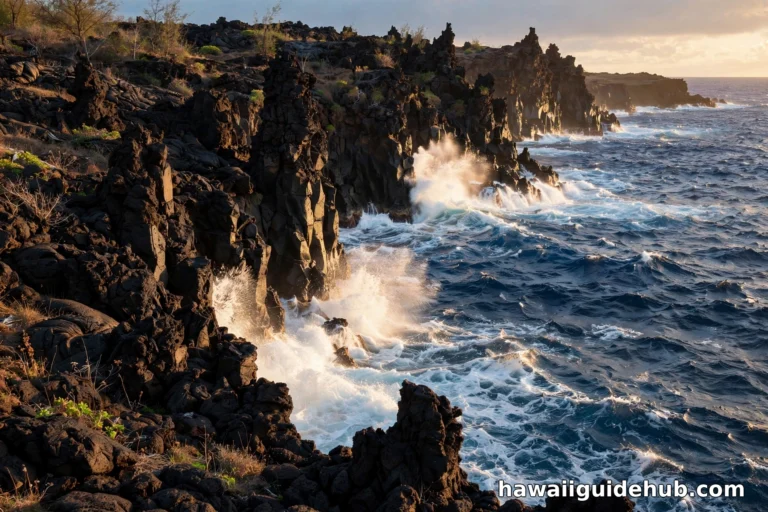
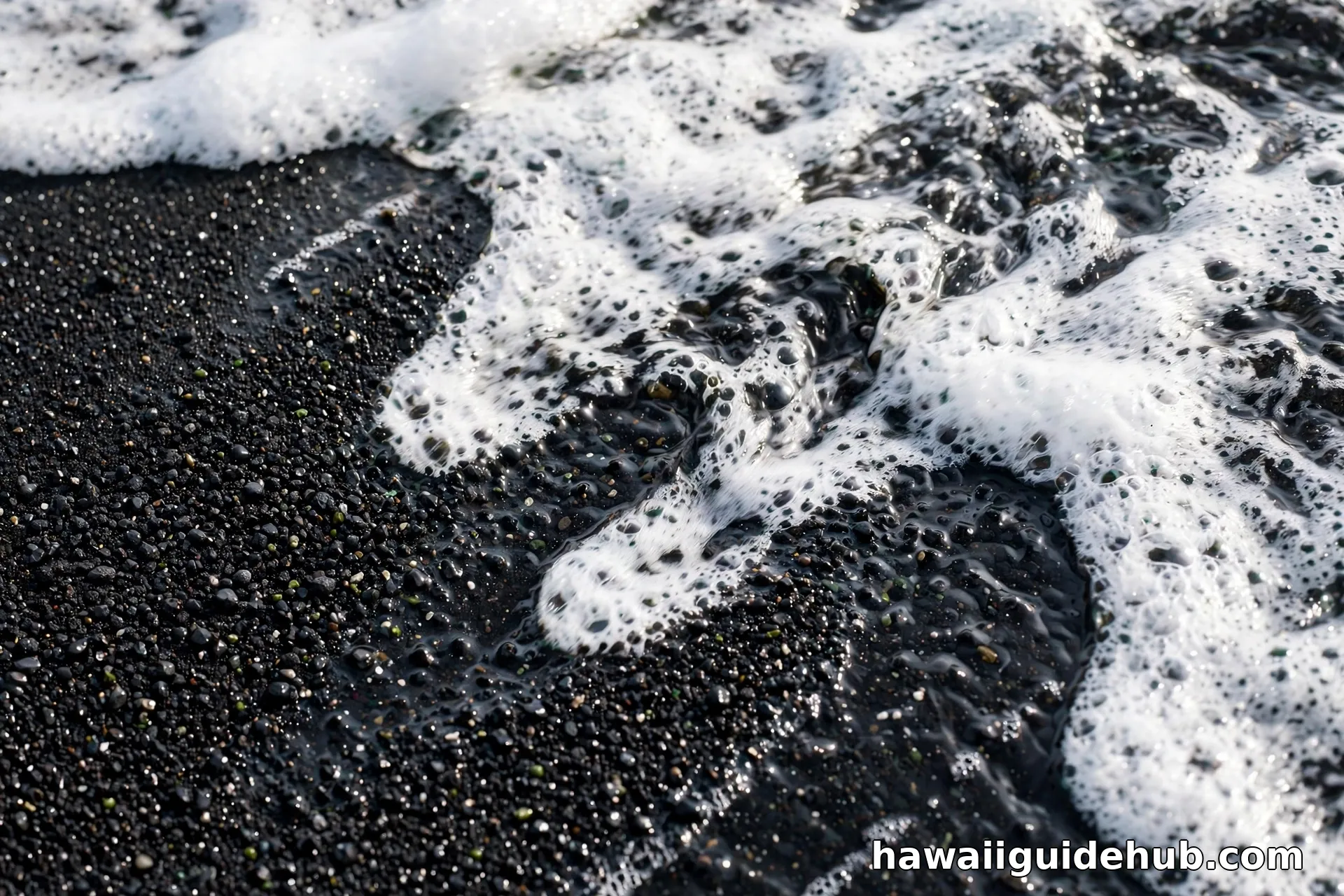
When molten lava pours into the ocean, the cold water shatters it into fragments. Waves grind those fragments down over years into black basalt sand. White sand beaches, by contrast, are made of coral and shell. Black sand beaches are geologically young and constantly changing: the 2018 Kīlauea eruption created entirely new black sand at Pohoiki, while older beaches slowly wash away. Two practical notes: black sand gets scorching hot in midday sun, wear sandals, and taking sand or rocks from Hawaii beaches is illegal as well as culturally disrespectful.
Black Sand Beaches on the Big Island
Punaluʻu Black Sand Beach (Kaʻū coast)
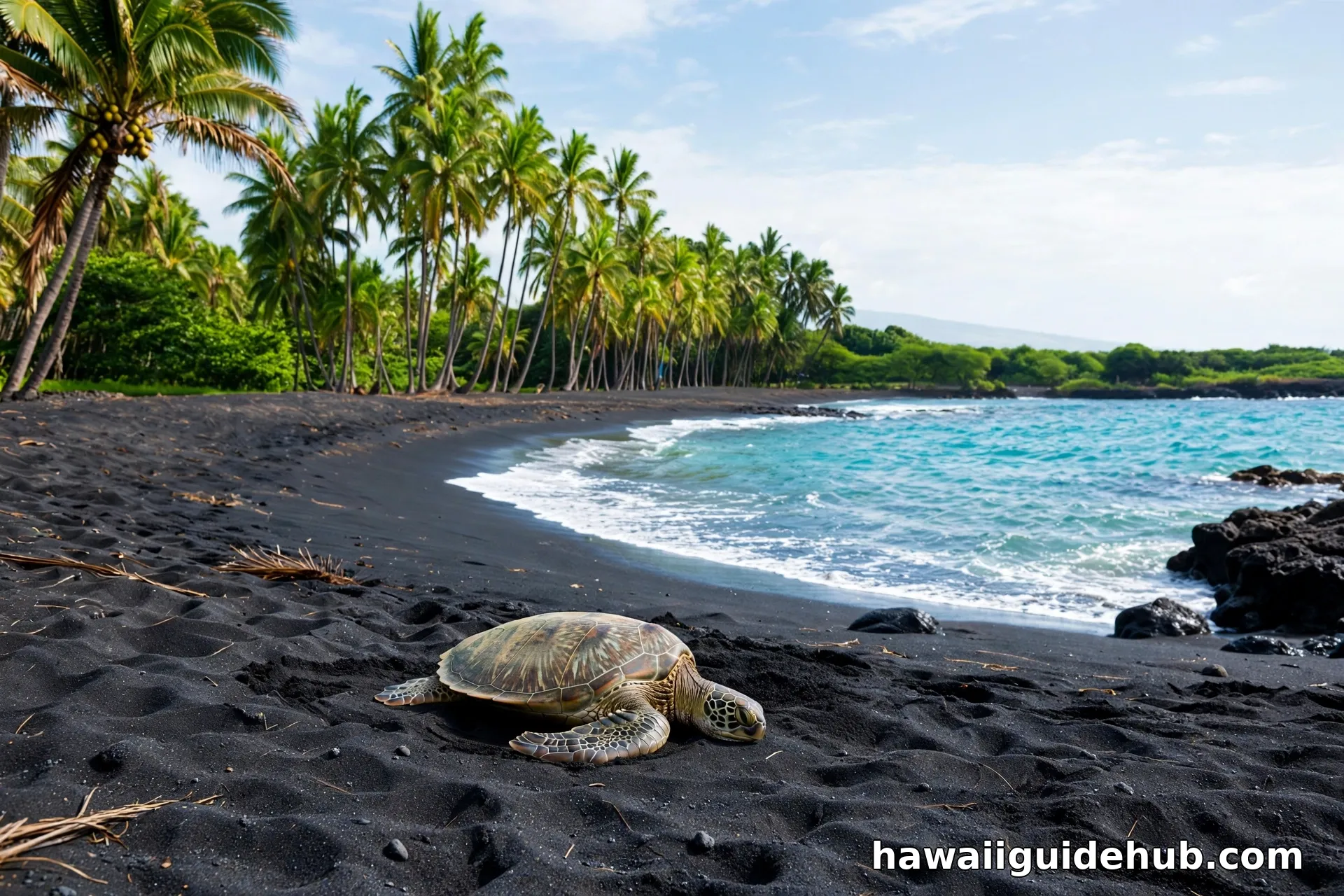
The most famous and most accessible black sand beach in Hawaii. Just off Highway 11 between Nāʻālehu and Volcano Village, about 31 miles from the national park, Punaluʻu has parking, restrooms, showers, picnic areas under coconut palms, and lifeguards. Hawaiian green sea turtles haul out here to bask, one of the few places on earth they do this on an open beach. Swimming is possible when calm, especially at the northeast end, but currents run strong and the bottom is rocky: water shoes help. Best paired with Hawaii Volcanoes National Park on the same day.
Kehena Black Sand Beach (Puna)
A wilder, more local scene near Pāhoa. Reached by a steep, sometimes slippery trail, Kehena is known for spinner dolphins offshore and a clothing-optional, bohemian reputation with a Sunday drum circle. No facilities, no lifeguards, unpredictable waves: come for the atmosphere and the views, not for swimming.
Pohoiki / Isaac Hale Beach Park (Puna)
The newest black sand beach in Hawaii, created when the 2018 eruption filled the old bay with lava and the ocean carved fresh black sand from it. It has warm geothermal ponds nearby and full county park facilities, but strong currents make ocean swimming dangerous. A fascinating look at how fast Hawaii’s coastline reinvents itself.
Kaimū, Pololū, and Waipiʻo
Kaimū near Kalapana requires a walk across rugged lava fields to reach coarse black sand; swimming is unsafe. Pololū Valley’s black sand sits at the bottom of a steep half-mile hike from the overlook, with no facilities and dangerous surf: the hike is the point. Waipiʻo Valley’s black sand shoreline is currently off-limits to non-residents since the steep access road closed in 2022; visit the overlook or join a permitted tour.
Richardson Ocean Park (Hilo)
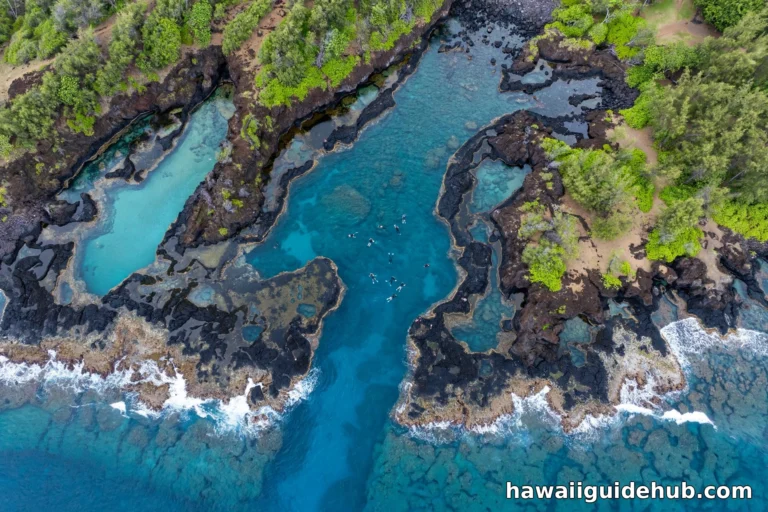
The exception that proves the rule. A natural lava shelf creates a protected interior cove with calm water, tide pools, and freshwater springs, making this one of the only genuinely swimmable black-and-green sand beaches. Restrooms, showers, and sometimes lifeguards. Pair it with the Big Island’s best sights around Hilo.
Black Sand Beaches on Maui
Waiʻānapanapa State Park (Hāna)
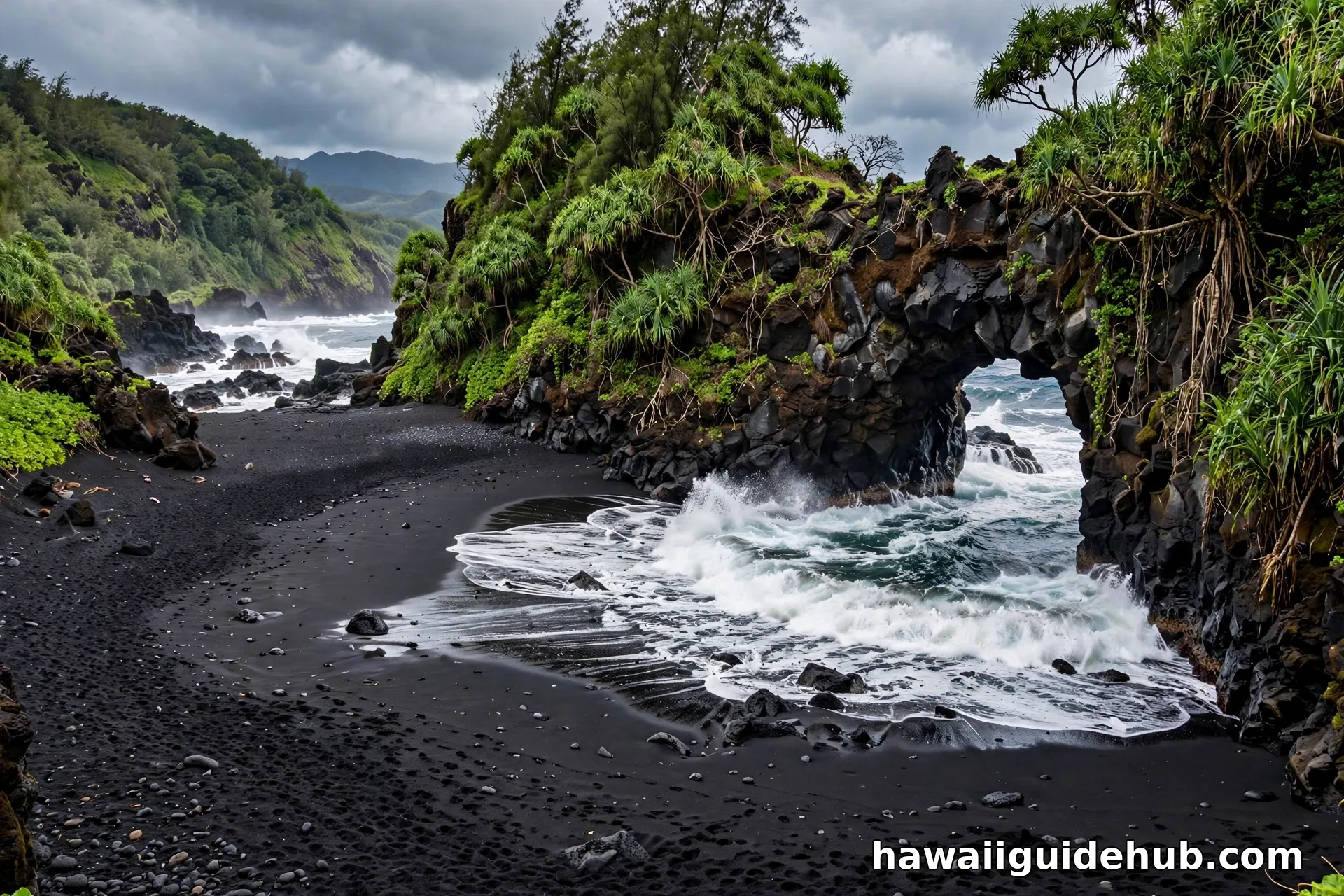
Maui’s famous black sand beach, on the Road to Hāna about 3 miles from town. A small black sand cove framed by a lava sea arch, blowhole, freshwater caves, and coastal trails. The surf is rough and swimming is often unsafe: this is a look-don’t-swim beach, and honestly the scenery is the whole show. Hawaii State Parks requires advance reservations for entry and parking: book before you drive the road.
Oneuli Beach (Mākena, South Maui)
A quieter black sand beach in Mākena State Park, reached by a rough dirt road. Coarse sand, strong shorebreak, no facilities: a local favorite for solitude rather than swimming.
Swim or Look? The Honest Matrix
Most visitors overestimate how swimmable black sand beaches are. Here is the honest breakdown, per Hawaii County Parks and Hawaii State Parks guidance:
| Beach | Island | Swimming | Turtles | Facilities |
| Punaluʻu | Big Island | Sometimes, when calm | Yes, reliable | Full: parking, restrooms, lifeguards |
| Richardson Ocean Park | Big Island | Yes, protected cove | Occasional | Restrooms, showers |
| Pohoiki | Big Island | No, strong currents | Occasional | County park full facilities |
| Kehena | Big Island | No, unpredictable surf | No | None; steep trail |
| Pololū | Big Island | No, dangerous surf | No | None; steep hike |
| Waiʻānapanapa | Maui | Rarely, rough surf | No | State park; reservations required |
| Oneuli | Maui | No, strong shorebreak | No | None; rough road |
The pattern is clear: the easier a black sand beach is to reach and the better its facilities, the more likely it is swimmable, and even then only conditionally. For real swimming and snorkeling days, head to Kona’s white sand and reef beaches: see things to do in Kona and the manta ray night snorkel.
Safety and Etiquette
Black sand absorbs heat: it can burn bare feet by late morning, so wear sandals and use the palm shade at Punaluʻu. Most black sand beaches have no lifeguards; never turn your back on the ocean and never swim alone. Give basking turtles at least 10 feet of space: they are protected, and touching or harassing them is a federal offense. Do not take sand or rocks: it is illegal, and Pele’s curse is the legend Hawaiians tell tourists who try. Leave the dunes and naupaka shrubs alone; they hold the shoreline together.
Beyond Black: Green and Red Sand
Black is not Hawaii’s only colored sand. Papakōlea Beach near South Point is one of only four green sand beaches in the world: its sand is rich in olivine crystals eroded from the surrounding cinder cone. Reaching it requires a rugged 2.5-mile hike or a ride in a local’s 4×4. On Maui, Kaihalulu Beach near Hāna, the “Red Sand Beach,” sits in a cinder cone cove with iron-rich red sand: beautiful, slippery to reach, and clothing-optional by custom. If colored sand is your thing, these two complete the set.
Best Time of Day to Visit
Go early. Black sand is coolest in the morning, turtles haul out to bask mid-morning, and tour buses arrive late morning. By afternoon the sand is hot enough to burn feet and the light is harsh for photos. At Punaluʻu, 8 to 10 AM is the sweet spot: turtles on the sand, shade still available under the palms, and easy parking. Late afternoon brings softer light for photography but hotter sand and bigger crowds.
The Perfect Black Sand Day Trip
From the Kona side, the classic route: drive Highway 11 south through Captain Cook’s coffee country, stop at Punaluʻu for 1 to 2 hours (turtles, picnic, photos), continue to Hawaii Volcanoes National Park for the afternoon, and return via the same road or loop through Hilo. It is a full day: 3-plus hours of driving plus stops. From Hilo, Richardson Ocean Park pairs naturally with a morning at the park and an afternoon waterfall run. On Maui, Waiʻānapanapa is a stop on the Road to Hāna, not a standalone trip: arrive with your reservation slot and give it 45 minutes.
Black Sand Beaches on Other Islands
Oʻahu has no true black sand beaches: its shores are coral-derived white sand and limestone. Kauaʻi has a few dark-sand pockets but nothing on the Big Island’s scale. Molokaʻi, Lānaʻi, and Niʻihau have none worth the trip. This is fundamentally a Big Island and Maui phenomenon, driven by young, active volcanism. If black sand is a must-see, plan the island accordingly.
What to Pack
Water shoes or sturdy sandals (hot sand, rocky entries), reef-safe sunscreen, more water than you think (no shade at most black sand beaches), a hat, and a camera: the contrast of black sand, white foam, and turquoise water is the most photogenic in Hawaii. Snorkel gear only for Richardson or a calm Punaluʻu day. Leave the beach umbrella at the hotel: most of these beaches are too windy or too wild for one.
Video: Black Sand Beach Magic on the Big Island
Black sand, turtles, and turquoise water on the Big Island’s Kaʻū coast.
Frequently Asked Questions About Black Sand Beaches in Hawaii
Where is the black sand beach in Hawaii?
The most famous is Punaluʻu on the Big Island’s Kaʻū coast, off Highway 11 between Nāʻālehu and Volcano. Maui’s is Waiʻānapanapa State Park near Hāna.
Which island has the most black sand beaches?
The Big Island, with seven well-known black sand beaches, thanks to its active volcanoes. Maui has two notable ones.
Can you swim at black sand beaches in Hawaii?
Sometimes. Richardson Ocean Park near Hilo has a protected swimmable cove, and Punaluʻu is swimmable when calm. Most others, Kehena, Pohoiki, Pololū, Waiʻānapanapa, Oneuli, have dangerous surf and are for looking.
Is there a black sand beach in Kona?
Not a true one. Kona’s coast is mostly lava rock and white sand pockets. The real black sand beaches are on the Kaʻū and Puna coasts, a 1.5 to 2.5 hour drive from Kona.
Why is the sand black in Hawaii?
Lava flowing into the ocean shatters on contact with cold water; waves grind the fragments into black basalt sand. White sand comes from coral and shells.
Can you take black sand from Hawaii?
No. Removing sand, rocks, or coral from Hawaii beaches is illegal, and culturally it disrespects Pele, the volcano goddess. Take photos, leave the sand.
Photographing Black Sand
Black sand fools camera meters: auto-exposure tends to overexpose, turning black sand gray. Dial exposure down by a third to two-thirds of a stop to keep the sand rich and black. Morning and late afternoon give the best color: white foam pops against dark sand, and turtles photograph best in soft light. A polarizing filter cuts glare on wet sand and water. And the obvious: keep gear away from the surf zone. Sneaker waves have claimed more cameras at black sand beaches than anywhere else in Hawaii.
Is the black sand at Punaluʻu natural?
Yes. It is basalt lava shattered by the ocean and ground down by waves over centuries. The beach is constantly renewed as waves break down more lava rock along the shore.
Are there black sand beaches on Oʻahu?
No true ones. Oʻahu’s beaches are coral-derived white sand. For black sand, visit the Big Island or Maui’s Waiʻānapanapa.
Pele’s Curse and Taking Sand
Every Hawaii visitor hears the legend: Pele, goddess of volcanoes, curses anyone who takes lava rock or sand from the islands with bad luck until it is returned. Park rangers receive boxes of returned rocks mailed back by guilty tourists every year. The practical side matters more than the legend: removing sand, rock, or coral from Hawaii’s beaches and parks is illegal under state law, with fines to match. The legend is just the memorable version of a real conservation rule. Buy a souvenir; leave the beach where you found it.
Snorkeling at Punaluʻu: When It Works
On calm summer mornings, the northeast end of Punaluʻu offers decent snorkeling over patchy reef with turtles cruising by. “Calm” is the operative word: the bay faces open ocean and trade-wind chop builds by midday. Enter at the sandy patch near the parking area, wear water shoes for the rocky bottom, and stay out if surf is up: a strong rip runs through the old boat channel. If conditions look marginal, they are: drive to Richardson Ocean Park or save the snorkel for the Kona coast’s manta ray night snorkel instead.
Camping Near Black Sand
Punaluʻu allows overnight camping with a Hawaii County permit, booked in advance: falling asleep to surf on black sand under the palms is one of the island’s great cheap nights. Waiʻānapanapa State Park also has cabins and tent camping with reservations. Everywhere else on this list is day-use only. Pack out everything; black sand beaches have minimal trash service and no fresh water.
Do black sand beaches get hotter than white sand?
Yes, noticeably. Dark basalt absorbs far more solar heat than coral sand. By midday in summer, Punaluʻu’s sand can burn bare feet: wear sandals and stick to the palm shade.
What is the green sand beach in Hawaii?
Papakōlea Beach near South Point on the Big Island, one of four green sand beaches in the world. Its olivine-rich sand comes from the surrounding cinder cone. It requires a 2.5-mile hike each way.
Black sand beaches are Hawaii’s geology on display: shores built from yesterday’s lava, still being rebuilt by today’s eruptions. Go for the turtles at Punaluʻu, the drama at Waiʻānapanapa, and the sheer novelty of black sand between your toes, and save the swimming for Kona’s calmer side.