Edamame Rice Recipe Hawaii: The Local Potluck Classic

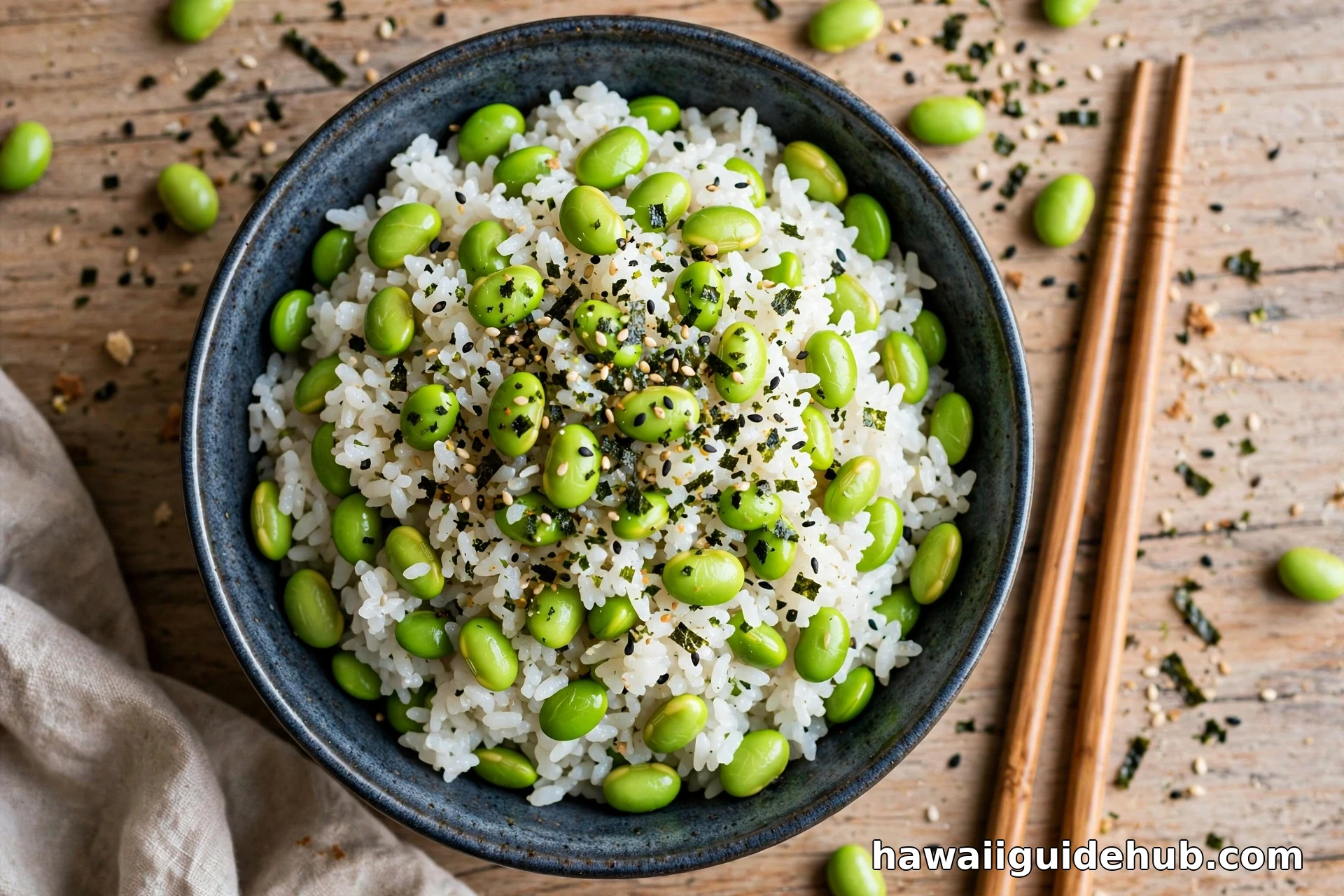
Edamame rice is one of Hawaii’s quiet staples: white rice tossed with bright green edamame, furikake, and seasoned mushrooms, the dish that shows up at every potluck, bento, and family gathering. The University of Hawaii’s own recipe program published the canonical local version, and this guide builds on it: the classic Hawaii recipe step by step, where the dish comes from, smart variations, and how locals actually serve it. Simple, healthy, and endlessly adaptable.
This page covers what edamame rice is, its origins in Hawaii’s Japanese food culture, the classic recipe with exact ingredients, two more variations, serving ideas, storage, and FAQs. Everything about Hawaii’s edamame rice is on this one page.
The Short Answer
Hawaii’s edamame rice is cooked white rice mixed with shelled edamame, nametake (Japanese seasoned mushrooms), and furikake (seaweed sesame seasoning), per the University of Hawaii CTAHR recipe. It takes about 10 minutes with cooked rice on hand, serves a crowd, and works hot or at room temperature. The variations below add shoyu-garlic or Japanese rice-cooker styles.
Where Edamame Rice Comes From
Edamame rice is a Hawaii-born fusion of Japanese home cooking and local pantry culture. Japanese immigrants brought rice traditions; Hawaii’s multicultural kitchens added furikake from the Japanese aisle, nametake mushrooms, and the potluck imperative to feed twenty people fast. The University of Hawaii’s GET Local program, which promotes Hawaii-grown produce including local edamame, published its version as a community recipe. It is not restaurant food; it is home food, the kind of dish aunties make in a rice cooker the size of a bucket.
The Classic Hawaii Recipe
This follows the University of Hawaii CTAHR proportions, scaled for a family.
Ingredients
- 5 cups cooked white rice (short grain preferred)
- 2 1/2 cups shelled edamame, cooked
- 1 bottle (about 7 oz) nametake, Japanese seasoned mushrooms
- Furikake, to taste (start with 3 to 4 tablespoons)
- Nori sheets, for serving (optional)
Instructions
- Cook the rice and let it cool for about 10 minutes; hot rice gets gummy, warm rice mixes perfectly.
- Boil the shelled edamame for 3 to 5 minutes until tender, then drain.
- In a large bowl, combine the rice, edamame, and the full bottle of nametake with its liquid.
- Sprinkle generously with furikake and toss to combine.
- Serve warm or at room temperature, with nori for wrapping if you like.
Edamame Rice, Three Ways
| Version | Key ingredients | Time | Best for |
| Hawaii local (UH style) | Rice, edamame, nametake, furikake | 10 min with cooked rice | Potlucks, bentos, feeding a crowd |
| Shoyu-garlic Hawaiian | Rice, edamame, shoyu, garlic, sesame oil, green onion | 15 min | Bold flavor; pairs with grilled meats |
| Japanese edamame gohan | Rice, edamame, sake, mirin, salt, kombu | 1 rice cooker cycle | Purists; delicate, clean flavor |
Variation 1: Shoyu-Garlic Edamame Rice
For a punchier version, skip the nametake. Toss warm rice and edamame with 3 tablespoons shoyu (Aloha Shoyu if you want the local touch), 2 minced garlic cloves sauteed in a teaspoon of sesame oil, sliced green onion, and furikake. The garlic and sesame oil give it the flavor profile of Hawaiian garlic shrimp’s famous sauce, minus the shrimp. This version is the best partner for teriyaki chicken or grilled fish: the rice stands up to strong mains.
Variation 2: Japanese Edamame Gohan
The Japanese rice-cooker method cooks the edamame with the rice. Wash 2 cups short grain rice, add water to the 2-cup line plus a tablespoon each of sake and mirin and two-thirds teaspoon salt, lay a piece of kombu on top, and cook. When done, remove the kombu and fold in blanched shelled edamame. The result is subtle and elegant: each grain seasoned, the edamame sweet against it. Serve as a side for broiled fish.
The Ingredients, Explained
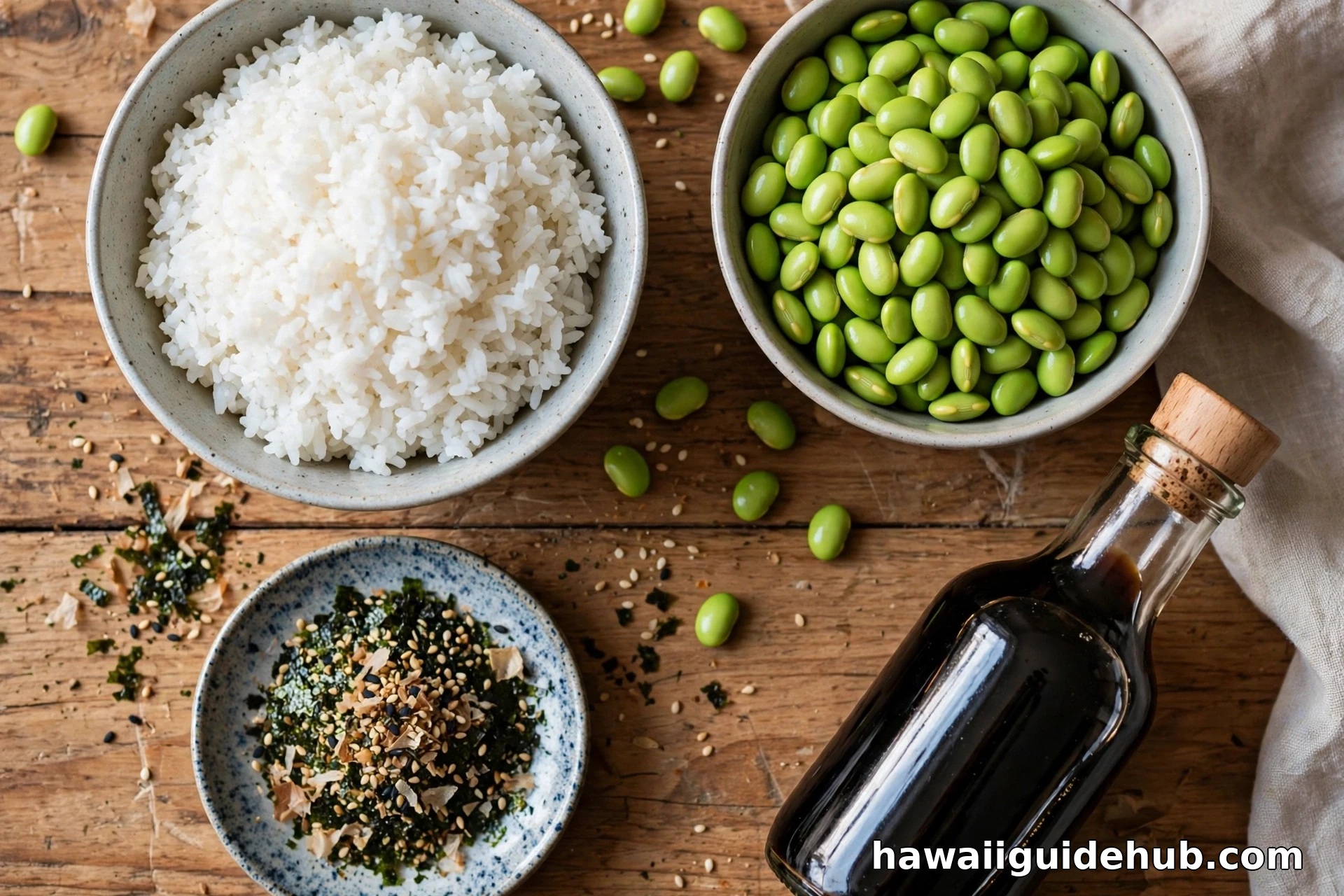
Each ingredient earns its place. The rice should be short or medium grain: its slight stickiness holds the dish together, while long grain falls apart into a pilaf. Edamame brings protein, fiber, and the bright green pop; use shelled, and do not overcook it to mush. Nametake, the bottled seasoned mushrooms, adds savory depth and a glossy moisture that keeps the rice from drying out: find it in the Japanese section of any Hawaii supermarket. Furikake is the non-negotiable: the seaweed-sesame-salt sprinkle that makes the dish taste like itself. Buy the big bag; you will use it on everything.
Edamame in Hawaii: Grown Local
Edamame is not just an import in Hawaii: it is grown locally, and the University of Hawaii’s GET Local program has promoted Hawaii-grown edamame alongside its recipes. Fresh local edamame, when you can find it at farmers markets, is sweeter and more tender than frozen. The season runs through the warmer months. If you buy it in the pod, boil the pods in salted water for five minutes, cool, and pop the beans out: it is meditative work, and the flavor reward is real. For everyday cooking, the frozen shelled bags are what every local kitchen uses.
Scaling for a Crowd
Potluck math: the UH recipe’s 5 cups of cooked rice serves about 10 to 12 as a side. For 20 people, double it and mix in the biggest bowl you own, or a cleaned cooler in true Hawaii style. Cook the rice in two rice cooker batches; mix the edamame and seasonings in while the second batch cooks. Transport at room temperature with the lid on; it holds safely for two hours. Bring the furikake bottle for a fresh sprinkle at serving: it re-crisps the top and looks generous.
More Variations to Try
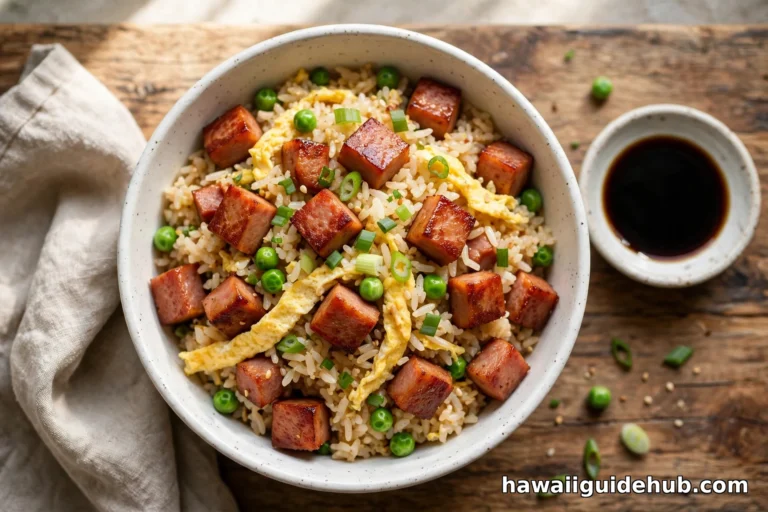
Once you know the base, improvise. Kimchi edamame rice: fold in chopped kimchi and a drizzle of sesame oil for a Korean-Hawaii twist. Spam version: dice and crisp a can of Spam, fold it through, and you have a main dish. Poke bowl base: press the rice into bowls and top with shoyu ahi poke, avocado, and macadamia crunch. Breakfast version: top a bowl with a fried egg and extra furikake. The dish is a template, not a rule: rice plus edamame plus something savory plus furikake always works.
Edamame Rice for Meal Prep
This is elite meal prep food. A Sunday batch gives you five days of lunches: portion into containers, add a protein on top (teriyaki chicken, baked tofu, canned tuna with mayo and shoyu), and refrigerate. The rice stays moist thanks to the nametake, and the edamame holds its texture better than most vegetables after days in the fridge. Microwave with a damp paper towel over the top for 90 seconds and it tastes fresh. Per-container cost: under two dollars.
Common Mistakes
Four mistakes ruin edamame rice. One: mixing with steaming hot rice, which turns gummy; let it cool ten minutes. Two: overcooking the edamame into olive drab mush; bright green and toothsome is the target. Three: under-seasoning: plain rice plus plain edamame is bland, and the furikake and nametake are doing the real work, so be generous. Four: making it hours ahead and refrigerating without covering, which dries the surface; press plastic wrap directly onto the rice.
Nutrition: Why It Works
A cup of edamame rice runs roughly 250 to 300 calories with about 10 grams of protein and 4 grams of fiber, a meaningful upgrade over plain white rice. The edamame supplies complete plant protein, folate, and iron; the furikake adds calcium and iodine from seaweed. Sodium is the watch point: between shoyu, nametake, and furikake, a serving can carry 400 to 600 mg, so low-sodium shoyu and a light hand with the sprinkle keep it balanced. For athletes and kids, it is close to an ideal carb-protein recovery bowl.
Cousins Around the Pacific
Edamame rice has relatives. Japan’s mame gohan is the ancestor: rice cooked with peas or edamame and salt. Hawaii’s own genmai versions use brown rice. In Korean-Hawaii kitchens, kongbap, rice with beans, plays the same role. The Philippines’ influence shows up when locals add diced lup cheong. Every rice culture in the Pacific has a “rice plus beans plus seasoning” dish, and Hawaii’s version borrows from all of them. That is the islands on a plate: everybody’s grandmother contributed something.
For Kids’ Lunchboxes
Edamame rice is a lunchbox hero: nutritious, room-temperature safe for hours, and finger friendly. Pack it in a bento with nori sheets for wrapping, some diced fruit, and a small treat. Kids who reject plain vegetables often accept edamame mixed into rice: the green beads are fun to eat. For picky eaters, go light on the nametake (its mushroom flavor divides children) and heavier on the furikake. Teachers report it as the lunch other kids ask about.
Where to Buy the Ingredients
In Hawaii, everything is at the supermarket: Foodland, Safeway, and Don Quijote carry nametake, furikake in a dozen varieties, and frozen edamame in the Japanese aisle. On the mainland, any Asian grocery has all three; mainstream supermarkets carry frozen edamame and furikake in the international aisle, and nametake is worth the trip to the Asian market. Aloha Shoyu, the Hawaii brand, is sold in many mainland stores and online. Total ingredient cost for the classic recipe: about $8 to $12, most of which is the edamame.
How Locals Serve It
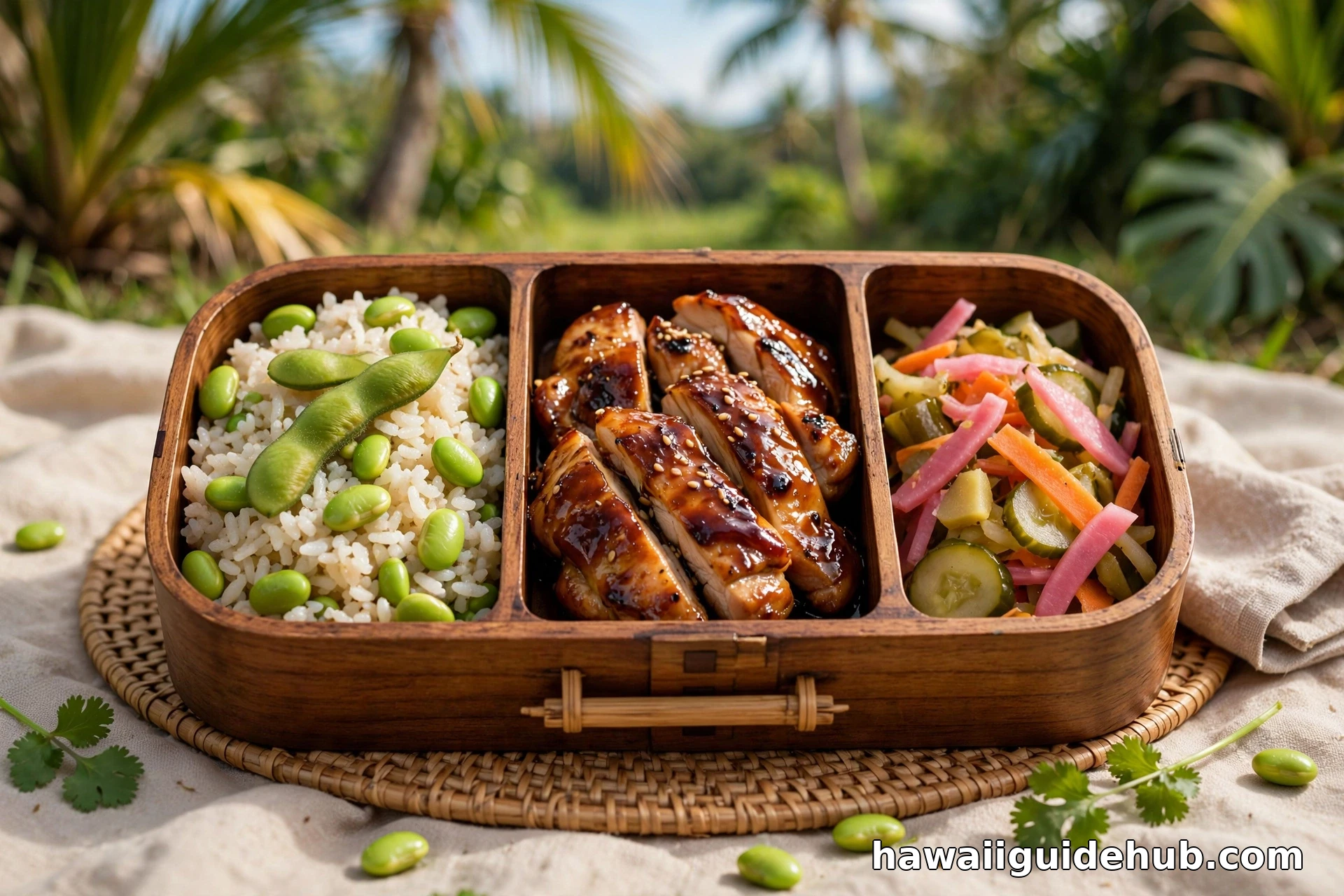
Edamame rice is a side dish, not a main: it anchors bentos next to teriyaki chicken, shoyu pork, or fried fish. At potlucks it sits at room temperature in a big bowl with a serving spoon, and it is always one of the first dishes to empty. For kids’ bentos, pack it with nori sheets for wrapping. It also works as a poke bowl base: top with ahi poke, avocado, and cucumber for a full meal. The rice holds up for hours without drying out, which is why it travels so well to beach parks.
For more Hawaii food culture, see the complete guide to huli huli chicken, lomi lomi salmon, and malasadas.
Tips and Storage
Use day-old rice if you can: freshly cooked rice is too wet and the dish turns mushy. Frozen shelled edamame is what everyone uses; no shame in it. Do not skimp on the furikake: it is the salt and the crunch. Leftovers keep three days refrigerated and reheat well with a sprinkle of water. The dish is naturally vegetarian and easily vegan; use tamari for gluten free. For a brown rice version, cook the brown rice fully first, then mix: brown rice’s chew stands up nicely to the edamame.
Video: Edamame Gohan
Step by step edamame rice in the Japanese style: simple, precise, delicious.
Frequently Asked Questions
What is in Hawaiian edamame rice?
Cooked white rice, shelled edamame, nametake seasoned mushrooms, and furikake, per the University of Hawaii recipe.
Is edamame rice healthy?
Yes: edamame adds protein and fiber to rice, and the dish is low in fat. Watch the sodium from shoyu and furikake if that matters to you.
Can I make it with brown rice?
Yes. Cook the brown rice fully first, then mix with the other ingredients. The chewy texture works well.
How long does it keep?
Three days refrigerated. Serve at room temperature or reheated with a sprinkle of water.
What is nametake?
Japanese seasoned mushrooms, sold in bottles in the Asian aisle. They add savory depth and moisture to the rice.
What do you serve with edamame rice?
Teriyaki chicken, shoyu pork, fried fish, or ahi poke. It is a side dish built for bentos and potlucks.
One last tip from the potluck circuit: make a double batch the first time. The first bowl is for tasting and adjusting the seasoning; the second is the one you bring. Nobody has ever complained about extra edamame rice, and the cook’s share is a time-honored tradition.
Edamame rice will never be the star of the table, and that is its charm. It is the reliable dish, the one that feeds everyone, travels anywhere, and tastes like Hawaii’s Japanese roots in every bite. Make a big batch, bring it to the next potluck, and watch it disappear first. Some recipes impress; this one just gets eaten.