Hawaii Christmas Traditions: Mele Kalikimaka Island Style

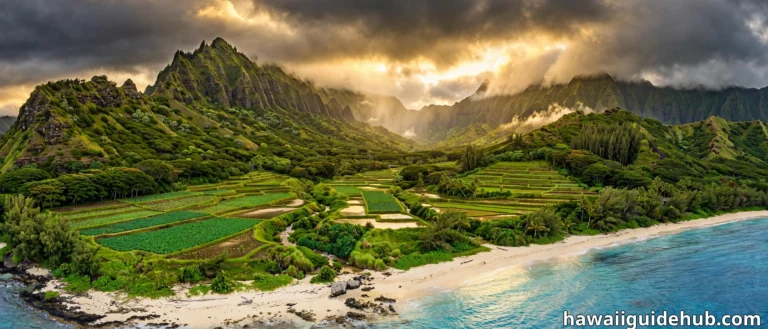
Hawaii does Christmas its own way: Santa arrives by outrigger canoe, palm trees wear the lights, the feast is kalua pig beside the turkey, and the whole season rests on a 2,000-year-old winter festival of peace called Makahiki. From the first Christmas dinner on Kauai in 1786 to Honolulu City Lights today, this is the complete story of Hawaii’s Christmas traditions: history, food, music, events, and what the holidays feel like in the islands.
This page covers the history of Christmas in Hawaii, the Makahiki roots, Mele Kalikimaka and its song, Santa Hawaiian style, the holiday table, music and hula, island-by-island events, visiting at Christmas, and FAQs. Everything about Christmas in Hawaii is on this one page.
The Short Answer
Christmas in Hawaii blends American holiday customs with island culture: it was introduced by missionaries after 1820 and declared an official holiday by King Kamehameha IV in 1862, building on the ancient Makahiki winter festival. Today the traditions include Honolulu City Lights, Santa (Kanakaloka) arriving by canoe or surfboard, the Mele Kalikimaka song, and a holiday table mixing turkey with kalua pig, poke, and haupia.
Before Christmas: The Makahiki
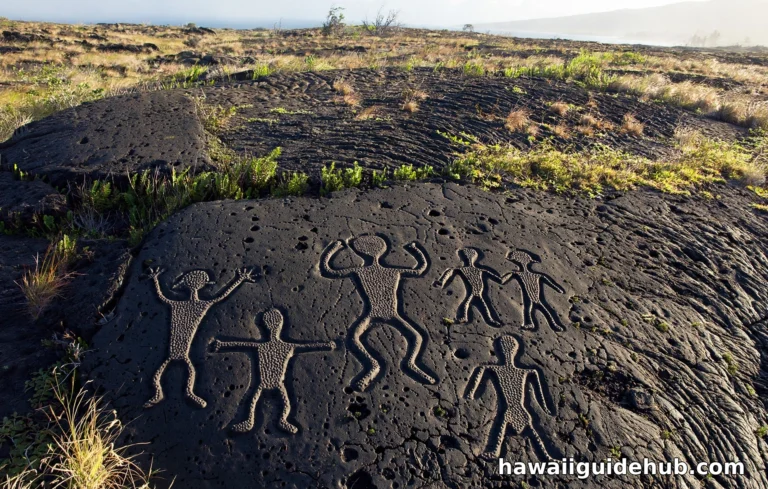
Long before Christmas reached Hawaii, the islands had their own winter celebration: the Makahiki, a four-month season from roughly November to February honoring Lono, god of agriculture and peace. During Makahiki, war was forbidden, work stopped, and the islands feasted, played games, danced hula, and renewed communal bonds. When missionaries later introduced Christmas, the season’s themes of peace and feasting mapped naturally onto what Hawaiians already celebrated. The Makahiki is the deep root under Hawaii’s Christmas: “peace on earth” was already the local custom.
The First Christmases in Hawaii
The first recorded Christmas in Hawaii happened in 1786, when Captain George Dixon’s crew celebrated aboard ship at Waimea Bay, Kauai, with roast pig, pie, and grog mixed with coconut milk. Protestant missionaries brought the holiday formally after 1820. In 1856, King Kamehameha IV declared December 25 the kingdom’s national day of thanksgiving, and in 1862 Christmas became an official holiday. Santa made his first documented Hawaii appearance delivering gifts at Washington Place. Hawaii’s Christmas is older than statehood by nearly a century.
Mele Kalikimaka: The Song and the Saying
“Mele Kalikimaka” is the Hawaiian phonetic rendering of “Merry Christmas”: Hawaiian has no R or S sounds, so the English greeting reshaped itself to fit the language’s sounds. Honolulu native Robert Alex Anderson wrote the song “Mele Kalikimaka” in 1949, and Bing Crosby’s 1950 recording with the Andrews Sisters made it a global standard. It remains the definitive Hawaiian Christmas song, played everywhere from malls to luaus each December. Say it “meh-leh kah-lee-kee-mah-kah,” flash a shaka, and you are speaking island Christmas.
Santa, Hawaiian Style
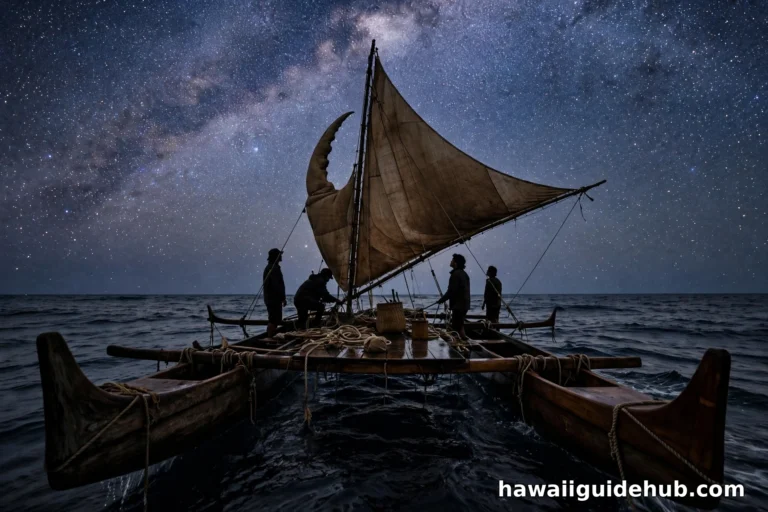
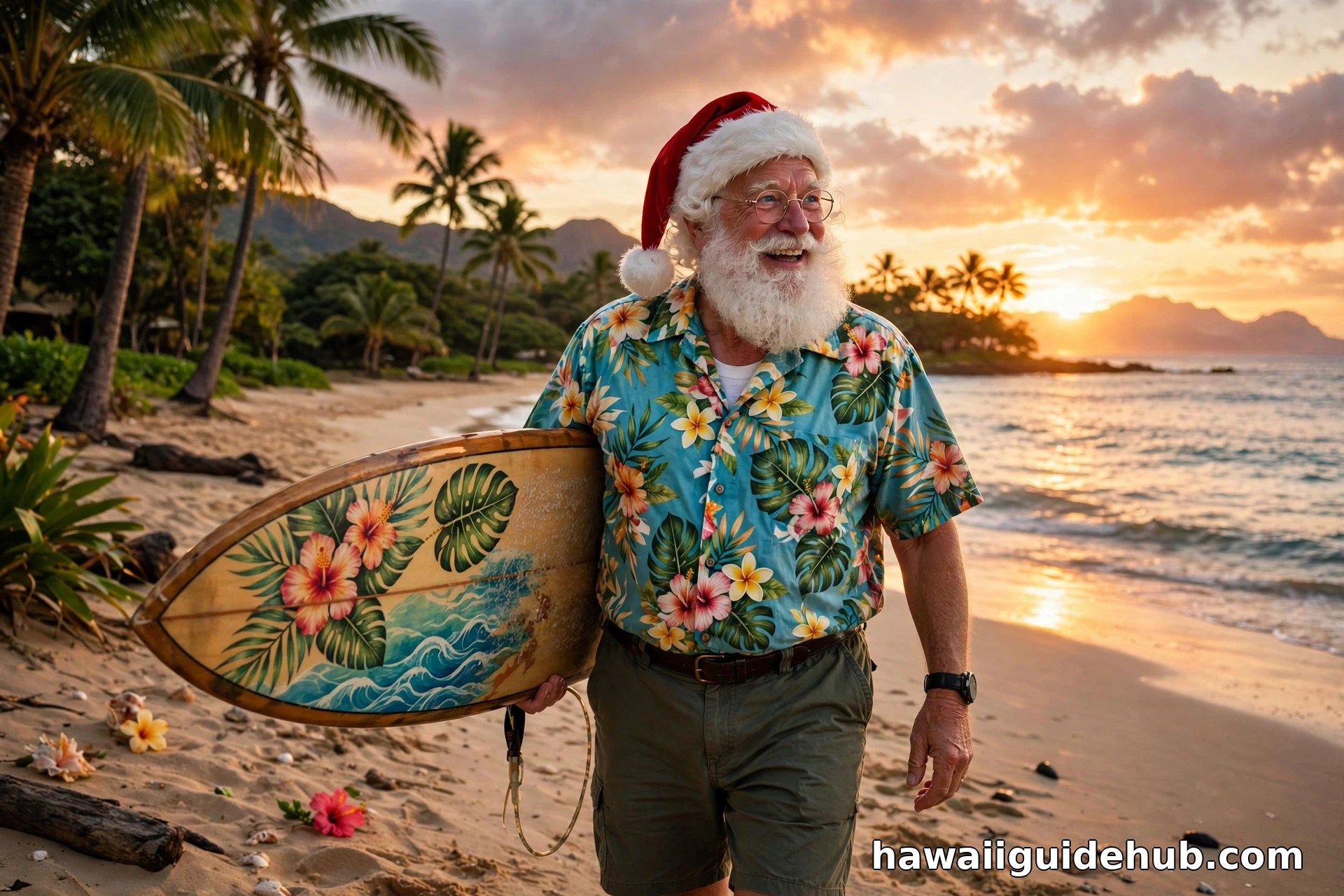
Hawaii’s Santa is Kanakaloka, and he has adapted to the islands. With no chimneys and no snow, he arrives by outrigger canoe, boat, or surfboard; his sleigh and reindeer become a canoe pulled by dolphins in the local telling. He trades the heavy red suit for an aloha shirt and slippers. At Honolulu City Lights, the giant Santa flashes a shaka instead of waving, and Mrs. Claus wears a muʻumuʻu. Kids in Hawaii never wonder about the logistics: of course Santa surfs in.
The Holiday Table
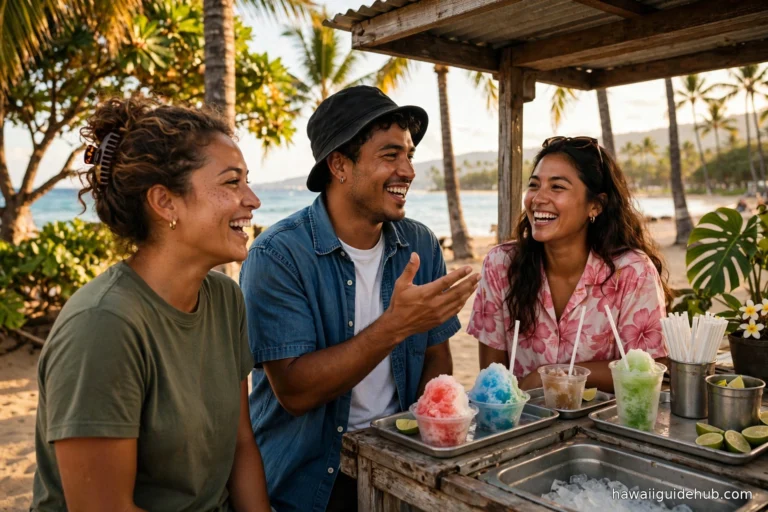
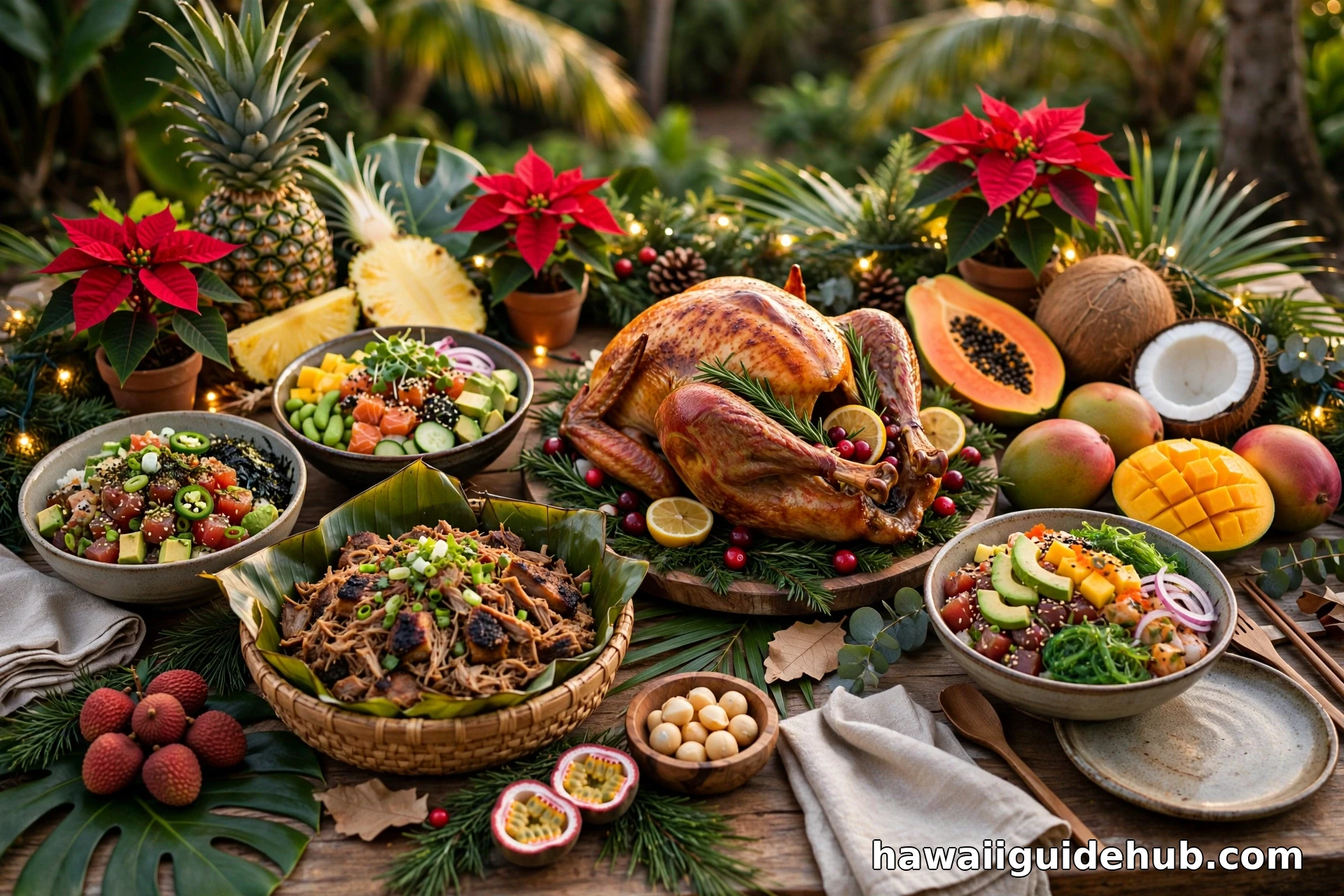
The Hawaiian Christmas feast is a potluck of cultures. The turkey and ham sit beside kalua pig, poke, lomi salmon, rice, sweet bread, and haupia. Japanese families add sushi, Filipino families add lumpia, Portuguese families add sweet bread and malasadas. Christmas wreaths are traditionally made from poinsettia, which grows as a shrub in Hawaii’s climate. Dessert is haupia pie, coconut pudding in chocolate crust, or tropical fruit. It is the most delicious argument for Hawaii’s multiculturalism, served on one table.
Music, Hula, and Church
Christmas music in Hawaii runs on ʻukulele and slack-key guitar: carols sung in Hawaiian and English, often with hula danced by keiki at church and school programs. Midnight services blend hymn traditions from a dozen cultures. The Kamehameha Schools and community choirs perform annual concerts that are genuine local institutions. Even the mall Santas here have ukulele players nearby. The soundtrack of a Hawaii Christmas is strings, not sleigh bells.
Christmas Events, Island by Island
| Island | Event | When | What makes it special |
| Oahu | Honolulu City Lights | December | Shaka Santa, 50-ft Norfolk pine, parade; running since 1985 |
| Kauai | Festival of Lights | December | Historic plantation estate; Lights on Rice parade in Lihue |
| Maui | Banyan tree lighting | December | Lahaina’s 150-year-old banyan in thousands of lights |
| Big Island | Holiday parades | December | Community parades in Hilo and Kona |
Honolulu City Lights deserves the detail: every December, downtown Honolulu around Honolulu Hale becomes a month-long festival with the giant shaka Santa, Tutu Mele (Mrs. Claus), themed trees, a wreath contest, live entertainment, and an opening-night parade. It has run since 1985 and is the islands’ definitive Christmas event. For family Christmas activities on Oahu, see family-friendly Christmas things to do on Oahu.
For December weather planning, see Hawaii weather in December and what not to miss in Oahu.
Christmas Trees, Island Style
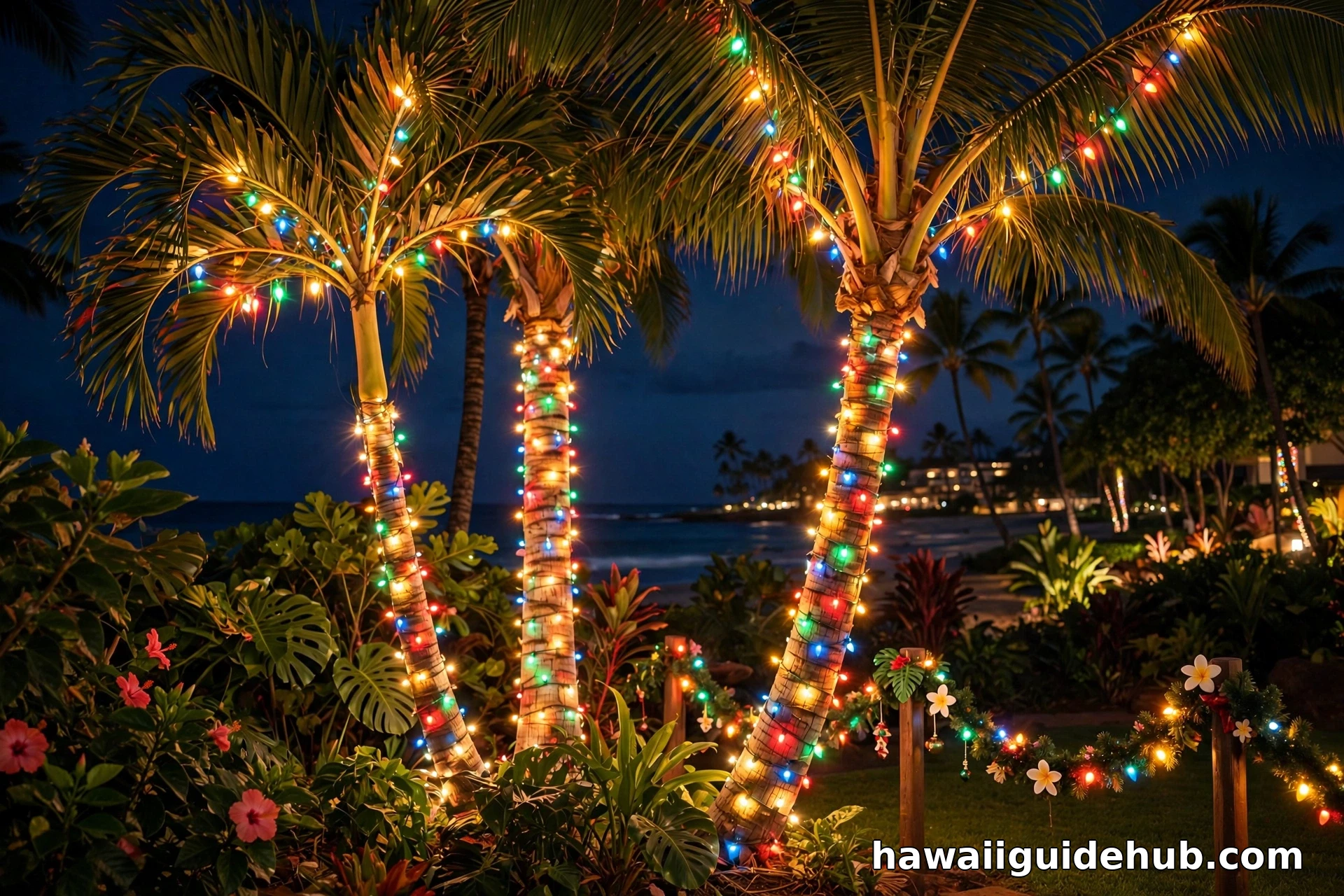
Real Christmas trees do not grow in Hawaii’s lowlands, so they arrive by ship: grand firs and nobles imported weeks before the season, sold at lots and pop-up stands across the islands. Many families grow Norfolk Island pines in their yards as living Christmas trees, stringing them with lights year after year. And the most Hawaiian option: decorating the palm. Neighborhoods compete in outdoor light displays draped over palms and monkeypod trees, and the effect, colored lights against black tropical night, beats any snowy postcard. Poinsettias, which grow as outdoor shrubs here, become the default Christmas flower.
New Year’s: Hauʻoli Makahiki Hou
The season runs past December 25. “Hauʻoli Makahiki Hou” means Happy New Year, and New Year’s Eve in Hawaii is loud: fireworks are a major tradition, with families setting off their own displays and the sky over Honolulu blazing at midnight. Japanese families observe oshogatsu traditions, eating ozoni soup and visiting temples. The holiday season effectively runs from Thanksgiving through the first week of January, and many local businesses close or slow between Christmas and New Year. Plan accordingly: it is the islands’ longest exhale.
A Multicultural Christmas
Hawaii’s Christmas is celebrated differently in every community, and that is the point. Portuguese families bake sweet bread and malasadas. Filipino families serve lumpia and bibingka and attend Simbang Gabi dawn masses. Japanese families add sushi and mochi. Chinese families fold in their own New Year overlaps. Korean, Vietnamese, Samoan, and Micronesian communities each add threads. The result is not one tradition but a braid: the rare Christmas where “traditional” means a dozen traditions at one table. Visitors are welcomed into it everywhere: the islands’ Christmas is inclusive by design.
Christmas Day at the Beach
The most Hawaiian Christmas morning of all: presents opened, then everyone to the beach. Christmas Day swims are a local tradition: the water is 78 degrees, the beaches are uncrowded in the morning, and the day has a relaxed, family-reunion feel. Surfers catch the winter swells on the North Shore while families barbecue at the beach parks. Santa hats in the water are standard. If you are visiting, do as the locals do: the beach is open, the sun is warm, and the turkey can wait until evening.
Visiting Hawaii at Christmas
Christmas is Hawaii’s peak season: expect the highest hotel rates of the year, booked-solid restaurants, and crowds at every attraction. Book flights and hotels three to six months ahead; last-minute Christmas trips to Hawaii are punishingly expensive. The weather is lovely, mid-70s to low-80s, with brief showers. Whale season is underway, a bonus. If you want the Christmas atmosphere without the peak prices, come the first two weeks of December: the decorations are up, the events are running, and the crowds have not arrived yet.
Giving the Aloha Way
Gift-giving in Hawaii leans local and edible: boxes of chocolate-covered macadamia nuts, Kona coffee, locally made soaps and crafts, and lei, which remain a living gift tradition. Many families give experiences over objects: a sunset sail, a day at the spa, a helicopter tour. The deeper tradition is kokua, help: holiday food drives, beach cleanups, and community feasts are woven into the season. The aloha in Mele Kalikimaka is not decoration; it is the instruction manual.
The 12 Days of Island Christmas
Every Hawaii family has its own version, but the island twelve days usually run something like this: a surfboard under the tree, a shaka from Shaka Santa, poke on Christmas Eve, the Honolulu City Lights stroll, carols with ʻukulele, hula at the church program, Christmas morning swim, kalua pig at noon, beach barbecue at three, sunset with the cousins, fireworks over the water, and leftovers for a week. It is not the twelve days of the song, but it is the twelve days that matter here: food, family, water, and light.
Island Christmas Crafts
Hawaii’s Christmas decorations are a craft tradition of their own. Wreaths are woven from local greens and crowned with poinsettia. Ornaments are made from shells, sea glass, koa wood, and dried tropical flowers. The annual wreath contests at Honolulu City Lights showcase astonishing creativity: entries built from lauhala, feathers, and recycled fishing net. Craft fairs across the islands in November and December sell ornaments and gifts you cannot find anywhere else. A koa wood ornament from a Hawaii craft fair is the souvenir that actually means something.
Where the Locals Go
Skip the hotel lobby tree and go where the islands go: the Honolulu City Lights opening night, when downtown fills with families; the Kaimuki Christmas parade, pure neighborhood; the Waimea Christmas Twilight Parade on the Big Island; the Festival of Lights on Kauai, set in a historic plantation great house. On Christmas morning, the locals are at the beach parks: Kailua, Hapuna, Poipu, Hanalei. Follow the families with the coolers and the pop-up tents. That is where Christmas actually happens in Hawaii.
The Logistics of an Island Christmas
Christmas in Hawaii comes with island logistics. Everything ships in: trees, gifts, and holiday stock arrive by container ship, so order online gifts early and watch shipping deadlines, which fall a week or more before mainland cutoffs. Grocery stores stock up on holiday hams and turkeys months ahead. The upside: farmers markets overflow with December produce, citrus, avocado, and tropical fruit at their peak. And the Christmas shipping rush is its own tradition: the harbors work overtime so the islands can celebrate on time.
Video: Mele Kalikimaka
Mele Kalikimaka: Hawaii’s Christmas song, from the islands to the world.
Frequently Asked Questions
What does Mele Kalikimaka mean?
It is the Hawaiian phonetic version of “Merry Christmas,” adapted to Hawaiian’s sounds.
When was Christmas first celebrated in Hawaii?
1786, by Captain George Dixon’s crew at Waimea Bay, Kauai. It became an official holiday in 1862 under King Kamehameha IV.
What is Honolulu City Lights?
Honolulu’s month-long December Christmas festival at Honolulu Hale, running since 1985, with Shaka Santa, a 50-foot tree, and a parade.
How does Santa arrive in Hawaii?
By outrigger canoe, boat, or surfboard: no chimneys, no snow, no sleigh needed.
What do Hawaiians eat at Christmas?
Turkey and ham alongside kalua pig, poke, lomi salmon, rice, sweet bread, haupia, and dishes from every immigrant culture.
What was the Makahiki?
The ancient Hawaiian four-month winter festival of peace, feasting, and games, the cultural root under Hawaii’s Christmas season.
Hawaii’s Christmas keeps the heart of the holiday and trades the weather: same gathering, same gratitude, same songs, but sung under palms with sand between the toes. Mele Kalikimaka is not just a greeting; it is proof that Christmas belongs to every climate, and that the islands make it their own without losing any of its warmth. From our island home to yours: Mele Kalikimaka me ka Hauʻoli Makahiki Hou, warmly and with aloha.