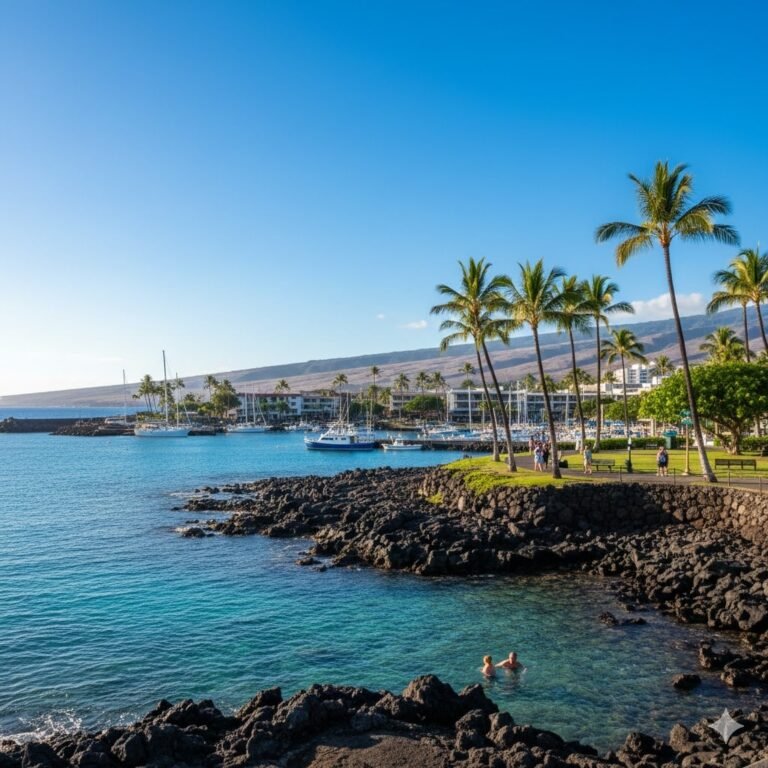
What Airport Is in the Big Island of Hawaii? Kona, Hilo and Waimea Explained

The Big Island of Hawaii has two main airports: Ellison Onizuka Kona International Airport at Keāhole (KOA) on the sunny west side, and Hilo International Airport (ITO) on the lush east side, plus the small Waimea-Kohala Airport (MUE) in ranch country. Most visitors fly into Kona, but the right choice depends on your itinerary. This is the single complete guide to every airport on the Big Island and how to choose between them.
This page covers each airport’s code, location, and flight options, a Kona vs Hilo decision table, drive times to key destinations, ground transportation, and FAQs. Everything about flying to the Big Island is here on this one page.
Kona Airport in Detail: What to Expect
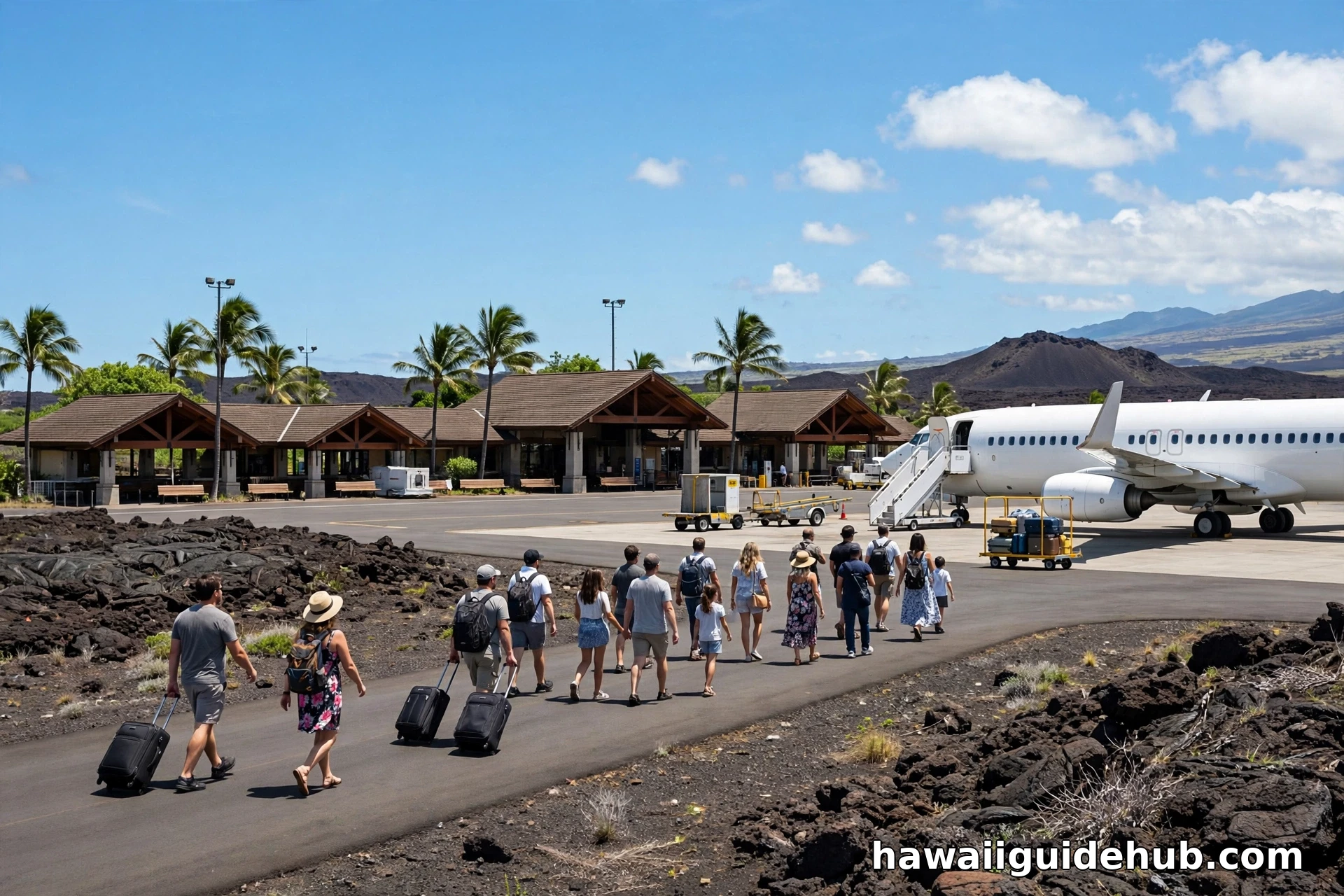
Kona’s open air design is genuinely different from any mainland airport. After landing you walk across the tarmac to low pavilions: ticketing in one, security in another, gates in open sided waiting areas with gardens between them. It is all outdoors but covered, so rain is a non issue and the breeze is the air conditioning. Food options are decent for the size: local coffee, plate lunch spots, and a few sit down choices past security. The lei greeting stands outside arrivals are where tour operators meet guests, and yes, the flower lei on arrival is a real tradition you can book.
Practical tips for KOA: arrive 2 hours before mainland departures, 90 minutes for interisland. The rental car lot is a short walk or shuttle ride from the terminal. Cell service is fine, wifi is free. If you have a long layover, the Old Kona Airport State Recreation Area beach park is 10 minutes south, a legitimate way to spend two hours with your toes in the sand between flights.
Hilo Airport in Detail: What to Expect
Hilo is the anti Kona in the best way: small, calm, and fast. The terminal is a single compact building, security lines are short, and the walk from curb to gate can be under 10 minutes at quiet times. Food is limited, so eat before you arrive for a mainland flight. The rental car counters are right there, and downtown Hilo’s restaurants and the bayfront are 10 minutes away. If your trip is volcano focused, landing at ITO and being at the national park entrance 45 minutes later is one of Hawaii’s great travel efficiencies.
Interisland Flights: Island Hopping From the Big Island
Both Kona and Hilo connect to Honolulu (HNL), Kahului on Maui (OGG), and Lihue on Kauai (LIH) with multiple daily interisland flights, typically 30 to 50 minutes each. Hawaiian Airlines operates the bulk of interisland service, with Southwest also flying interisland routes. If you are splitting a trip between islands, you do not need to route through Honolulu: direct Big Island to Maui and Big Island to Kauai flights run daily from Kona, with a smaller schedule from Hilo.
Book interisland flights early for the best prices, but know they are rarely the trip’s budget breaker: advance fares are often comparable to a nice dinner. Leave at least 3 hours between an interisland arrival and a mainland departure at Honolulu if you are connecting, and consider travel insurance for tight connections in winter when mainland weather disrupts schedules.
When to Book and How to Save
Mainland to Big Island fares follow familiar patterns: cheapest in the fall shoulder season (September through early November, skipping Thanksgiving) and late April through early June, most expensive at Christmas, New Year, and spring break. Tuesday and Wednesday departures are usually cheapest. Kona’s larger flight schedule means more competition and often lower fares than Hilo, sometimes by enough to justify the cross island drive. Set fare alerts a few months out and be flexible by a day or two: on this route, a single day’s shift can save over a hundred dollars per ticket.
First Day Strategy
Your arrival airport shapes your first day. Landing at Kona in the morning: pick up the car, stock up at the Costco or grocery in Kona, and be at your resort by lunch with the whole afternoon ahead. Landing at Hilo: you can be watching steam rise at Volcanoes National Park by early afternoon, which is a spectacular trip opener. Landing at night: drive straight to your lodging and start fresh in the morning; the island’s dark rural roads and jet lag are a bad combination for sightseeing. Whatever you do, do not plan the Saddle Road crossing after dark on arrival day: do it rested, in daylight, with a full tank.
The Short Answer
Fly into Kona (KOA) if you are staying on the west side: Kailua-Kona, the Kohala resorts, Waikoloa, or anywhere along the sunny Kona coast. Fly into Hilo (ITO) if you are staying on the east side: Hilo town, Volcano Village, or the Hamakua coast. The two airports are about 90 miles apart, a two hour drive across the island, so picking the wrong one adds a long drive to your first and last day.
Kona International Airport (KOA)
Kona is the Big Island’s primary airport, handling about 2 million passenger boardings a year per FAA 2024 data, roughly three times Hilo’s volume. It serves transpacific flights from the US mainland and interisland hops, and it is the airport behind most Big Island vacations. The terminal is famously open air: you walk across the tarmac between low roofed pavilions with the lava fields and ocean around you, which makes arriving feel like an event rather than a process.
KOA sits at Keāhole Point, about 20 minutes north of Kailua-Kona and 30 minutes from the Waikoloa resorts. Rental car facilities are on site, and booking ahead is essential in peak season: the Big Island’s rental inventory is finite and sells out. Taxis, rideshares, and hotel shuttles serve the terminal. There are no jet bridges; you board via stairs, which is part of the charm.
Hilo International Airport (ITO)
Hilo is the east side’s airport, handling about 680,000 boardings a year per FAA 2024 data. It serves interisland flights and a smaller set of mainland connections. The vibe is the opposite of Kona’s bustle: a compact, easy terminal wrapped in tropical green, where you can go from plane to rental car in minutes. Hilo is the right airport for Volcano Village, Hawaii Volcanoes National Park (45 minutes), the Hamakua coast waterfalls, and Hilo town itself.
One honest note: Hilo is the wettest city in the US, and the airport’s rain is legendary. Do not be surprised to land in a downpour; it usually passes, and the rainbows are the compensation. Rental cars are available but the selection is smaller than Kona’s, so book early.

Waimea-Kohala Airport (MUE)
Waimea-Kohala is a tiny airport in paniolo (cowboy) country, handling only a few thousand boardings a year. It has limited commercial service, mostly small interisland connections, and is useful mainly if you are staying in Waimea or the Kohala resorts and want to skip the Kona drive. Most visitors will never use it, but it is worth knowing it exists. The general aviation ʻUpolu Airport near Hawi serves private planes only.
Kona vs Hilo: Which Airport Should You Fly Into?
| Airport | Best for | Flight options | Key drive times | Watch out for |
| Kona (KOA) | West side stays: Kailua-Kona, Waikoloa, Kohala resorts | Transpacific + interisland; ~2M boardings/yr per FAA 2024 | Kailua-Kona 20 min; Waikoloa 30 min; HVNP 2.5 hrs | Rental cars sell out in peak season; book early |
| Hilo (ITO) | East side stays: Hilo, Volcano Village, Hamakua coast | Interisland + limited mainland; ~680K boardings/yr per FAA 2024 | Hilo town 10 min; HVNP 45 min; Kona 2 hrs | Frequent rain; smaller rental car selection |
| Waimea (MUE) | Waimea and Kohala resort stays only | Very limited small-plane service | Waimea 5 min; Kohala resorts 20 min | Not useful for most itineraries |
The expert move for a two sided trip: fly into one airport and out of the other. Land in Kona, spend the west side days, drive across via Saddle Road, spend the volcano and Hilo days, and fly home from Hilo. You see the whole island without backtracking, and one way rental cars between KOA and ITO are readily available.
Drive Times From Each Airport
The Big Island is big: bigger than all the other Hawaiian islands combined. From Kona, Kailua-Kona is 20 minutes, the Waikoloa resorts 30 minutes, Waimea 45 minutes, and Hawaii Volcanoes National Park about 2.5 hours via the south. From Hilo, downtown Hilo is 10 minutes, the national park 45 minutes, Akaka Falls 30 minutes, and Kailua-Kona about 2 hours via Saddle Road. Saddle Road (Highway 200) is the fast cross island route and is fully paved and safe, despite old guidebook warnings.
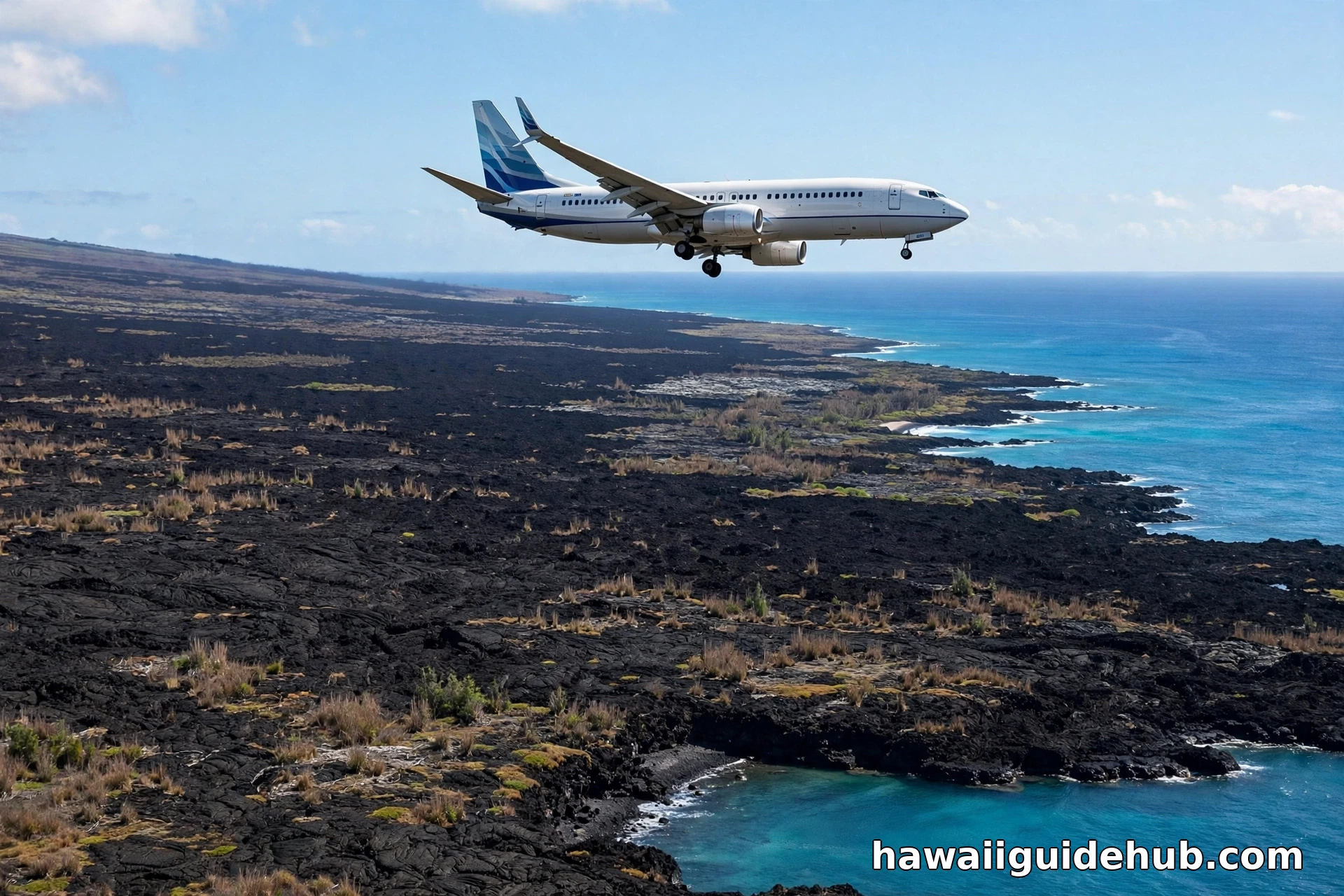
One more consideration for photographers and sightseers: request a window seat on the correct side. Landing at Kona from the mainland, the left side often gets the coastline and the Hualalai volcano; departing Hilo eastward, the right side can frame Mauna Kea on clear mornings. Small detail, big payoff.
Departing: Agriculture Inspection
Hawaii is the only US state with a departure agriculture inspection, and it applies at both Kona and Hilo. Before checking in for a mainland or international flight, your bags go through a USDA scanner looking for uninspected produce and plants. Fresh fruit, vegetables, and plants generally cannot leave Hawaii in carry on or checked bags unless they were inspected and sealed at the point of purchase: those gift boxes of pineapple at the airport shops are pre cleared and fine. Leave extra time for this step, especially at Kona during the morning departure bank, and do not try to sneak a mango through: the beagles will find it, and the fine is real.
Ground Transportation
Rent a car. This is not optional advice on the Big Island: public transit is minimal and the sights are spread across an island the size of Connecticut. Both KOA and ITO have on site rental counters. Book months ahead for winter holidays and spring break. If you are not driving, hotel shuttles and private transfers serve the Kohala resorts from Kona, and a few tour operators offer day trips with Kona pickup. Rideshares operate at both airports but long cross island rides are expensive.
For trip planning, see the best things to do on the Big Island of Hawaii, the best five things to do in Hawaii Volcanoes National Park, and the best things to do in Kona.
Video: Kona Airport Arrivals and Ground Transportation
A walkthrough of arriving at Kona International Airport: the terminal, rental cars, and ground transport options.
Frequently Asked Questions
What airport do you fly into for the Big Island of Hawaii?
Most visitors fly into Kona International Airport (KOA) on the west side. Hilo International Airport (ITO) serves the east side.
What is the airport code for Kona Hawaii?
KOA. The full name is Ellison Onizuka Kona International Airport at Keāhole.
What is the airport code for Hilo Hawaii?
ITO. Hilo International Airport, on the east side of the Big Island.
Is it better to fly into Kona or Hilo?
Kona for the west side resorts and beaches; Hilo for Volcanoes National Park and the east side. For a full island trip, fly into one and out of the other.
How far is it between Kona and Hilo airports?
About 90 miles via Saddle Road, roughly a 2 hour drive.
Does the Big Island have international flights?
Yes, through Kona (KOA), which handles transpacific flights. Hilo’s international service is limited.
Pick your airport by your itinerary, not by habit. Kona for the sun and resorts, Hilo for the volcano and the green side, and the open jaw ticket for the whole island. Book the rental car early, respect the agriculture inspection on the way home, and the Big Island rewards the traveler who plans the arrival as carefully as the trip. Now you have.