Hawaii Gas Station Guide: Prices, Where to Fill Up, and Rental Car Fuel Tips

Gas in Hawaii is among the most expensive in the United States, gas stations thin out exactly where the best drives begin, and rental car companies profit when you get fuel strategy wrong. None of this is complicated once you know the system: where the cheap stations are, which famous drives have no fuel at all, how to handle the rental return, and how to pay at the pump as a visitor.
This is the single complete Hawaii gas station guide. It covers current price reality, the cheapest places to fill up, self-service and payment basics, the drives you must fuel up before, rental car fuel rules, EV charging, and FAQs. Everything about getting fuel in Hawaii lives on this one page.
What Gas Costs in Hawaii
Hawaii consistently ranks among the priciest states for gasoline. As of early 2026, visitor forums and local news put regular unleaded roughly between $5 and $6 per gallon across the islands, with Oahu usually cheapest, Maui and Kauai higher, and warehouse clubs like Costco running noticeably below street prices. Prices move constantly, so check the GasBuddy app for live prices near you rather than trusting any printed number.
The price gap between stations matters more here than on the mainland. A resort-area station can charge far more than a Costco or Safeway-affiliated pump a few miles away. For a week of island driving, the difference between the cheapest and priciest fill-ups can easily exceed the cost of a nice dinner. The ten minutes it takes to drive to a cheap station is the highest-paid ten minutes of your vacation.
Where to Fill Up: Cheapest to Priciest
Not all pumps are equal. Hawaii’s fuel landscape has clear tiers.
| Station type | Price level | Catch |
| Costco / Sam’s Club | Lowest, per GasBuddy reports | Membership required; lines at peak hours |
| Safeway-affiliated and town stations | Below average | Loyalty card helps; locations vary by island |
| Major brands in town (Shell, Chevron, 76, Texaco) | Average | Convenient; fine for top-ups |
| Highway and resort-area stations | Highest | You are paying for location, not fuel |
| Remote single stations (Hana, etc.) | Highest | Sometimes the only option; fill before you need them |
Costco deserves special mention: its gasoline meets Top Tier detergent standards, its island locations sit near airports on Oahu, Maui, Kauai, and the Big Island, and visitor reports routinely show savings of 30 to 50 cents per gallon over nearby street stations. If you already hold a membership, the arrival-day Costco run can cover groceries and your first tank in one stop.
Fill Up Before These Drives
Hawaii’s most famous drives pass through long stretches with no fuel. This is the table that saves vacations.
| The drive | Last reliable fuel stop | Why it matters |
| Road to Hana, Maui | Paia | No stations on the highway past Paia until Hana’s small pump |
| Waimea Canyon and Kokee, Kauai | Waimea town | Nothing but viewpoints once you climb; see our Kauai beach guide for the west side |
| Saddle Road, Big Island | Hilo or Kona side before the crossing | The high middle stretch has no services at all |
| Chain of Craters Road, Hawaii Volcanoes NP | Volcano Village | The park’s long descent has no fuel |
| North Shore, Oahu | Haleiwa or Wahiawa | Sparse stations past the surf towns; plan the North Shore day with a full tank |
| Kaena Point approaches, Oahu | Waianae or Haleiwa side | Dead-end roads with nothing at the end |
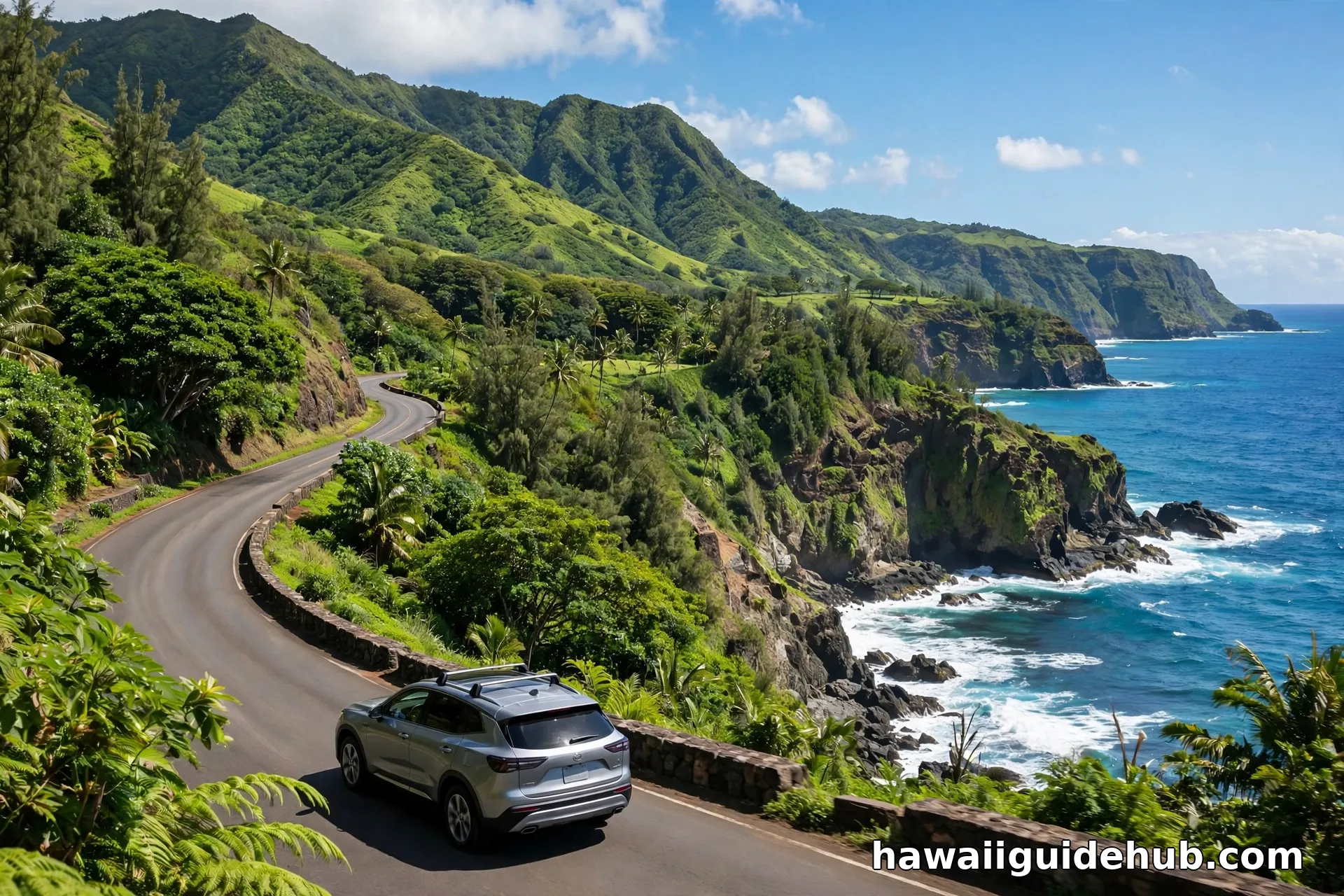
The rule is absolute: never start a rural Hawaii drive with less than half a tank. Cell service drops in the same places fuel does, so you cannot count on finding a station by phone. Fill up in town, enjoy the drive, and never think about the gauge.
Paying for Gas as a Visitor
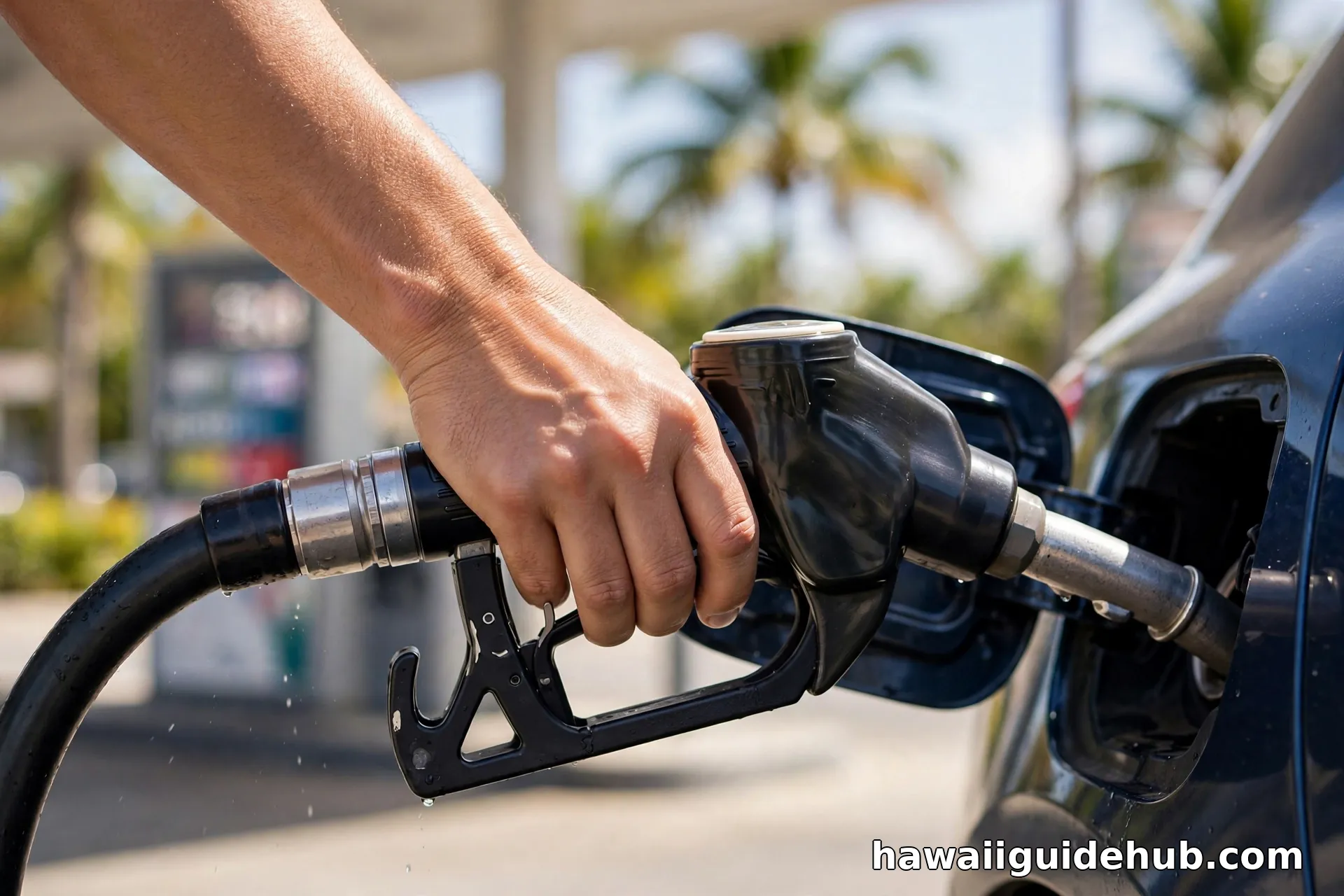
Hawaii is self-service, like nearly all of the United States. Pay at the pump with a credit or debit card: insert, follow the prompts, and pump. U.S. cards work normally. International visitors should know some pumps ask for a ZIP code with a card payment; if yours fails, pay inside with the attendant instead, which always works.
A few practical notes. Many stations switch to prepay-after-dark, meaning you pay the cashier first, then pump. If a pump authorizes a hold on your card (commonly $75 to $150), it releases within a day or two; this is normal and not a charge. And keep the receipt if you are on a business trip or splitting costs with travel companions.
Rental Car Fuel Rules
Rental companies offer you three fuel choices, and only one is usually smart. The prepaid fuel option, where you buy a full tank upfront and return the car empty, sounds convenient but charges you for a full tank no matter how much you return: unless you time it perfectly, you donate fuel to the rental company. The refueling service, where they fill it and bill you, carries a steep per-gallon markup. The winner is the simple one: return it full, exactly as you received it.
Plan the final fill-up the night before or morning of return. Every island’s airport area has stations within a few minutes of the rental car return: on Oahu, the Kapahulu and Nimitz corridors near Honolulu; on Maui, the Kahului stations; on Kauai, Lihue; on the Big Island, near Kona airport. Fill up, keep the receipt until the return is processed, and photograph the fuel gauge and dashboard at drop-off. For the full cost picture of driving, see our guide to how expensive Hawaii really is.
EV Charging in Hawaii
Electric rental cars are increasingly common in Hawaii, and the charging network is growing but still thin compared to the mainland. Oahu has the densest coverage; the neighbor islands have chargers concentrated in the main towns. If you rent an EV, confirm your hotel has overnight charging before booking it, because public fast chargers in rural areas are sparse. For most visitors doing big driving days, a hybrid remains the sweet spot: excellent mileage with zero charging logistics.
How Much Fuel You’ll Actually Use
Budgeting fuel for a Hawaii trip is easier than visitors expect, because the islands are small. Oahu is only about 40 miles across; even an ambitious day of sightseeing rarely exceeds 100 miles of driving. Maui’s Road to Hana round trip runs roughly 130 miles. The Big Island is the exception: Kona to Hilo via Saddle Road is about 75 miles each way, and a full island circle approaches 300 miles.
Do the math for a typical week. A rental sedan getting 30 miles per gallon, driven 80 miles a day for seven days, burns under 20 gallons: at $5.50 per gallon, that is roughly $110 for the week. Even a thirstier SUV on a Big Island-heavy itinerary rarely pushes fuel past $200. Fuel is a minor line item next to lodging, dining, and activities, which is exactly why visitors should not stress about it and should stress about never running low in the wrong place. The cost of fuel is small; the cost of poor fuel planning is a ruined day.
Diesel, Premium, and Other Fuels
Nearly every rental car in Hawaii runs on regular unleaded, and you should pump exactly what the rental agreement specifies, which is regular for the standard fleet. Premium is available at most stations but buys you nothing in a car designed for regular. Diesel is sold at select stations, mostly serving trucks and a few diesel rentals; if your rental takes diesel, confirm station availability on your island before driving remote routes, because diesel pumps are far less common than gasoline.
One Hawaii-specific note: ethanol-blended gasoline is standard, just as on the mainland, and poses no issue for modern rental cars. Do not overthink the pump: regular unleaded, fill it up, keep the receipt.
Night, Holidays, and When Stations Close
Most town stations operate long hours, but rural Hawaii keeps rural hours. Small-town stations may close early in the evening, and some switch to card-only prepay pumps after the cashier leaves. On holidays, hours shrink further. The practical rule: if you are driving a remote route late in the day, fill up while stations are visibly open rather than assuming a 24-hour pump awaits. Airport-area stations on all four major islands keep the longest hours, which is another reason to handle the pre-return fill-up near the airport rather than in a beach town at 10 p.m.
Apps Worth Downloading Before You Drive
Two apps earn their place on a Hawaii driving trip. GasBuddy shows live prices at stations around you, crowdsourced by drivers, and it is the fastest way to find the cheapest pump within a few miles. Google Maps or Apple Maps handles navigation and, crucially, lets you download offline maps of each island before you leave Wi-Fi: rural dead zones are exactly where you most need directions to the next town with fuel. Download both, and the islands’ fuel logistics become a non-issue.
Watch: Where to Find the Cheapest Gas in Hawaii
Hawaii Gas Station FAQs
How much is gas in Hawaii right now?
As of early 2026, roughly $5 to $6 per gallon for regular across the islands, with Oahu cheapest and warehouse clubs lowest. Prices change constantly: check the GasBuddy app for live prices at stations near you.
Is Costco gas worth it in Hawaii?
If you have a membership, yes. Costco stations on Oahu, Maui, Kauai, and the Big Island routinely undercut nearby street stations by 30 to 50 cents per gallon, the fuel meets Top Tier standards, and several locations sit minutes from the airports, perfect for the pre-return fill-up.
Should I prepay for fuel with my rental car?
Usually no. The prepaid option charges for a full tank regardless of how much you return, and the rental company’s refueling rate carries a heavy markup. Return the car full yourself at a cheap station near the airport.
Are there gas stations on the Road to Hana?
Effectively no. Fill up in Paia before starting; there are no stations along the highway itself until a small pump in Hana, which you should not rely on. Start with a full tank.
Can I use my foreign credit card at Hawaii gas pumps?
Sometimes the pump’s ZIP code check rejects foreign cards. If it does, walk inside and pay the cashier with the same card; that always works. Some visitors also have luck with mobile payment at the pump where accepted.
Is self-service gas the norm in Hawaii?
Yes. Pump it yourself, pay at the pump or inside. Attendants are available for help and for prepay transactions, but there is no full-service tradition to navigate.
Do I need to worry about running out of gas on the islands?
Only if you ignore the half-tank rule. The main towns on every island have plenty of stations, and running dry happens almost exclusively to drivers who push into remote areas on a low tank. Treat the fuel gauge as seriously as the ocean: respect it, plan ahead, and it will never be a problem. The islands are small, the towns are well served, and the only empty stretches are the famous ones listed in this guide.
Fuel Smart, Drive Far
Hawaii fuel strategy fits in one paragraph: check GasBuddy, favor Costco and town stations over resort pumps, never start a rural drive under half a tank, and return the rental full yourself. Do that and fuel becomes a footnote to the trip instead of a surprise on the receipt. The islands are made for driving: sea cliffs, volcano roads, canyon switchbacks, and surf towns strung along the coast. Keep the tank full, download your offline maps, and keep your eyes on the road. Hawaii’s best miles will take care of themselves. Drive safe and enjoy every mile.