The Best Time of Day to See Whales in Hawaii

The best time of day to see whales in Hawaii is the early morning. Between roughly 6 and 10 AM, the trade winds are at their calmest, the ocean surface is smoothest, and humpback whales tend to be at their most active near the surface. Spouts are easier to spot on flat water, boat rides are smoother, and the soft morning light makes for the best photographs.
This is the single complete guide to the best time of day to see whales in Hawaii. It covers why mornings win, how the season shapes your chances, the best months and islands, what whale behavior to look for at different hours, and how to watch responsibly. If you have been searching for anything about when to see whales in Hawaii, the answers are all here on this one page.
Which Departure Should You Book?
Every time block has a real tradeoff. Use this to match the departure to what matters most to you.
| If you want | Book this | Why it works | The tradeoff |
| Calmest water, least seasickness | First morning departure, around 7 AM | Trades build through the day, so mornings are flattest (per Maui tour operators) | Early wake-up; Jan-Feb sailings book out weeks ahead |
| The most active whales | Early morning | Naturalists report more breaching and surface play before 10 AM | Same early start required |
| The best photos | Early morning or sunset | Low angled light on spouts and breaches; harsh midday glare avoided | Sunset means choppier water than morning |
| Easiest booking, lower price pressure | Midday | More seats available; high sun helps spot whales below the surface | Windy, choppy; spouts harder to pick out |
| Romance and thin crowds | Sunset departure | Golden light, fewer boats, relaxed pace | Rougher ride than morning; book the earliest sunset slot |
| Free viewing, no schedule | Shore watch, morning | Maui’s west shore is world class from land; polarized sunglasses help | No naturalist narration; whales farther away |
Why Morning Is the Best Time
Three things come together in the morning to make whale watching better. First, the wind. Hawaii’s trade winds typically build through the day, so the ocean is calmest in the early hours and choppiest in the afternoon. On a glassy morning surface, a whale’s spout stands out clearly against the horizon, while in afternoon chop the same spout can disappear into whitecaps. Smoother water also means a more comfortable boat ride, which matters if anyone in your group is prone to seasickness.
Second, whale behavior. Humpbacks tend to be more surface active in the morning, with more breaching, tail slapping, and pectoral slapping in the early hours. Marine naturalists consistently report livelier encounters on the first departures of the day. Third, the light. Low angled morning sun illuminates spouts and breaches beautifully and avoids the harsh midday glare that washes out photographs. For all three reasons, the earliest tour departure you can manage, often around 7 AM, is the one to book.
Morning vs Midday vs Sunset: Hour by Hour
It helps to think of the whale watching day in three blocks. The early block, from first light to about 10 AM, is the prime window. Tour boats that leave around 7 AM catch the flattest water of the day, and naturalists report the most breaching and surface play in these hours. Photographers get warm, directional light and glassy reflections. If you only get one whale watch, make it this one.
The midday block, roughly 10 AM to 2 PM, is the tradeoff zone. The sun is high, which actually helps spot whales directly below the surface in clear water, and tours are easier to book. But the trade winds are building, whitecaps start to form, and spouts get harder to distinguish. Seasick prone travelers should avoid this window if they can.
The late block, from about 3 PM to sunset, has its own magic. The wind often eases slightly in the last hour of daylight, the light turns golden again, and sunset whale watches are genuinely romantic. Crowds thin out and the boats feel calmer. You will work a bit harder to spot spouts in the chop, but a breach silhouetted against a Maui sunset is the kind of memory that lasts for decades.
What About Afternoon and Sunset?
Afternoon whale watching is still worthwhile, just different. The whales do not leave at noon. Mother and calf pairs, resting whales, and slow traveling groups can be found at any hour during the season. Afternoon tours often have smaller crowds and softer booking pressure, and a sunset whale watch pairs the animals with spectacular evening light. The tradeoff is wind: by mid afternoon the trades are usually up, the water is choppier, spouts are harder to pick out, and the ride is bumpier.
If morning is not possible, choose the earliest afternoon departure available rather than the last one, and sit where you can see the horizon with the sun behind you. Polarized sunglasses cut surface glare dramatically at any hour and are the single most useful piece of gear for whale watching from shore or from a boat.
The Season Matters More Than the Hour
No time of day helps if the whales are not there. North Pacific humpbacks spend summers feeding in Alaska, then migrate roughly 3,500 miles to Hawaii each winter to mate, give birth, and nurse their calves in warm, shallow, protected water. They start arriving as early as October, but the real season runs December through April, with January through March as the peak. February is usually the single best month, with the highest whale density in the channel between Maui, Lanai, and Molokai.
Early season, in December, brings the first arrivals and eager males, with good sighting rates and easier bookings. Late season, in April, is quieter and more intimate, dominated by mothers and calves preparing for the long migration north. By May, nearly all the whales are gone. For the full migration story, see our complete guide to humpback whale migration to Hawaii.
Where to See Whales in Hawaii
Maui is the whale watching capital of Hawaii. The shallow, protected Auau Channel between Maui, Lanai, and Molokai, part of the Hawaiian Islands Humpback Whale National Marine Sanctuary, holds the highest concentration of whales in the islands. Tours depart from Lahaina Harbor and Maalaea Harbor, and the west and south Maui shorelines, from Kaanapali to Wailea, offer world class whale watching from land. McGregor Point lookout on the highway between Maalaea and Lahaina is a favorite shore spot with wide ocean views and easy parking.
The other islands have whales too. The Kona coast of the Big Island, the south shore of Kauai around Poipu, and Oahu’s south and west shores all see humpbacks in season, just in lower numbers than Maui. On Kauai, the overlooks along the Poipu coast and the Koloa Landing area are reliable morning perches. On Oahu, try the Makapuu Lookout in the morning or the west side beaches around Ko Olina. On the Big Island, the Kohala coast pullouts and the Kona harbor area give you a shot without booking a boat.
If whales are the priority for your trip, base yourself on Maui in February. For a broader planning view, see our guide to the best times and locations for whale watching in Hawaii.
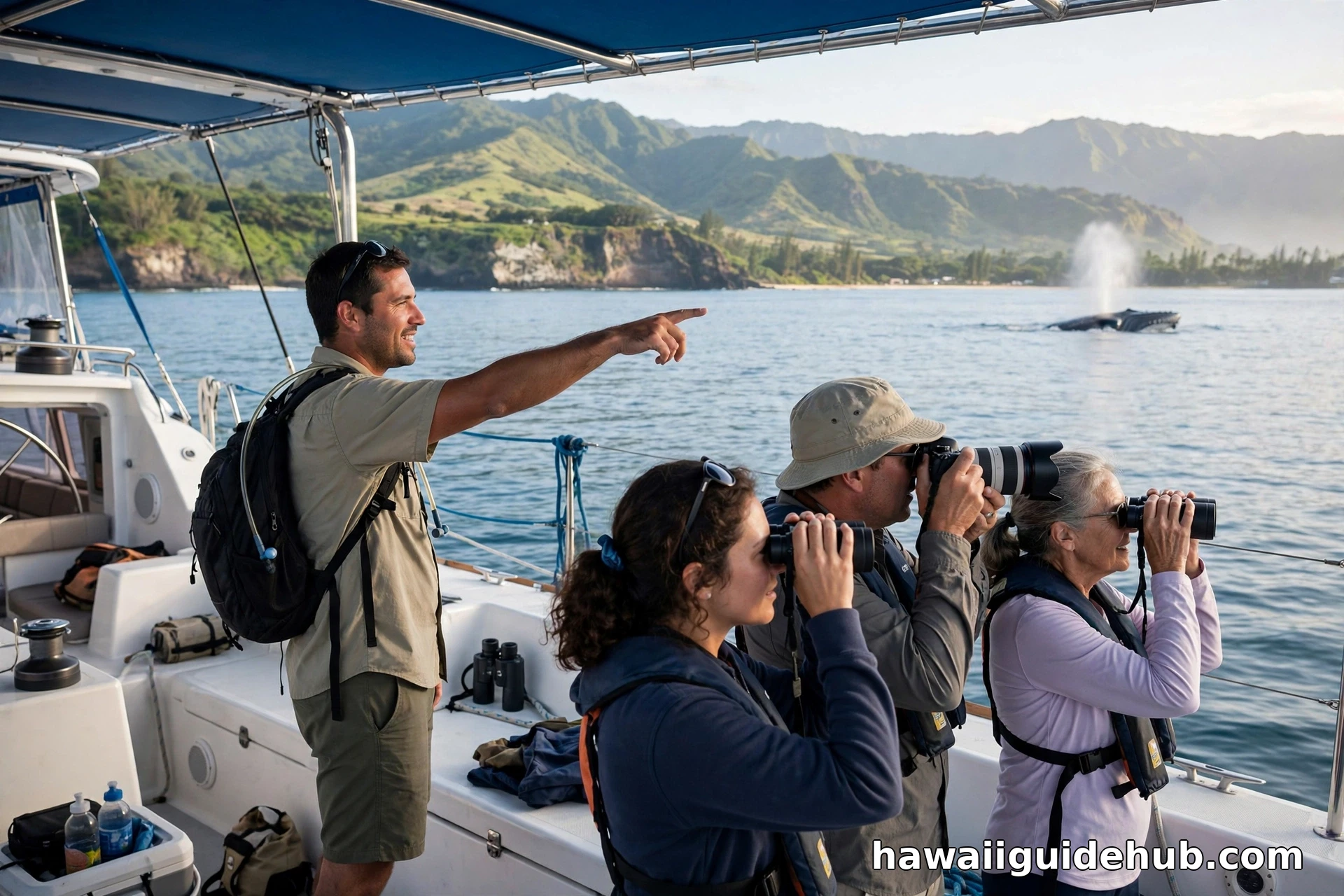
Whale Behavior to Watch For
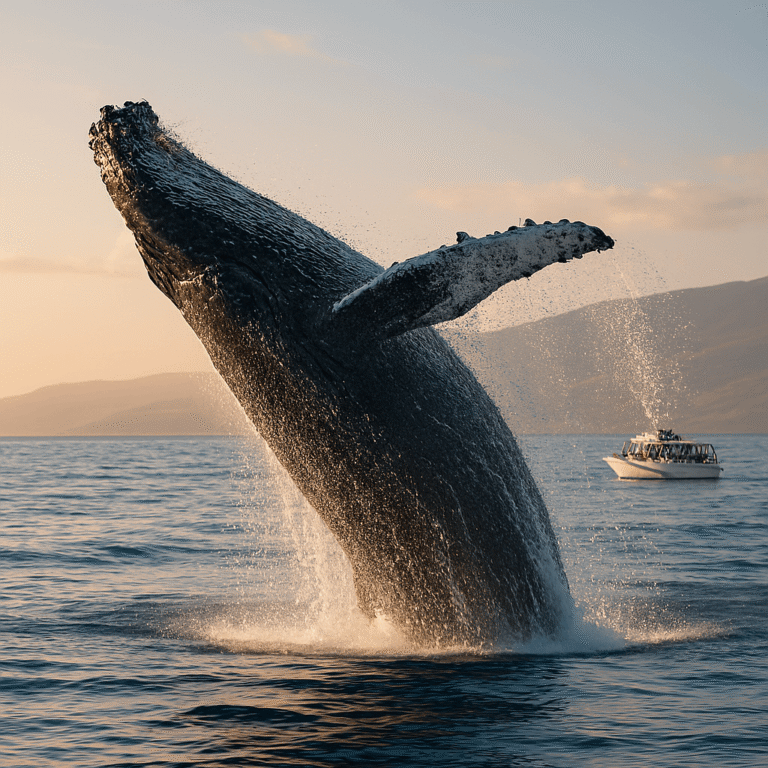
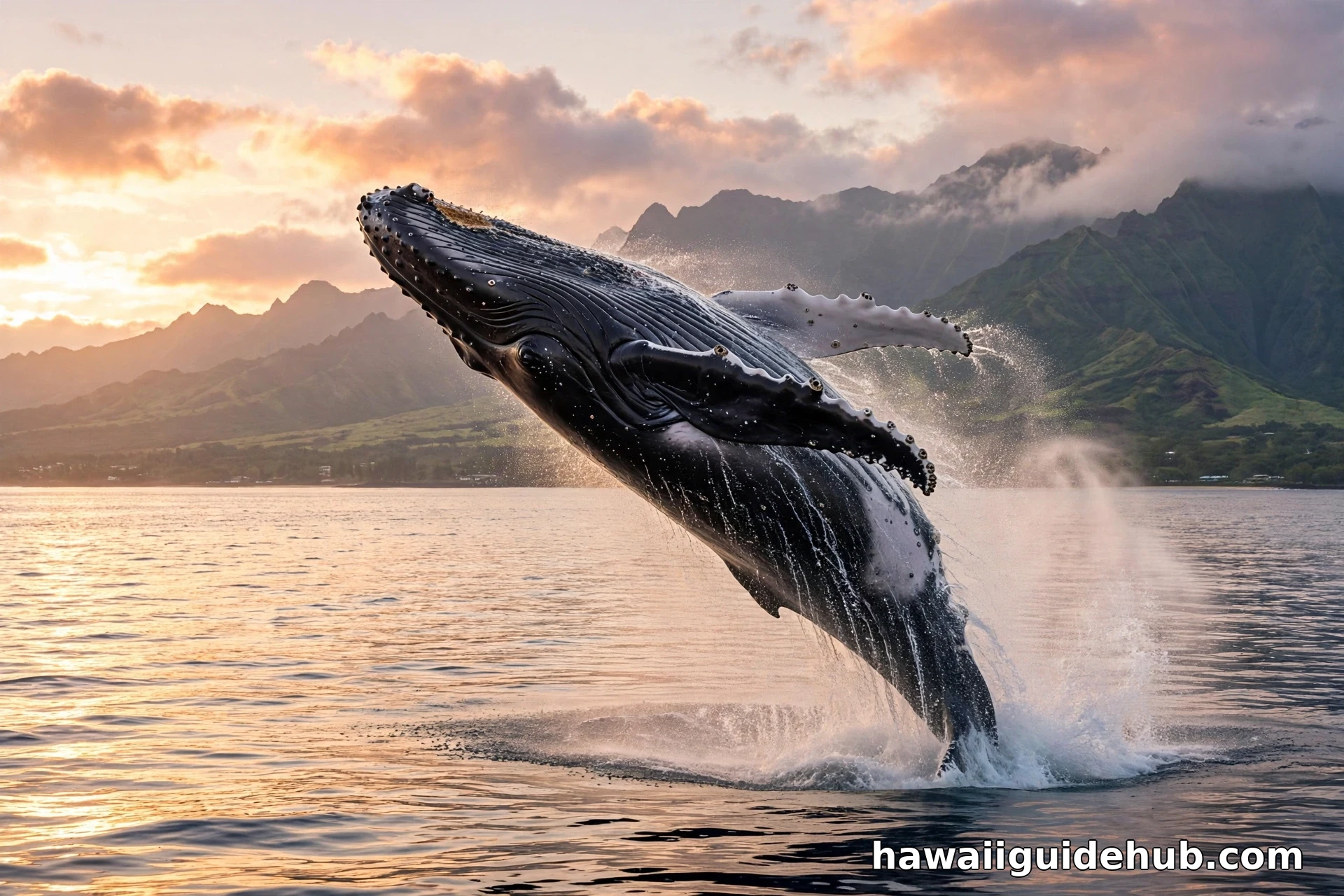
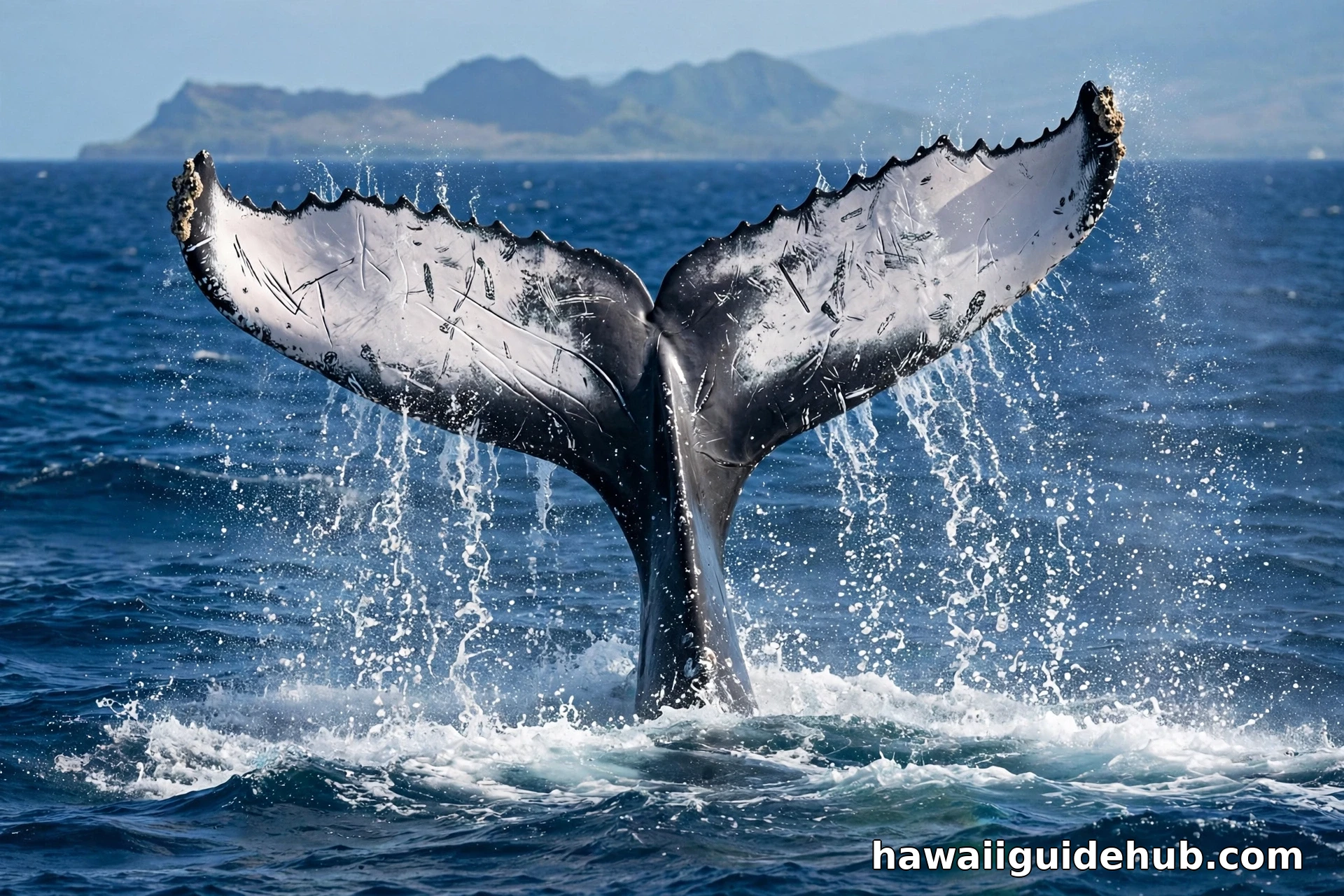
Knowing the behaviors turns a distant spout into a real encounter. A breach, when the whale launches most of its body clear of the water, is the showstopper, and calves practice it repeatedly as they build strength for the migration. Tail slapping and pectoral fin slapping send loud cracks across the water and are common in the morning. Spy hopping, when the whale rises vertically to look around, is unforgettable from a boat. And a fluke up dive, the tail rising high before the whale disappears, means it is going deep and will be down for several minutes.
Male competition, called heat runs, produces the wildest surface action, with several males chasing a female at speed, breaching and slapping as they go. Mothers with calves are calmer but deeply moving to watch, the calf surfacing to breathe every few minutes while the mother hovers below. Males also sing, complex songs that can last for hours and travel for miles underwater. For a deeper look at what it all means, see our guide to understanding humpback whale behavior.
How to Watch Whales Responsibly
Federal law prohibits approaching within 100 yards of a humpback whale in Hawaiian waters, and aircraft must stay at least 1,000 feet above. Reputable tour operators follow these rules strictly and employ trained naturalists. Never chase, surround, or try to touch a whale, and never get in the water with one. If a whale approaches your boat on its own, which happens, enjoy it quietly and let the crew handle the vessel.
From shore, the rules are simpler: stay on marked paths, keep noise down, and give hauled out marine life like monk seals a wide berth. Choose operators with strong conservation records. For more on doing it right, see our guide to eco friendly whale watching in Hawaii and the cultural story in the cultural significance of whales in Hawaiian tradition.
Tips for the Best Morning Whale Watch
Book the first departure of the day and arrive at least 30 minutes early, since boats leave on schedule. January and February tours sell out weeks ahead, so reserve early in peak season. Bring polarized sunglasses, a light jacket for the morning breeze, reef safe sunscreen, and a camera with a zoom lens. Binoculars help enormously from shore. Eat a light breakfast if you are prone to motion sickness, and consider a morning tour over an afternoon one for exactly that reason.
From shore, scan slowly across the horizon rather than staring at one spot, watch for the quick puff of a spout, and be patient. Whales surface in patterns, often staying down for up to ten minutes between breaths. A cluster of stopped boats usually marks whales, so let the tour fleet be your spotters.
Video: Humpback Whales Breaching off Maui
A mother humpback and her calf breaching off Maui during whale season, the kind of morning encounter this guide helps you find.
Frequently Asked Questions
What is the best time of day to see whales in Hawaii?
Early morning, roughly 6 to 10 AM. The ocean is calmest, whales are most surface active, and the light is best for spotting spouts and taking photos.
What months can you see whales in Hawaii?
December through April, with January through March as the peak. February usually has the highest whale numbers.
Can you see whales in Hawaii in the afternoon?
Yes, whales are present all day during the season. Afternoons are just windier and choppier, which makes spotting harder and boat rides bumpier.
Which Hawaiian island is best for whale watching?
Maui, especially the Auau Channel between Maui, Lanai, and Molokai. The Big Island, Kauai, and Oahu also see humpbacks in season.
How close can you get to a whale in Hawaii?
Federal law requires staying at least 100 yards away from humpback whales. Boats must not approach closer, though whales sometimes approach boats on their own.
Can you see whales from shore in Hawaii?
Yes. Maui’s west and south shores are among the best land based whale watching spots in the world. Bring binoculars, go in the morning, and watch for spouts.
Do whales breach more in the morning?
Naturalists report more surface activity, including breaching and tail slapping, in the morning hours. Afternoon encounters happen too, but the early boats consistently see the liveliest behavior.
Morning is the simple answer to the best time of day to see whales in Hawaii, but the season is the real key. Get yourself to Maui between January and March, book the earliest boat you can drag yourself onto, and let the calm morning ocean do the rest. The whales will handle the show.