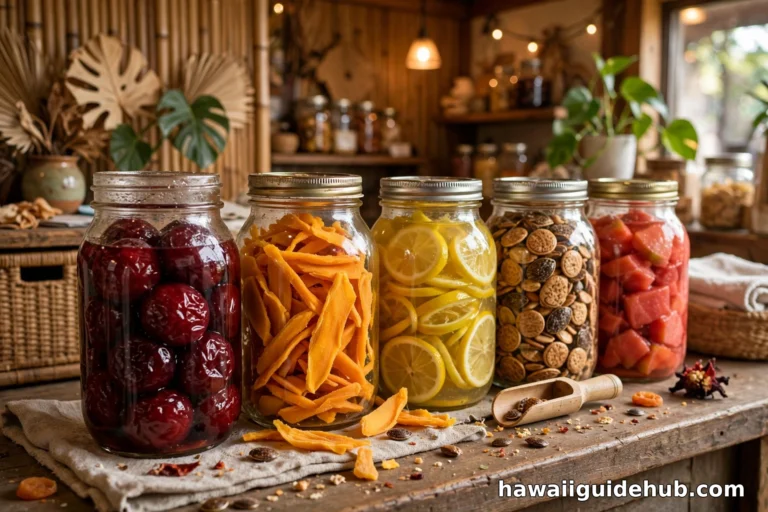
Li Hing Mui: Hawaii’s Salty-Sweet Traveling Plum

Walk into any crack seed shop in Honolulu, browse the snack aisle at a Hawaiian grocery store, or order a margarita in Waikiki, and you will meet a bright red powder that locals sprinkle on just about everything. It is called li hing mui, and it is one of the most distinctive flavors in all of Hawaii. Sweet, salty, sour, and impossible to confuse with anything else, this Chinese plum snack traveled across the Pacific more than a century ago and never left.
If you have been wondering what li hing mui is, what it tastes like, and how Hawaiians actually use it, this guide is the one page you need. It covers the name and its meaning, the plantation history that brought it to the islands, how the plums and the famous red powder are made, every way locals enjoy it, where visitors encounter it, and how to try it for the first time.
What Li Hing Mui Is
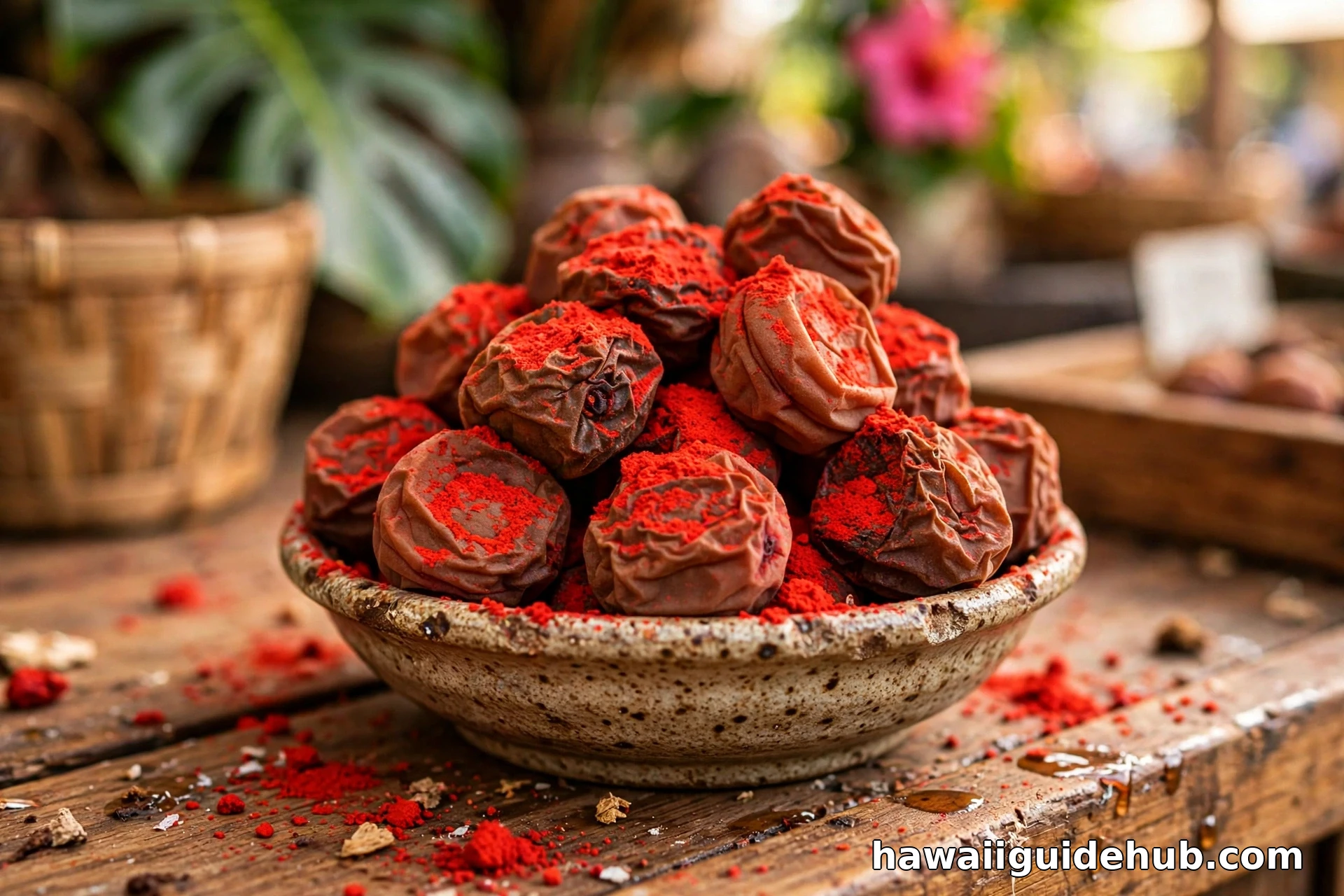
Li hing mui is a preserved plum snack with roots in China that became a beloved part of Hawaii’s food culture. The snack itself is a dried, salted plum, usually coated in a bright red powder made from plum skins, salt, sugar, and licorice. The name is also used more loosely in Hawaii to cover the whole family of products: the whole dried plums, the seeds you crack between your teeth, and the ground li hing powder that gets shaken onto fruit, shave ice, popcorn, and cocktails.
To a visitor, the red dust can look alarming the first time you see it on a slice of pineapple. To someone raised in Hawaii, it is the taste of childhood: the crack seed jar on the store counter, the packet of seeds shared at the beach, the rim of a margarita at sunset. It belongs to the same world as malasadas and huli huli chicken, foods that arrived with immigrant workers and became something uniquely Hawaiian.
Li Hing Mui at a Glance
| What it is | Dried, salted Chinese plum snack and its ground powder form; “traveling plum” in Cantonese, pronounced lee hing moo-ee |
| What it tastes like | Salty, sweet, and sour with a hint of licorice; bright red from the powder coating |
| Where it came from | China, brought to Hawaii by plantation workers in the late 1800s |
| What to buy | Whole dried plums, cracked seeds, or ground powder; find it at crack seed shops, grocery stores, convenience stores, and bars |
The Meaning Behind the Name
The phrase “li hing mui” comes from the Cantonese translation of the Chinese characters 旅行梅, which means “traveling plum.” The story behind the name is as old as the snack itself. In ancient China, preserved plums were carried by travelers as a durable food for long journeys, a salty and sour provision that kept well and helped with thirst and digestion on the road. The name remembers that history.
Say it “lee hing moo-ee.” You will hear the phrase shortened to just “li hing” in everyday Hawaii speech, as in “li hing powder” or “li hing margarita.” Both refer to the same flavor. In Mandarin, the same preserved plums go by different names, but the Cantonese pronunciation is the one that took hold in Hawaii, because most of the Chinese immigrants who arrived during the plantation era spoke Cantonese and related southern dialects.
How Li Hing Mui Came to Hawaii
Li hing mui crossed the Pacific in the late 19th and early 20th centuries, carried by Chinese immigrants who came to work on Hawaii’s sugar plantations. When the plantation era brought workers from China, Japan, Korea, the Philippines, and Portugal, each group brought its own foods. Chinese workers brought preserved plums, and the snack caught on far beyond the plantation camps.
The rise of crack seed shops sealed its place in local culture. These small neighborhood stores sold rows of glass jars filled with preserved seeds, dried plums, lemon peel, and ginger, sold by the scoop or in small bags. For generations of Hawaii kids, a few quarters spent at the crack seed jar was a daily ritual. One long-running local brand, Yick Lung, became a fixture of those counters, and old timers still talk about picking seed over ice cream and chocolate at the store.
From those jars, li hing mui spread into the wider food scene. Shave ice stands began offering li hing powder as a topping. Bartenders rimmed cocktail glasses with it. Grocery stores stocked li hing gummies, li hing popcorn, and li hing flavored candies. What had arrived as an immigrant comfort food became one of Hawaii’s signature flavors, as local as the native Hawaiian fruits it is now sprinkled on.
How Li Hing Mui Is Made
The base ingredient is the plum. Ripe plums are pickled in a mixture of salt and sugar, often with licorice added for that distinctive backnote. The pickled plums are then dried in the sun or in commercial dryers, which concentrates the flavor and gives the snack its chewy, wrinkled texture. From here the product takes one of two paths.
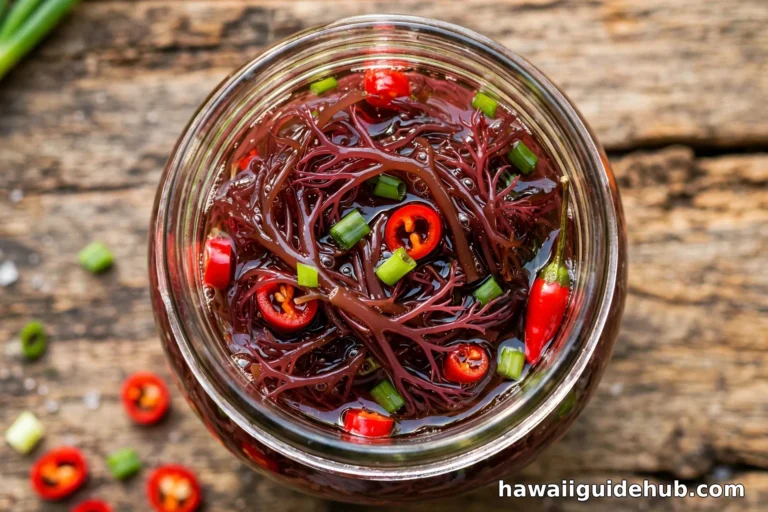
The first path is the whole snack. Dried plums are sold as is, sometimes with the seed left in, sometimes pitted. The seeded versions are the true “crack seed,” meant to be cracked between your teeth to get at the kernel inside, although many people simply chew the flesh and discard the pit. These are sold in red, white, sweet, tart, and spicy varieties depending on the maker.
The second path is the powder. Dried plum skins are ground together with salt, sugar or a sugar substitute, licorice, and food coloring into the fine reddish dust sold as li hing powder. This is the form that turns up everywhere in modern Hawaii, because a shaker of powder is easy to use on anything. The powder is also what gives li hing margaritas and shave ice their unmistakable color.
What Li Hing Mui Tastes Like
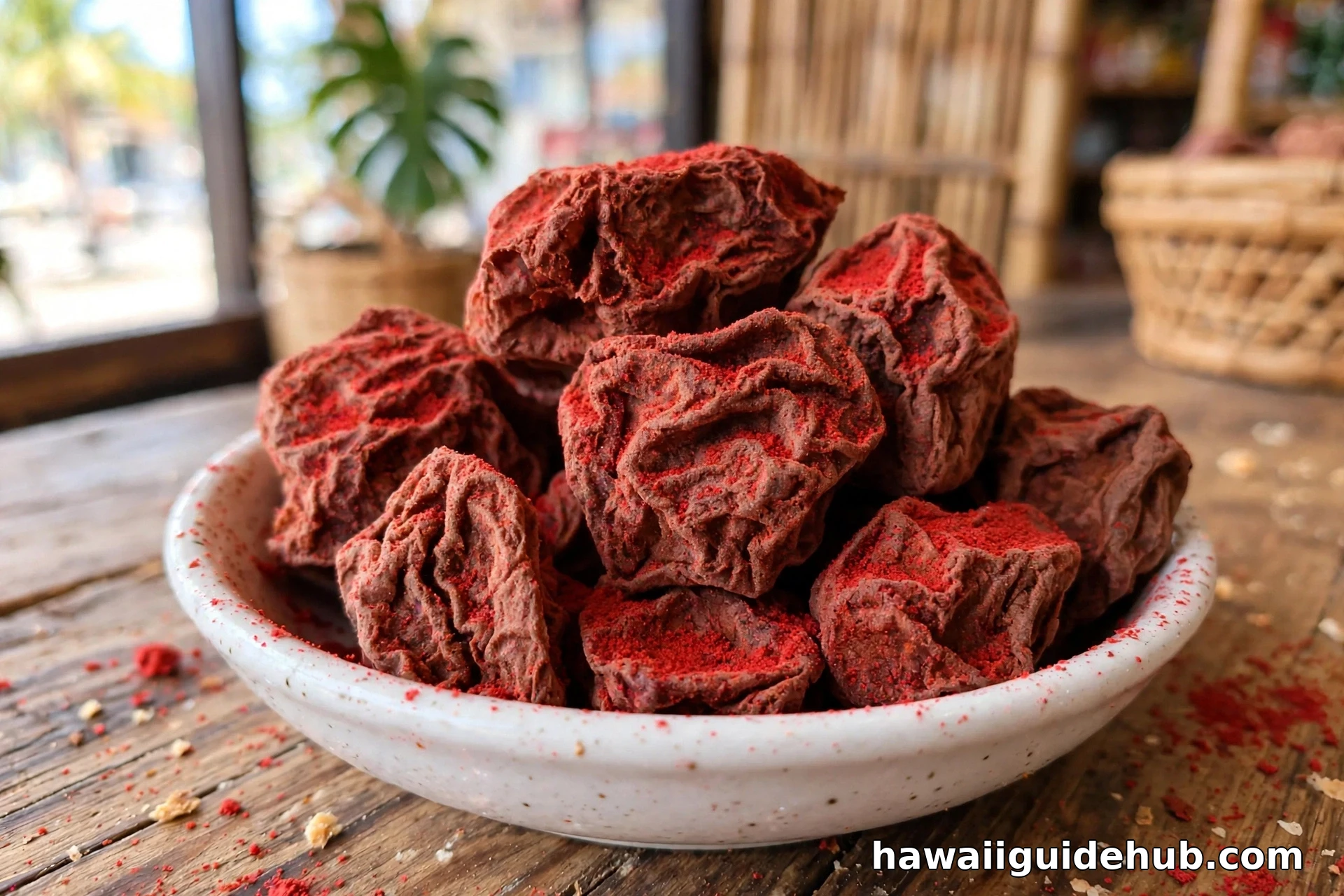
There is no single way to describe the taste, because li hing mui hits several senses at once. The first impression is salty, then sweet, then a sharp sourness that makes your mouth water. Underneath runs a faint licorice note from the traditional flavoring. It is intense in a way that Western snacks rarely are: the flavor keeps changing as you chew, moving from salt to sweet to tart without ever settling.
Locals will tell you it is an acquired taste, and they are right. Most first timers find it startling, even too salty. Then, an hour later, they want another piece. The sour-salty combination is a classic appetite trigger, the same reason pickles, salted lemons, and tamarind are loved across so many food cultures. Once your palate adjusts, plain fruit can taste unfinished without the red dust.
Variations change the experience noticeably. The white powder versions tend to be milder and sweeter. The deep red ones are usually the saltiest and most intense. Spicy versions add chili heat. Seedless li hing mui is softer and easier to eat straight from the bag, while the seeded crack seed versions are more of a slow, contemplative snack. If you are trying it for the first time, start with the powder on fruit rather than the whole plum, because the powder lets you control the dose.
Li Hing Mui vs Li Hing Powder: What Is the Difference
The two terms overlap, which confuses visitors. Li hing mui properly refers to the preserved plum itself, the dried and salted fruit. Li hing powder is the ground seasoning made from plum skins. In practice, Hawaiians use “li hing” for everything in the family, and the powder is by far the most common form you will meet as a visitor.
The whole plums are the traditional snack, eaten like candy. The powder is the modern flavoring, used the way other cultures use cinnamon sugar or chili salt. When a menu says “li hing shave ice” or a bartender asks if you want a “li hing rim,” they mean the powder. When someone hands you a bag of seeds, they mean the plums. Knowing the difference makes ordering easy.
How Hawaii Enjoys Li Hing Mui
This is where li hing mui stops being a snack and becomes a culture. Hawaiians put the powder on an astonishing range of foods, and as a visitor you will encounter it in places you never expected. Here are the classics.
Fresh fruit
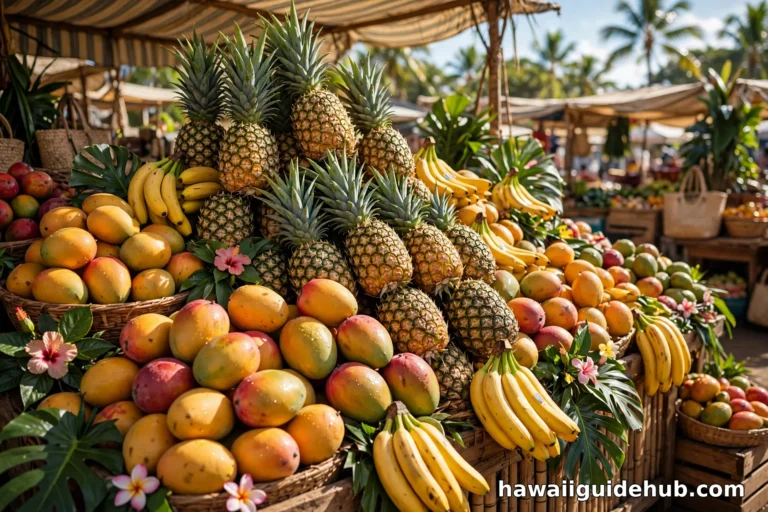
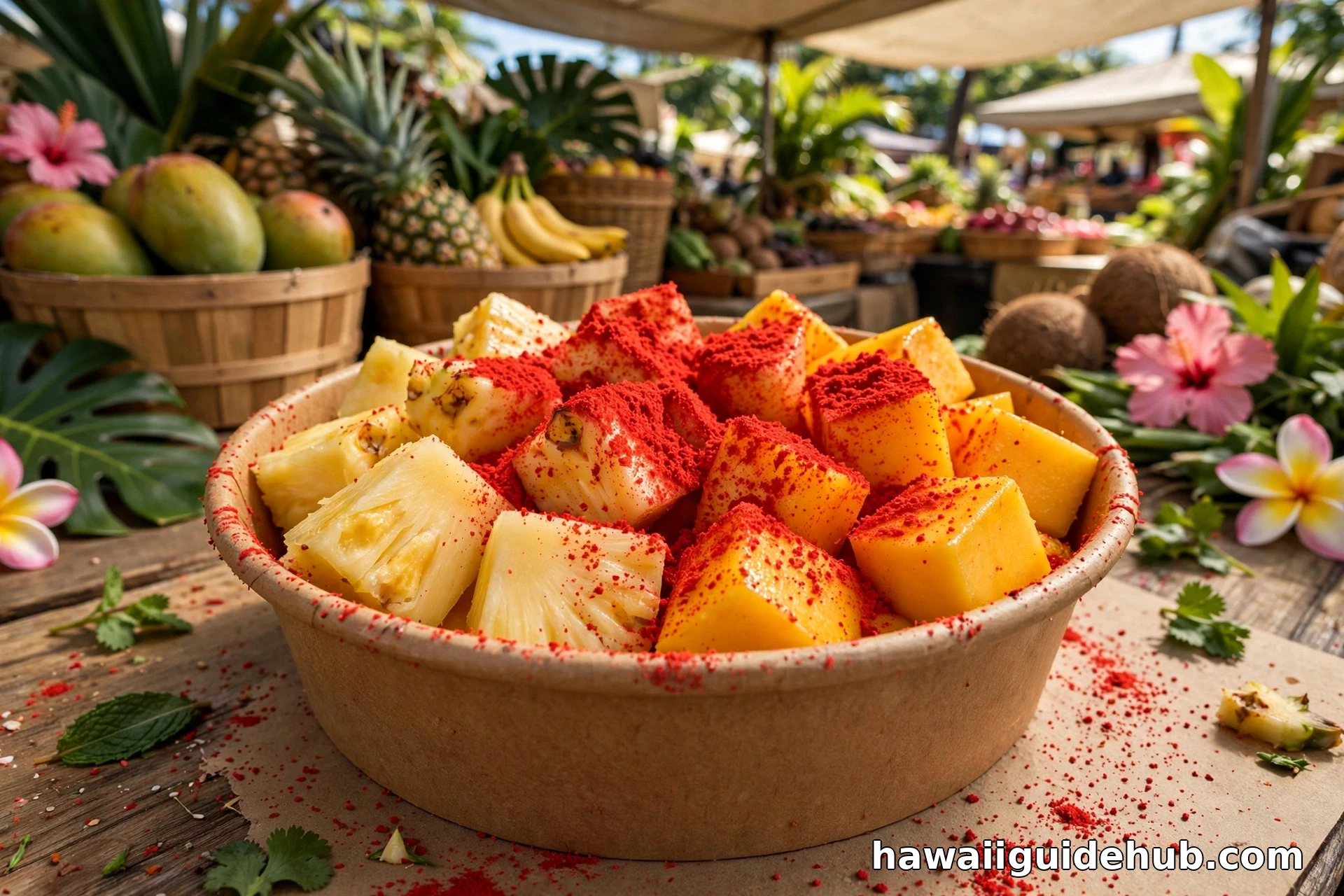
The single most popular use. A shake of li hing powder over fresh pineapple, mango, watermelon, or green apple turns good fruit into a sweet-salty-sour masterpiece. The powder dissolves slightly into the fruit juice and forms a tangy glaze. Fruit stands and farmers markets often sell pre-dusted fruit, and locals keep a shaker at home the way mainlanders keep salt and pepper. For more on the local fruit scene, see our guide to must-try local dishes in Hawaii.
Shave ice
Many shave ice stands offer li hing powder as a topping or mix it into the syrup. The fine ice melts around the powder and the result is a sweet, salty, icy slush that locals swear by. Ask for it on top of a rainbow shave ice and watch the red dust bleed into the colors. It is one of the great shave ice upgrades that most visitors never discover.
Margaritas and cocktails
If you order a margarita in Hawaii, the bartender may rim the glass with li hing powder instead of salt. The red rim looks spectacular and the sweet-sour-salty flavor pairs naturally with lime and tequila. Li hing has also found its way into lemonades, sodas, and other tropical drinks. When a tourist asks “what is that red powder on my glass,” the answer is always li hing mui.
Popcorn and candy
Li hing popcorn is a movie-night staple in Hawaii households, and li hing gummy bears are a fixture of the candy aisle. The powder clings to the gummies and gives them a tangy shell that contrasts with the sweet chew inside. Sour candy lovers in particular tend to fall hard for li hing gummies.
Crack seed, straight from the bag
The original way: a bag of whole li hing mui plums or cracked seeds, eaten one at a time. This is the snack of long car rides, beach days, and movie theaters. Crack seed shops sell dozens of varieties, and part of the fun is working through the jars to find your favorite. The tradition of buying seed at the corner store is one of the oldest continuous food rituals in Hawaii.
Where Visitors Encounter Li Hing Mui
You do not have to hunt for li hing mui. It finds you. Grocery stores across the islands stock li hing powder, li hing gummies, and bags of the plums in the snack aisle. Convenience stores carry the small packets. Crack seed shops, concentrated in Honolulu but found on every island, are the connoisseur’s choice, with the widest selection and the old glass-jar atmosphere.
At restaurants and bars, watch for li hing rims on cocktails, li hing dust on desserts, and occasionally li hing worked into savory dishes. Shave ice stands are the most reliable encounter: almost any stand will add li hing powder if you ask. Farmers markets are another good bet, especially for li hing dusted fresh fruit. Some bakeries even sell li hing malasadas, a crossover of two immigrant traditions, and our guide to malasadas covers that Portuguese-Hawaiian classic.
A First Timer’s Guide to Trying Li Hing Mui
Start with the powder on fresh fruit. It is the gentlest introduction and the most representative of how locals actually eat it. A fruit stand at a farmers market will often let you sample before you buy a bag of powder to take home. From there, try a li hing shave ice, then a bag of the whole plums if you are feeling brave.
A few practical notes. Li hing mui is high in sodium and sugar, so enjoy it as a treat rather than a health food. The powder stains, so do not wear white when you eat a li hing shave ice. The seeded versions have real pits, so they are not ideal for small children; the powder and gummies are the safer kid introduction. And if you fall in love with it, the powder travels well in a suitcase, which is more than can be said for fresh fruit.
Watch: Li Hing Mui Crack Seed
This short video shows what li hing mui crack seed looks like up close and how locals eat it, a handy preview before you try your first bag.
Frequently Asked Questions
What does li hing mui mean?
It means “traveling plum” in Cantonese, from the characters 旅行梅. The name dates to ancient China, where preserved plums were carried as durable travel provisions.
Is li hing mui spicy?
Usually not. The standard flavor is salty, sweet, and sour with a licorice note. Some makers sell spicy chili versions, but they are the exception.
What is the red powder on Hawaiian fruit?
That is li hing powder, made from ground plum skins, salt, sugar, and licorice. It is the most common way visitors meet li hing mui, dusted over pineapple, mango, and shave ice.
Where can I buy li hing mui?
In Hawaii, look in crack seed shops, grocery stores, convenience stores, and farmers markets. On the mainland, check Asian grocery stores and online retailers. For more island food hunting, our late-night eats guide points to more local flavors worth seeking out.
Is li hing mui healthy?
It is high in sodium and sugar, so it is best treated as an occasional treat rather than a health snack. The original preserved plum was valued as a travel provision that kept well and replaced salts, which is where the “traveling plum” name comes from.
Can kids eat li hing mui?
The powder and gummy versions are fine for kids in moderation, though the intense sour-salty flavor is not for every child. Whole seeded plums are better for older kids and adults because of the pits.
Li hing mui is one of those foods that tells the story of Hawaii in a single bite: Chinese origins, plantation-era roots, and a century of local reinvention that turned a preserved plum into a flavor found on fruit stands, in cocktail bars, and at every beach picnic. Try it on pineapple first. If you are like most visitors, the red dust will follow you home.