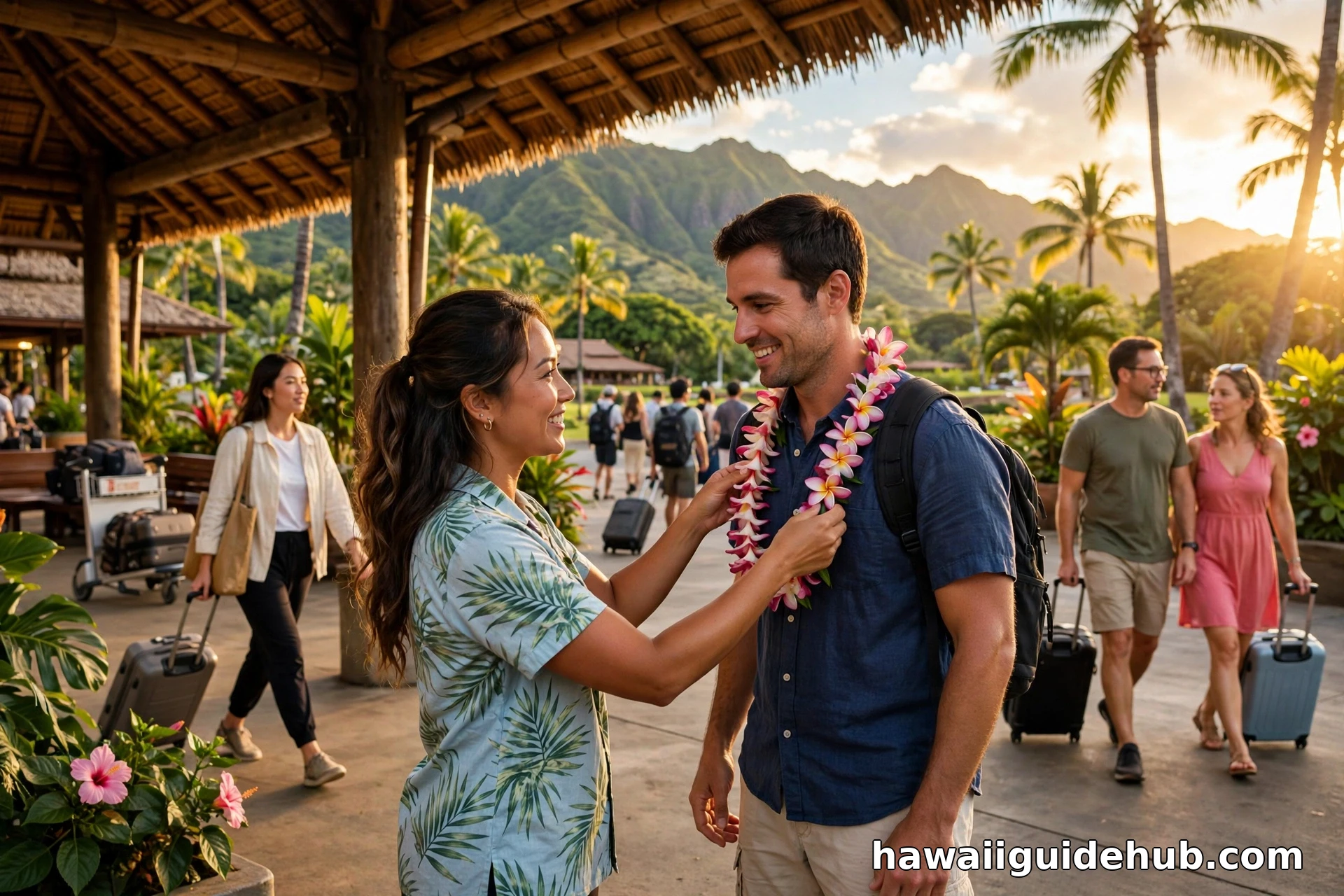
Hawaii Arrival Day Tips for a Perfect First Day

Touching down in Hawaii feels different from landing anywhere else in the United States. The jet bridge opens onto warm air scented with plumeria, the airport corridors are open to the trade winds, and somewhere between baggage claim and the curb you realize the trip you planned for months has finally started. How you spend the next few hours sets the tone for the entire vacation.
This is the single complete guide to Hawaii arrival day tips. It covers the agriculture form every visitor must complete, how to get from the airport to your hotel on each island, how to beat jet lag on day one, what to do based on your landing time, what to eat first, and the mistakes that trip up first timers. If you have been searching for anything about your first day in Hawaii, the answers are all here on this one page.
Hawaii Arrival Day at a Glance
| DO FIRST | |
| On the plane | Complete the Hawaii agriculture declaration form |
| Beat the jet lag | Stay awake until at least 9:00 PM Hawaii time on day one |
| KNOW BEFORE YOU LAND | |
| Time zone | Hawaii Standard Time (UTC-10), no daylight saving |
| Main airports | Honolulu (HNL), Kahului (OGG), Kona (KOA), Līhue (LIH), Hilo (ITO) |
| Sunset range | About 5:50 PM in winter to 7:15 PM in summer |
| Typical hotel check-in | 3:00 to 4:00 PM; early check-in is never guaranteed |
| DO NOT | |
| The biggest mistake | Overplanning day one and crashing from exhaustion |
| EAT | |
| First meal move | Eat local: poke, plate lunch, or shave ice near your hotel |
The Agriculture Form: Hawaii’s Arrival Ritual
On your flight to Hawaii, the crew will hand out (or point you to) the Hawaii Department of Agriculture’s Plants and Animals Declaration Form. Every person arriving in the state must complete one, with one adult allowed to fill it out for the whole family. The form is now digital on many routes through a program called Akamai Arrival, but paper forms are still common, so keep a pen in your carry-on.
The question is simple: are you bringing any plants, fresh produce, animals, soil, or microorganisms into Hawaii? Answer honestly. Hawaii’s ecosystem evolved in isolation for millions of years, and a single pest or seed can cause lasting damage. Little fire ants, coqui frogs, and coffee berry borers all arrived from elsewhere. This is not a formality: giving false information or failing to declare restricted items can be a misdemeanor carrying fines up to $25,000 under Hawaii law. If you are unsure about something in your bag, declare it. Our guide to whether you need a passport to fly to Hawaii covers the ID side of arrival paperwork.
Getting from the Airport to Your Hotel
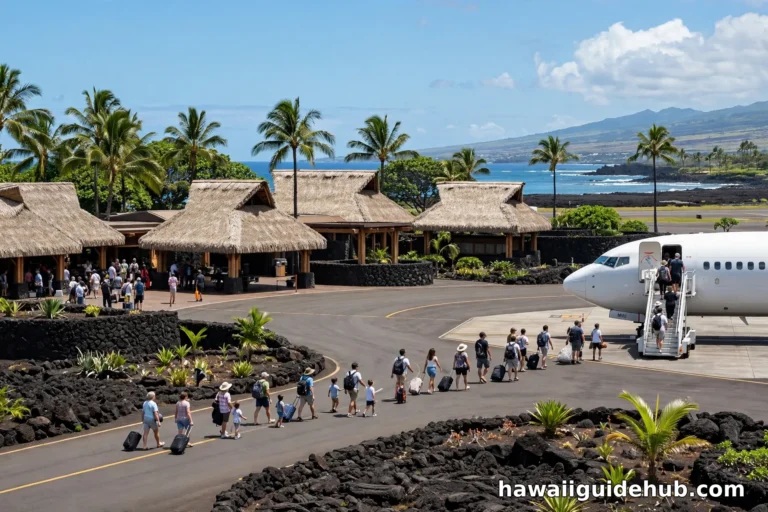
Hawaii’s airports are refreshingly easy to navigate, and none of them works quite like a big mainland hub. Honolulu’s Daniel K. Inouye International Airport (HNL) is the largest, with open-air walkways where you feel the trade winds the moment you leave the jet bridge. Kahului (OGG), Kona (KOA), Lihue (LIH), and Hilo (ITO) are smaller and even simpler: you will go from plane to curb in minutes. Decide your ground transportation before you land, because the worst arrival-day mistake is standing on the curb with luggage and no plan.
Rental Cars: The Default Choice on Most Islands
On Maui, the Big Island, and Kauai, a rental car is close to essential. Distances are long, public transit is thin, and the best beaches and trailheads have no other practical access. Book your car at the same time you book your flights, because Hawaii periodically runs short on rental inventory and walk-up prices are painful. At HNL, the rental car center is reached by shuttle; at the neighbor island airports, the rental lots are a short walk or shuttle ride from the terminal.
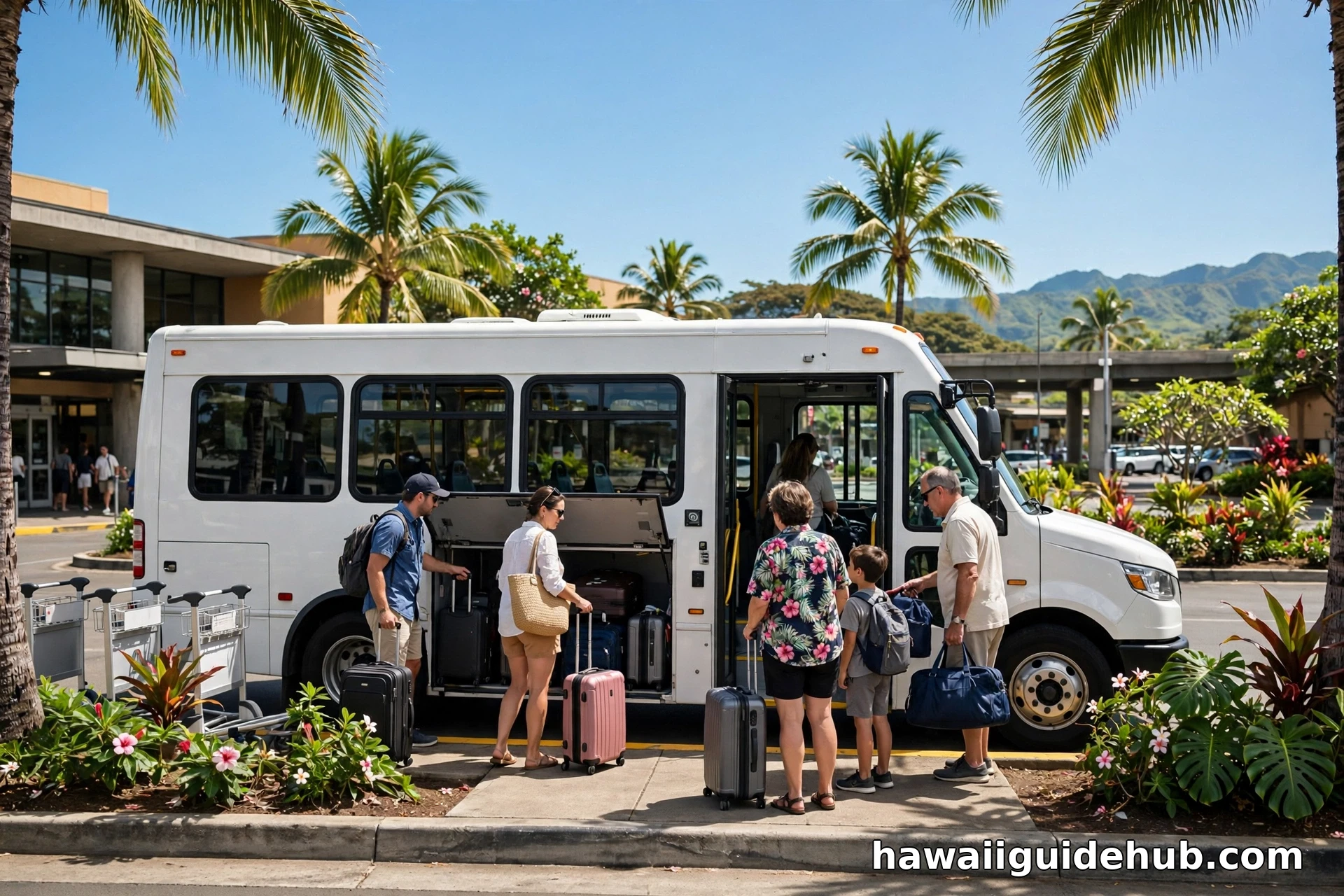
Inspect your car before driving off and photograph any existing damage. If you are staying in Waikiki, check your hotel’s parking rate before you commit to a car for the whole trip: nightly parking at Waikiki hotels commonly runs $40 to $60, which changes the math for travelers who mostly plan to walk and swim.
Taxis, Rideshares, and Shared Shuttles
If you are staying in Waikiki and not planning daily road trips, a taxi or rideshare from HNL is often cheaper than a rental car plus hotel parking. The ride to Waikiki takes about 20 to 30 minutes without traffic and can double during rush hour. Shared shuttle vans are the budget pick and drop at multiple hotels, so expect a longer ride with stops.
TheBus and Hotel Shuttles
On Oahu, TheBus runs from the airport to Waikiki for a few dollars, which makes it the cheapest arrival option by far. It is slower and you will handle your own luggage, but it is a legitimate choice for light packers. Many Waikiki and Ko Olina hotels also run their own airport shuttles, sometimes free and sometimes for a fee. Check with your hotel before you land: a surprising number of visitors pay for a taxi without realizing their hotel would have collected them.
Beating Jet Lag on Day One
Hawaii runs on Hawaii Standard Time, which is UTC minus 10 hours, and the state does not observe daylight saving time. That means a 3-hour difference from the West Coast and a 5 to 6-hour difference from the East Coast, depending on the season. Your body thinks it is much later than the island clock says, and the first evening is when jet lag hits hardest.
The single most effective strategy is sunlight. Get outside into bright daylight as soon as you can after landing: walk to the rental car shuttle instead of waiting indoors, eat lunch on a lanai, and spend the afternoon at the beach. Bright light is the strongest signal your brain uses to reset its internal clock, and Hawaii gives it to you for free. Drink far more water than you think you need, because dry cabin air leaves most travelers dehydrated, and dehydration makes every jet lag symptom worse.
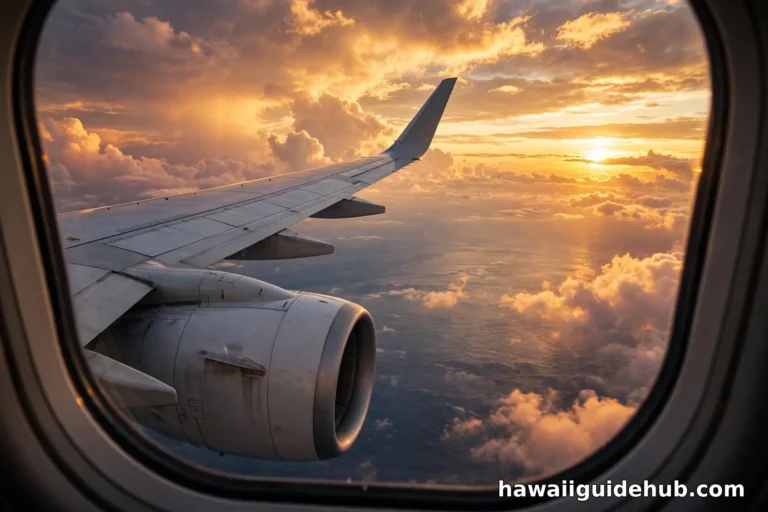
Set a hard rule: stay awake until at least 9:00 PM Hawaii time. The temptation to nap at 4:00 PM is overwhelming after a long travel day, but a long afternoon nap almost guarantees you will be wide awake at 2:00 AM. If you absolutely must nap, set an alarm for 20 to 30 minutes. Cut off caffeine by early afternoon, since it lingers in your system for hours. And give yourself a finish line worth staying up for: a Hawaiian sunset, which falls around 5:50 PM in the depths of winter and stretches to about 7:15 PM in midsummer.
What to Do on Your First Day, by Landing Time
Your landing time shapes your whole first day. Here is how to play each scenario so you end the day tired in the good way, not wrecked.
If You Land in the Morning
A morning arrival is the best-case scenario, but it comes with a luggage problem: your room will not be ready until mid-afternoon. Drop your bags with the hotel bell desk, change into beach clothes, and head straight out. This is the perfect window for a gentle first activity: a swim at the beach nearest your hotel, a stroll through town, or a shave ice run. Eat a real lunch, stay in the sun, and check in when your room is ready. Take a short rest if you need it, then get back outside for sunset.
If You Land in the Afternoon
An afternoon arrival is the most common and the most dangerous for jet lag, because your body is already telling you the day is over. Go directly to your hotel, check in, and change. Then commit to one easy, enjoyable outing: a walk on the beach, a casual dinner nearby, and sunset. Do not schedule anything ambitious. The goal is simply to stay awake, stay outside, and let the island do the work.

If You Land in the Evening
An evening arrival is actually the easiest to manage. Get to your hotel, eat a proper dinner, and go to bed at a reasonable local hour. You will likely wake up very early the next morning thanks to the time difference, which is a gift: use that first full morning for the activity that needs an early start, like a sunrise hike or beating the crowds to a popular beach. For help choosing where to base yourself, see our guide to the best island in Hawaii for first time visitors.
First-Day Food: Eat Like You Mean It
After hours of airplane food, your first real meal in Hawaii should be local. You do not need a reservation or a plan: walk to the nearest poke counter, plate lunch spot, or shave ice stand and order what looks good. Ahi poke bowls, loco moco, garlic shrimp, and malasadas are all perfect arrival-day food because they are satisfying without being heavy. Heavy, greasy meals and alcohol hit harder when you are dehydrated and jet-lagged, so save the big celebratory dinner for night two or three.
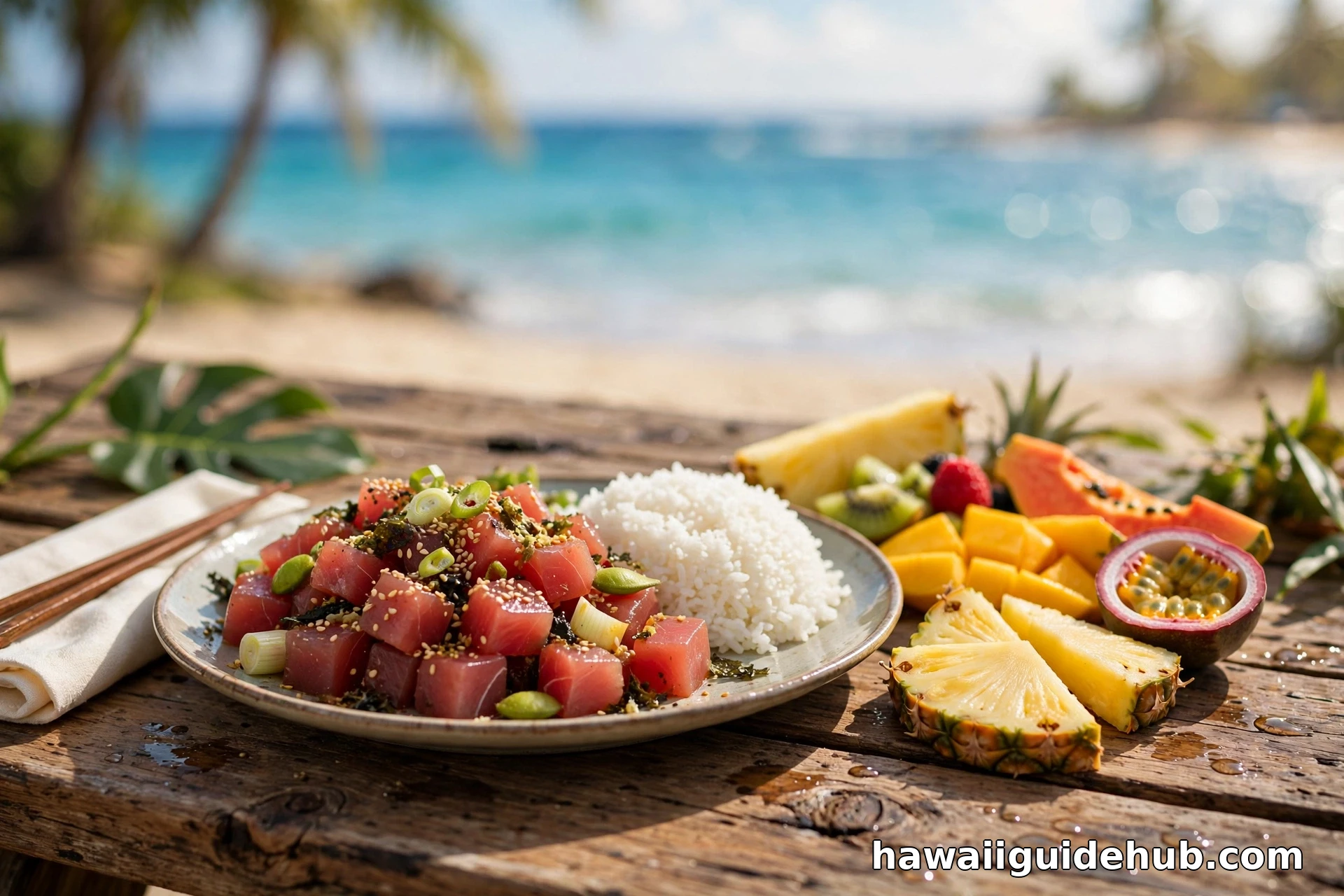
Stop at a grocery store on arrival day if you can. Prices for basics like sunscreen, snacks, bottled water, and breakfast supplies are far lower at a supermarket than at a hotel shop or ABC Store.
Island Differences on Arrival Day
Arrival day plays out differently depending on which island you land on. On Oahu, everything is close: Waikiki is 20 to 30 minutes from HNL, the island has real public transit, and you can have a full first afternoon without a car. On Maui, Kahului Airport sits in the center of the island, and most visitors drive 30 to 60 minutes to their resort in West or South Maui. Pick up your rental car, stop for groceries in Kahului where prices are lowest, then head to your side of the island.
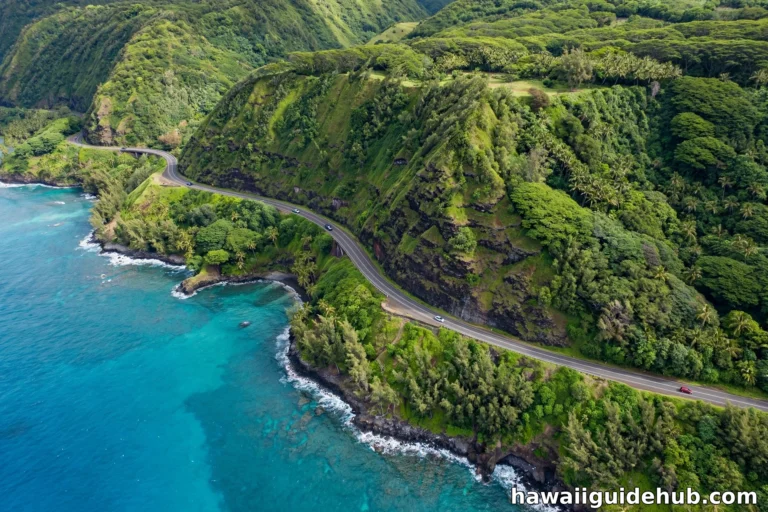
On the Big Island, distances are the story: Kona Airport to Waikoloa is about 30 minutes, but Kona to Hilo is a two-hour drive across the island. On Kauai, Lihue Airport is small and calm, most hotels are within 30 minutes, and the island’s slower pace makes arrival day feel easy. Wherever you land, resist the urge to drive far on day one. Tired drivers on unfamiliar roads are how vacations get ruined, so keep arrival day local.
Common Arrival Day Mistakes
The most common mistake is overplanning. Travelers land, try to fit in a hike, a beach, a luau, and a sunset sail on day one, then spend day two recovering. Plan exactly one real activity for arrival day and let the rest happen. The second mistake is ignoring the sun: after months of planning, people sit by the pool for six hours on day one without reapplying sunscreen and spend the next three days burned. Hawaii’s sun is strong year round, and mineral sunscreen needs reapplying every couple of hours.
The third mistake is money-related. Airport shops, hotel gift stores, and tour desks in the lobby all charge premium prices for things you can buy cheaper in town. Do not book tours at the airport, do not buy sunscreen at the hotel shop, and do not exchange currency at the airport if you can avoid it. The fourth mistake is leaving valuables visible in a rental car. Break-ins at trailheads and beaches are a known problem across the islands, so keep luggage out of sight or leave it at the hotel. Timing your trip well also matters, and our guide to what time of year it rains in Hawaii helps you pack right for your arrival.
Video: Arriving at Honolulu Airport
Walk through the full arrival experience at Daniel K. Inouye International Airport, from the jet bridge to baggage claim and out into the island air.
Frequently Asked Questions
What form do I need to fill out when arriving in Hawaii?
Every arriving passenger must complete the Hawaii Department of Agriculture’s Plants and Animals Declaration Form, declaring any plants, fresh produce, animals, soil, or microorganisms. One adult may complete it for the whole family. It is available digitally as Akamai Arrival on many routes, or on paper during your flight.
How do I get from Honolulu Airport to Waikiki?
You have four main options: taxi or rideshare (20 to 30 minutes, fastest door to door), shared shuttle van (cheapest private option, slower with multiple stops), TheBus (a few dollars, slowest, you handle your luggage), or a hotel shuttle if your property offers one. If you are renting a car, take the rental car shuttle from the terminal to the rental car center.
What time is hotel check-in in Hawaii?
Most Hawaii hotels check in between 3:00 and 4:00 PM. If you land in the morning, drop your bags with the bell desk and enjoy the beach or town until your room is ready.
How do I beat jet lag when I arrive in Hawaii?
Get into bright sunlight as soon as possible, stay hydrated, avoid a long afternoon nap, cut off caffeine by early afternoon, and stay awake until at least 9:00 PM Hawaii time. Most travelers adjust within one to two days if they follow this routine on day one.
Can I go to the beach on arrival day?
Absolutely, and you should. A swim or beach walk is the ideal arrival-day activity: it gets you into the sun, cools you down, and keeps you awake through the afternoon. Just reapply reef-safe sunscreen often, because arrival-day sunburn is one of the most common trip-ruining mistakes.
Should I rent a car on arrival day?
On Maui, the Big Island, and Kauai, yes: pick it up at the airport and you are set for the trip. On Oahu, it depends on your plans. If you are staying in Waikiki and mostly beaching and dining nearby, you can skip the car and use shuttles, rideshares, and TheBus. If you want to explore the island, rent one. Our full Hawaii bucket list can help you decide how much exploring you will actually do.
Arrival day is the only day of your trip you cannot redo, so treat it as the foundation, not the main event. Handle the form, get to your hotel without stress, eat something local, watch the sun go down, and get to bed at a decent hour. Do that, and you will wake up on day two feeling like you actually live in Hawaii, with the whole trip still ahead of you.