Kīpukapuaulu Trail: the Bird Park Hike in Hawaiʻi Volcanoes National Park

Most visitors to Hawaiʻi Volcanoes National Park spend their time staring into Kīlauea’s crater or driving the Chain of Craters Road. Almost none of them turn off onto Mauna Loa Road, the quiet side road that climbs away from the crowds. Those who do find one of the sweetest walks on the Big Island: the Kīpukapuaulu Trail, a 1.2 mile loop through an ancient pocket of native forest that locals call the Bird Park. If you love birds, big trees, and peaceful trails where you can hear yourself think, this easy hike deserves a slot in your park day.
What Is Kīpukapuaulu?
The name looks intimidating, but it breaks down simply. A kīpuka is a Hawaiian word for an area of older vegetation surrounded by a more recent lava flow, an island of old forest in a sea of new rock. About 600 years ago, a Mauna Loa lava flow swept across this slope and left one fragment of forest standing, rooted in lava roughly 8,600 years old. Ash from later Kīlauea eruptions settled over the fragment and built up deep, moist soils, and the forest never left.
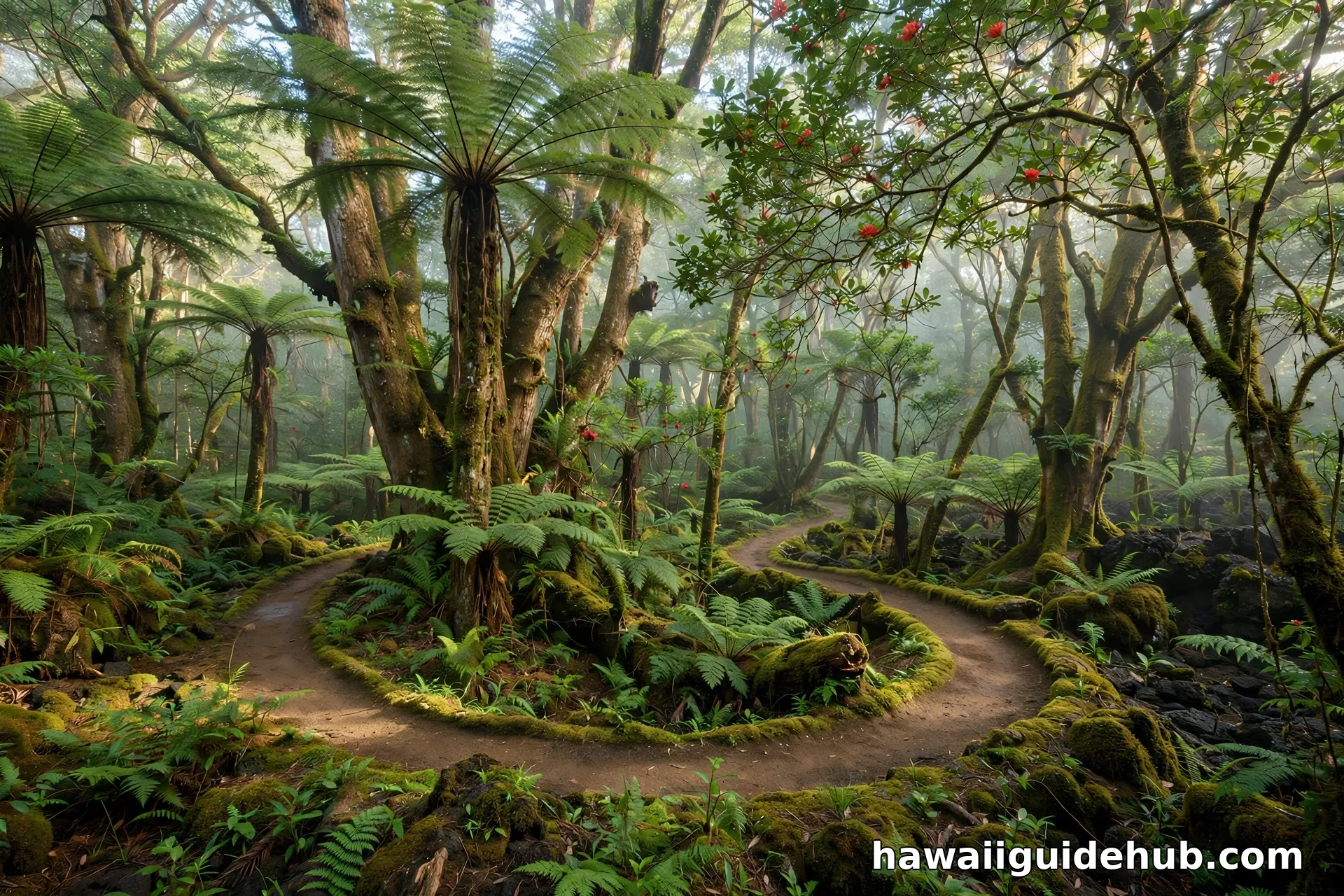
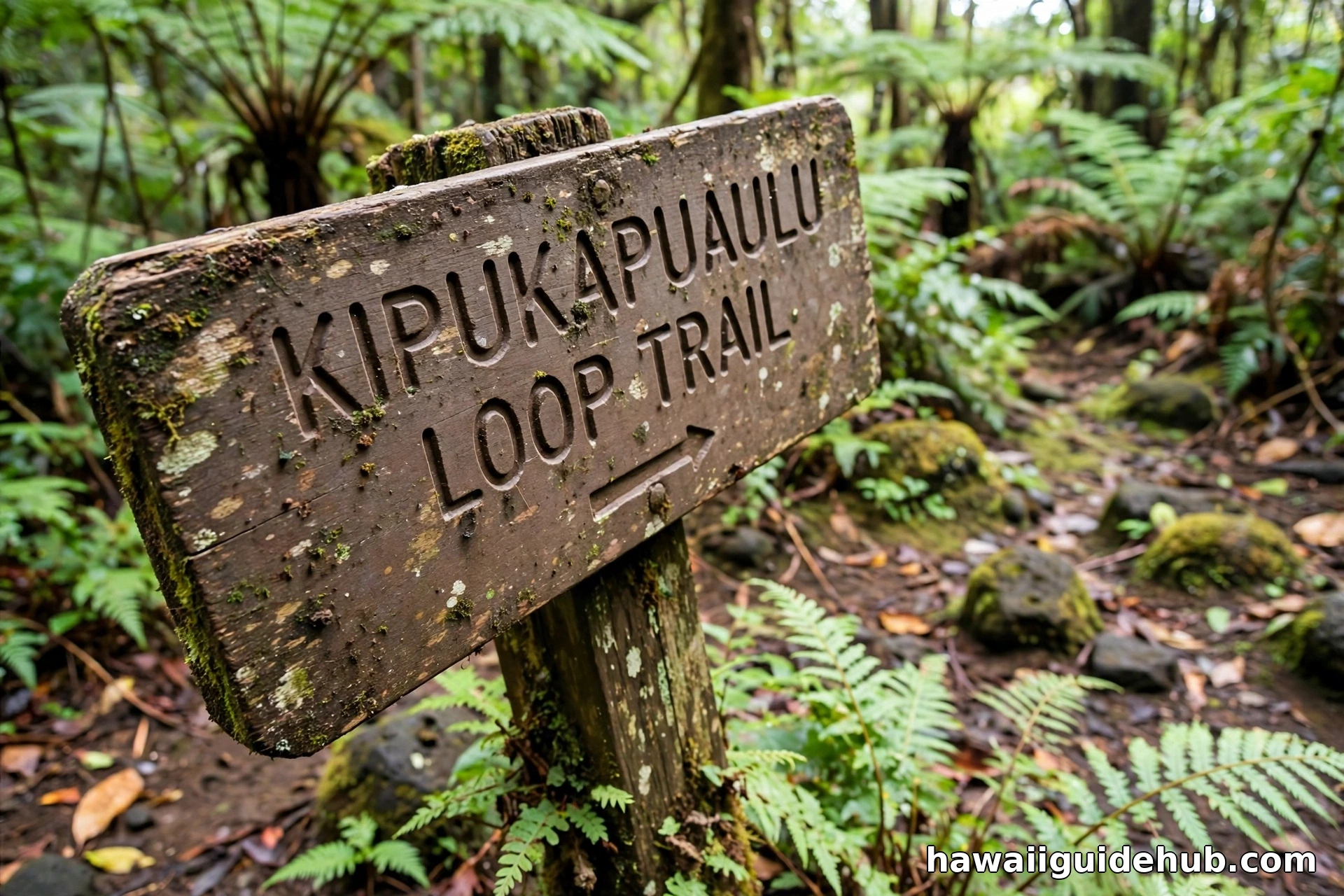
Today that forest is a special ecological area, a refuge for native trees and birds that have vanished from much of the surrounding land. Because the canopy rings with birdsong from dawn onward, people started calling it Bird Park, and the name stuck. The trail itself is an easy dirt loop with interpretive signs and numbered stops that tell the story of struggle and survival written into this landscape.
The park treats the kīpuka as a special ecological area, and you can feel why the moment the trail closes around you. The National Park Service publishes a self guided trail guide with numbered stops keyed to the plaques along the path; it is a small printed booklet sold at park stores and also available as a free PDF download on the NPS website, and it turns a pleasant walk into a real natural history lesson. Fences at the trailhead keep feral pigs and goats out, which is one reason the understory stays so intact. Go quietly, give the forest time to settle after your arrival, and the birds will reward you.
Kīpukapuaulu Trail Quick Facts
| TRAIL READ: THE EASY VOLCANO WALK | |
|---|---|
| THE WALK | |
| Distance | 1.2 mile (1.9 km) loop |
| Typical time | 1 to 1.5 hours at a relaxed pace |
| Difficulty | Easy, gentle inclines and declines |
| Elevation | About 3,600 feet |
| THE LOGISTICS | |
| Location | Mauna Loa Road, Hawaiʻi Volcanoes National Park |
| Facilities | Parking lot, picnic area, pit toilets |
| Park fee | Standard park entrance fee applies |
| Dogs and bikes | Not allowed on this trail |
All trail stats above follow the National Park Service day hike page for Kīpukapuaulu, which lists the loop as easy with a hiking time of one to one and a half hours.
The Trail at a Glance
The loop starts at the Kīpukapuaulu parking area on Mauna Loa Road. A wooden fence protects the forest interior from feral pigs, and the trail passes through a gate onto a dirt path that rolls gently through the trees. You will not find steep climbs or tricky footing here, just a pleasant winding path with benches and numbered interpretive stops where you can pause and listen.
Walk it as three relaxed legs. The first stretch climbs gently from the trailhead through open meadow edge into the old growth koa grove, where some trees have stood for more than a century. The middle section is the birdwatching heart of the hike, shaded, quiet, and lined with interpretive plaques about the forest’s rarest residents. The final stretch loops back through mixed native trees to the parking lot, with views of the surrounding younger lava flows that never touched this forest island. Most walkers finish in about an hour if they keep moving, but plan for ninety minutes or more if you like to stop, listen, and read the signs.
How to Get to the Trailhead
The trailhead sits on Mauna Loa Road, which branches off Highway 11 on the mauka (mountain) side of the highway, west of the main park entrance. Drive about two miles up Mauna Loa Road and watch for the Kīpukapuaulu parking area on your left. The drive itself is short and scenic, and many visitors continue up the same road afterward toward the Mauna Loa Lookout at 6,662 feet.
Note that the trail is inside Hawaiʻi Volcanoes National Park, so the park entrance fee applies to your visit. You pass the park entrance station on the way in from Highway 11, so pay there or at the main entrance area before turning up the road. Check the official NPS fees page for current rates, since they can change. The parking lot is small but rarely fills, which is part of this trail’s quiet charm.
See our guide to the best things to do in Hawaiʻi Volcanoes National Park for help building this trail into a full park day.
What You Will See Along the Way
The forest
The star of the walk is the forest itself. Massive old growth koa trees tower over a layered understory of ʻōhiʻa lehua, soapberry, kolea, mamani, and towering hāpuʻu tree ferns. The kīpuka is said to hold more native tree species per acre than any other forest in the park, and the contrast is striking when you look past the fence line at the much younger, sparser vegetation on the lava around it. Interpretive signs along the numbered stops explain how the forest survived and how plants recolonize lava, making this one of the most educational short walks in the park.
The birds
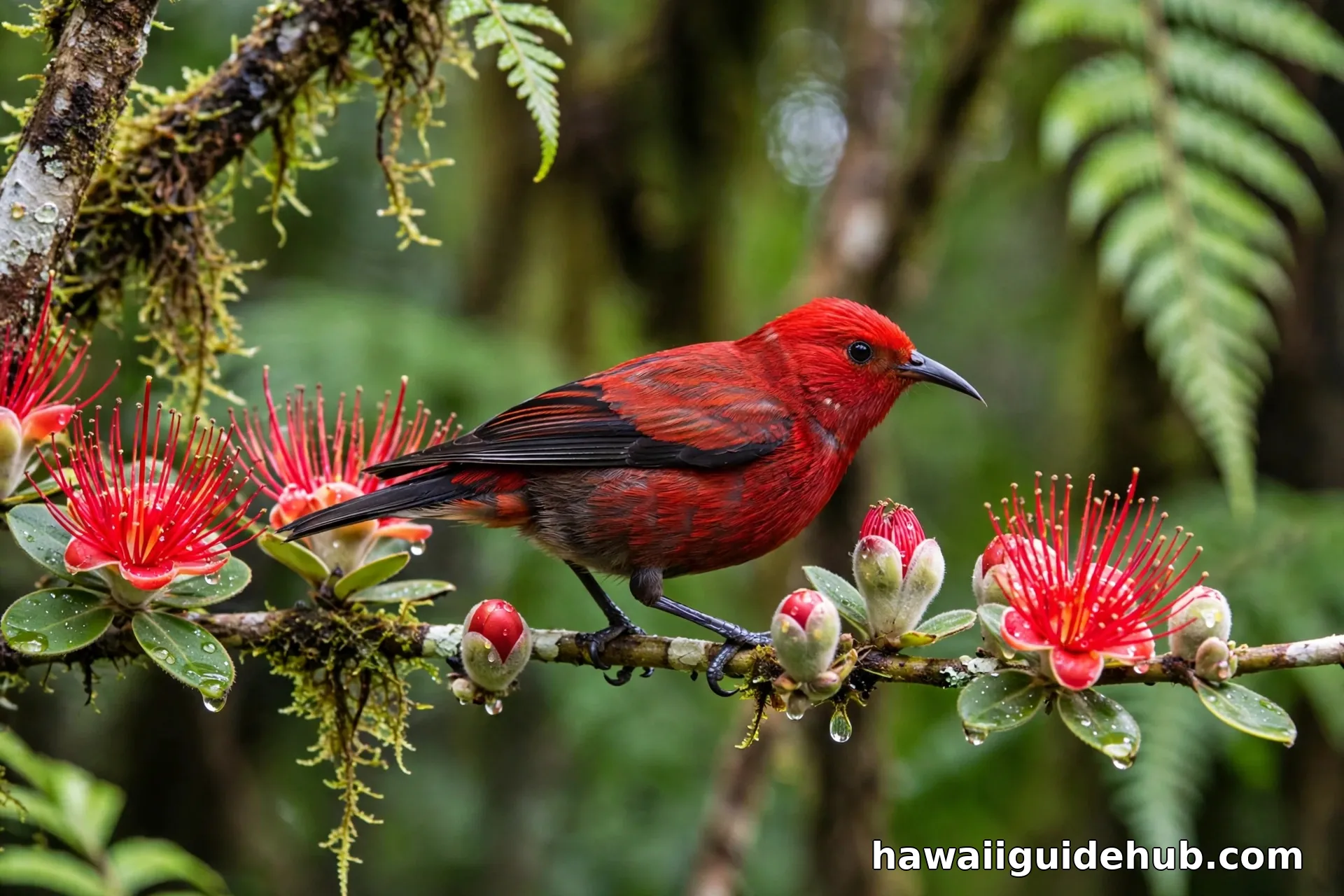
Come for the trees, stay for the birds. Native forest birds you may encounter include the crimson ʻapapane, the brown ʻōmaʻo (Hawaiian thrush), and the curious Hawaiʻi ʻelepaio that flits close to the trail. With patience and luck you might catch the scarlet flash of an ʻiʻiwi or hear the ʻio, the Hawaiian hawk, circling above the canopy. Nēnē, the Hawaiian goose, sometimes graze in the meadows near Mauna Loa Road.
You will almost certainly meet the trail’s most famous resident, the kalij pheasant, an introduced game bird that struts the trail edges in small family groups and shows almost no fear of walkers. Introduced songbirds like the red billed leiothrix and Chinese hwamei add their own color and song to the chorus.
Birdwatching Tips for the Bird Park
Go early. Birds are most active and vocal in the first few hours after sunrise, and you may have the trail almost entirely to yourself. Bring binoculars, because most native birds feed high in the canopy and are easier to hear than to see. Walk slowly and stop often; experienced birders recommend standing still at one of the benches and letting your eyes adjust to the mottled light, which reveals small movements overhead far better than constant motion.
Listen first. Each species has a distinctive call, and on a quiet morning the forest is a full choir. Download a bird call app before you go, since some hikers play calls briefly to pique a bird’s curiosity, though you should never blast calls repeatedly or chase wildlife. Keep food sealed and never feed the pheasants, no matter how boldly they approach. If ʻōhiʻa are blooming, scan the red blossoms, because honeycreepers like the ʻapapane and ʻiʻiwi come down to feed on the nectar and give you your best views of the day.
When to Hike the Trail
The trail is open year round, and mornings are the sweet spot for both birds and weather. At roughly 3,600 feet of elevation the air is cool and fresh, and clouds often build by afternoon. The NPS advises bringing rain gear alongside your sun protection, because conditions here can swing from hot to wet to windy in a single walk. Dress in layers rather than shorts and a tee alone; locals hike this trail in a fleece more often than visitors expect.
Vog, the volcanic haze from Kīlauea, can occasionally drift across the area and affect air quality. If you have heart or respiratory conditions, check the park’s current air quality and eruption alerts on the NPS website before you set out, and skip the hike on days when conditions are poor.
What to Bring and Trail Rules
Pack water, a hat, sunscreen, and rain gear, and wear sturdy walking shoes with decent grip, since the dirt path can be slippery after rain. There is no drinking water at the trailhead, so carry everything you need for ninety minutes on the trail. A light snack is smart, because the picnic area near the trailhead is a lovely spot to eat before or after your walk.
Trail rules are simple and worth respecting. Dogs, horses, and bicycles are prohibited, which keeps the forest quiet and protects the birds. Stay on the marked path and do not pick plants or disturb wildlife. Hawaii’s forests face a serious threat from Rapid ʻŌhiʻa Death, a fungal disease spread on muddy footwear, so use the boot cleaning stations if they are present at the entrance and brush your shoes clean before and after your hike. This small step helps protect every ʻōhiʻa forest you will visit afterward.
Pair It with Nearby Stops
Kīpukapuaulu works best as part of a slow morning on the park’s quieter side. Just down Mauna Loa Road you can stop at the lava tree molds, strange hollow columns where molten lava once surrounded tree trunks and then drained away. Continuing up the road brings you to the Mauna Loa Lookout for sweeping views on clear days, and the trailhead for the long Mauna Loa Summit Trail begins nearby for serious backpackers.
Back on Highway 11, the Kīlauea Visitor Center, Volcano House, and the crater overlooks anchor the classic park experience. Many visitors combine Bird Park with the Thurston Lava Tube and the Kīlauea Iki overlook for a full day that covers forests, lava tubes, and craters in one loop.
Browse the best things to do on the Big Island to plan the rest of your trip around this hike, and see more off the beaten path outdoor activities if quiet corners like this one are your favorite kind of stop.
Frequently Asked Questions
Is the Kīpukapuaulu Trail free?
The trail itself has no separate fee, but it sits inside Hawaiʻi Volcanoes National Park, so the standard park entrance fee applies. Pay at the entrance station when you arrive.
How long does the hike take?
The NPS lists one to one and a half hours for the 1.2 mile loop. Birdwatchers and photographers commonly take closer to two hours because they stop often.
Is the trail good for kids?
Yes. The easy grade, short distance, benches, and tame pheasants make it one of the most family friendly hikes in the park. The interpretive signs give kids plenty to look at along the way.
Can I bring my dog?
No. Dogs are prohibited on the trail to protect native wildlife, and the same rule applies to horses and bicycles.
Is the trail wheelchair accessible?
No. The dirt path has gentle but uneven inclines and declines, so it is not suitable for wheelchairs or strollers.
Do I need the trail guide?
The numbered stops are marked along the trail, and the park sells a printed trail guide and offers a free PDF download on the NPS website. It is not required, but it adds real depth to the walk if you like knowing what you are looking at.
Watch: Walking the Trail
Here is a video walkthrough of the trail so you can see the forest and the birds before you go.
Why This Quiet Trail Is Worth Your Morning
The Kīpukapuaulu Trail will not make your heart race or fill your camera roll with crater panoramas. What it offers instead is rarer in a busy national park: an hour of green quiet, ancient trees, and birdsong in a forest that survived against the odds. If you can spare a morning away from the overlook crowds, the Bird Park repays it with one of the most peaceful walks on the Big Island.