Hawaii Camping Permit Guide: How to Camp Legally on Every Island

Falling asleep to waves and waking up to a beach sunrise is one of the best experiences Hawaii offers, and it costs a fraction of a hotel room. But camping in Hawaii is not as simple as pitching a tent wherever looks nice. Nearly every legal campsite requires a permit, the booking systems are different on each island, and some campgrounds sell out the moment permits release. This is the single complete guide to Hawaii camping permits. It covers which system each island uses, exactly how and when to book, what visitors pay, the rules you must follow, and what to pack.
The first thing to understand is that Hawaii has two layers of campgrounds: county parks and state parks, each with its own permits, fees, and booking windows. Figure out which layer your chosen campground belongs to, and the rest of this guide will walk you through it.
Camping Permits at a Glance
| Island / area | Permit system | Key facts for visitors |
| Oʻahu (county parks) | camping.honolulu.gov | Book 2 Fridays ahead at 5 p.m. HST; $32.75 (3-day) or $53.22 (5-day) |
| Hawaiʻi Island (county parks) | hawaiicounty.ehawaii.gov | Per-person nightly fees; non-residents $21/adult/night; no free camping |
| Maui County parks | Mail or in person | Apply through the county parks department |
| Kauaʻi County parks | Mail or in person | Apply through the county parks department |
| State parks (all islands) | camping.ehawaii.gov | DLNR permits online or in person at district offices |
Oʻahu Camping Permits
Oʻahu runs the most structured system, through the Honolulu Department of Parks and Recreation. Family camping permits cover groups of up to 10 people per site, and you book them at camping.honolulu.gov or in person at the permits office. Online permits for a given weekend become available two Fridays before the Friday you want to camp, at 5 p.m. HST, and popular campgrounds are claimed within minutes, so set an alarm.
Every permit starts on a Friday. A 3-day permit runs Friday through Monday at 8 a.m. and costs $32.75; a 5-day permit runs Friday through Wednesday at 8 a.m. and costs $53.22. You must be at least 18 to apply, you are limited to one permit per weekend, and each site allows a maximum of ten people, two tents, and three vehicles. Permits are non-transferable and non-refundable unless officials close the campground. If you are organizing a big group months ahead, Honolulu offers large group sites at Kualoa Regional Park (up to 150 people) and Kokololio Beach Park (up to 250), booked by phone.
Note that Oʻahu camping is weekend-based: there is no Tuesday-night-only permit. Plan your itinerary around a Friday arrival, and if you are exploring the island before that, our North Shore Oʻahu guide covers the coast where several campgrounds sit.
Oʻahu’s most popular campgrounds each have their own character. Bellows Field Beach Park in Waimānalo offers a long, beautiful beach but sits beside an active military training area, so expect occasional closures and check conditions. Kualoa Regional Park puts you beneath the dramatic Koʻolau cliffs with views of Mokoliʻi island, and Malaekahana on the North Shore is a favorite for its calmer vibe. All of them follow the same Friday-start permit system, so the booking strategy is identical: be online at camping.honolulu.gov at 5 p.m. HST two Fridays out, with your site picked and your vehicle information ready. If your first choice is gone, have a backup campground in mind before the release time hits.
Hawaiʻi Island Camping Permits
On the Big Island, county campgrounds are booked through hawaiicounty.ehawaii.gov, where you reserve, pay, and print your permit online. Fees are charged per person per night, and visitors pay non-resident rates: $21 per adult per night, $21 per junior (13 to 17) per night, and $20 per child 12 and under per night. Residents with a Hawaii ID pay far less, which is why the system asks for ID. There is no free camping in Hawaii County parks, and you cannot buy a permit at the park itself, so purchase before you go and keep a printed or electronic copy with you.
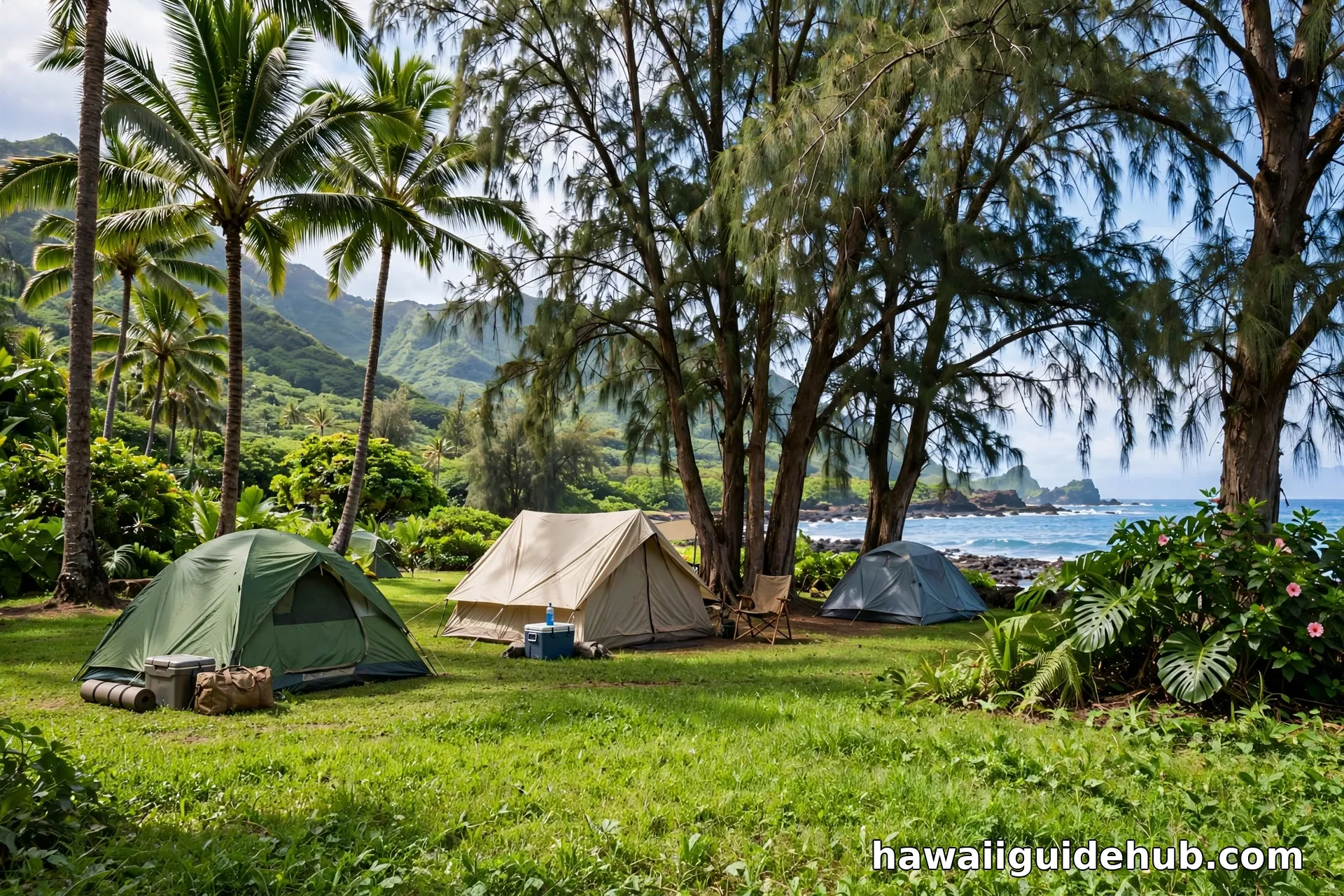
County rules cap stays at one week per site from June through August and two weeks in other months, on a first-come, first-served basis. Tents must be freestanding and no larger than 10 by 10 feet, camping is allowed in designated areas only, and quiet hours run from 11 p.m. to 6 a.m. Dogs, cats, and other pets are not allowed on county beach parks (service animals excepted), and open-flame cooking is limited to designated fire pits or contained grills. Mauna Kea’s cabins and bunkhouse are a separate, pricier option for campers who want a roof at altitude.
The Big Island’s county campgrounds span dramatically different climates, so pick your site with the weather in mind. Coastal parks on the Kona side are warm and dry, while Hilo-side and upland sites can be cool, wet, and muddy, sometimes all in the same day. Because permits are first-come, first-served within the booking window, you have more flexibility than Oʻahu’s Friday-release scramble, but holiday weekends still fill. Book as early as the system allows if your dates touch a holiday, and double-check which parks have potable water and which do not, since a few remote sites leave you entirely self-sufficient.
Maui and Kauaʻi Camping Permits
Maui County and Kauaʻi County campgrounds work the old-fashioned way: you apply by mail or in person through the county parks department, since neither county offers full online permit sales. Start this process early, because mail turnaround plus your travel dates leaves little room for delay. On Kauaʻi, county beach parks like Anini and Anahola are beloved camping spots, and our Poʻipū guide covers the south shore base many campers use. On Maui, county campgrounds pair well with a Road to Hana itinerary, but remember that Waiʻānapanapa is a state park with its own separate reservation system.
State Park Camping Permits
State park campgrounds, from Polihale and Kōkeʻe on Kauaʻi to Mākena on Maui, are managed by the DLNR Division of State Parks. Book through camping.ehawaii.gov, the state’s Wiki Permits site, where you can check availability, reserve, and pay by credit card. The DLNR no longer accepts mail-in applications, but you can still buy permits in person at a district office. State park camping is where you find Hawaii’s most dramatic sites, including Nāpali Coast wilderness camping, which requires its own highly competitive permit booked well in advance. Note that some state parks, like Hāʻena, require day-use reservations on top of any camping permit, so read each park’s page carefully.
Storm season deserves a special warning. When tropical systems threaten, DLNR suspends state park and forest camping permits and closes parks outright, crediting refunds for missed nights. If you are camping between June and November, watch the forecasts and DLNR announcements, and have a backup lodging plan. The Hawaiʻi Volcanoes area on the Big Island is one place where weather can change fast, so build flexibility into that leg of your trip.
Campground Rules Every Visitor Should Know
Across all islands, the same core rules apply. Camp only in designated sites with a valid permit, and keep it with you. Respect quiet hours and your neighbors. Use only designated fire pits or contained grills, never gather wood beyond dead material on the ground, and never leave a fire unattended. Pack out all trash, including food scraps, because mongoose, rats, and feral cats are quick to raid a messy camp. Leave the site cleaner than you found it. And never camp on a beach that is not a designated campground: sleeping on undesignated beaches is illegal and enforced, especially in tourist areas.
What to Pack for Camping in Hawaii
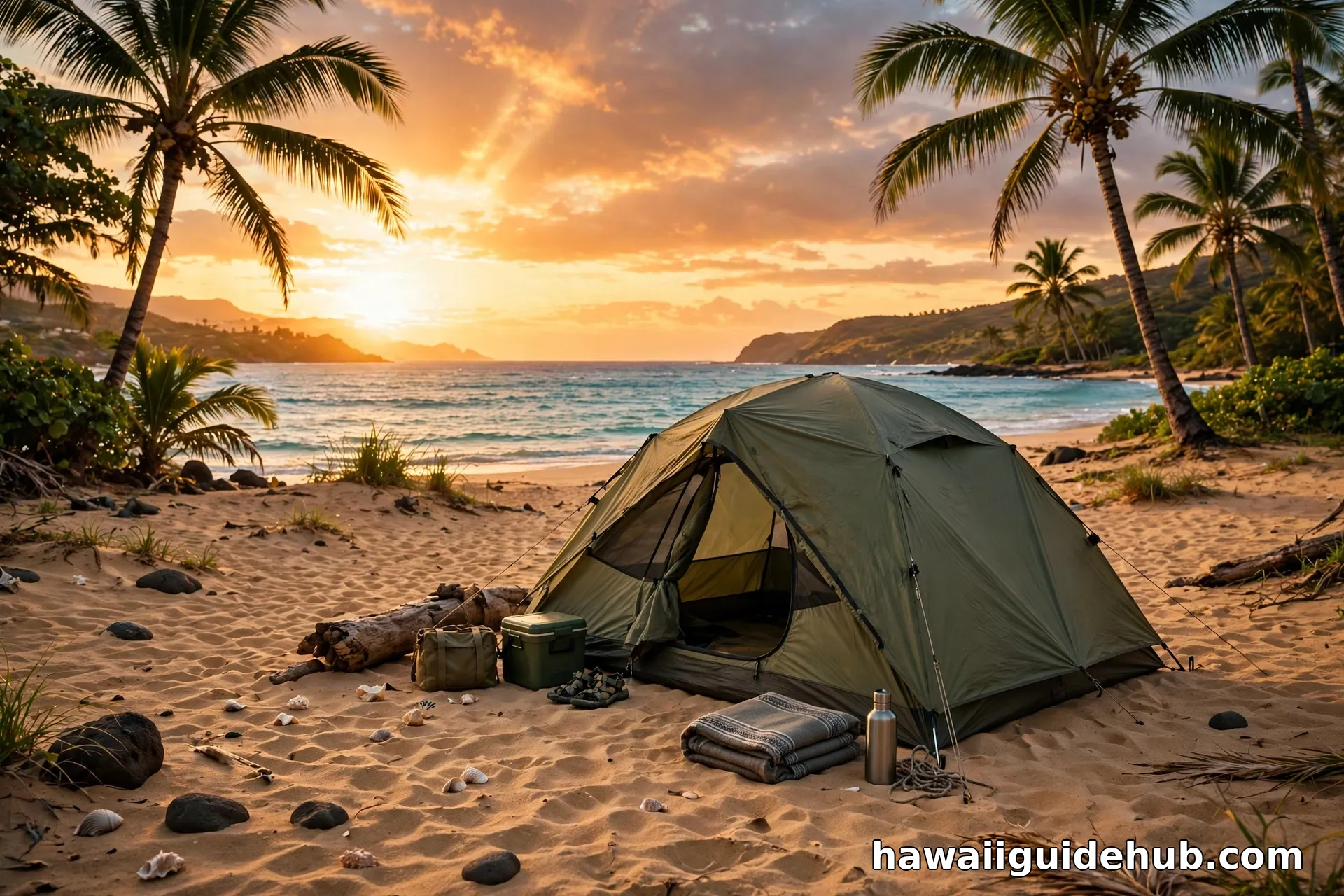
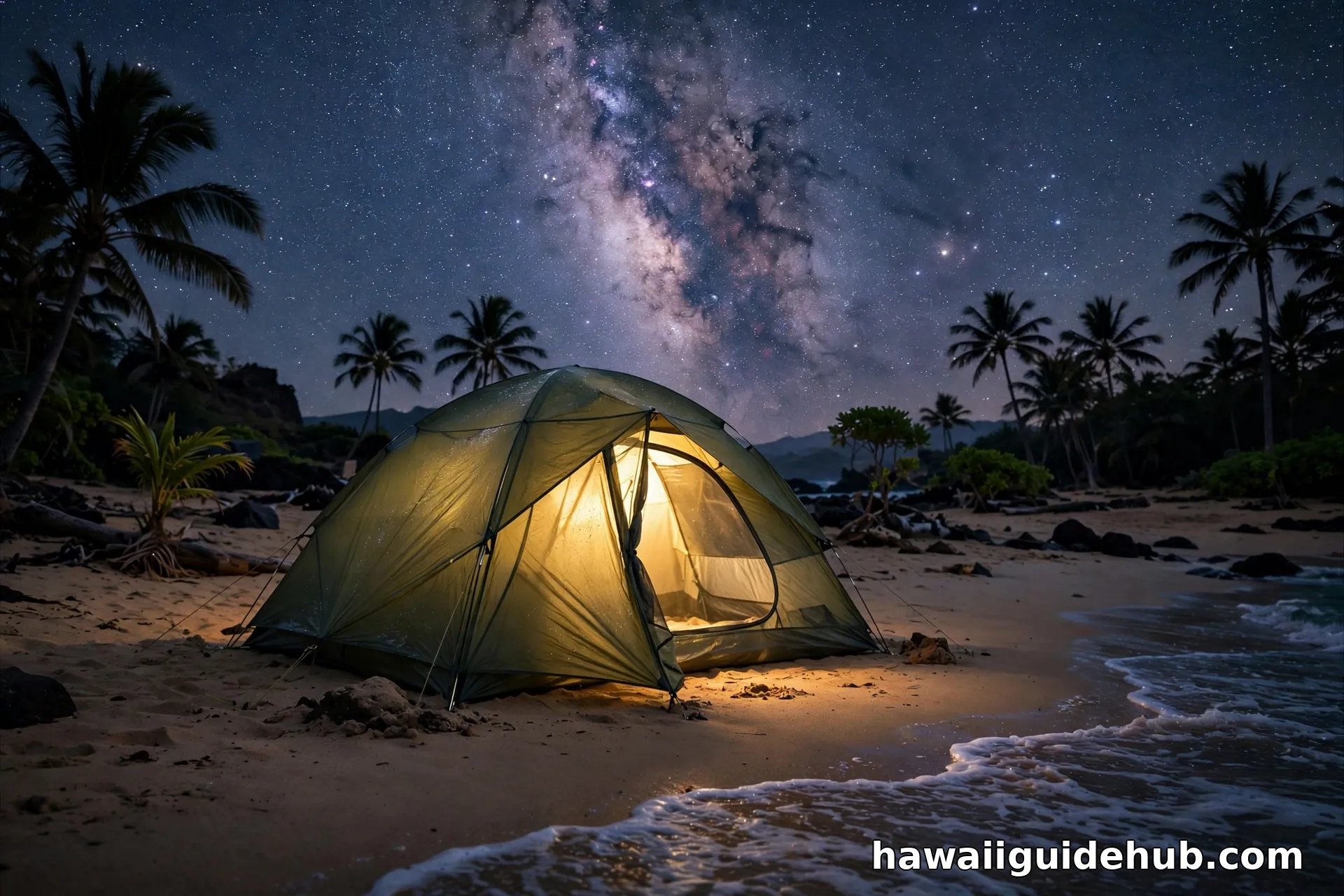
Hawaii camping is warm-weather camping, but the details matter. Bring a tent with a full rainfly: tropical rain arrives fast, even on the “dry” side of an island. A sleeping pad matters more than a heavy bag, since nights rarely drop below the mid-60s Fahrenheit at sea level. Pack reef-safe sunscreen, insect repellent, a headlamp, and far more water than you think you need, plus a way to carry it. Campgrounds vary wildly in amenities: some have restrooms, showers, and picnic tables, while others have nothing but a permit post. Check your specific campground’s facilities before you go, and never assume you can buy supplies nearby. A cooler, a camp stove or contained grill, and trash bags round out the kit.
A few Hawaii-specific packing notes catch first-timers out. Mosquitoes are worst at dawn and dusk near standing water, so a headnet and repellent earn their weight. A cheap tarp and extra cord turn any site into a dry kitchen when the rain starts. Water shoes help on rocky entries if your campground has a swimming spot. And bring cash or a card for ice and firewood runs: many campgrounds sit far from the nearest store, and a mid-trip supply run can eat half a day. If you are flying in with gear, remember that stove fuel cannot go in checked or carry-on baggage, so plan to buy it after you land.
Mistakes First-Time Hawaii Campers Make
The most expensive mistake is assuming you can sort the permit out on arrival. You cannot buy county permits at the park, Oʻahu permits sell out in minutes, and wilderness permits for places like the Nāpali Coast are gone months ahead. The second mistake is picking a campground for the photos without checking the facilities: arriving at a remote site with no water and no store nearby ruins a trip fast. Third, visitors underestimate the rain. A “mostly sunny” forecast in Hawaii still means passing showers, and a tent without a rainfly becomes a bathtub. Fourth, people forget that campgrounds close. Military exercises shut Bellows, storms shut state parks, and maintenance closes sites with little notice, so check the official site a day or two before you go, not a month before.
Camping FAQs
Can I camp for free anywhere in Hawaii?
No. There is no free legal camping in Hawaii’s county or state parks; every permit carries a fee. Camping outside designated campgrounds is illegal.
How far ahead should I book?
Oʻahu county permits release two Fridays before your weekend at 5 p.m. HST and popular sites go immediately. State park wilderness permits, especially the Nāpali Coast, should be booked as early as the system allows. For Maui and Kauaʻi county parks, allow mail time on top of your travel dates.
Can I camp on the beach without a permit if I keep it clean?
No. Sleeping on undesignated beaches is illegal regardless of how tidy you are, and it is enforced. Book a designated campground.
Are campgrounds safe for visitors?
Designated campgrounds are generally safe, but use normal precautions: lock your car, keep valuables out of sight, and store food securely. Some campgrounds near urban areas have issues with theft, so read recent reviews of your specific park.
Can I bring my dog camping in Hawaii?
Pets are prohibited on Hawaii County beach parks and restricted in many other campgrounds. If you are traveling with a service animal, different rules apply. Check your specific campground before assuming.
Watch: Camping on Kauaʻi’s Best Spots
This vlog walks through three Kauaʻi campgrounds, Anini Beach, Polihale State Park, and Anahola, with the pros and cons of each from a camper who stayed at all three.
Camping in Hawaii rewards the organized. Identify whether your campground is county or state, book through the right system at the right moment, print your permit, and follow the campground rules. Do that, and you will spend your nights listening to the Pacific instead of worrying about a ranger’s flashlight, which is exactly how a Hawaii camping trip should feel. Sweet dreams under the palms. Book early, pack for the windward chill after dark, and leave every campsite cleaner than you found it. Every single time, no exceptions.