Hawaii Monk Seal Viewing Rules: How to Watch Them the Right Way

Seeing a Hawaiian monk seal on the beach is one of the great wildlife moments Hawaii offers visitors. These gentle-looking animals are found nowhere else on earth, they are among the most endangered marine mammals in the world, and Hawaii chose one as its official state mammal. They are also strictly protected by law, and the viewing rules are not suggestions. This is the single complete guide to Hawaii monk seal viewing rules. It covers the official distances, what to do when you see a seal, where you are most likely to spot one, the laws that protect them, and answers to the questions every visitor asks.
The core rule fits in one sentence: stay at least 50 feet away from every monk seal, and at least 150 feet from a mother with a pup. Everything else in this guide explains why those distances matter, how to judge them on a real beach, and what to do in the situations visitors actually run into.
Monk Seal Viewing Rules at a Glance
| Situation | Rule |
| Any monk seal, land or water | Stay at least 50 feet (15 meters) away |
| Mother nursing a pup | Stay at least 150 feet away (half a football field) |
| Posted signs, ropes, or cones | Stay behind them, always |
| Dogs | Leashed and kept well away from seals |
| Touching, feeding, chasing | Illegal under federal and state law |
| Seal approaches you | Move away calmly; do not interact |
| Sightings | Report to the NOAA Marine Wildlife Hotline: 888-256-9840 |
| Photos and video | Use zoom or binoculars instead of moving closer |
Meet the Hawaiian Monk Seal
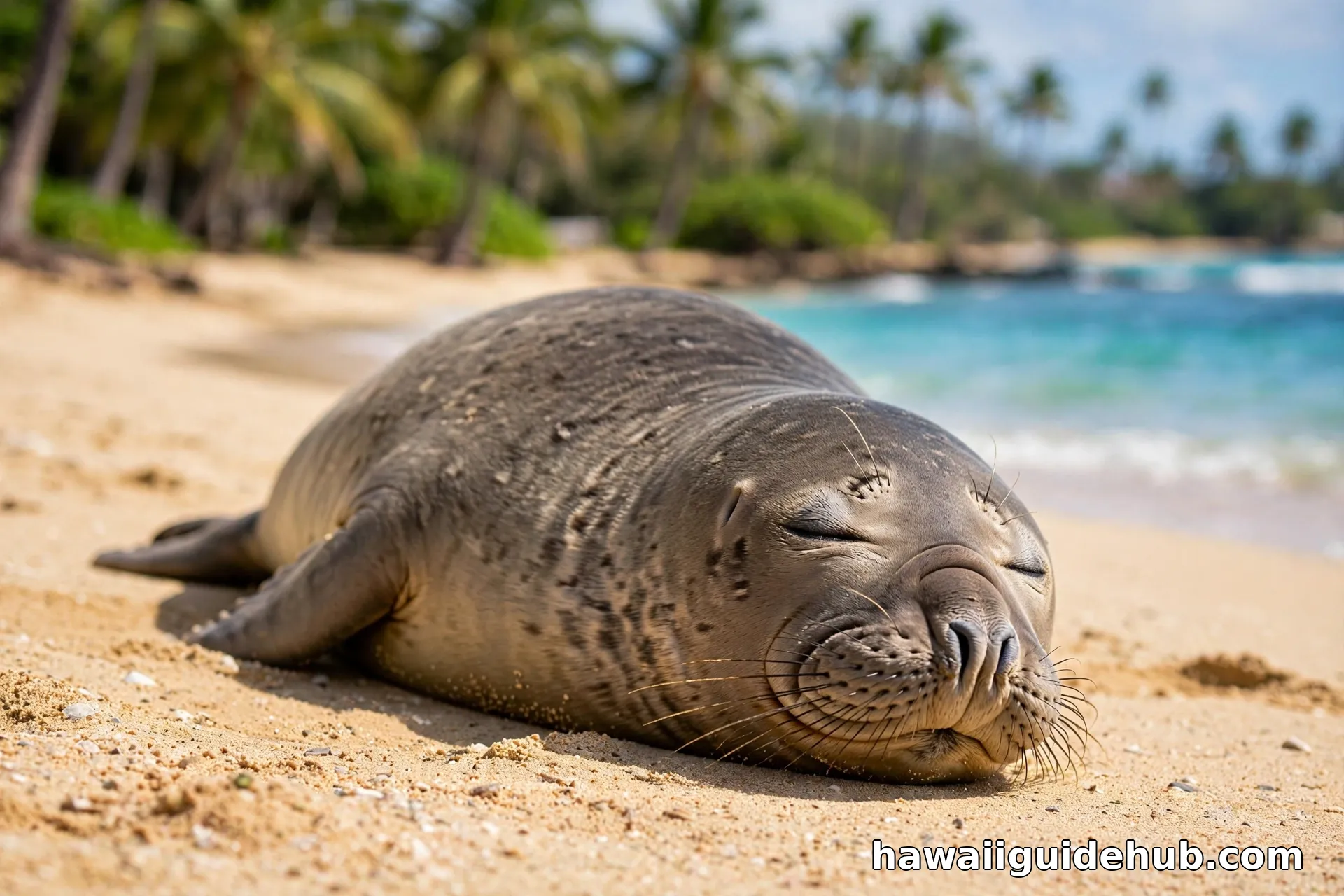
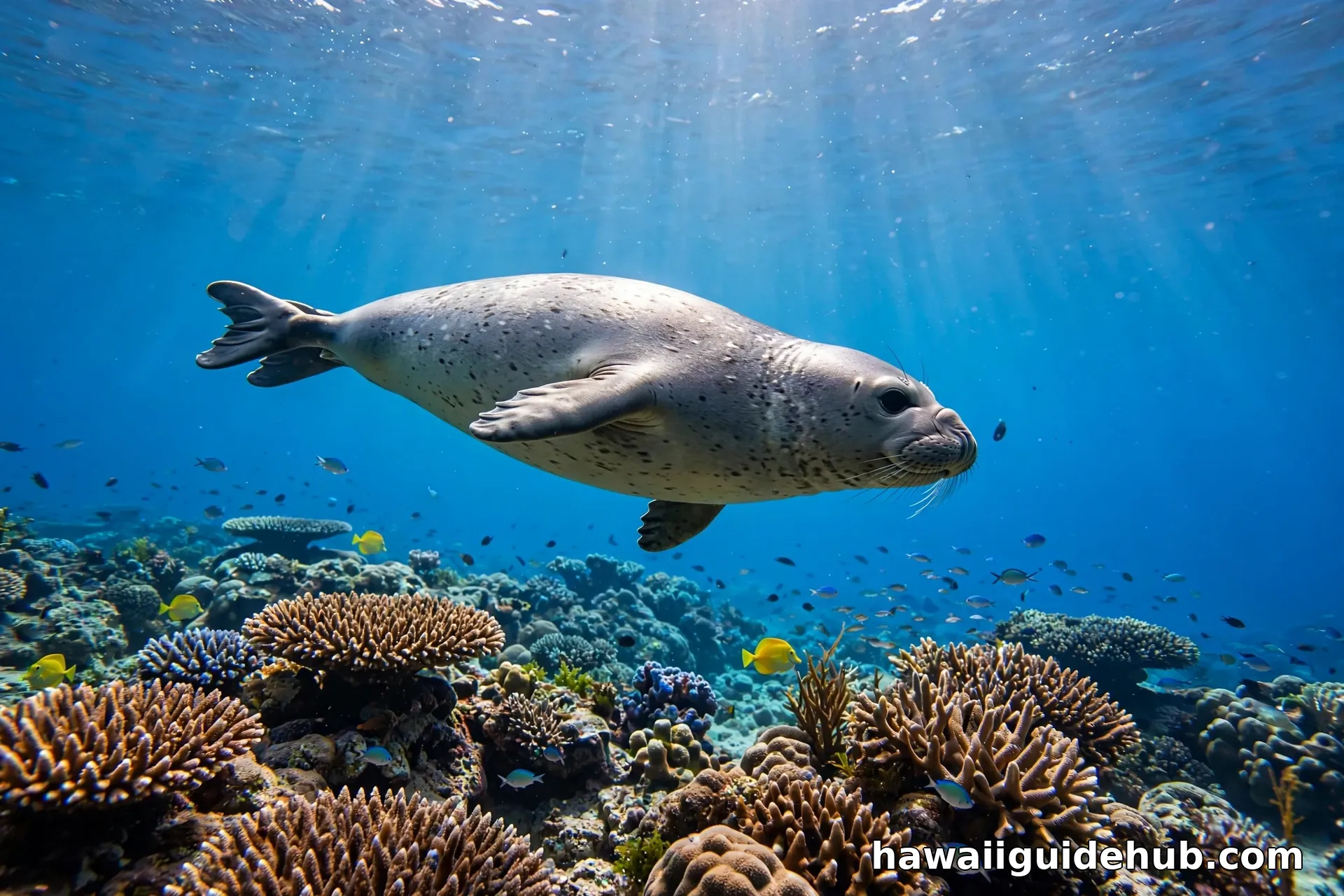
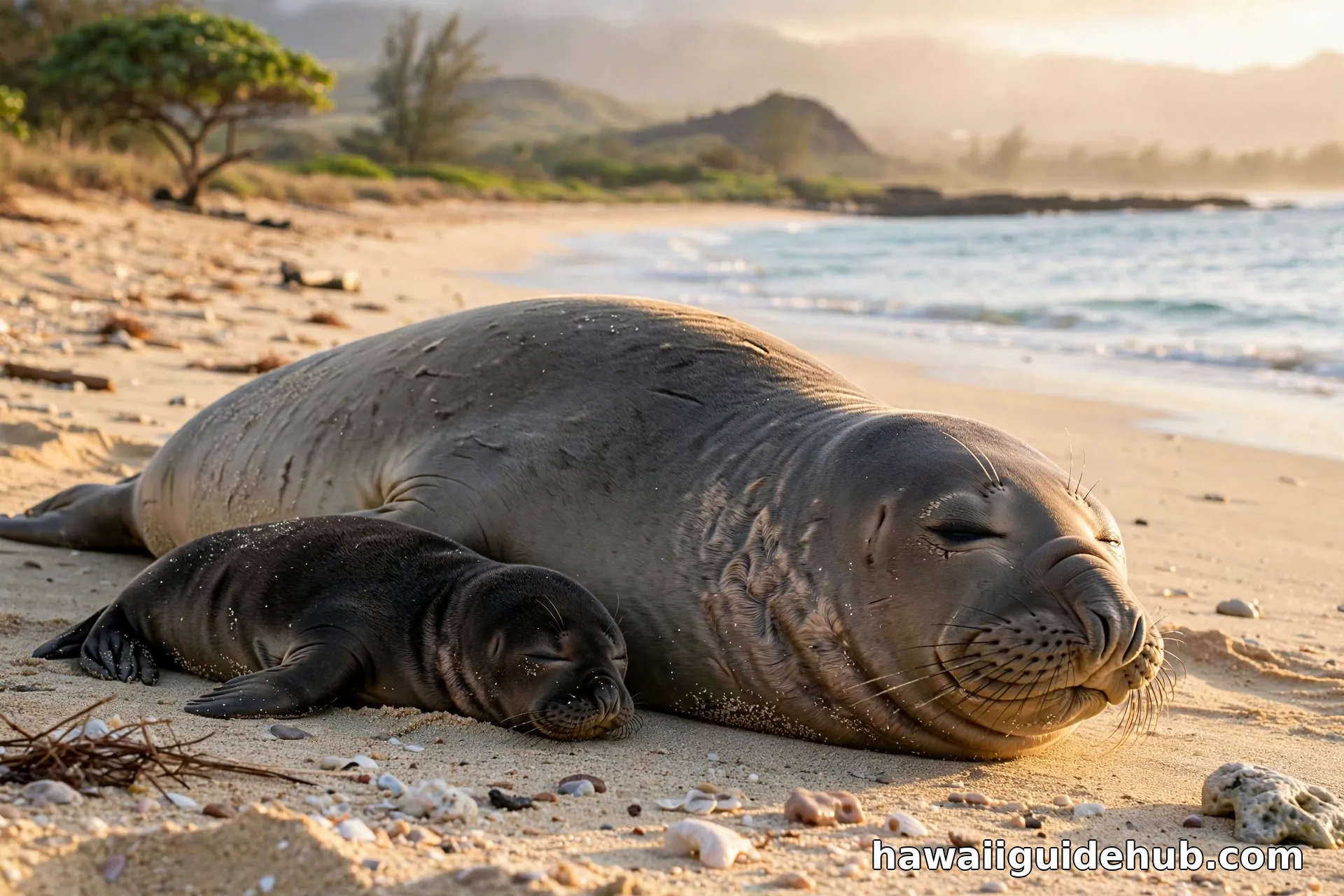
The Hawaiian monk seal (ʻīlioholoikauaua, meaning “dog that runs in rough water”) is a true native: it lives only in Hawaii and nowhere else. Adults have a gray coat with a pale belly, a small flat head with large dark eyes, and no visible external ears. Males reach about 7 feet and 300 to 400 pounds, while females are larger at about 8 feet and 400 to 600 pounds. They are the only endangered marine mammal found exclusively in the United States, and in 2008 Hawaii named the monk seal its official state mammal.
About 1,600 Hawaiian monk seals remain in the world, and the population is slowly recovering after decades of decline from hunting, entanglement in marine debris, and habitat pressures. Most seals live in the remote Northwestern Hawaiian Islands, but a growing number now haul out on the main islands, which is why visitors encounter them on beaches from Kauaʻi to Hawaiʻi Island. Every undisturbed seal you see is part of that recovery.
The Official Viewing Rules, Explained
Stay at least 50 feet away, on land and in the water
NOAA and the Department of Land and Natural Resources ask everyone to keep at least 50 feet (about 15 meters) from monk seals, whether the seal is hauled out on the sand or swimming nearby. Fifty feet is roughly three car lengths, or a little more than the length of a city bus. If you are unsure whether you are far enough, use the “rule of thumb”: hold your thumb out at arm’s length, and if the seal is smaller than your thumbnail, you are at a reasonable distance. When in doubt, add more space.
Stay 150 feet from mothers with pups
Pupping happens mainly in late winter and spring, and a nursing mother with her pup gets triple the buffer: at least 150 feet, about half a football field. During nursing season you will often see a temporary fence of posts and rope, or cones and signs, marking the resting area. Stay behind them. Nursing mothers fast while they feed their pups for five to six weeks, losing a great deal of weight, and they are fiercely protective. In 2022 a swimmer at Kaimana Beach on Oʻahu suffered serious lacerations after getting too close to a mother seal. The distance protects you as much as the seal.
Keep dogs leashed and away
Dogs and seals are a dangerous mix. Off-leash dogs have attacked and killed monk seals on Oʻahu, and a seal can seriously injure a dog in return. Keep your dog on a leash and well away from any hauled-out seal. If you see a seal on the beach where you planned to let your dog run, choose another beach for the day.
Never touch, feed, chase, or try to move a seal
It is illegal to disturb, harass, feed, or harm a monk seal, and that includes trying to “help” by pushing a resting seal back into the water. A seal lying on the beach is doing exactly what it needs to do: resting, digesting, or nursing. Feeding is especially harmful, because a seal that learns to take food from people starts approaching swimmers, fishermen, and boats, and those encounters end badly for the seal. If a seal approaches you, move away calmly. If one follows you in the water, exit the water.
Use zoom, not your feet
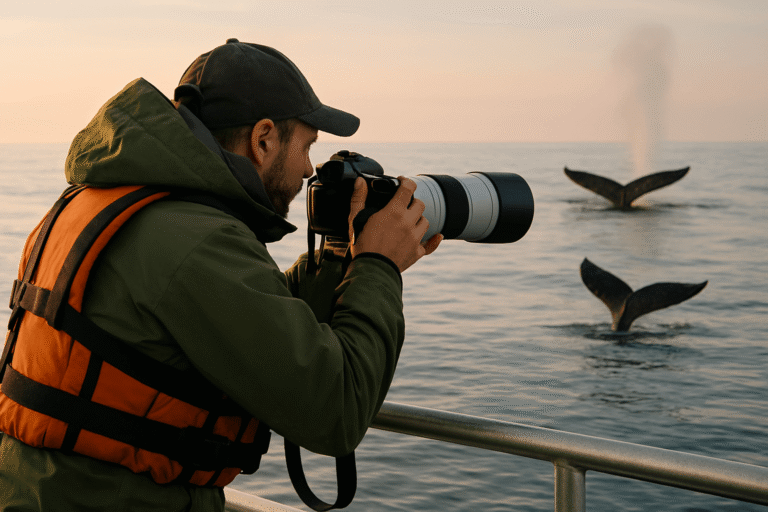
The best seal photos are taken from a distance with a zoom lens or binoculars. Walking closer for a selfie stresses the animal and can put you on the wrong side of the law. NOAA also asks people not to share real-time seal locations on social media, because crowds gathering around a posted location lead to exactly the disturbance the rules are meant to prevent.
Why the Distance Matters
A resting seal is conserving energy it needs to hunt, nurse, or recover. Every time a person gets too close, the seal lifts its head, watches, and sometimes hauls itself back into the water, burning calories it cannot spare. For mothers, the stakes are higher: a disturbed mother may abandon a nursing session, and pups depend entirely on those weeks of rich milk to survive their first months. Habituation is the slow version of the same problem. Seals that get used to people lose the wild caution that keeps them safe, and they start seeking out interactions that wildlife officers then have to undo.
You do not need to diagnose what a seal is doing to give it space. A seal lying still may be digesting a meal, growing a pup, recovering from an injury, or going through its annual molt, when it sheds its entire coat and stays ashore for days. All of these states demand rest, and all of them are protected by the same rules. The only judgment call you need to make is whether a pup is present, because that triples the required distance. When you are not sure, choose the larger buffer.
What to Do When You See a Monk Seal
First, stop where you are and look for signs, ropes, or cones. Second, estimate your distance and back up to at least 50 feet (150 if there is a pup). Third, leash your dog immediately and keep children from running toward the seal. Fourth, enjoy the moment quietly: watch, take photos with zoom, and keep your voice down. Fifth, report the sighting to the NOAA Marine Wildlife Hotline at 888-256-9840. Your report helps scientists track the population, and it can save a seal’s life if the animal is entangled or injured.
If the seal looks injured, entangled in fishing line, or in obvious distress, call the hotline and do not try to intervene yourself. Trained responders from NOAA, DLNR, and partner groups like the Hawaiʻi Marine Animal Response team handle these cases, and seals that need medical care go to Ke Kai Ola, the monk seal hospital in Kailua-Kona run by The Marine Mammal Center. An entangled seal that a well-meaning beachgoer tries to “rescue” can panic and injure both itself and the person.
Where You Are Most Likely to See Them
Monk seals haul out on all of the main Hawaiian islands, and sightings are increasing as the main-island population grows. Poʻipū on Kauaʻi’s south shore is one of the most reliable places to see them resting on the sand, which is one reason our complete guide to Poʻipū includes seal-watching etiquette. On Oʻahu, seals regularly visit beaches from Kaʻena Point to the south shore, including Kaimana Beach, where pups have been born in recent years. If you are exploring that side of the island, our North Shore Oʻahu guide covers the coastline where seals haul out. Maui, Molokaʻi, Lānaʻi, and Hawaiʻi Island all get regular visitors too.
Pupping season, roughly late winter through spring, is when you are most likely to see mothers with pups and the temporary protective perimeters that come with them. If a beach you planned to visit has a roped-off nursing area, treat it as a bonus wildlife sighting from a distance and swim elsewhere that day. Early mornings are the best time to spot a hauled-out seal before the beach fills up.
The Laws That Protect Monk Seals
Hawaiian monk seals are protected under the federal Endangered Species Act and the Marine Mammal Protection Act, as well as Hawaii state law. That triple layer means it is illegal to disturb, harass, feed, capture, or harm a seal, and violations can bring fines or criminal penalties. DLNR’s enforcement chief has noted that past NOAA fines in monk-seal cases have totaled several thousand dollars. If you witness someone harassing a seal, do not confront them yourself. Note the details and report it to NOAA’s Office of Law Enforcement at 800-853-1964.
These laws apply to everyone, including fishermen, paddlers, divers, and drone operators. They also apply in the water: the 50-foot rule follows the seal wherever it goes, and chasing a seal with a kayak or paddleboard counts as harassment. Responsible wildlife viewing is a theme across all of Hawaii’s marine life, as our eco-friendly whale watching guide shows for the winter whale season.
Monk Seal FAQs
Can I swim near a monk seal?
Keep the same 50-foot distance in the water. Do not swim toward a seal to get a closer look, and if a seal approaches or follows you, exit the water calmly. Never swim near a mother with a pup.
What if a monk seal comes up to me on the beach?
Move away slowly and give it space. Seals are naturally curious, especially young ones, but any interaction you encourage teaches the seal that people are safe to approach, which puts it at risk. Quietly create distance and let the seal settle.
Is it okay to post a monk seal’s location online?
NOAA asks people not to share real-time locations. A post that sends a crowd to a resting seal creates exactly the disturbance the viewing rules prevent. Share your photos after you leave, without a live pin.
Why is there a rope around a seal on the beach?
Volunteers and officials set a temporary perimeter to give the seal undisturbed rest, especially for nursing mothers. Stay behind it. The rope is there because the seal needs the space, not to ruin your beach day.
Are monk seals dangerous?
They are wild animals, not pets. Adults weigh several hundred pounds, and mothers defending pups have seriously injured swimmers who got too close. At the proper distance, they are no danger to you at all.
Can I help a seal that looks tangled in fishing line?
Call the NOAA Marine Wildlife Hotline at 888-256-9840 and describe what you see. Do not try to cut line or pull hooks yourself. Trained responders have the equipment and permits to do it safely.
Watch: Sharing the Beach with Monk Seals
This NOAA-produced video explains responsible monk seal viewing with animations and real footage, and it is worth eight minutes of your time before your trip.
A monk seal sighting is a privilege, not a photo opportunity to chase. With only about 1,600 of these animals left in the world, each one you meet on a Hawaiian beach is carrying the future of its species. Give it 50 feet, give a mother 150, keep your dog leashed, and report what you see. The seals were here millions of years before the first visitor arrived, and with a little restraint from all of us, they will be here long after.