Oʻahu Without a Car: The Complete Car-Free Guide

You do not need a car to have a great trip on Oʻahu. The island has the best public transit in Hawaii by a wide margin: a island-wide bus network, a new rail line that serves the airport, hop-on-hop-off trolleys built for visitors, and a main resort district you can explore entirely on foot. Plenty of travelers skip the rental car, skip the $35-a-night hotel parking fees, and never feel stranded.
This guide is the single complete resource for visiting Oʻahu without a car. It covers the exact decision fully: how TheBus and the HOLO card work, what Skyline rail does for visitors, when the Waikiki Trolley is worth it, where to stay, what you can and cannot easily reach, realistic costs, common mistakes, and a car-free checklist. Everything about oahu without a car is gathered here in one place.
Oʻahu Without a Car at a Glance
| Car-free Oʻahu | The details | The fine print |
|---|---|---|
| Is it doable? | Yes, especially based in Waikīkī | Waikīkī is the only base that truly works car-free |
| Main transit | TheBus (island-wide) + Skyline rail | Two systems, one HOLO card |
| HOLO card | $2, sold at ABC Stores and Skyline stations | The card costs $2 on top of fares |
| Bus fare | $3 HOLO 2-hour fare; $3.25 cash; $7.50 day cap | HOLO beats cash on every ride |
| Skyline rail | Serves HNL airport to Middle Street, 13 stations | Airport to town without traffic |
| Waikiki Trolley | Hop-on-hop-off, about $30-$55 per day | Tourist-priced; TheBus is cheaper |
| Best base | Waikīkī (walkable, most transit) | Everything radiates from here |
| Hardest without a car | Remote trailheads, far west side, dawn patrols | This is where car-free breaks down |
Can You Really Do Oʻahu Without a Car?
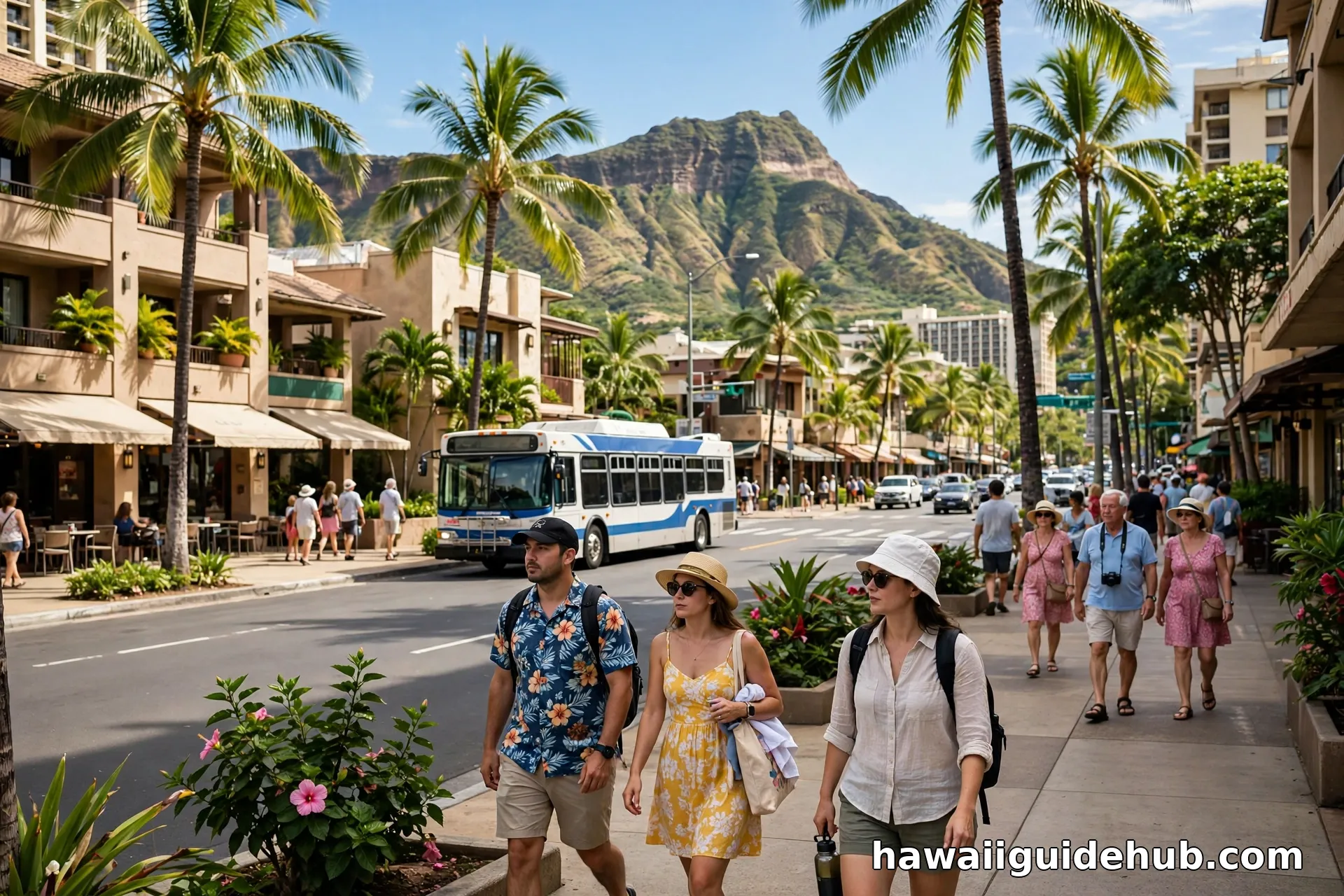
Yes, with the right expectations. Oʻahu is the one Hawaiian island where car-free travel is genuinely practical. TheBus covers the whole island, from Waikīkī to the North Shore to Waimānalo, and Honolulu’s Skyline rail now connects the airport to the bus network’s main hub. Waikīkī itself is compact and walkable: beaches, restaurants, shopping and nightlife sit within a mile or two of most hotels.
The honest tradeoff is time. A bus ride from Waikīkī to the North Shore can take two hours each way, where a car does it in one. Remote trailheads, the far west coast and sunrise missions to the east side are all harder without your own wheels. If your trip is mostly Waikīkī, Diamond Head, Hanauma Bay, Pearl Harbor and a North Shore day, you will be fine. If your list is full of trailheads at dawn and far-flung beaches, price a rental car for a day or two instead of the whole trip.
TheBus: Oʻahu’s Public Bus System
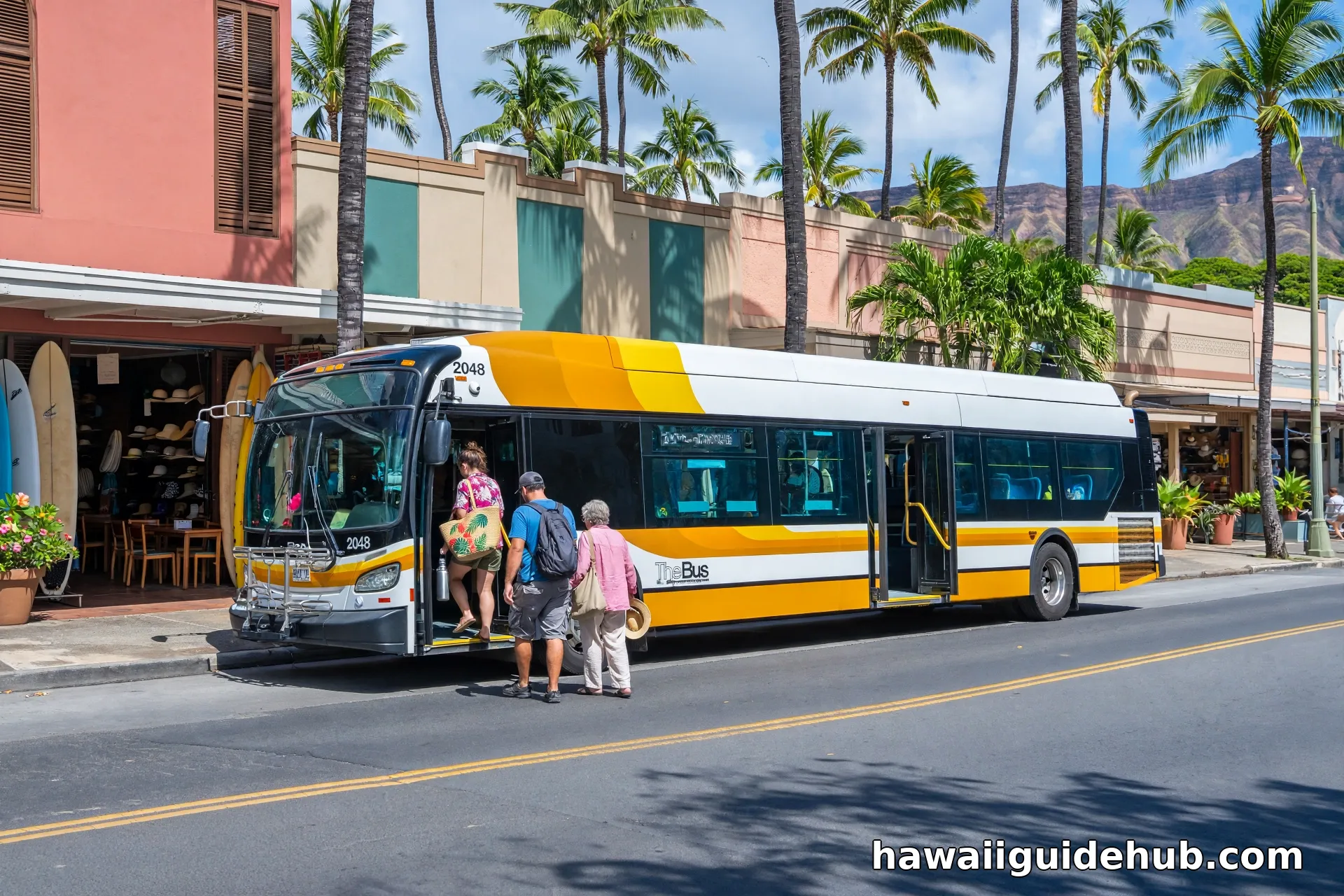
TheBus is the backbone of car-free Oʻahu. It runs all over the island with frequent service in Honolulu and Waikīkī, and the buses are clean, air-conditioned and used by everyone from commuters to visitors. Google Maps handles TheBus routing well: type your destination, tap the transit icon, and it shows the route, stops and arrival times.
Fares and the HOLO Card
Buy a HOLO card on day one. The card itself costs $2 at ABC Stores in Waikīkī, 7-Eleven and Foodland locations, and HOLO vending machines in every Skyline station. With a HOLO card, an adult fare is $3 for a 2-hour pass with unlimited TheBus and Skyline rides inside the window, and fare capping means you never pay more than $7.50 in a day or $90 in a month. Paying cash costs $3.25 per boarding with no transfers and no cap, and drivers do not make change, so the card pays for itself almost immediately. Visitor-friendly passes include a 3-day option for $20 and a 7-day option for $45.
Key Routes for Visitors
TheBus’s W Line and routes 19 and 20 link Daniel K. Inouye International Airport with downtown Honolulu, Ala Moana and Waikīkī, which solves the arrival question for about $3. Route 2 runs the Waikīkī to downtown corridor, Route 8 serves Ala Moana, and Route 22 is the seasonal beach bus to Hanauma Bay. For the North Shore, TheBus routes run up through Haleʻiwa, though it is a long ride: budget half a day of transit for a North Shore day trip. Buses run less often on Sundays and holidays, so check the schedule the night before.
Skyline Rail: The Airport Connection
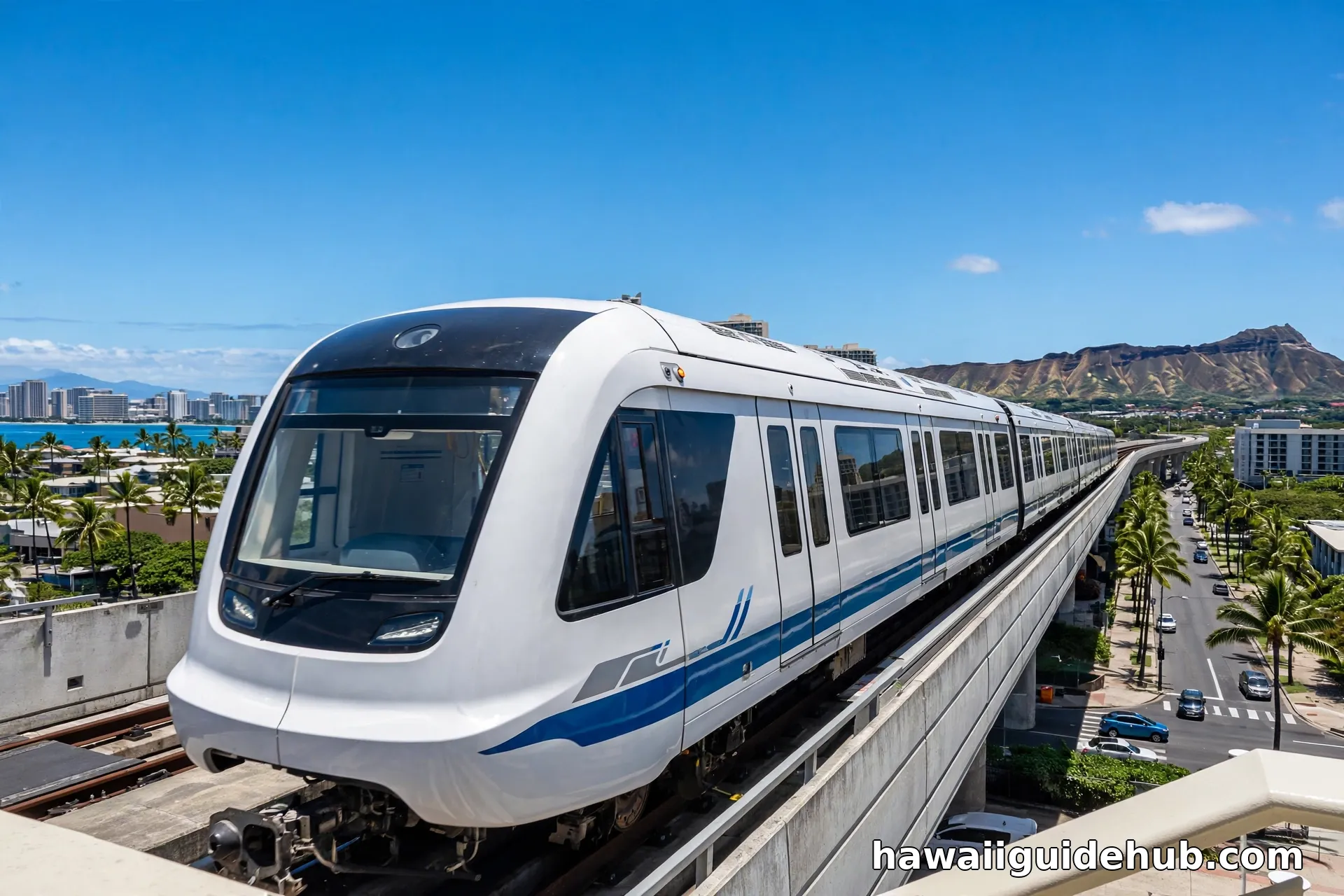
Honolulu’s Skyline is the United States’ first fully driverless metro with platform screen doors, and since October 2025 it matters for visitors: the second segment opened with 13 stations from East Kapolei to Middle Street, including a station at Daniel K. Inouye International Airport and one at Pearl Harbor. A third segment to downtown Honolulu is due in 2031.
For a car-free traveler, Skyline’s killer feature is the airport link. Land at HNL, buy a HOLO card for $2 at the station machines, tap for the $3 fare, and ride to the Kalihi Transit Center, where you transfer to TheBus for Waikīkī. The trains run every 10 to 15 minutes from early morning to late evening. It is not yet a Waikīkī train, so you will still finish the trip by bus, but the airport-to-bus-hub leg is now fast and traffic-proof.
Waikiki Trolley: The Visitor Shuttle
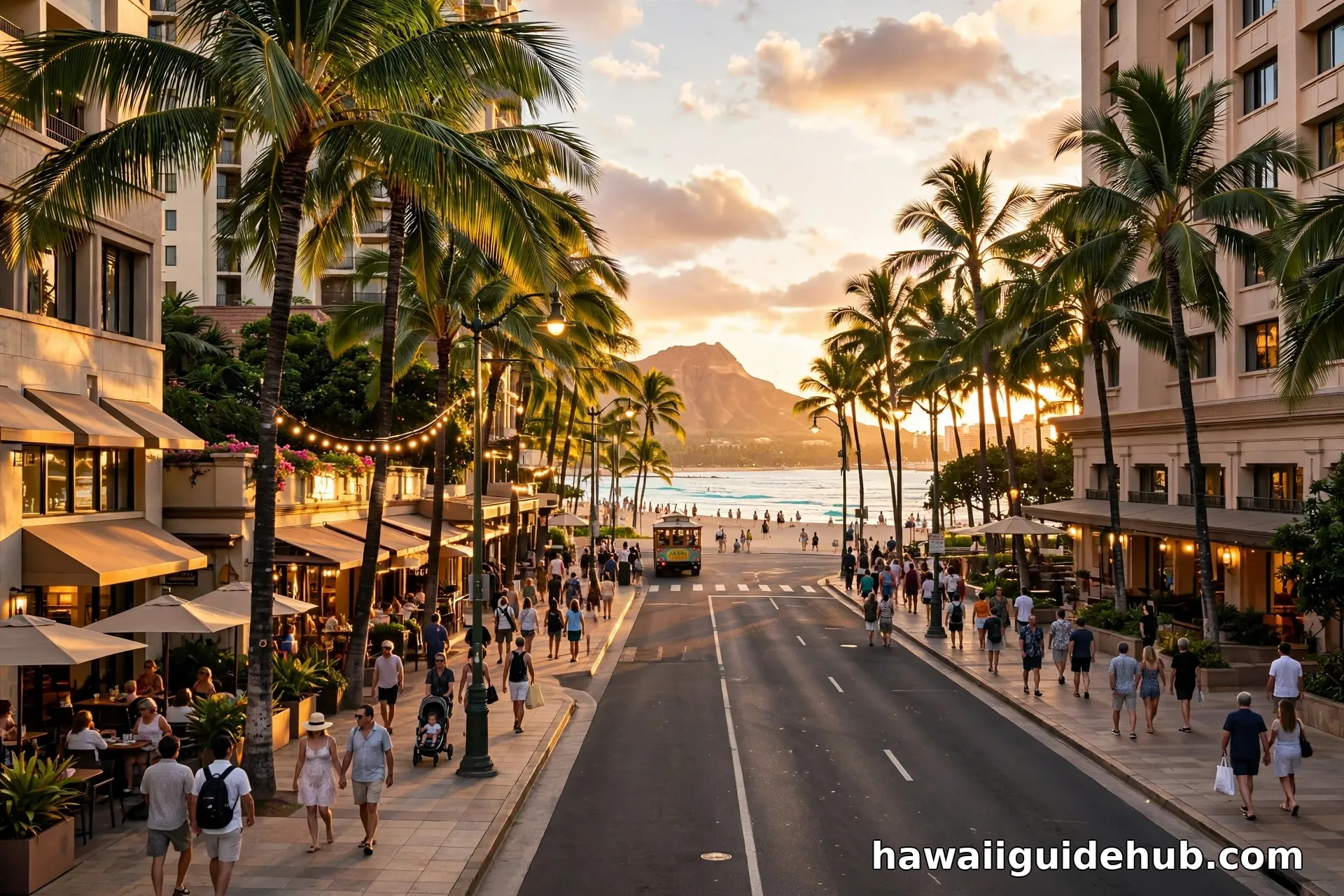
The Waikiki Trolley is a hop-on-hop-off sightseeing service with four lines: the Red Line for downtown and Honolulu landmarks, the Green Line for Diamond Head and local eateries, the Blue Line for the southeast coast including Sea Life Park, and the Pink Line double-decker for shopping. It is more expensive than TheBus, with passes from about $30 for a single line to $55 for all lines for one day, and multi-day passes up to $75 for seven days, but the open-air ride and live narration make it a fun alternative for a sightseeing day. The Green Line in particular is handy: it stops at Diamond Head, which otherwise takes planning to reach.
Where to Stay Without a Car
Stay in Waikīkī. This is the single most important decision for a car-free trip. Waikīkī puts the beach, dozens of restaurants, ABC Stores for your HOLO card, and the densest transit stops in the state within walking distance. Ko Olina and the North Shore have beautiful resorts, but both leave you dependent on infrequent buses or expensive rideshares for everything. If Waikīkī is not your style, look at Ala Moana or downtown Honolulu, both on strong bus corridors. If this is your first trip to the islands, the best island for first-time visitors guide can help you decide whether Oʻahu is the right base. Wherever you stay, confirm the walk to the nearest bus stop before you book.
What You Can Reach Without a Car
A surprising amount of the classic Oʻahu itinerary works by transit. Diamond Head is reachable by the Waikiki Trolley Green Line or TheBus, though remember that nonresidents must book the Diamond Head entry reservation in advance. Hanauma Bay is served by TheBus Route 22 and the reservation system is built for visitors arriving without cars. Pearl Harbor is an easy bus ride from Waikīkī, and the USS Arizona Memorial program releases reservations 8 weeks and 24 hours ahead. Downtown Honolulu, ʻIolani Palace, Chinatown and the Bishop Museum all sit on strong bus routes, and the windward side towns of Kailua and Kāneʻohe are reachable for a beach day.
The North Shore is the big test. TheBus does run to Haleʻiwa and across the North Shore, and plenty of car-free travelers do it, but treat it as a full-day expedition: the ride is long, connections matter, and you will plan your day around the return schedule. In winter, when the surf is huge, it is one of the most rewarding transit day trips on the island. The best winter places on Oʻahu guide helps you pick which stops deserve the journey.
What Is Hard Without a Car
Be honest about the gaps. Trailheads with no bus service, like Kaʻena Point’s far ends and several Koʻolau hikes, are effectively off the table. The far west coast beyond Ko Olina has thin transit. Sunrise at remote east-side spots means a very early bus or a rideshare, since the first buses may not get you there before dawn. And multi-stop circle-island days, the classic drive-around-the-island loop, do not translate to transit: the circle takes all day by bus with little time at each stop. For these, consider renting a car for a single day through a Waikīkī rental office or a car-share app, which is far cheaper than a week-long rental plus hotel parking.
Money math: a week-long rental car in Waikīkī plus hotel parking can easily top $600. A HOLO card with the $7.50 daily cap costs at most $52.50 for the same week, and a single rental-car day for your one far-flung adventure runs a fraction of the weekly rate. Run your own numbers before assuming a car is the default.
A Sample Car-Free Day
Here is what a transit day looks like from Waikīkī. Morning: TheBus or Waikiki Trolley Green Line to Diamond Head for a sunrise-slot hike (reservation booked ahead). Midday: bus back through Kapahulu for plate lunch, then Route 22 or the trolley Blue Line out to Hanauma Bay for an afternoon snorkel (reservation booked 2 days ahead). Evening: walk the Waikīkī beach path at sunset and dinner on Kalākaua Avenue. Total transit cost with a HOLO card: capped at $7.50 for the day. That is the car-free Oʻahu formula: one anchor sighting per half day, transit between, feet for everything else.
Common Mistakes
First-timers make the same few errors. Paying cash instead of getting a HOLO card on day one, which costs extra on every ride and kills transfers. Not carrying exact change for the one cash ride they do take, since drivers make no change. Assuming Sunday buses run like weekday buses; they do not, so check schedules. Trying to do the North Shore as a half day, which turns into a stressful race against the return bus. And booking accommodation far from a bus stop to save money, then spending the savings on rideshares. Avoid these five and the car-free trip runs smoothly.
Frequently Asked Questions
How do I get from Honolulu airport to Waikīkī without a car?
Take Skyline rail from the airport station to the Kalihi Transit Center, then transfer to TheBus for Waikīkī, all on one HOLO card for a few dollars. TheBus’s W Line and routes 19 and 20 also run between the airport, downtown and Waikīkī. Rideshares and hotel shuttles are the faster but pricier alternatives.
How much does TheBus cost for visitors?
With a $2 HOLO card, an adult fare is $3 for a 2-hour pass, capped at $7.50 per day and $90 per month. Cash is $3.25 per boarding with no transfers. A 7-day pass costs $45.
Can I get to the North Shore by bus?
Yes, TheBus serves Haleʻiwa and the North Shore from Honolulu, but it is a long ride, so plan it as a full day and check the return schedule before you go.
Is the Waikiki Trolley worth it?
For a dedicated sightseeing day, yes: the open-air ride, narration and Diamond Head and coastal stops are convenient. For daily getting around, TheBus is far cheaper. Many visitors do one trolley day and use TheBus the rest of the trip.
Do I need to rent a car for even one day?
Not necessarily, but one rental day is the smart compromise if your must-do list includes remote trailheads, the far west coast, or a dawn mission. Waikīkī has rental offices, so you can grab a car for 24 hours without paying for a week.
Oʻahu without a car is not a compromise, it is a different and often better trip. You trade the stress of traffic and parking for the rhythm of the bus, the novelty of the driverless train, and the simple pleasure of walking Waikīkī at night with no car to worry about. Get the HOLO card, stay in Waikīkī, plan around the bus schedule, and the island opens up on its own terms.