Portuguese Sausage and Rice

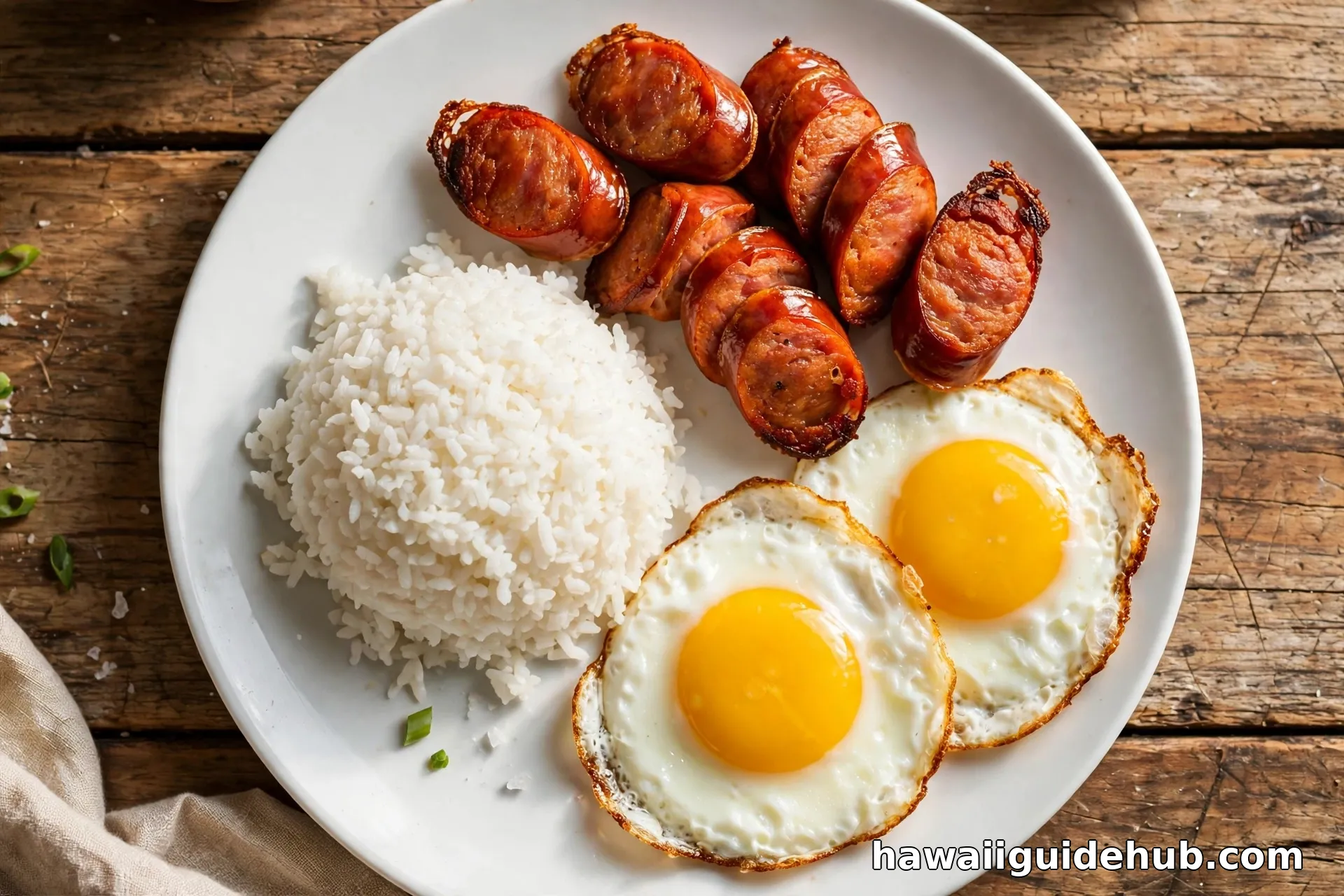
Sit down at a breakfast counter anywhere in Hawaiʻi and you will see the same plate arriving again and again: golden-brown slices of Portuguese sausage, eggs cooked any way you like, and two scoops of steamed white rice. It is the local breakfast in its purest form, and it has been that way for generations. Portuguese sausage and rice is not a trend or a novelty dish. It is everyday island food, loved in homes, diners, and school cafeterias across every island.
This is the complete guide to Portuguese sausage and rice. It covers the full story of how this sausage traveled from the islands of Portugal to the sugar plantations of Hawaiʻi, what it is made of and how it tastes, how to cook it at home the way locals do, where visitors encounter it, and answers to the questions people ask most. Everything about this dish lives here on this one page.
Portuguese Sausage and Rice at a Glance
| On the plate | What it is | Why it’s there |
|---|---|---|
| The sausage | Linguiça, a Portuguese pork sausage seasoned with garlic and paprika | The smoky, garlicky heart of the plate |
| The cut | Sliced about three eighths of an inch thick, pan-fried until golden | Thick enough to stay juicy, thin enough to crisp |
| The flavor | Smoky, garlicky, and savory with a mild sweetness | Smoky, garlicky, savory, faintly sweet |
| The eggs | Eggs any style | Your call |
| The rice | Steamed white rice | The neutral base that soaks it all up |
| Heat levels | Mild and hot, sold in links or pre-sliced | Pick your heat |
| The roots | Brought to Hawaiʻi by immigrants from Madeira and the Azores starting in 1878 | Plantation-era history on a breakfast plate |
| Where to find it | Diners, breakfast plates, grocery stores, and home kitchens statewide | It’s everywhere; that’s the point |
| The cost | A breakfast plate at a local diner typically runs a few dollars, comparable to other local breakfasts | One of the cheapest hot breakfasts on the islands |
From Portugal’s Islands to Hawaii’s Plantations
The story of Portuguese sausage in Hawaiʻi begins in 1878, when the first ships carrying laborers from Madeira and the Azores arrived to work in the sugarcane plantations. The planters had recruited them deliberately. The terrain and climate of those Atlantic islands resembled Hawaiʻi, and the workers already knew sugarcane agriculture from generations of growing it at home. By the end of 1911, nearly 16,000 Portuguese immigrants had arrived, and they came as families, not as single laborers, which meant their food traditions put down deep roots.
Native Hawaiian speakers called these newcomers Pukikī, and the nickname stuck. The Portuguese immigrants were devout Catholics with strong family ties and rich food traditions, and those traditions spread far beyond their own households. They introduced malasadas, the fried doughnuts that Hawaiʻi now treats as its own, plus pão doce, the soft sweet bread found in every island bakery, and Portuguese bean soup. The sausage they made, linguiça, traveled the same path from plantation camp kitchens into the mainstream of island cooking.
Sausage making had been part of life on Madeira and the Azores for centuries, a practical way to preserve pork through the winter. In Hawaiʻi, immigrant families kept the practice alive, grinding and seasoning pork, stuffing it into casings, and smoking it. Over the decades the recipe adapted to local tastes and ingredients, and the sausage evolved into something distinctively Hawaiian while keeping its Portuguese soul. Today you can hardly separate the two: in Hawaiʻi, Portuguese sausage simply means this food, and this food means Hawaiʻi.
What Portuguese Sausage Actually Is
At its core, Portuguese sausage is linguiça, a cured and smoked pork sausage from Portugal. Traditional linguiça is made from pork, usually pork butt, mixed with salt, garlic, paprika, black pepper, and sometimes wine vinegar, then stuffed into natural casings and smoked. Despite the name, which refers to the sausage’s thin tongue-like shape, there is no tongue in it. The seasoning is the defining feature: garlic leads, paprika gives the sausage its deep red-orange color and gentle warmth, and the smoke ties it all together.
It is worth knowing how linguiça differs from chorizo, because visitors often confuse the two. Spanish chorizo is drier and dominated by paprika, while linguiça is juicier and more garlic forward. Portuguese chouriço is a close cousin, thicker and chunkier than linguiça. The Hawaiian version grew out of Azorean linguiça traditions: it tends to be softer than the smoked links of Portugal, often boiled before it is sliced and fried, which gives it a tender bite that suits breakfast perfectly. Redondo’s, the state’s largest sausage maker, describes its Portuguese sausage as fully cooked, so at home you only need to heat it and serve it.
What It Tastes Like
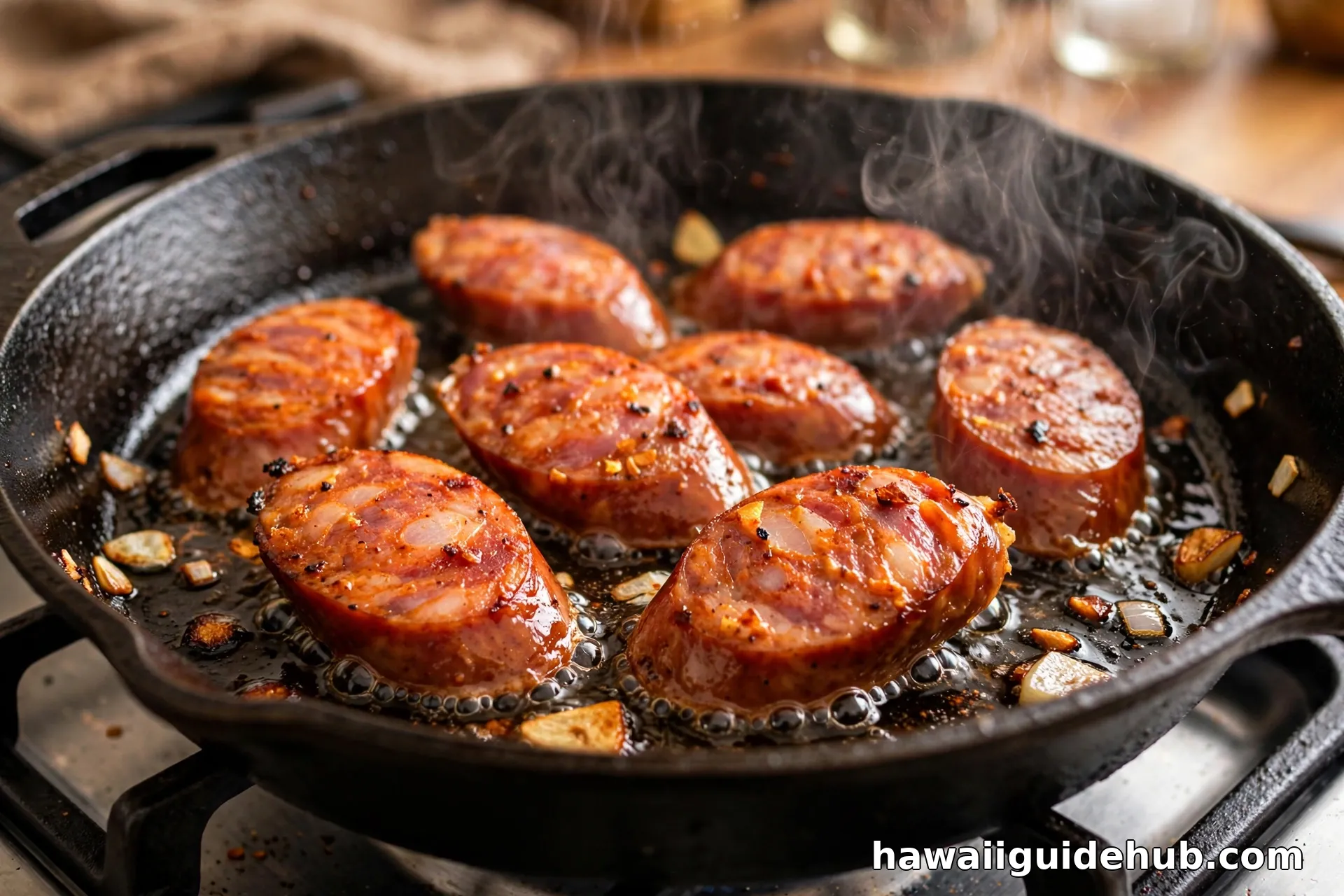
The first thing you notice is the smoke, a clean woodsmoke aroma that rises off the pan the moment the slices hit the heat. Then comes the garlic, bold but not harsh, layered over the rich flavor of pork. Paprika adds warmth and color without the fiery burn of chili-heavy sausages; the mild version has almost no heat at all, while the hot version carries a pleasant kick that builds slowly. There is also a faint sweetness underneath, the kind that makes you reach for another slice.
Texture matters as much as flavor. The casing gives a satisfying snap, and the inside is juicy and coarse ground, not finely emulsified like a hot dog. When the slices are fried hard, the edges crisp and caramelize, and those crunchy browned bits are the best part. Eaten beside a pile of plain steamed rice and a fried egg, the whole plate balances itself: the rice cools and softens the sausage’s richness, and the egg yolk ties everything together. For a deeper look at another island breakfast staple, see our guide to must-try local dishes in Hawaii, which shares the same plantation roots.
The Classic Plate: Sausage, Eggs, and Rice
The canonical way to eat Portuguese sausage in Hawaiʻi is simple to the point of being sacred. The sausage is sliced about three eighths of an inch thick and pan-fried on medium heat until both sides are golden brown and the edges crisp. It is plated next to eggs cooked however you like, scrambled, fried, or folded into an omelette, with two scoops of steamed white rice. That trio, sausage, eggs, rice, is the island breakfast, and it shows up on menus from Honolulu diners to neighborhood drive-ins on every island.
Zippy’s, the beloved local restaurant chain, describes its Portuguese sausage as slightly sweet and slightly spicy, a pork sausage introduced from Portugal that evolved into an all-time island favorite. Their breakfast bentos pair it with eggs and rice, and their Portuguese sausage fried rice mixes the sausage with bacon, vegetables, and rice. Fast food chains in Hawaiʻi have followed the same playbook: Portuguese sausage, eggs, and rice platters appear on local menus where mainland locations serve biscuits and gravy. Order it once and you will understand why it never left.
How to Cook It at Home
Cooking Portuguese sausage the local way takes about ten minutes and almost no skill. Start with links or pre-sliced sausage from any Hawaiʻi grocery store, or from mainland stores that stock island brands. If you have whole links, slice them about three eighths of an inch thick. Thicker slices stay juicier; thinner slices crisp more. Some cooks simmer the slices in water for about five minutes first, which trims a little of the salt and keeps them tender, but many locals skip straight to the pan.
Set a skillet over medium heat. You do not need oil, because the sausage renders plenty of its own fat. Lay the slices in a single layer and let them fry undisturbed for about five minutes, until the first side is golden brown. Flip them and cook the second side until it matches, with crisp caramelized edges. That is it. Serve the slices with steamed white rice and eggs cooked your way, and you have the plate exactly as an island diner would make it. Leftover slices are excellent chopped into fried rice the next day.
Beyond Breakfast: Other Ways It Shows Up
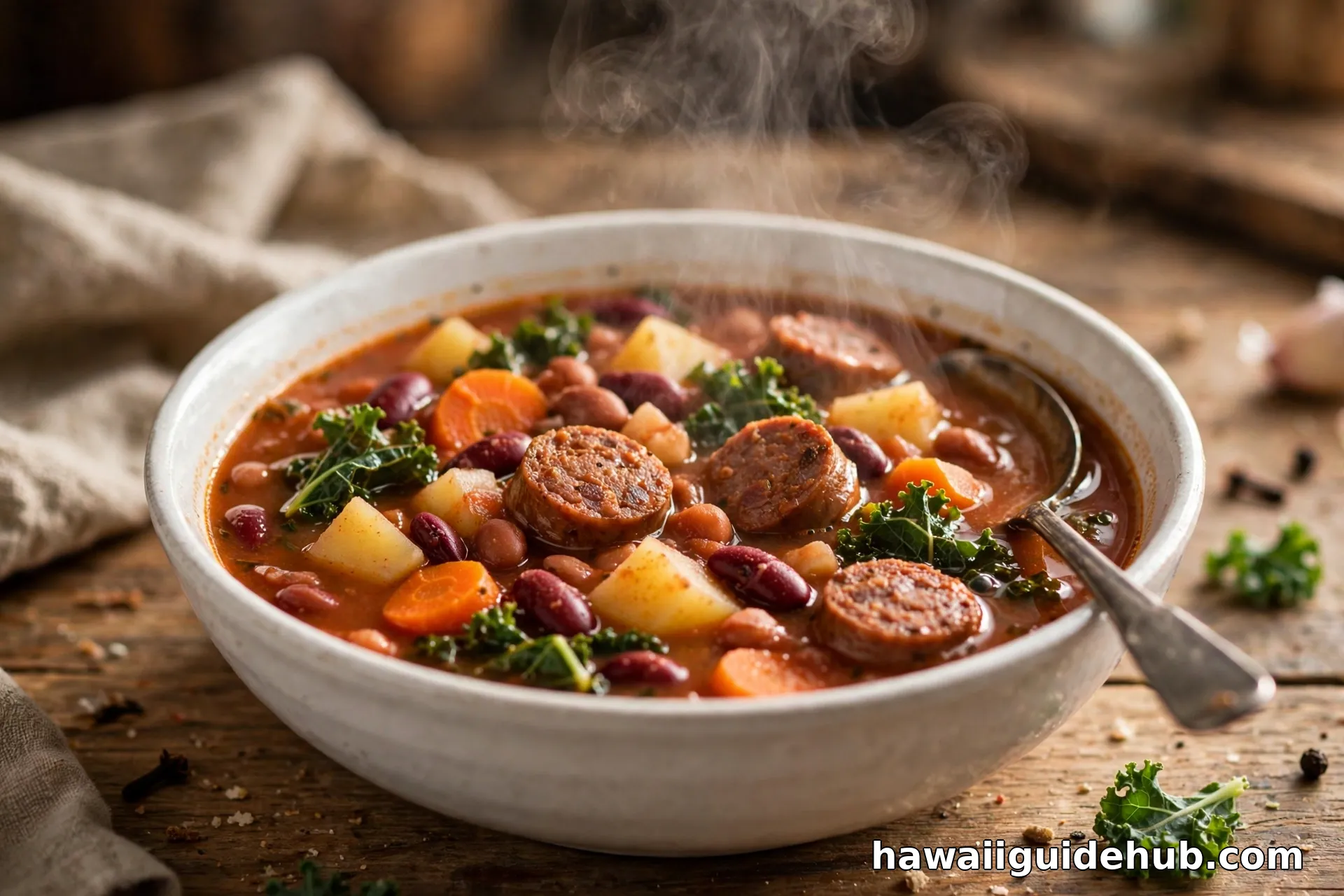
Breakfast may be the sausage’s home turf, but it appears all over island cooking. Portuguese bean soup is the most famous example, a hearty tomato-based soup loaded with kidney beans, potatoes, carrots, kale, and generous chunks of Portuguese sausage. It is the soup of fundraisers, church gatherings, and rainy days, and the sausage is what gives the broth its smoky depth. Zippy’s serves it by the bowl, and most local delis do too.
Fried rice is another natural home for it. Diced Portuguese sausage, rendered crisp, gets tossed through rice with vegetables and egg for a one-pan meal that shows up in home kitchens and plate lunch shops alike. You will also find it folded into omelettes, wrapped into breakfast sandwiches on sweet Hawaiian rolls, and occasionally standing in as the meat in a loco moco variation. Because the sausage is already fully cooked, it is an easy shortcut ingredient for weeknight cooking: dice it into pasta sauce, chili, or scrambled eggs and the smoke and garlic do the seasoning work for you.
Where Visitors Encounter It
You do not have to hunt for Portuguese sausage and rice in Hawaiʻi. It finds you. Local diners and breakfast counters list it among their standard breakfast meats, right beside bacon, SPAM, and corned beef hash. Fast food restaurants with Hawaiʻi-specific menus serve Portuguese sausage, egg, and rice platters in the morning. Farmers markets and grocery stores sell links and pre-sliced packs from island makers, and hotel breakfast buffets on every island almost always include it, because guests from the mainland ask for it by name after their first taste.
If you want the full local experience, order it at a neighborhood diner rather than a hotel. Ask for the eggs your way, and do not skip the rice: the plate is designed as a trio, and eating the sausage without rice is like eating a sandwich without bread. Pair your meal with a malasada for dessert and you have tasted the two most beloved gifts of the Portuguese immigrants in a single morning.
Makers, Varieties, and Labels
Redondo’s is the name most islanders grew up with. Frank Redondo founded the company in Kapahulu, Oʻahu in 1949, and it has grown into the largest sausage company in the state, still made locally. Their Portuguese sausage comes in mild and hot versions, and they also make Hawaiian Winners and pipi kaula, other local favorites. The products are fully cooked, so the package directions simply call for heating and serving: slice, pan-fry until golden, and eat.

Smaller family makers keep the craft tradition alive too. The Holusa family, featured in a PBS Hawaiʻi documentary about the sausage, had been making it long before they immigrated to Hawaiʻi, and they were surprised to find how much islanders loved it. When you shop, you will see labels like mild and hot, and sometimes Lisboa style. Mild is the everyday choice and the one most restaurants serve. Hot adds red pepper heat for people who like a kick. Either way, check that the label says Portuguese sausage or linguiça rather than Spanish chorizo, which is a different, drier product.
Substitutions
If you cannot find Portuguese sausage where you live, you have a few workable stand-ins, though none is a perfect match. Kielbasa is the closest widely available substitute: it is a smoked pork sausage with a similar juicy texture, though it lacks the garlic punch and paprika warmth. Andouille brings smoke and spice but runs hotter and coarser. Spanish chorizo is a poor breakfast substitute; if you must use it, choose a soft cooking chorizo rather than the hard cured kind, and add extra garlic to the pan.
For the full recipe rather than a substitute, look for island brands online: Redondo’s and other Hawaiʻi makers ship to the mainland, and many specialty stores carry frozen packs. Once you have the real thing, keep it simple. The sausage needs no help beyond a hot pan, and the plate needs nothing beyond eggs and rice.
Video: How Hawaii’s Favorite Breakfast Meat Is Made
PBS Hawaiʻi goes inside a local sausage factory to show how Hawaiʻi’s beloved Portuguese sausage is made.
Frequently Asked Questions
What is Portuguese sausage in Hawaii?
It is linguiça, a smoked pork sausage seasoned with garlic and paprika, brought to Hawaiʻi by Portuguese immigrants from Madeira and the Azores starting in 1878. In Hawaiʻi it evolved into a softer, breakfast-friendly sausage that is almost always served sliced and pan-fried with eggs and rice.
Is Portuguese sausage the same as chorizo?
No. Linguiça is juicier and garlic forward, while Spanish chorizo is drier and dominated by paprika. Portuguese chouriço is a closer relative, thicker and chunkier than linguiça. For Hawaiian breakfast plates, always look for linguiça or Portuguese sausage on the label.
How do you cook Portuguese sausage and rice?
Slice the sausage about three eighths of an inch thick and pan-fry on medium heat for about five minutes per side until golden brown with crisp edges. No oil is needed, since the sausage renders its own fat. Serve beside eggs cooked your way and steamed white rice.
Is Portuguese sausage already cooked?
If you buy raw linguiça from a butcher, cook it to an internal temperature of 160 degrees Fahrenheit before eating.
Where can I buy Portuguese sausage?
In Hawaiʻi, every major grocery store carries it in links or pre-sliced packs. On the mainland, look for island brands in the specialty sausage section or order frozen packs from Hawaiʻi makers online. Check the label for linguiça or Portuguese sausage rather than Spanish chorizo.
What is Portuguese bean soup?
It is a hearty Hawaiian soup made with kidney beans, potatoes, carrots, kale, and chunks of Portuguese sausage in a tomato-based broth. The sausage gives the soup its signature smoky flavor. It is a staple at local fundraisers, delis, and restaurants like Zippy’s.
Portuguese sausage and rice tells the story of Hawaiʻi in a single plate. Portuguese immigrants crossed an ocean with a sausage recipe in their heads, plantation kitchens turned it into a local staple, and generations of islanders made it the breakfast they reach for without thinking. Try it at a neighborhood diner, cook it at home with eggs and rice, and you are tasting more than a meal: you are tasting 140 years of island history, one golden slice at a time.