Pali Puka Trail: Oʻahu’s Window in the Mountain

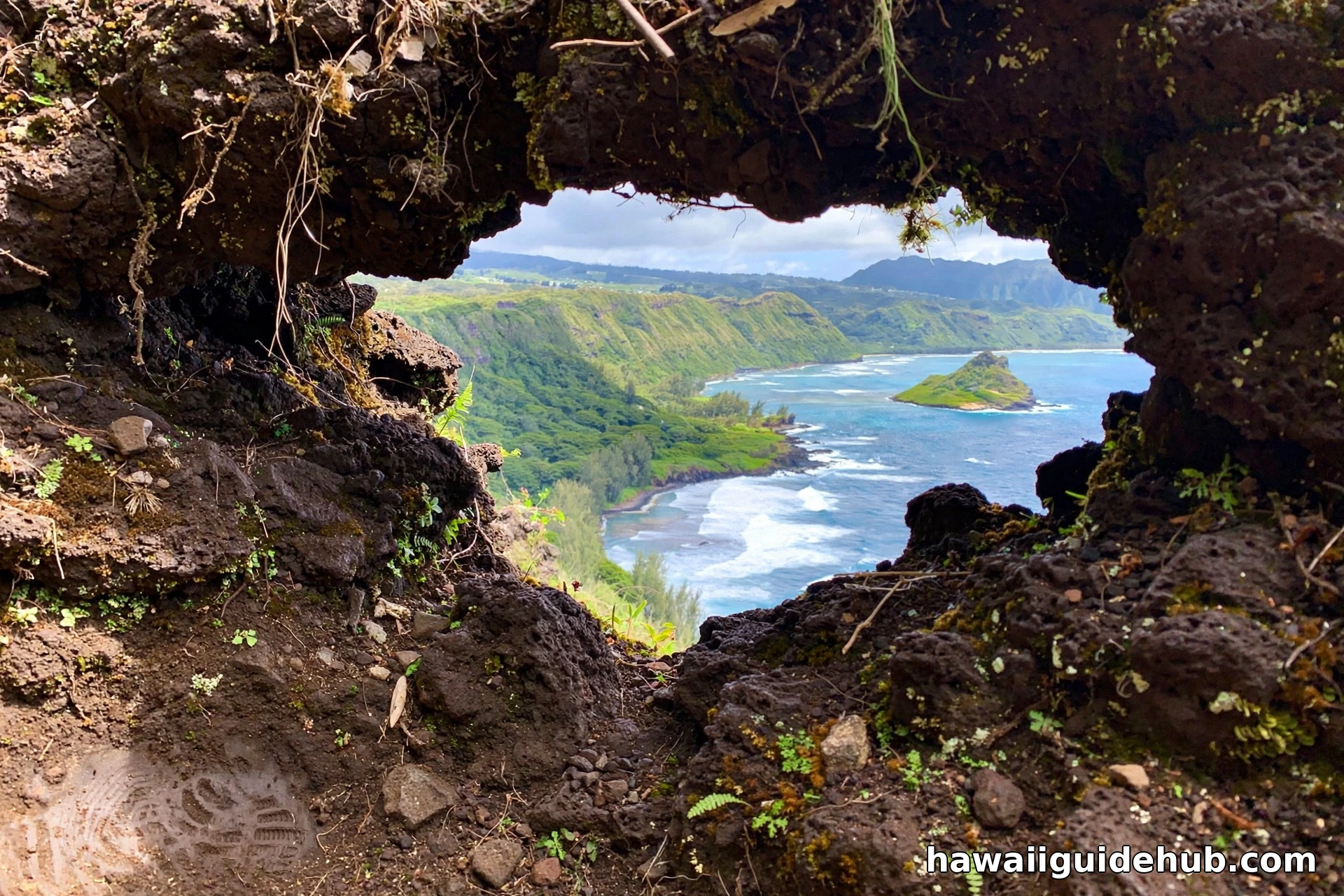
A short climb above one of Oʻahu’s most famous lookouts leads to a hole in the mountain that frames the windward coast like a picture. The Pali Puka Trail is only about a mile round trip, but it packs steep ridges, rope sections, and genuine exposure into that short distance, ending at a natural rock window with a view people cross the island to see.
This is the complete guide to the Pali Puka Trail. It covers where to park and what it costs, how to find the unmarked trailhead, how hard the hike really is, the legal and safety warnings you should take seriously, what to bring, and the best time to go. If you have been searching for anything about the pali puka trail, the answers are all on this one page.
Pali Puka Trail at a Glance
| Fact | Detail | What it really means |
|---|---|---|
| Location | Koʻolau Range above the Nuʻuanu Pali Lookout, Oʻahu | You’re hiking above one of the island’s windiest lookouts |
| Distance | About 1 mile round trip (0.5 mile each way) | Short, not easy |
| Elevation gain | About 300 to 500 feet | All of it steep |
| Typical time | 1 to 2 hours, including time at the puka | The puka photo stop is half the point |
| Difficulty | Intermediate: short, steep, exposed, and muddy after rain | Exposure, not distance, is the challenge |
| Trailhead | North end of the Nuʻuanu Pali Lookout parking lot | Puka goes left; the Notches go right |
| Parking | $7 per vehicle for nonresidents, free for Hawaiʻi residents | Have payment ready at the lookout |
| Lookout hours | 6 AM to 6 PM daily, per the DLNR | The gate sets your hiking window |
| Permit needed | None, but the trail is unofficial and unmaintained | No permit also means no maintenance; you hike it as-is |
| Best time | Early morning, during the drier months of May through September | Beat the wind and the mud |
Where the Pali Puka Trail Is
The Pali Puka Trail climbs the Koʻolau Range on Oʻahu, starting from the Nuʻuanu Pali State Wayside, the famous Pali Lookout that sits about 1,200 feet above sea level on the Pali Highway (Route 61) between Honolulu and the windward towns of Kāneʻohe and Kailua. From Waikiki it is roughly a 20 minute drive inland and up the mountain, which makes the trail an easy add-on to a windward sightseeing day.
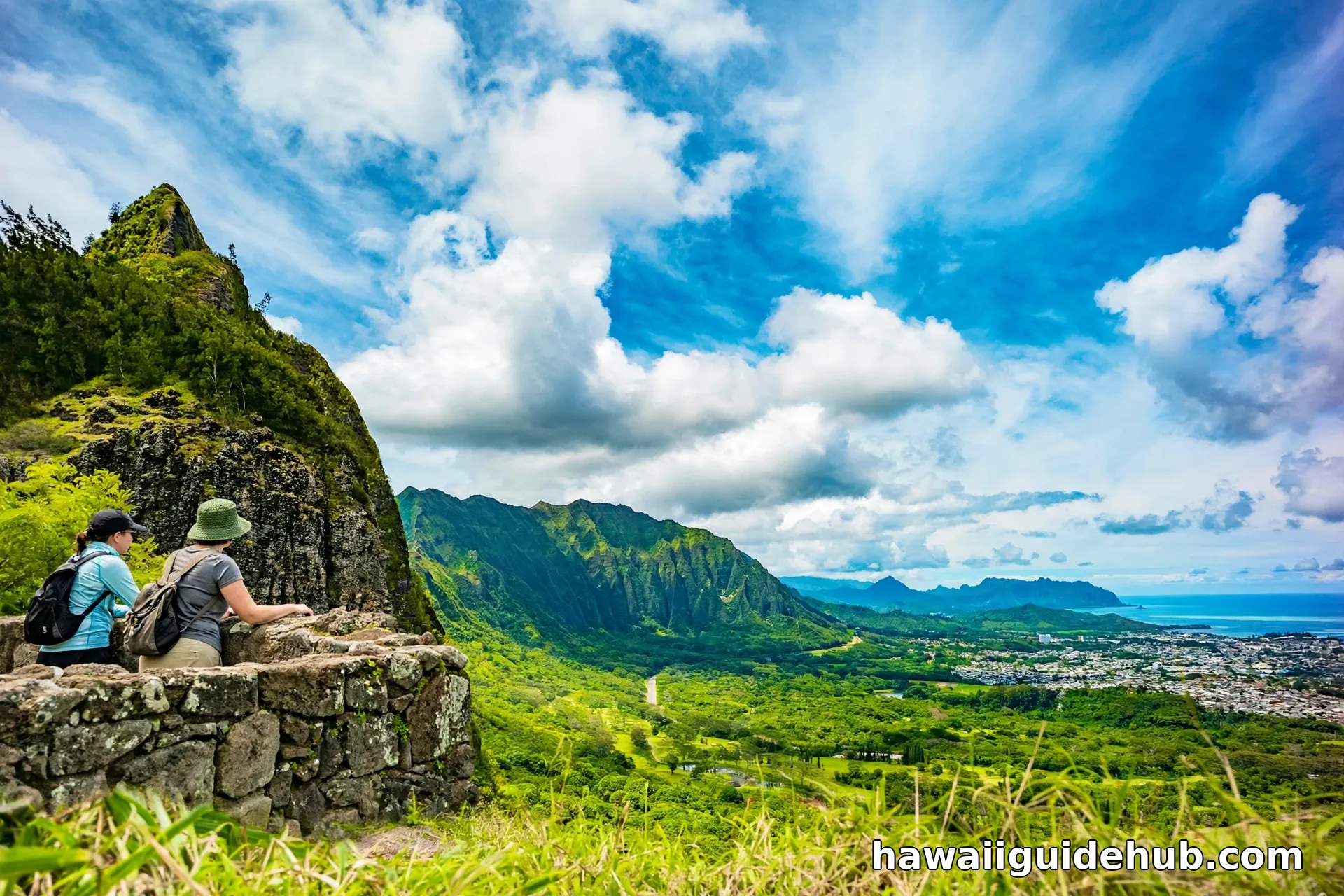
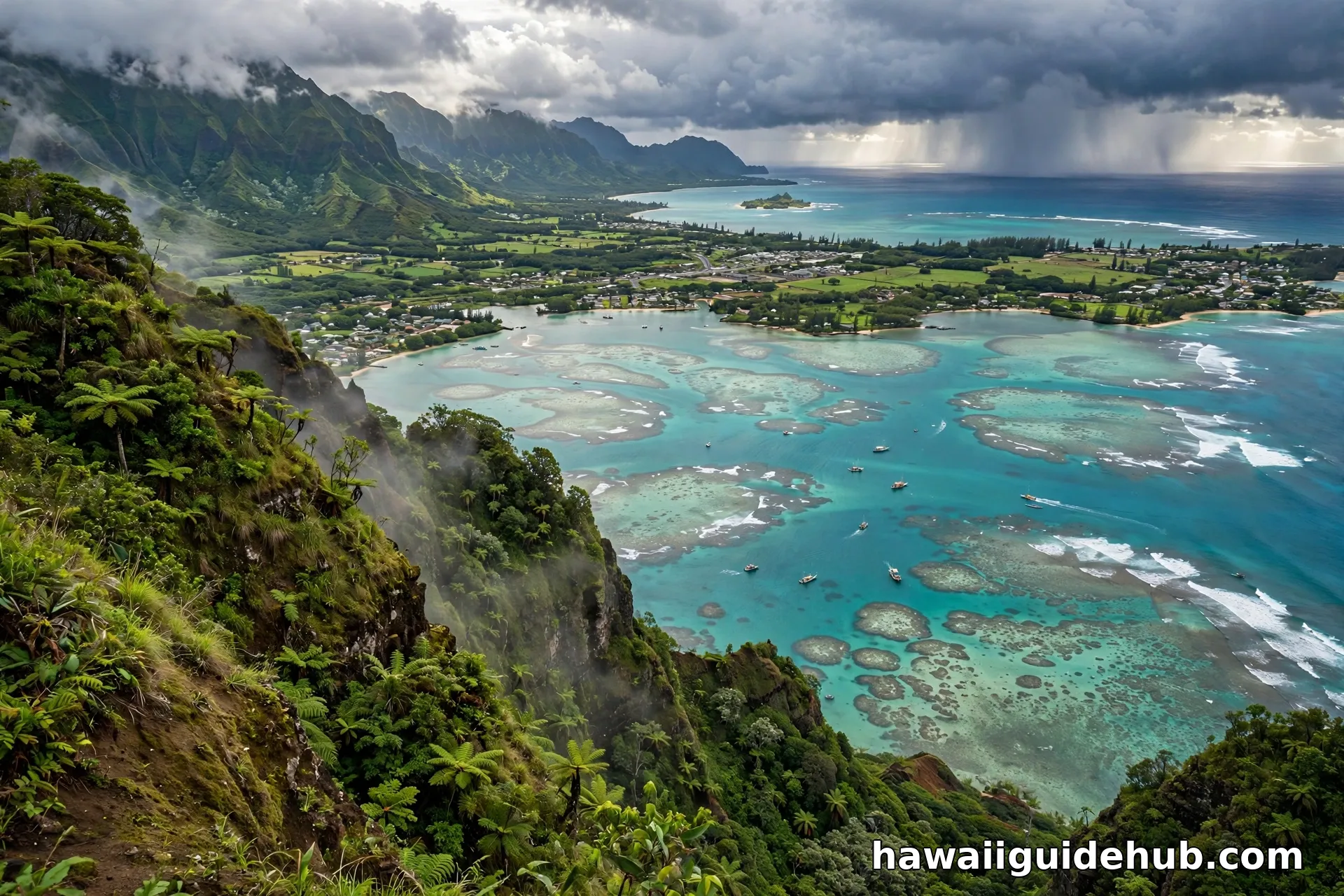
The lookout itself is the destination most visitors come for: a stone terrace with sweeping views of Kāneʻohe Bay, the windward coastline, and the sheer green fluted cliffs of the Koʻolau Range. It is also a historic site: in 1795 the forces of Kamehameha drove the warriors of Oʻahu over these cliffs in the Battle of Nuʻuanu, which united Oʻahu under his rule.
You park in the lookout’s paid lot and start the hike from the lot itself. There is no separate trailhead parking, no shuttle, and no reservation system. The gates are unlocked daily from 6 AM and secured at 6 PM, so this is strictly a daytime hike.
The Hike, Step by Step
The Pali Puka Trail is a straight shot up the ridge from the lookout to the puka. The challenge is finding the start and handling the exposure near the top.
Finding the Trailhead
Walk to the left, or north, end of the parking lot, away from the main viewing terrace, toward the old stone wall. Look for a gap in the wall where the trees close in; that gap is the start of the trail. There is no official trailhead sign or map board: this is not a maintained park trail.
Step through to a quick fork; take the right branch uphill. Follow the ridgeline upward, marked in places by orange ribbons tied by other hikers.
The Climb Up the Ridge
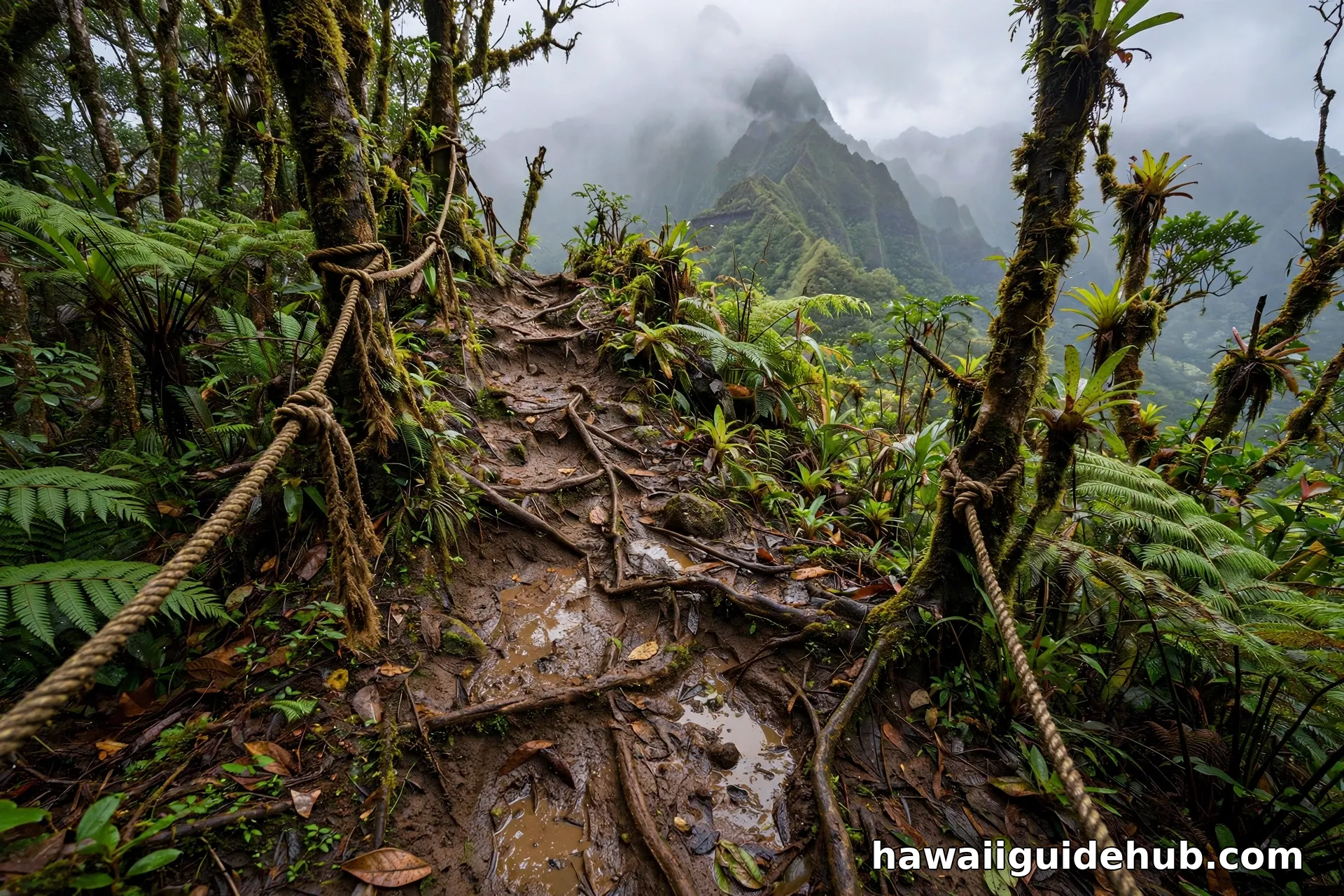
The climbing starts fast. The first section is a steep scramble up an incline covered in pine needles, roots, and loose dirt, and it is slippery even when it has not rained. Ropes are tied to trees in the steepest spots; use them, but test each one first, since they are placed by hikers and not maintained.
As you gain the ridge, the forest opens and the windward side appears on your right: Kāneʻohe Bay below, the coastline curving toward Kailua, and the Three Peaks and Pali Notches across the way. The ridge narrows as you climb, with steep drop-offs on the windward side. This is where the hike earns its reputation: keep your eyes on the trail, go single file, and do not let the views pull you toward the edge.
The Puka Itself
The trail ends where the ridge meets an impassable rock wall. The puka, a natural hole in the cliffside, sits just behind and below you at that point. Scramble down a short, steep section to get level with it; two rough ways down exist: slightly right of the puka facing the ocean, or along the tall rock face. Neither is graceful, so take your time.
At the puka, the hole perfectly frames the windward coastline: one of Oʻahu’s most photographed natural frames. Space in front of the puka is tight, so if other hikers are there, wait your turn on the ridgeline. There is no loop and no alternate descent, so head back the way you came.
Distance, Elevation Gain, and Honest Difficulty
On paper this looks like an easy hike: about a mile round trip with 300 to 500 feet of elevation gain, doable in 1 to 2 hours including a long stop at the puka. In practice, most hikers rate it intermediate, and some call it advanced, because the short distance hides how steep, slippery, and exposed the route is.
The honest read is this. If you hike regularly, wear real shoes, and are comfortable with heights, the Pali Puka Trail is a fun, quick adventure with an outsized payoff. If you are a casual walker, if you get nervous near drop-offs, or if you are bringing children, this is not your trail. A fall from the exposed ridge sections could be fatal.
If you want a gentler Oʻahu hike with a big payoff, Mānoa Falls gives you a lush rainforest walk to a 150 foot waterfall on a wide, well traveled trail. Save the Pali Puka for a day when you feel strong, the ground is dry, and the wind is calm.
Is the Pali Puka Trail Legal?
This is the question every responsible hiker should ask, and the answer is uncomfortable. The Pali Puka Trail is not an officially maintained trail. The Hawaiʻi Department of Land and Natural Resources has stated that there are no legal hikes beginning from the Pali Lookout, because the surrounding slopes are part of the State Forest Reserve system, and hikers entering closed areas are subject to citation and fines.
That has not stopped the trail from becoming one of Oʻahu’s most hiked unofficial routes, and on any dry weekend morning you will likely share the ridge with other hikers. But go in with your eyes open: there is no maintained trail, no rescue infrastructure, and no one checking the ropes. If the trailhead is posted as closed on the day you visit, do not go.
The Real Dangers, and How to Handle Them
Three things make this trail dangerous, and all three are manageable if you respect them. The first is exposure. The ridge narrows near the top with steep drop-offs on the windward side, and the scramble down to the puka has no margin for error. Stay on the trail, stay off the very edge, and turn back if any section feels beyond you. There is no shame in that. The mountain will be there another day.
The second is the wind. The Pali is famous for gusts strong enough to snatch hats, sunglasses, and phones straight off the terrace and over the cliff. On the ridge the wind can push you off balance at the worst moments. Secure everything before you leave the parking lot, and if the wind is howling through the pass, postpone the hike.
The third is mud. After rain the trail becomes a slide, and the Koʻolau crest collects rain often. If the ground is wet, the roots are slick, and the ropes are doing all the work, turn around. Do not hike this trail in active rain, and give it a day or two to dry after a big storm.
One more rule, and it matters. Do not continue past the puka. The ridge above it is part of the Koʻolau Summit Trail toward Puʻu Lanihuli, a razor thin, crumbly ridgeline that is far more dangerous than anything below it. The puka is the turnaround point.
What to Pack for the Pali Puka Trail
Pack light but pack right, because there is no water, no food, and no help once you leave the parking lot. The essentials fit in a small daypack.
| Bring | The spec | Why |
|---|---|---|
| Hiking shoes | Sturdy, aggressive tread. No flip-flops, no smooth-soled sneakers. | Mud plus exposure punishes bad footwear |
| Water | At least 1 liter per person | There is no water on the trail |
| Rain jacket | Lightweight and packable | Koʻolau weather changes fast |
| Gloves | Optional, but helpful for gripping the muddy ropes | Grip matters more than warmth here |
| Secure hat and sunglasses | With a chin strap or retainer, or leave them in the car | The wind takes souvenirs |
| Charged phone | In a zip bag | Photos only; don’t count on cell service or a rescue call |
Best Time to Hike to the Pali Puka
Go early. The lookout gates open at 6 AM, and the first hour of the day gives you the clearest views, the calmest air, and the emptiest trail. Clouds and mist love to swallow the Koʻolau crest by late morning, and a fogged-in puka is a real possibility if you start late. An early start also means you finish well before the gates are secured at 6 PM.
For the driest trail conditions, aim for May through September, when trade wind weather is most stable. November through March brings the heaviest rain, and the ridge can stay slick for days after a storm. Check the forecast the morning of your hike and be ready to switch plans. For a deeper look at island weather patterns, see our guide to what time of year it rains in Hawaii.
Pali Puka vs Pali Notches: Which Ridge Trail?
The Pali Lookout parking lot is the starting point for two famous unofficial ridge hikes, and visitors mix them up constantly. Both are short, steep, exposed, and unmaintained. Here is how they differ.
| Trailhead | Pali Puka | Pali Notches |
| Side of the lot | Left, or north, end of the parking lot | Right, or south, end of the parking lot |
| Distance | About 1 mile round trip | About 1 mile round trip to the first notch |
| The payoff | A natural hole in the cliff framing the coast | Notches, or dips, in the ridgeline with big views |
| Difficulty | Intermediate, with a scrambly finish | Intermediate to the first notch, harder beyond |
| Good for | The iconic framed photo | Ridge walking with slightly less exposure at the start |
If you only have time for one, pick the puka for the photograph. If you loved the puka and want more ridge time on another dry day, the notches are the natural next step. Either way, the same rules apply: dry weather, early start, real shoes, and no pushing past your comfort level.
Video: The Full Pali Puka Hike
Watch the entire trail from the lookout parking lot to the puka and back, filmed in 4K, so you know exactly what the ridge, the ropes, and the scramble look like before you go.
Pair It With a Windward Oʻahu Day
The hike takes half a morning at most, so build a day around it. Spend time at the Pali Lookout itself, reading the plaques about the 1795 battle. Then drop down the windward side to Hoʻomaluhia Botanical Garden, a 400 acre garden in Kāneʻohe that sits right against the same cliffs you just hiked, or continue to Kailua for lunch and an afternoon at the beach.
To plan the rest of the island, our guide to the windward side of Oʻahu explains what makes this coast different, and our Oʻahu adventure guide covers what not to miss.
Frequently Asked Questions
How long is the Pali Puka Trail?
About 1 mile round trip, or 0.5 mile each way. Most hikers take 1 to 2 hours total, including time at the puka for photos and rest.
Is the Pali Puka Trail hard?
It is rated intermediate. The distance is short, but the trail is steep, often muddy, and runs along an exposed ridge with real drop-offs. It is not a beginner hike and not a good choice if you are afraid of heights.
How much is parking at the Pali Lookout?
Nonresidents pay $7 per vehicle at the self-pay machine in the lot. Hawaiʻi residents park free. The lookout is open daily 6 AM to 6 PM, and the gates are secured at night.
Is the Pali Puka Trail legal?
The trail is unofficial and unmaintained, and the DLNR has stated that no legal hikes begin from the Pali Lookout. Hikers who enter closed areas can be cited and fined. Many people still hike it, but you go at your own risk, and you should obey any posted closures.
Can kids do the Pali Puka Trail?
No. The steep scrambling, narrow exposed ridge, and drop-offs make this an adults-only hike. Families will have a far better time at the Pali Lookout terrace itself.
What is the difference between Pali Puka and Pali Notches?
They are two separate unofficial ridge trails starting from opposite ends of the same parking lot. The Pali Puka goes left from the lot to a natural hole in the cliff. The Pali Notches goes right from the lot along the ridgeline to a series of notches. Both are short, steep, and exposed.
Can you hike the Pali Puka Trail in the rain?
You should not. Rain turns the trail into a mudslide, soaks the ropes, and adds gusty wind to the exposed ridge. Wait for a dry day, and give the trail a day or two to dry out after heavy rain.
The Pali Puka Trail is proof that a hike does not need big mileage to deliver a big moment. In about a mile of climbing you get rope-assisted scrambling, a narrow jungle ridge, and one of the great natural frames in Hawaiʻi, a hole in the mountain with the whole windward coast spread out beyond it. Pick a dry morning, treat it with respect, and it will be one of the shortest hikes you remember the longest.