Queen’s Surf Beach: Waikiki’s Local Corner by Kapiʻolani Park

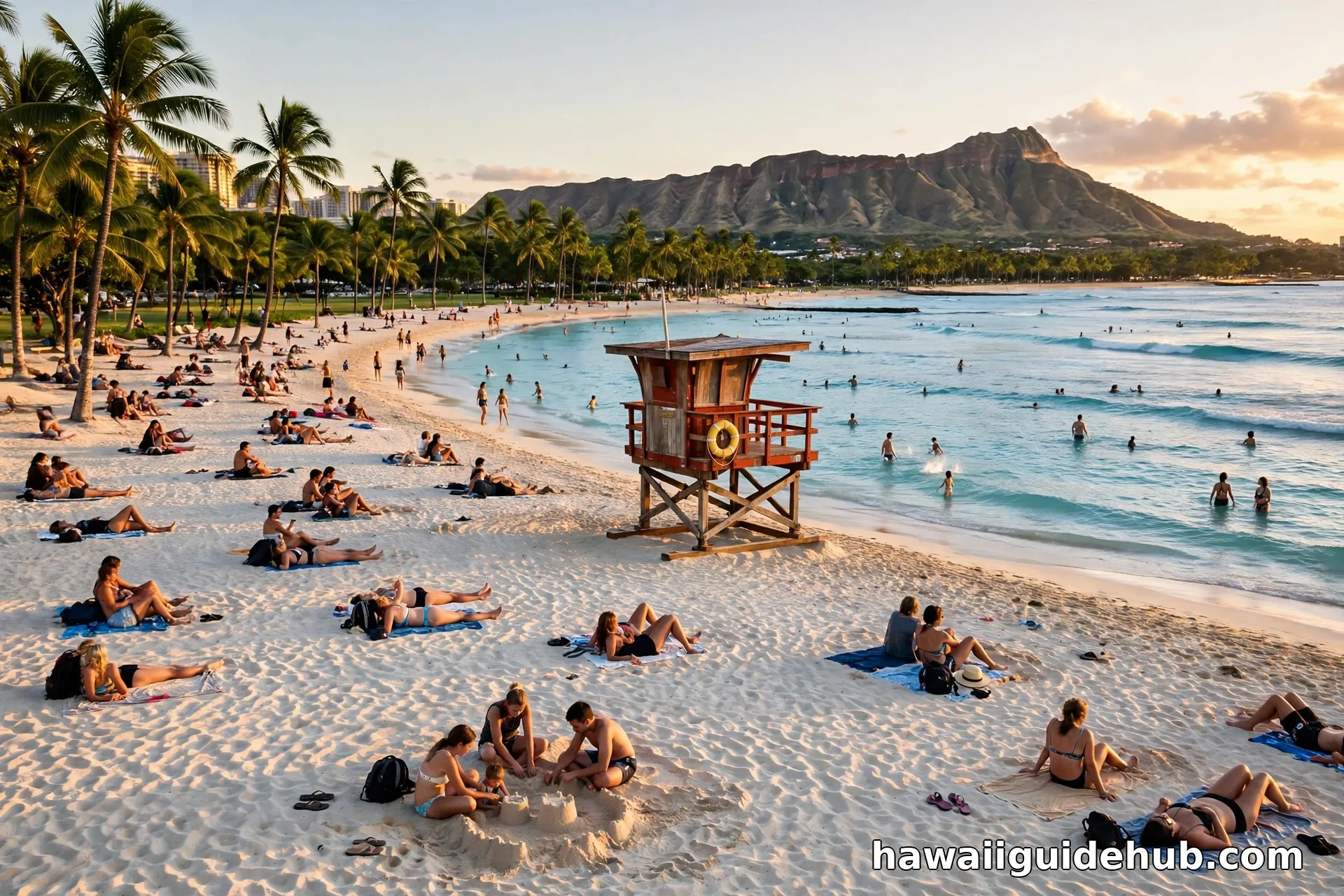
Queen’s Surf Beach sits at the quiet Diamond Head end of Waikiki, where the hotel crowds thin out and the grass of Kapiʻolani Park meets the sand. This is the Waikiki that locals love: gentle surf at the break called Publics, a wide beach that suits swimmers of every age, and a beachfront cafe where you can eat lunch with your toes in the sand. If you want the famous shoreline without its thickest crowds, this is the stretch to learn.
This is the single complete guide to Queen’s Surf Beach. It covers where the beach is and how to get there, parking, facilities, swimming and surfing conditions, seasonal hazards, the beach’s remarkable history, and the best nearby alternatives. Everything about queen’s surf beach and queens surf beach is gathered on this one page, so you do not need to search anywhere else.
Queen’s Surf Beach at a Glance
| Perfect for | Good to know |
|---|---|
| Gentle surf at the Publics break, a local vibe, and royal and LGBTQ+ history | Lifeguarded: Lifeguard Stand 2F near the Publics break |
| Easy, beginner-friendly swimming with a shallow sandy entry | Snorkeling is modest: some reef fish over coral patches |
| Full facilities: restrooms, showers, park lawns, beachfront cafe | Street parking on Kalākaua Avenue and nearby lots; go early morning for calm water and easy parking |
Where Queen’s Surf Beach Is
Queen’s Surf Beach lies on the east side of Waikiki in Honolulu, on the island of Oʻahu. It sits at the Diamond Head end of the Waikiki shoreline, just west of the Waikiki Natatorium War Memorial and in front of Kapiʻolani Park. For directions, use the stretch of Kalākaua Avenue near the Kapiʻolani Park Bandstand, around 2743 Kalākaua Avenue in Honolulu. If you are walking, follow Kalākaua Avenue east past the Duke Kahanamoku statue and the hotel row. The beach opens up as the hotels give way to the park, and you will know you have arrived when the grassy lawns start running alongside the sand.
Getting there is easy. TheBus routes serving Waikiki run along Kalākaua Avenue and Kūhiō Avenue, and both stop within a short walk of the beach. Drivers can use street parking along Kalākaua Avenue and the side streets near Kapiʻolani Park, though spots fill quickly on sunny weekends. Arriving before 10 AM makes parking much easier. The Kapiʻolani Park area also has lot parking, and the areas near the Honolulu Zoo and the Diamond Head trailhead give you backup options if the closest street spots are taken. For a broader look at the island, see our guide to what not to miss on Oʻahu.
The Beach and the Water
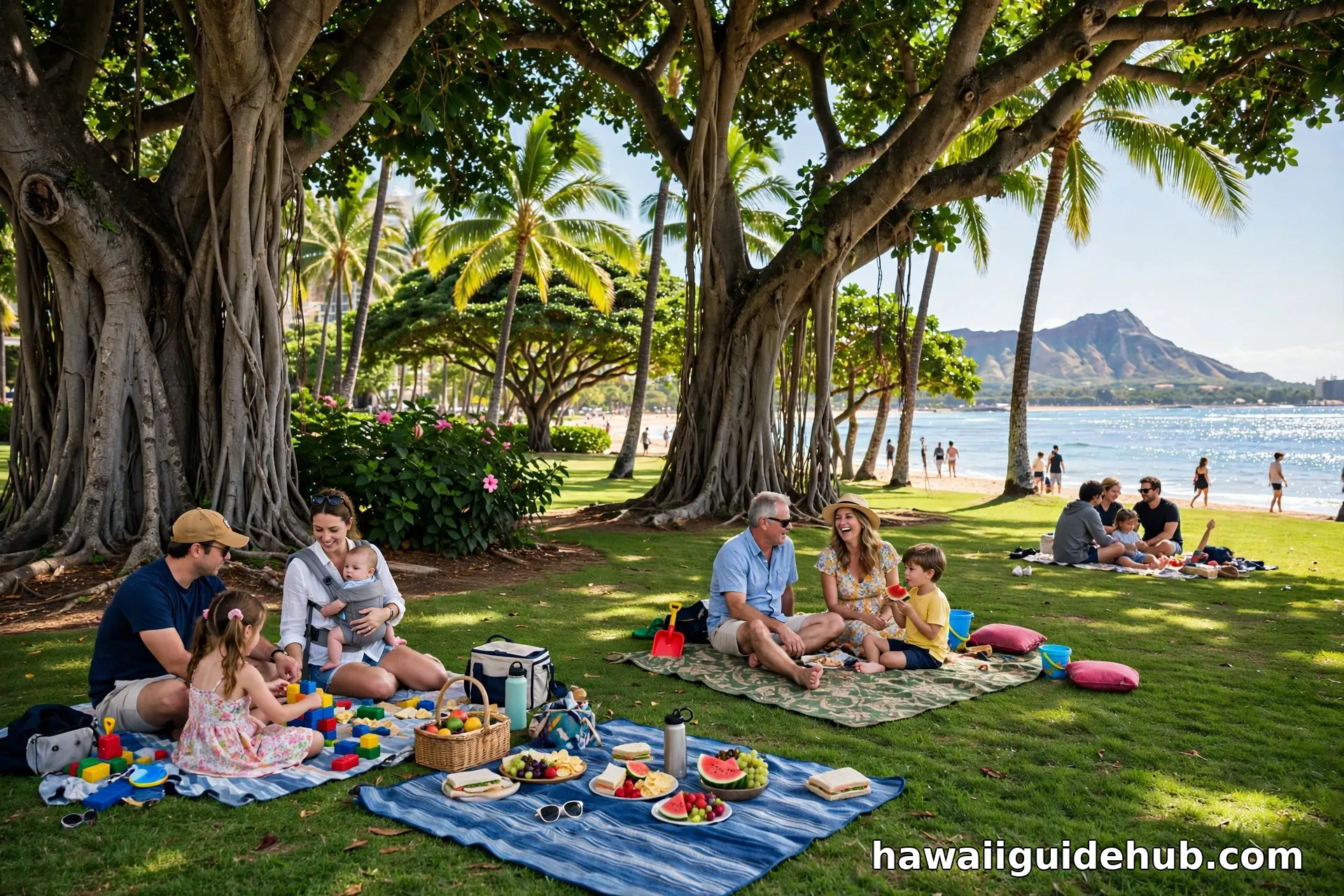
The sand at Queen’s Surf Beach is wide, light, and backed by lawns and shade trees that give the beach a park-like feel. The bottom near shore is mostly sand with patches of reef further out, so the entry is friendly for swimmers and waders. The water is the classic Waikiki turquoise, warm enough to swim without a wetsuit all year.
Swimming and Snorkeling
Swimming here is generally easy and relaxed. The waves arrive as gentle rollers, the water stays shallow for a good distance, and the offshore reefs take the edge off ocean swells. Mornings are usually the calmest part of the day, and families favor the shallower inside areas where children can splash safely. Like everywhere in Hawaiʻi, you should never turn your back on the ocean for long, but this is one of the most forgiving swimming beaches on Oʻahu’s south shore.
Snorkeling is possible but modest. You will see small reef fish over the patches of coral, but this is not a snorkeling destination on the level of Hanauma Bay. Bring your own gear if you want a look around, shuffle your feet when entering to avoid stepping on anything sharp, and watch your footing on coral heads. If snorkeling is your priority, save your big snorkel day for a dedicated reef spot and enjoy Queen’s Surf for the swim and the surf.
Surfing at Publics
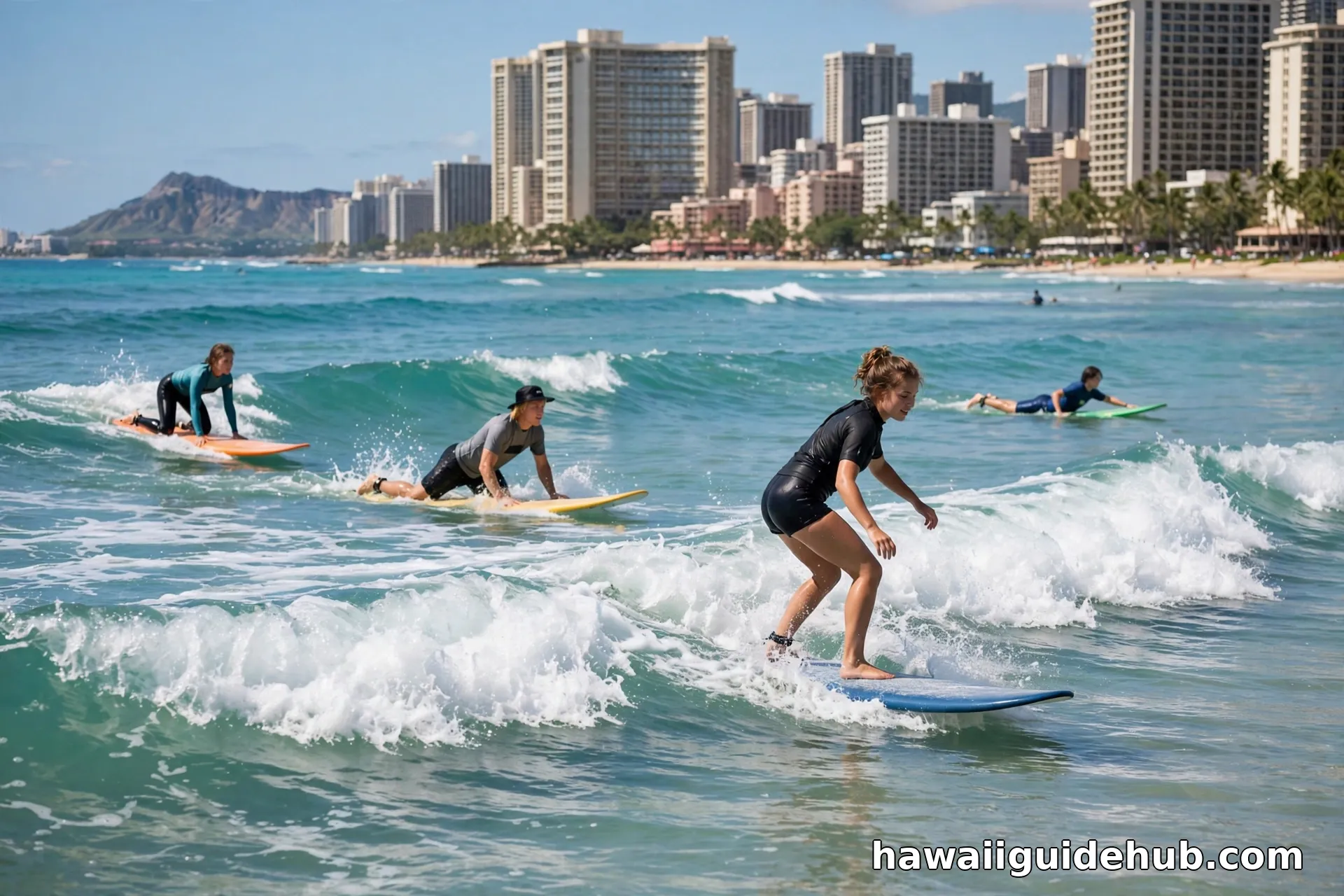
The surf break locals call Publics breaks right off Queen’s Surf Beach near Lifeguard Stand 2F, and it is one of the classic Waikiki beginner spots. The waves are soft, slow-rolling, and forgiving, which is why surf schools and new surfers love this entire stretch of Waikiki. More experienced surfers still enjoy it on a good south swell, when the lineup can get lively but stays friendly by Hawaiʻi standards. If you are new to surfing, a lesson here is one of the best introductions in the state, since the bottom is sandy and the rides are long.
Follow basic surf etiquette even as a beginner: do not drop in on another rider’s wave, paddle wide around the break instead of through the lineup, and keep a safe distance from swimmers. The inside whitewater near shore is the best place to practice pop-ups before you paddle out to the actual break.
Seasonal Ocean Conditions and Hazards
Summer brings south swells that make the surf bigger and more fun, while winter is generally calmer on this south-facing shore. That pattern makes Queen’s Surf Beach a reliable year-round beach: there is almost always a swimmable window, even when other coasts are rough. For a broader look at what time of year it rains in Hawaii, our seasonal guide breaks it down island by island.
The hazards are the ordinary ones for a Hawaiʻi beach. Like the rest of Waikiki and Oʻahu’s south shore, Queen’s Surf Beach sees box jellyfish for about three days each month, roughly a week after the full moon. During those days, stay out of the water or swim with caution, and watch for lifeguard warnings. The strong midday sun calls for real sun protection, stingrays occasionally rest in the sand, and reef cuts happen if you scramble over coral. The reef just offshore is relatively shallow, so avoid walking on live coral. Before paddling out, check with the lifeguard. The posted signs and the lifeguard’s advice are the final word on the day’s conditions.
Facilities, Lifeguards, and Beach Rules
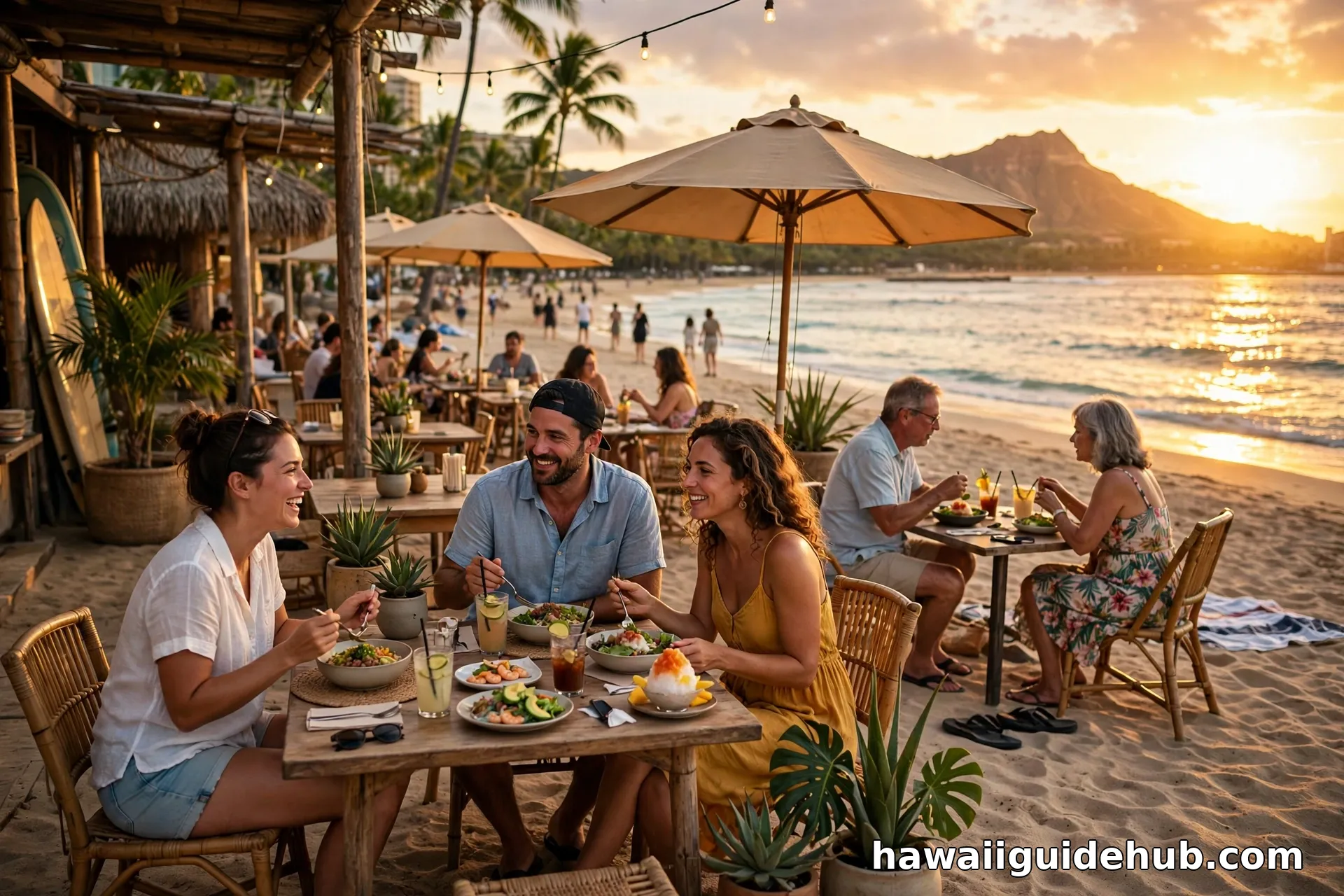
This is one of the best-equipped beaches in Waikiki. Public restrooms and beach showers serve the Queens section of the shoreline, and the grassy lawns of Kapiʻolani Park give you a shady place to picnic between swims. The Barefoot Beach Cafe sits right on the sand at the park’s edge, open daily from 7 AM to 9 PM, serving breakfast through dinner with live music on the oceanfront lanai most evenings. It is one of the few places in Waikiki where you can eat dinner at sunset with your feet in the sand.
A lifeguard station (Stand 2F, near the Publics break) watches this stretch, and City and County of Honolulu lifeguards patrol the Waikiki beaches. Swim near the guarded areas, never swim alone, and heed the warning flags and signs. Standard city beach park rules apply: no alcohol, no smoking, no glass containers, and dogs are not allowed on the sand. Our guide to Hawaii beach park rules covers what you can and cannot do at beaches across the state. Drone use is restricted over the beach, so check current regulations before flying one.
The Story of Queen’s Surf Beach
The beach is named for Queen Liliʻuokalani, Hawaiʻi’s last reigning monarch and an enthusiastic surfer who loved Waikiki’s waters. The name carries that royal connection into the present day, and it is part of what makes this stretch feel different from the hotel-front beaches to the west.
In the 1970s, Queen’s Surf Beach became a gathering and organizing space for Hawaiʻi’s LGBTQ+ māhū communities, a place where people could relax and be themselves at a time when sexual and gender diversity was only beginning to be discussed openly. Unlike most gay beaches of that era, it was visible and public, a reflection of Hawaiʻi’s relatively welcoming culture. Activity slowed in the late 1980s with the arrival of HIV/AIDS, but a new generation has been reclaiming the beach as a place of community, including through monthly potlucks organized by community groups. A historical plaque presented to the City and County of Honolulu by Lei Pua Ala Queer Histories of Hawaiʻi marks the beach’s place in this history. The beach is open to the public, and everyone is welcome.
Best Time to Visit Queen’s Surf Beach
Early morning is the sweet spot. The ocean is calmest, the sand is uncrowded, parking is easiest, and the light on Diamond Head is beautiful. Midday brings the strongest sun and the biggest crowds, so bring shade and plenty of water if you claim a midday spot. Late afternoon and sunset are lovely for a walk or a meal at the cafe. Summer’s south swells make for the best surfing, while winter brings the calmest water for swimming and floating. Weekdays are noticeably quieter than weekends, and winter is a fine season to plan around, with more ideas in our guide to the best places in Oʻahu to visit in winter.
Nearby Alternatives
Walk west and you reach Kūhiō Beach, with its wide sand, hula mound, and the Duke Kahanamoku statue. Continue east past the Natatorium and you find San Souci Beach, a small local favorite tucked against Diamond Head. If this is your first trip to the islands, our guide to the best island in Hawaii for first time visitors will help you plan the rest of your days beyond Waikiki.
Video: Queen’s Surf Beach and the Publics Break
Watch the gentle surf at Publics and the wide sandy shoreline at the Diamond Head end of Waikiki.
Frequently Asked Questions
Where exactly is Queen’s Surf Beach?
Queen’s Surf Beach is at the Diamond Head (east) end of Waikiki in Honolulu, in front of Kapiʻolani Park near the park bandstand, around 2743 Kalākaua Avenue. Walk east along Kalākaua Avenue past the hotel row and you will reach it where the park begins.
Is Queen’s Surf Beach good for beginners?
Yes, it is one of the best beginner spots on Oʻahu. The surf at the Publics break is soft and slow-rolling, the bottom near shore is sandy, and the swimming areas are calm and shallow. Many first-time surfers take their lessons on this stretch of Waikiki.
Are there lifeguards at Queen’s Surf Beach?
Yes. City and County of Honolulu lifeguards staff a tower at this stretch, known as Stand 2F, near the Publics surf break. Swim near the guarded area and follow the lifeguard’s posted warnings.
Is there parking at Queen’s Surf Beach?
There is street parking along Kalākaua Avenue and the side streets near Kapiʻolani Park, plus lot parking in the park area. Spots fill fast on sunny weekends, so arrive before 10 AM for the easiest parking.
Can you swim at Queen’s Surf Beach in winter?
Yes. Oʻahu’s south shore is generally calmest in winter, since the big swells hit the north shore instead. Winter is one of the best seasons for calm swimming at Queen’s Surf Beach. Just watch for the monthly box jellyfish days.
Why is it called Queen’s Surf Beach?
The beach is named for Queen Liliʻuokalani, Hawaiʻi’s last reigning monarch, who was an enthusiastic surfer in Waikiki’s waters. It is also known for its history as a gathering place for Hawaiʻi’s LGBTQ+ māhū communities since the 1970s, marked by a historical plaque at the beach.
Is Queen’s Surf Beach crowded?
It is quieter than the hotel-front beaches in central Waikiki, but it is still Waikiki, so weekends and holidays bring plenty of people. The beach feels roomy on weekday mornings, when you will mostly share the sand with local regulars and early swimmers. If you want the calmest experience, come on a weekday before 9 AM and you will have your pick of spots.
Queen’s Surf Beach is the Waikiki that keeps its locals: easy water, real history, a park behind the sand, and Diamond Head on the horizon. Come early, swim near the lifeguard, eat at the cafe as the sun goes down, and you will understand why this corner of Honolulu holds such a loyal following. Bring reef-safe sunscreen, respect the ocean and the beach’s history, and leave the sand as clean as you found it.