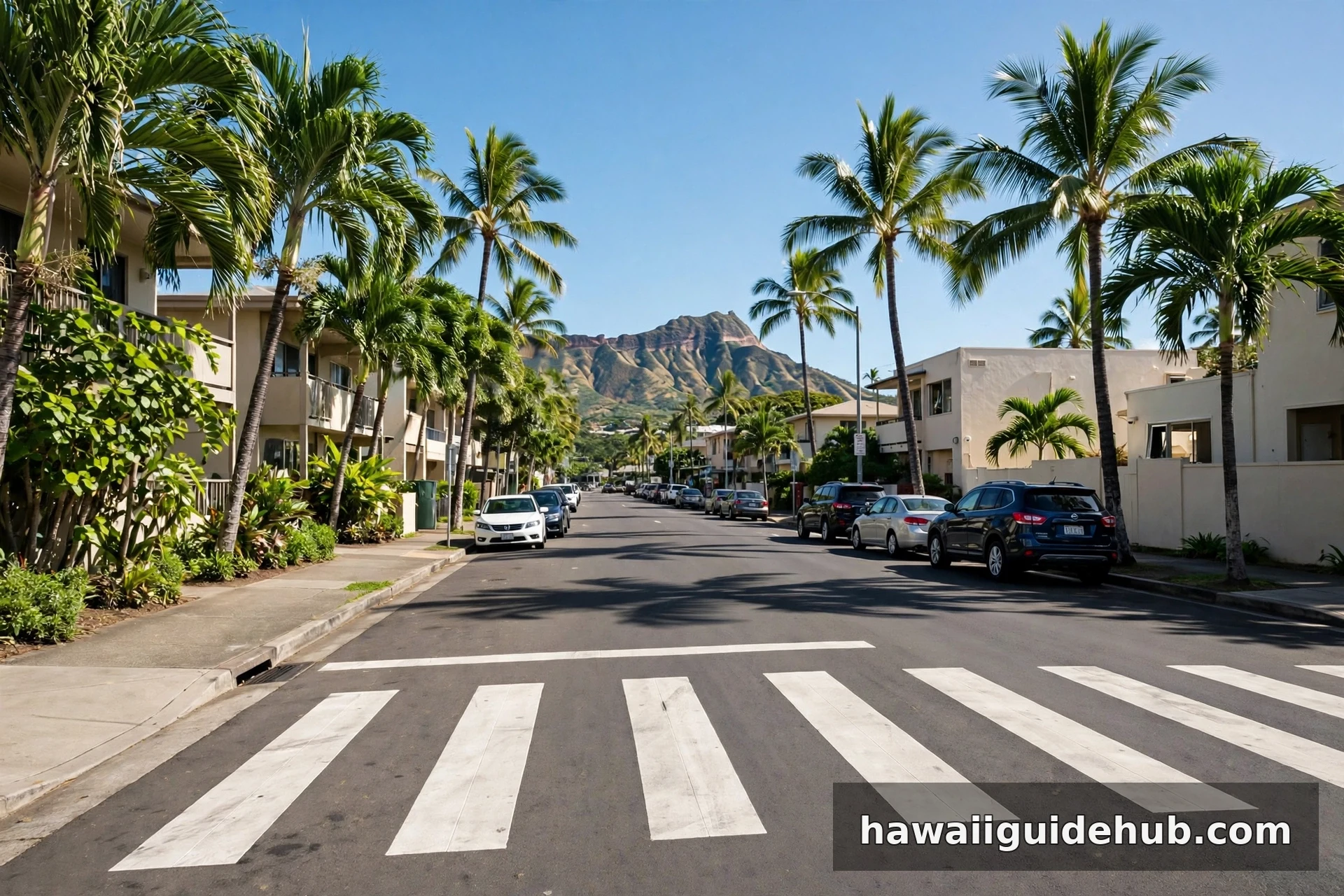
How Far Do You Have to Park From a Crosswalk in Hawaiʻi?

In Hawaiʻi, you must park at least 20 feet away from any crosswalk. That is the state law, and it applies whether or not there is a sign or a painted curb telling you so. Park closer, and you can be ticketed or towed.
This guide explains Hawaiʻi’s crosswalk parking law in plain English: the exact distance, what counts as a crosswalk, how the counties differ, what happens if you break the rule, and practical tips for visitors with rental cars. If you searched for how far do you have to park from a crosswalk, the answer is 20 feet, and this page covers everything around it.
The Short Answer
| The question | The answer | The law |
|---|---|---|
| How far from a crosswalk | 20 feet minimum | per HRS §291C-116 |
| Does it apply without signs | Yes; no sign or marking is required | per HRS §291C-116 |
| Marked or unmarked crosswalks | Both count; every intersection has a crosswalk by law | per HRS §291C-116 |
| The penalty | Traffic infraction; fine and possible tow | per HRS §291C-116 |
| The Kauaʻi exception | 6 feet for mid-block crosswalks (not at intersections) | per the Kauaʻi County rule |
Why 20 Feet? The Safety Logic
Twenty feet is not arbitrary. When a car parks right at the edge of a crosswalk, it creates a wall that hides pedestrians from drivers and drivers from pedestrians. A child stepping off the curb becomes invisible to an approaching car until the last second. At 20 feet back, the sight lines open up: a driver can see the full crosswalk, and a pedestrian can see oncoming traffic before stepping out.
Hawaiʻi takes pedestrian safety seriously because the stakes are high. The state runs an annual Pedestrian Safety Month every August, and the Department of Transportation’s Walk Wise Hawaiʻi program teaches the same core message year after year: visibility saves lives. The 20-foot parking buffer is one of the cheapest, simplest visibility tools available. It costs nothing to obey and prevents the exact blind-spot crashes that kill pedestrians in urban areas.
What the Law Says
Hawaiʻi Revised Statutes §291C-116 prohibits stopping, standing, or parking within 20 feet of a crosswalk. A related section, §291C-111(b), makes it explicit that no sign or curb marking is required for this rule to apply: the 20-foot buffer is the law whether the curb is painted or not. In Honolulu, the county ordinance (ROH 15-13.9 and 15-14.1) repeats the 20-foot rule and authorizes towing.
The reason is visibility. A car parked right up against a crosswalk blocks the sight lines between drivers and pedestrians, especially children. Twenty feet gives drivers time to see someone stepping into the street and gives pedestrians a clear view of oncoming traffic. It is one of the simplest and most effective pedestrian safety rules on the books.
What Counts as a Crosswalk?
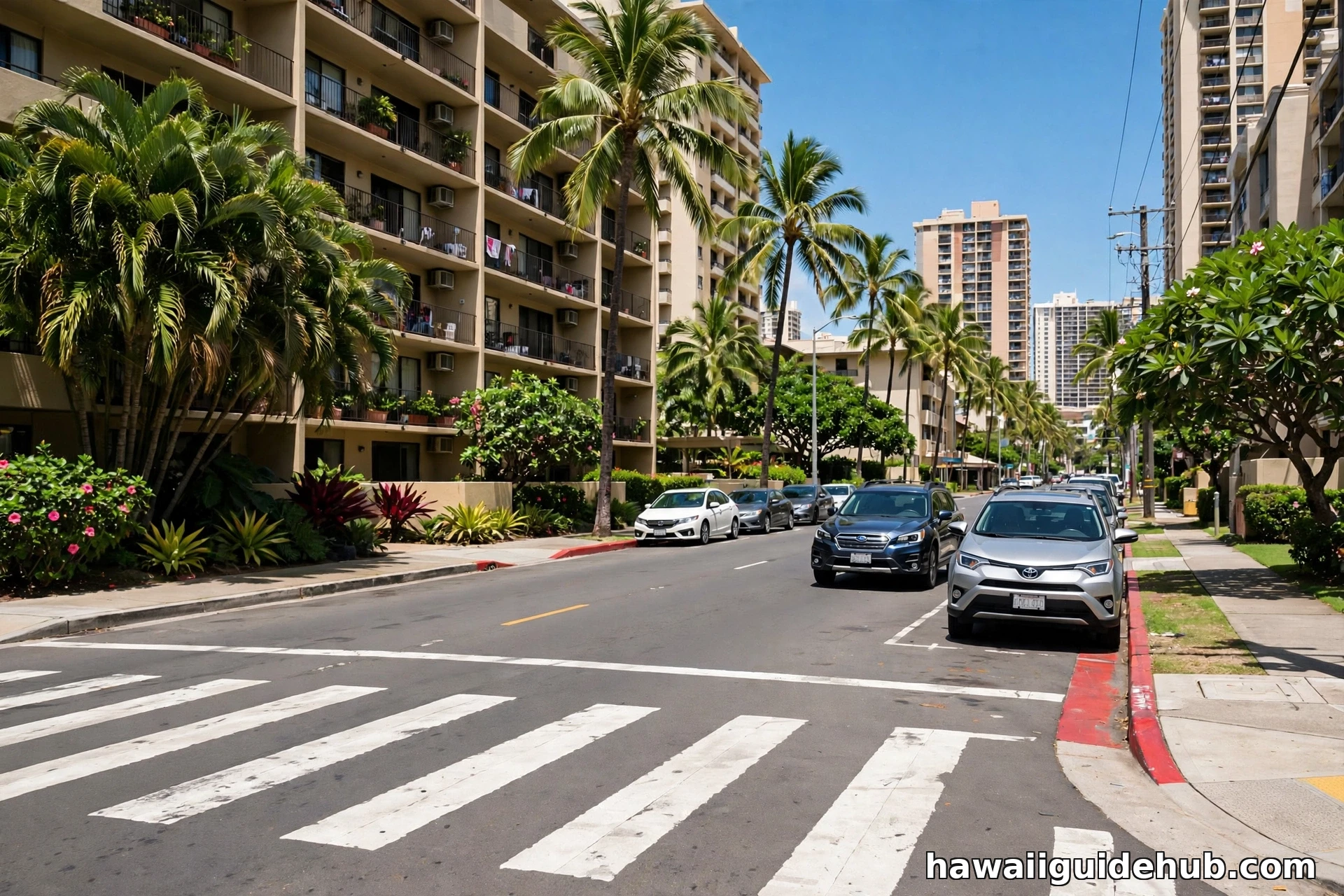
More than you think. Under Hawaiʻi law, there are two kinds of crosswalks. A marked crosswalk is the familiar striped or lined crossing. An unmarked crosswalk exists by law at every intersection: it is the extension of the sidewalk across the street, whether paint is on the ground or not. If you are parking near any street corner, you are parking near a crosswalk.
This surprises a lot of visitors. You might see a quiet residential corner with no stripes and assume there is no crosswalk. Legally, there is. The 20-foot rule still applies. When in doubt, give the corner a wide berth.

How to Measure 20 Feet Without a Tape Measure
Nobody carries a tape measure to park. Here is how to judge 20 feet in the real world. A standard parking space is about 18 to 20 feet long, so if you can fit a full empty parking space between your bumper and the crosswalk, you are good. A typical sedan is about 15 feet long, so 20 feet is roughly one and a third car lengths. On foot, it is about seven or eight normal walking strides.
The easiest method: when you pull into a spot near a corner, look at where the crosswalk stripes (or the corner itself) are, then check that you could walk at least seven big steps from your bumper to that point. If it feels tight, it probably is. Move up. In practice, if you are unsure, adding an extra half car length costs you nothing and removes all doubt.
Other Keep-Clear Distances in Hawaiʻi
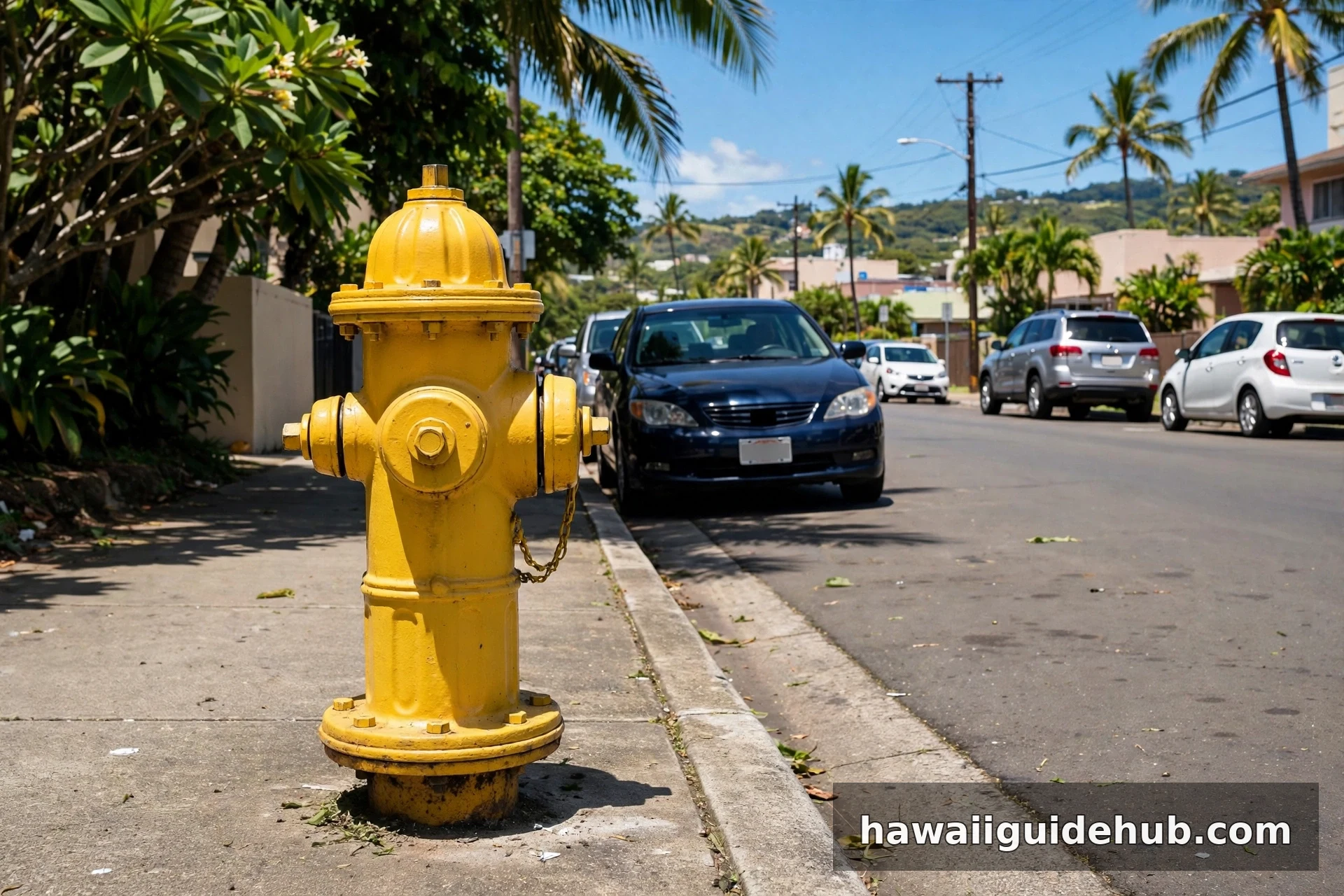
The crosswalk rule is part of a family of keep-clear distances. If you are parking on a Hawaiʻi street, these are the numbers to know. The crosswalk’s 20 feet is the one visitors break most often, usually without realizing it.
County Differences
State law sets the floor at 20 feet, but counties can add their own rules. Kauaʻi County’s ordinance draws a useful distinction: 20 feet from a crosswalk at an intersection, but only 6 feet from a crosswalk not at an intersection (a mid-block crossing). Honolulu, Maui, and Hawaiʻi County follow the state 20-foot standard. Wherever you are, 20 feet is the safe number to remember.
Counties also control signage, meters, and tow zones. In Waikīkī and downtown Honolulu, many curbs are already restricted by signs, meters, or red paint. The 20-foot crosswalk rule applies on top of those restrictions, not instead of them.
What Happens If You Park Too Close?
- A ticket. Violating the parking rules is a traffic infraction under HRS chapter 291D, enforced by the county police and collected by the district courts.
- A tow. In Honolulu, a car parked on or within 20 feet of a crosswalk can be towed. Getting your rental car out of impound will ruin a vacation day.
- Liability. If a pedestrian is hit near a crosswalk your car was blocking, your illegal parking can become part of a civil case.
The practical advice is simple: the ticket is the least of it. A car blocking a crosswalk creates a blind spot where a child can step into traffic unseen. The 20 feet is not bureaucratic; it is the difference between a driver seeing a pedestrian in time and not.
Honolulu’s crosswalk flyer puts it bluntly: no stopping or parking on a crosswalk or within 20 feet of one, and your car can be towed. The city does not need to prove you saw a sign, because the statute does not require one. Enforcement tends to be complaint-driven in residential areas and proactive in Waikīkī and downtown, where officers on foot patrol write these tickets routinely. Either way, the law is the same on every island.
Parking in Waikīkī: A Survival Guide
Waikīkī is where visitors most often run into the 20-foot rule, because it is where parking is scarcest and pedestrians are densest. The side streets off Kalākaua Avenue fill up by mid-morning, and every corner tempts you to squeeze into a gap that is technically too close to the crosswalk. Do not do it. Honolulu parking enforcement is active in Waikīkī, and a tow from here means a long, expensive trip to the impound lot.
Better options: use a parking structure. Most Waikīkī hotels offer parking (usually $35 to $60 per day), and public structures like the Waikīkī Banyan or the Royal Hawaiian Center garage are cheaper than a ticket. If you are just visiting for the day, the Ala Wai area east of the canal has more street parking, but the same 20-foot rule applies at every corner. And remember that many Waikīkī curbs have additional restrictions: no parking during rush hours, tow-away zones, and metered sections. The crosswalk buffer sits on top of all of that.
Tips for Visitors with Rental Cars
- Learn what 20 feet looks like. It is about one and a half car lengths, or roughly four big steps. When you park near a corner, pace it off the first few times until your eye learns it.
- Unmarked corners still count. In residential neighborhoods and small towns, assume every intersection has a crosswalk and park accordingly.
- Waikīkī is the highest-risk area. Dense streets, constant pedestrians, and scarce parking tempt drivers to squeeze into tight spots near corners. Use a parking structure instead.
- Read every sign. The 20-foot rule is the minimum. Signs can impose longer restrictions, meters, or time limits.
- When in doubt, park farther. An extra 30 seconds of walking beats a ticket, a tow, or worse.
Rental cars add one more wrinkle: you are responsible for tickets, and the rental company will charge your card plus an administrative fee, often $30 to $50 on top of the fine. A tow is worse, since you will pay the tow and storage fees to get the car back, and the rental company may charge you for the lost day. The 20-foot rule is one of the cheapest forms of travel insurance in Hawaiʻi: it costs you a few extra steps.
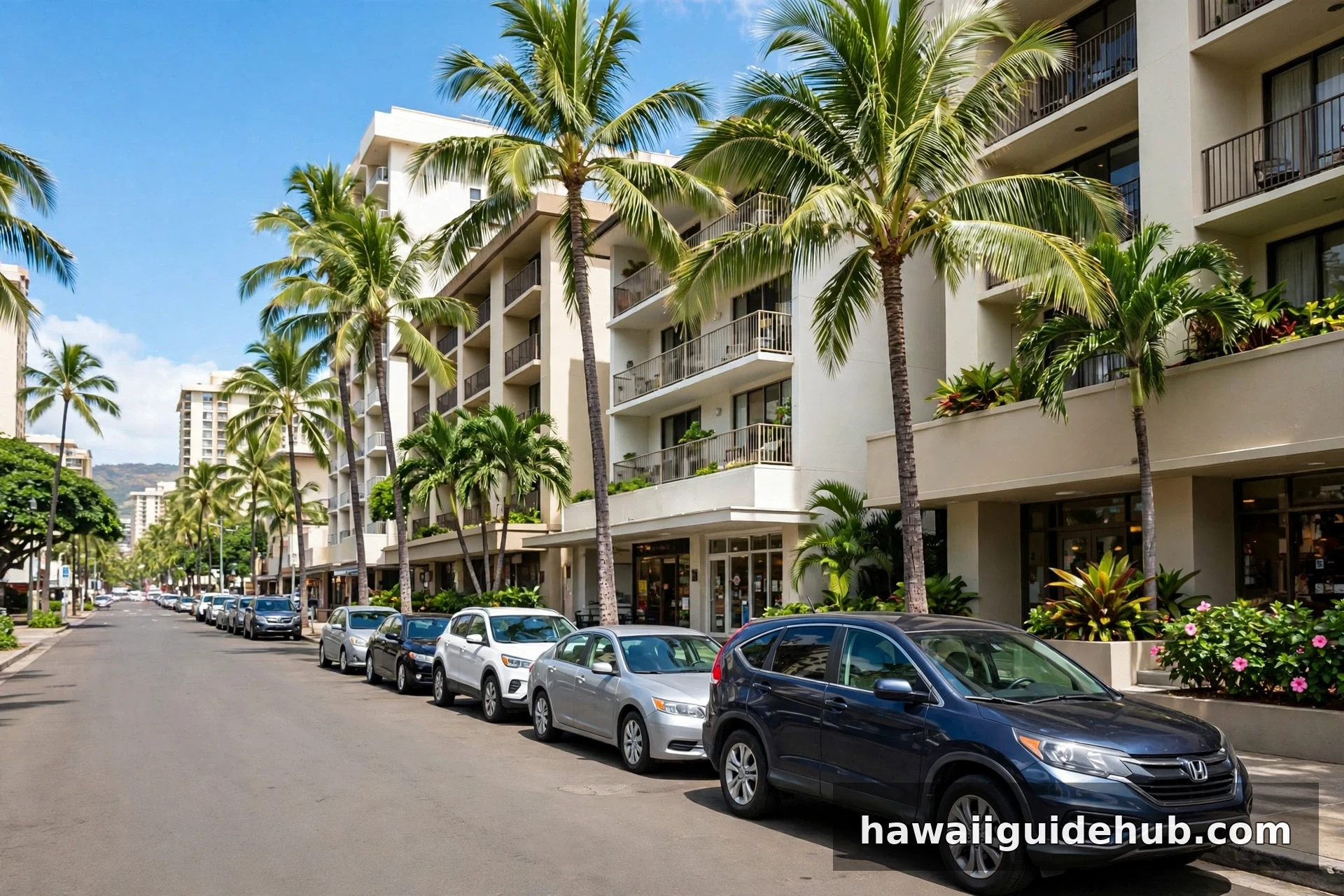
If you are driving around Oʻahu, our guide to the best island in Hawaii for first time visitors and Hawaii’s hidden gems will help you plan where the car is actually worth it.
Video: Hawaiʻi’s 20-Foot Parking Law
Watch how Hawaiʻi’s 20-foot parking law works and why it was put in place.
Frequently Asked Questions
How far do you have to park from a crosswalk in Hawaii?
At least 20 feet. This is state law (HRS §291C-116) and applies whether or not there is a sign or painted curb.
Does the 20-foot rule apply to unmarked crosswalks?
Yes. Under Hawaiʻi law, every intersection has an unmarked crosswalk by definition. The 20-foot rule applies to marked and unmarked crosswalks alike.
Can your car be towed for parking near a crosswalk?
Yes. In Honolulu, a vehicle stopped or parked on or within 20 feet of a crosswalk can be towed under the county traffic code.
How far from a fire hydrant do you have to park in Hawaii?
Within 10 feet of a fire hydrant is prohibited. For driveways it is 6 feet, and for traffic signals and safety zones it is 30 feet.
Is it different on Kauai?
Slightly. Kauaʻi County requires 20 feet from a crosswalk at an intersection but only 6 feet from a mid-block crosswalk not at an intersection. Everywhere else in Hawaiʻi, use 20 feet.
Do I need to see a sign for the law to apply?
No. HRS §291C-111(b) states that no sign or curb marking is required to enforce the 20-foot crosswalk restriction. The law applies on its own.
What should I do if I get a parking ticket in Hawaii?
Do not ignore it. Unpaid parking tickets in Hawaiʻi can lead to additional penalties, and rental car companies will charge your card plus a fee. You can usually pay online through the county’s system or by mail. If you believe the ticket was issued in error, each county has a process to contest it, but “I didn’t see a sign” is not a valid defense for the 20-foot crosswalk rule, since the law explicitly does not require one.
Does the 20-foot rule apply in parking lots?
The state traffic code applies to highways and public roadways. Private parking lots have their own rules set by the property owner, but marked pedestrian crossings inside lots should still be kept clear as a matter of safety and common sense. If a lot has striped crosswalks, do not park on or directly against them.
Twenty feet. That is the number to remember every time you park on a Hawaiʻi street: 20 feet from any crosswalk, marked or not, sign or no sign. It keeps pedestrians visible, keeps you ticket-free, and keeps your rental car out of the impound lot. Measure it once by pacing it off, learn what it looks like, and it becomes second nature. For more driving tips, see our guide to outdoor adventures in Hawaii.
One last note for the careful driver: the 20-foot rule is a minimum, not a target. If the street is busy, if children are around, or if visibility is poor, giving the crosswalk even more room is always the right call. Hawaiʻi’s roads are shared with pedestrians, cyclists, and visitors on foot, and the aloha spirit extends to the curb. Park with room to spare.