Poi Near Me: Where to Find Fresh Poi in Hawaii

If you are in Hawaii and searching for poi near me, you are asking the right question at the right moment. Poi is the food that connects every other Hawaiian dish on the table, and there is no substitute for tasting it fresh on the islands. The good news is that fresh poi is easy to find once you know where to look: supermarkets, farmers markets, taro farms, and Hawaiian restaurants all carry it. This guide covers exactly where to buy poi across the islands, which brands to look for, how to pick the freshest bag, how to store it, and what it actually tastes like.
Poi at a Glance
| What you are buying | Cooked taro root (kalo) pounded smooth with water, Hawaii’s traditional staple starch |
| Where to buy it | Foodland, Times, Safeway, KTA, Costco, Walmart, farmers markets, taro farms, lūʻau and Hawaiian restaurants |
| Brands to look for | Taro Brand (HPC Foods), Hanalei Poi |
| Fresh vs. older | Mild, slightly tangy, creamy; fresh poi is sweeter, older poi turns pleasantly sour. First-timers: buy fresh. |
| Keeping it | Refrigerate always; it freezes well and lasts for days |
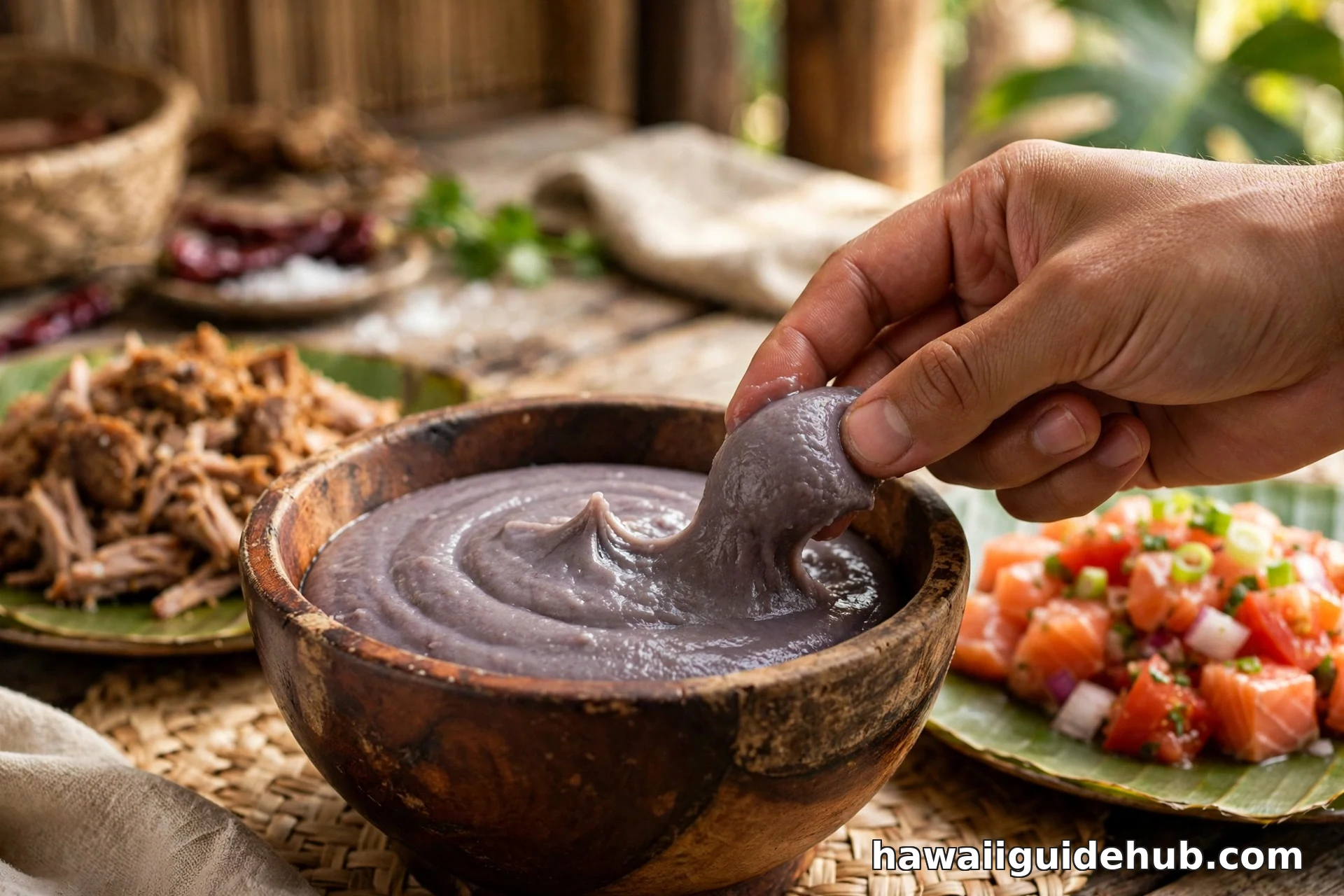
| Eating it | Dip with two fingers and scoop it up with salty foods like kalua pig or lomi salmon |
What Poi Actually Is
Poi is made from kalo, the Hawaiian word for taro. The part used is the corm, the starchy bulb at the base of the plant. Kalo was one of the canoe plants carried across the Pacific by Polynesian voyagers, who arrived in Hawaii around 1100 A.D. bringing kalo with them. It is one of the oldest cultivated crops in the world, mentioned in Chinese writings as early as 100 B.C., and it reached the Pacific long before written history.
For Native Hawaiians, kalo was not just another food. It was the primary food, eaten every day by nearly everyone. Historians estimate that each person may have eaten roughly five to fifteen pounds of poi a day. When you walk through a Hawaiian supermarket today and see the poi section stocked with bags from Kauai and Oahu, you are looking at a food tradition that has fed these islands for a thousand years. That long history is also why poi carries a cultural weight that no other island food quite matches.
Why Poi Is Sacred: The Story of Hāloa
To understand poi, you need to know the story of Hāloa. According to Hawaiian mythology, the first couple in the creation chant, Wākea and Hoʻohōkūkalani, gave birth to a stillborn child they named Hāloanaka. Wākea buried his lifeless child near the house. Shortly after, the kalo plant sprouted from that spot. The couple’s second son was named Hāloa after his firstborn, and through Hāloa the Hawaiian people descended.
This means that in Hawaiian belief, kalo is the elder brother of the Hawaiian people. Hāloa was charged with caring for and respecting (mālama) his older brother, the kalo, for all eternity. In return, the elder brother would sustain and nourish his younger brother and his descendants. Because Hawaiians descended from the second son, many viewed kalo as genealogically superior to themselves. That reverence shaped everything: how kalo was planted, how water was shared for the loʻi (taro patches), and how poi was handled at the table. When you eat poi in Hawaii, you are participating in a relationship, not just a meal.
How Poi Is Made
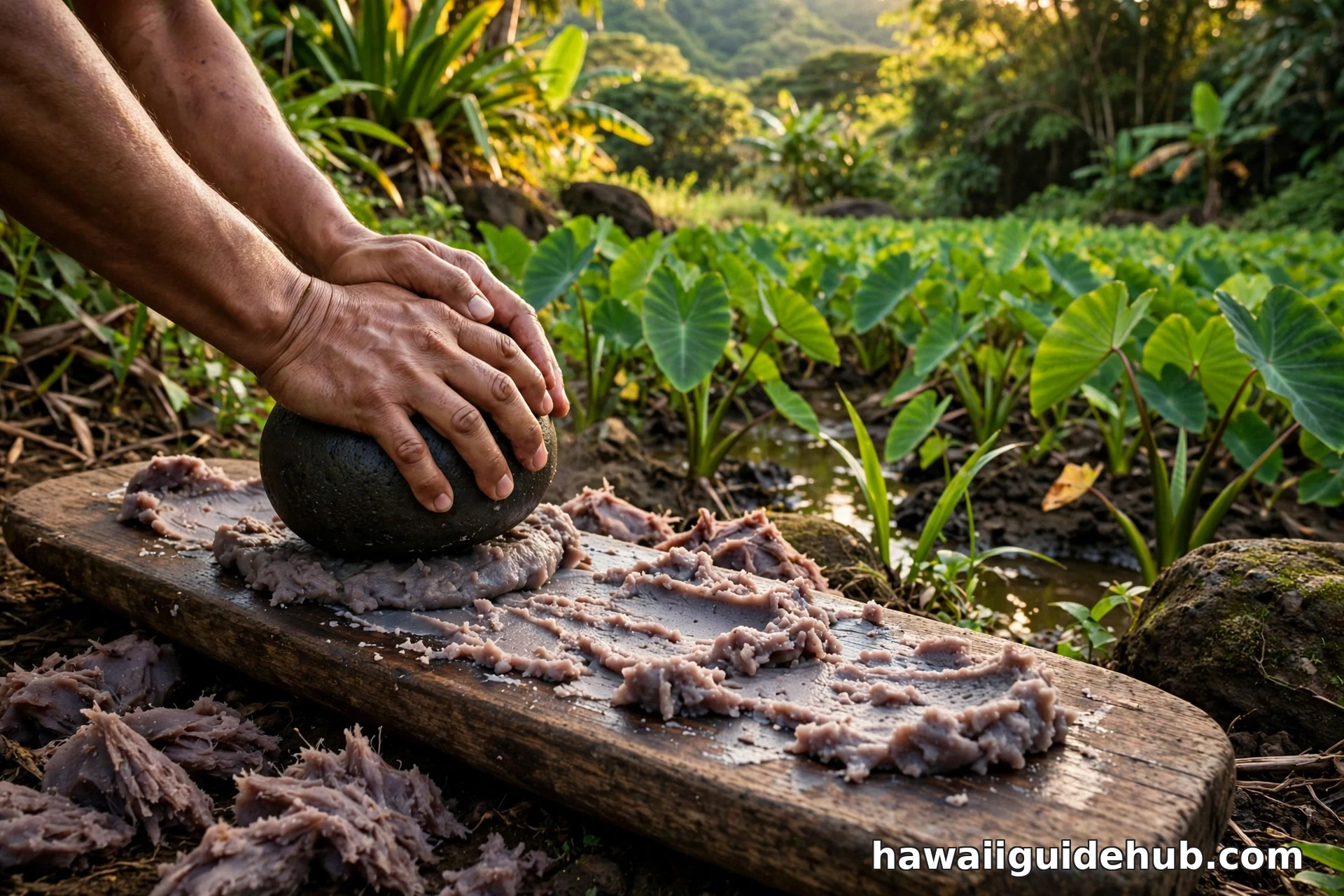
Traditional poi making is a slow, physical craft. First the kalo corm is harvested, then baked or steamed until soft. The cooked corm is peeled and placed on a papa kuʻi ʻai, a wooden pounding board, where it is worked with a pōhaku kuʻi ʻai, a rounded basalt pounding stone. The pounder breaks the kalo down until it becomes a dense, hard mass called paʻi ʻai. At that stage it can be wrapped in ti leaf and stored for later.
When it is time to eat, water is gradually worked into the paʻi ʻai until it becomes smooth poi. The finished poi is transferred to an ʻumeke, a wooden bowl or calabash, for serving. Old descriptions of Lahaina before Western contact describe shaded groves where koa poi boards were a common sight, with the steady smacking sound of pounders filling the air. Commercial poi today is made with mechanized mills and pressure cookers, but the steps are the same: cook the corm, pound it smooth, add water.
What Does Poi Taste Like
First-time tasters are often surprised by how mild poi is. Fresh poi tastes smooth, creamy, and faintly sweet, with a light earthy note from the taro. It does not shout. It is a background starch, the way rice or bread works in other cuisines, and it shines when paired with salty, savory Hawaiian foods.
Poi changes with time. On the first day it is sweet and smooth. After a day or so it begins to ferment lightly and develops a tangy, sour edge. Many Hawaiians love sour poi and consider it the proper way to eat it, especially with rich meats. You will also hear poi described by thickness: one-finger poi is thick (you need one finger to scoop it), two-finger poi is medium, and three-finger poi is thin and pourable. If a bag is labeled simply poi, it is usually in the medium range.
Where to Buy Poi Near Me in Hawaii
This is the part that matters most when you are standing in a hotel room or rental wondering where to buy poi right now. Poi is a refrigerated staple across Hawaii, and you can find it on every major island.
Supermarkets: the easiest option
The fastest way to find poi near you is a supermarket. Foodland, Hawaii’s largest locally owned grocery chain, founded in 1948 by Maurice J. “Sully” Sullivan, stocks poi in the refrigerated Hawaiian foods section. Look for Taro Brand and Hanalei Poi, the two names you will see most often. Times Supermarkets and Safeway also carry poi, and on the Big Island you will find it at KTA Super Stores. Costco and Walmart locations in Hawaii sell poi too, often in larger bags that are handy if you are feeding a group. A 16-ounce bag usually runs in the low to mid-teens, though prices move with the taro harvest and shift a little from season to season.
Farmers markets: the freshest poi
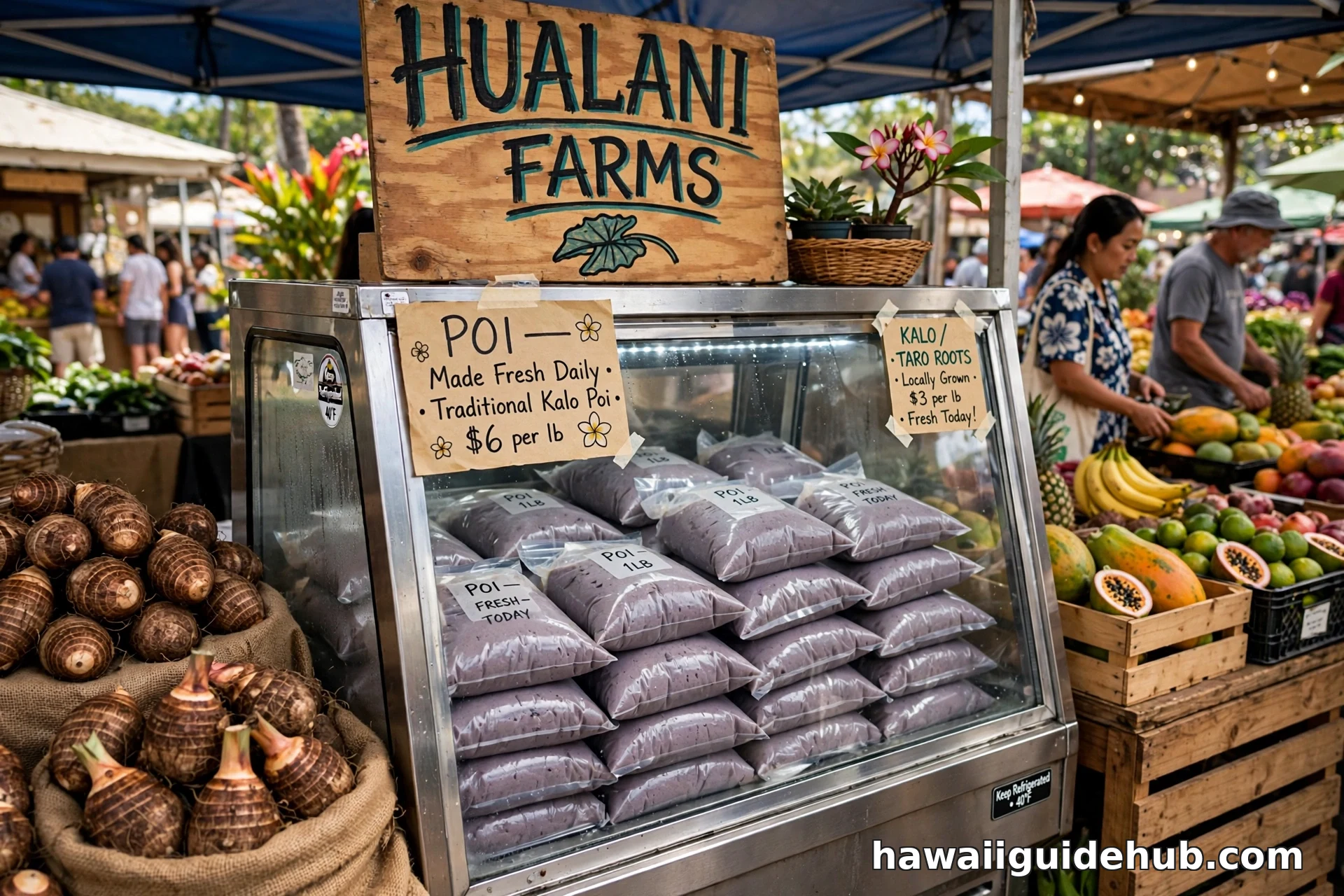
If you want poi at its freshest, go to a farmers market. On Kauai, the Waipa Farmers Market on Tuesday afternoons near Hanalei sells freshly harvested kalo and fresh poi grown in the surrounding valleys, and the Saturday Kauai Community Market at Kauai Community College in Lihue is the island’s biggest weekend food market. County Sunshine Markets rotate through towns like Kapaa, Kalaheo, and Hanapepe on weekday afternoons with certified growers selling direct. On Oahu and the Big Island, the large weekend markets in Honolulu and Hilo regularly have poi vendors. Market poi is often hand-pounded and made within days, which is the closest you can get to the traditional product without pounding it yourself.
Taro farms and poi makers
For the full story, buy from the source. HPC Foods, the maker of Taro Brand poi, is Hawaii’s largest poi manufacturer, producing more than 30,000 pounds of poi a week, over a million pounds a year. About eighty percent goes to retail stores and twenty percent to private lūʻau. Their poi is made from the lehua variety of taro grown in Hanalei, Kauai. The company was founded by Kakuichi Tottori in 1946, and the family designed its own pressure cookers that can cook more than six tons of taro an hour. On Kauai you can also find Hanalei Poi, made from the taro patches of the Hanalei Valley, in local stores. Smaller artisan makers like Mana ʻAi sell fresh paʻi ʻai and poi through select shops and markets.
Restaurants and lūʻau
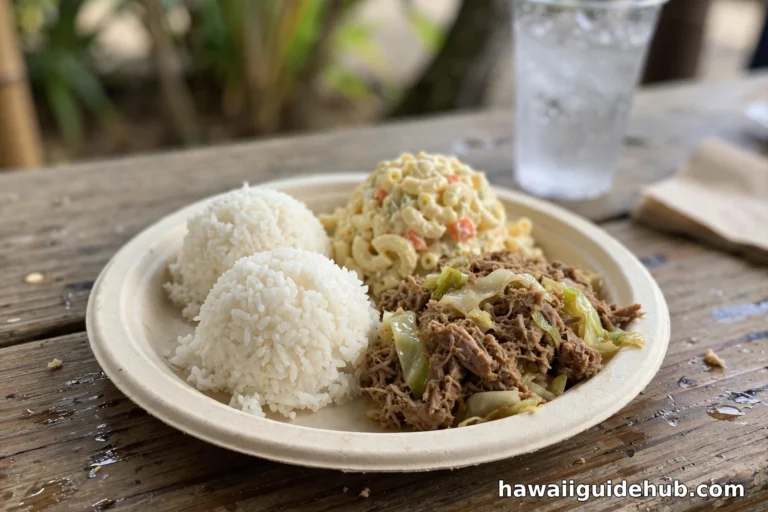
Almost every lūʻau in Hawaii serves poi as part of the traditional spread, which makes a lūʻau the easiest one-stop tasting if you have never tried it. Hawaiian plate lunch restaurants and local-style eateries often serve poi as a side or with kalua pig plates. If you are exploring must-try local dishes in Hawaii, poi belongs at the top of that list, right beside the meats and fish it was made to accompany.
How to Pick Fresh Poi and Keep It Fresh
Fresh poi should look smooth and feel cool to the touch in the store case. Check the date on the bag and pick the newest one you can find, since poi sells fast and turns over quickly in busy stores. Bags are usually labeled by thickness; if you are new to poi, start with a standard or two-finger bag.
Keep poi refrigerated from the moment you buy it. Fresh poi will naturally begin to sour after a day or two, which is normal and, to many locals, desirable. Do not throw it out when it turns tangy; sour poi is a traditional preference, especially with salty fish and pork. Poi also freezes well, so if you bought a big bag, portion it into smaller containers and freeze what you will not eat within a few days. Taro Brand also sells poi powder, which is handy if you want to take the taste of Hawaii home and mix it up later.
How Hawaiians Eat Poi
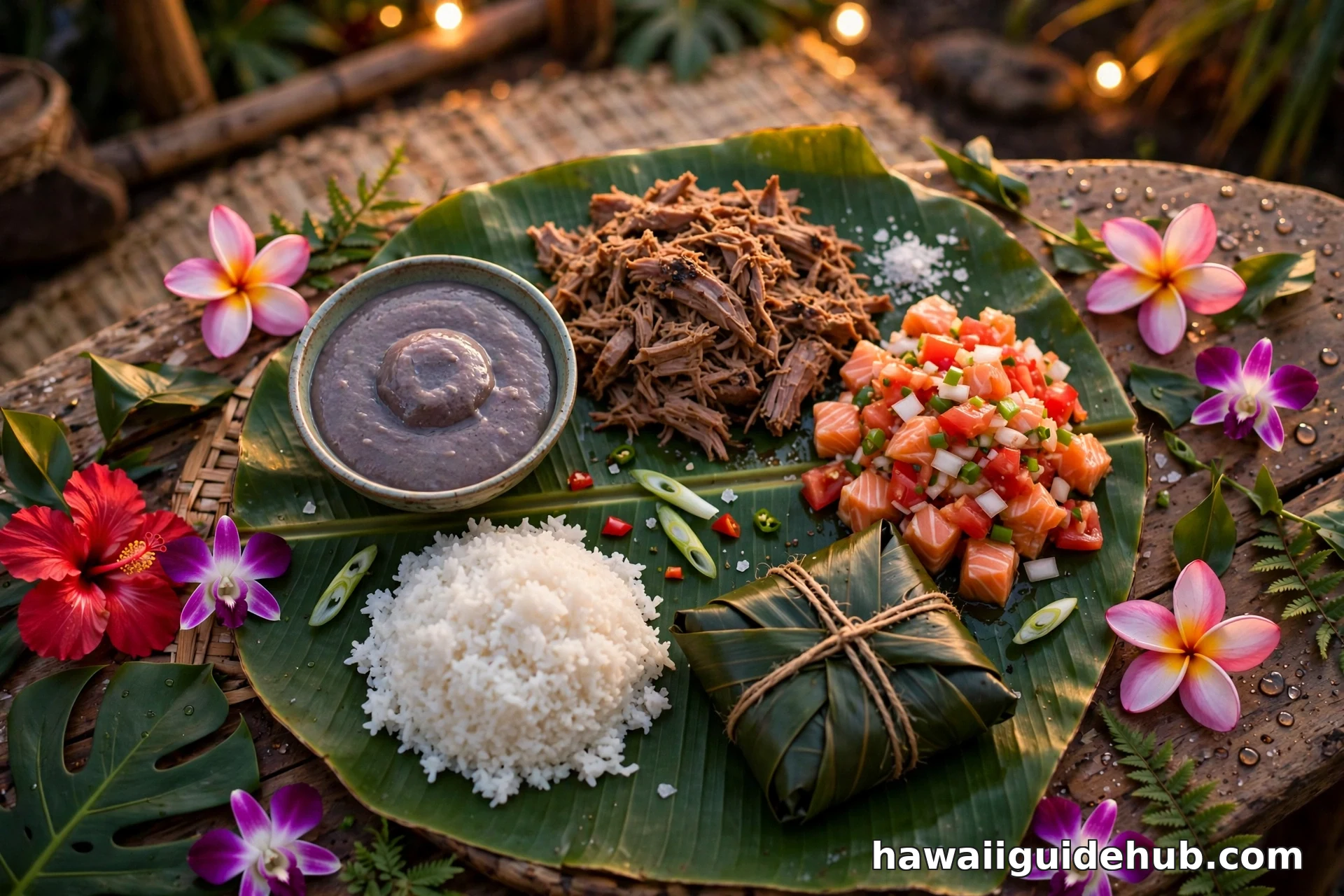
Poi is almost never eaten alone. It is the cool, mild partner to Hawaii’s salty, rich foods: kalua pig, lomi salmon, lau lau, poke, pipikaula (a local style of dried beef), and salted fish. The classic combinations exist for a reason. The salt and fat of the meat balance poi’s gentle tang the way a good bread balances a stew.
The traditional way to eat it is with your fingers. Take two fingers, dip into the center of the bowl, and scoop up with a quick twist in one smooth motion. It takes a try or two to get right, and nobody will mind if you start with a spoon. A few points of etiquette are worth knowing: treat poi with respect, since kalo is an ancestor in Hawaiian belief; never waste it; and if you are served poi in someone’s home or at a cultural event, accept it graciously even if you only take a little. Poi pairs naturally with other Hawaiian staples, from malasadas at a Portuguese-Hawaiian table to native Hawaiian fruits for a lighter meal.
Making Poi at Home
You can make poi at home if you can get paʻi ʻai or cooked taro. The method is simple: work the pounded taro in a bowl, add water a little at a time, and keep mixing and mashing until it reaches the thickness you like. One-finger, two-finger, or three-finger is your choice. Poi powder from Taro Brand is the easiest mainland option; just add water and mix. Fresh taro root is sometimes available at Asian markets on the mainland, and if you find it, steam it until completely tender before pounding. Nothing you make at home will quite match fresh market poi in Hanalei, but it gets you close.
Watch: How Poi Is Made
Daniel Anthony, a kalo farmer and poi maker on Oahu, explains the science of taro and the traditional process of making poi in this video.
Poi FAQs
Where can I buy poi near me in Hawaii?
Foodland, Times, Safeway, KTA (Big Island), Costco, and Walmart all sell poi in the refrigerated section. For the freshest poi, visit a farmers market like Waipa on Kauai or the weekend markets in Honolulu and Hilo, or buy direct from taro farms and poi makers.
What is fresh poi?
Fresh poi is poi made within the last day or two. It tastes smooth, mild, and slightly sweet. As it ages it naturally ferments and turns tangy or sour, which many Hawaiians prefer. Both are the same product at different stages.
Does poi taste good?
Poi tastes mild and creamy with a light tang, and it is best judged with the right pairing. Eaten alone it can seem plain, but with salty kalua pig, lomi salmon, or poke it makes complete sense. Try it the Hawaiian way before you decide.
Is poi healthy?
Poi is low in fat and a good source of complex carbohydrates, B vitamins, vitamin A, and calcium. It is also hypoallergenic and easy to digest, which is why it has traditionally been fed to babies. Like any starch, portion size matters.
How long does poi last?
Refrigerated poi keeps for about a week, gradually turning more sour as it ferments. That souring is natural and safe. For longer storage, freeze it in portions; it thaws well and keeps for months in the freezer.
Why is poi purple or gray?
Poi’s color comes from the taro corm, and it ranges from pale lavender-gray to a deeper purple depending on the taro variety. The lehua variety used by major producers gives poi its familiar purple-gray tone. The color is completely natural.
A Food Worth the Search
Poi rewards a little effort. The bag from a supermarket shelf will teach you the basics, the fresh pound from a farmers market will show you what it is supposed to taste like, and the story of Hāloa will tell you why Hawaiians treat this simple food with such care. Whether you scoop it with two fingers beside kalua pig at a lūʻau or spread it on a quiet beach picnic from a Foodland bag, you are tasting a thousand years of island history. If you are spending time on the Garden Isle, pair your poi run with a look at the best things to do on Kauai, where much of the islands’ taro still grows.