Makahiku Falls: Maui’s 200-Foot Waterfall on the Pīpīwai Trail

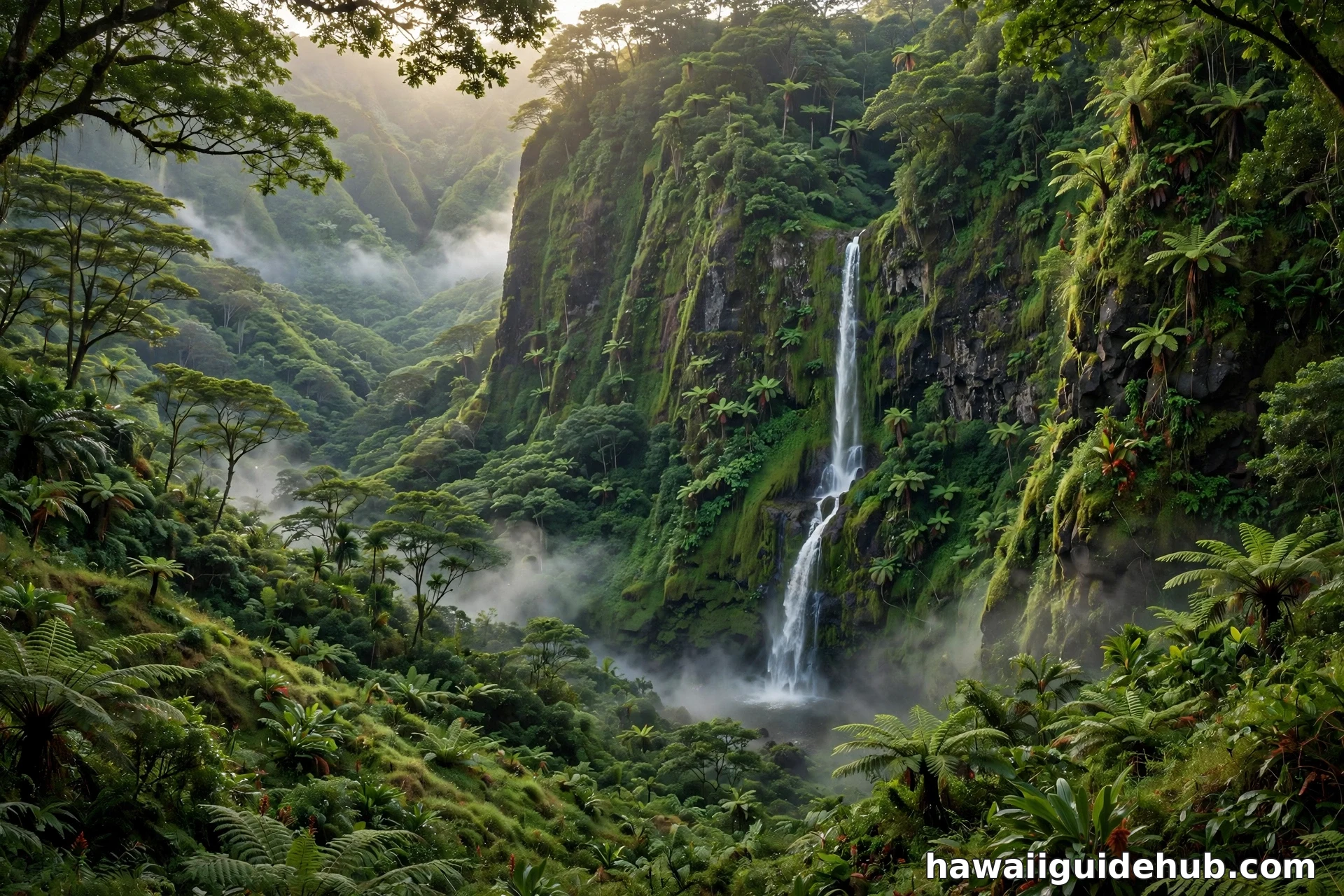
Deep in the rainforest of Maui’s east coast, a 200-foot ribbon of white water pours over a mossy cliff into the ʻOheʻo Gulch. That is Makahiku Falls, one of the most rewarding sights in Haleakalā National Park, and one of the easiest big waterfalls to reach on the island. You do not need to be an athlete to see it. A gentle half-mile stroll up the Pīpīwai Trail brings you to a dedicated overlook, and if you keep walking, the trail rewards you with a bamboo forest, a century-old banyan tree, and the towering Waimoku Falls at the end.
This guide covers everything you need to know before you go: exactly where the falls are, how to get there, what the hike involves, what it costs, when to visit, and the safety rules that matter. It is also honest about what to expect, because Makahiku is a distant-view waterfall, and knowing that in advance makes the visit better, not worse.
Makahiku Falls at a Glance
| The quick overlook walk | The full Pīpīwai Trail | |
|---|---|---|
| Location | Kīpahulu District, Haleakalā National Park, Maui | |
| Distance and effort | About 1 mile round trip, easy to moderate | 4 miles round trip, 800 feet of elevation gain, moderate |
| Falls access | Overlook about 0.5 miles from the trailhead | The same overlook, as part of the longer hike |
| The falls | 200 feet (61 meters), single horsetail drop | |
| Park fee | $30 per vehicle, valid 3 days, covers both park districts | |
| Rules | No swimming at the falls; no permit beyond the park entrance fee | |
Where Exactly Is Makahiku Falls?
Makahiku Falls sits inside the Kīpahulu District of Haleakalā National Park, on the remote east side of Maui. This is the coastal half of the park, about 12 miles past the town of Hāna at the end of the famous Hāna Highway. It feels like a different world from the park’s summit district: instead of a volcanic crater above the clouds, you get dripping rainforest, bamboo, and waterfalls spilling toward the sea.
An important planning note: the park’s two districts are not connected by road inside the park. The summit and Kīpahulu are roughly three hours apart by car. Treat them as separate day trips. Makahiku Falls belongs firmly to the Kīpahulu day.
The falls run on the ʻOheʻo Gulch stream. The name Makahiku is sometimes translated in local lore, but what matters for your visit is simpler: it is the first major waterfall you meet on the Pīpīwai Trail, and the only one on this trail you can reach with a short, easy walk.
The Pīpīwai Trail: Your Path to the Falls
The Pīpīwai Trail begins near the Kīpahulu Visitor Center, just off the Hāna Highway. It is one of the most celebrated hikes in Hawaiʻi, and Makahiku Falls is its opening act.
The short version: just the falls
About a half mile (0.8 km) into the hike, a signed spur trail branches to the right to the Makahiku Falls overlook. The walk to this point is uphill but gentle, passing through guava and rainforest vegetation. From the overlook platform, the falls appear across the valley, pouring down a cliff face framed by dense green. Plan on roughly one mile round trip and 45 minutes to an hour, including time to enjoy the view. This is an excellent option if you are short on time, hiking with kids, or saving your energy for the rest of the Road to Hāna.
The full hike: onward to Waimoku Falls
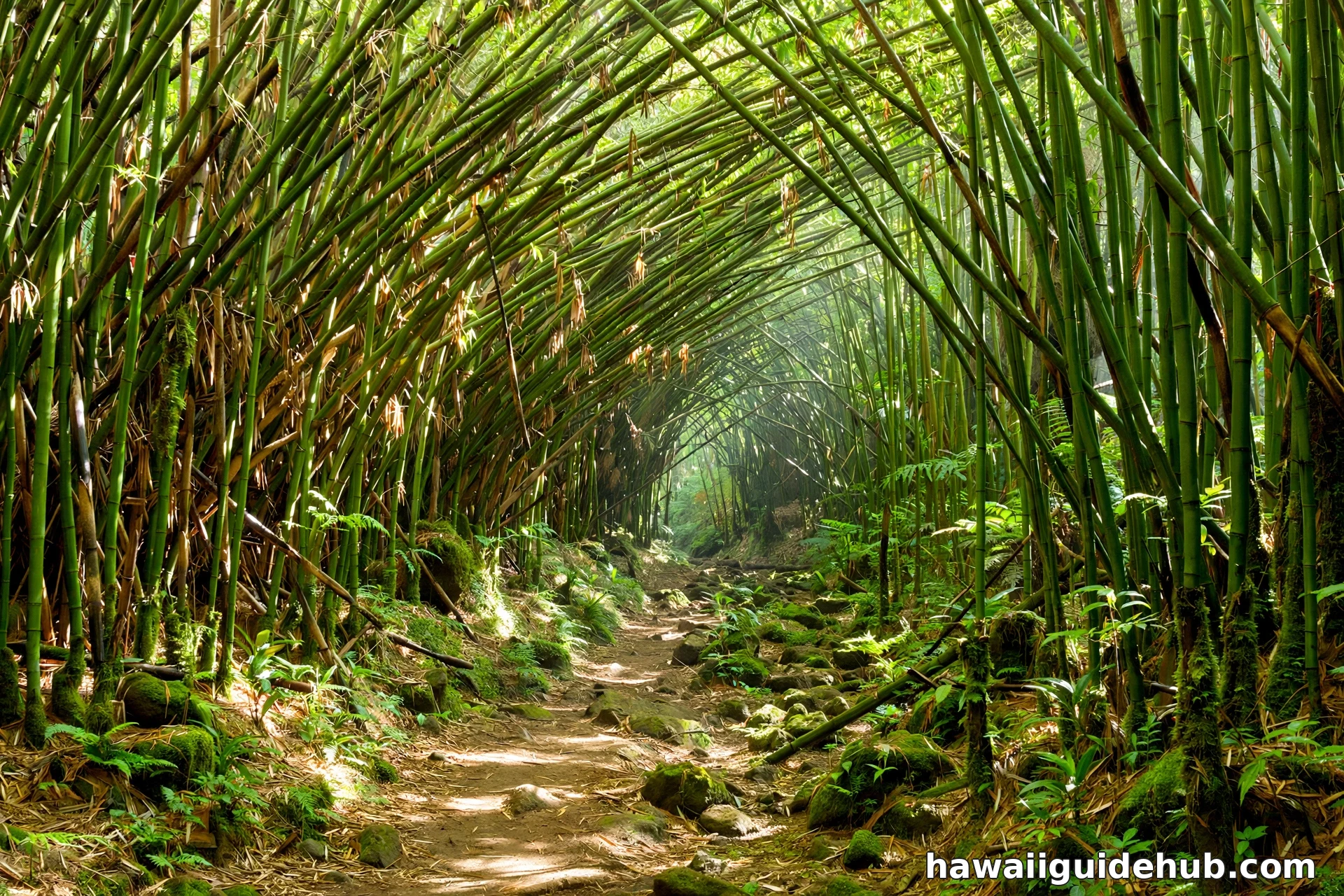
If you continue past the overlook, the trail climbs through a massive banyan tree (about a mile in), crosses two footbridges over the Pīpīwai Stream, and enters the justly famous bamboo forest, where towering stalks creak and clack overhead. The full trail is 4 miles round trip with about 800 feet of elevation gain, rated moderate. Most hikers finish in 2 to 3 hours. The payoff is Waimoku Falls, a 400-foot cascade at the trail’s end. Many visitors do both waterfalls in one hike, and the trail is well worth the full effort if your schedule allows.
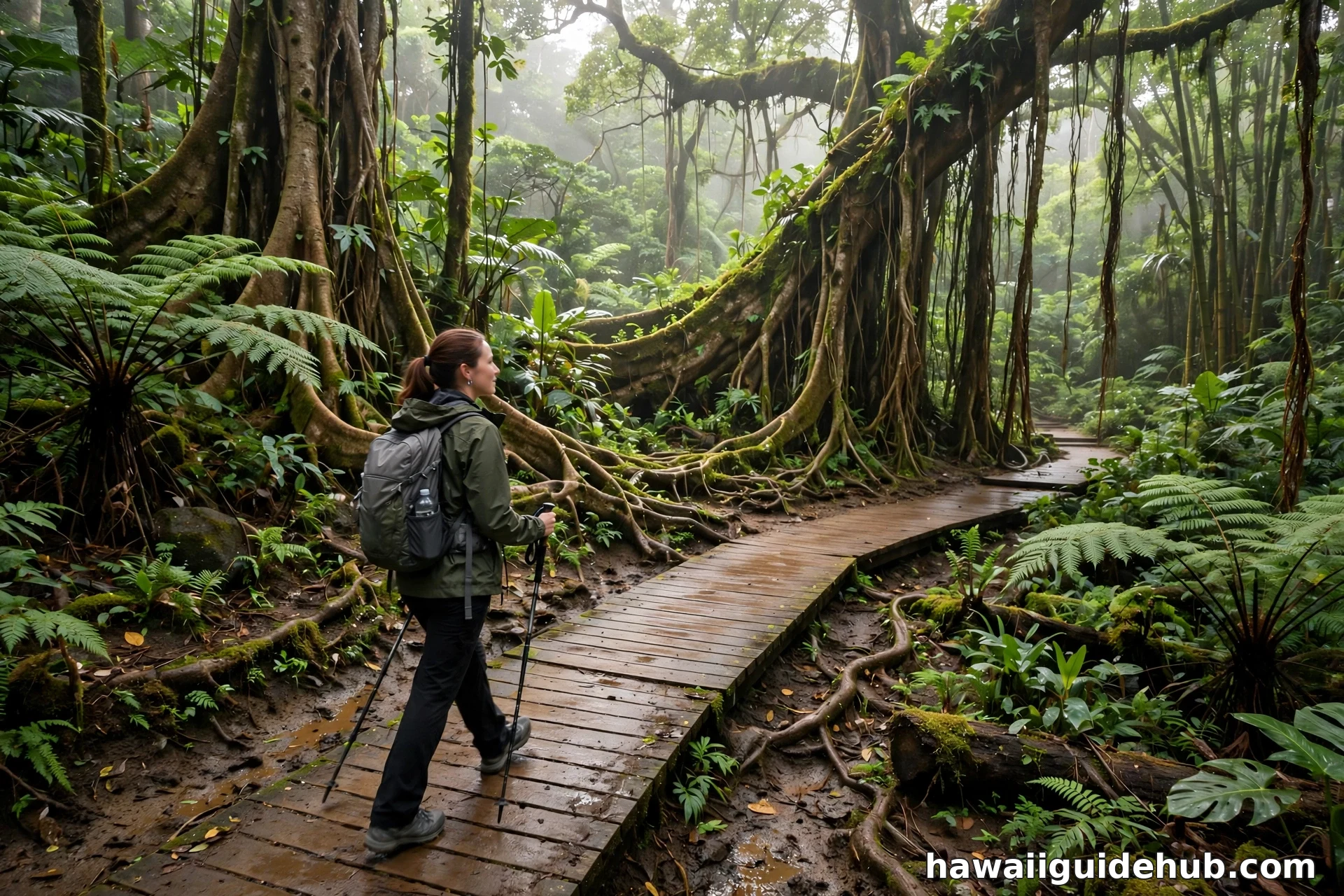
The trail surface varies: packed dirt, exposed roots, rocky stretches, and wooden boardwalks over the muddiest sections. It can be slick after rain, which is often. Wear shoes with real tread, not flip-flops.
What You Will See at the Falls
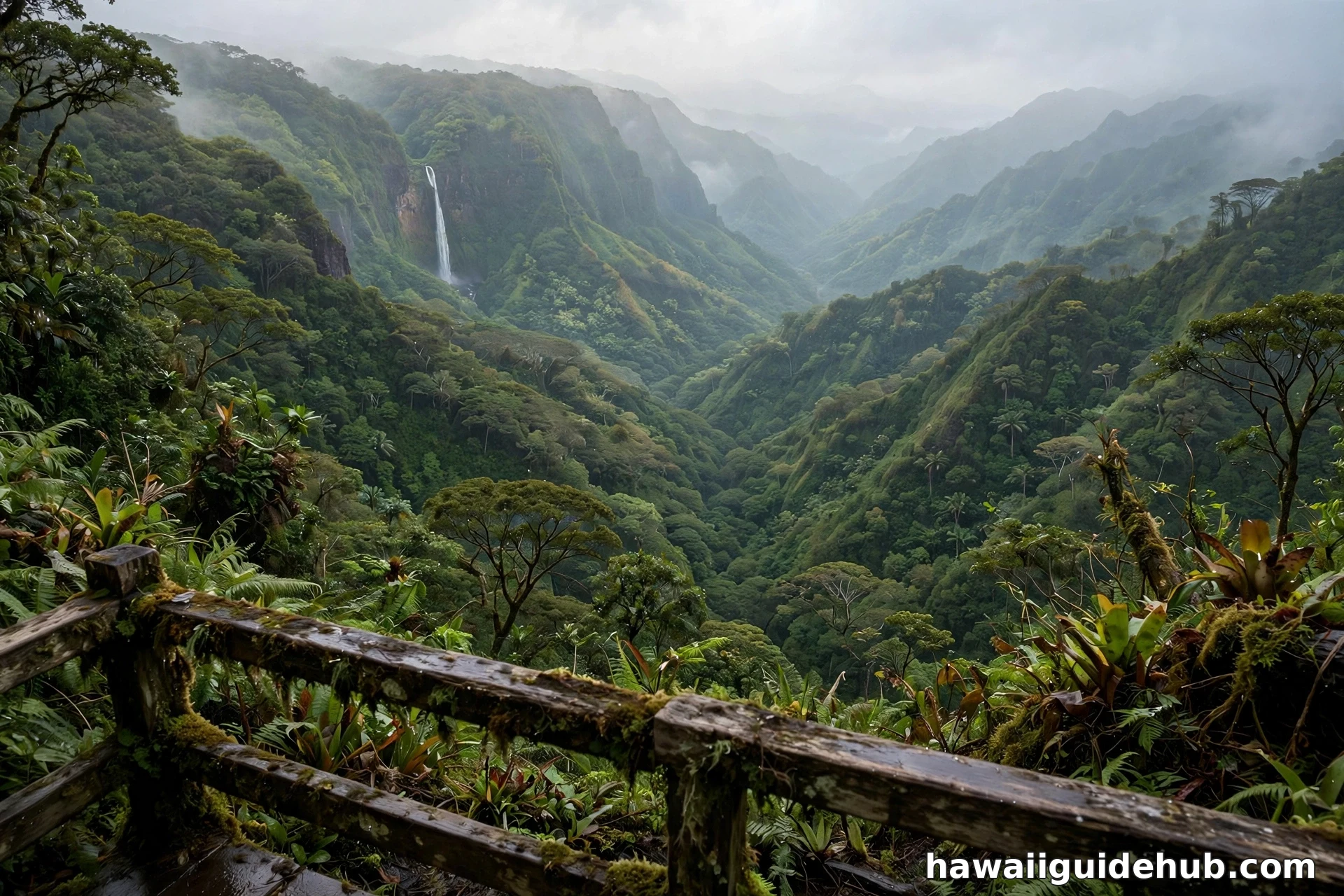
Honesty first: Makahiku Falls is viewed from across a valley, not from its base. The overlook sits at a distance, and the falls can look slender in dry spells. Summer visitors sometimes find the flow modest. After rain, it transforms into a thundering white curtain. Bring binoculars or a zoom lens if photography matters to you.
What makes the viewpoint special is the setting as much as the falls. You stand at the edge of a deep green gulch, with the water dropping 200 feet down a cliff stitched with ferns and moss. The sound carries across the valley. It is peaceful, uncrowded compared to the bamboo forest section, and it gives you a genuine waterfall moment without a strenuous hike.
Do not try to leave the overlook to get closer. The terrain beyond is steep, unstable, and off-limits. The view from the platform is the experience, and it is a good one.
Makahiku Falls vs. Waimoku Falls
Visitors often ask which waterfall is better. The honest answer is that they are different experiences, and the Pīpīwai Trail lets you see both.
Makahiku Falls is the easy win: a half-mile walk, a distant but beautiful 200-foot cascade, and minimal time commitment. Waimoku Falls is the grand finale: twice as tall at 400 feet, viewed much closer at the end of a 4-mile hike through the bamboo forest. Waimoku impresses with scale and proximity. Makahiku charms with accessibility and serenity.
If you only have an hour, do Makahiku. If you have half a day, do both. There is no wrong choice here.
Fees, Hours, and Parking
Haleakalā National Park charges $30 per private vehicle, valid for three days and covering both the summit and Kīpahulu districts. Motorcycles are $25, and walk-in or bicycle entry is $15 per person. Pay by card; the park does not take cash. If you already hold an America the Beautiful pass, it covers the entrance fee.
The Kīpahulu District parking lot is generally open from 9 a.m. to 5 p.m., with last entry around 4:30 p.m. If your car is still inside when the gate closes, it may be locked in overnight, so plan your hike timing with margin. Restrooms and a potable water station are available at the trailhead near the main parking lot.
Arrive early. The lot fills on busy days, and morning light in the rainforest is beautiful. Starting before 9 a.m. also gives you the best chance of finishing the full Pīpīwai Trail comfortably before the afternoon clouds and rain build.
Safety: Read This Before You Hike
Makahiku Falls is an easy viewpoint, but the rainforest demands respect. These are the rules that matter.
No swimming at the falls. Swimming at Makahiku Falls is not allowed. The currents are dangerous, the rocks are slippery, and access to the water is restricted. Enjoy the view from the overlook.
Watch for flash floods. The Kīpahulu area receives heavy rainfall, and water levels in the gulch can rise with terrifying speed after rain upstream, even when it is sunny where you stand. Do not hike the trail during heavy rain, and never attempt to cross streams running high. Check the weather forecast before you go, and turn back if conditions change.
The trail is muddy and slick. Roots, rocks, and boardwalks get slippery when wet. Take your time, watch your step, and wear proper footwear. The boardwalk sections can be wobbly at the edges, so walk near the center.
Mosquitoes are relentless. Bring and use insect repellent. The lowland rainforest around Kīpahulu is prime mosquito territory, especially in still, humid air.
Stay on the trail. This is a national park with fragile native ecosystems and real hazards off-trail. The overlook platform is there for a reason.
Best Time to Visit
The Kīpahulu District is open year-round, and Makahiku Falls flows in every season. That said, timing affects what you see. Winter months (roughly November through March) tend to bring more rain, which means fuller, more dramatic waterfalls but muddier trails and a higher chance of flash-flood closures. Summer (roughly June through September) is drier, the trail is more pleasant, but the falls can run thin.
For the best combination, aim for the shoulder months of April, May, September, or October, when rainfall is moderate and crowds are lighter. Whatever the season, go in the morning. Afternoon rain is a daily pattern in east Maui’s rainforest, and an early start gives you the driest, clearest conditions.
For broader seasonal planning across the islands, see our guide on what time of year it rains most in Hawaiʻi.
What to Bring
Pack like you mean it, even for the short walk to the overlook. Bring at least one liter of water per person; you can refill at the trailhead water station. Wear sturdy, closed-toe shoes with good grip. Bring rain gear or at least a light rain jacket, because rainforest means rain. Apply insect repellent before you start. Pack sunscreen for the exposed sections, a hat, and snacks. A zoom lens or binoculars will noticeably improve your waterfall viewing. And bring a dry bag or plastic bag for your phone and camera if rain is likely.
Nearby Places Worth Your Time
Makahiku Falls sits in one of the richest corners of Maui, so plan the full day.
Waimoku Falls. The 400-foot finale of the Pīpīwai Trail, two miles each way from the same trailhead. If your legs are willing, keep walking.
Kūloa Point and the ʻOheʻo pools. Near the visitor center, the short Kūloa Point Trail leads to the famous pools of ʻOheʻo, sometimes called the Seven Sacred Pools. Check current conditions: the pools are frequently closed to swimming after rain, and flash-flood danger is real here too.
Hāna town. About 12 miles back along the highway, Hāna offers food, the black sand beach at Waiʻānapanapa State Park (reservations required), and Hāna Bay. It is the natural bookend to a Kīpahulu day.
Charles Lindbergh’s gravesite. The aviator’s simple grave sits in the churchyard at Palapala Hoʻomau Congregational Church, a few miles past Kīpahulu toward Kaupō. A quiet, reflective stop.
If you are building a bigger Maui hiking itinerary, our guide to outdoor adventures across Hawaiʻi covers the island’s best trails beyond Kīpahulu.
See the Falls on Video
Watch the Pīpīwai Trail in action, including the Makahiku Falls viewpoint, the bamboo forest, and Waimoku Falls, in this hiking tour from Hawaii Walking Tours:
Frequently Asked Questions
How tall is Makahiku Falls?
Makahiku Falls is 200 feet (61 meters) tall, a single horsetail drop on the ʻOheʻo Gulch stream.
How do I get to Makahiku Falls?
Drive the Hāna Highway to the Kīpahulu District of Haleakalā National Park, about 12 miles past Hāna town. Park at the Kīpahulu lot and hike the Pīpīwai Trail about a half mile to the signed overlook spur on the right.
How long is the hike to Makahiku Falls?
The overlook is about 0.5 miles each way, roughly 1 mile round trip, taking 45 minutes to an hour at a relaxed pace. The full Pīpīwai Trail to Waimoku Falls is 4 miles round trip and takes 2 to 3 hours.
Can you swim at Makahiku Falls?
No. Swimming at Makahiku Falls is not allowed due to dangerous currents and slippery conditions. The viewpoint is for looking, not entering the water.
Is there an entrance fee?
Yes. Haleakalā National Park charges $30 per private vehicle, valid for three days across both park districts. An America the Beautiful pass covers the fee.
Is Makahiku Falls worth it if I am short on time?
Yes. It is one of the best low-effort waterfalls on Maui: a gentle half-mile walk for a genuine 200-foot cascade in a spectacular rainforest setting. If you have only an hour in Kīpahulu, spend it here.
Why Makahiku Falls Belongs on Your Maui Itinerary
Not every great waterfall demands a great effort. Makahiku Falls proves the point: a short walk through some of the lushest forest in Hawaiʻi, a viewpoint across a green valley, and 200 feet of falling water doing what waterfalls have done for millennia. It asks little and gives plenty. Pair it with the bamboo forest and Waimoku Falls if you can, but even on its own, as a quiet stop on a long Road to Hāna day, it earns its place. If this is your first trip, our first-time visitor guide will help you plan the rest. Go early, bring rain gear and repellent, respect the closures and the currents, and let the rainforest do the rest.