Lei Making Class Oahu: Where to Learn, What to Expect and Lei Types

Walk through Waikiki on any given morning and you will see the ritual play out a dozen times before lunch. A new arrival steps off a shuttle, blinking in the sun, and someone drapes a cool ring of plumeria around their neck. The flowers are still damp from the cooler. The visitor laughs, bends to smell them, and stands a little straighter. That is the lei, and it has been Hawaii’s signature greeting for centuries. What most visitors never discover is that they can learn to make one themselves. On Oahu, lei making classes turn a souvenir into a skill, and the hour you spend threading blossoms will teach you more about the islands than a dozen brochures.
What a Lei Making Class Is Actually Like
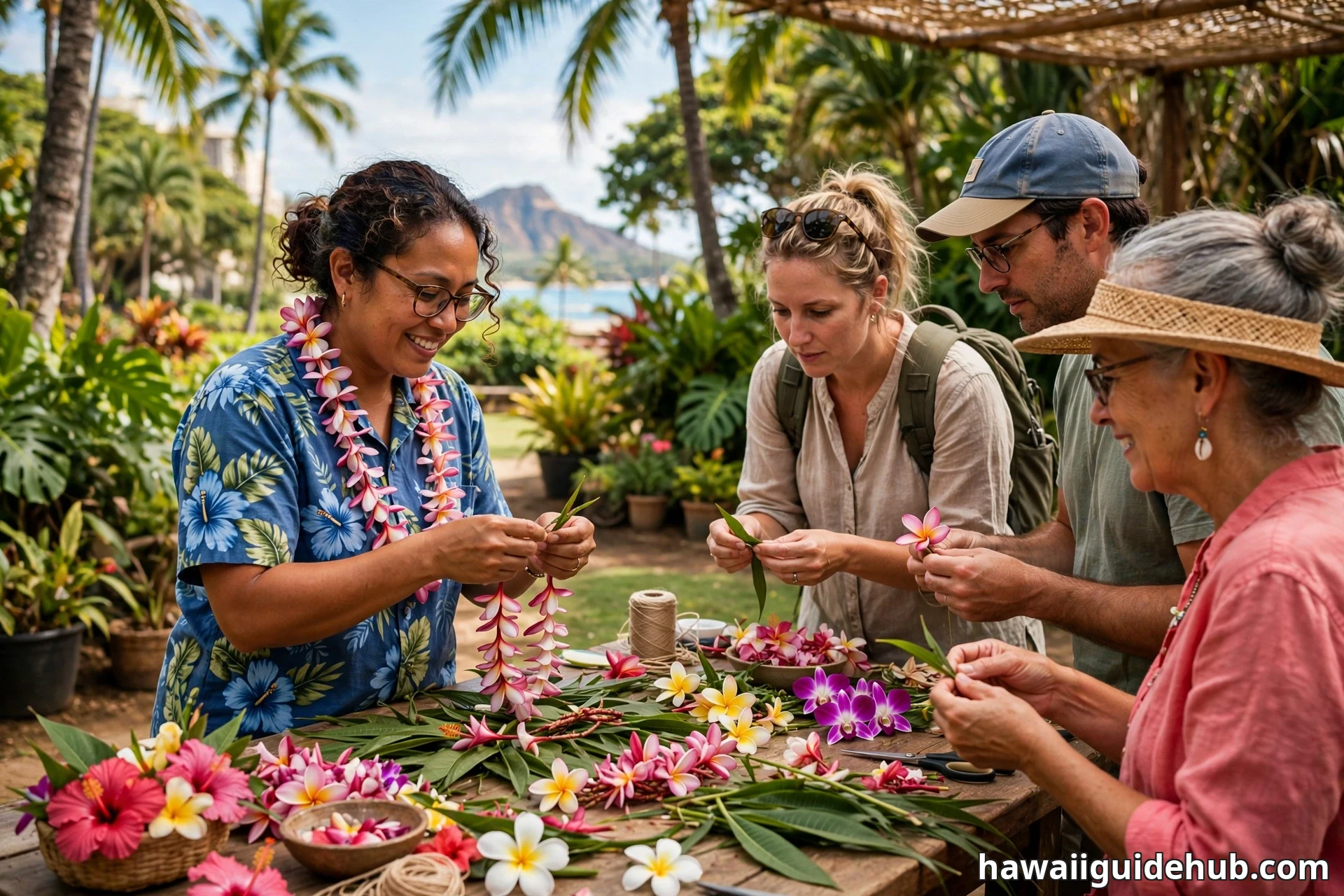
Forget any picture of a rigid classroom. A lei making class on Oahu usually happens at a long table under a roof, flowers in shallow boxes down the center, and a teacher who has been stringing blossoms since before you were born. You sit down. Someone hands you a long steel needle threaded with cord. In front of you sit plumeria, orchids, or whatever is blooming that week, plus ti leaves if the class covers wili, the twisted style.
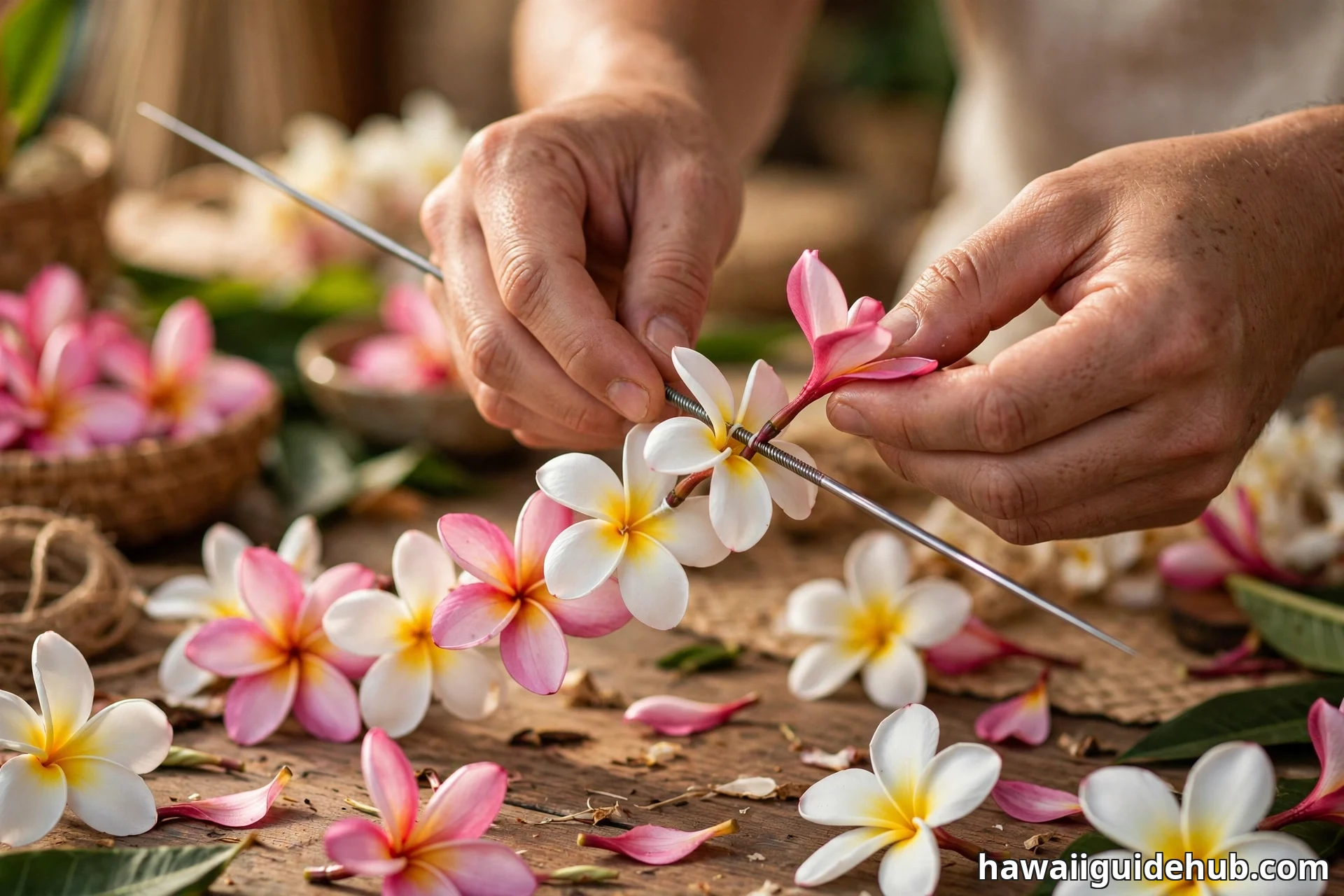
The teacher demonstrates the kui method first. Kui is the needle technique most beginners learn. You push the needle through the center of each blossom, sliding the flowers down the thread until they stack into a full, fragrant rope. It sounds simple, and it is, right up until your first flower lands crooked and your neighbor’s already looks like a florist made it. The teacher leans over, straightens your spacing with a smile, and tells you the flowers forgive. In about forty five minutes to an hour, you will have a finished lei roughly the length of your forearm when doubled, ready to wear.
Most classes on Oahu teach in this order: a short talk about what lei mean, a demonstration, then hands on practice with the teacher circulating. Questions are welcome. People ask about everything from how long their lei will last to whether they can fly home with it (they can, fresh lei travel in the cabin fine). Nobody is graded. Nobody fails. The room usually smells incredible by the end.
Where to Take a Lei Making Class on Oahu
Royal Hawaiian Center, Waikiki
The best known option costs nothing at all. The Royal Hawaiian Center on Kalakaua Avenue runs free cultural classes as part of its commitment to sharing Hawaiian culture, and lei making is on the regular rotation alongside hula, ukulele, and lauhala weaving. The classes are led by experienced cultural practitioners and take place in the Royal Grove area of the center. Because they are free and walk in friendly, they are the easiest lei class to fit into a Waikiki day. Arrive a little early, because seats fill on busy mornings.
Bishop Museum
For a deeper cultural setting, the Bishop Museum in Honolulu hosts lei related programming and workshops throughout the year, often tied to exhibits or to the spring Lei Day season. Making lei inside a museum that holds some of the world’s finest Hawaiian feather work adds a weight to the experience. Check the museum’s event calendar before your trip, since workshops sell out and schedules change by season.
Paid Workshops and Private Sessions
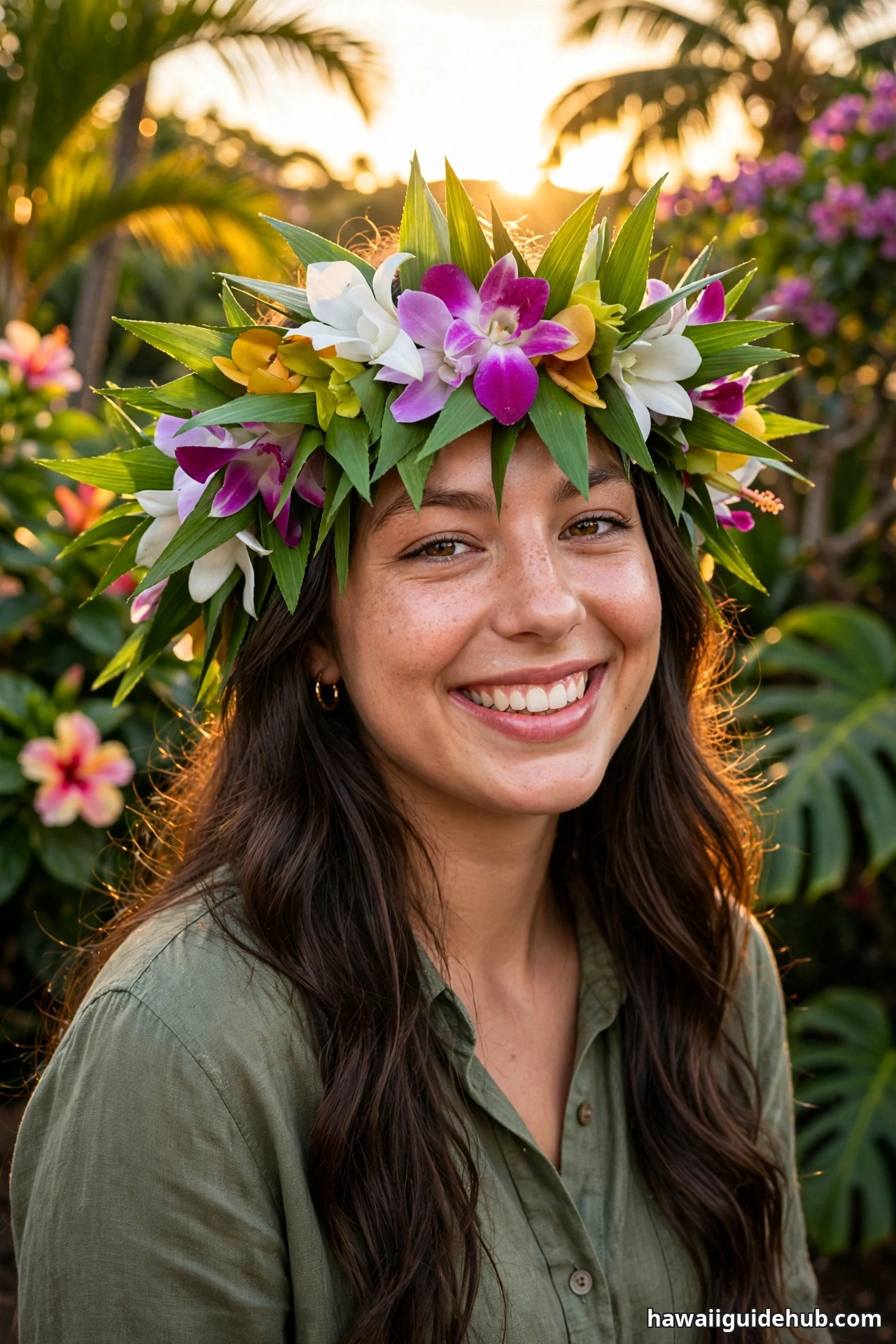
Several local lei makers on Oahu offer small group workshops and private sessions, including haku lei classes where you build a flower crown for your head rather than a neck lei. These usually run longer than the free classes, use premium flowers, and let you take home a larger, more elaborate piece. Search for haku lei workshops in Honolulu or Kailua, read recent reviews, and book ahead, since the best teachers keep small classes and fill up fast.
Hotels and Resorts
Many Waikiki resorts run their own cultural programs for guests, and lei making appears on activity calendars especially around holidays and summer. Ask the concierge or check the daily schedule at check in. These tend to be casual and short, perfect if you only have half an hour to spare.
The Four Main Ways to Make a Lei
Every lei making class on Oahu teaches one or two of the classic techniques. Knowing the names helps you understand what you are looking at when you see lei around the islands.
Kui: The Needle Method
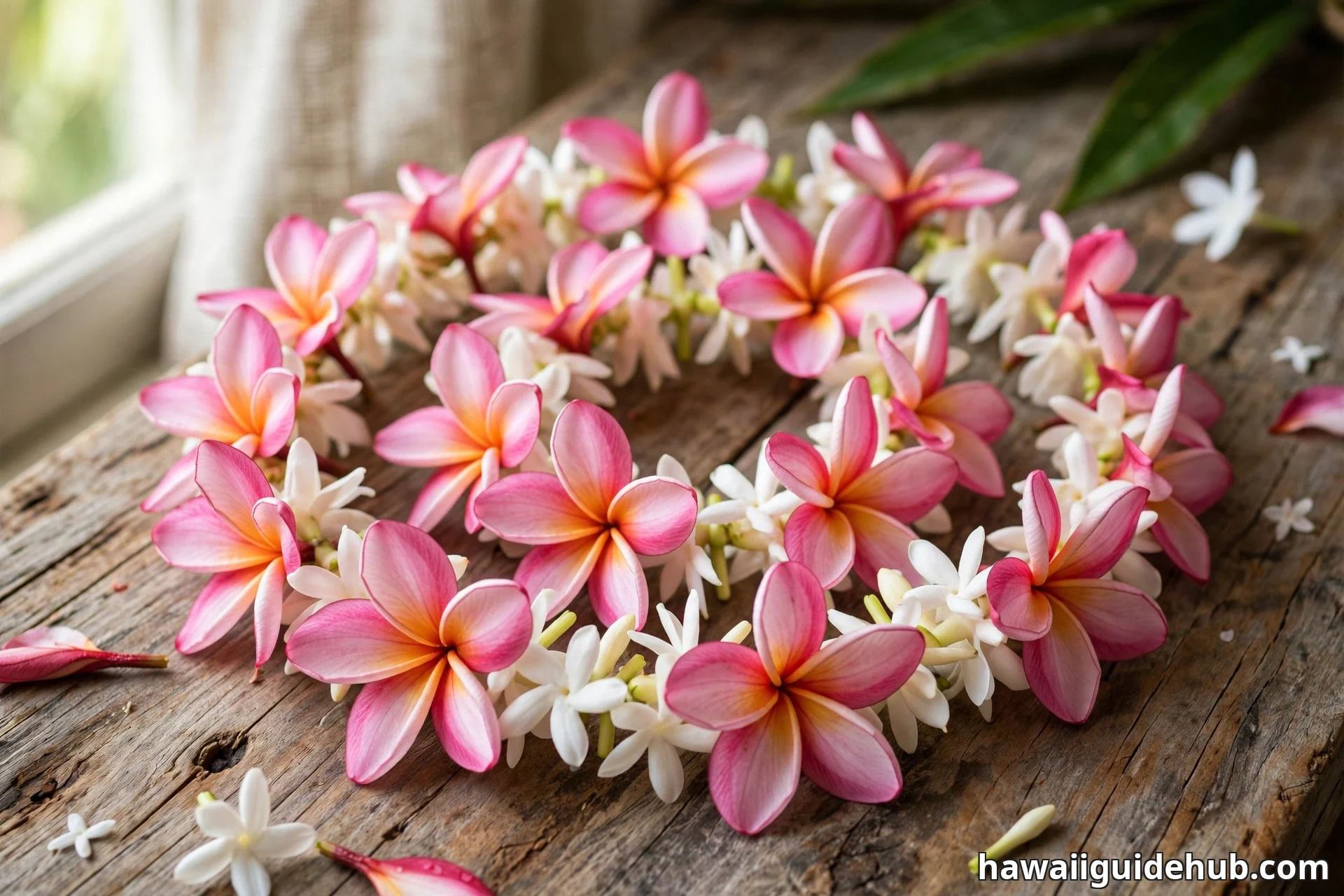
Kui is what most visitors learn first. Blossoms are pierced through their centers with a long needle and slid down a thread. Plumeria, orchid, carnation, and tuberose lei are usually made this way. The kui method produces the classic full, round lei that most people picture when they think of Hawaii.
Haku: Braiding
Haku lei are braided onto a backing, most often ti leaves or a soft fiber base. The famous haku flower crown, worn like a headband, is made with the haku technique. Haku takes more skill and patience than kui, which is why haku classes cost more and run longer. The result is spectacular, a wearable bouquet that photographs beautifully.
Wili: Twisting and Coiling
In the wili method, materials are twisted around a core of fiber or raffia, coiling the lei into shape without a needle. Ti leaf lei, the deep green twisted strands often worn by men, pair beautifully with the native plants of Hawaii, are made this way. Wili is an old technique, and watching an expert’s hands blur through the twisting is worth the price of a class on its own.
Hilo: Rope Twisting
Hilo lei are formed by twisting two strands together into a rope, working flowers or leaves into the twist as it goes. It is one of the older styles and produces sturdy lei that last well. Some teachers demonstrate hilo as a second technique after kui, so ask if your class covers more than one method.
What Your Lei Will Be Made From
The flowers on your table depend on the season and the teacher, but Oahu classes commonly use plumeria for its scent, dendrobium orchids for their durability, and carnations for their fullness. Ti leaves appear in wili classes. If you take a class in spring, you may work with pikake, the tiny white jasmine prized for wedding lei, or with blooms gathered specifically for the Lei Day season.
Oahu’s own symbolic lei is made from the ‘ilima, a small yellow orange flower so delicate that hundreds are needed for a single strand. In old Hawaii, ‘ilima lei were worn by high chiefs. You are unlikely to string ‘ilima in a beginner class, since the blossoms are tiny and precious, but knowing the story helps you appreciate why the flower matters.
A note on freshness: your lei is a living thing. Kept cool and lightly misted, a plumeria lei lasts a day or two, an orchid lei up to a week in the refrigerator. Do not leave it in a hot car. Teachers always mention this, usually while watching someone drape a fresh lei over a sun baked dashboard.
Why Lei Matter: The Culture Behind the Flowers
A lei is never just decoration. In Hawaiian culture, lei carry aloha, the spirit of love, compassion, and connection. They are given to welcome, to honor, to congratulate, and to say goodbye. Ancient Hawaiians wore lei to beautify themselves and to mark who they were. The kukui nut lei, dark and polished, was worn by ali’i, the chiefs. Maile, the fragrant green vine, was intertwined by opposing chiefs to seal a peace agreement, and it still signals respect at formal occasions.
The tradition runs through the whole Pacific. Polynesian voyagers carried lei customs eastward across the ocean long before Europeans arrived, and the word changes by island, hei in Tahiti, ei in the Cook Islands, while the meaning holds steady.
Each Hawaiian island also has its own emblematic lei. Oahu claims the yellow ‘ilima. The Big Island wears red ‘ohi’a lehua. Maui’s is the pink lokelani rose. Kauai’s is the purple mokihana berry. Molokai’s is green kukui. Lanai’s is the orange kauna’oa vine. Kaho’olawe’s is the silvery hinahina. And Ni’ihau’s famous shell lei, the lei pupu, is made from tiny shells gathered on that island’s shores, each one pierced and strung by hand into patterns of astonishing precision.
On May 1, Hawaii celebrates Lei Day, a tradition that began in 1928 when writer Don Blanding proposed a holiday honoring the custom, and columnist Grace Tower Warren supplied the slogan, “May Day is Lei Day.” Schools hold pageants, parks fill with lei contests, and the whole state wears flowers. If your trip lands on May 1, you have picked the best possible day to be on Oahu.
Tips for Getting the Most From Your Class
Book or arrive early. Free classes at popular spots fill up. Paid workshops with small groups sell out days ahead in high season. A little planning saves disappointment.
Wear something you do not mind getting damp. Fresh flowers are misted, and your hands will be wet with petal juice. Nothing stains badly, but a white silk blouse is the wrong choice.
Listen to the cultural talk. The technique is fun, but the stories are the point. Teachers share the meaning of the flowers, the history of the method, and the proper way to give and receive lei. This is the part you will remember.
Learn the etiquette. A lei is given, not taken. When someone offers you a lei, bow your head slightly so they can place it over it. It is considered rude to remove a lei in front of the person who gave it to you. And if you are leaving the islands, the old custom says to toss your lei into the ocean on departure, so that like the lei, you will return someday.
Take photos of your hands, not just the lei. You will want to remember the process. Ask the teacher before photographing them, and always ask before photographing other students.
Keep your lei cool. Ask for a plastic bag or a damp paper towel for the trip back to your hotel. Hang it in the bathroom while you shower, the steam revives wilting blossoms, and refrigerate it overnight.
See Lei Making on Video
Frequently Asked Questions
How long does a lei making class take?
Most beginner classes run forty five minutes to an hour. Haku crown workshops run longer, usually two to three hours, because braiding takes more time and skill.
Do I need any experience?
None at all. Beginner kui classes are designed for first timers, including children. Teachers expect wobbly first flowers and help everyone finish with a lei they are proud of.
How much does a lei making class cost on Oahu?
Cultural center classes, such as those at the Royal Hawaiian Center, are free. Museum workshops usually charge a modest fee on top of admission. Private and haku workshops range higher depending on group size and materials. Always check the current schedule and pricing before you go.
Can I take my lei on the plane home?
Yes. Fresh flower lei are allowed through agricultural inspection and in the cabin. Keep yours cool and lightly misted for the flight, and check current Hawaii Department of Agriculture guidance if you are carrying large quantities.
What is the difference between a lei and a haku?
A lei usually means the neck garland. A haku, also called lei po’o, is the flower crown worn on the head. Haku are traditionally reserved for special occasions like weddings, graduations, and celebrations.
Is it disrespectful to make a lei as a visitor?
Not at all, when you learn it the right way. Hawaiians are generous with this tradition, and teachers welcome visitors who approach it with respect. Listen, ask questions, and treat the flowers and the stories with care, and you are honoring the culture, not borrowing it.
There is a particular quiet that falls over a lei making table about halfway through class. The chatter fades, heads bend over the work, and the only sounds are the slide of blossoms down thread and the teacher’s soft corrections. Then someone holds up a finished lei, the room applauds, and a stranger across the table asks to take a photo. You came to Hawaii for the beaches and the views. You will go home remembering the hour you spent learning to string flowers, and the teacher who told you that every lei carries the aloha of the hands that made it.